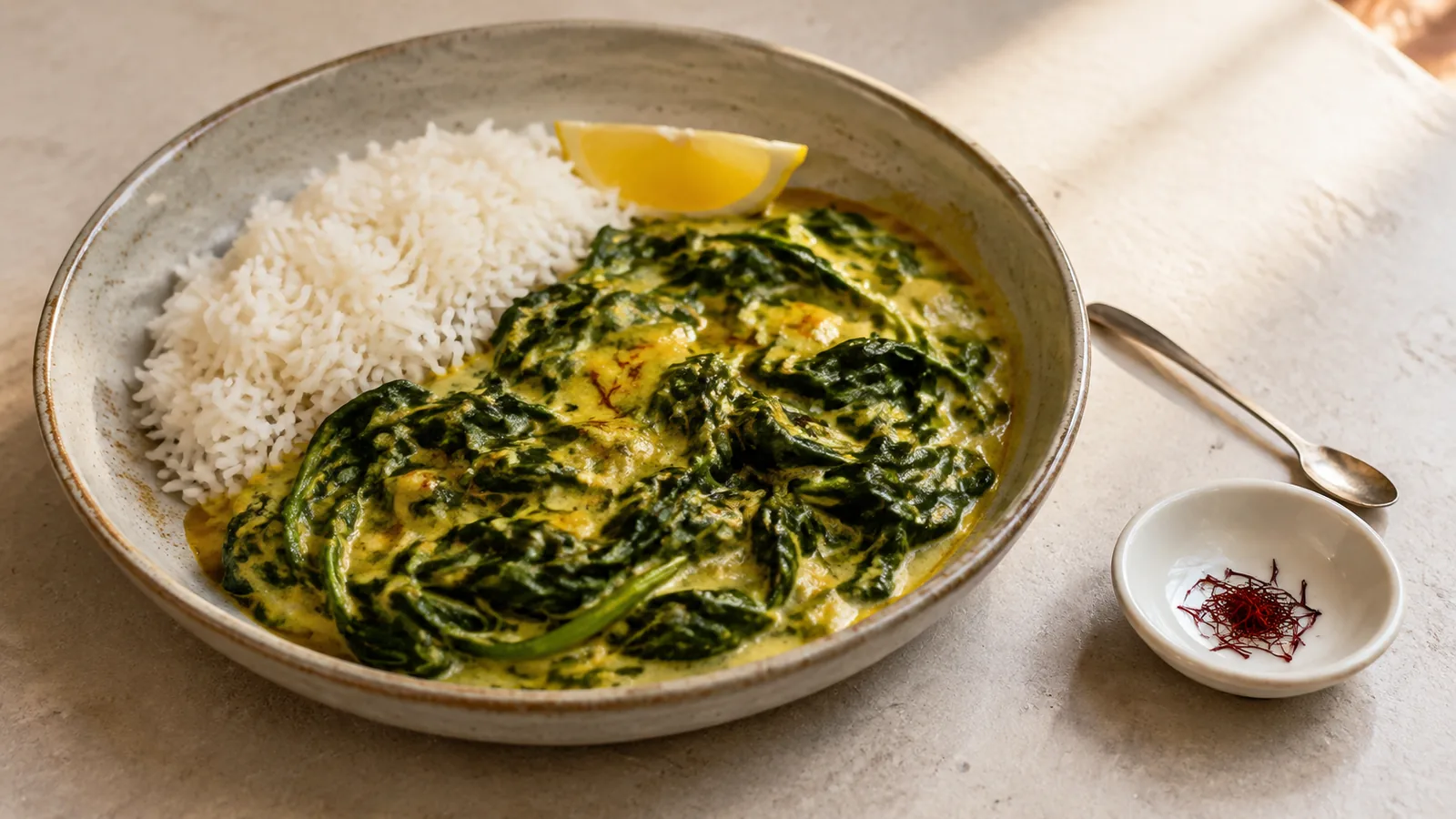
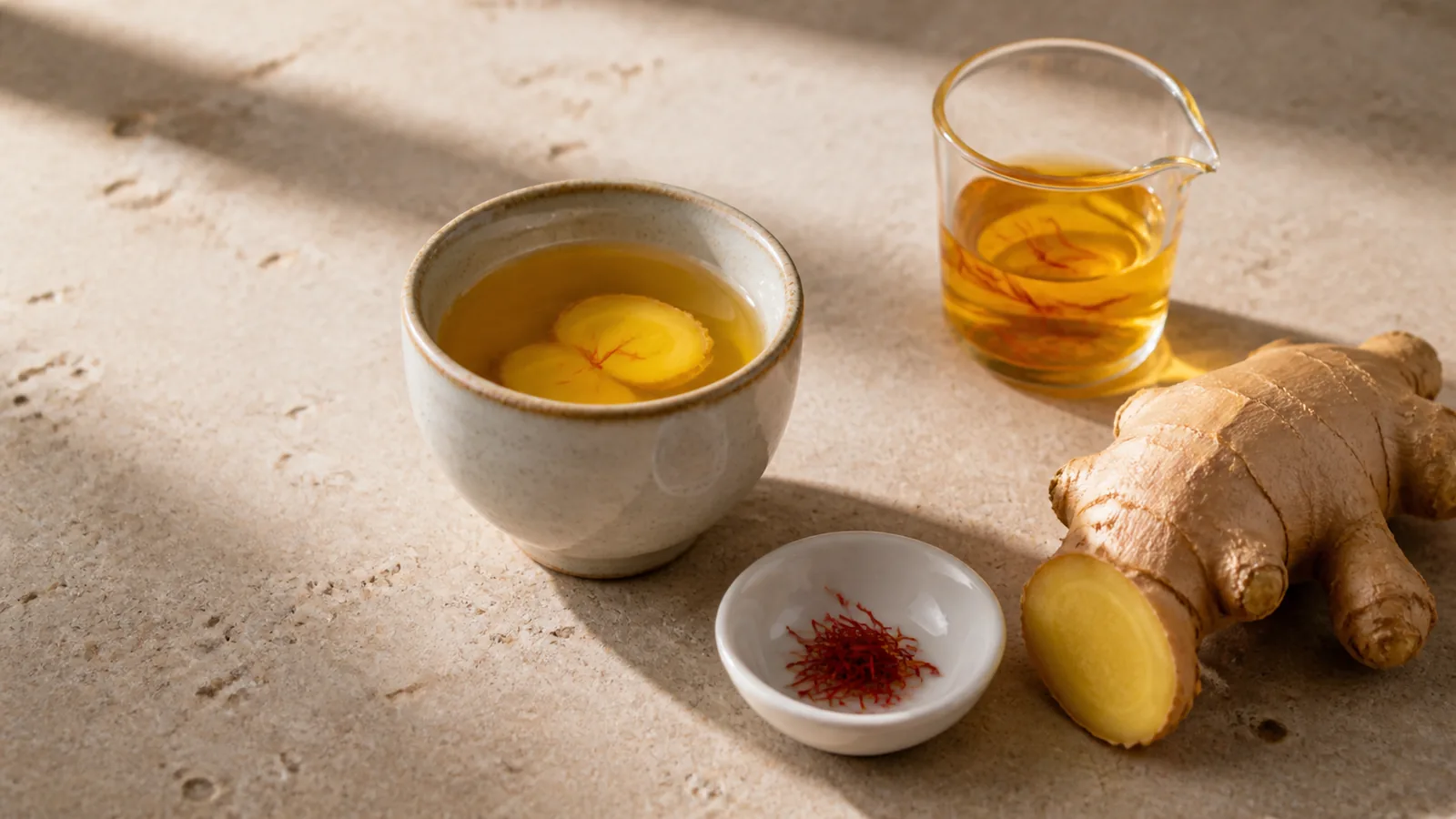
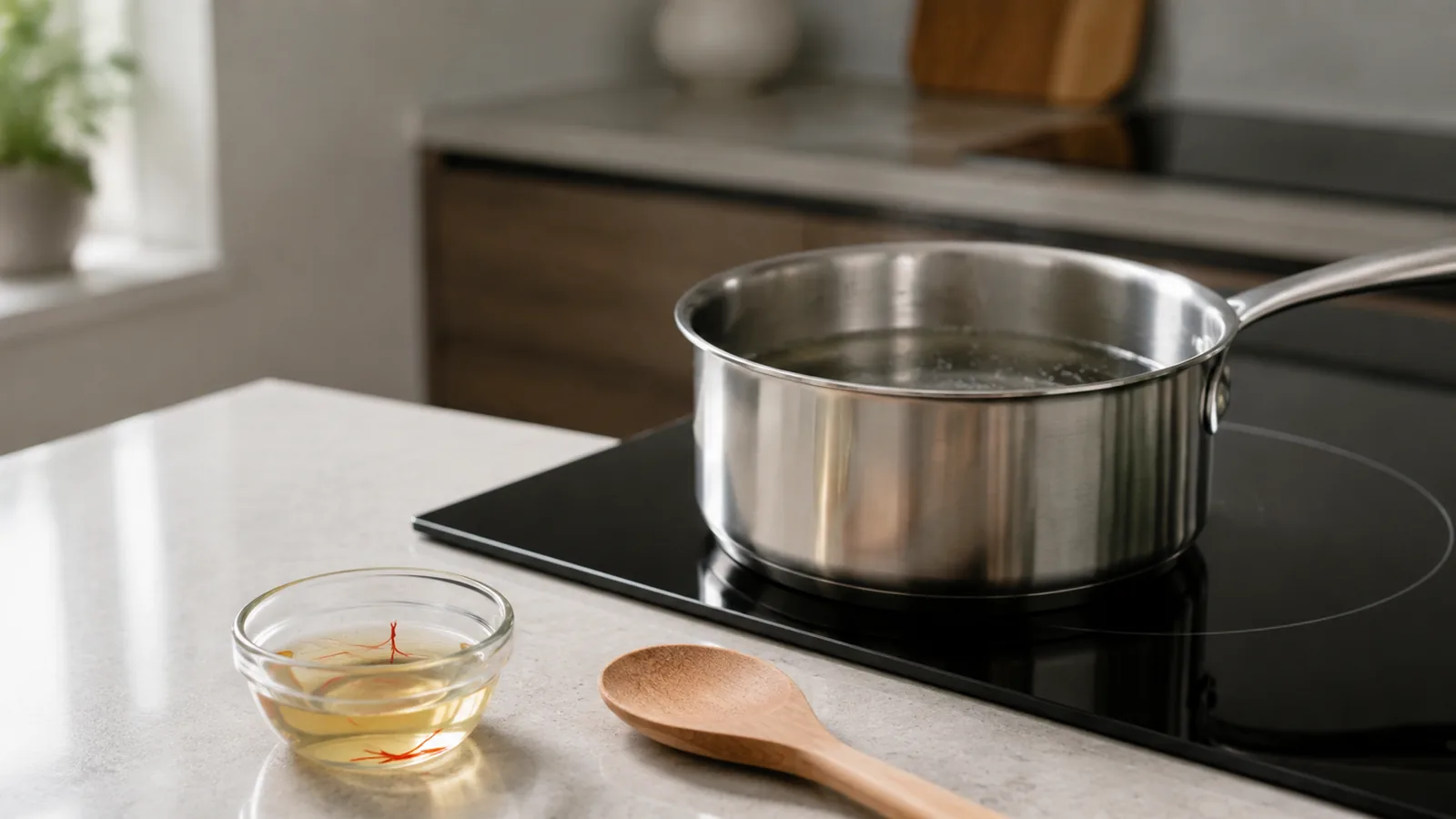
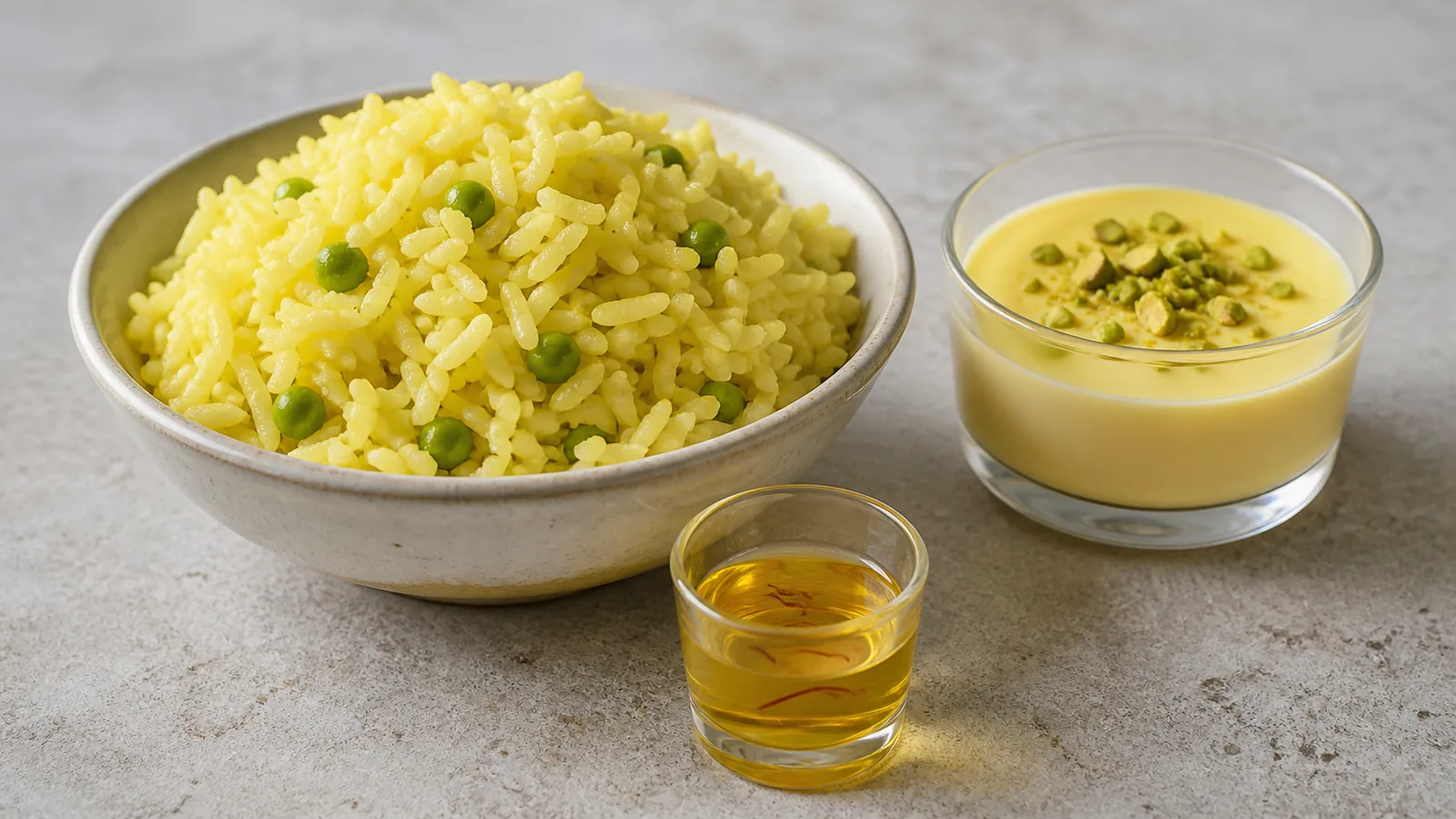
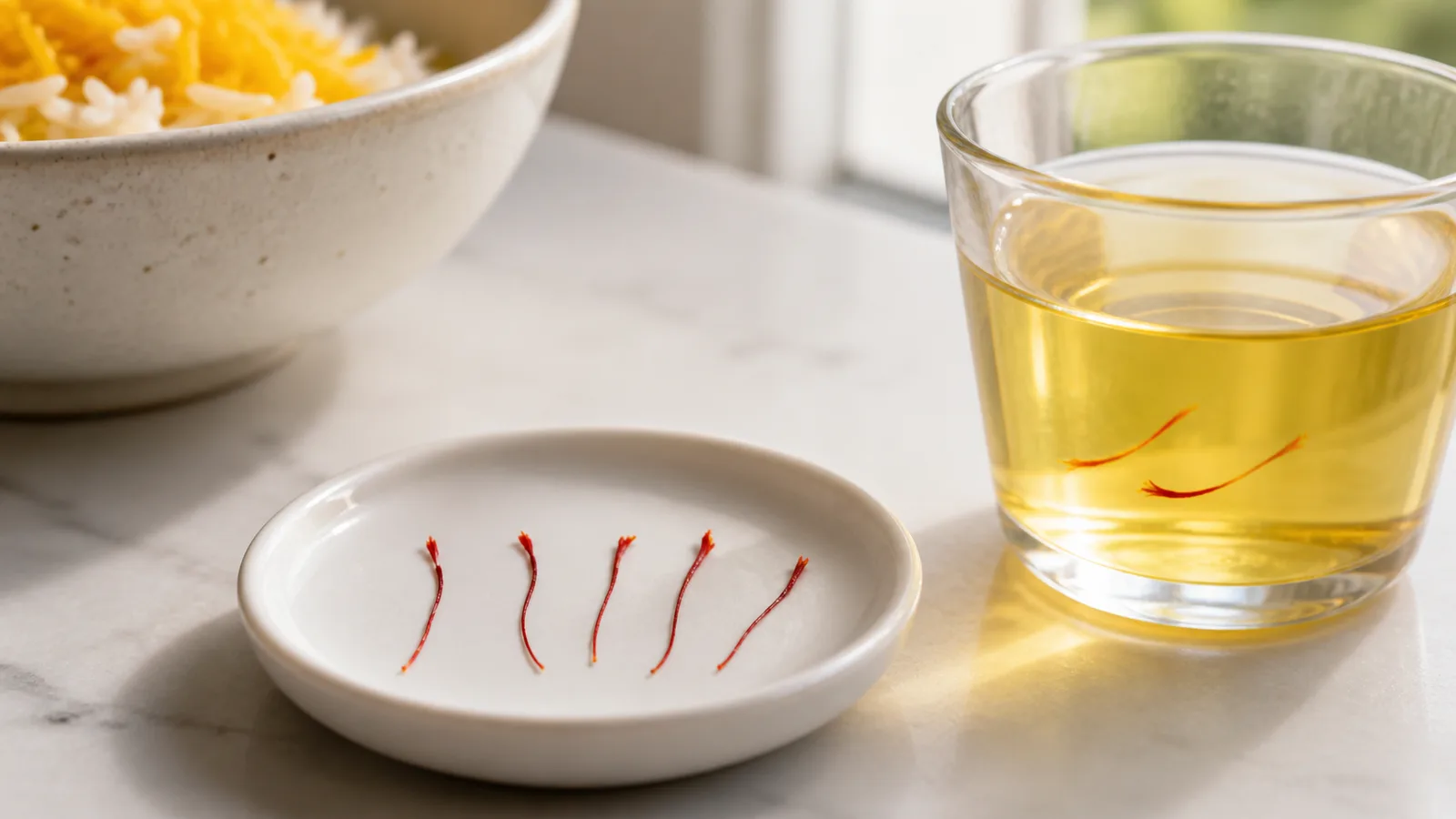
There is no exact substitute for saffron. If you need its golden colour, use a very small amount of turmeric or an annatto infusion. If you want decorative threads, safflower is the closer visual alternative. None of them recreates saffron’s floral, hay-like aroma and gently bitter taste, so the best choice depends on what the recipe needs.
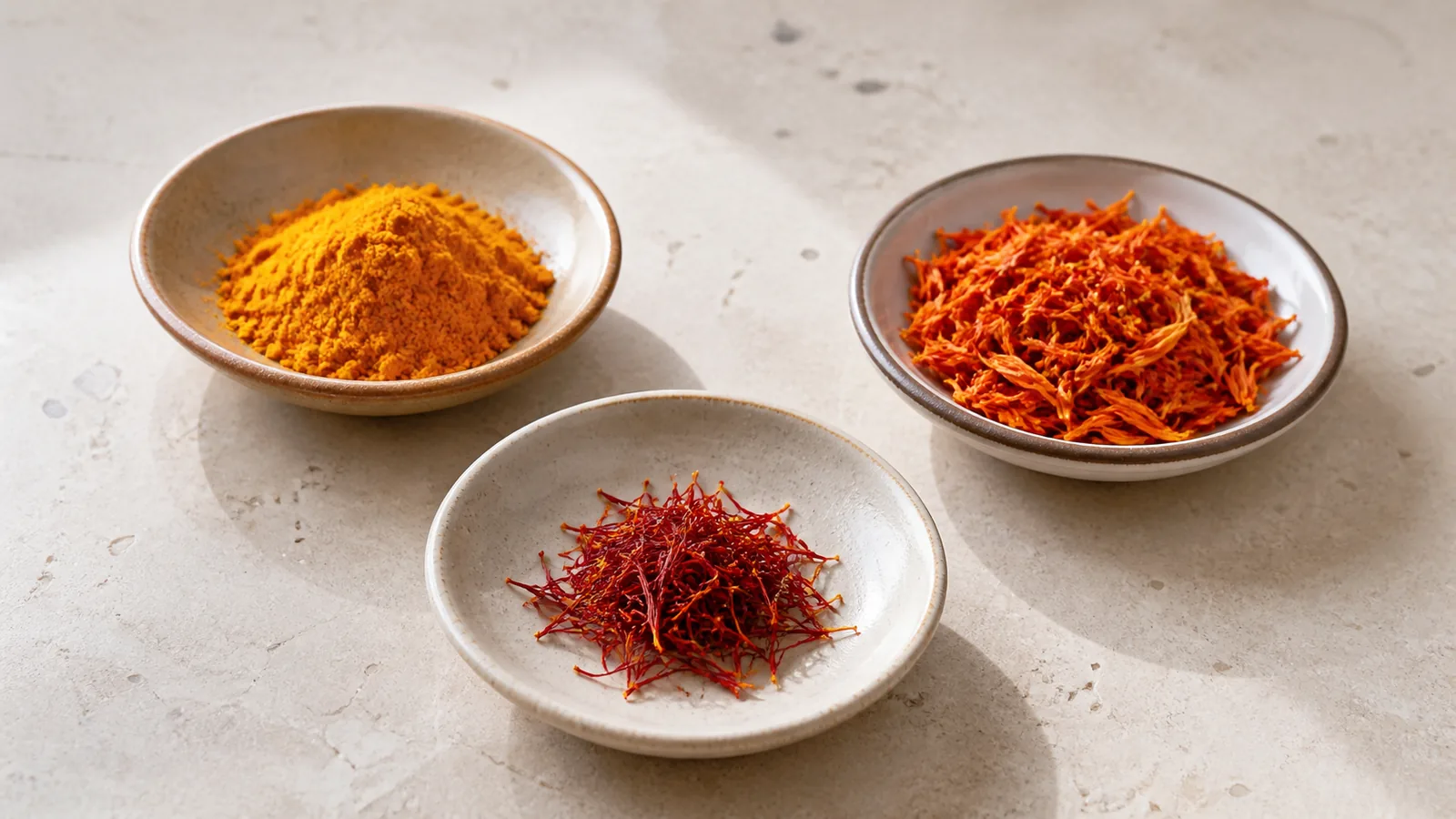
What is a good substitute for saffron?
For most savoury dishes, turmeric is the easiest saffron substitute for colour. Begin with a tiny pinch: turmeric is earthy and can take over a mild risotto, rice dish or cream sauce long before the colour looks too strong. It is better to accept a paler gold than to make the dish taste mainly of turmeric.
Annatto is another useful colour substitute, especially in rice, oil-based sauces and Latin American or Caribbean dishes where its mild, peppery character already makes sense. Safflower petals can provide red-orange threads and some yellow colour, but their flavour is much quieter. Choose them when appearance matters more than aroma.
Choose the replacement by what saffron does in the recipe
Saffron contributes more than one thing. Before replacing it, decide which job matters most:
- Golden colour: a small pinch of turmeric or annatto-infused liquid can work.
- Visible red threads: culinary safflower petals give a closer appearance, though not the flavour.
- Aromatic warmth: cardamom, citrus zest, vanilla or a floral ingredient may suit the dish, but each creates a different flavour.
- The unmistakable saffron character: omit it or change the dish; no substitute is genuinely equivalent.
This is also why a substitution disclosed in a recipe is different from adulteration. Safflower, turmeric and other plant materials are documented in research on spice and herb fraud as materials that can be passed off inside products labelled as saffron. Using one knowingly in your own cooking is fine. Selling it as genuine saffron is not.
Turmeric: best for a quick golden colour
Turmeric is widely available, inexpensive and effective in rice, soups, stews and curries. It is not a flavour match. Its earthiness is more direct than saffron’s aroma, and a spoonful is usually far too much when it is replacing a pinch of threads.
Add a little to the cooking liquid, stir, then judge both colour and taste. In a strongly seasoned curry, the difference may fit naturally. In risotto alla milanese or a delicate seafood broth, it will be easier to notice that the saffron is missing.
Annatto: useful when colour is the main goal
Annatto comes from the seeds of the achiote tree. It can colour oil or water from yellow-orange to deeper orange, depending on concentration. Whole seeds are commonly warmed gently in oil and strained; ground annatto can be mixed into a wet preparation.
Its flavour is mild but not neutral, so it suits savoury rice, stews and sauces better than custard or sweet saffron milk. It also shifts more towards orange than a restrained saffron infusion.
Safflower: similar-looking threads, different flavour
Dried safflower petals are sometimes sold under names such as “poor man’s saffron.” They can give a dish warm colour and visible petal-like pieces, which makes them a practical replacement for appearance. They do not produce saffron’s aroma, and you generally need more plant material to notice their colour.
Use clearly labelled culinary safflower from a food supplier. The visual similarity is also a reason to check bargain saffron carefully: loose petals are not the same as the trumpet-shaped stigmas of Crocus sativus.
Can marigold petals replace saffron?
Only use petals sold specifically as an edible culinary product, and check the botanical identity on the label. “Marigold” is a loose common name applied to different plants, while florist and garden flowers may not be grown or treated for food use. Food-grade calendula can add yellow-orange petals and a mild herbal note, but it does not copy saffron’s taste.
For that reason, marigold petals are not the first recommendation for an ordinary saffron replacement. Turmeric is simpler for colour, and labelled culinary safflower is clearer when visible threads are wanted.
Are paprika or curry powder good saffron alternatives?
Usually not. Paprika brings red colour and a sweet, earthy or smoky taste depending on the type. It may belong in the recipe, but it will not make paella, risotto or a cream sauce taste like saffron. Curry powder is a blend rather than one spice, and its turmeric, coriander, cumin and other seasonings change the whole direction of a dish.
Use either because you want its own flavour, not because it is a neutral replacement for saffron threads. Calling every yellow or red spice a saffron alternative confuses colour with taste.
What can replace saffron in desserts?
Desserts need a gentler decision. A trace of turmeric can add gold, but even a little may be noticeable in milk, custard or cake. For a pleasing dessert without saffron, build a new aromatic profile with vanilla, cardamom, citrus zest, rose water, pistachio or almond. Those flavours do not imitate saffron; they simply make the finished sweet feel intentional rather than incomplete.
If both the colour and saffron aroma define the dessert—kulfi, sholeh zard or a saffron panna cotta, for example—omitting the spice creates a different dish. That can still be delicious, but it should be described honestly.
Substituting saffron in common dishes
Rice, pilaf and biryani
Use a tiny pinch of turmeric in the liquid for a yellow tone, or annatto when an orange-gold colour suits the seasoning. Safflower can add visible petals. Cardamom, cinnamon and fried onion may provide complexity, but they do not replace saffron directly.
Paella and seafood dishes
If saffron is unavailable, leave it out and season the stock well. A restrained amount of turmeric can supply colour, while paprika should be used only if its flavour belongs in the recipe. Seafood, stock, tomato, garlic and herbs still need their own balance.
Risotto and cream sauces
For colour alone, use the smallest pinch of turmeric you can control. For flavour, it is often better to make a good plain risotto or a lemon, herb, mushroom or cheese variation instead of trying to imitate saffron.
How much substitute should you use?
There is no reliable one-for-one conversion because threads, powders, petals and infused oils behave differently. Start below the amount you think you need, especially with turmeric, curry powder or smoked paprika. Add the replacement to liquid where possible, taste it in the context of the dish, and stop before colour becomes the only goal.
A good replacement respects the recipe rather than pretending to be saffron. Use turmeric or annatto when colour matters, safflower when the thread-like appearance matters, and a different aromatic plan when flavour matters. If the original taste is essential, genuine saffron is the only match; our guide to what saffron actually tastes like explains what the alternatives cannot reproduce.