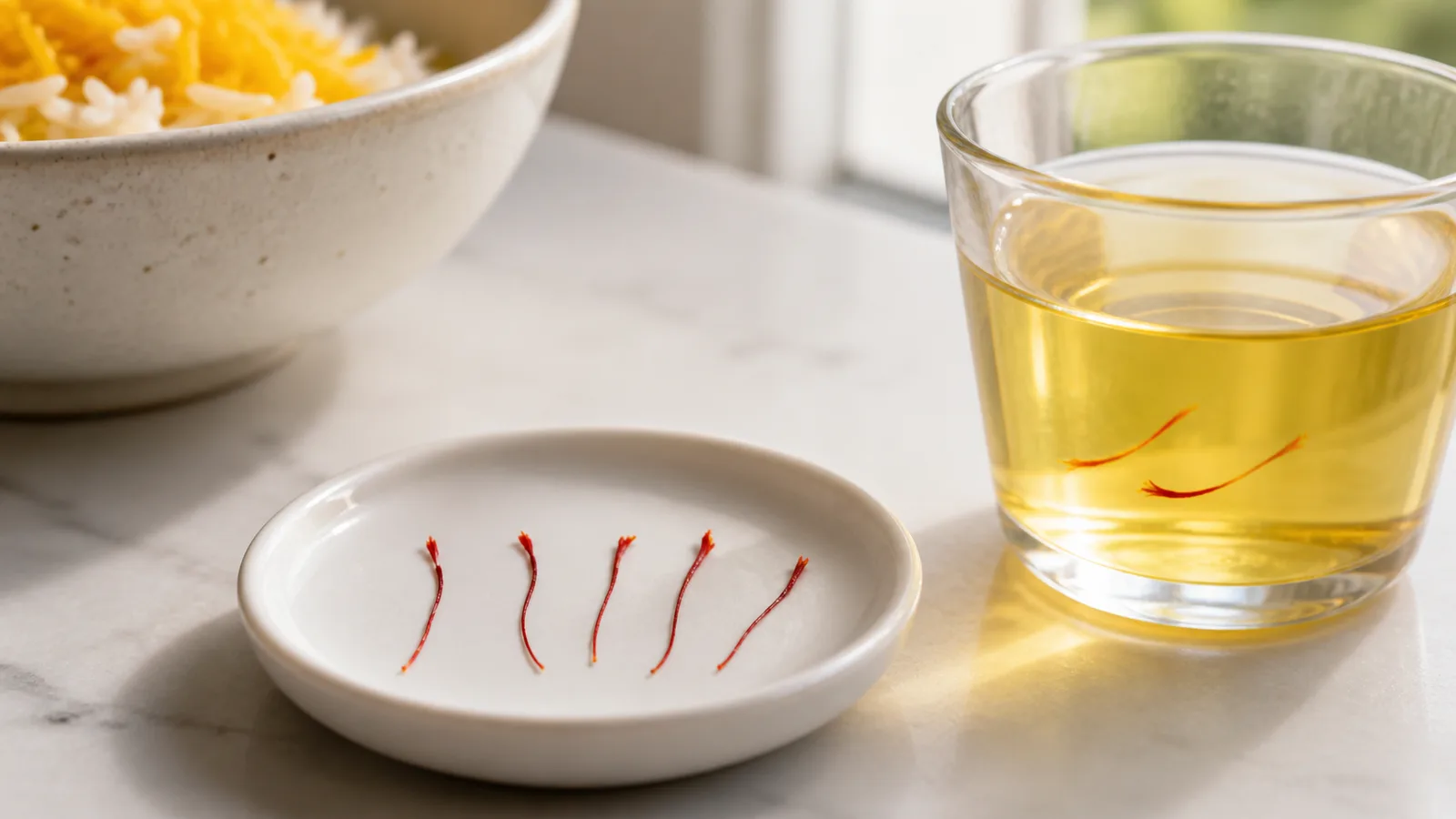
Yes, you can grow saffron at home if you can give the corms sun, sharply drained soil, a cool growing season and a comparatively dry summer dormancy. It is possible in the UK, Ireland, Canada and much of the United States; winter cold is often less troublesome than waterlogged ground. The real challenge is matching the plant’s unusual annual cycle.
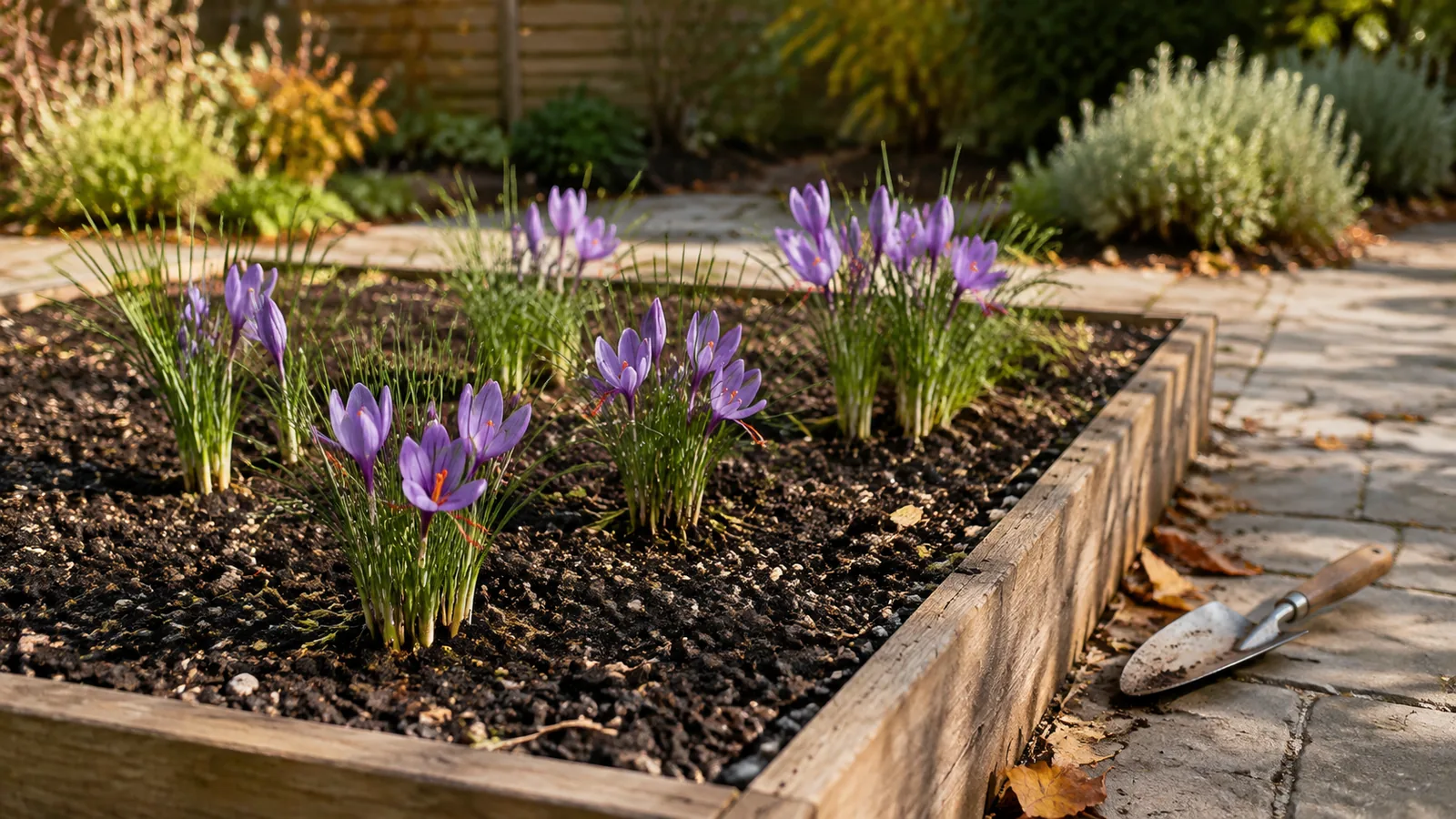
Can I grow saffron in my climate?
Saffron comes from Crocus sativus, an autumn-flowering crocus. It grows leaves through the cooler part of the year, builds replacement corms in spring and rests in summer. That cycle is the opposite of many familiar spring bulbs, so treating it like a daffodil can lead to the wrong watering schedule.
The University of Vermont’s North American Center for Saffron Research and Development lists saffron as suitable for USDA plant hardiness zones 4–8 and reports successful outdoor growing in cold Vermont conditions. Its home-gardener saffron planting guide places even more emphasis on drainage: corms left in standing water can rot.
Can you grow saffron in the UK or Ireland?
Yes, especially in a sunny raised bed, gritty border or container. The main difficulty in a wet maritime climate is keeping the dormant corms from sitting in saturated soil during summer. A rain-sheltered container or a raised planting area can be more useful than trying to make a heavy clay bed behave like free-draining ground.
Can you grow saffron in Canada or the northern US?
Yes in many locations, with local protection. UVM’s work shows that saffron can survive a zone 4 winter in the ground. Containers cool faster than garden soil, so place them at ground level and insulate the sides where winters are severe. Snow cover, drainage and freeze-thaw cycles differ from one garden to another; a hardiness-zone number is a starting point, not a guarantee.
What about warm climates?
Hot, dry summers suit dormancy, but the corms still need a seasonal change that supports autumn flowering. In warm, humid places, raised beds and containers make moisture easier to control. A shaded or permanently damp corner is a poor choice even if winter temperatures seem ideal.
What you need before planting
- True Crocus sativus corms: buy from a reputable nursery and avoid confusing autumn crocus with unrelated plants sold under similar common names.
- A sunny position: leaves need light during the cool growing season to feed the next generation of corms.
- Free-draining soil: a raised bed, gritty loam or suitable container mix is safer than compacted, water-holding ground.
- Enough depth: shallow decorative bowls dry and freeze too quickly. Use a substantial bed or pot with open drainage holes.
- Protection where needed: rodents may eat corms, while deer and other animals can browse the leaves.
The plant is sterile and does not produce a useful seed crop, so saffron is grown from corms. Over time, a parent corm forms daughter corms. That is how a healthy planting increases, and also why crowded beds eventually need lifting and division.
When and how to plant saffron corms
Plant healthy corms in late summer or early autumn, before they begin active growth. Timing should follow your local season and supplier guidance rather than a fixed calendar date for every country. UVM recommends August or early September for its region and warns against holding corms until the following spring.
Set each corm with the pointed growth tip upward. In UVM’s home-garden system, corms are planted about 6 inches deep and 3–4 inches apart, at roughly 6–12 corms per square foot. Other climates and soil types may use different spacing, but a deeper, well-drained planting generally gives the corms a more stable environment than a shallow tray.
Water after planting only as much as the soil and weather require. Outdoor beds receiving autumn rain may need little or no extra irrigation. Containers need closer observation because they can swing from dry to saturated quickly. Never keep a saucer full of water under the pot.
How long does it take for saffron to grow?
Good corms may sprout and flower in their first autumn, sometimes within weeks of planting, but performance varies with corm size, planting date and conditions. A weak first display does not necessarily mean the planting has failed. Leaves continue the work after flowering and should remain until they yellow and die back naturally in late spring or early summer.
Do not cut green foliage for tidiness. Those leaves are replenishing the corms that support the next crop. Once the leaves have died back, the planting enters summer dormancy and its need for water drops sharply.
Is saffron hard to grow?
The basic plant is not especially demanding once its site is right. The difficult parts are drainage, the reversed seasonal cycle, animal damage and the amount of hand work needed for a small harvest. A few corms make a satisfying garden experiment; they will not produce a large jar of spice.
Common problems usually point to conditions:
- Corms rot: soil stayed wet or drainage was blocked.
- Leaves appear but flowers do not: corms may be small, crowded, planted late, shaded or still establishing.
- Growth disappears: rodents may have taken the corms or animals may have eaten the foliage.
- Container plants struggle: the pot may be too shallow, exposed to repeated freezing or kept wet through dormancy.
How to harvest home-grown saffron
Collect flowers in the morning after frost or dew has gone, ideally just before they open fully. Work on the same day. Separate the three red stigma branches from the purple petals and yellow stamens, then dry the stigmas promptly with a controlled food-safe method. Store fully dried saffron in a tightly closed glass or metal container in a dark, dry place.
The harvest is small because each flower contributes only three stigmas. That is normal, not a sign of failure. Label the container with the harvest date, keep moisture out, and give the aroma time to settle before judging it.
Can I grow saffron in a pot?
Yes. A pot is useful where garden soil is heavy or summers are wet. Choose a container with generous drainage holes and enough depth for the corms, not a shallow indoor display bowl. Keep it outdoors in strong light during active growth. In cold areas, insulate the sides and leave the container on the ground; in very wet summers, move it under cover without sealing it into a humid space.
Saffron can flower indoors temporarily, but a warm living room is not a complete year-round growing system. The leaves, cool season and dormancy still matter. For a more detailed planting and care sequence, use our guide to growing saffron at home.
Do I need a licence to grow or sell saffron?
Growing a few corms for your own kitchen and selling a food product are different activities. There is no single worldwide answer about licences. Commercial growers may need to follow local rules for imported planting material, land use, food handling, packaging, labelling, tax and business registration. Check the agriculture and food authorities where the crop will actually be grown and sold before treating a garden project as a business.
For home growing, start small. A sunny, well-drained bed or substantial pot will teach you more in one full growth cycle than a large first purchase. If the leaves remain healthy, the corms stay dry enough in dormancy and the autumn flowers return, you have the conditions needed to grow your own saffron.