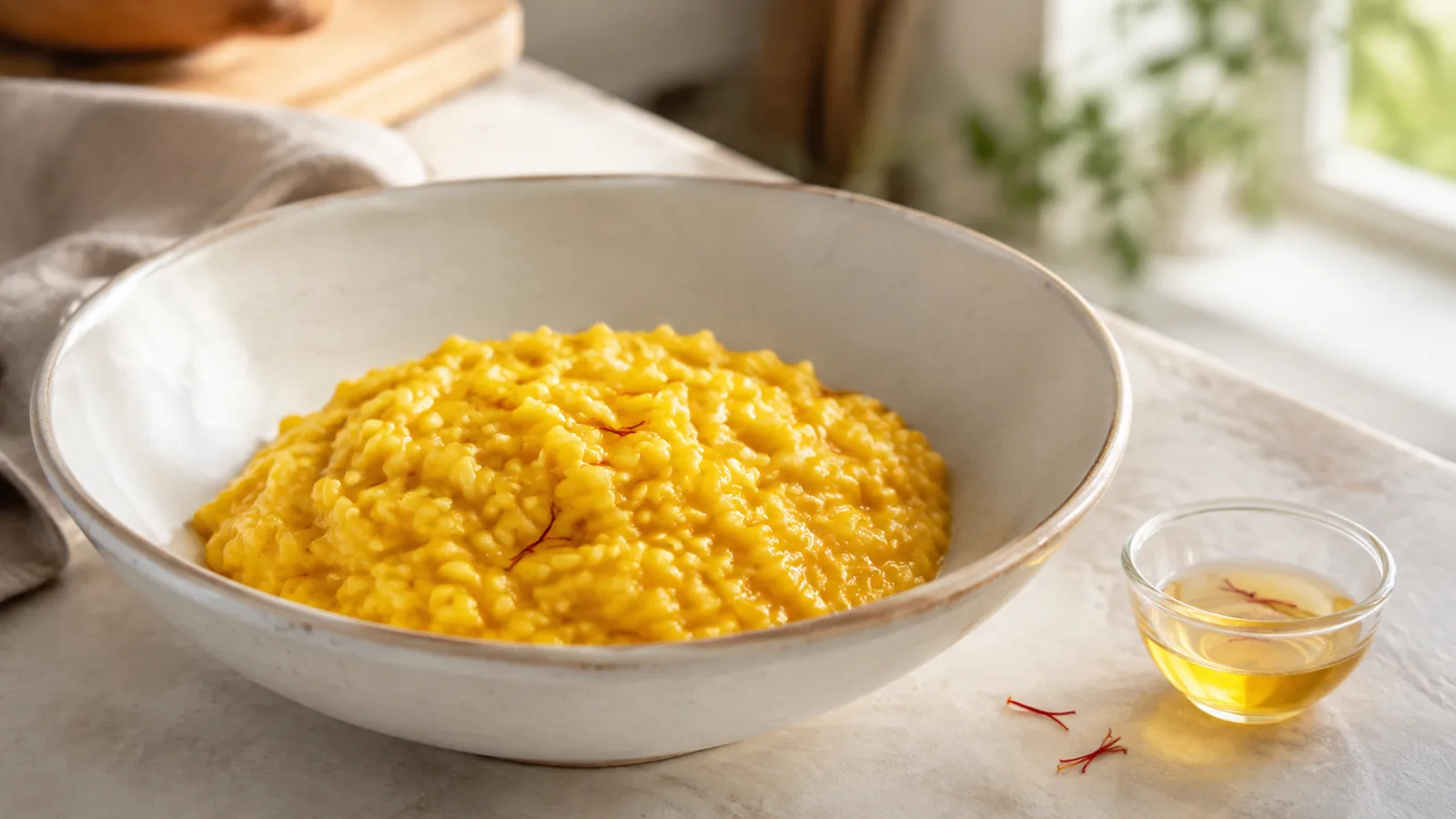
Saffron pairs especially well with rice, seafood, chicken, lamb, milk, cream, almonds, pistachios, citrus, tomato and mild aromatic spices such as cardamom. Its warm floral aroma is easy to cover, so the best pairings support it instead of competing with it.
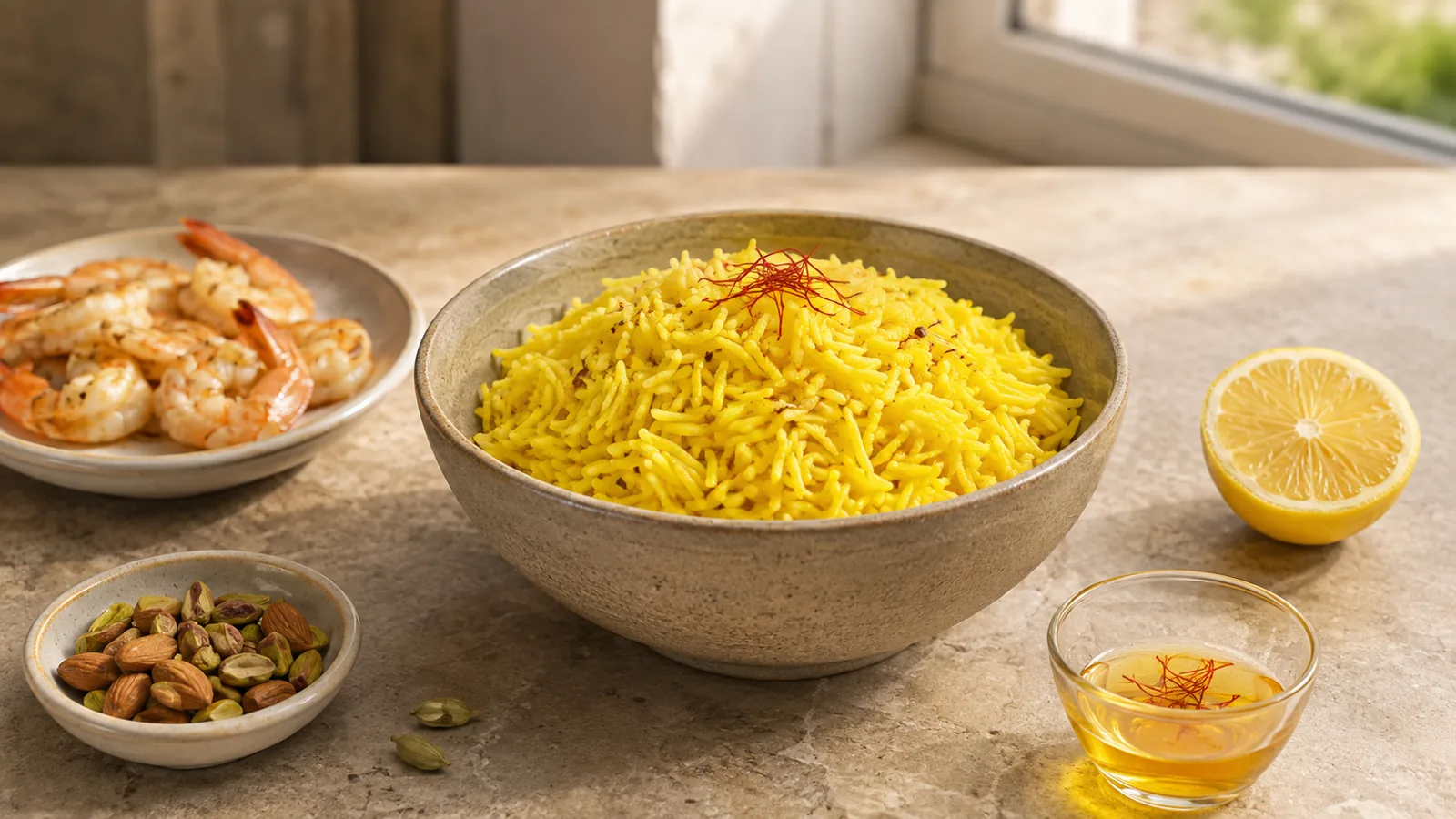
What does saffron pair well with?
Useful saffron food pairings have one thing in common: they give the spice enough liquid, fat or gentle heat to spread through the dish. If you are deciding what foods go well with saffron, rice and stock carry its colour; dairy rounds its bitterness; seafood and poultry leave room for its aroma; nuts, honey and citrus echo different parts of its fragrance.
The question of what pairs well with saffron becomes easier when you keep the recipe focused. Choose a main ingredient, one or two aromatics and a cooking method that lets the infusion disperse. If every supporting spice is used heavily, the most expensive ingredient may be the hardest one to taste.
Rice and grains
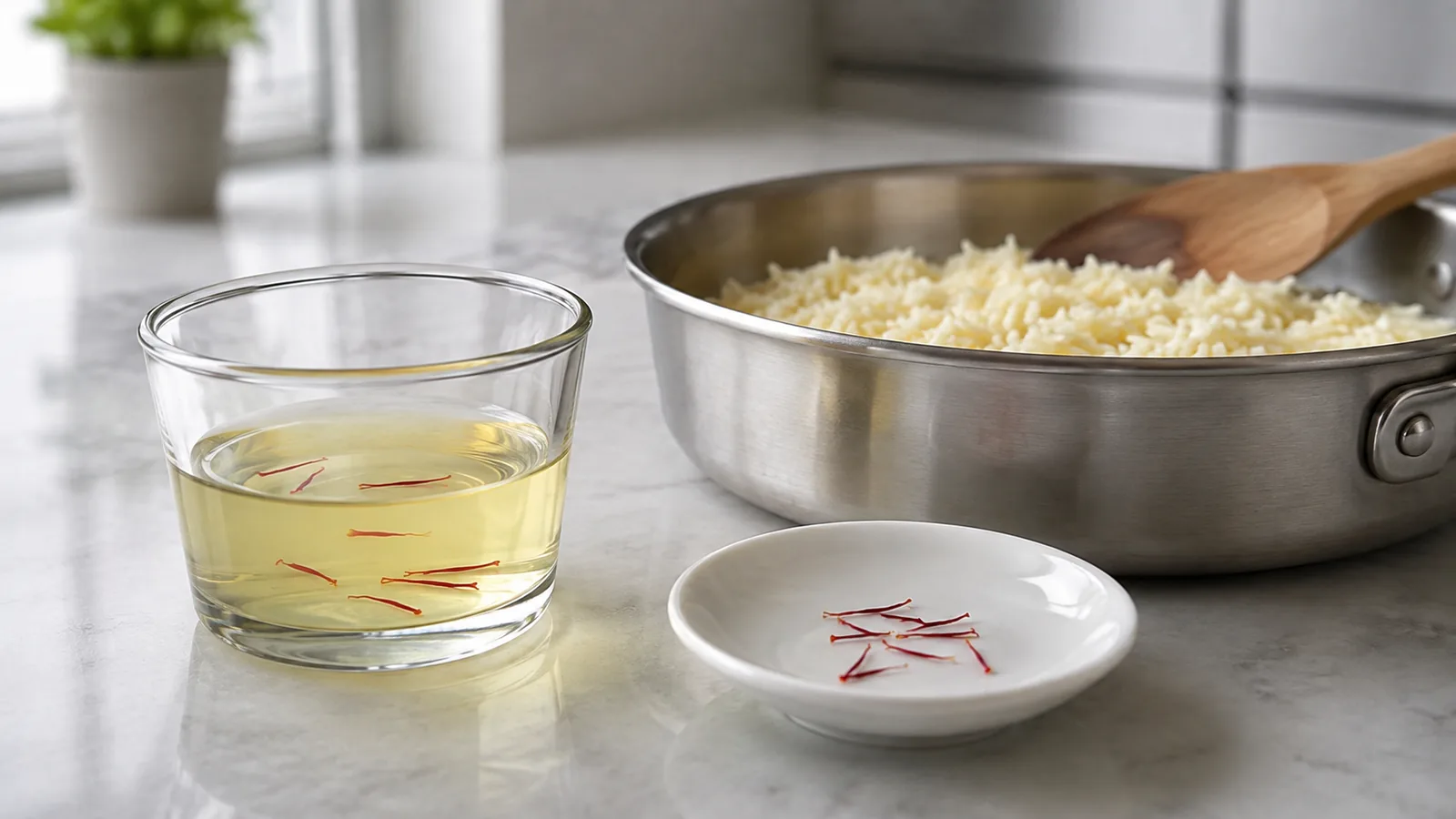
Rice is the classic partner because it absorbs saffron infusion evenly without adding a forceful flavour of its own. Basmati rice, risotto rice and Spanish short-grain rice each produce a different texture, but all can carry saffron well. That is why it appears in Persian rice dishes, biryani, risotto and paella.
Saffron also works with couscous, barley and quinoa. Use stock that suits the rest of the dish, and season it carefully; an overly salty or strongly flavoured stock can make the saffron seem faint. For a practical starting amount, see how much saffron to use in rice.
Seafood and fish
Delicate seafood gives saffron space to be noticed. Prawns or shrimp, mussels, white fish, crab and lobster can all work with a saffron broth or sauce. Tomato, fennel, leek, garlic, white beans and a little citrus are useful supporting ingredients.
In seafood paella, the saffron belongs to the rice and cooking liquid as much as to the shellfish. In a soup, infuse the spice before stirring it into the stock. Keep the seafood fresh and properly handled; saffron should not be used to cover an off odour.
Poultry, lamb and beef
Chicken and turkey
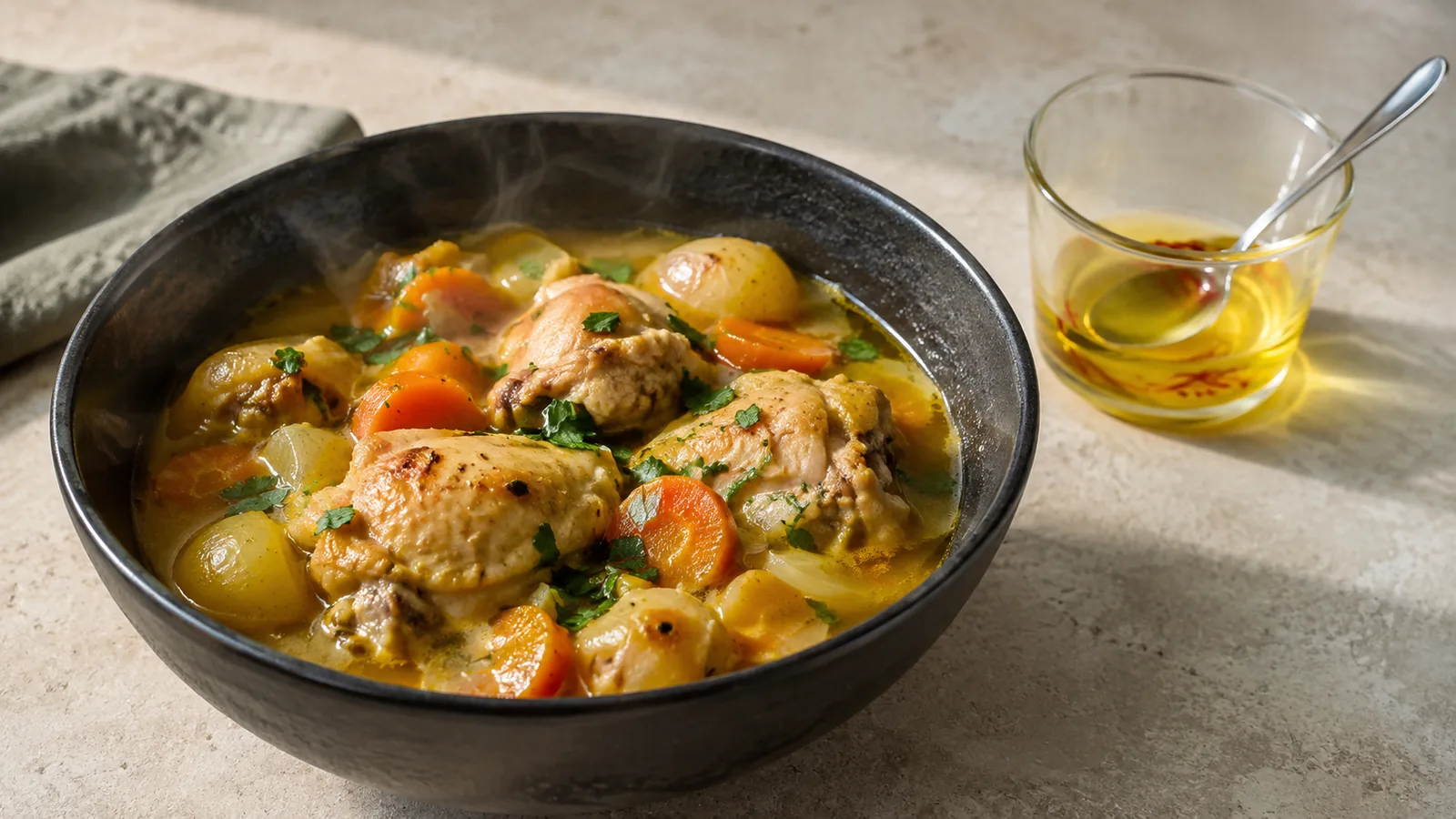
Chicken is mild enough to take saffron in a marinade, sauce, soup or rice dish. Yoghurt, lemon, onion, garlic and a measured amount of black pepper can support it. Turkey works in the same general direction, particularly in a light stock or creamy sauce, though the quantity and cooking time should follow the recipe.
Lamb
Lamb has a fuller flavour, so saffron benefits from a clear route into the dish: infused liquid in a braise, rice served with the meat, or a yoghurt-based marinade. Onion, citrus, mild cinnamon, cardamom and dried fruit can work, but the dish becomes muddy if all are pushed to the foreground.
Beef
Saffron can accompany beef, especially in a broth, stew or rice dish, but it is easier to lose beside deep browning, smoke and heavy sauces. Use a lighter cut or let the saffron flavour the rice or sauce rather than expecting a few threads to dominate the meat.
Vegetables that go well with saffron
Root vegetables and mild alliums are dependable partners. Potatoes, carrots, parsnips, onion and leek take on the infusion while keeping their own shape and sweetness. Squash, tomato and eggplant suit saffron in soups, stews, casseroles and rice dishes.
Spinach and kale can work, but their green, mineral character is stronger. Use saffron in the surrounding sauce or grain and treat the leaves as one part of the dish. Cauliflower, fennel, peas and white beans are gentler options for a vegetarian plate.
Roasting vegetables builds browned flavours; adding saffron only to the roasting tray can waste its more delicate aroma. A saffron yoghurt, dressing, stock or grain served with the vegetables often gives better control.
Dairy, eggs and creamy foods
Milk, cream, yoghurt and butter soften saffron’s bitter edge and hold its aroma. This is useful in custards, sauces, lassi, kulfi, ice cream and rice pudding. Eggs can also carry a small amount in a soft scramble, baked egg dish or custard, though strong cheese may overwhelm it.
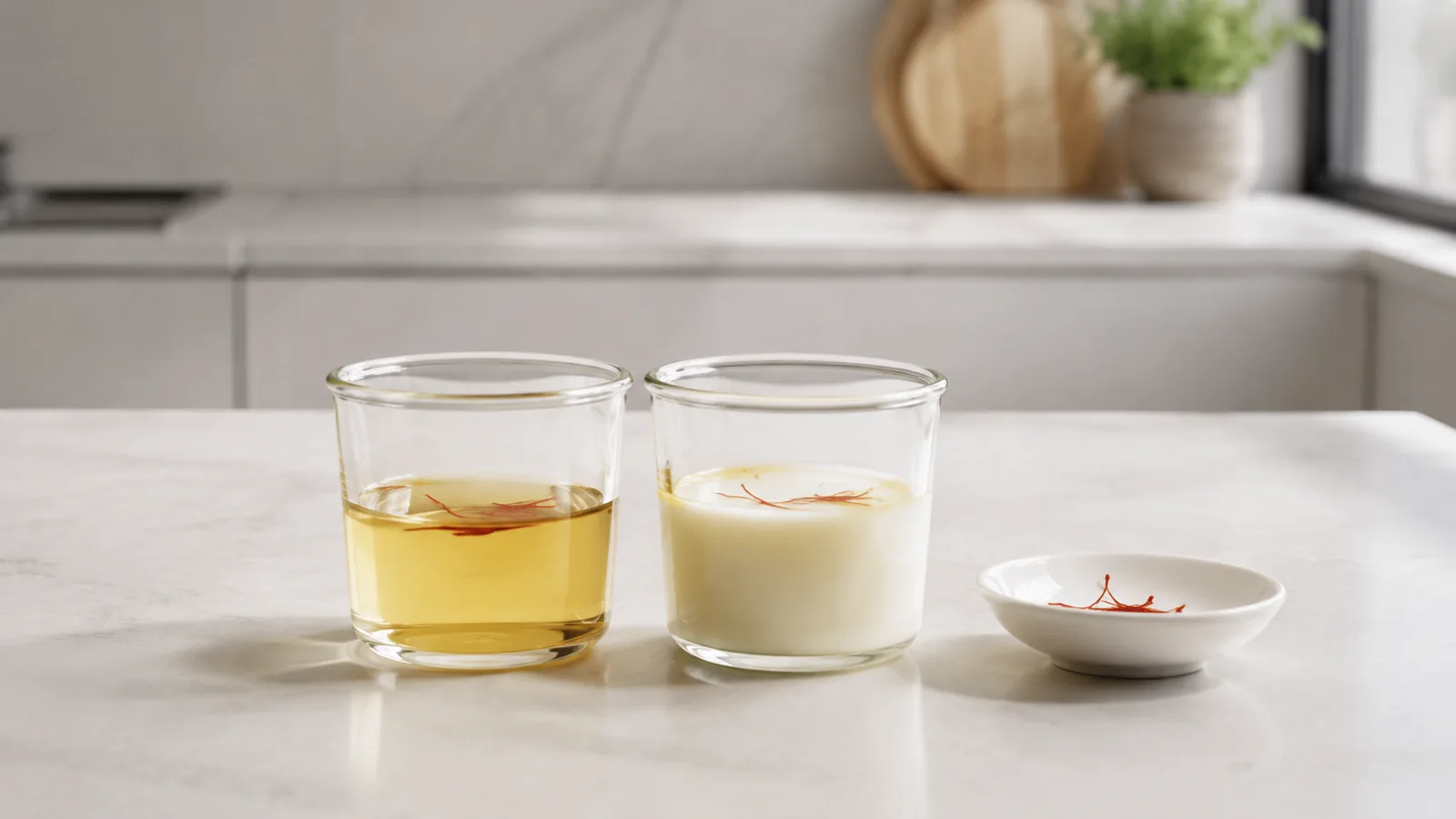
Warm a portion of the milk and infuse the saffron before combining it with the rest. This distributes the colour and avoids a cluster of dry threads in one spoonful.
Nuts, fruit and sweet ingredients
Almonds, pistachios and cashews
Almond and pistachio are among saffron’s most natural nut pairings. Their mild richness suits cakes, biscuits, ice cream, rice pudding and milk drinks. Cashews work in creamy savoury sauces and desserts. Toast nuts gently and add them where their crunch remains distinct.
Honey, sugar and fruit
Honey can echo saffron’s honey-like aroma, but the spice itself is not sugary. Citrus—especially lemon or orange—adds freshness to rice, seafood, cake and syrup. Pear, apple, apricot, mango and dried fruit can also work when the recipe stays restrained.
Acidity makes a dish feel brighter, while too much can thin out the warm impression of saffron. Add lemon juice near the end and taste before adding more.
Herbs and spices
Saffron pairs with cardamom, cinnamon, cumin and coriander, but the balance changes by dish. Cardamom suits tea, milk and desserts. Cumin and coriander belong more naturally in savoury rice, stews and curries. Cinnamon can bridge lamb, rice and sweet dishes when used lightly.
Garlic, ginger and bay leaves can support saffron in soups, marinades and braises. Fresh parsley, dill, mint and coriander leaf bring a green finish. None is mandatory. Start with the cuisine and recipe rather than combining ingredients simply because each appears on a pairing list.
What flavours are harder to pair with saffron?
Very heavy smoke, a large amount of chilli, aggressively bitter ingredients and strongly perfumed flavourings can hide or distort saffron. That does not make the combination impossible, but it leaves less room for error. The same is true of very mature blue cheese or an intensely reduced meat sauce.
If a dish needs those flavours, decide what saffron is meant to contribute. It may work better in the rice, bread, broth or dessert served alongside than in the strongest part of the plate.
How preparation changes a pairing
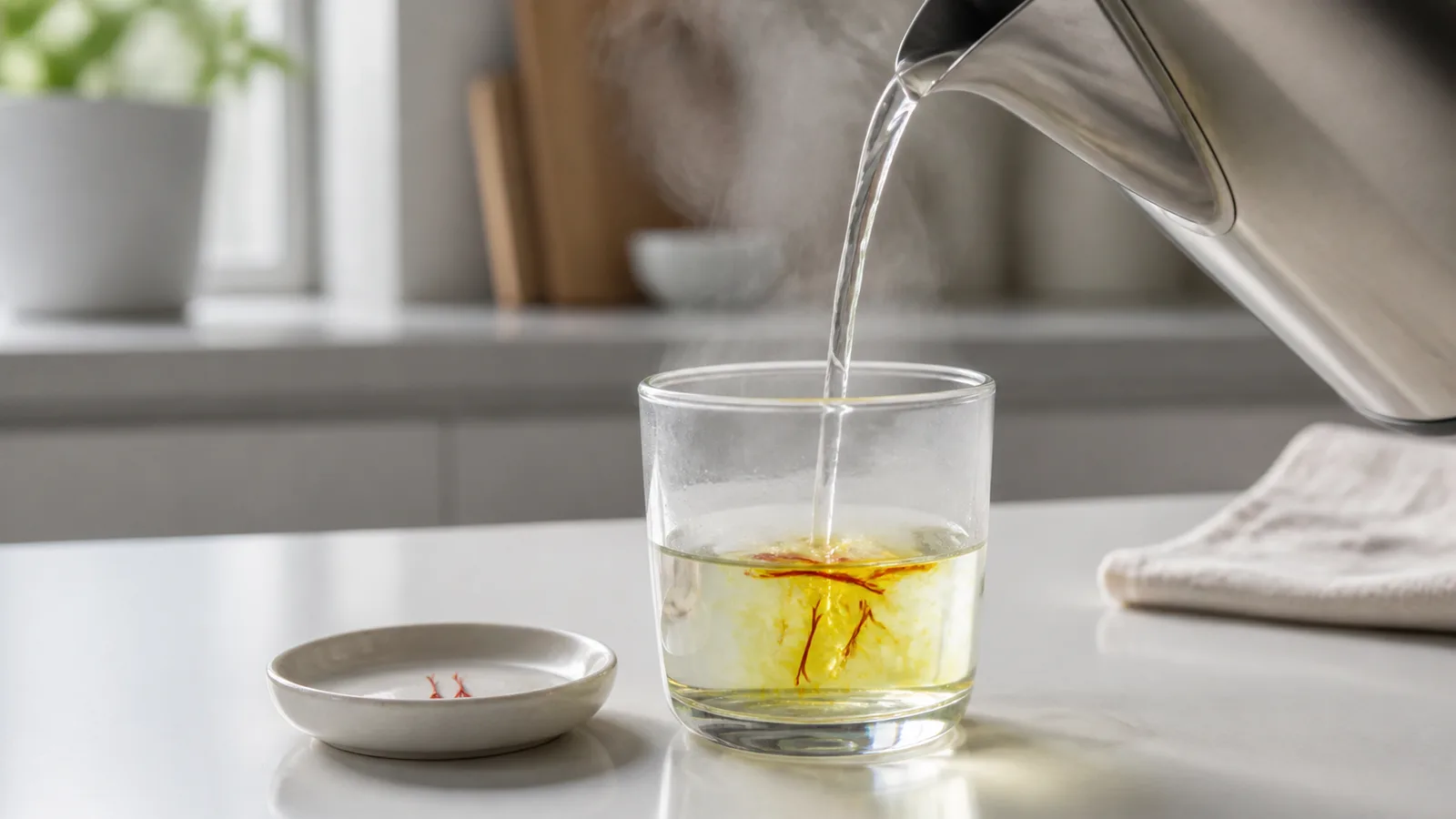
Lightly crush the saffron and steep it in a small amount of warm water, milk or stock for 10 to 15 minutes. Add both the infusion and softened threads. A dry thread scattered at the end provides colour and decoration in only a few bites; an infusion carries the flavour through the food.
The taste is gently bitter, while much of the perceived sweetness and floral character comes from aroma. A trained-panel sensory study found differences among saffron samples in aroma, flavour, bitterness, astringency and pungency. This is one reason a pairing may need adjustment when you open a new lot.
For a fuller description before choosing ingredients, read what saffron tastes like in food. The broader guide to what to cook with saffron turns these pairings into dish ideas.
Does this advice apply to saffron extract?
No. People searching “saffron extract pairs well with” may be asking about a supplement rather than a food flavour. Extracts and capsules can have defined concentrations and intended uses that are not comparable with culinary threads. Food pairings do not establish that two supplements or medicines are safe to combine.
Follow the product label and ask a qualified clinician or pharmacist about medicines, supplements, pregnancy, breastfeeding or a medical condition. Do not open a capsule into a recipe simply because culinary saffron works with that food.
Build a balanced saffron dish
Begin with one base—rice, stock, milk or cream—then choose a main ingredient and one supporting direction. Rice with chicken and lemon, seafood with tomato and fennel, milk with cardamom and pistachio, or a vegetable stew with chickpeas and mild spices all give saffron a clear job.
Infuse first, add modestly and taste before increasing the amount. If you need whole threads for a recipe, check the current Sargol saffron pack details. A good pairing should make the finished food more coherent, not merely more yellow.