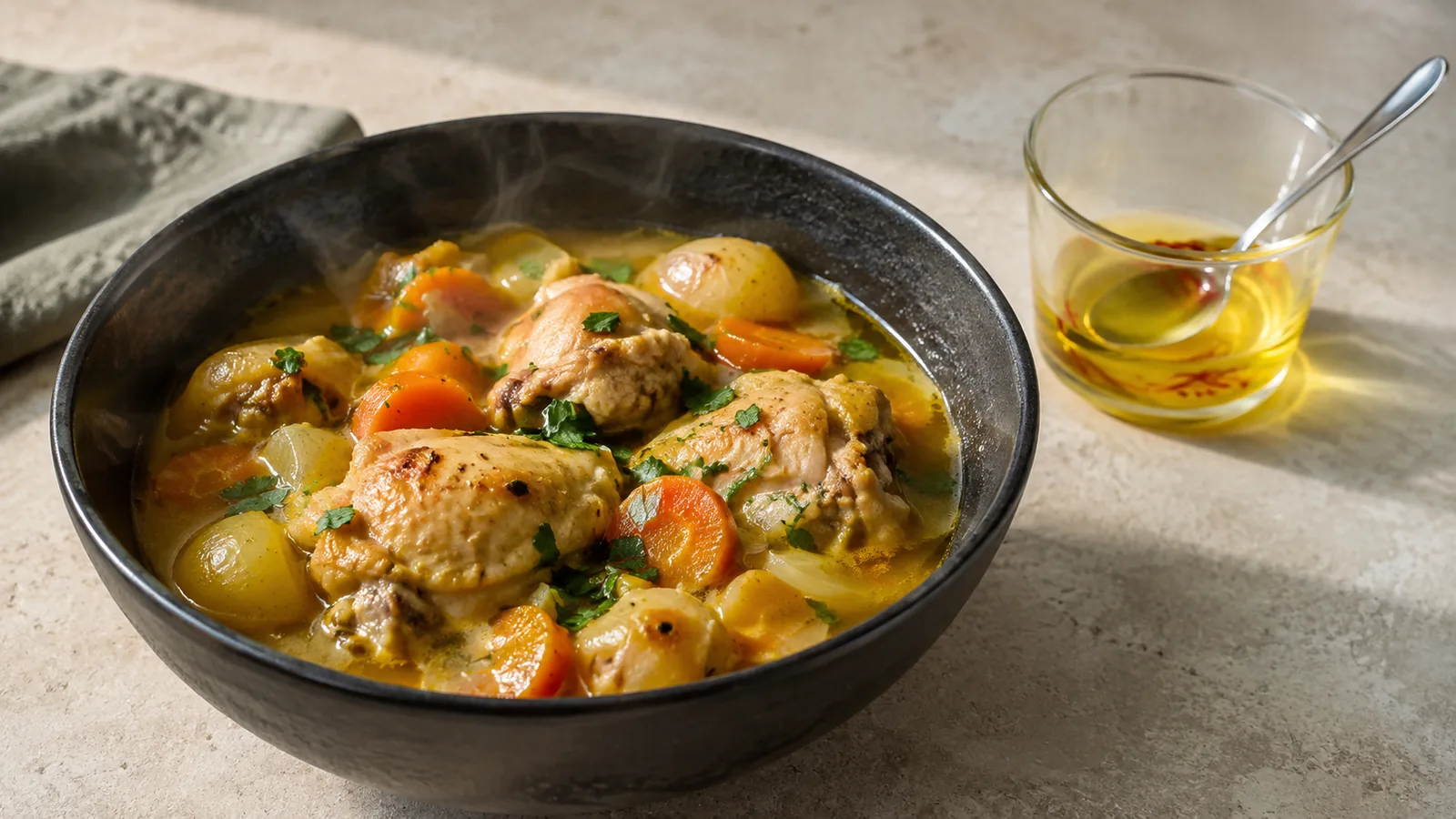
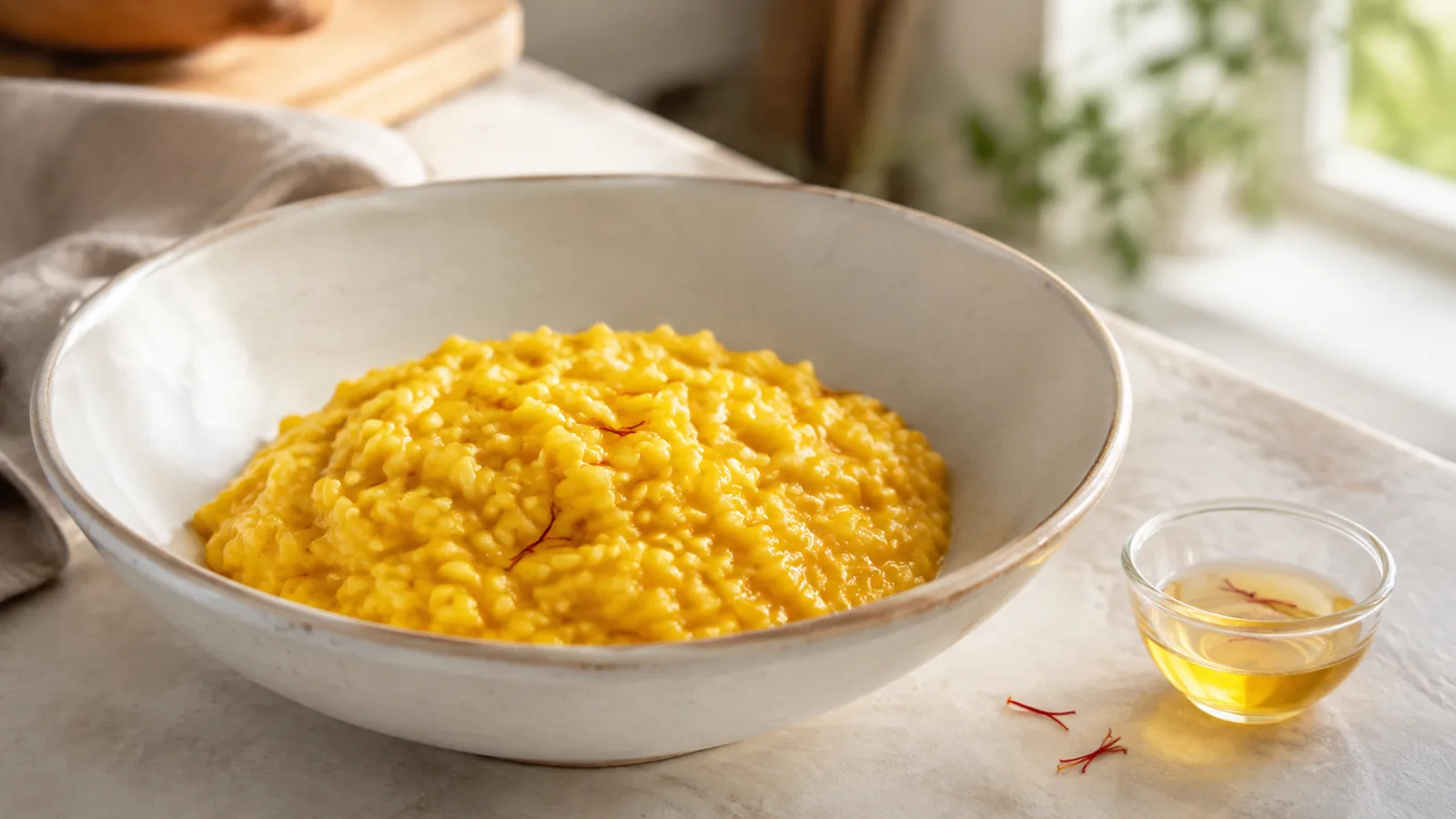
Saffron rice flour halva is a soft Persian sweet made by gently toasting rice flour, coating it with butter and oil, then stirring in a warm saffron-and-rosewater syrup. This version serves 6–8 and is designed to hold a smooth shape on a plate without becoming dry or greasy. Keep the heat low: rice flour can scorch before its colour changes enough to warn you.
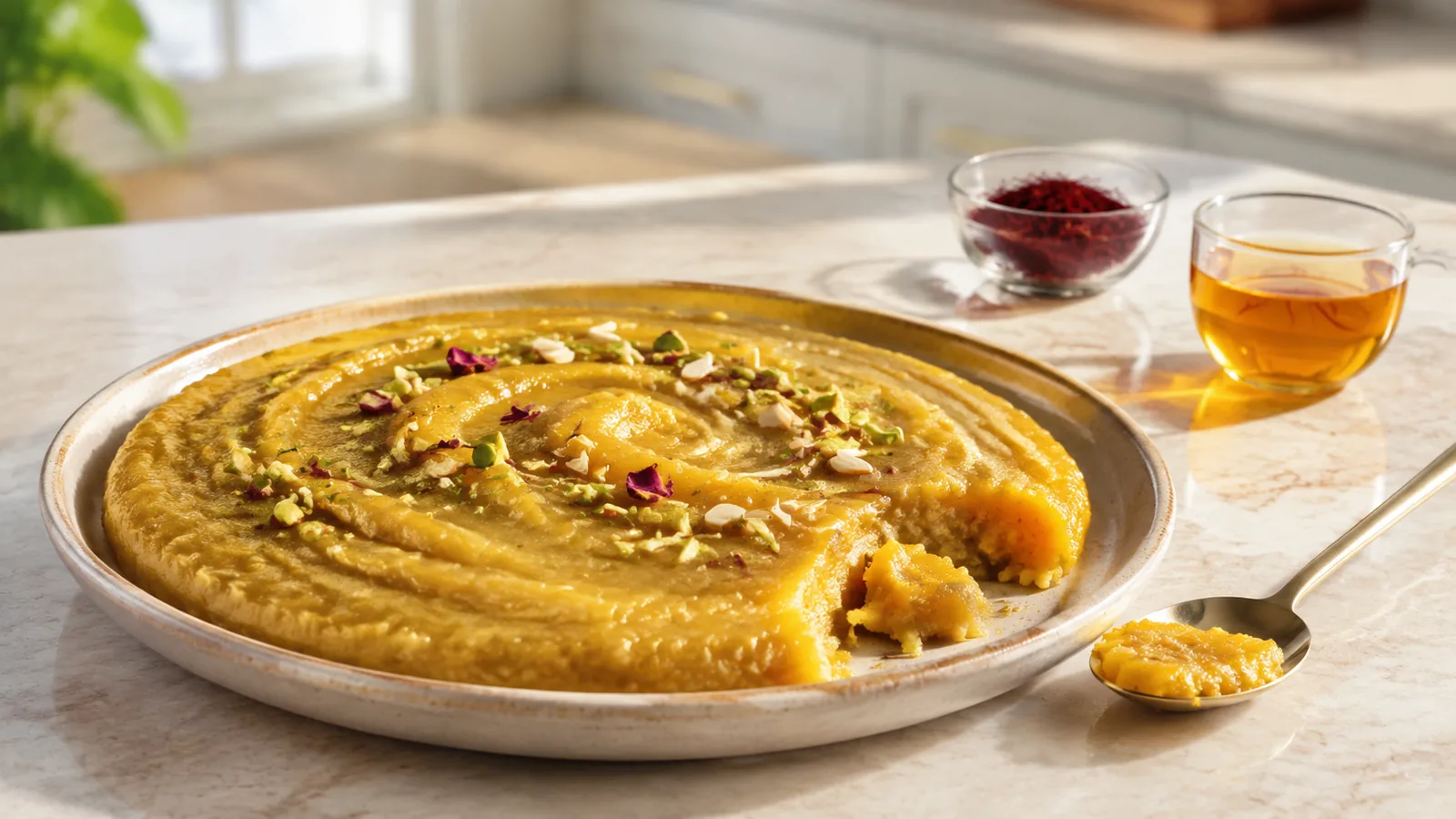
Ingredients for saffron rice flour halva
- 1 cup rice flour, about 120 g
- 3/4 cup granulated sugar, about 150 g
- 1 1/2 cups water, 360 ml
- 1/4 cup rosewater, 60 ml
- 1/4 teaspoon saffron threads
- 3 tablespoons hot water for a strong brewed saffron infusion
- 40 g unsalted butter
- 1/4 cup neutral vegetable oil, 60 ml
- 1/4 teaspoon ground cardamom, optional
- slivered pistachios, almonds, walnuts or dried rose petals for garnish, optional
Use finely milled plain rice flour, not glutinous rice flour or a prepared infant cereal. Rosewater strengths vary; if yours is very concentrated, begin with half and replace the remaining volume with water. The butter brings flavour, while the oil helps the halva stay supple as it cools.
Equipment
- a heavy, wide saucepan or frying pan;
- a separate small saucepan for the syrup;
- a fine sieve;
- a flexible heatproof spatula or wooden spoon;
- a shallow serving plate or individual dishes.
A pale-coloured pan makes it easier to see whether the flour is browning evenly. A wide base also lets moisture leave steadily once the syrup is added.
Brew the saffron first
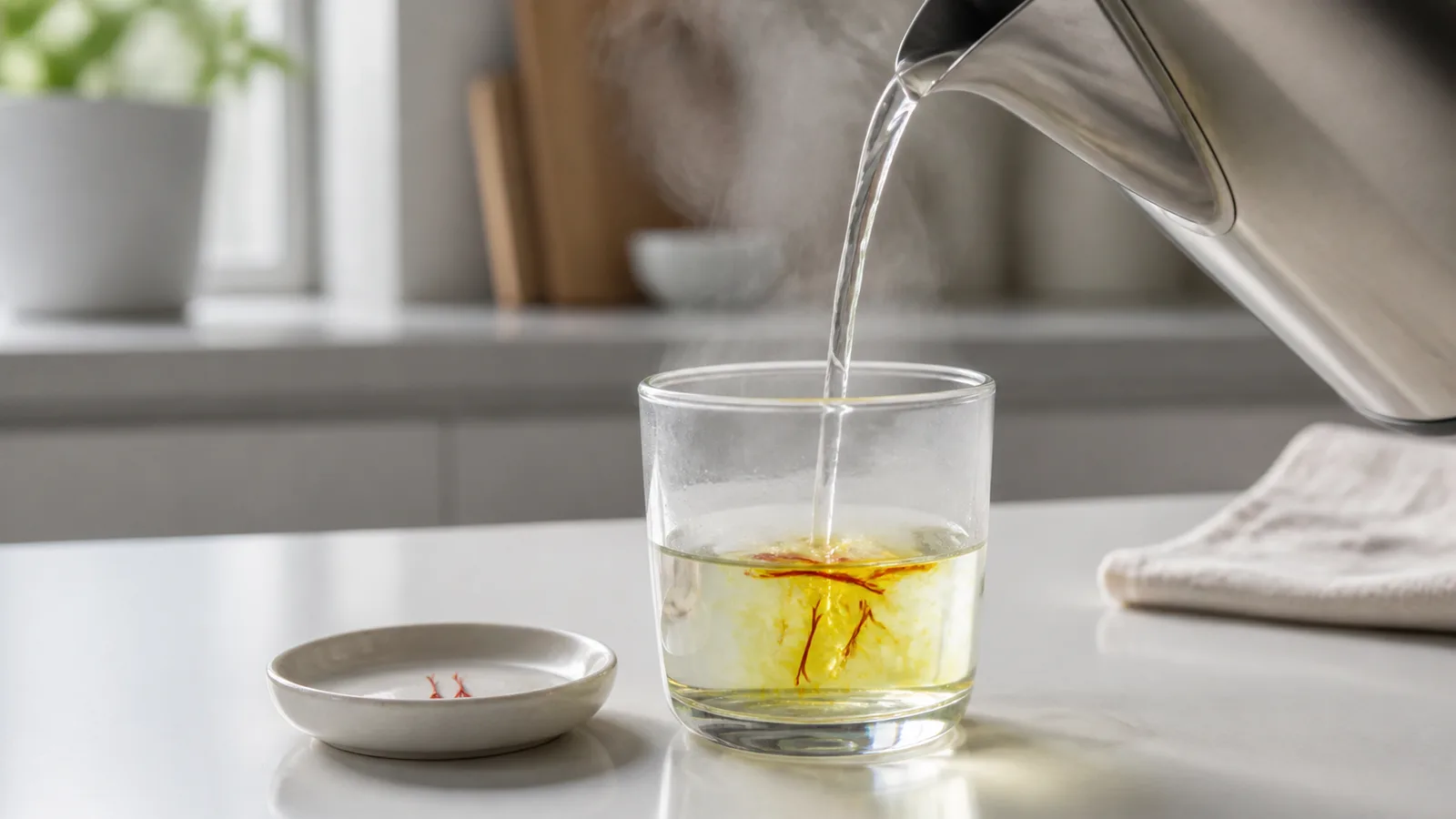
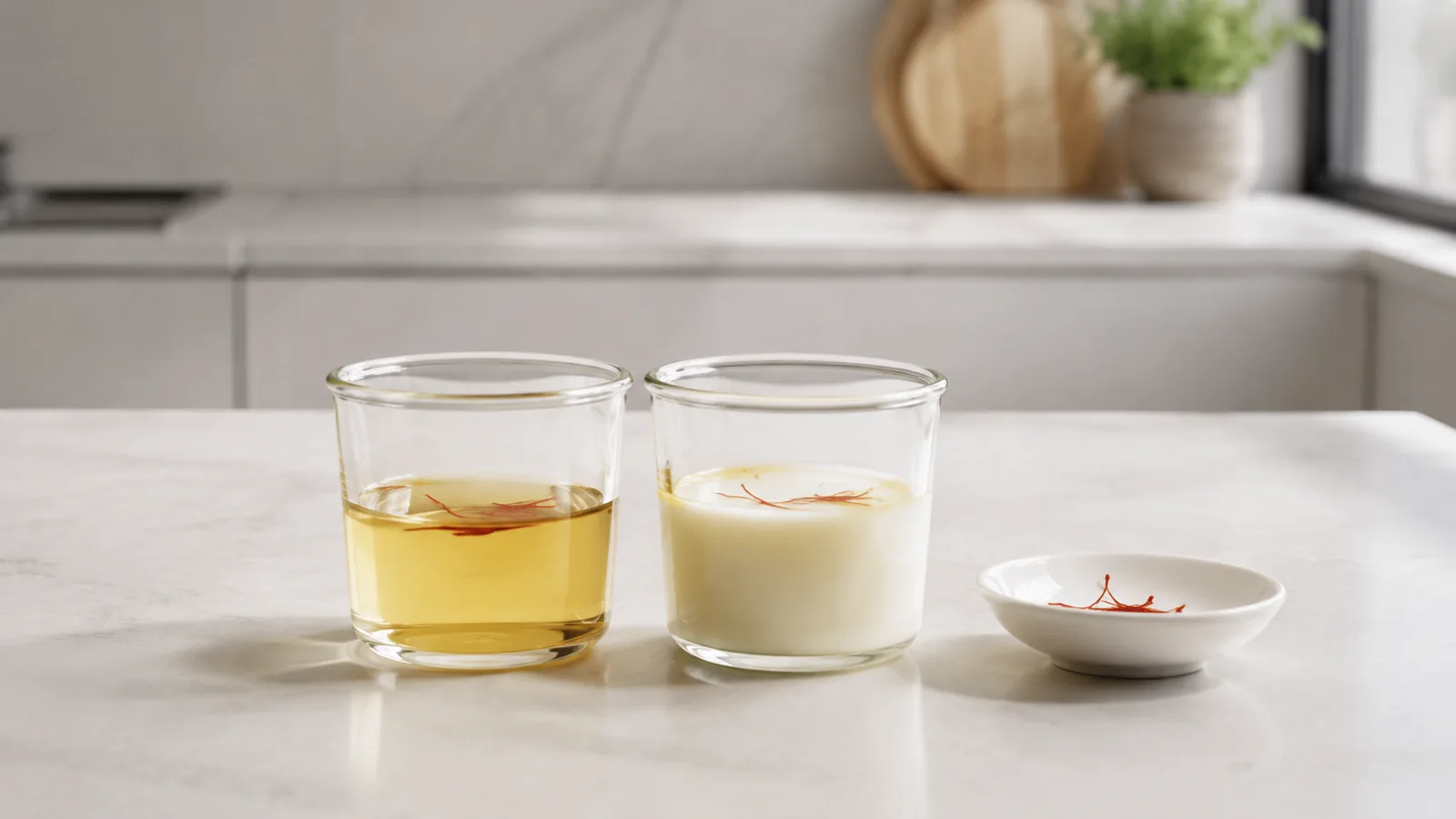
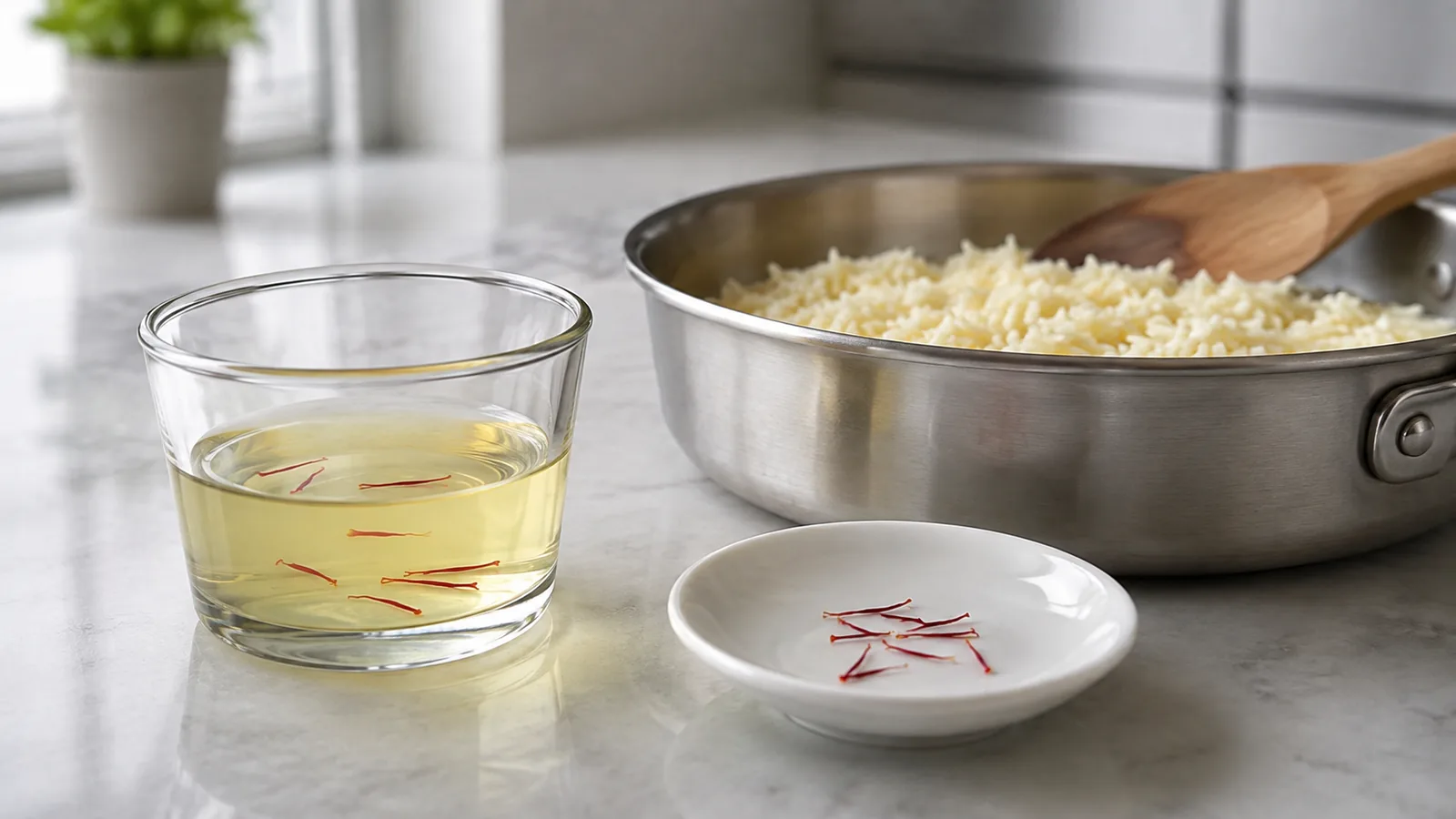
Grind the saffron lightly, pour over three tablespoons of hot water, cover and leave for 10–15 minutes. It should become a deep golden liquid. Do not add the dry threads straight to the flour; the infusion distributes their colour and aroma much more evenly.
The site’s guide to brewing saffron for cooking explains how warm-water extraction works and how to store any separately prepared infusion.
Make the saffron and rosewater syrup
- Put the sugar and 1 1/2 cups of water in the small saucepan.
- Warm over medium-low heat, stirring only until the sugar has dissolved. The syrup does not need to boil or thicken.
- Remove it from the heat. Stir in the brewed saffron, rosewater and optional cardamom.
- Cover and keep the syrup warm while the rice flour toasts.
Boiling the syrup for several minutes concentrates it and can make the finished halva unexpectedly firm. The goal at this stage is simply a clear, warm, evenly flavoured liquid.
Toast the rice flour gently
- Sift the rice flour into the dry wide pan, breaking up every compacted piece.
- Set the pan over low heat and stir continuously for 12–18 minutes.
- Move the flour from the edges into the centre and scrape the base so no patch sits still.
- Stop when the flour smells lightly nutty and warm. It should remain cream-coloured or turn only a shade darker.
Rice flour does not need the deep brown colour used for some wheat-flour halvas. If it becomes brown quickly, the heat is too high and the final saffron colour will look muddy. Seven or eight minutes may be enough in a very wide hot pan, but aroma and evenness are better guides than the clock alone.
Add the butter and oil
Lower the heat as far as it will go. Add the butter and oil to the toasted flour and stir until every dry particle is coated. Continue for 3–5 minutes, smoothing out small lumps with the spatula.
The mixture should resemble a loose, even paste. If a pool of oil remains after several minutes, the flour may have been measured too lightly; do not add more fat. Keep stirring and let the flour absorb what is present.
Combine the flour and syrup safely
- Take the flour pan off the heat. Warm syrup can release a burst of steam when it meets hot fat, so stand back and keep your hands clear of the rim.
- Add one ladle of syrup and stir until it is absorbed.
- Repeat in several additions. The mixture may look lumpy at first; steady stirring brings it together.
- Return the pan to low heat after all the liquid is incorporated.
- Stir and fold for 8–12 minutes, until the halva thickens and pulls cleanly from much of the pan.
Adding seven cups of water to six tablespoons of flour, as the earlier version suggested, would produce a thin porridge rather than mouldable halva. The measured syrup here keeps the ratio workable while still leaving a tender finish.
How to know the halva is ready
Drag the spatula across the base. The path should stay visible briefly before the mixture settles. When the pan is tilted gently from side to side, the halva should move together as one soft mass rather than run like custard or break into dry crumbs.
Do not wait for oil to separate around the edges. That usually means the mixture has cooked too far or contains more fat than the flour can hold. Remember that rice flour halva firms as it cools.
Shape and garnish while warm
Spoon the halva onto a shallow plate as soon as it leaves the heat. Smooth it with the back of a lightly oiled spoon, or press it into small silicone moulds and turn them out after they have cooled enough to hold.
Make shallow lines with a spoon rather than cutting deeply through the soft mixture. Add pistachios, almonds, walnuts or a few food-grade dried rose petals. Garnish should complement the saffron rice flour halva, not hide its golden surface.
What does this Persian halva taste like?
The texture is soft and close-grained, with less of the toasted wheat flavour found in many darker halvas. Saffron gives colour and a gentle bitterness, rosewater adds a floral note, and butter rounds the finish. Cardamom is optional; using saffron, rosewater and cardamom heavily at the same time can make the aroma crowded.
This is a recipe for Persian halva made specifically with rice flour. “Irani halva” is a broad English label rather than one fixed formula: families and regions use different flours, fats, sweetness levels, shapes and occasions.
Common problems and how to fix them
The halva is lumpy
Sift the flour before toasting and add warm syrup gradually off the heat. Press small lumps against the side of the pan. If they remain, work the hot mixture carefully with a sturdy whisk before it becomes thick, then return to the spatula.
The halva is too loose
Continue stirring over low heat for a few minutes. Do not add a handful of raw rice flour; it will taste uncooked and form pale lumps. If the original measurements were correct, time and gentle evaporation usually solve the problem.
The halva is too firm or dry
Take the pan from the heat and work in warm water one tablespoon at a time. Stop as soon as it becomes flexible. Next time, remove it sooner or avoid boiling the syrup.
The flavour tastes raw
The flour needed longer over low heat before the fat was added. Once syrup is in the pan, extra cooking removes water but cannot recreate the same dry-toasted aroma. Keep a written time for your pan and burner.
The colour is dull
Darkly toasted or scorched rice flour can cover the saffron’s gold. Old saffron, an uncovered infusion or too much cardamom can also weaken the impression. Use fresh threads, brew them covered and keep the flour pale.
Can powdered sugar or rock candy replace sugar?
Granulated sugar is easiest to measure and dissolves cleanly in the water. Powdered sugar may contain starch, which can alter the texture, so it is not a direct cup-for-cup substitute. Rock candy can work by weight if it is plain sugar and dissolves fully, but it does not create a special texture or nutritional advantage.
If you prefer a less sweet dessert, reduce the sugar modestly to 2/3 cup on the first attempt. A large reduction changes both flavour and the way the halva sets.
Butter, oil and dairy-free options
For a dairy-free rice flour halva, replace the butter with another 3 tablespoons of neutral oil. The aroma will be lighter and the finished sweet may remain softer. Coconut oil gives a clear coconut flavour and is not neutral.
“Local oil” is too vague for a repeatable recipe. Use an oil that is fresh, mild and suitable for cooking. Strong extra-virgin olive oil can dominate saffron and rosewater, while an old oil makes the whole dessert taste stale.
Serving and storage
Serve the halva warm, at room temperature or lightly chilled. Small portions suit tea because the dessert is rich. Depending on the household and occasion, it may appear as a snack, a breakfast sweet or a dessert; no single serving time defines it.
Let leftovers cool, cover them and refrigerate within two hours. Use within three to four days. Bring a portion toward room temperature before serving, or warm it gently with a teaspoon of water if it has become firm. Discard it if it develops an unusual smell, visible mould or signs of contamination.
Other styles of saffron halva
Rice flour produces a paler, softer result than many wheat-flour recipes. Egg halva is another distinct preparation rather than an ingredient swap; use a complete saffron egg halva recipe if that is the style you want.
For this version, the reliable sequence is simple: brew the saffron, dissolve the syrup, toast the rice flour gently, coat it in fat, then add the warm liquid in stages. Stop while the mixture is still supple. That gives saffron rice flour halva a smooth texture, clean golden colour and enough structure to serve neatly.