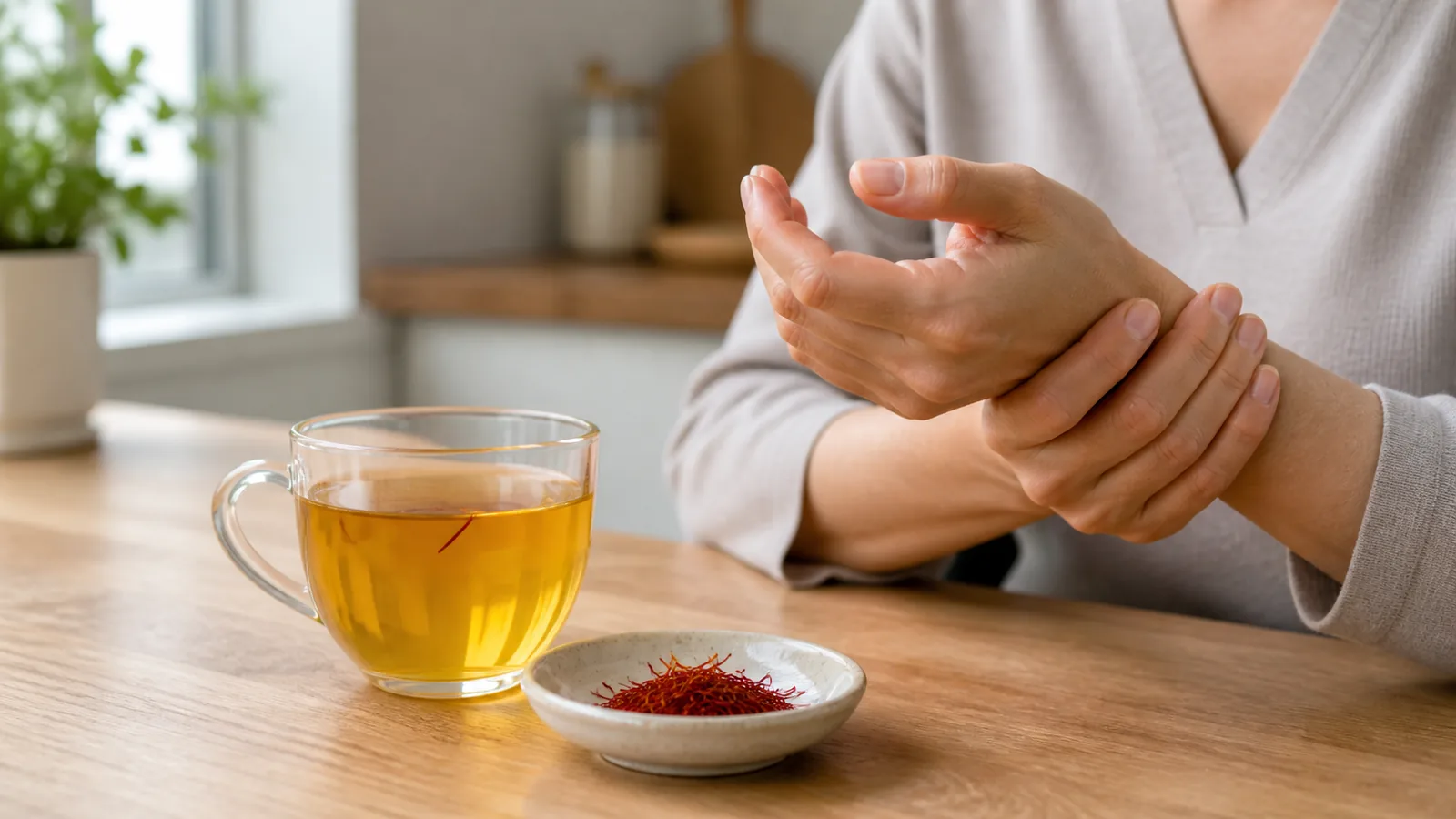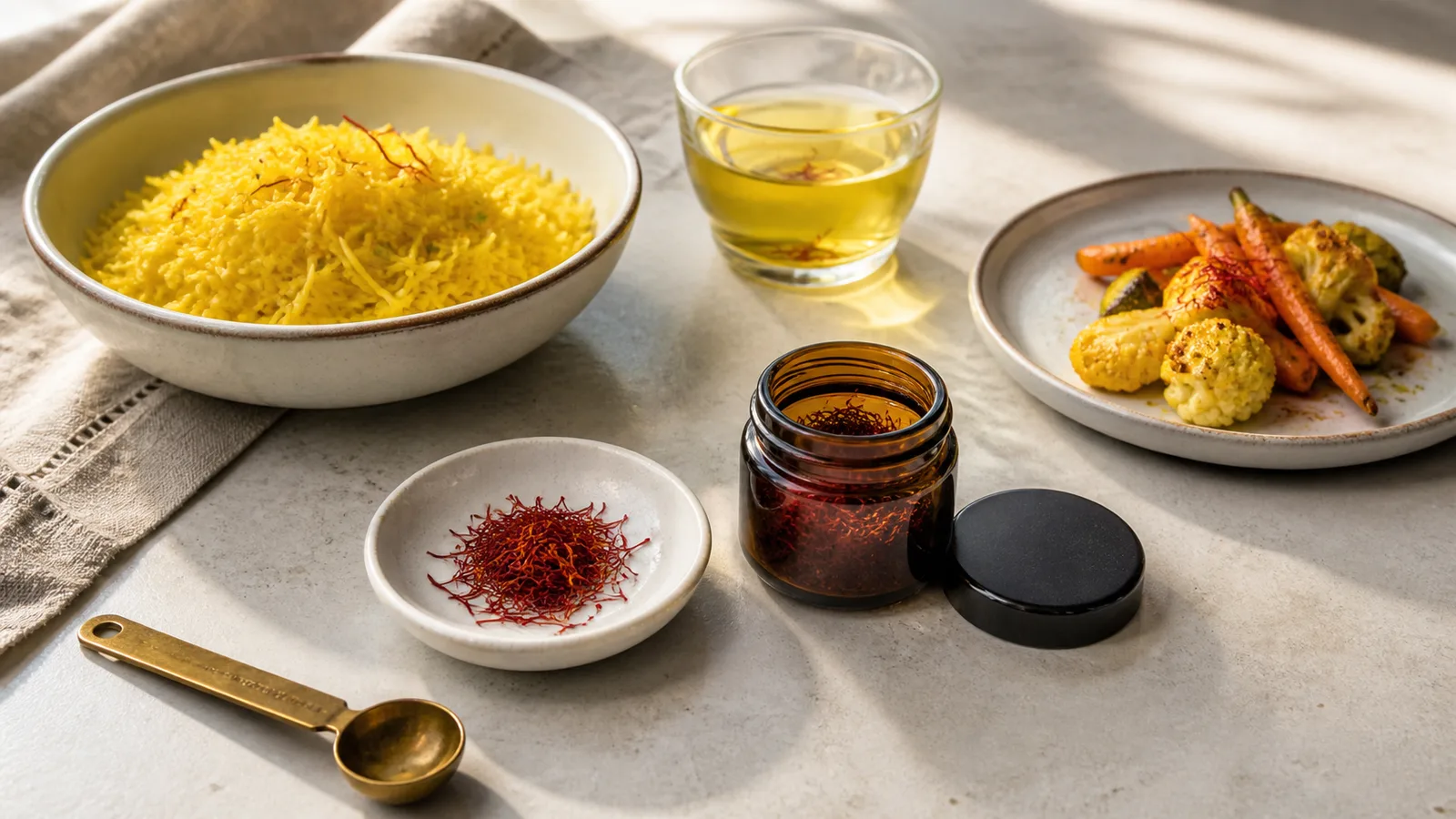
Saffron’s clearest benefits are culinary: a small amount brings colour, aroma and a distinctive bitter-floral flavour to food. Human studies also suggest that standardized saffron extracts may help with some mood and sleep outcomes, but the evidence varies by condition and product. It does not support treating saffron as a cure, a guaranteed weight loss aid or a substitute for medical care.
That is what matters when weighing saffron health benefits. The spice in a pot of rice, a capsule used in a trial and an unverified supplement sold online are not interchangeable. The safest advice begins with what you are using, why you are using it and whether you take medicines or have a health condition.
What pure saffron contributes
Saffron is made from the dried stigmas of Crocus sativus. Crocins contribute its colour, picrocrocin its characteristic bitter taste, and safranal much of the aroma associated with properly dried threads. These compounds are scientifically interesting, but finding antioxidant activity in a laboratory is not the same as proving prevention or treatment of disease in people.
Clinical research is most developed around depressive symptoms, sleep and a few cognitive or cardiometabolic outcomes. Reviews of controlled depression trials and sleep studies describe promising results, often from small and relatively short trials using measured extracts. Product composition, dose and study population differ, so the result of one trial cannot be transferred automatically to every tea, dish or supplement.
Our detailed review of saffron health research by condition explains where evidence is encouraging and where popular claims are still unsupported.
How to use saffron for health benefits without overpromising
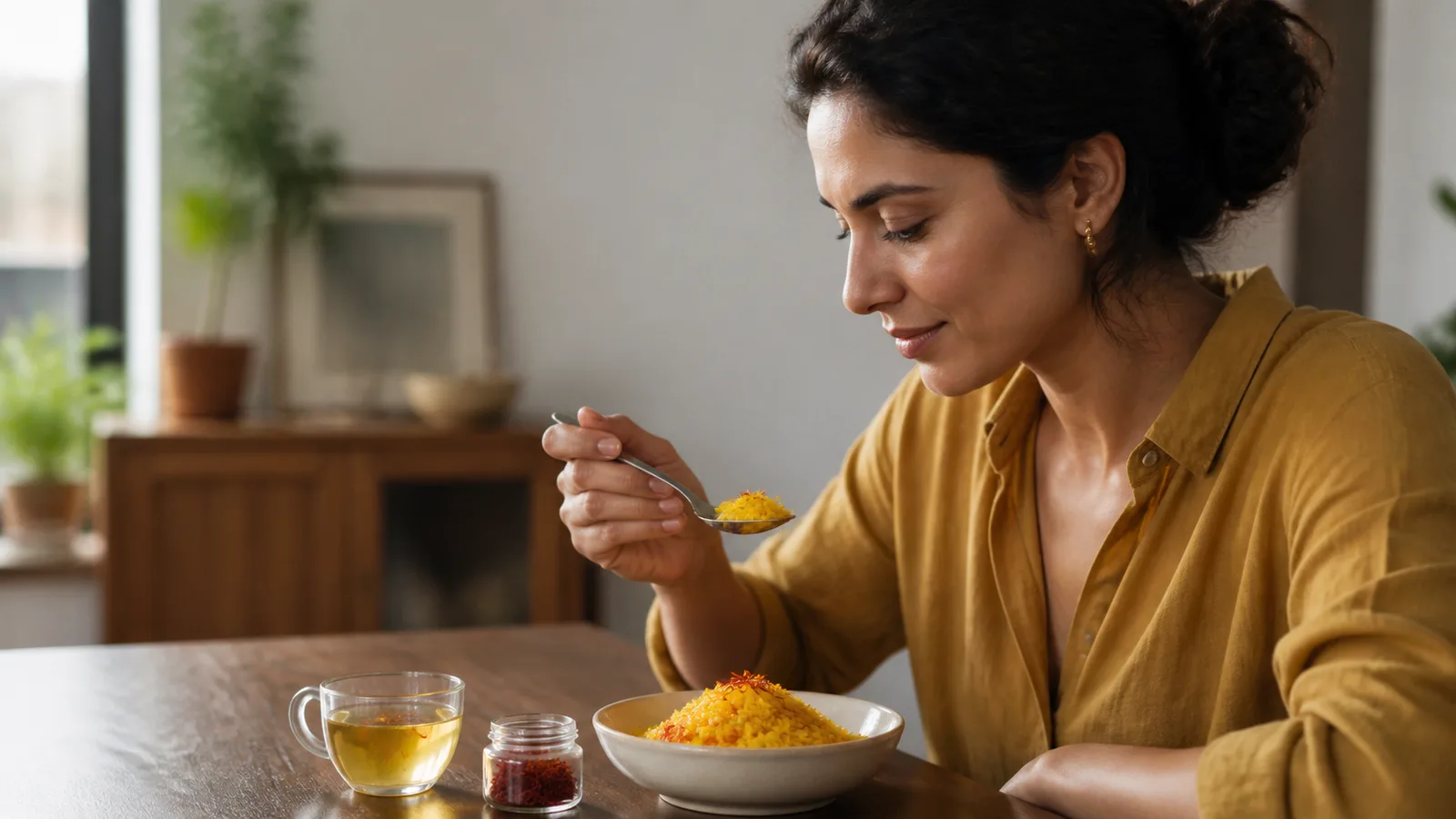
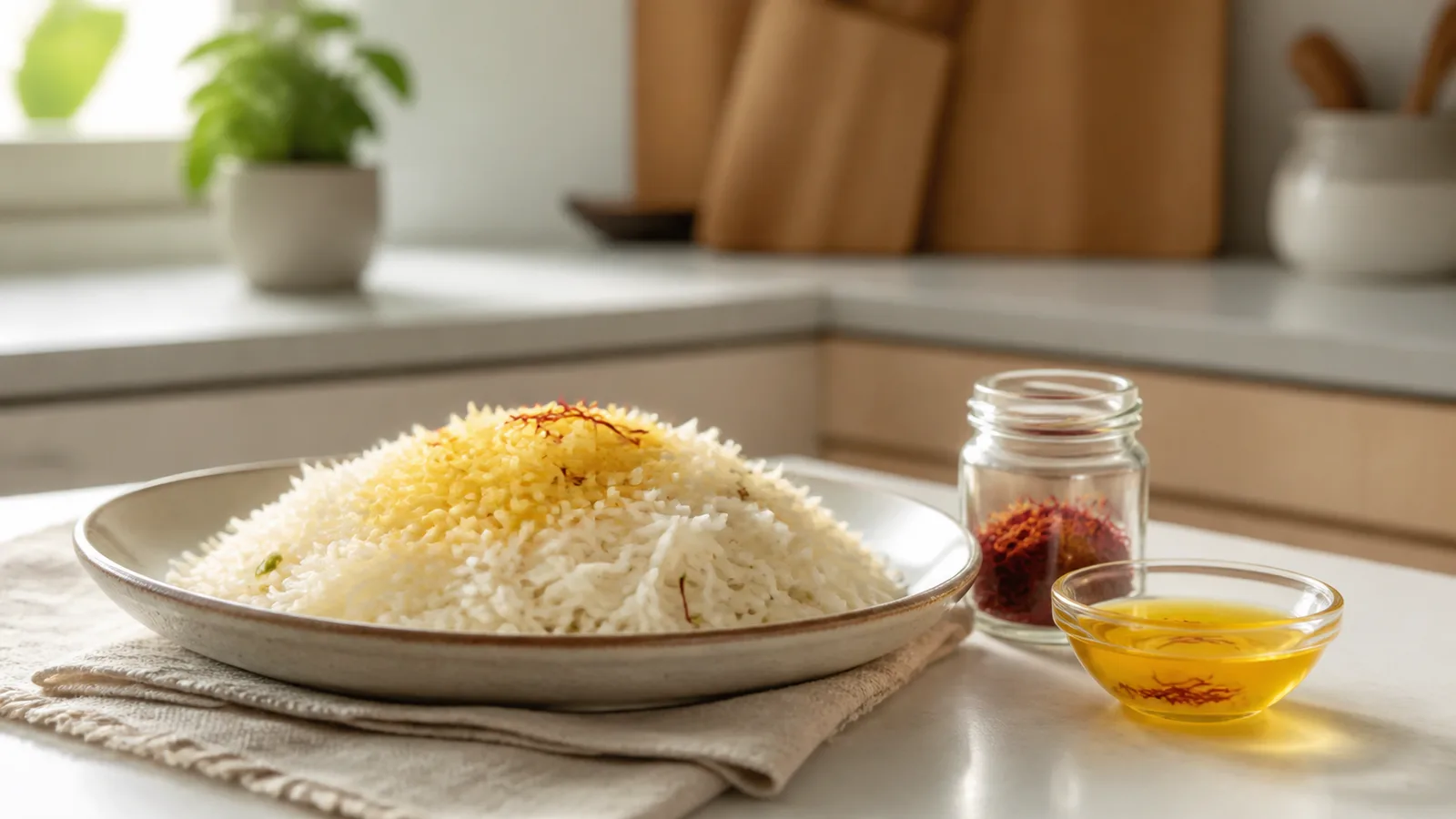
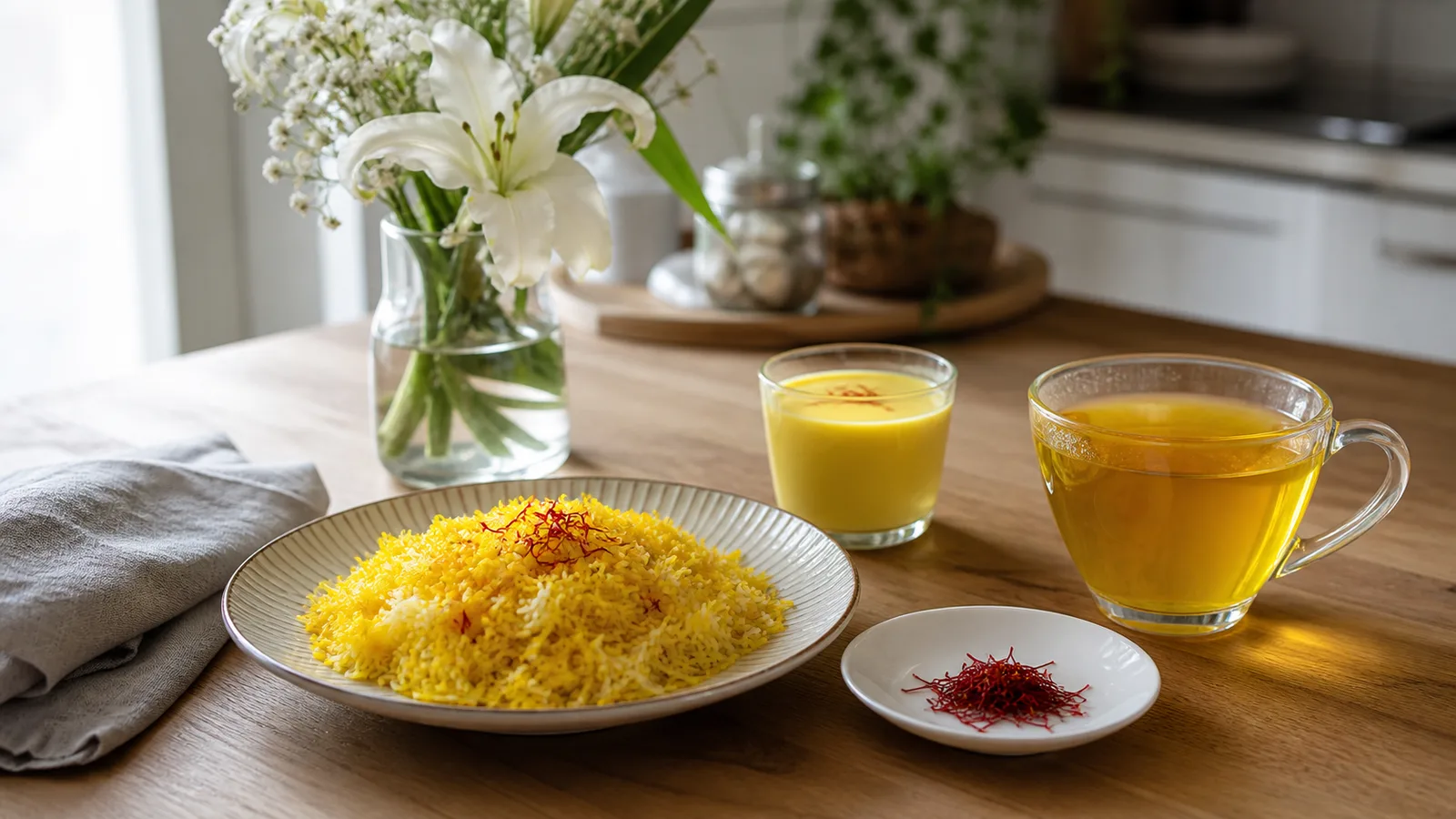
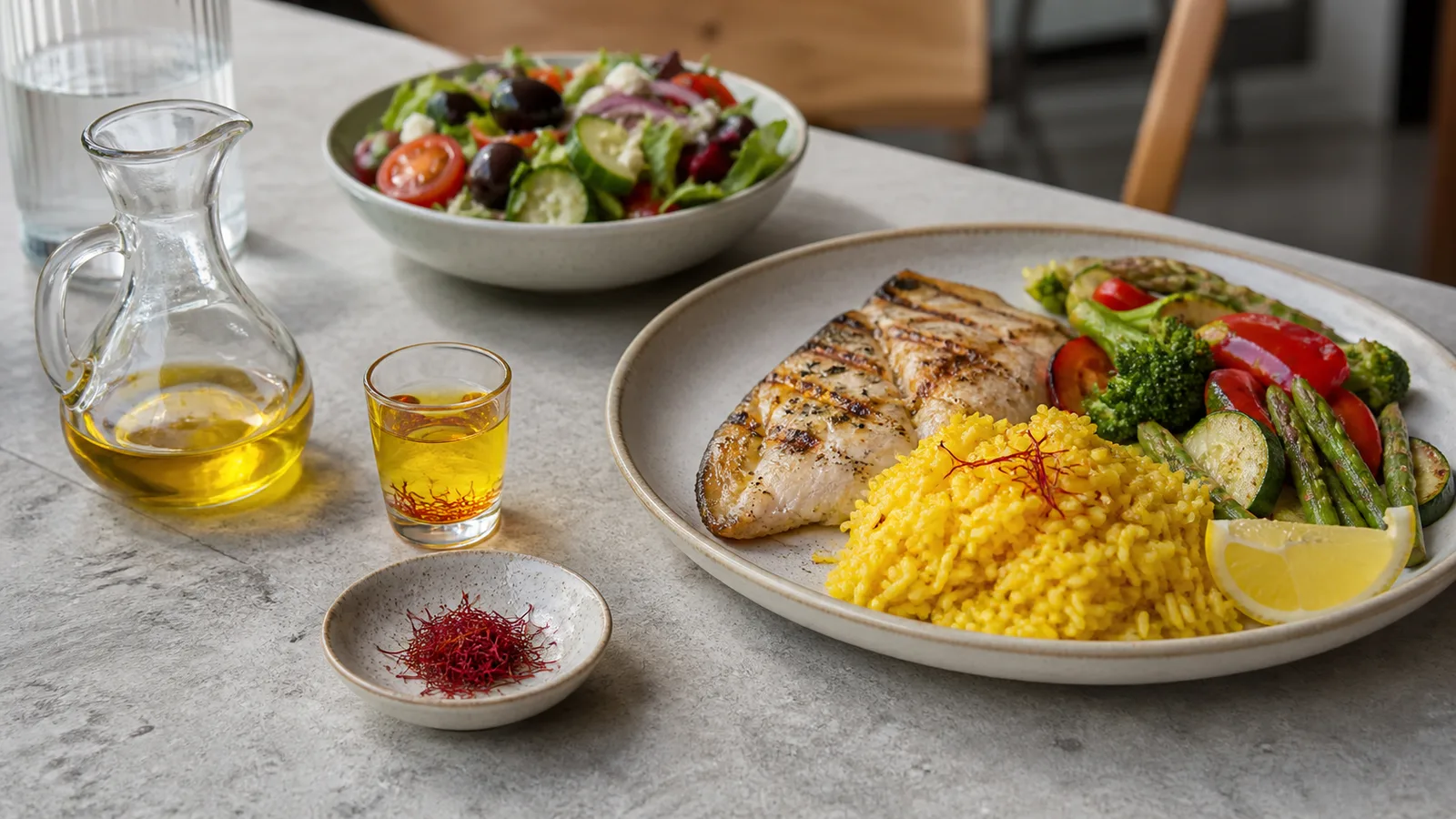
If the aim is a varied, enjoyable diet, use saffron as a spice. Gently crush a small pinch of genuine threads, steep them in warm water or milk, and add the infusion to rice, soup, bread, dessert or a drink. This spreads the colour and aroma more evenly than scattering dry threads at the end.
There is no evidence-based culinary “health dose” that guarantees a clinical benefit. Adding more does not turn food into medicine. Saffron tea can be a pleasant unsweetened drink, but it has not been shown to break down body fat. Trials that report changes in appetite or body measurements do not justify selling an ordinary cup as a weight loss treatment.
Anyone considering a concentrated extract for mood, sleep, weight or another health purpose should discuss the exact product with a doctor or pharmacist. This is especially important when other medicines are involved. A label that says natural, premium or pure does not answer questions about dose, interactions or manufacturing quality.
Do Iranian saffron benefits differ from other saffron?
Iran is a major saffron-growing country with a long cultivation tradition, and high-quality Iranian saffron can have excellent colour, aroma and thread presentation. The phrase “Iran saffron benefits” often reflects a question about origin, not a different medicinal plant. Iranian, Kashmiri, Greek and Spanish culinary saffron are all derived from Crocus sativus.
Origin can affect growing practices, grading language, traceability and price. It does not prove that every pack from one country delivers a unique health effect. When comparing Iranian saffron benefits with claims made for other origins, look first at batch quality, authenticity, freshness and the actual preparation studied.
Saffron health risks: food is not the same as a supplement
Normal culinary use and repeated concentrated use create different exposure. Excessive saffron consumption is not made safe by the product being natural. Most people tolerate saffron in food, but supplements can cause adverse effects. A systematic review of reported adverse events describes symptoms such as nausea, digestive discomfort, headache, dizziness, dry mouth and allergic reactions. The details vary across products and trials.
The old claim that more than 5 milligrams in a dose causes poisoning is wrong; five milligrams is a very small quantity. At the other extreme, publishing a supposed universal “fatal dose” would also be misleading. Toxicity depends on the preparation, amount, person and circumstances, and online thresholds are often copied without dependable clinical context.
If someone develops repeated vomiting, fainting, breathing difficulty, facial or throat swelling, unusual bleeding, severe confusion or another alarming symptom after a saffron product, stop using it and seek urgent medical or poison-control advice. Do not wait for a web article to identify a precise dose.
Long-term use of saffron
A spice used occasionally in food is not the same as a capsule taken every day for months. Long-term supplement evidence is much thinner than short trial evidence, and products may not match those used in research. Regular concentrated use deserves a periodic review of side effects, medicines and whether the product is helping the reason it was started.
Saffron sensitivity and allergy
A headache, anxiety or dry mouth after use is not automatically an allergy. True allergy is more likely to involve hives, swelling, wheezing or breathing difficulty, although any concerning reaction deserves advice. People with known sensitivity to saffron or related plants should avoid experimenting with concentrated products.
Combining saffron with other spices
Using saffron with cinnamon, honey, cardamom, fruit or berries in ordinary recipes is not inherently dangerous for most people. The relevant issue is each ingredient and the person eating it. Honey still adds sugar; cinnamon supplements are not the same as a pinch in food; berries and spices can cause individual allergies. A familiar kitchen combination does not need a medical claim attached to it.
Saffron for heart patients
Some trials have measured blood pressure, blood sugar, lipids and inflammatory markers after saffron supplementation. A cardiometabolic meta-analysis helps quantify those outcomes, but a change in a biomarker does not prove that saffron prevents heart attack or stroke, and results are not consistent enough to replace established treatment.
People with cardiovascular disease should not stop medication or add a concentrated extract on the strength of a general heart-health claim. Saffron products may be relevant to blood pressure, blood sugar or bleeding risk, depending on the product and the person’s medicines. A clinician or pharmacist can assess that combination properly.
Saffron for pregnant women: pregnancy and miscarriage concerns
Pregnancy advice needs more care than the simple claim that saffron either causes miscarriage or is completely safe. A review of the pregnancy evidence found limited and heterogeneous research, and culinary exposure cannot be assumed to have the same risk as a concentrated supplement or a deliberately large amount.
Pregnant people should avoid using saffron medicinally without advice from their obstetric clinician and should not take it to start labour, treat symptoms or alter the pregnancy. A normal ingredient amount in a familiar dish is a different question, but personal circumstances still matter. Bleeding, severe pain, fainting or concern about miscarriage needs urgent medical care, not a home remedy.
For a fuller practical safety review, see our guide to the health risks of saffron consumption.
Buying saffron online and avoiding fake saffron
Choose whole threads when possible because they are easier to inspect than powder. Look for a clear net weight, country of origin, lot or batch identifier, packer details and sensible storage guidance. A test certificate is useful only when it can be connected to the batch being sold.
Fake saffron can include unrelated fibres, coloured style material or undeclared dyes. A single home test cannot prove purity, and “reputable seller” should mean more than an attractive website. Traceable sourcing, realistic pricing, intact packaging and credible analysis work together. If a product has an intense artificial colour, unexplained ingredients or no accountable supplier, do not consume it.
How to store saffron
Keep saffron airtight, dry, cool and away from light. Heat, moisture, oxygen and direct sunlight can weaken aroma and colour over time. A small opaque container in a stable cupboard is usually better than a clear display jar beside a cooker. Use a clean, dry spoon or fingers so moisture does not enter the pack.
Proper storage protects quality; it does not preserve medicinal effects indefinitely or make an adulterated product safe. Discard saffron that is visibly damp, mouldy, contaminated or has developed an abnormal odour.
What you should know before using saffron for health
Saffron can make wholesome food more enjoyable, and several areas of human research deserve continued attention. The honest position is neither “magic spice” nor “dangerous at any amount.” Culinary use is generally a food decision; concentrated, repeated use is a supplement decision with different uncertainties.
Use whole, traceable saffron for flavour. Treat disease claims, rapid weight-loss promises and exact toxicity numbers with caution. If the goal is to manage a symptom or medical condition, make saffron part of a properly informed conversation rather than a replacement for one.