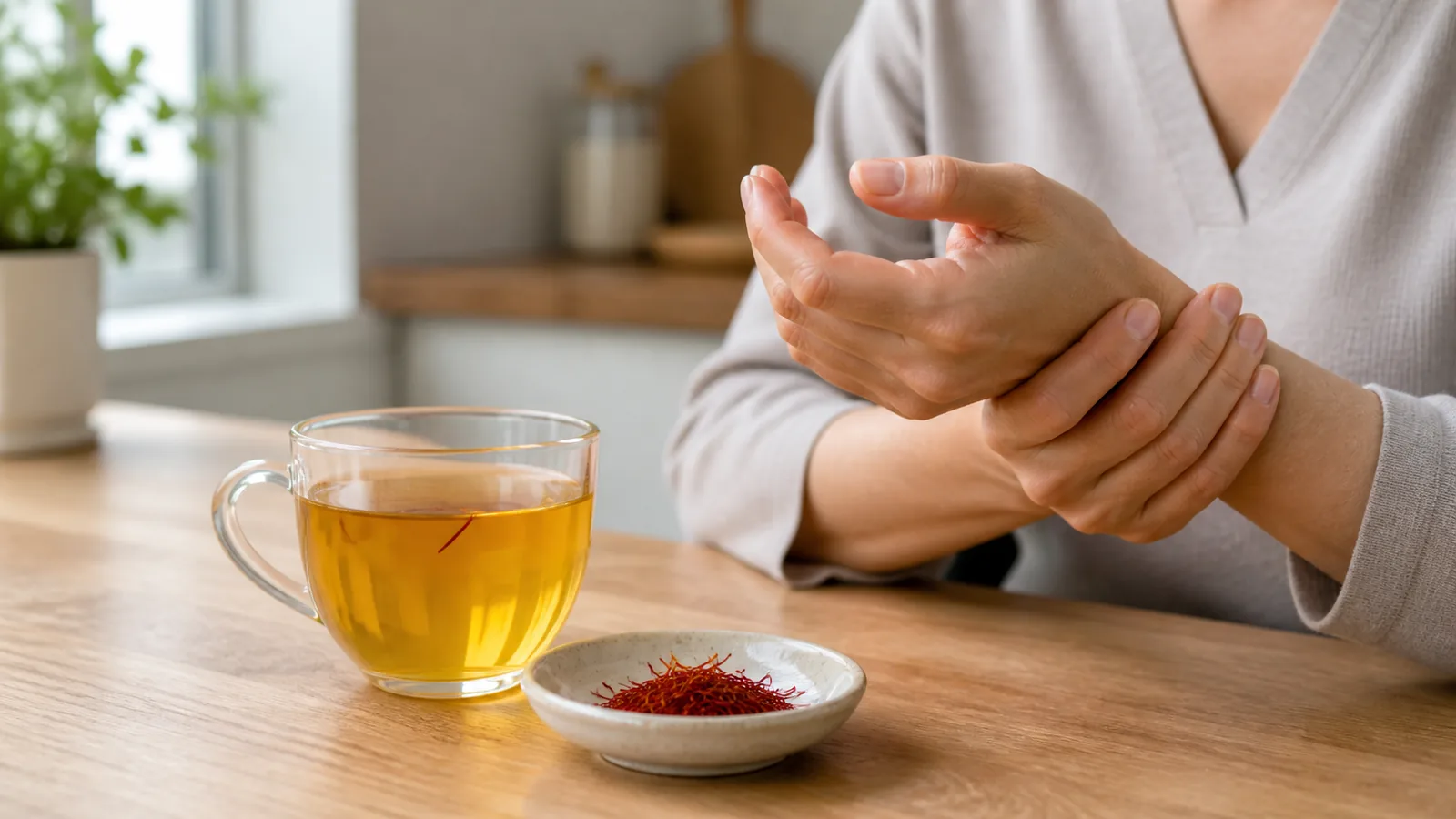
Most saffron benefits are not unique to women, but a small body of research has looked specifically at premenstrual symptoms, period pain and postpartum depression. Some results are encouraging. The studies are too limited to say that saffron regulates menstrual cycles, cures acne or works as a general women’s tonic.
That is the useful answer to “Is saffron good for women?” A pinch used in food is primarily a flavouring. A standardized extract tested in a clinical trial is a different product, and neither should replace assessment when pain, bleeding, a missed period or a change in mood needs care.
In ordinary cooking, saffron benefits women and men in the same straightforward way: it adds colour, aroma and flavour that can make a meal more enjoyable. Women-specific claims need women-specific evidence.
What “saffron benefits for women” can reasonably mean
Saffron is the dried stigma of Crocus sativus. Its crocin-family compounds contribute colour, picrocrocin contributes bitterness, and safranal is central to its aroma. These compounds are studied in the laboratory and in human trials, but a biological mechanism does not prove that every claimed benefit occurs in daily life.
Women’s health also covers far more than periods and beauty. Age, pregnancy, menopause, medicines, nutrition, chronic conditions and mental health all change the relevant questions. Good guidance should identify the group that was actually studied rather than attach “for women” to a general saffron claim.
Does saffron help with periods?
There is preliminary evidence for symptoms around menstruation. A small double-blind placebo-controlled trial tested saffron for premenstrual syndrome, and a 2026 systematic review of saffron for PMS and dysmenorrhea pooled the limited available research. The findings support further study; they do not establish a universal remedy.
One frequently cited period-pain trial tested a combined Iranian herbal product containing saffron, celery seed and anise. Because several ingredients were given together, its result cannot show what saffron alone did. It also does not prove that daily saffron tea will relieve every person’s cramps.
Mild menstrual cramps can often be managed with ordinary comfort measures and advice from a pharmacist or clinician. Severe pain, fainting, fever, pain between periods, very heavy bleeding or symptoms that repeatedly disrupt life deserve proper assessment. Conditions such as endometriosis, fibroids, infection and anaemia should not be hidden beneath a “natural remedy” label.
Saffron benefits for periods versus a treatment claim
The phrase saffron benefits for periods is best understood as a research question, not a guarantee. Study extracts had defined amounts and schedules. A home infusion varies with thread quality, quantity and preparation. If someone chooses to drink saffron tea because they enjoy it, that is different from relying on it to control clinically significant pain.
Saffron for irregular periods: can it regulate a cycle?
There is not good evidence that saffron reliably makes irregular periods regular. Cycle changes can follow pregnancy, breastfeeding, perimenopause, stress, changes in body weight, polycystic ovary syndrome, thyroid disorders, intense exercise, medicines and other causes. The right response depends on the cause.
If a period is late and pregnancy is possible, take an appropriate test rather than using saffron to bring on bleeding. Persistent irregularity, bleeding after menopause, bleeding after sex or an abrupt change in a previously stable pattern should be discussed with a healthcare professional.
Mood, anxiety and postpartum depression
Saffron extracts have been studied for depressive symptoms in adults of different sexes. A few small trials also involved women with mild-to-moderate postpartum depression. Those trials reported symptom changes over short periods, including in a placebo-controlled postpartum study, but the evidence remains much smaller than the established care base.
Postpartum depression is not simply a low mood that should be handled with a spice. It can affect sleep, bonding, appetite, concentration and safety, and it deserves prompt professional support. Thoughts of self-harm, harming a baby, severe agitation, hallucinations or confusion require urgent help. No one should stop antidepressants or substitute saffron without the prescriber’s involvement.
For everyday stress, a warm drink and a quiet routine may feel comforting. That experience should not be described as proof that saffron balances hormones, raises happiness or treats anxiety in every woman.
Saffron tea benefits for female health
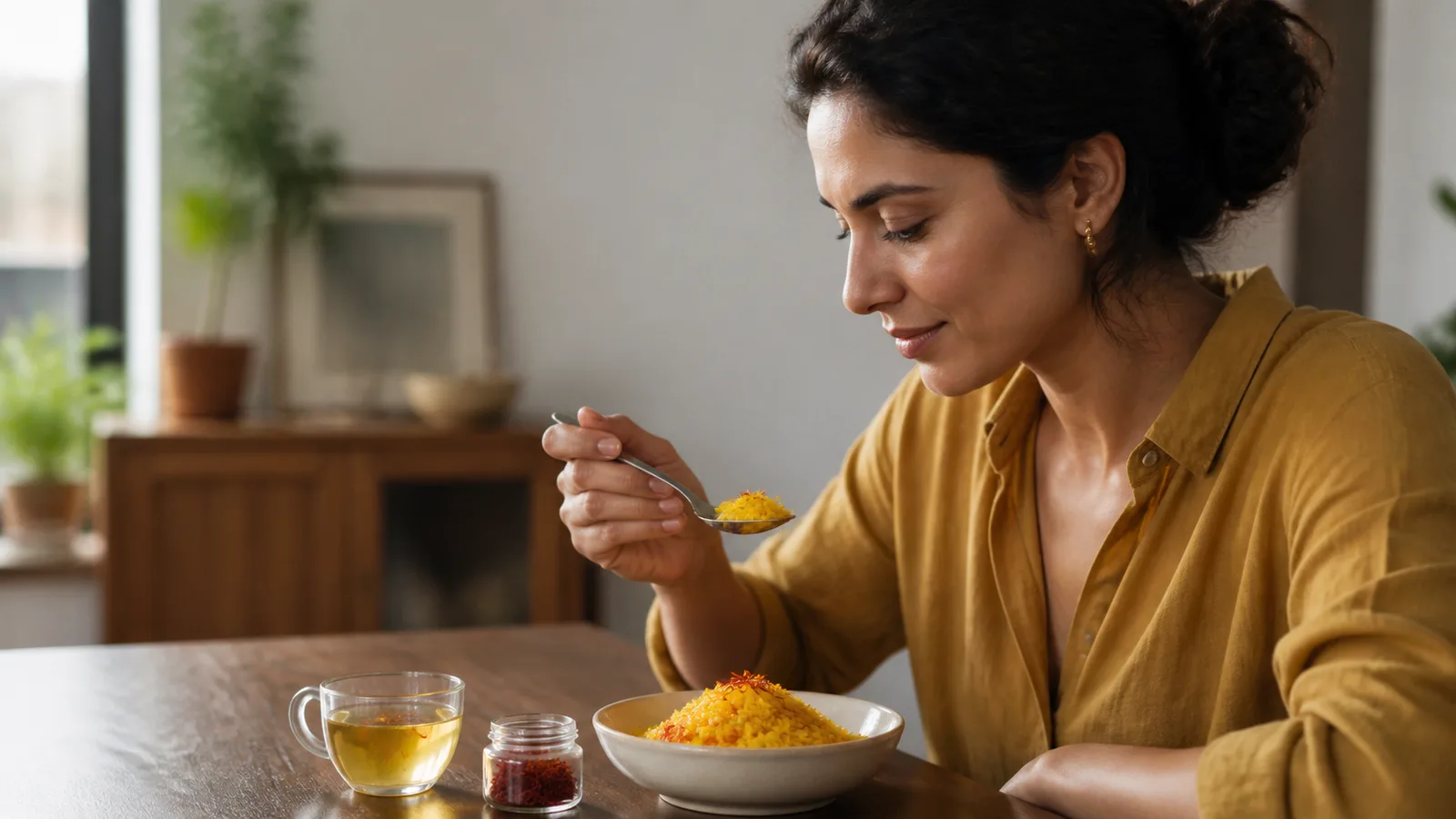
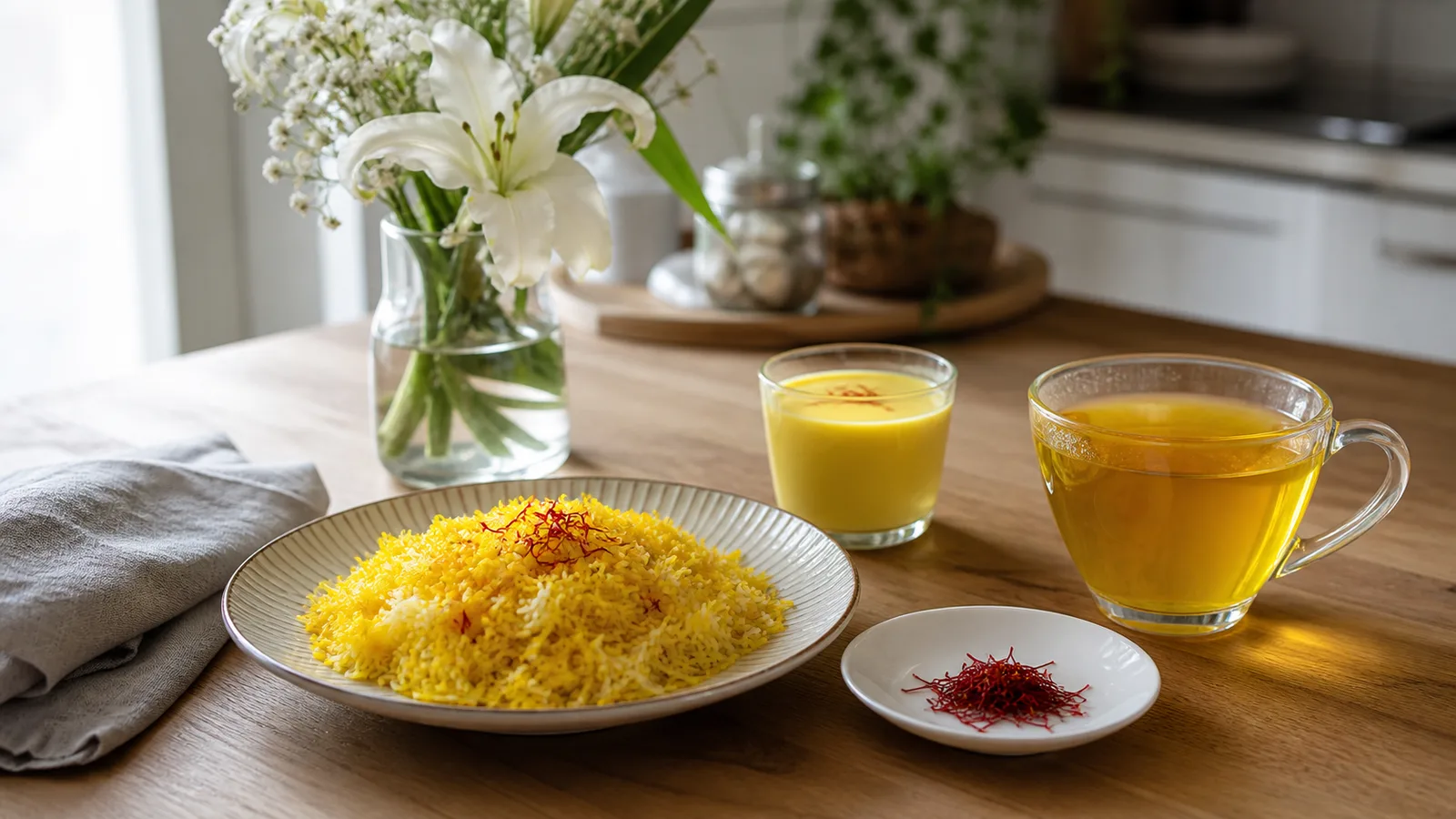
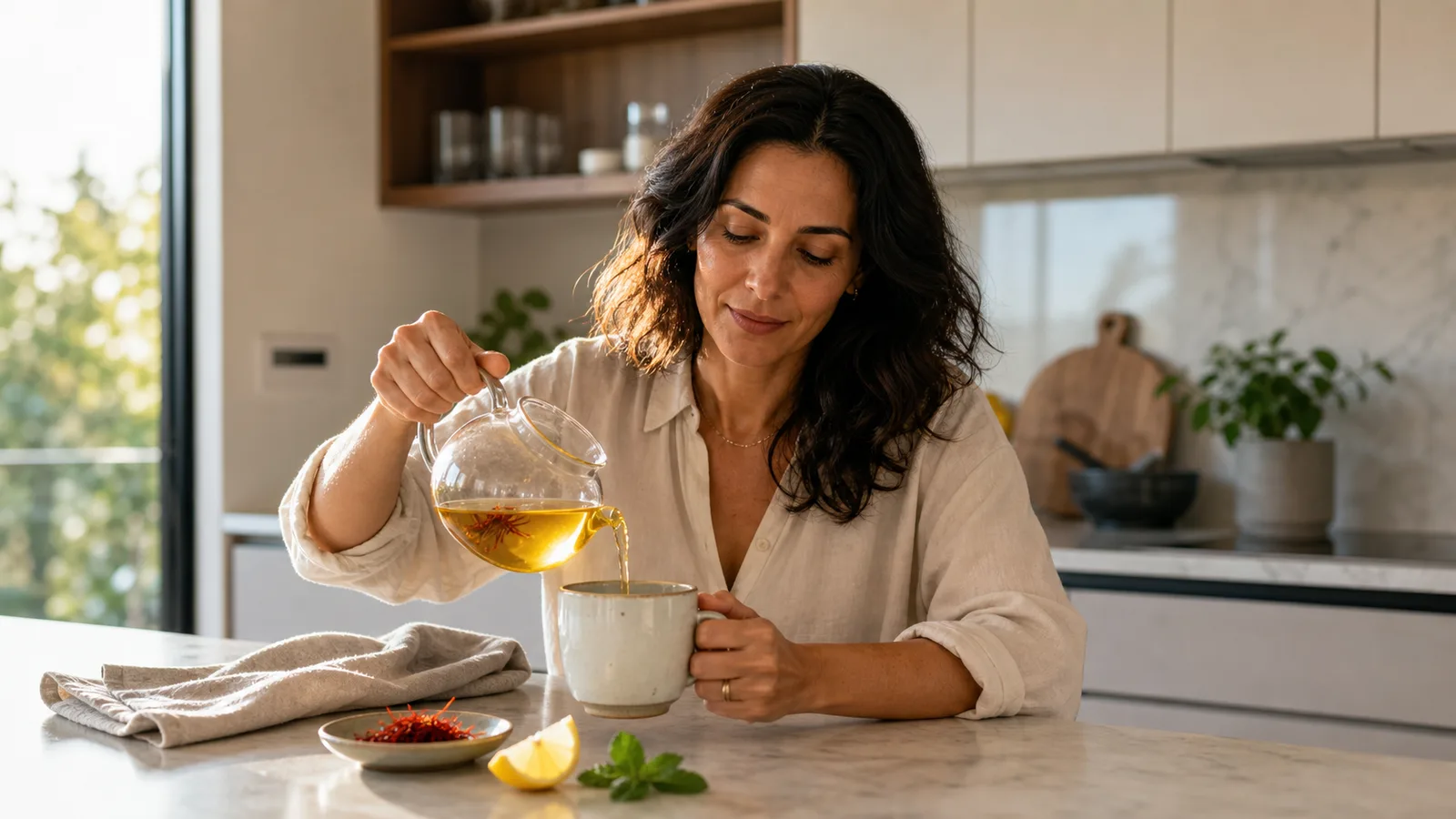
Saffron tea provides aroma, colour and a pleasant ritual. To make it, gently crush a small pinch of genuine threads, add warm—not aggressively boiling—water, and allow it to infuse. Lemon, mint or a little honey can be added for flavour. Honey still contributes sugar, and none of these additions creates a medical treatment.
Searches for “saffron tea benefits for female” often lead to lists that combine period, fertility, skin, weight and mood claims without distinguishing evidence. Tea is not standardized like a research extract. More threads do not make the drink proportionally healthier, and a culinary serving should not be converted into a supplement schedule.
Beauty benefits, acne and skin care
There is no strong clinical evidence that a homemade saffron mask clears acne, treats sunburn or produces a younger complexion. Antioxidant or antibacterial activity measured in a laboratory does not establish a safe, effective treatment on human skin.
The old basil-and-saffron paste recommendation has therefore not been kept as an instruction. Plant material, fragrance, lemon, spices and other kitchen ingredients can irritate skin or trigger allergy; a scrub or paste can also worsen an already damaged barrier. Persistent acne, painful lesions, scarring or a significant burn deserves evidence-based care.
If a cosmetic product contains saffron, follow its directions and patch-test it as advised. Stop if burning, swelling, hives or a spreading rash develops. “Natural” is not the same as non-irritating.
Asthma, heartburn, sleep and general wellbeing
Claims that saffron relieves asthma or heartburn are not supported well enough to recommend it as treatment. Breathing difficulty needs appropriate assessment, and saffron cannot replace a prescribed inhaler. Heartburn that is frequent, severe, associated with swallowing difficulty or accompanied by unexplained weight loss also deserves medical advice.
Some short trials of saffron extracts report improvements in self-rated sleep. The evidence does not show that every saffron drink corrects insomnia, and sleep problems may reflect stress, menopause, medication, breathing disorders or another condition. A pleasant evening cup can be part of a routine without being sold as a cure.
Pregnancy, fertility and breastfeeding
Culinary saffron and concentrated medicinal use should not be treated as the same exposure during pregnancy. Evidence is limited and mixed. A review of saffron use in pregnancy does not support casual claims of either universal safety or inevitable miscarriage.
Do not use saffron to start a period, induce labour, treat pregnancy symptoms or try to end a pregnancy. Anyone who is pregnant, breastfeeding, trying to conceive or undergoing fertility treatment should discuss concentrated products with their clinician. Pain, bleeding, fainting or concern about pregnancy needs timely care.
Safety and interactions
Most adults tolerate normal food amounts, but supplements can cause nausea, digestive upset, headache, dizziness, dry mouth or allergic reactions. Concentrated use may also matter alongside medicines affecting mood, blood pressure, blood sugar or bleeding, and before surgery.
Stop using a product and seek urgent help for breathing difficulty, facial or throat swelling, fainting, severe confusion or heavy bleeding. Our fuller guide to the health risks of saffron consumption covers food, extracts and warning signs separately.
A balanced conclusion on saffron benefits for female health
Saffron is a valuable spice, not a universal women’s remedy. Early research on PMS, period pain and postpartum depression is worth following, but small extract trials cannot justify claims about irregular cycles, fertility, acne, asthma or a guaranteed improvement in wellbeing.
Enjoy genuine saffron in food or tea for its flavour and aroma. When the aim is to change a symptom, mood or menstrual pattern, start with the cause and the quality of the evidence. That protects both the pleasure of the spice and the person using it.