Health Benefits of Pure Saffron and Its Uses
Saffron health benefits have been studied most seriously in relation to mood, sleep and cognition. Some randomized trials report promising results, but the studies are often small, short and based on standardized extracts rather than the amount used to season food. That evidence does not show that saffron prevents cancer, heart attacks, stroke, Alzheimer’s disease or hair loss, and it does not make saffron a substitute for medical care.
In the kitchen, saffron remains a valued spice for its color, aroma and bitter-floral flavor. Treating a diagnosed condition is a different use with different doses, risks and evidence. This article keeps those two roles separate.
What pure saffron is
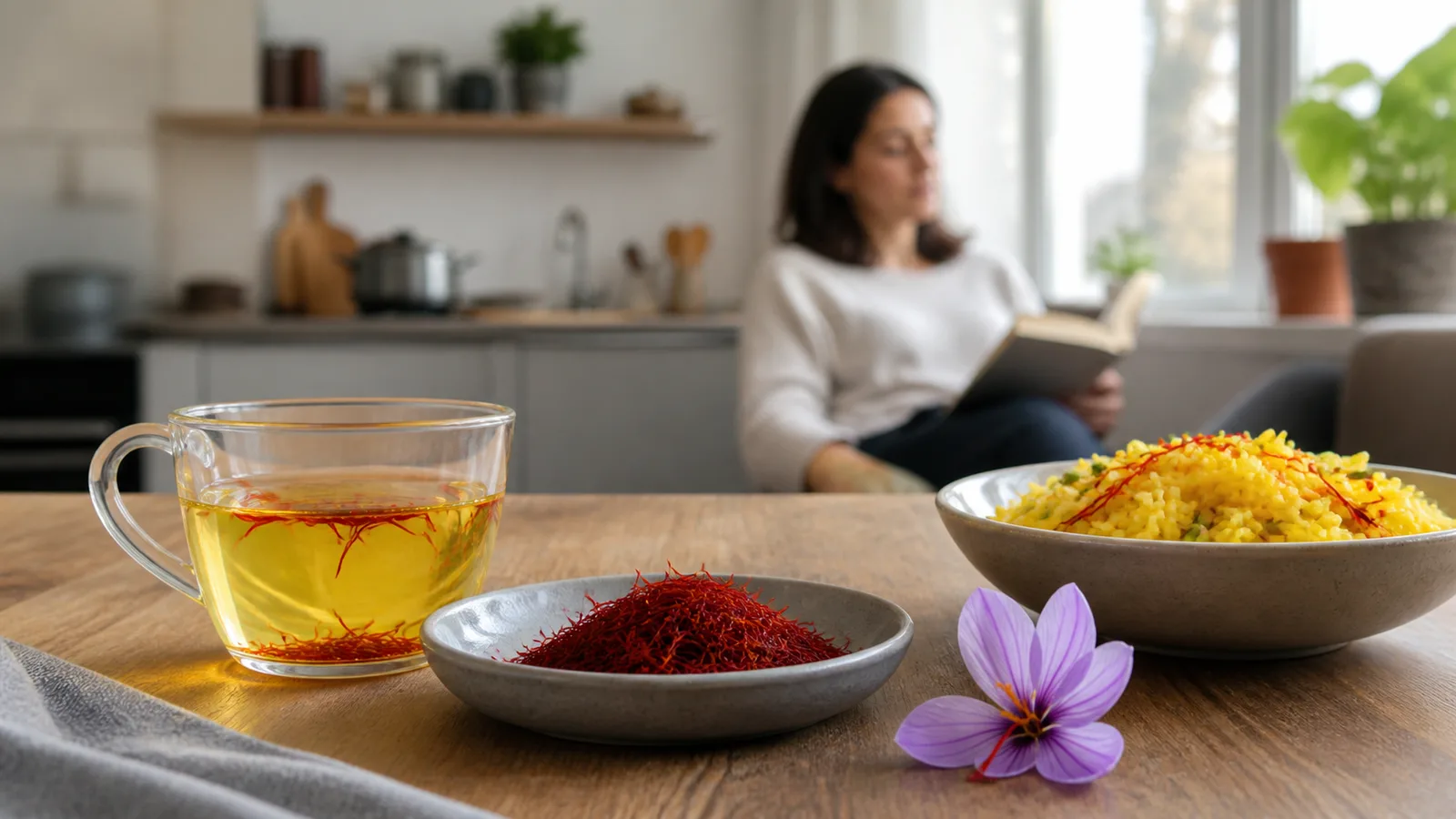
Saffron is made from the dried red stigmas of Crocus sativus L. The plant grows from a corm covered by a fibrous brown tunic. A shoot emerges, and each purple flower normally carries three red stigmas joined to a paler style. Those stigmas are separated and dried to make the spice.
The main compounds used to describe commercial quality include crocins, associated with color; picrocrocin, associated with bitterness; and safranal, an important aroma compound formed during drying and storage. Their concentration helps characterize a sample. It does not prove that eating a more strongly colored lot will produce a stronger medical effect.
What human research suggests
Mood and depressive symptoms
Several small randomized trials and meta-analyses have found reductions in depressive-symptom scores with saffron or specific extracts compared with placebo. Some early trials also compared saffron with an antidepressant and found no statistically significant difference between groups. That result should not be read as proof that saffron is an equivalent replacement: the evidence base was small, follow-up was short, and later reviews continue to call for larger independent trials.
Saffron has therefore not been shown to deliver a guaranteed “happiness” effect or a faster recovery from depression. The old explanation that it simply regulates serotonin and dopamine also overstates what clinical trials establish. Anyone with persistent low mood, loss of interest, or thoughts of self-harm needs qualified care; prescribed medication should not be stopped or changed for a supplement without the prescriber.
Sleep quality
A 2023 systematic review identified five randomized trials with 379 participants and found initial support for better sleep outcomes. A separate meta-analysis also reported improvements on several sleep questionnaires, while noting that long-term safety and the effects of different doses still need study.
These trials investigated defined preparations for limited periods. They do not show that a cup of saffron tea resets everyone’s body clock, cures insomnia or reliably reduces anxiety. Persistent insomnia can have medical, medication-related or behavioral causes that a spice does not diagnose.
Memory and cognitive impairment
A systematic review of five randomized trials involving 325 people reported promising cognitive results, including studies in mild cognitive impairment or Alzheimer’s disease. The reviewers also warned that the evidence could have a high risk of bias and called for larger, stronger trials. Another review concluded that evidence was insufficient to make a clinical-use recommendation.
This is a research signal, not evidence that saffron “boosts intelligence” in healthy people or prevents Alzheimer’s disease. Minerals present in trace amounts in saffron do not establish a cognitive benefit at culinary intake. New memory loss or confusion needs clinical assessment rather than self-treatment.
Cardiometabolic measurements
Meta-analyses of supplementation trials report small average changes in some measurements, including blood pressure, blood glucose and lipids. Results vary by review and participant group. One blood-pressure analysis described the estimated effect as small and potentially not clinically important.
Changes in intermediate measurements are not proof that saffron prevents heart attacks or strokes. It should not replace blood-pressure, diabetes or cholesterol treatment, and concentrated supplements deserve medication review.
Claims that are not established
Hair loss
There is no sound basis for the old claim that saffron stimulates hair growth because its threads resemble hair. Visual resemblance is not a biological mechanism. Human evidence is not adequate to recommend saffron tea, saffron milk or a topical mixture as a hair-loss treatment. Hair loss has many causes, including genetics, iron or thyroid problems, medication and scalp disease.
Skin, freckles and beauty
Saffron has a history in traditional cosmetic preparations, and laboratory work continues on its compounds. That does not prove that eating saffron gives younger skin, removes freckles or clears dark spots. Topical mixtures can irritate skin, and an unlabeled home remedy may stain it. A changing pigmented lesion or persistent skin problem belongs with a qualified clinician.
Pain and respiratory conditions
Preclinical studies cannot by themselves support claims that saffron relieves muscular pain or treats a chronic respiratory disease. Human evidence is not strong enough for those promises. Breathing difficulty, chest pain or severe persistent pain requires appropriate medical evaluation.
Cancer
Cell and animal studies of saffron compounds are not evidence that saffron prevents, controls or treats cancer in people. No one should delay screening, diagnosis or oncology treatment for saffron. A food can be part of a normal diet without being an anticancer therapy.
Digestion and eyesight
Traditional digestive uses and early research do not establish that saffron prevents gastric disease or improves vision for the general population. Digestive symptoms and visual change have many possible causes. Saffron also is not comparable to carrots merely because both are associated with carotenoid chemistry.
Pregnancy and the baby-beauty myth
The claim that taking saffron during pregnancy makes a baby more beautiful or changes the baby’s complexion has no credible scientific basis. Appearance is shaped mainly by genetics and normal development, not by saffron.
Evidence on medicinal saffron use during pregnancy remains limited and inconclusive. Culinary use and concentrated supplements are not the same exposure. A pregnant or breastfeeding person should discuss supplements and medicinal amounts with their obstetric clinician rather than relying on a traditional timing rule.
Safety: food amounts and supplements are different
The small amount used to flavor a shared dish is different from a daily capsule or concentrated extract. A 2026 systematic review of human saffron studies found that preparations were generally well tolerated, but adverse effects did occur; gastrointestinal problems were the most frequently reported and were usually minor. The reviewers advised clinical monitoring for higher-dose or prolonged medicinal use.
Product composition matters. Trials using one standardized extract do not automatically apply to saffron tea, powder, milk, another brand or a different dose. Allergy is possible, and supplements may be unsuitable with some medicines or conditions. See our detailed guide to saffron side effects and safety before considering non-culinary use.
Practical culinary uses
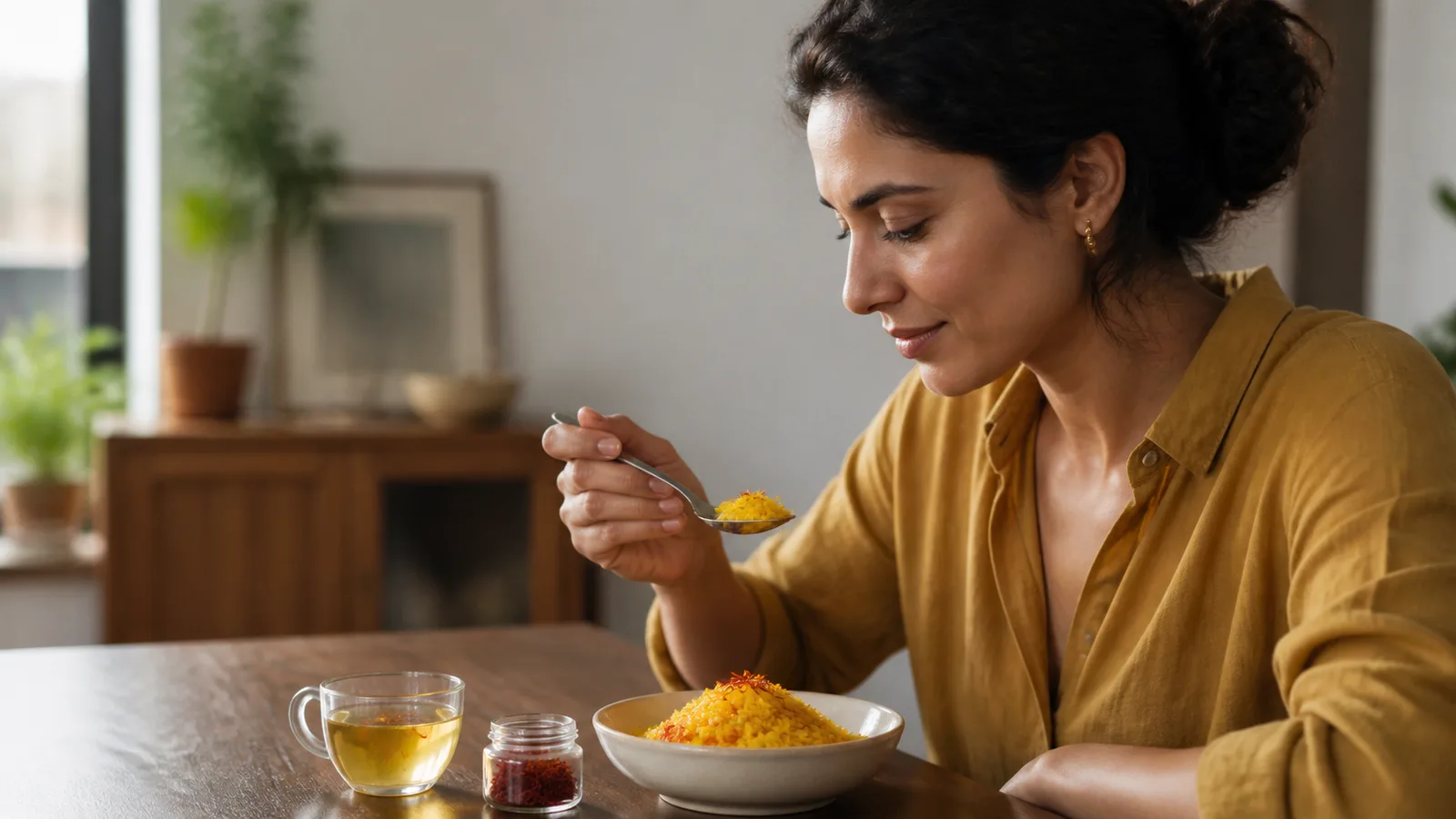
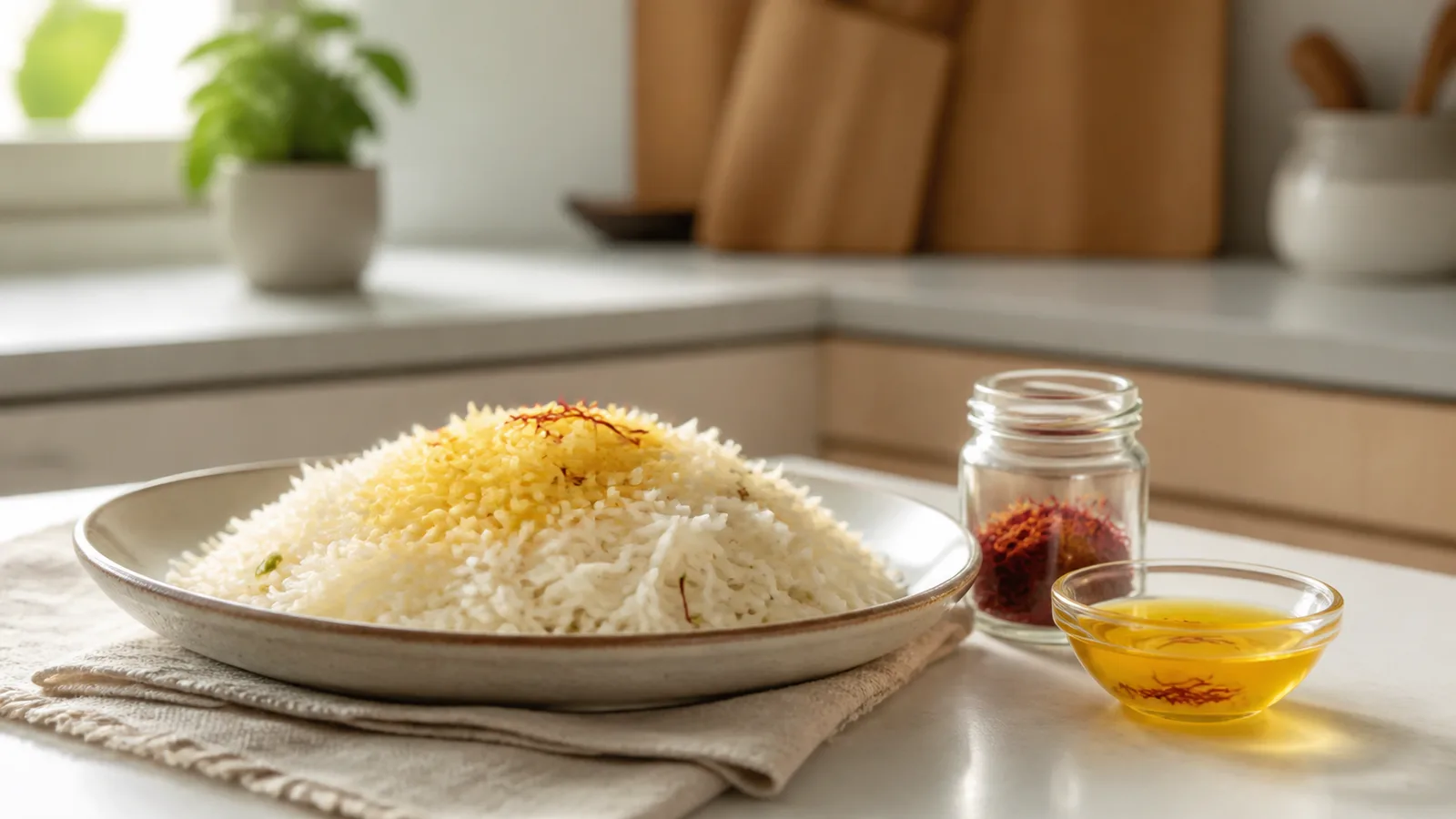
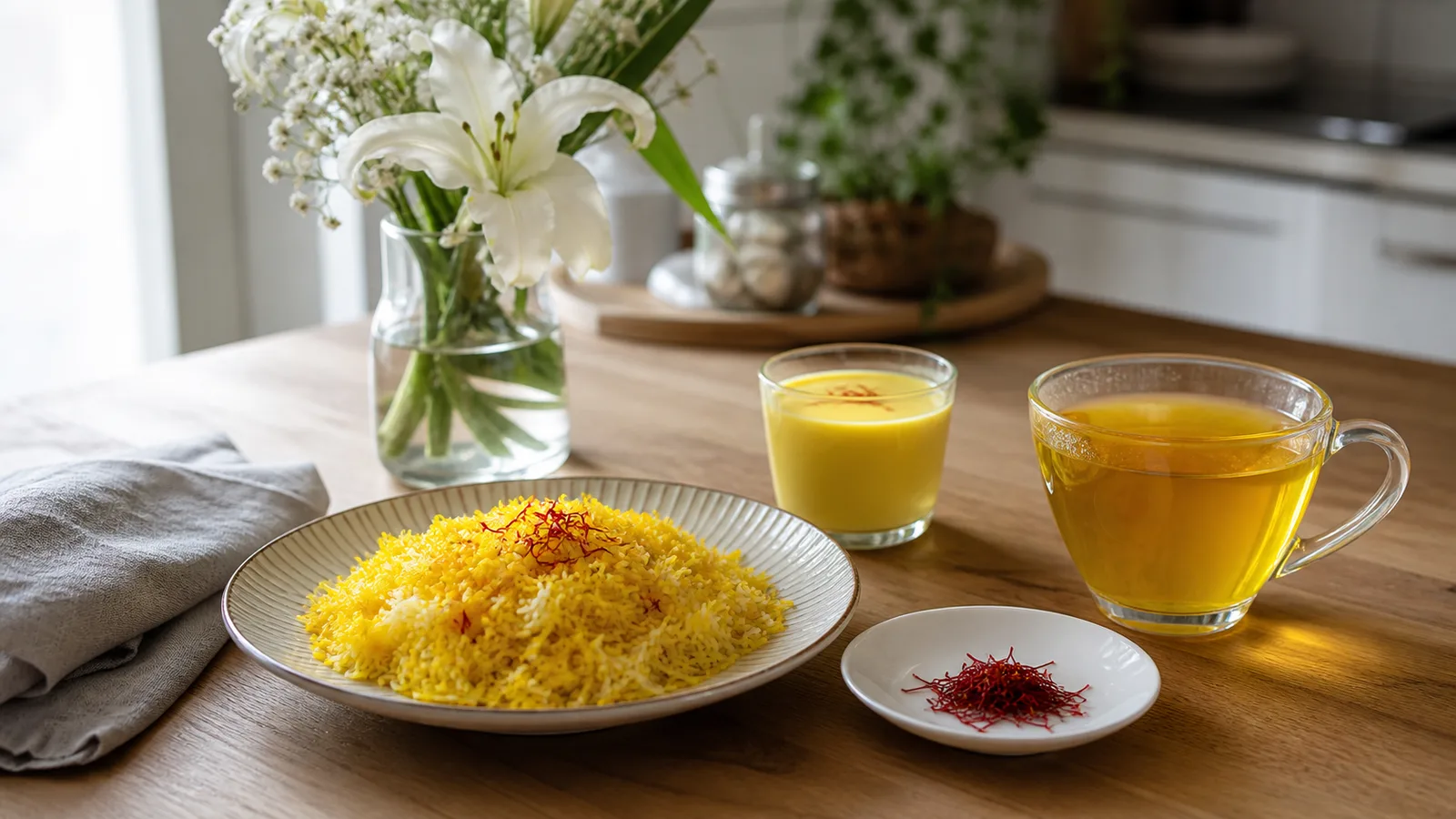
For cooking, crush a small portion of threads and steep them briefly in warm water or milk before adding the liquid to rice, stews, bread or desserts. This spreads the color and aroma more evenly. Keep the bulk saffron dry and sealed rather than repeatedly exposing the jar to steam.
- Add a saffron infusion near the end of cooking when a delicate aroma matters.
- Use a modest amount; more threads can make a dish bitter rather than better.
- Record the source and lot when buying for a business or repeat recipe.
- Choose intact, clean-smelling threads from a traceable seller; appearance alone cannot certify purity.
How to read a saffron health study
Before turning a headline into a health decision, check what was actually tested:
- Participants: healthy adults, people with symptoms, or patients with a diagnosis?
- Product: whole stigma, powder, crocin, or a branded standardized extract?
- Comparison: placebo, usual treatment, or no meaningful control?
- Duration: a few weeks or long enough to address the claim?
- Outcome: a questionnaire or biomarker, not necessarily fewer illnesses or better long-term health?
- Independence: who funded the trial and has another team reproduced it?
This is why a cautious summary can acknowledge a promising mood or sleep result while rejecting a claim about cure, prevention or guaranteed beauty.
Sources and further reading
- Clinical evidence for saffron in neurological and psychiatric disorders, 2024 systematic review.
- Saffron and major depressive disorder, meta-analysis of randomized trials.
- Saffron and sleep quality, systematic review of randomized trials.
- Saffron and cognitive function, systematic review of randomized trials.
- Saffron supplementation and cardiovascular risk factors, systematic review and dose-response meta-analysis.
- Adverse events of saffron, systematic review of human evidence.
- Saffron use and safety evidence in pregnancy, integrative review.
Pure saffron can make food vivid and distinctive. Human studies justify continued research into a few specific outcomes, especially mood and sleep, but they do not turn the spice into a universal treatment. Use culinary saffron as food; approach supplements as health products that require evidence, dose clarity and safety review.