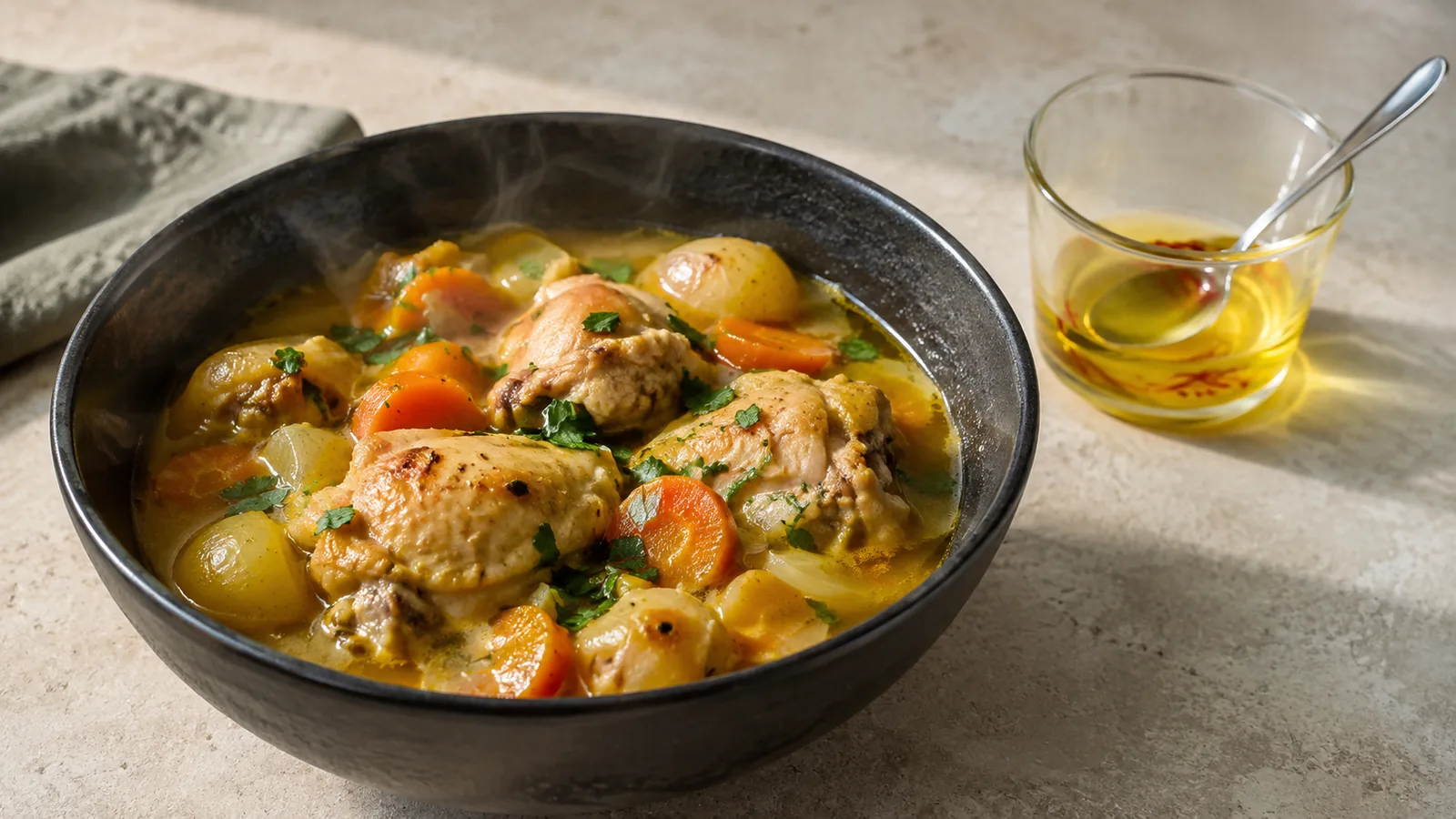
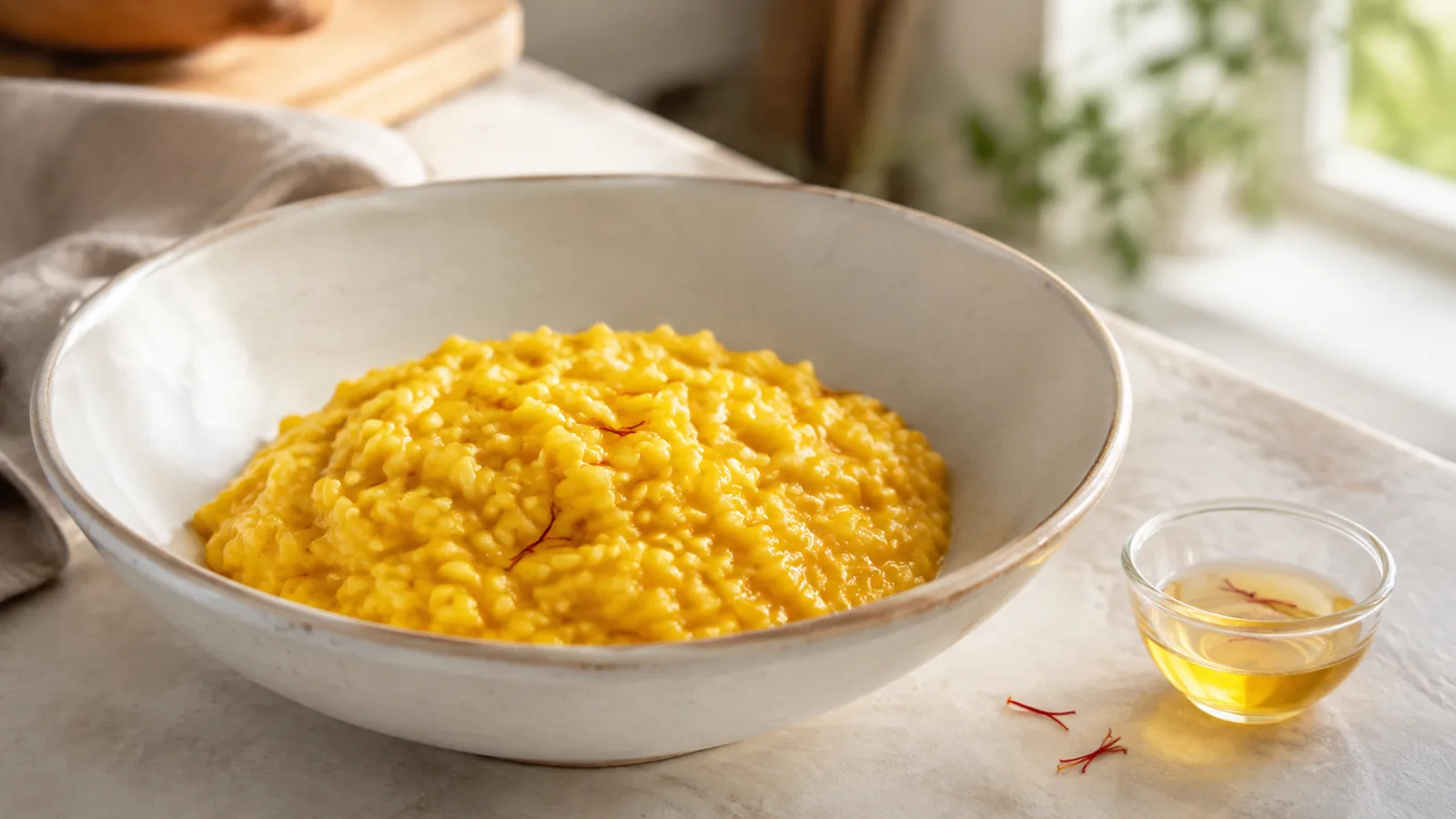
This saffron chicken recipe uses a generous bed of onions to make its own silky sauce. The chicken is browned first, then cooks gently with garlic, turmeric and bloomed saffron until tender. Adding the onions in two stages gives the finished Persian saffron chicken both a rich base and soft ribbons of onion, without hiding the spice under a heavy gravy.
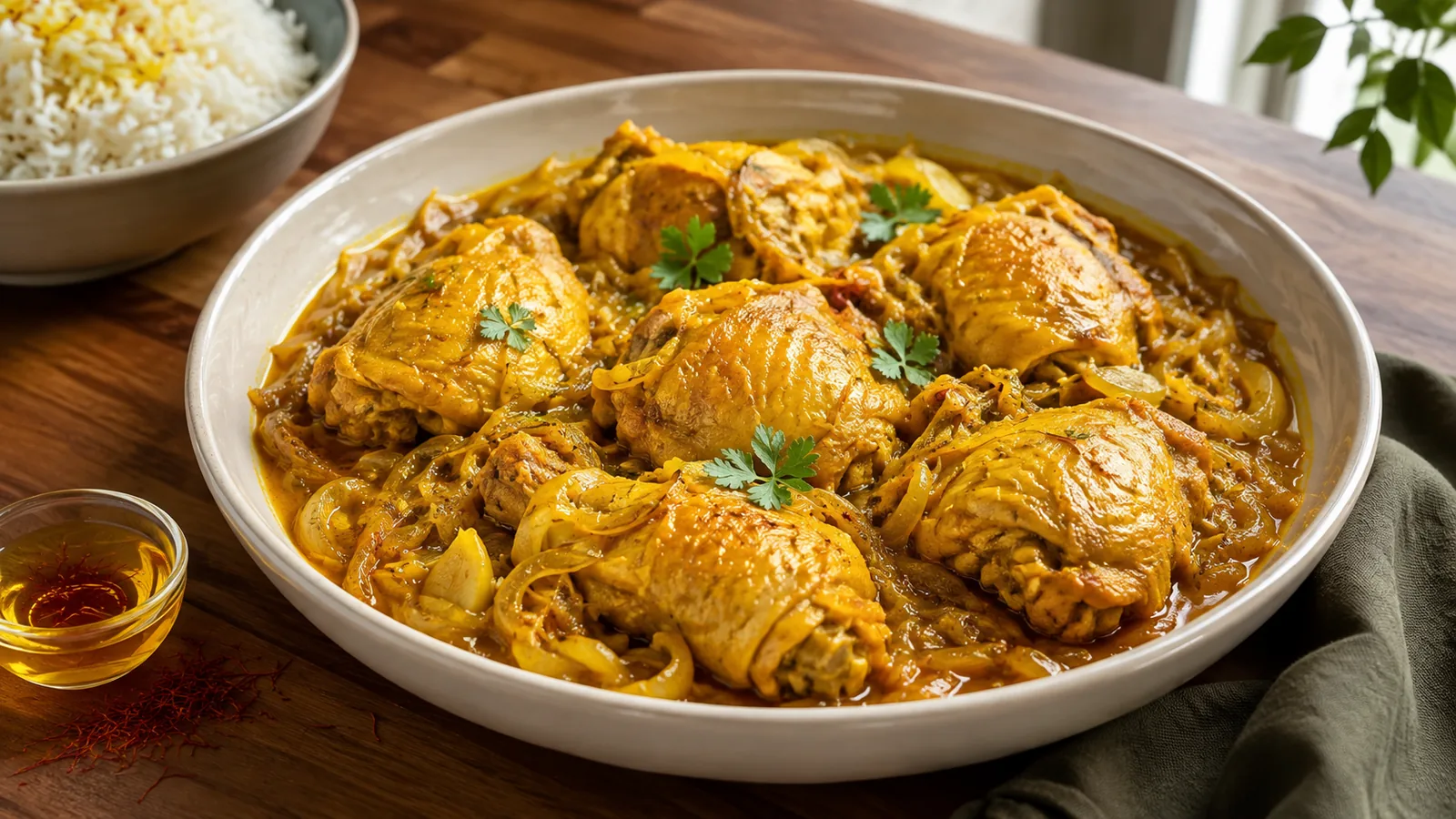
Saffron chicken with onions at a glance
- Serves: 4–6
- Preparation: about 25 minutes
- Cooking: about 60–75 minutes, depending on the chicken pieces
- Best pan: a wide, heavy pot with a lid
- Serve with: steamed basmati rice, Zereshk Polo, dill rice or warm flatbread
This is an onion-forward Iranian chicken recipe rather than a cream sauce. Most of the liquid comes from the onions themselves, so the pot stays fragrant and concentrated.
Ingredients
- 6 bone-in chicken thighs, or 4 thighs and 2 small breast pieces, about 1.3–1.5 kg total
- 4 large onions, about 800–900 g, thinly sliced
- 3 garlic cloves, finely chopped or crushed
- 30 g unsalted butter
- 1 tablespoon neutral oil
- 1 teaspoon ground turmeric
- ½ teaspoon freshly ground black pepper
- 1½ teaspoons fine salt, divided, plus more if needed
- ½ teaspoon loosely packed saffron threads, about 0.15 g
- 3 tablespoons hot water for blooming the saffron
- 180 ml hot water or unsalted chicken stock, plus a little more only if the pot dries
- 1 tablespoon fresh lemon juice, optional
Thighs are the most forgiving choice for slow cooking. If you combine thighs and breasts, make the breast pieces similar in size and begin checking them earlier so they do not become dry.
Bloom the saffron before it goes into the pot
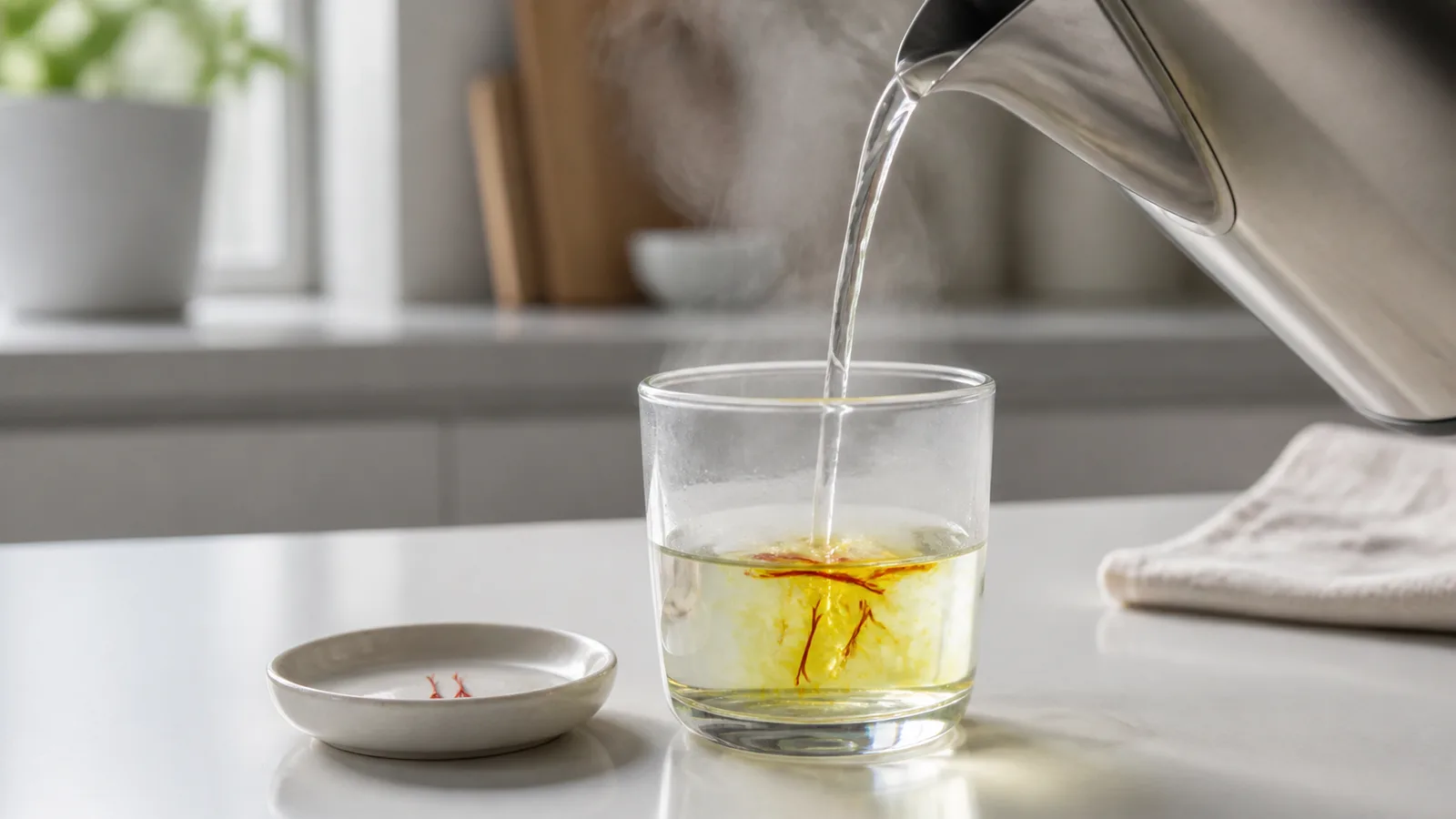
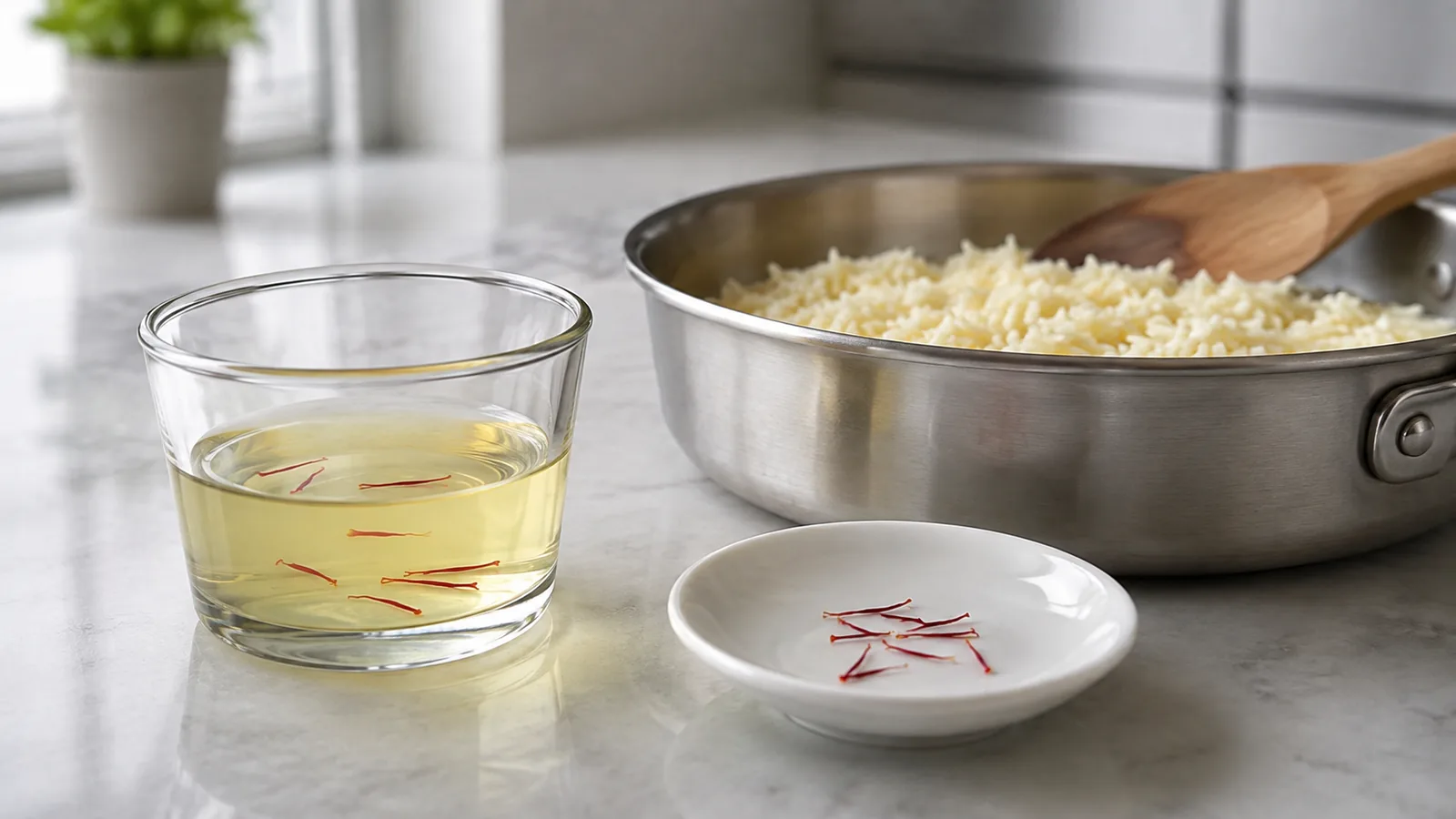
Crush the saffron threads to a coarse powder in a small mortar. Pour over the hot water, cover, and leave it for 10–15 minutes. The liquid should become deeply golden and aromatic. This step spreads a small amount of spice evenly through the onion sauce instead of leaving concentrated red specks on one piece of chicken.
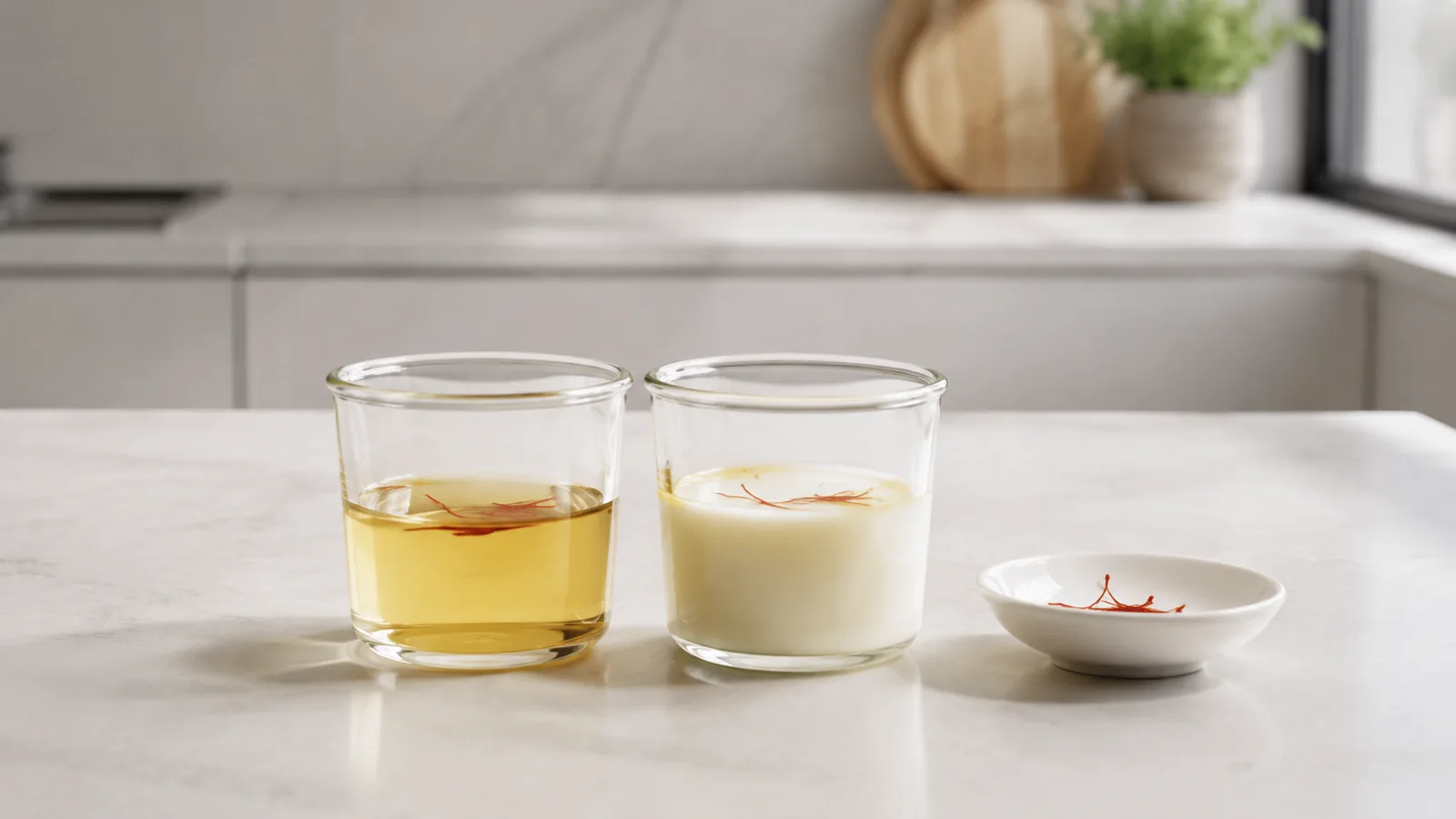
Hot water is dependable for this recipe because the infusion goes straight into a simmering dish. For alternative water and ice methods, see the best way to brew saffron. Whichever method you choose, keep the infusion covered while it stands so the aroma is not left open to the kitchen air.
Why this recipe uses abundant onions
Four onions may look excessive when they first fill the pot. They collapse as their water cooks out, leaving natural sweetness and body. Browning most of them builds the sauce, while the final portion softens around the chicken and keeps a recognisable onion texture.
Slice the onions to an even thickness. Very thin pieces can catch while thicker ones are still raw. Cook them patiently over medium-low heat; high heat may darken the edges before the centre softens and can make the sauce taste burnt.
How to make Persian saffron chicken
1. Season the chicken
Pat the chicken dry. Mix the turmeric, black pepper and 1 teaspoon of salt, then season all sides. Leave the pieces for 15–20 minutes while you slice the onions and bloom the saffron. Keep raw chicken and its utensils away from foods that will be served without further cooking.
2. Brown the pieces
Heat the oil and half the butter in a wide pot over medium heat. Add the chicken in one layer and brown it for 3–4 minutes on each side. Work in batches rather than crowding the pot. The aim is colour, not complete cooking. Transfer the browned pieces to a clean plate.
3. Build the onion base
Lower the heat and add about two-thirds of the sliced onions with the remaining ½ teaspoon salt. Cook for 12–15 minutes, stirring and scraping up the browned bits, until the onions are soft and lightly golden. Add the garlic and cook for about 1 minute, just until fragrant.
If the base begins to stick, add a spoonful of hot water rather than another large pour of oil. The onions should become glossy and sweet, not crisp.
4. Layer and simmer
Return the chicken and any collected juices to the pot. Spoon the cooked onions around and partly over the pieces, then scatter the remaining raw onions on top. Add the hot water or stock and half of the saffron infusion. Bring the liquid to a gentle simmer, cover, and turn the heat to low.
Cook thighs for about 35–45 minutes, turning once. Breast pieces may be ready sooner. Cooking time is only a guide: the size of the pieces, starting temperature and pot all make a difference.
5. Finish with saffron
Pour the remaining saffron infusion over the chicken during the final 10–15 minutes. Leaving part of it until late keeps a fresh saffron aroma while the earlier portion seasons the sauce. Add the remaining butter and lemon juice, if using.
Check the thickest part of every piece with a food thermometer, avoiding the bone. Poultry should reach at least 74°C/165°F. If some pieces finish first, move them to a covered clean plate while the others continue cooking.
6. Reduce the sauce
When the chicken is safely cooked, uncover the pot and simmer for 5–10 minutes until the onions form a spoonable, glossy sauce. Turn the pieces once so they are coated. Taste the sauce before adding more salt or lemon; reducing it concentrates both.
What gives this Persian chicken its restaurant-style finish?
“Restaurant-style” here means deeply softened onions, browned chicken and a sauce that clings instead of flooding the plate. Three small choices make the difference:
- brown the chicken without cooking it through;
- give the first batch of onions time to turn golden;
- reduce the sauce only after the chicken is done.
Do not thicken the pot with flour. The onions provide enough body once excess water evaporates. If the sauce is thin, lift out the cooked chicken and reduce the liquid briefly rather than continuing to overcook the meat.
How much saffron should go with the chicken?
About 0.15 g is enough to make this recipe for saffron chicken clearly aromatic without becoming harsh. Thread density varies, which is why weight is more reliable than counting threads. If your saffron is old or poorly stored, adding more will not restore the missing aroma; use a fresher batch instead.
Saffron and chicken both benefit from a restrained spice list. The saffron should support the onions and meat rather than disappear under strong seasoning. Turmeric provides warmth and colour, but cinnamon, curry powder or a mixed blend can change the character of the dish quickly. Add another spice only when that is the variation you intend.
Useful variations
Chicken with saffron and barberries
Rinse barberries carefully, then sauté a small handful briefly in butter with a pinch of sugar if they are very tart. Spoon them over the finished chicken rather than simmering them for an hour. They also work in the accompanying rice; our saffron rice with barberries recipe gives the full method.
Saffron chicken with dried plums
Add 6–8 rinsed dried plums during the last 20 minutes. They make the onion sauce sweet-tart and closer to a fruit-based Persian stew. Taste before adding lemon because the fruit may provide enough acidity.
Carrot or zucchini
Carrot can simmer with the second layer of onions. Zucchini cooks much faster and is better browned separately, then added near the end. Too many watery vegetables will dilute the sauce, so use one variation at a time.
Boneless chicken breast
Cut breast into large, even pieces and shorten the covered cooking stage. Sear it, make the onions, then return the meat only long enough to reach a safe internal temperature. It will not need the same slow simmer as bone-in thighs.
Can it be made in a pressure cooker?
Yes, although a pressure cooker changes the onion texture and makes the final reduction especially important. Use the sauté function to brown the chicken and soften the first onions. Add only the minimum liquid required by the appliance, lock the lid, and follow the manufacturer’s timing for the exact chicken cut and cooker. After pressure releases safely, confirm 74°C/165°F in the thickest pieces, then simmer uncovered to concentrate the sauce. Add the final saffron infusion during that reduction.
Troubleshooting
- The onions are catching: lower the heat and loosen the pot with a tablespoon of hot water.
- The sauce is watery: remove safely cooked chicken and reduce the sauce uncovered.
- The chicken is dry: choose thighs next time or check breast pieces earlier; a longer simmer does not make lean breast more tender.
- The saffron tastes weak: bloom fresh threads, cover the infusion and add part of it near the end.
- The dish tastes bitter: check for burnt onion edges, excessive turmeric or too much old saffron powder.
- The sauce is too sweet: add lemon juice a teaspoon at a time and adjust the salt only after reduction.
What to serve with Iranian saffron chicken
Zereshk Polo is the classic colourful partner: tart barberries cut through the sweet onions, while saffron rice repeats the aroma on the plate. Plain steamed basmati rice is calmer and lets the sauce lead. Dill rice, a crisp salad, yoghurt with cucumber or warm flatbread also work well.
Rest the chicken for a few minutes in its sauce before serving. Spoon onions beneath and over each piece, then add any barberry garnish at the table. The final dish should taste first of tender chicken and slowly cooked onion, with saffron rising clearly rather than shouting over everything else.
A dependable saffron chicken recipe
The method is forgiving when each stage has a purpose: bloom the saffron, brown the chicken, soften the onions slowly, simmer gently, verify doneness and reduce at the end. Follow that order and this chicken with saffron keeps its restaurant-style appearance while remaining recognisably Persian and practical enough for a home kitchen.