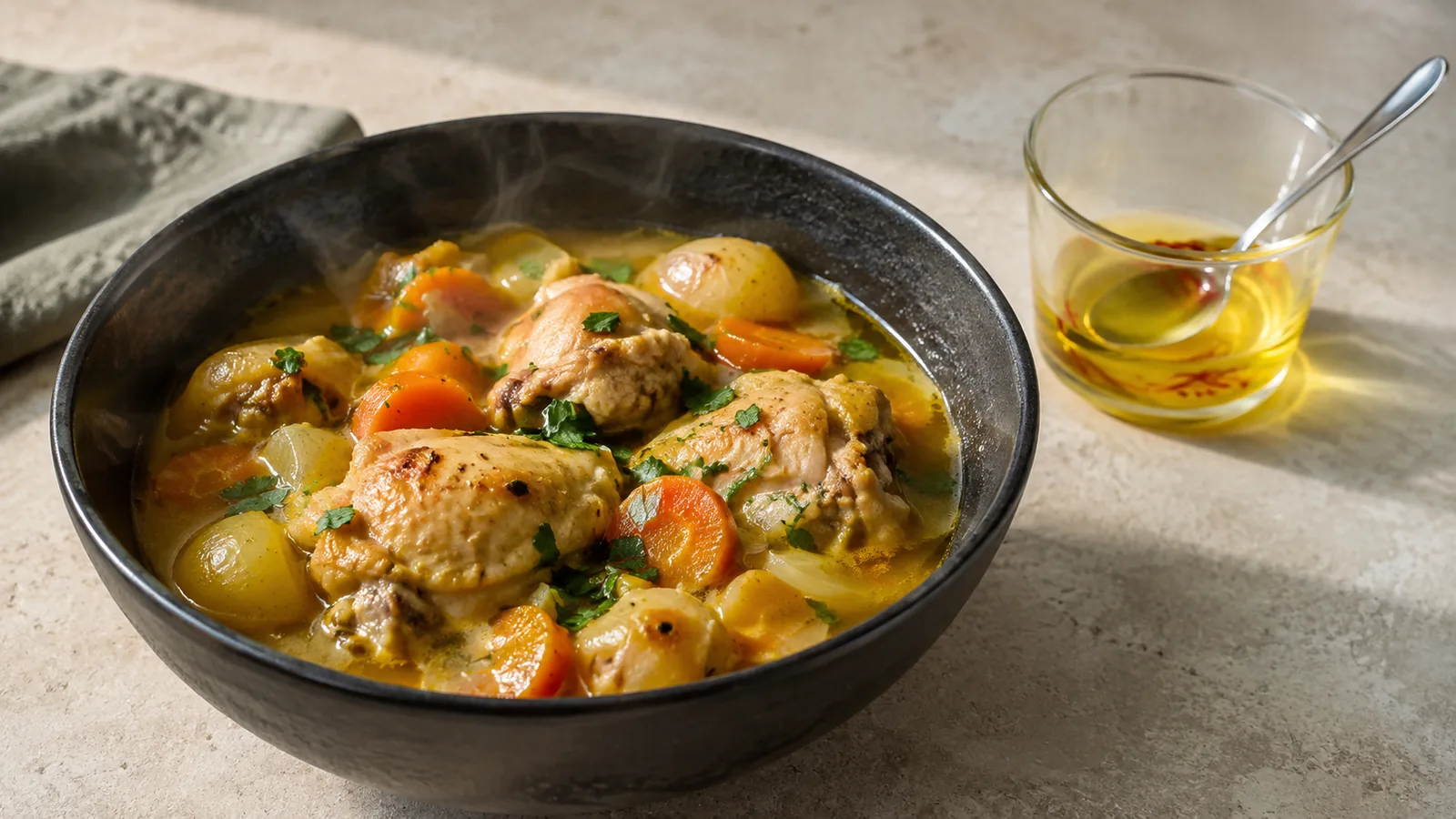
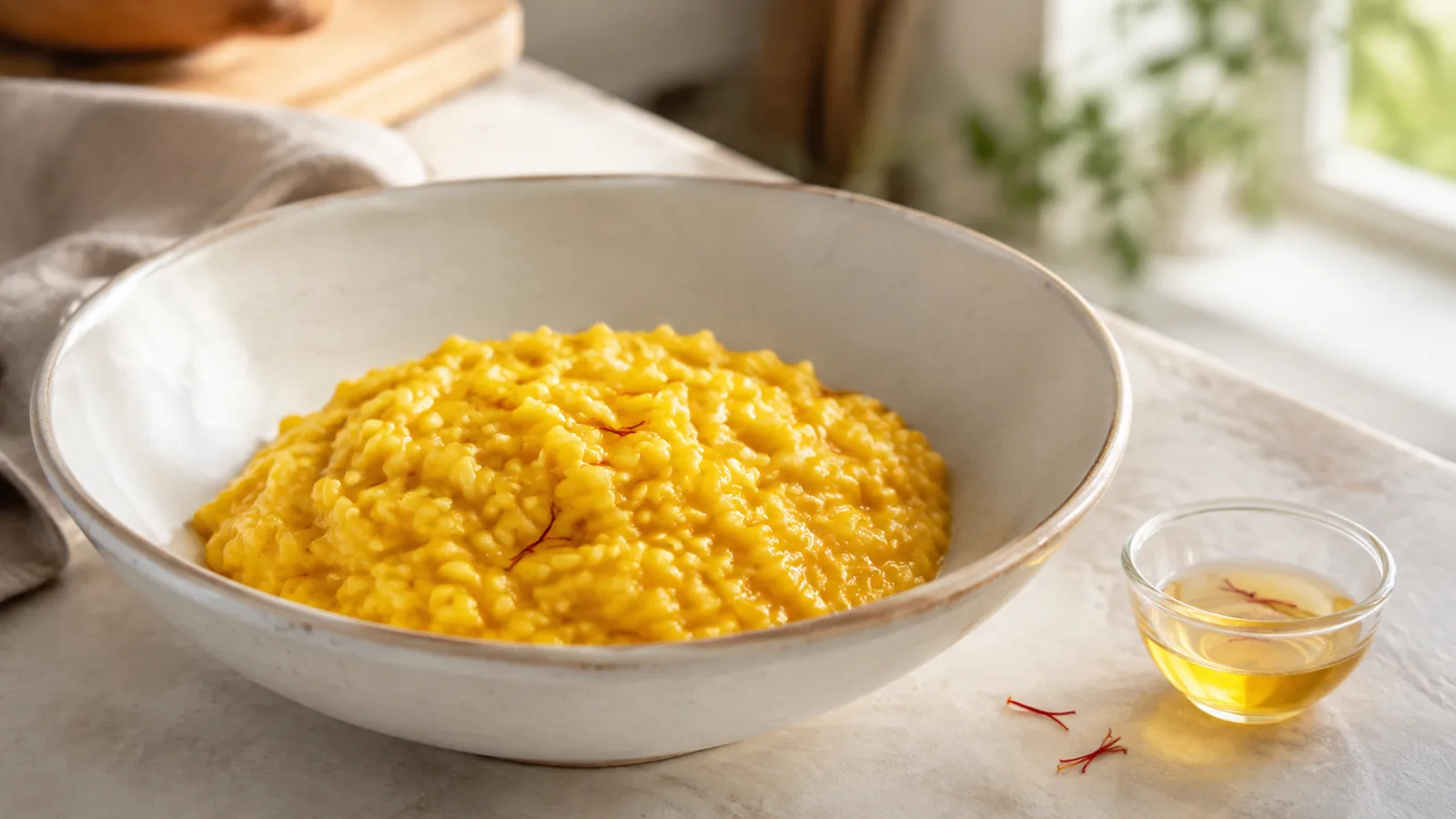
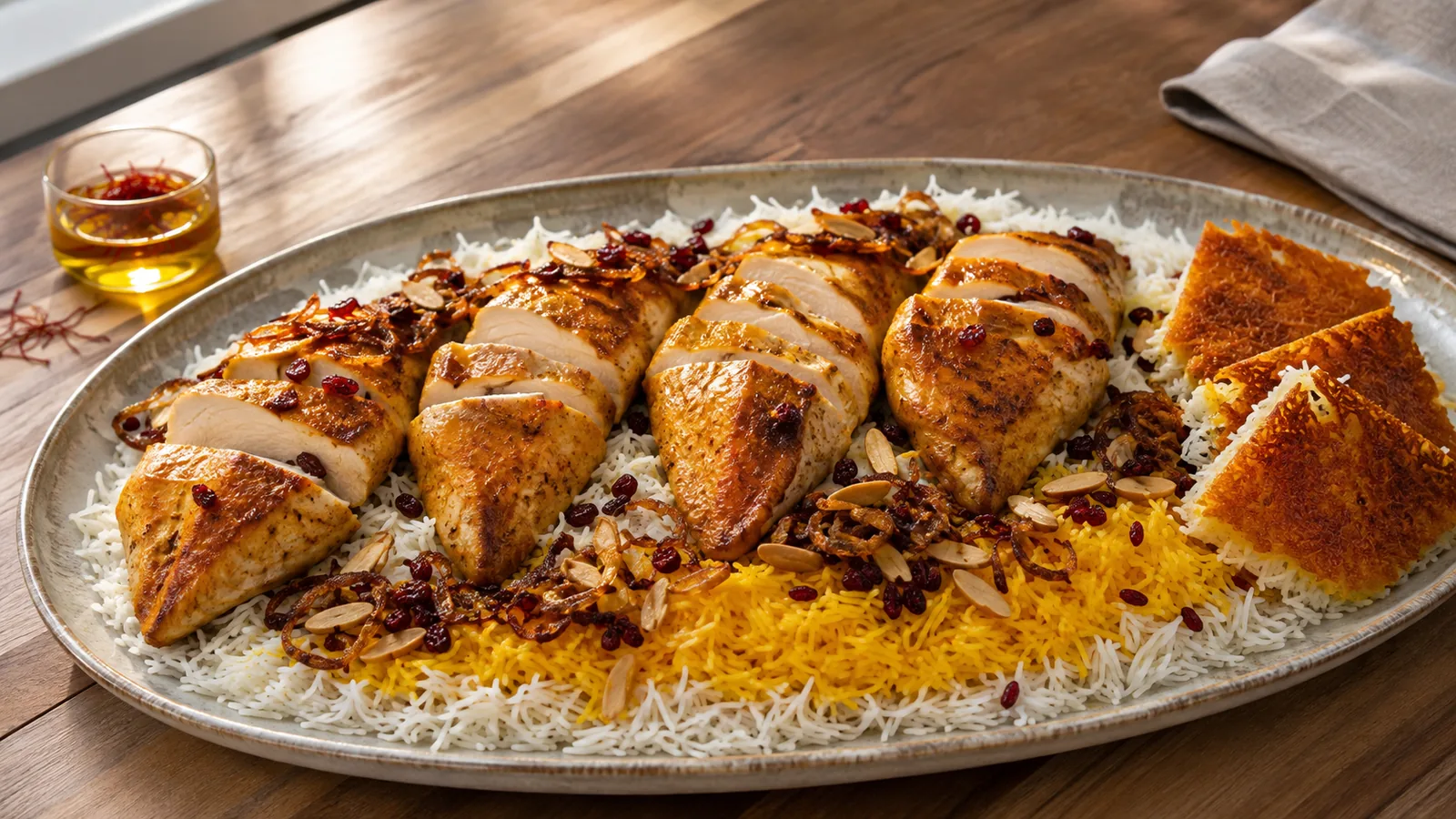
This saffron chicken with rice pairs juicy pan-cooked breast fillets with fragrant basmati, crisp rice tahdig, tart barberries and toasted almonds. Saffron appears in both the chicken and rice, but in measured amounts so the flavour stays clear rather than bitter. The components finish together and make a complete dinner for four.
Saffron chicken and rice at a glance
- Serves: 4
- Preparation: 30 minutes, plus 30–60 minutes to marinate
- Cooking: about 50 minutes
- Main ingredients: chicken breast fillets, basmati rice, onions, saffron, barberries and almonds
- Equipment: lidded non-stick or well-seasoned rice pot, wide frying pan and food thermometer
This saffron chicken and rice recipe is planned as one meal, but the fillets and rice can be cooked separately if that suits the kitchen. Start the chicken marinade first, then soak the rice while the saffron blooms.
Ingredients
For the saffron chicken fillets
- 2 large boneless, skinless chicken breast fillets, about 600 g total
- 1 medium red onion (often sold as a purple onion), coarsely grated
- 1 tablespoon fresh lemon juice
- ½ teaspoon fine salt
- ¼ teaspoon freshly ground black pepper
- 1 tablespoon bloomed saffron, from the mixture below
- 1 tablespoon neutral oil
- 15 g unsalted butter
For the saffron rice and tahdig
- 2 cups basmati rice, about 380–400 g
- 2 tablespoons fine salt for soaking and boiling, most of which is drained away
- 2 tablespoons neutral oil, plus a little for the pot if needed
- 15 g unsalted butter
- ¼ teaspoon loosely packed saffron threads, about 0.1 g
- 3 tablespoons hot water
For the onion, barberry and almond garnish
- 2 medium red or purple onions, thinly sliced
- ⅓ cup dried barberries
- ⅓ cup slivered almonds
- 15 g unsalted butter
- 1 teaspoon sugar, optional
- A small pinch of salt
Bloom the saffron once, then divide it
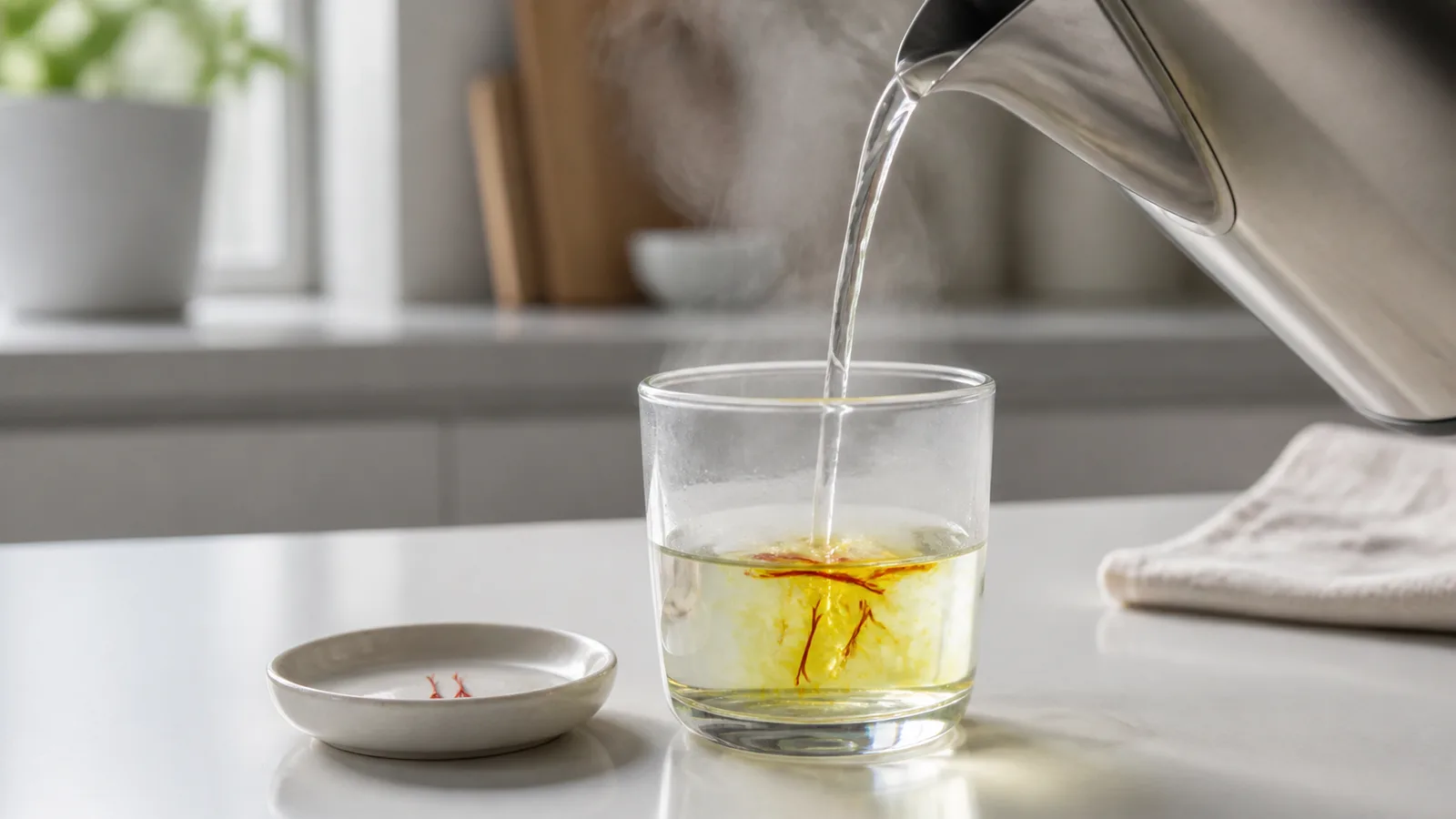
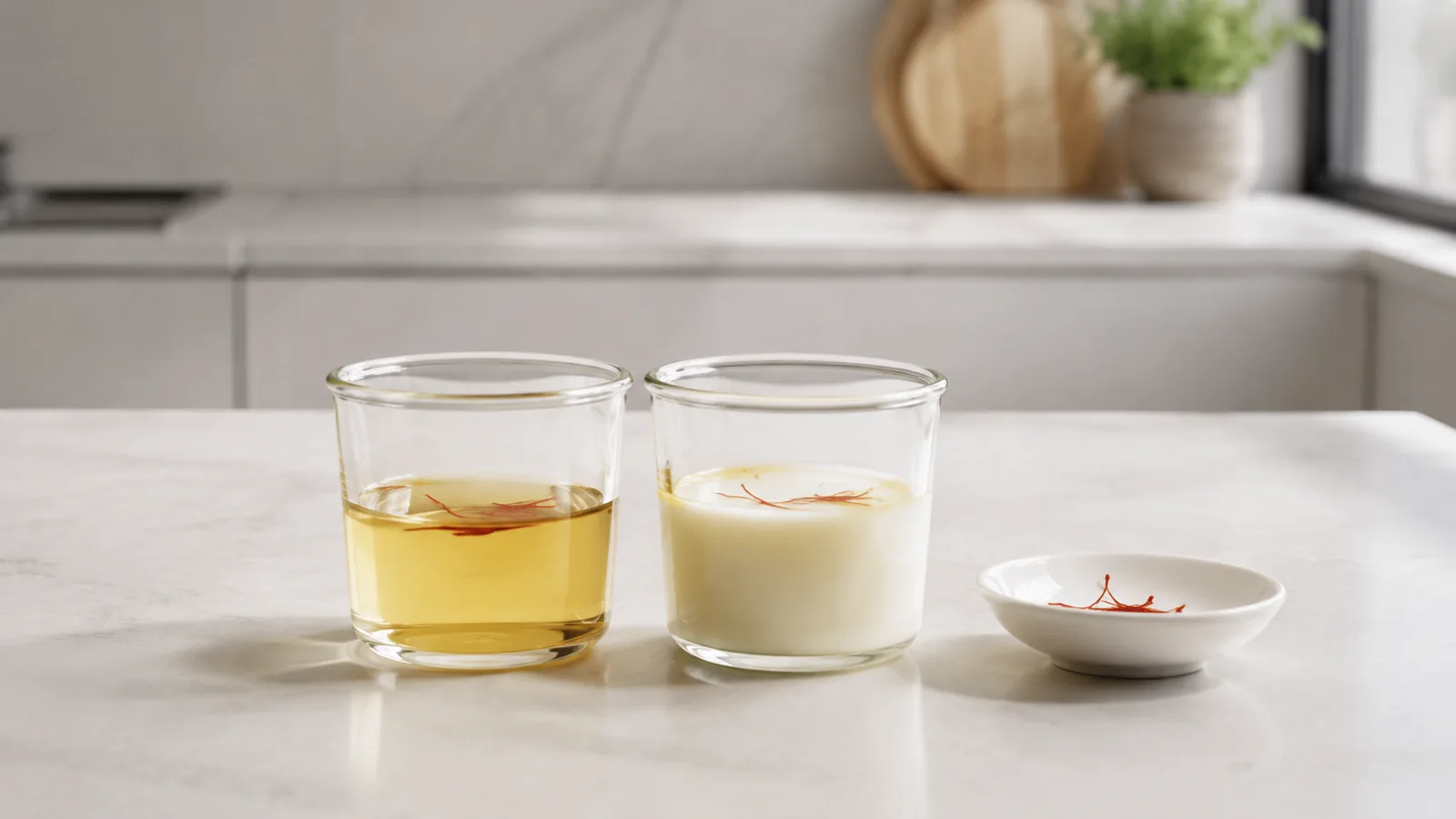
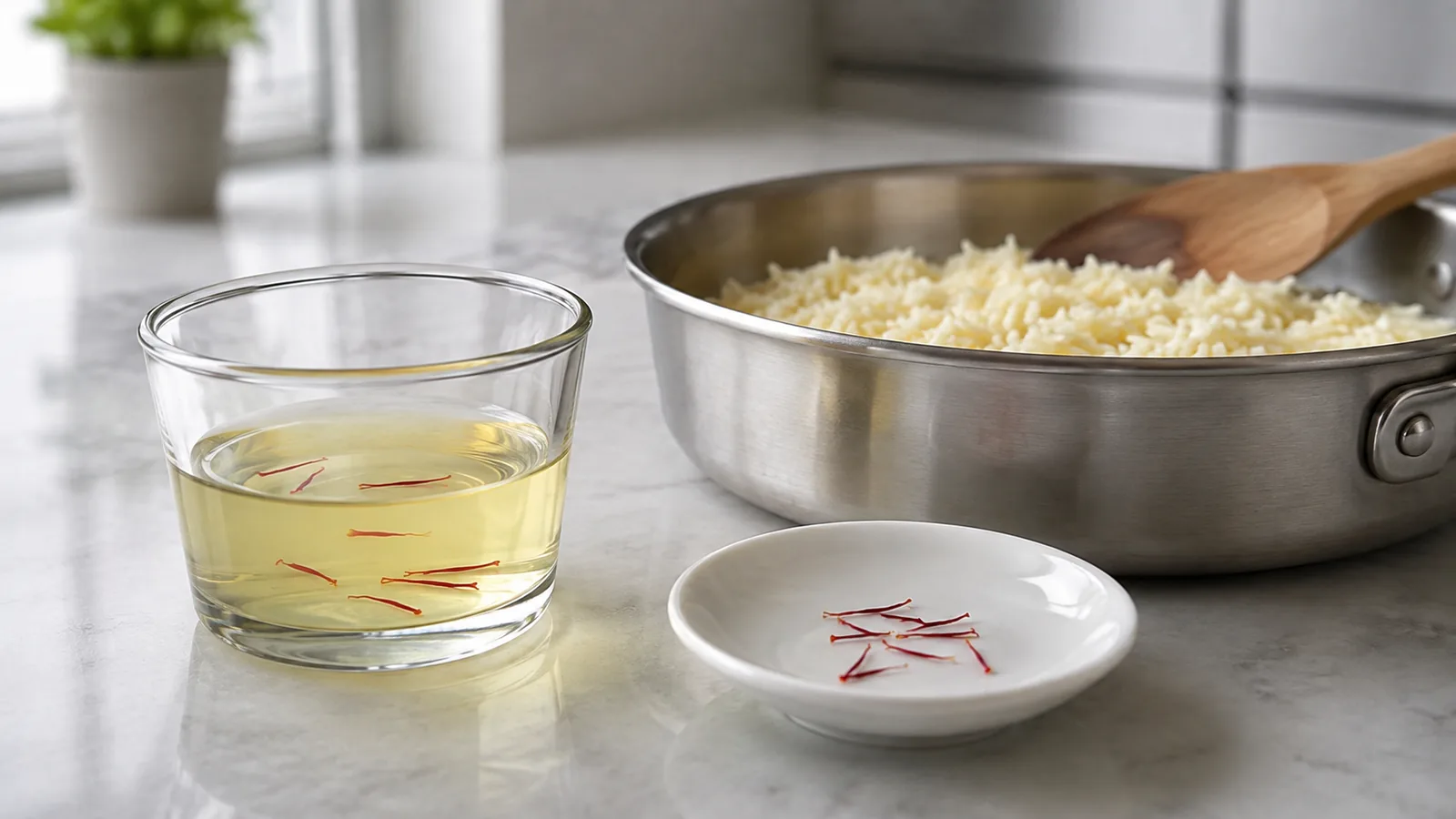
Grind the saffron threads to a coarse powder. Pour over the hot water, cover, and leave for 10–15 minutes. Measure 1 tablespoon into the chicken marinade and reserve the rest for the rice and final garnish. Keeping the cup covered helps hold its aroma.
If you prefer to compare hot-water and ice methods, our guide to brewing saffron for cooking explains both. For this recipe, hot water is convenient because the infusion is divided between warm components.
1. Marinate the chicken safely
Do not wash raw chicken; splashing can spread contamination around the sink. Pat the fillets dry, then slice each one horizontally into two thinner cutlets of even thickness. This gives four pieces that cook quickly and predictably.
Put the grated onion in a sieve and press its juice into a bowl. Discard the dry pulp or cook it thoroughly in another dish. Mix the onion juice with lemon, salt, pepper and 1 tablespoon of bloomed saffron. Turn the chicken through the marinade, cover, and refrigerate for 30–60 minutes. Do not marinate it on the counter.
2. Soak and parboil the basmati rice
Rinse the rice gently in several changes of cool water until the water is much less cloudy. Cover with fresh water and 1 tablespoon of salt, then soak for 30 minutes. Soaking helps long-grain rice cook evenly, but an older dry rice and a new-season rice may still need different boiling times.
Bring a large pot of water to a rolling boil with the remaining tablespoon of salt. Drain the soaked rice and add it to the pot. Boil until the grains are flexible outside but retain a firm centre, usually 5–8 minutes. Bite one grain to check; a clock cannot account for every rice. Drain promptly and rinse briefly with lukewarm water if the surface seems very salty.
3. Build a saffron rice tahdig
Mix about 1 cup of the drained rice with 1 tablespoon of the remaining saffron infusion and 1 tablespoon oil. Heat the rice pot over medium heat with the other tablespoon oil and half the butter. Spread the saffron rice evenly across the base and press it gently, without crushing the grains.
Mound the plain rice loosely on top and make three steam holes with the handle of a spoon, stopping before the tahdig. Cover the lid with a clean tea towel, keeping every edge safely away from the flame, and close the pot. Let steam build for about 5 minutes over medium heat, then turn the heat to low and cook for 30–40 minutes.
Rice tahdig depends on the pot and burner. Listen for a gentle sizzle and smell for toasting, not burning. If this is your first attempt with the pan, check a small edge before committing to the longest time.
4. Cook the chicken fillets
Remove the chicken from the marinade and let excess liquid drip back into the bowl. Discard the used marinade. Heat the oil and butter in a wide frying pan over medium heat. Add the cutlets in one layer; use two batches if the pan is crowded.
Cook for about 3–5 minutes on the first side until golden, then turn and cook the second side. The exact time depends on thickness. Check the centre of each fillet with a food thermometer: chicken should reach at least 74°C/165°F. Move finished pieces to a clean plate, cover loosely and rest for 5 minutes before slicing.
If the pan browns too quickly, lower the heat rather than adding a flood of butter. Saffron gives aroma and golden colour, but burnt milk solids will dominate both.
5. Fry the onions until crisp
Wipe the pan if it contains dark burnt residue. Add a little oil if needed, then spread in the sliced onions with a pinch of salt. Cook over medium heat, stirring regularly, until soft and golden. Lower the heat as they colour so the edges become crisp without tasting scorched. Transfer them to a plate; they will firm slightly as they cool.
Three onions sound generous, but one provides the marinade juice and two become the sweet, crisp garnish. They balance the barberries and stop the plate from tasting only of rice and lean chicken.
6. Sauté the barberries and almonds
Pick over the barberries, rinse quickly in cool water and drain well. Melt the remaining butter over low heat. Toast the almond slivers for 2–3 minutes until lightly golden, then add the barberries and optional sugar. Toss for only 30–60 seconds, just until the berries glisten and begin to plump.
Barberries do not need to “turn golden.” They burn quickly and become unpleasantly hard if fried for too long. Remove the pan from the heat while they are still bright red.
7. Finish and serve the saffron rice with chicken
Drizzle the last saffron infusion and remaining butter over a small portion of the steamed rice, then fold gently to make a vivid golden garnish. Spoon the plain rice onto a warm platter and scatter the saffron rice across the top.
Arrange the rested chicken fillets alongside or over the rice. Add crisp onions, barberries and almonds just before serving. Loosen the tahdig around the edge of the pot and lift it out in pieces, or invert it carefully onto a separate plate.
Serve while the chicken is warm and the tahdig is crisp. A cucumber-and-herb salad or plain yoghurt gives a cool contrast without competing with the saffron.
Why cook the chicken separately from the rice?
Cooking thin fillets in a pan lets you brown them and stop as soon as they reach a safe temperature. If lean breast stays under the rice for a full steaming cycle, it can become dry. Separate cooking also keeps raw chicken liquid away from the rice garnish and makes the tahdig timing easier to control.
Bone-in thighs can handle a longer braise, but that is a different style of saffron chicken recipe. The goal here is tender sliced fillet with distinct basmati grains and a crisp base.
Can chicken thighs be used?
Yes. Use boneless thighs of similar thickness and cook them until every piece reaches at least 74°C/165°F. They may take a little longer and release more fat. Drain excess fat before frying the onions so the garnish remains crisp rather than greasy.
Can the rice be made without tahdig?
Yes. Steam the drained rice in the usual way without pressing a saffron layer into the base, or use a rice cooker according to its instructions. Fold bloomed saffron through part of the finished rice and keep the chicken, onions, barberries and almonds unchanged. The dish loses its crisp contrast but not its central saffron chicken and rice character.
Common problems
- Dry chicken: cut the fillets evenly, avoid crowding, and use temperature rather than a long fixed frying time.
- Mushy rice: stop parboiling while the centre is still firm and drain immediately.
- Pale tahdig: allow enough low, steady heat and use a pan that browns evenly.
- Burnt tahdig: reduce the burner sooner; a thin pot can need a diffuser or shorter cooking time.
- Hard barberries: keep their time in the butter under a minute.
- Weak saffron aroma: use fresh threads, bloom them covered and reserve some infusion for the finish.
- Greasy garnish: measure the butter and let the onions cook slowly instead of deep-frying them.
Make-ahead order
The saffron can be bloomed, onions sliced and almonds measured earlier in the day. Marinate the chicken only in the refrigerator, and keep raw-chicken utensils separate. For the best texture, parboil and steam the rice close to serving time and sauté the barberries at the end.
If leftovers are kept, refrigerate them promptly in shallow covered containers. Reheat the chicken and rice thoroughly, but expect the tahdig to soften; a dry frying pan or oven can restore some crispness more successfully than a microwave.
A balanced chicken saffron rice dinner
The pleasure of this chicken with saffron rice comes from contrast: juicy fillet, separate grains, crisp tahdig, sweet onion, tart barberry and toasted almond. Measured saffron connects those elements without making every mouthful taste the same. Prepare the components in order, check the chicken with a thermometer, and the platter will feel generous rather than complicated.