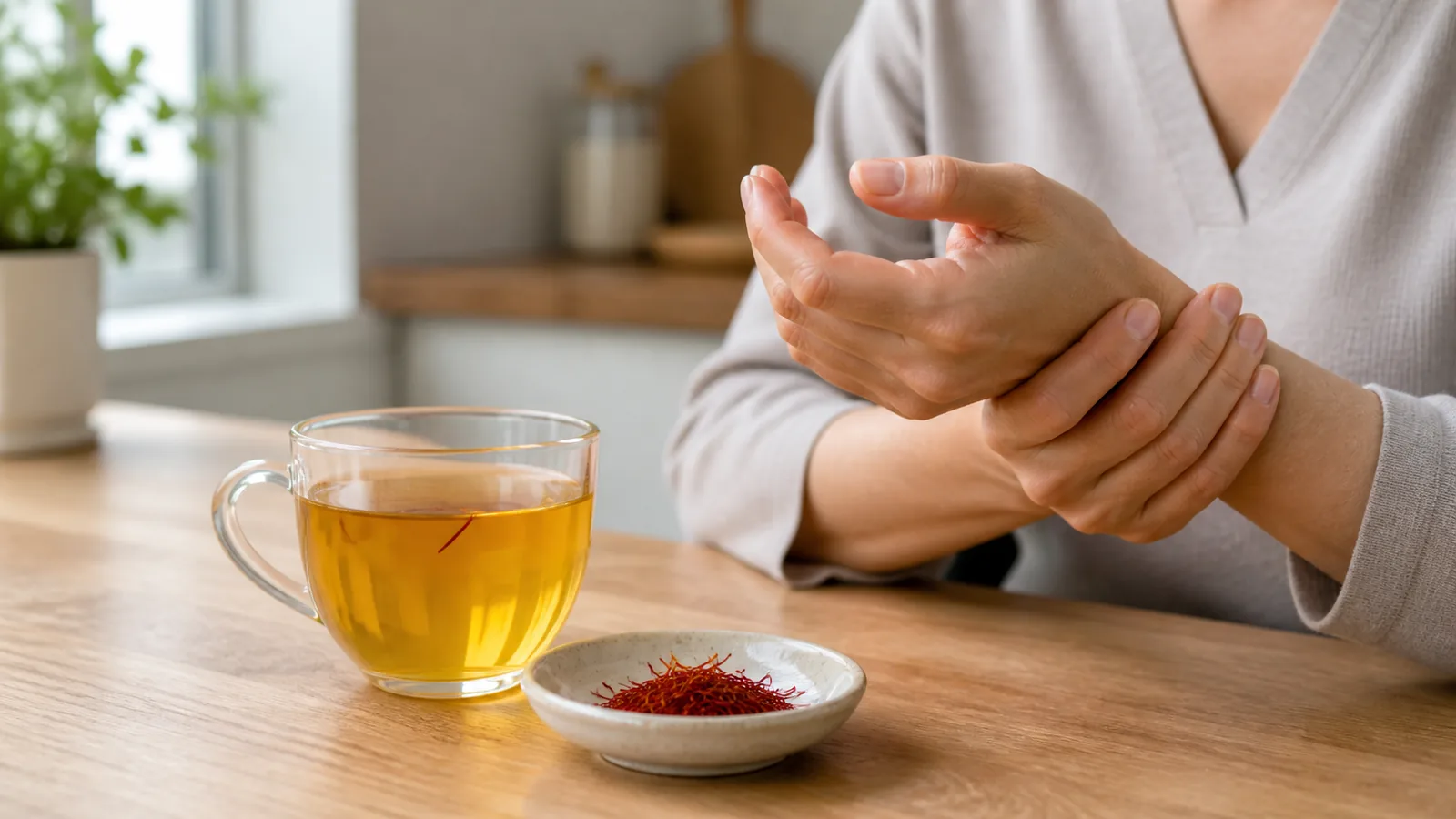
Saffron benefits are often presented as one long list, with a laboratory property, a traditional use and a proven treatment made to sound equivalent. They are not. Saffron is unquestionably useful in food; measured preparations have also been studied in people. But evidence for mood or metabolic markers cannot be transferred automatically to skin masks, hair growth, cancer care or pregnancy.
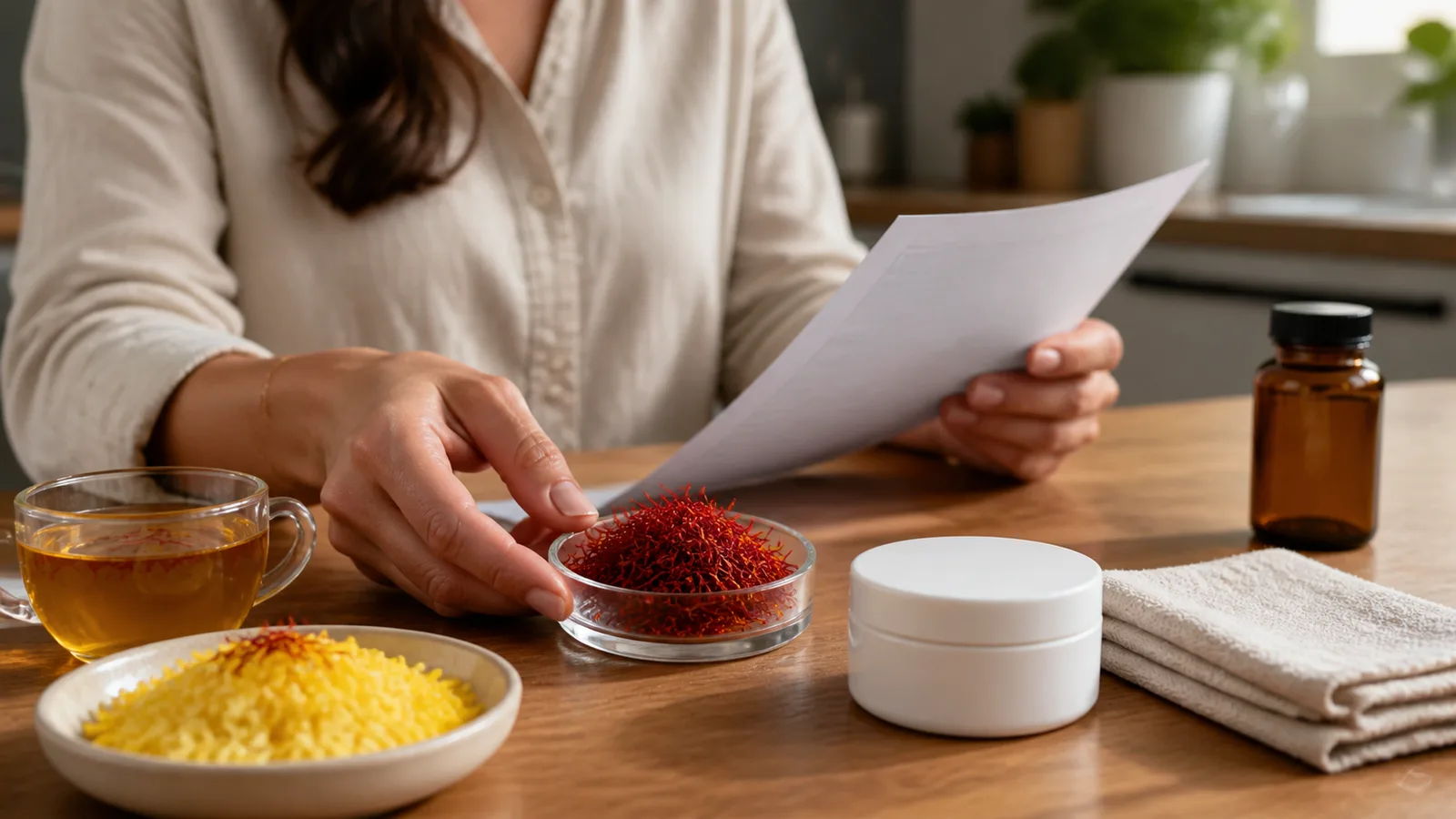
This guide separates those questions. It looks at what saffron contains, what human research has actually measured, and where caution matters more than an attractive claim.
What gives saffron its properties?
The spice is made from the dried red stigmas of Crocus sativus. Crocins contribute colour, picrocrocin contributes bitterness, and safranal is central to the aroma. Crocetin and related plant compounds are also studied in laboratory and clinical research.
Words such as “antioxidant” and “anti-inflammatory” describe activity under particular test conditions. They do not mean that eating the spice neutralises every harmful process in the body. In a meta-analysis of eight randomised trials, saffron supplementation did not significantly change the overall pooled results for CRP, TNF-α or IL-6. Some subgroups differed, but the authors called for better studies.
The most certain everyday properties are sensory: a small amount gives food a distinctive colour, aroma and taste. Clinical effects depend on the preparation, amount, duration and people studied.
Saffron benefits for skin: evidence versus a home mask
Saffron compounds and flower by-products are being investigated for antioxidant, antimicrobial, pigment and formulation properties. A review of dermoprotective research discusses their use in lotions, creams, moisturisers and other cosmetics. That is a research and formulation field, not proof that loose threads mixed in a kitchen hydrate, “oxygenate” or detoxify human skin.
A finished cosmetic has a defined ingredient list, concentration, preservative system and intended use. A homemade blend of saffron, rosewater, milk, honey, sugar or olive oil does not. Sugar scrubs can abrade irritated skin, and fragrant plant mixtures do not belong on burns, open wounds or an infected rash.
If you want to try a saffron cosmetic, choose a properly labelled product and follow its directions. Stop using it if redness, swelling, hives or persistent burning develops. A changing mole, deep burn, spreading rash or sign of infection needs appropriate care, not a brightening mask.
Does saffron help hair?
There is no reliable human trial showing that true saffron regrows hair or prevents hair loss. The antioxidant story is plausible chemistry, but it does not establish that a culinary serving repairs follicles. Claims about saffron vitamins and iron are also misleading because the amount normally eaten is tiny.
Hair loss can result from heredity, immune disease, hormones, infection, medication, nutritional deficiency, tight styling, illness or stress-related shedding. Our evidence review of saffron benefits for hair explains these distinctions and the common confusion between saffron and safflower research.
Saffron in pregnancy and breastfeeding
Pregnancy claims need more care than folklore about complexion, strength or an easier birth. A 2026 integrative review found that the evidence is limited and inconclusive. It also reported dose-dependent concerns, including uterine stimulation and associations between higher exposure or occupational exposure and miscarriage risk.
This does not make a few threads in a normal meal identical to a daily extract, concentrated drink or supplement. It does mean pregnancy is the wrong time to experiment with medicinal amounts or products of uncertain strength. Discuss concentrated saffron with the clinician responsible for your pregnancy, particularly if you have bleeding, contractions, a high-risk pregnancy or take medicine.
Breastfeeding safety is not established well enough to assume that every concentrate is harmless. Ordinary food use and supplement use should remain separate decisions.
Saffron and cancer: no treatment claim
Crocin, crocetin, safranal and saffron extracts have been tested in cells and animals. These experiments can help scientists investigate mechanisms. They do not show that saffron prevents cancer, shrinks a tumour, improves chemotherapy or treats cancer in a person.
A broad map of saffron clinical evidence found human meta-analyses for several health outcomes, while also identifying important quality limitations. It does not establish an anticancer benefit. Anyone receiving cancer treatment should check supplements and concentrated herbs with the oncology team or pharmacist because “natural” does not guarantee compatibility.
Heart health, blood pressure and metabolic markers
Saffron has been studied in people with metabolic syndrome and related conditions. A 2025 meta-analysis of 25 randomised trials reported small average reductions in fasting glucose, HbA1c, total cholesterol and systolic and diastolic blood pressure. It found no significant changes in triglycerides, LDL, HDL, body mass index or waist circumference, and called for higher-quality trials in more diverse populations.
Those results came from defined supplements in selected participants, not from seasoning a meal. They do not show that saffron prevents a heart attack, clears arteries or replaces blood-pressure, cholesterol or diabetes treatment. Never change prescribed medicine because of a spice or supplement result.
Mood, sleep, eyes and cognition
Mood is one of the better-studied saffron areas, though the picture is not perfectly consistent. A 2026 review of 34 randomised trials found improvement on self-reported depression and anxiety scales, while clinician-rated results were less consistent and studies varied substantially.
A sleep review covering five trials found early support for better sleep quality or duration. Other small studies have examined cognitive or eye outcomes in diagnosed populations. None makes saffron a replacement for mental-health care, an insomnia assessment, dementia care or an eye examination.
A brewed cup is also not automatically equivalent to the standardised product used in a trial. The difference between tea and measured preparations is explained in our guide to the health benefits of saffron tea.
Digestion and traditional after-meal use
Saffron appears in rice, soups, sweets and drinks across many food cultures. Enjoying it after a meal may be part of a familiar routine, and a warm drink can feel soothing. That does not demonstrate treatment of an ulcer, reflux, inflammatory bowel disease or another gastrointestinal condition.
New severe abdominal pain, repeated vomiting, black or bloody stool, persistent diarrhoea or unexplained weight loss needs medical assessment. Adding more saffron can make nausea or digestive discomfort worse rather than solve the cause.
Potential saffron side effects
A 2026 systematic review of adverse events examined 102 clinical trials and one case report. Saffron was generally well tolerated, but adverse events occurred. Gastrointestinal complaints were reported most often and were usually mild and self-limiting. Headache, nausea, dry mouth, reduced appetite, dizziness and allergic symptoms have also been described in human research.
The old internet lists of eyelid numbness, yellow eyes, jaundice and nosebleeds are sometimes repeated without a reliable dose, product or source. They should not be presented as a standard checklist. Severe or rapidly worsening symptoms after any product still require urgent assessment, especially breathing difficulty, facial or throat swelling, fainting, confusion or unusual bleeding.
Extra caution is sensible for concentrated use during pregnancy or breastfeeding, before surgery, alongside prescription medicine, or with a bleeding, blood-pressure, glucose, liver, kidney or mental-health condition. A pharmacist can review the actual product and medicine list.
How to use saffron without turning it into medicine
For most customers, saffron belongs in food: buy whole, traceable threads; use enough for flavour and colour; and store them dry, dark and sealed. A culinary pinch is not a clinical dose and should not be increased to chase a study result.
If you are considering an extract or daily supplement, check the botanical name, part used, amount per serving, other ingredients, manufacturer and independent quality information. Do not rely on a front-label promise such as detox, immune boost or heart protection.
The most useful account of saffron benefits and side effects keeps the categories separate: food value is real, clinical research is promising in selected areas, and many skin, hair, cancer and pregnancy claims remain unproven or unsafe to generalise. That is not a reason to dismiss saffron. It is a reason to enjoy it without asking the spice to do the work of diagnosis or treatment.