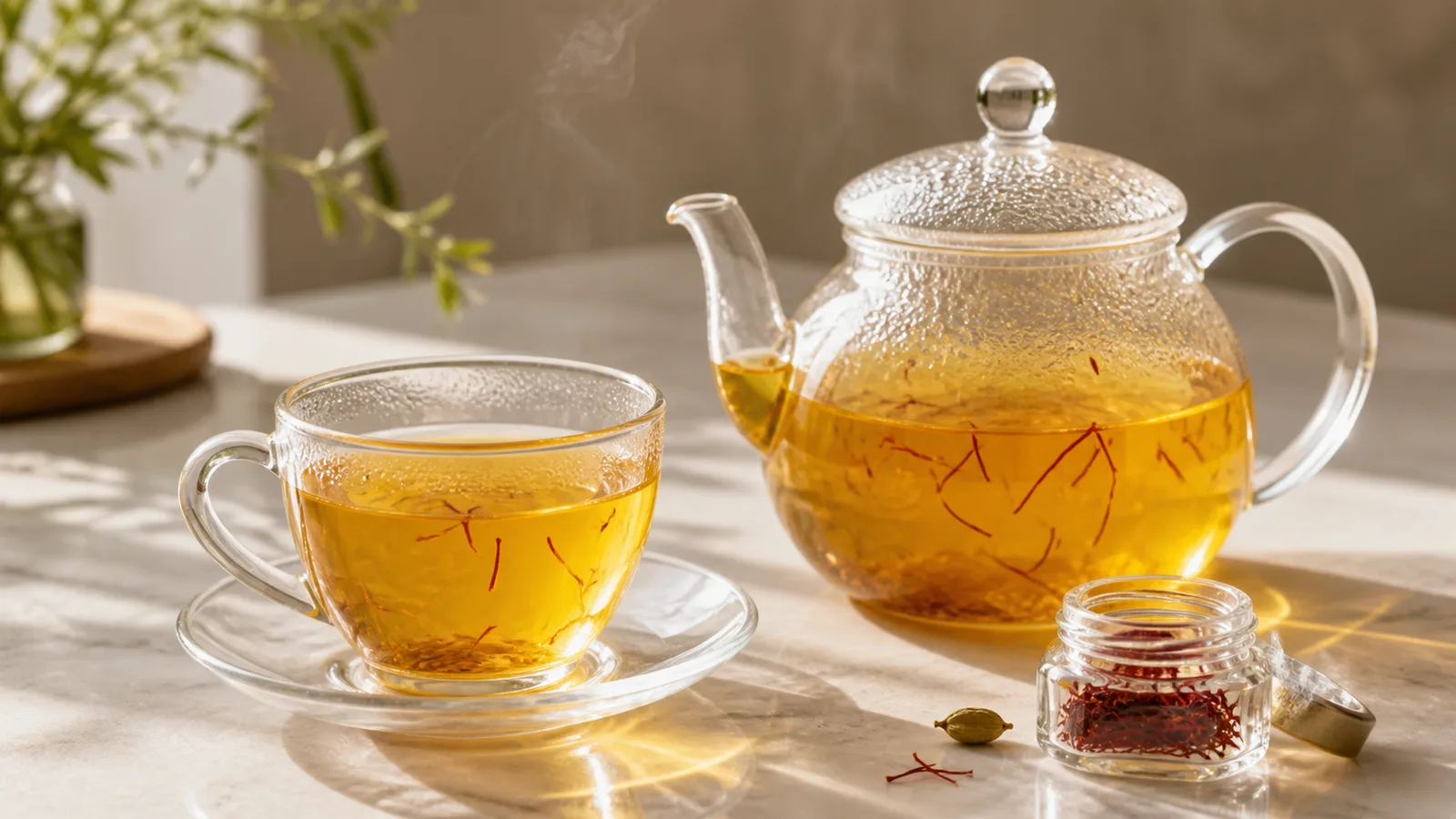
How do you add saffron to tea? Lightly crush a small pinch of genuine saffron threads, steep them in hot water for 5 to 10 minutes, then drink the infusion as it is or add it to black, green or herbal tea. Taste before adding sweetener so saffron’s own aroma is not buried.
How to Add Saffron to Tea?
Good saffron tea preparation is simple. The important choices are the amount of saffron, the water temperature and what else goes into the cup. You want a clear golden infusion with a dry floral aroma and gentle bitterness—not a dark, perfumed drink loaded with spice.
Step-by-Step Guide to Adding Saffron to Tea
- Warm the cup or pot. Rinse it with hot water, then discard that water.
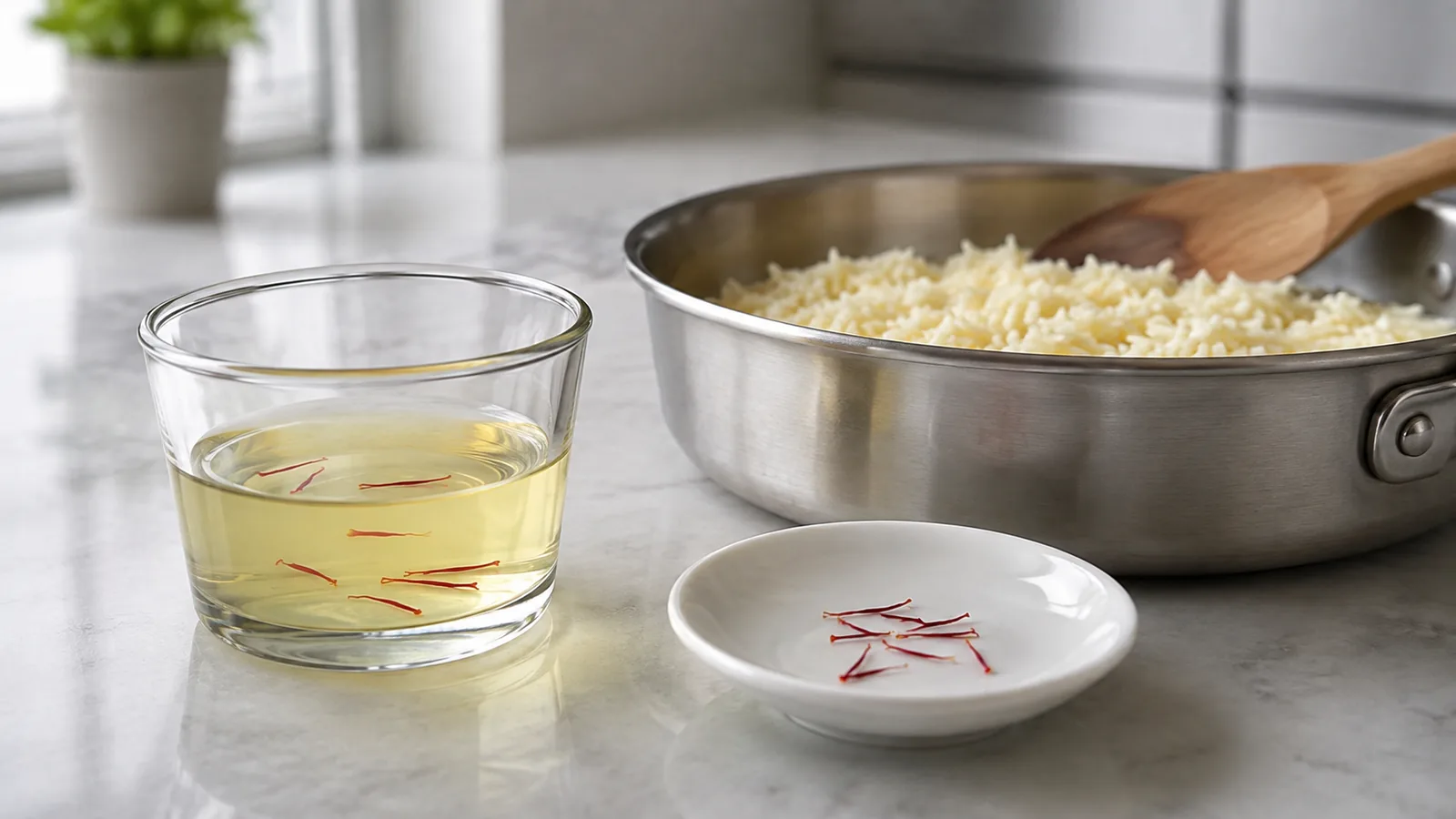
- Prepare the saffron. Use a small pinch of dry threads and crush them gently between clean fingers or in a mortar.
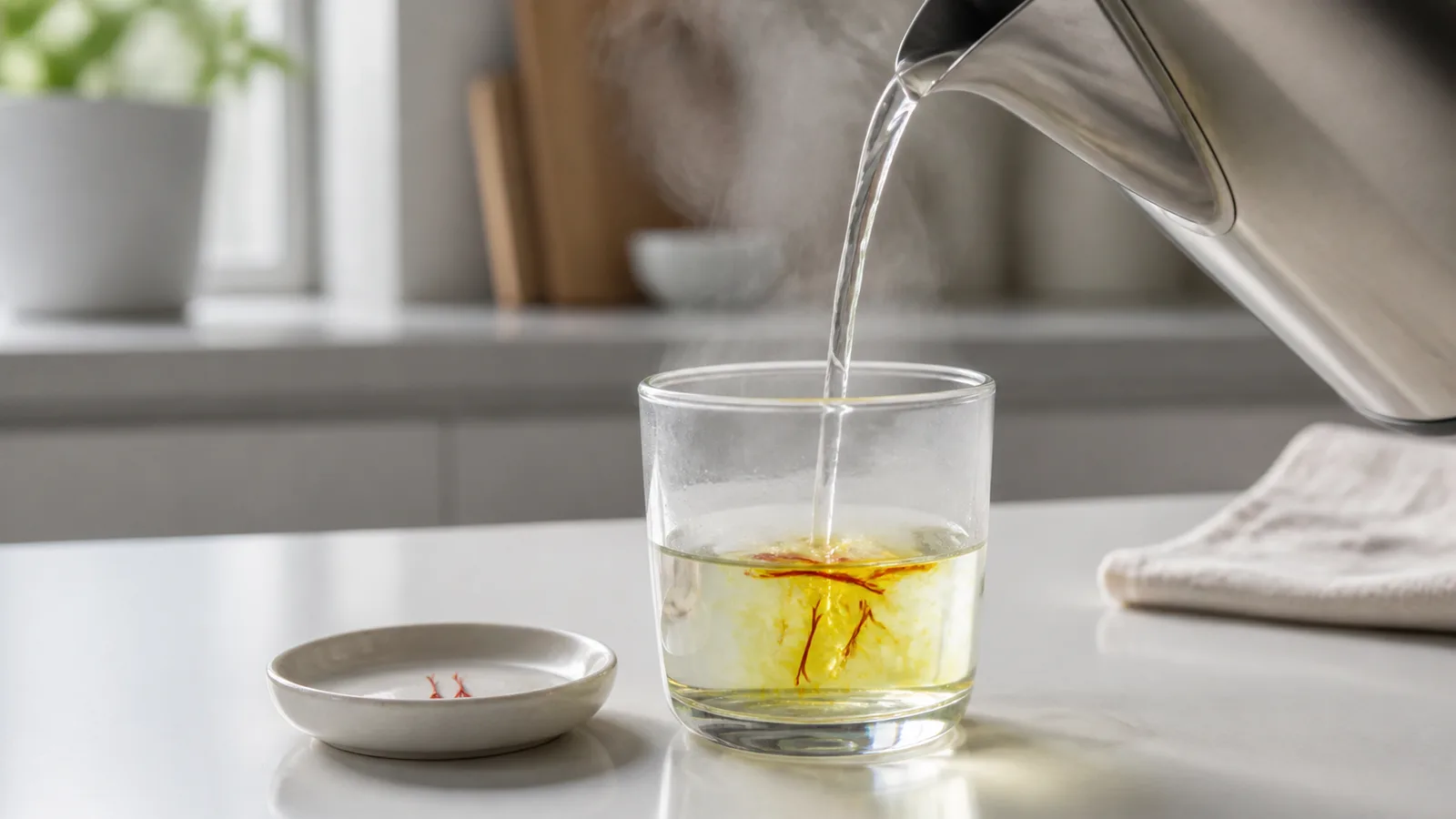
- Add hot water. Pour in one cup of water just off the boil. If you are making delicate green tea, use the lower temperature recommended for those leaves.
- Steep. Cover the cup and wait 5 to 10 minutes. The liquid should gradually turn golden.
- Finish to taste. Leave the softened threads in the cup or strain them. Add tea leaves, lemon, honey or another spice only if it improves the drink for you.
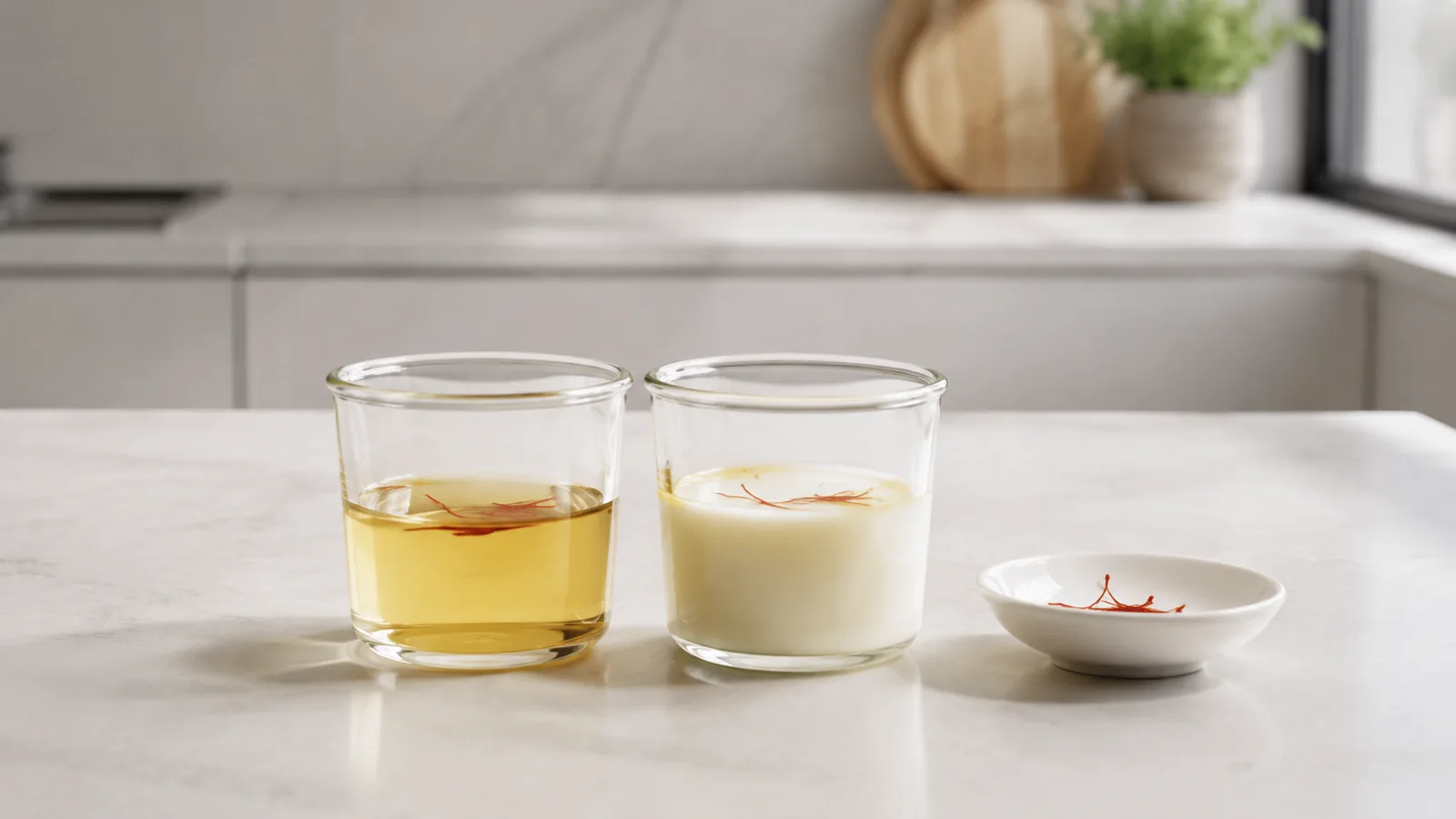
For black or green tea, you can bloom saffron separately and combine the two infusions. This lets each ingredient steep for the right time: saffron can take several minutes, while tea leaves may become bitter if left too long. It also makes the strength easier to adjust.
Optional Additions for Extra Flavor
Cardamom is a natural partner, but one lightly crushed pod is usually enough for a cup. A thin slice of fresh ginger gives warmth; a small strip of lemon peel adds brightness; rose water should be added by drops because it can quickly dominate.
Cinnamon and honey suit a rounder, sweeter cup. Add honey after the drink has cooled slightly and begin with less than you think you need. For iced saffron tea, make the infusion a little stronger, cool it promptly and pour it over ice rather than leaving warm tea at room temperature for hours.
Health Benefits of Saffron Tea
Saffron contains compounds including crocins, picrocrocin and safranal. Research has examined standardised saffron preparations for several outcomes, but the results of an extract trial cannot be assigned automatically to a lightly infused cup. A meta-research review of saffron evidence found promising results alongside important weaknesses in the quality of published reviews and trials.
It is reasonable to enjoy saffron tea for its aroma, colour and the quiet ritual of making it. It is not accurate to promise that one cup improves mood, digestion, sleep or skin. If you are considering a concentrated saffron product for a health reason, discuss the exact product with a qualified clinician.
Common Tea Problems and Simple Fixes
- The cup tastes bitter: use fewer threads, shorten the tea-leaf steep or reduce strong additions.
- The aroma is faint: crush the threads, cover the cup while steeping and check that the saffron is still fresh.
- The colour appears instantly vivid: colour alone cannot authenticate saffron; assess the source, aroma and thread structure too.
- The drink tastes musty: discard the batch and inspect the saffron for moisture or poor storage.
Keep saffron tightly sealed, cool, dry and away from light. Browse our saffron threads, or compare this cup method with the broader guide to the best way to consume saffron.
Conclusion
To add saffron to tea, crush a modest pinch, cover it with hot water and give it time. Drink the golden infusion alone for the clearest flavour, or combine it with a carefully brewed tea and restrained additions. The best cup is aromatic and balanced, not crowded.