Is saffron better than turmeric? Neither spice is better in every situation. Saffron is the choice for a delicate floral, honeyed aroma and clear golden infusion; turmeric brings an earthy, peppery flavour and stronger yellow colour at a much lower price. Health research on one cannot be transferred to the other.
Saffron vs Turmeric: Which Spice is Better for You?
Saffron and turmeric can make food yellow, but that is where the simple comparison ends. They come from different plants, taste different, behave differently in recipes and contain different studied compounds. Choose according to the dish first. Do not choose either spice as a replacement for medical care.
Are Saffron and Turmeric the Same?
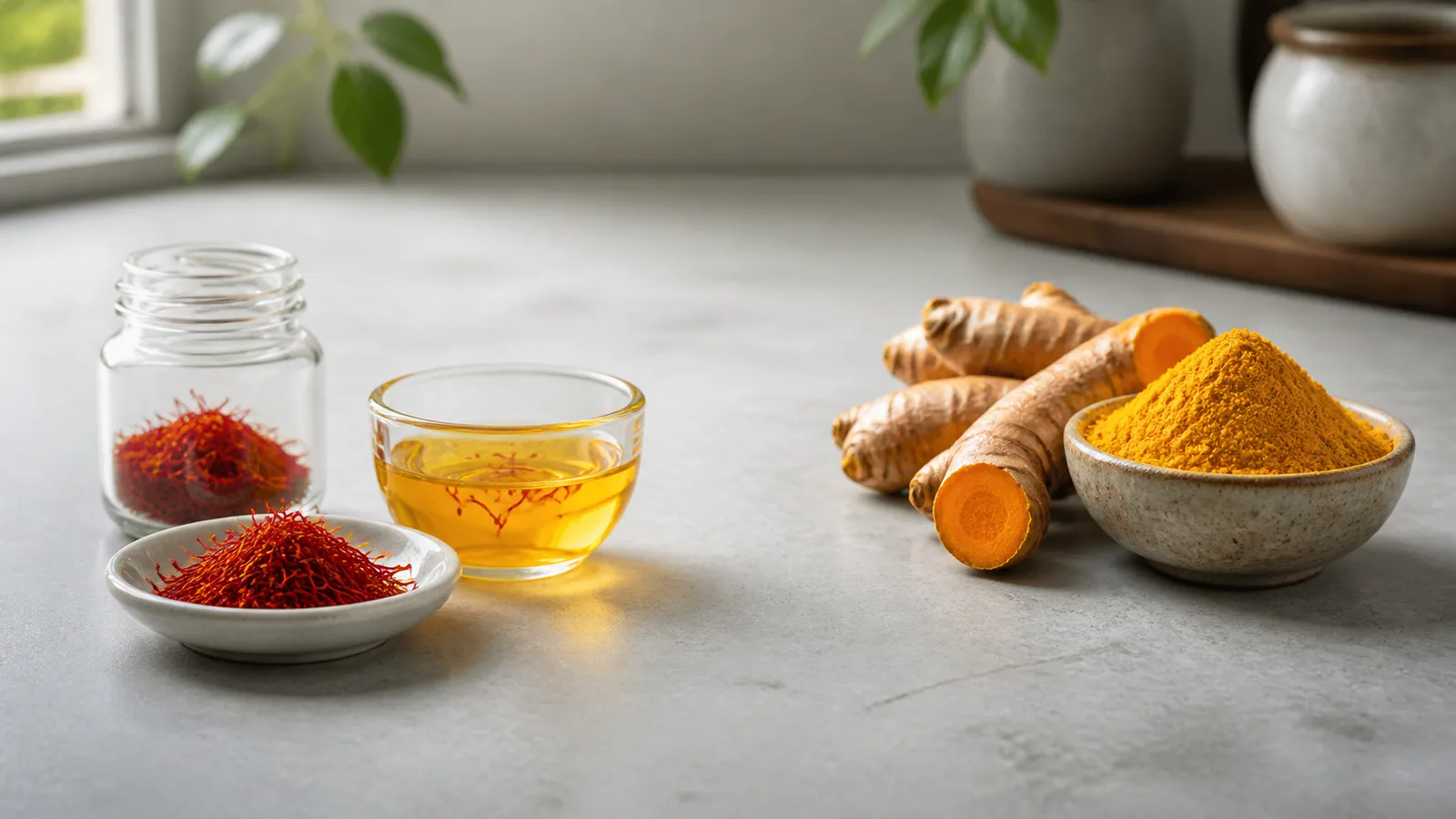
Is saffron the same as turmeric? No. Saffron is made from the dried red stigmas of the flower Crocus sativus. Turmeric is the underground rhizome of Curcuma longa, commonly sold fresh or as a yellow-orange powder. “Indian saffron” is sometimes used as a nickname for turmeric, but it does not make turmeric true saffron.
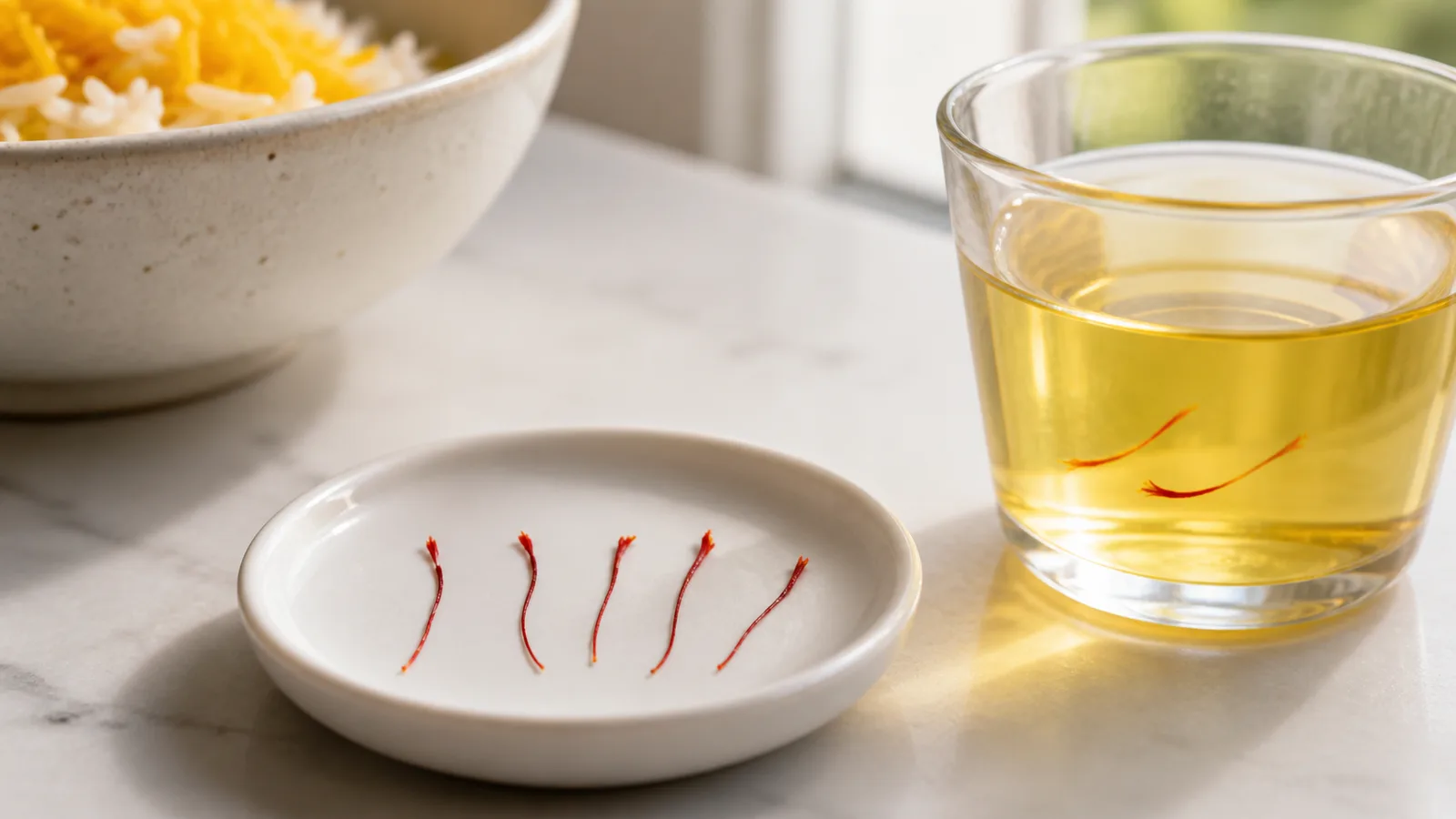
The difference between saffron and turmeric is visible in the pack as well. Saffron threads are fine, irregular and deep red; turmeric powder is dense and yellow-orange. Ground saffron exists, but an unlabelled yellow powder should never be assumed to be saffron.
Health Benefits of Saffron
Saffron contains crocins, picrocrocin and safranal, which help create its colour, bitterness and aroma. Clinical studies have examined standardised saffron preparations for mood, cognitive and other outcomes. A meta-research review of saffron meta-analyses reported promising findings in several areas but also found that the quality of the reviews and trials needed improvement.
That evidence does not mean a pinch in paella prevents cancer, treats anxiety or reliably improves memory, libido, digestion or skin. Those claims in the former article were too broad. The dependable benefit of culinary saffron is what it contributes to food; treatment decisions belong with a clinician.
Health Benefits of Turmeric
Turmeric contains curcuminoids, including curcumin. Studies often use extracts or specially formulated supplements rather than the quantity of turmeric found in a curry. A methodological review of oral curcumin research found that most systematic reviews did not adequately account for large differences in product bioavailability.
Turmeric is therefore not a proven all-purpose anti-inflammatory treatment, and a spoonful in food should not be presented as preventing cancer, Alzheimer’s disease or heart disease. It can be an enjoyable part of cooking; a concentrated curcumin product is a separate decision with its own formulation, dose and safety considerations.
Comparing the Culinary Uses of Saffron and Turmeric
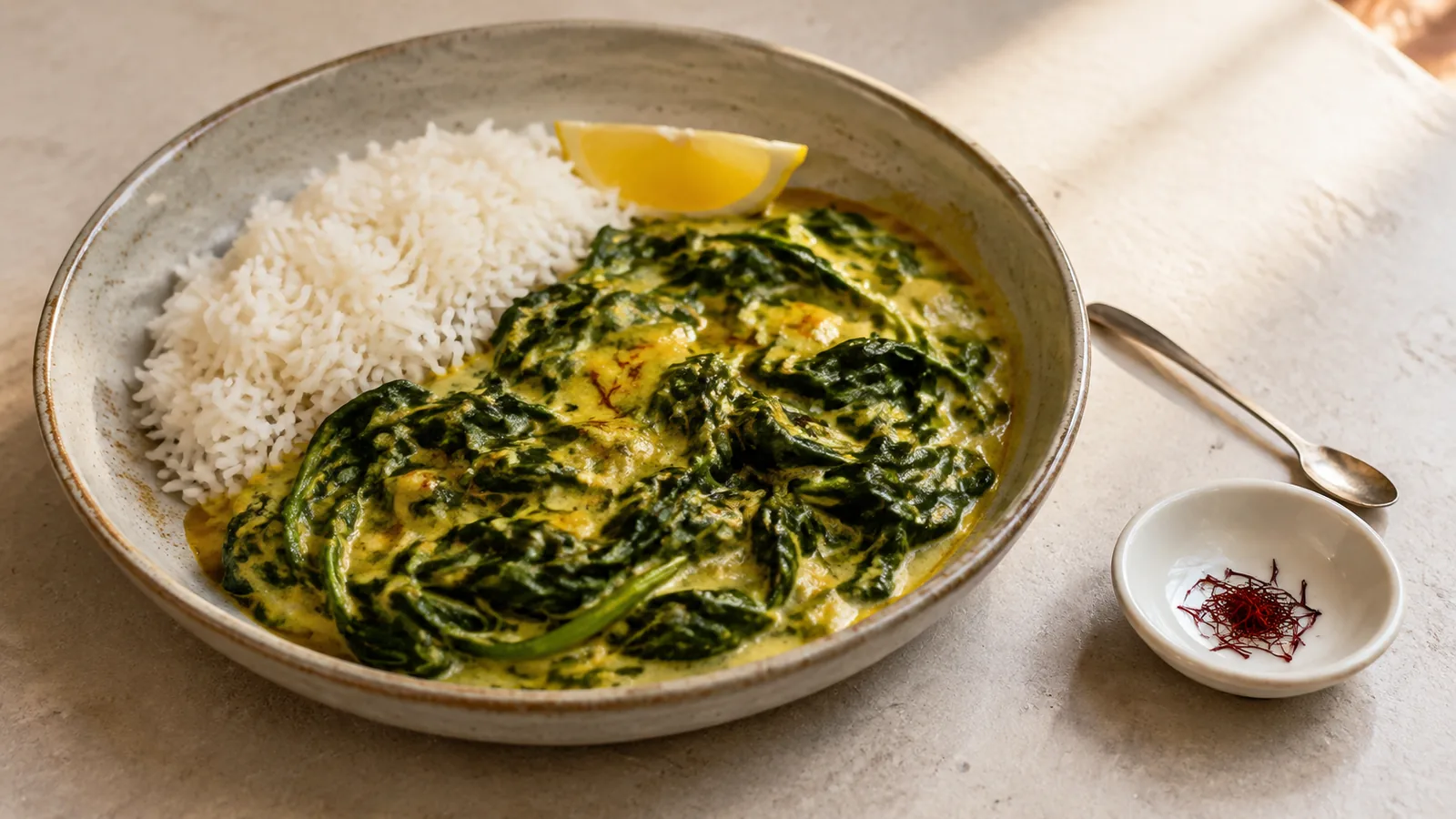
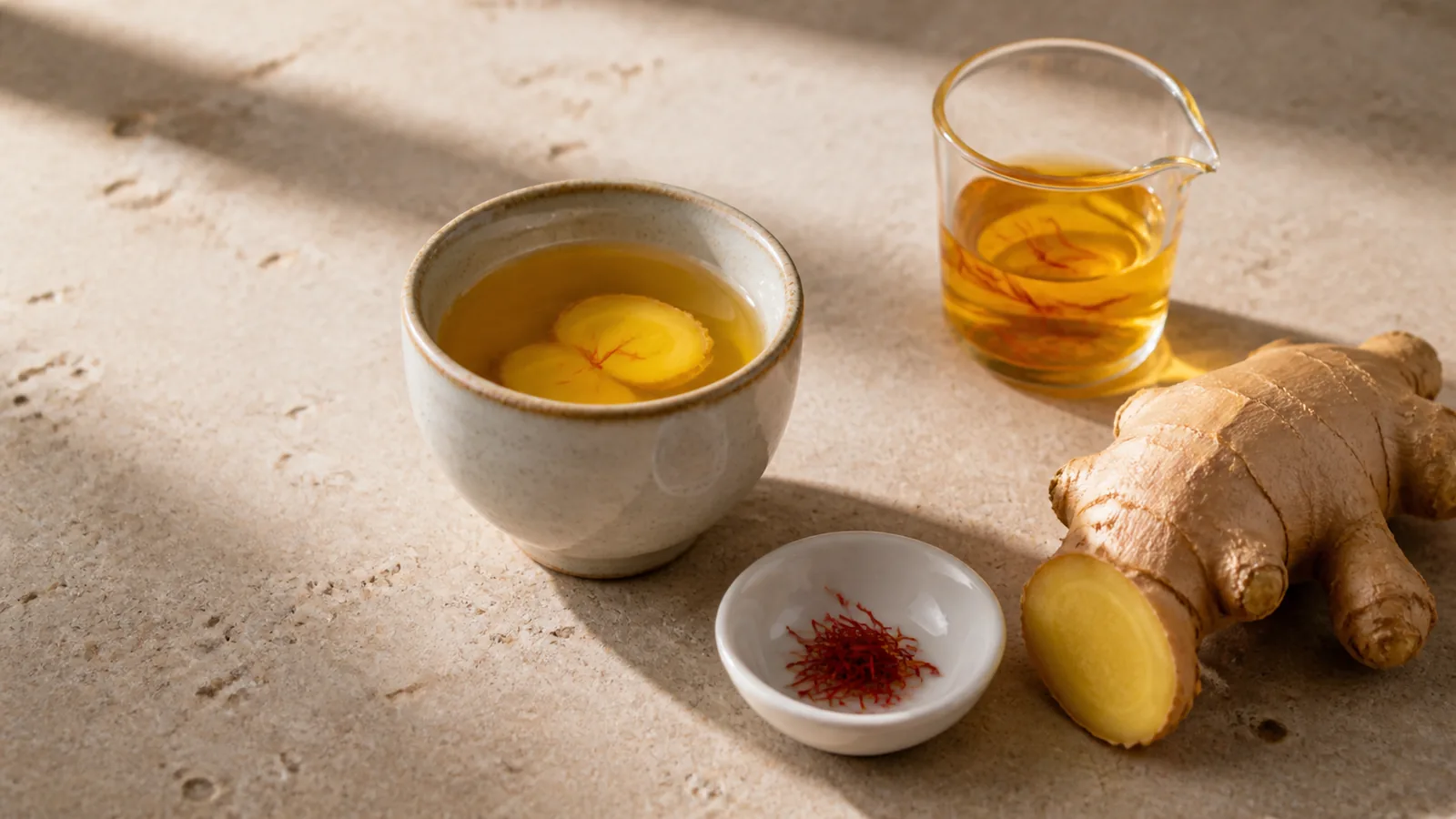
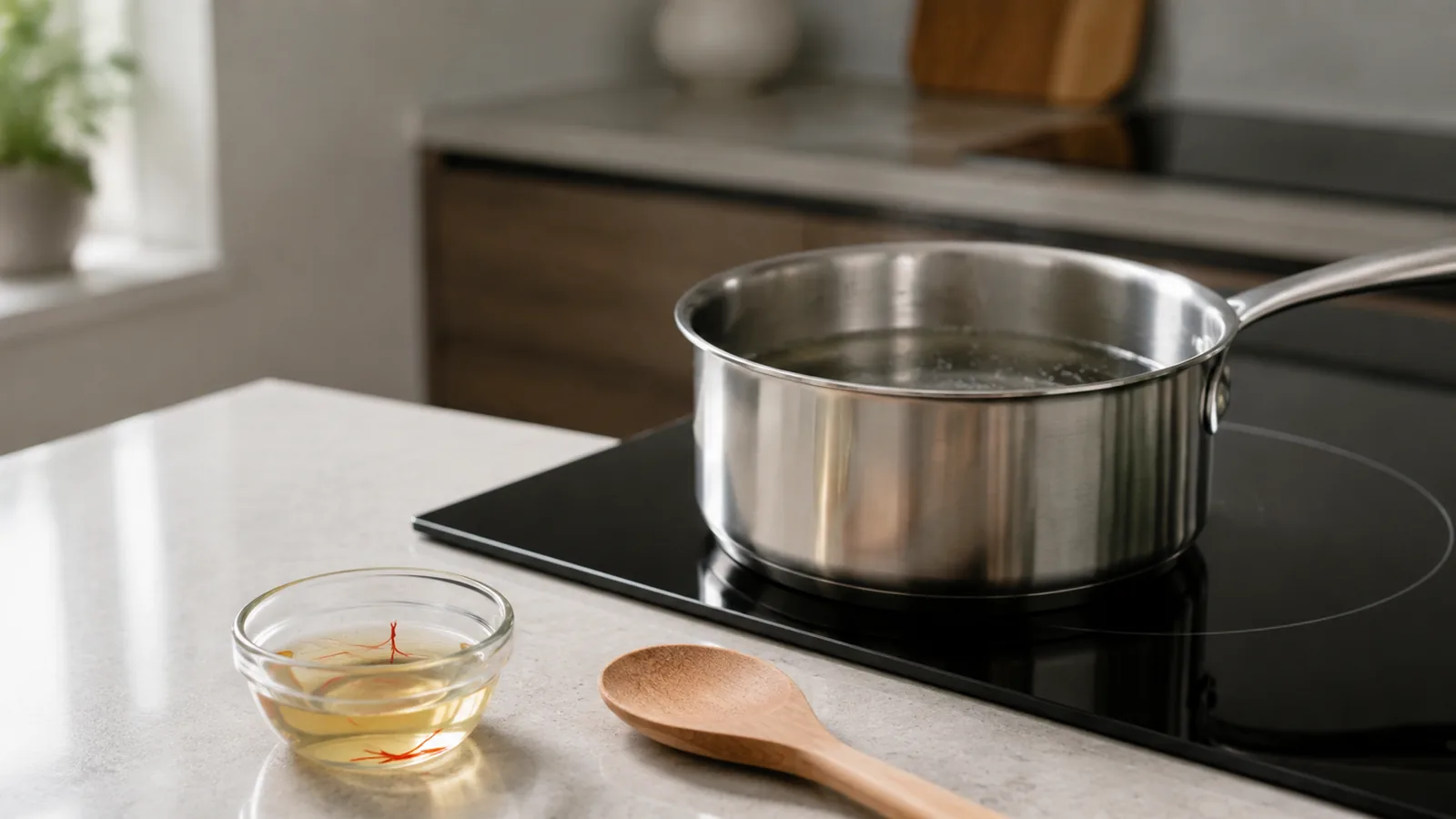
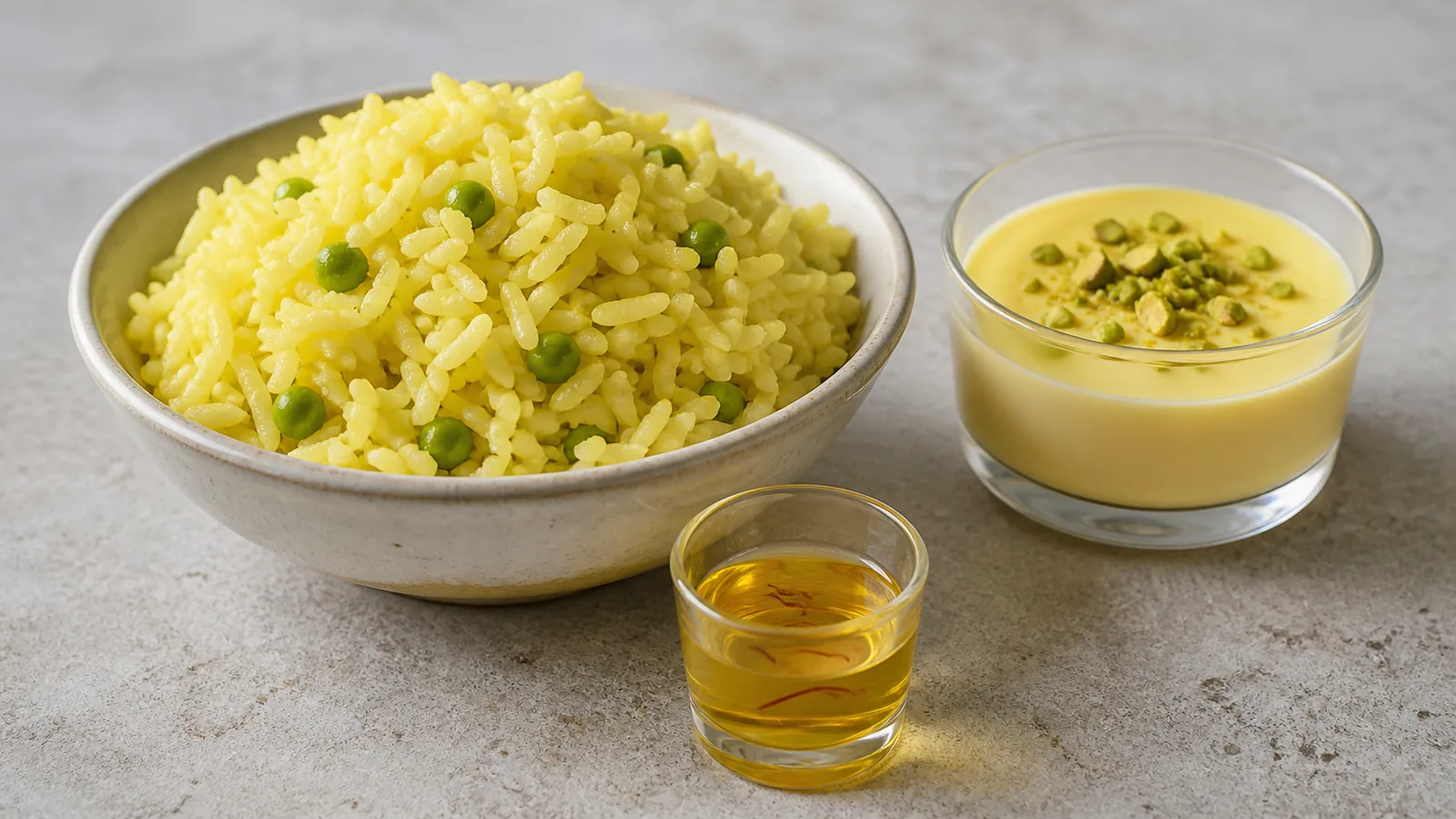
Saffron suits dishes where its aroma can remain distinct: risotto alla milanese, paella, Persian rice, biryani, bouillabaisse, milk desserts and lightly flavoured drinks. Crushing and blooming the threads in warm water, milk or stock helps the flavour spread evenly.
Turmeric is at home in curries, lentils, soups, stews, pickles and spice blends. It tolerates robust companions such as ginger, cumin, coriander and black pepper. Its earthy bitterness can dominate a delicate dish if used as though it were only colouring.
How much turmeric should substitute for saffron? There is no flavour-equivalent conversion. If colour alone matters, start with a very small pinch of turmeric and adjust; the finished dish will still taste different. For a recipe built around saffron’s aroma, turmeric is not a true substitute.
Which One Is Better for You?
Choose saffron when the recipe calls for fragrance, a clear golden colour and a light hand. Choose turmeric when an earthy spice belongs in the flavour base or when cost and everyday availability matter. Use both only when the dish is designed for both; combining them does not automatically increase a meal’s health value.
For supplements, “better” cannot be decided from the spice name. The studied preparation, amount, medical goal, medication use and quality of the evidence all matter. Ask a qualified clinician before using either as a treatment, particularly during pregnancy or alongside regular medication.
For cooking, see our saffron selection and learn the best way to bloom and use saffron.
Conclusion
Saffron vs turmeric is a comparison between two distinct spices, not two versions of the same product. Saffron offers a delicate aroma and luminous infusion; turmeric offers an earthy flavour and bold colour. The better choice is the one that fits the recipe, while health claims require evidence for the exact preparation being discussed.