Is there fake saffron? Yes. Counterfeit saffron can be a different plant sold in place of saffron, genuine threads bulked out with cheaper material, or a product treated with colour or aroma to appear better than it is. Fake saffron identification begins with sensible screening, but no single home test can prove purity or guarantee the expected flavour.
What counts as fake saffron?
True culinary saffron is the dried stigma of Crocus sativus. The current ISO 3632-1:2025 saffron specification applies to dried saffron sold as filaments, cut filaments or powder. A product becomes misleading when its label or presentation promises that spice but the contents, origin, age or grade do not match the claim.
Counterfeit saffron is not always a packet containing no saffron at all. Common forms of fraud include:
- plant material such as safflower, marigold, turmeric or other coloured fibres substituted for saffron;
- real stigmas mixed with stamens, styles, old material or unrelated plant matter to increase weight;
- added dyes, oils, sugars, salts, moisture or other additives and impurities that change appearance, aroma or weight; and
- misleading claims about botanical identity, geographic origin, grade or testing.
A 2024 study of 104 market samples from 16 countries used morphology, HPLC, HPTLC and DNA barcoding. It found adulteration in 45 samples, while no single method found every problem. That result shows why fake saffron is a real concern, but it does not mean that 43% of all saffron sold everywhere is fake. The figure belongs to that particular sample set and method.
Why saffron attracts counterfeiters
Each crocus flower produces only three stigmas, and harvesting and separating them requires concentrated seasonal work. Its high cost and tiny retail quantities make saffron an inviting target for substitution and dilution. Powder also hides the shape of the original stigma, making visual screening much harder.
Price can warn you that an offer is implausible, but price alone cannot authenticate it. A cheap packet may be poor or false, while an expensive packet can still be mislabeled. Compare the net weight and seller information with current saffron price context, then assess the product itself.
Fake saffron identification before you buy
Read the label, not only the front of the pack
Look for the botanical name Crocus sativus, net weight, seller or producer details, country of origin, lot or batch identification, and a best-before or packing date where applicable. A sealed package with traceable information is easier to question if something is wrong than loose strands with no origin or receipt.
Be cautious when the name “saffron” is paired with another plant. Safflower, sometimes sold under a saffron-like culinary name, is a real plant and a useful ingredient in its own right; it is not Crocus sativus. Likewise, a picture of a red or orange flower does not establish that the contents are saffron.
Prefer whole threads when you want to inspect them
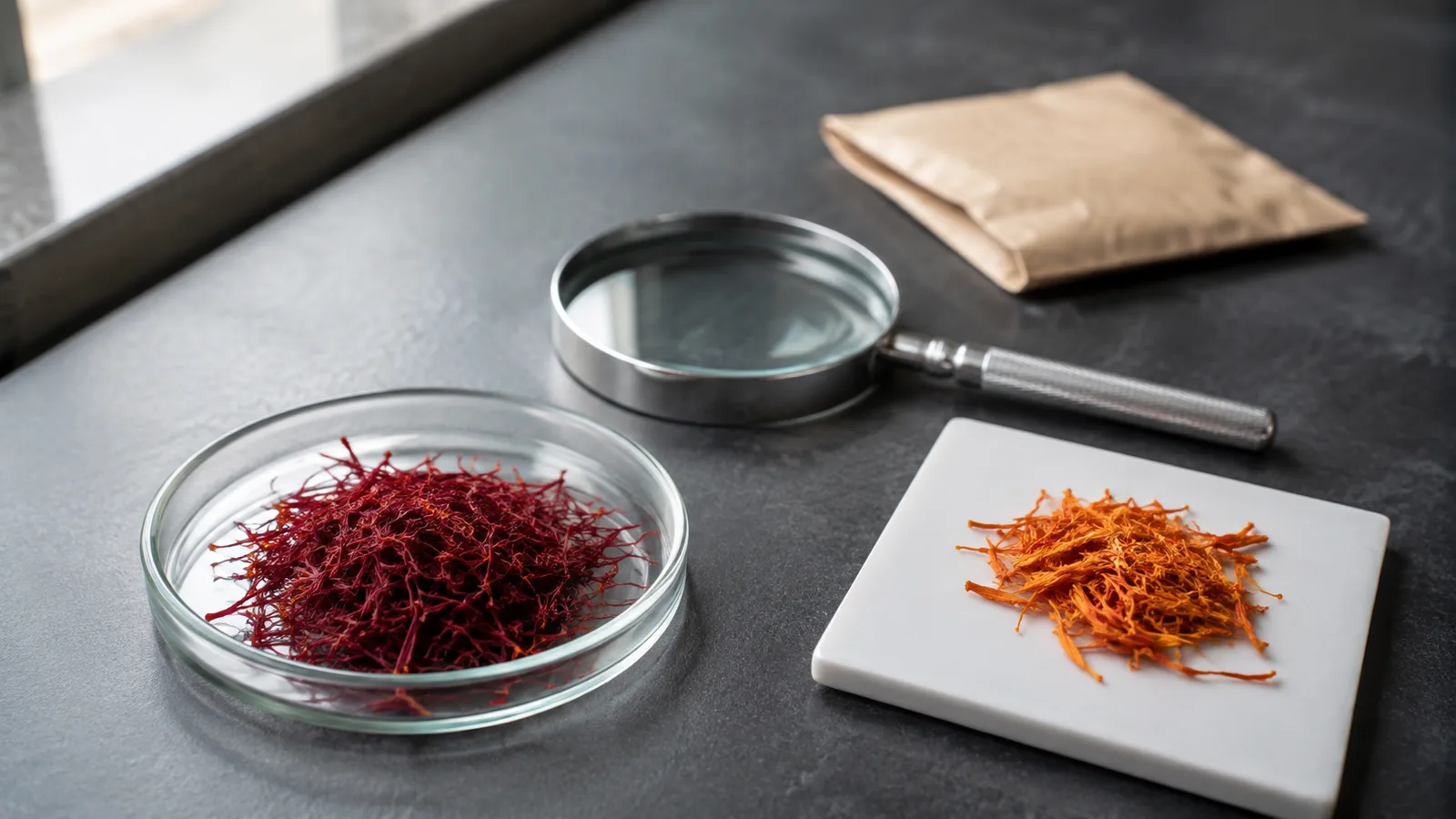
Whole saffron gives you more visible information than powder. Genuine dried stigmas are slender and irregular, with a broader, flared end rather than perfectly identical cut fibres. Some grades retain more yellow or orange style than others, so “every thread must be entirely red” is not a universal authenticity rule.
Uniform shape can be suspicious, but appearance is only a screen. Researchers have documented plant substitutes that resemble saffron closely enough to require microscopy, chromatography or DNA analysis. The detailed guide to real saffron versus fake saffron shows the visual comparison without pretending that sight settles every case.
Check the seller’s evidence
A trusted seller should be able to explain where a batch came from, how it was packed and what a cited test actually measured. Ask for a batch-specific report if laboratory testing is part of the sales claim. A generic certificate, an unexplained “Grade A” badge or an ISO logo on its own is not the same as traceable results for the packet in your hand.
When buying online, keep the listing, order confirmation and lot details. Use the seller’s real contact information rather than relying on reviews alone. Questions about a listed product can be sent through Rowhani’s contact page before ordering.
What you can check after opening the pack
Look at colour and shape in good light
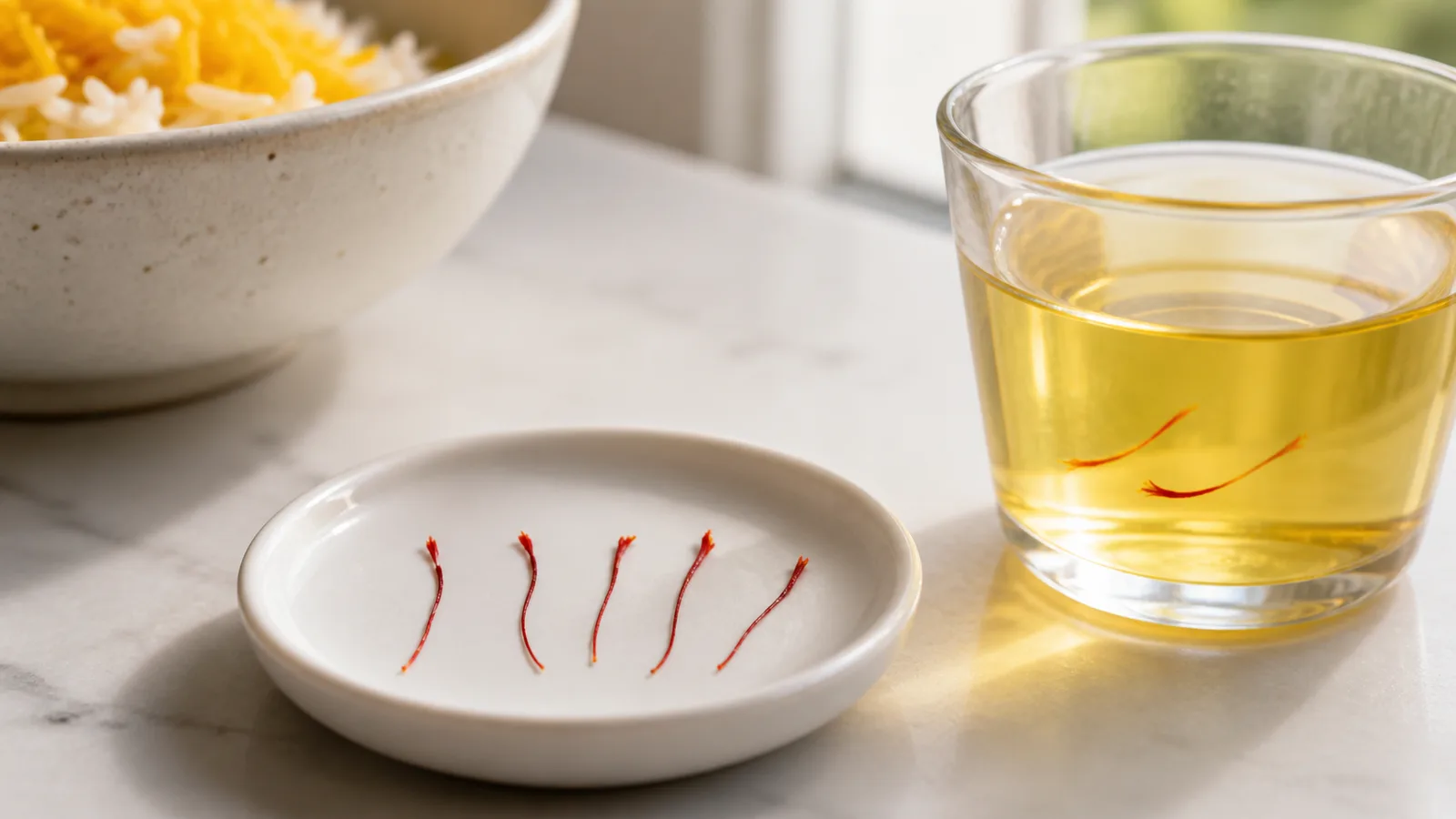
Spread a few dry threads on a white plate. Look for natural variation, fine longitudinal texture and a flared end on at least some pieces. Watch for obviously flat petals, wood-like shavings, fuzzy fibres, coloured powder collecting in the pack, or a large proportion of yellow material. These signs justify caution, but a convincing shape does not rule out added weight or dye.
The phrase “fake saffron flower” can also be confusing. There is no single counterfeit flower. Several unrelated plants may be presented as culinary saffron, while genuine saffron comes specifically from the stigmas of the purple Crocus sativus flower.
Assess the aroma without expecting one simple note
Saffron has a distinctive, complex aroma that people describe in different ways: dry hay, honey, a subtle floral note and a slightly medicinal or metallic edge are common comparisons. An overpowering perfume, oily surface or chemical smell is a reason not to use the product. A weak aroma may also reflect age or poor storage rather than deliberate fraud.
Smell is useful when you already know good saffron, yet counterfeit saffron can contain added aroma and genuine saffron can lose volatile compounds. It should never be your only test.
Use the water test as a screen, not a verdict
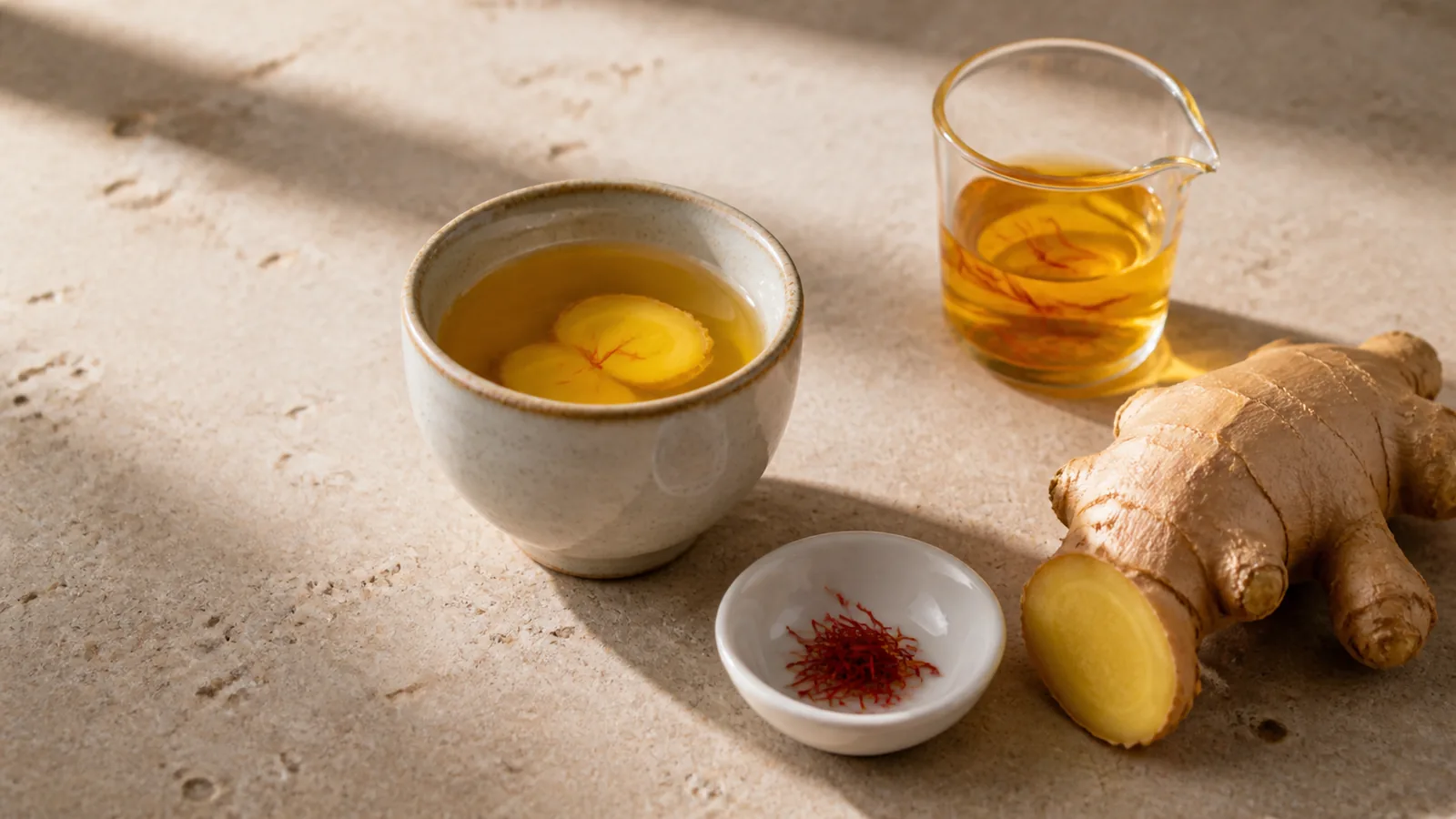
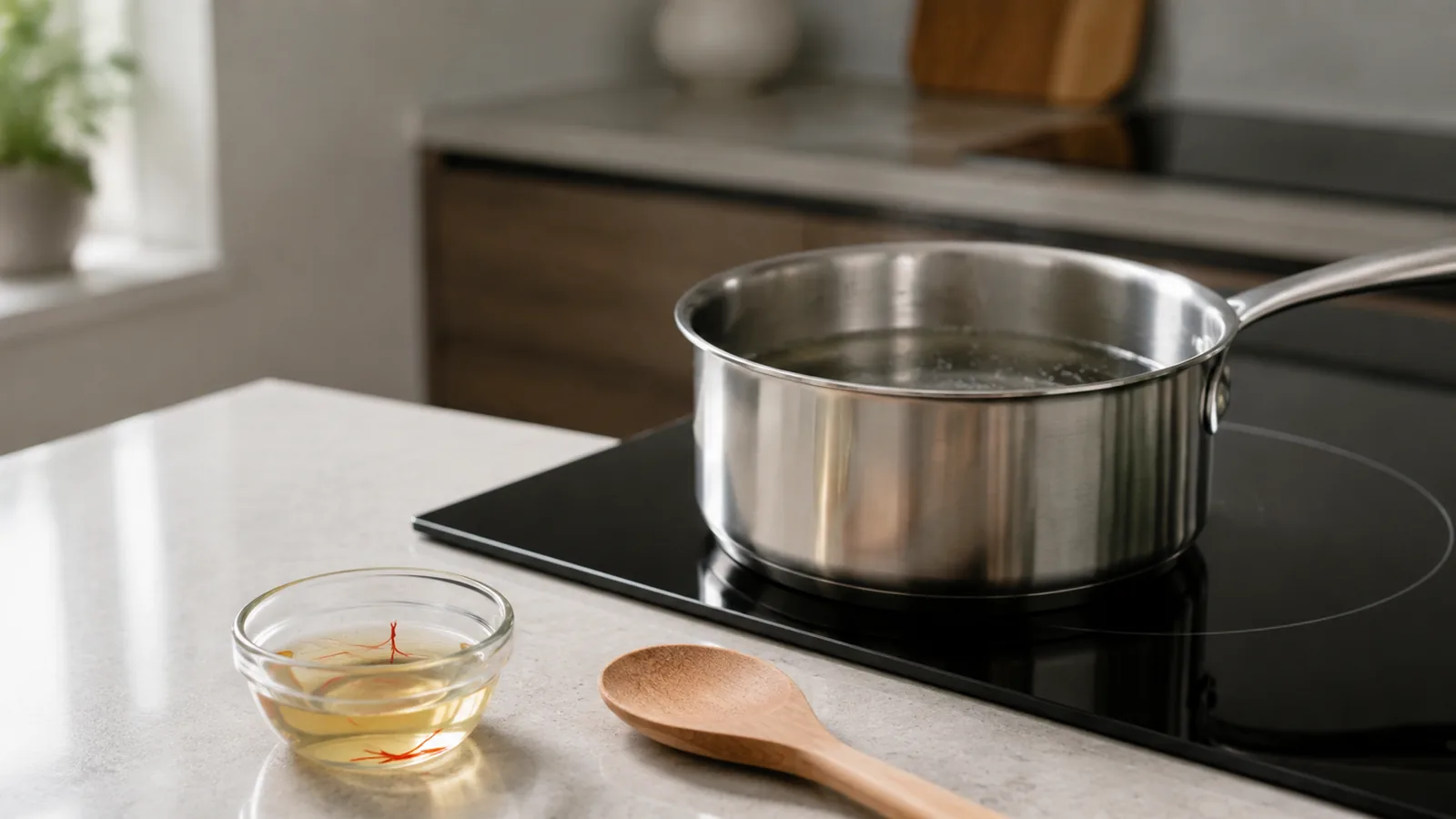
Place a few threads in room-temperature water and observe rather than stirring hard. Genuine saffron colours the water yellow to golden as soluble pigments move out of the stigmas; the threads do not simply vanish. A sudden cloud of red dye, colour rubbing off onto your fingers, or fibres turning pale immediately is suspicious.
Timing is affected by water temperature, thread size, agitation, processing and age. Some dyed materials can release colour quickly, while others imitate a gradual release; genuine finely cut saffron can also colour water faster than intact threads. The water test therefore cannot certify purity or identify an adulterant.
Do not use hazardous internet tests
Do not burn saffron, taste unknown chemicals, mix it with petrol or other solvents, or use household reagents on something you may later eat. These tests can expose you to fumes or contamination and still do not provide controlled laboratory evidence. If a packet seems abnormal, keep it closed or set the sample aside for the seller or a qualified laboratory.
Why laboratory testing is different
ISO 3632-2:2010, confirmed as current in 2022, specifies test methods for dried saffron in filament, cut-filament and powder forms. Laboratory methods can measure characteristics under controlled conditions; specialised techniques may also examine morphology, chemical markers or DNA.
Even professional methods answer different questions. A Food Chemistry study comparing ISO analysis, microscopy and DNA barcoding concluded that the methods were more useful in combination: one could assess colour and aroma, another could screen physical material, and another could identify biological origin. A later multi-method market-sample study likewise found different numbers of suspect samples with morphology, HPLC, HPTLC and DNA barcoding.
This is why a seller should describe testing precisely. “Lab tested” is incomplete unless the batch, laboratory, date and scope are clear. ISO quality classification and authentication are related, but a colour-strength result alone does not prove every statement about purity or origin.
What to do if you suspect counterfeit saffron
- Stop using it if the product has an unusual chemical smell, loose dye, foreign matter or damaged packaging.
- Keep the package, receipt, listing screenshots, lot number and a small untouched sample.
- Photograph the contents in neutral light without altering them.
- Ask the seller for an explanation, refund and any batch-specific test report.
- Report a food-safety concern to the appropriate local food authority, especially if someone became ill.
If a person develops worrying symptoms after eating a suspect product, seek local medical or poison-control advice rather than trying more home tests. The likely substitute is unknown, so an article cannot determine the health risk from appearance alone.
So, is there fake saffron?
Yes, fake saffron exists in several forms, from complete substitution to diluted or misleadingly labelled genuine spice. The best protection is a traceable seller, a clear label, whole threads that you can inspect and evidence tied to the actual batch. Colour, shape, aroma and water behaviour can help you notice a problem; they cannot replace a laboratory when certainty matters.