No. Saffron is exceptionally expensive for a food ingredient, but a natural gem-quality diamond generally costs far more per gram. The familiar claim that saffron can be pricier than diamonds comes from mixing kilograms with carats, using unreliable price figures or comparing entirely different grades of material.
Is saffron more expensive than diamond by weight?
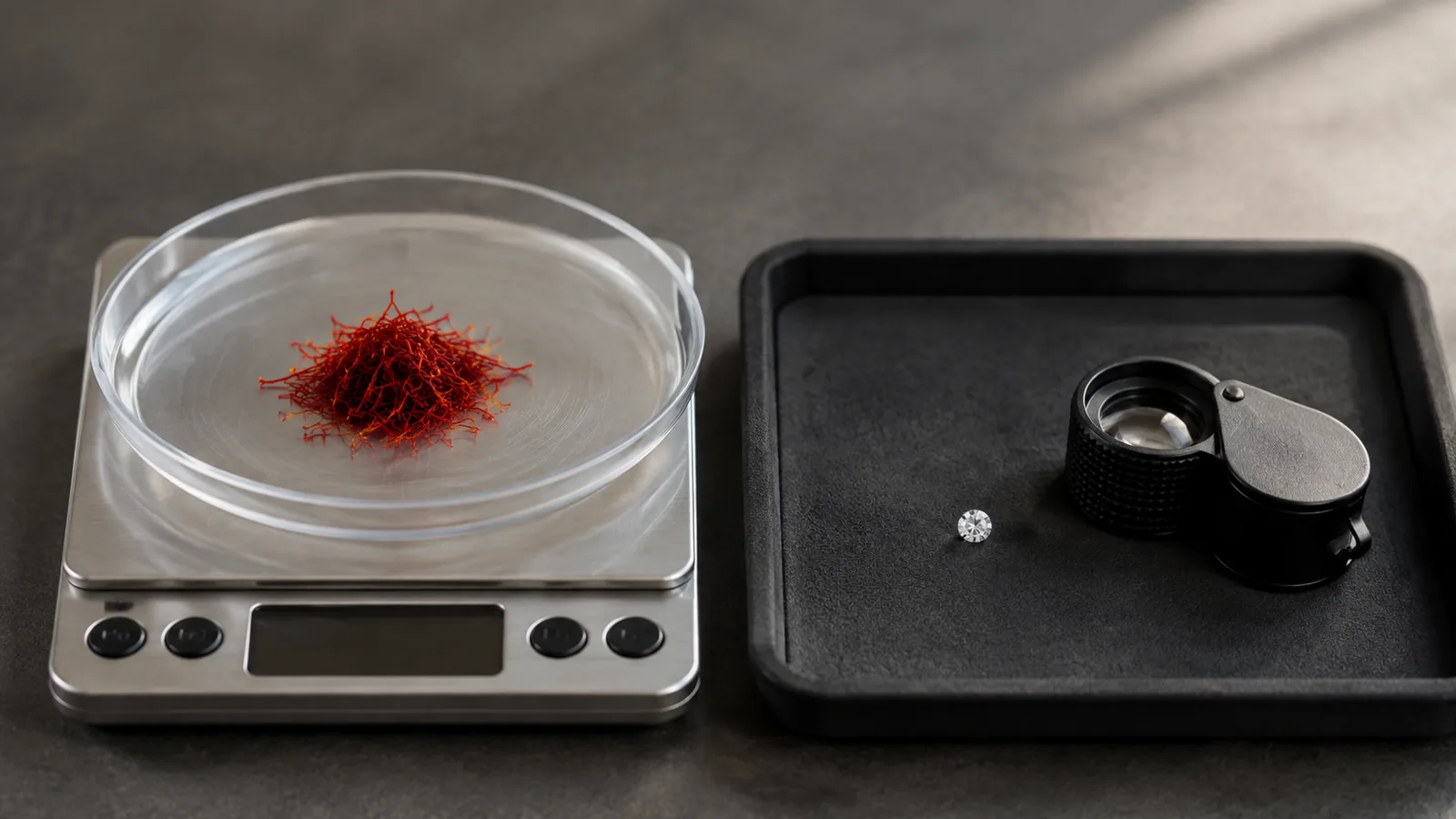
To compare the two by weight, the units must first match. The Gemological Institute of America states that one metric carat equals 0.20 grams. Five carats therefore weigh one gram. A diamond quotation “per carat” must be multiplied by five before it can be compared with a saffron price per gram.
Once that conversion is made, gem-quality diamonds remain in a much higher value category. Saffron may be one of the world’s costliest spices and agricultural products by weight, but it is not more expensive than a comparable weight of a valuable natural diamond.
The wording still needs a caveat. “Diamond” can mean a graded natural gemstone, a laboratory-grown stone, a tiny low-quality fragment or industrial abrasive. Those products do not share one price. The sensible comparison is culinary saffron versus a documented gem-quality diamond, not saffron versus the cheapest material that contains carbon crystal.
Why the saffron-versus-diamond myth sounds believable
Both products are sold in very small units and surrounded by luxury language. A jar may show a price per kilogram even though a household buys one gram; a jeweller quotes per carat even though a carat is only one-fifth of a gram. Moving between those units without doing the conversion creates dramatic but false conclusions.
Old articles also repeat temporary prices as permanent facts. Saffron changes with origin, harvest, grade, pack size and retail market. Diamond value changes with the individual stone. A statement such as “diamonds cost $50 to $100 per gram” is not a credible general benchmark for jewellery diamonds and should not be used.
How is kesar made, and why is saffron expensive?
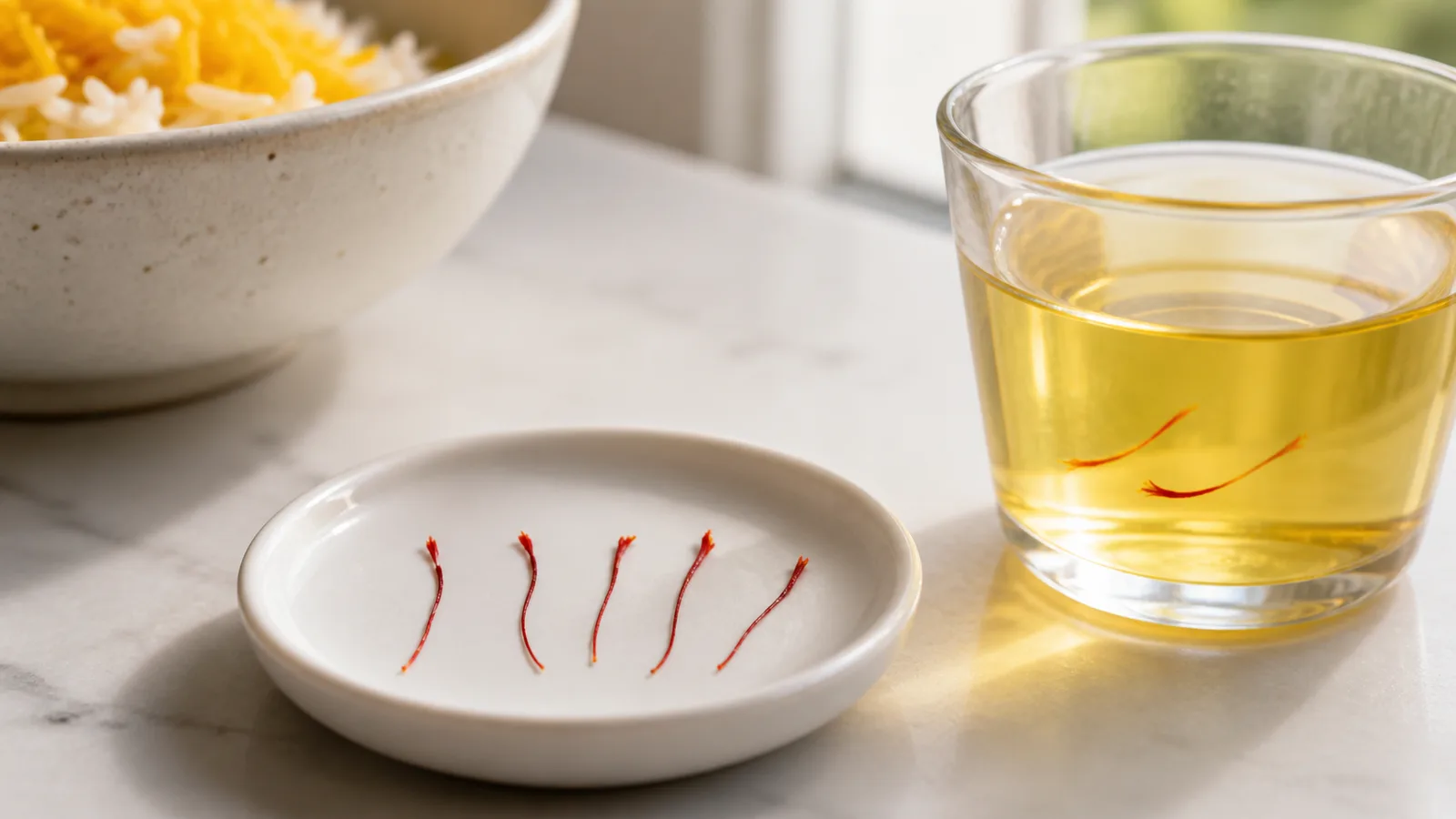
Kesar is another name for saffron. The saffron plant is the autumn-flowering Crocus sativus, and the spice comes from its red stigmas. Each flower provides only three, and the blooms must be collected during a short harvest window. Workers then separate the stigmas from the rest of the flower and dry them carefully.
University of Vermont Extension estimates that about 150–170 flowers produce one gram of dried saffron. A kilogram represents a huge number of individual flowers, plus picking, separation, drying, testing, packing and distribution. That labour concentration explains saffron’s exceptional place among spices.
It does not put saffron into the same value system as a gemstone. Saffron is harvested, consumed and replaced. A diamond is a durable object whose rarity, optical qualities and size can make one stone unusually valuable.
How diamonds are valued
Diamonds are not priced by weight alone. GIA describes the four central quality factors as carat weight, colour, clarity and cut. Its diamond quality guide explains that the combination of these “4Cs” affects the value of a finished diamond.
Two stones with the same carat weight can therefore have very different prices. Larger stones are also rarer, so value does not rise in a simple straight line with weight. A one-carat stone is not necessarily worth exactly twice as much as a comparable half-carat stone.
A meaningful diamond comparison needs a grading report, natural or laboratory-grown status, cut, colour, clarity and carat weight. Without those details, “diamond price” is too vague to use in arithmetic.
How saffron is valued
Saffron also varies by batch, although its quality language is different. Buyers consider the proportion of red stigma, thread integrity, moisture, foreign matter, colouring strength, aroma-related measures, freshness, origin, storage and traceability.
The current ISO 3632-1:2025 saffron specification offers a technical framework for saffron. A real result applies to the sampled lot; a seller merely mentioning ISO does not prove that every jar has been tested.
Origin can influence supply and reputation, but premium Iranian saffron is not automatically the world’s most expensive and a famous regional name is not a substitute for batch evidence. Whole threads are easier for a household buyer to inspect than powder, which can hide adulteration.
A fair gram-for-gram comparison
A fair comparison follows four steps:
- Choose a dated saffron retail offer and convert it to price per gram.
- Choose a specific graded diamond, not a generic web estimate.
- Convert the diamond’s carat weight to grams using five carats per gram.
- State the currency, date, tax and product details for both.
The result will ordinarily show the gem-quality diamond costing far more per gram. More importantly, the calculation will reveal why a single universal dollar figure for either product is misleading.
What “saffron diamond” and similar phrases mean
Names such as saffron diamond, red diamond saffron, saffron jewel or saffron ring may appear in product names, colour descriptions or marketing copy. They are not recognised saffron grades and do not connect the spice to a certified gemstone. A decorative label should never replace the actual net weight, origin, thread form and quality evidence.
A search for saffron diamond price may therefore refer to a seller’s named product rather than a standard commodity category. Read the listing itself and compare its saffron grade and weight; do not use the word “diamond” as a price calculation.
“Red gold” is another metaphor for saffron’s value. It describes cultural and commercial importance; it is not a laboratory classification. The same rule applies to words such as royal, luxury or diamond-grade.
Is saffron still a luxury?
Yes, in the culinary sense. Saffron concentrates a great deal of farm labour into a light product and gives food a distinctive aroma, flavour and golden colour. Our guide to saffron as a practical culinary luxury explains why the per-serving cost can remain reasonable even when the per-kilogram price looks dramatic.
A diamond is bought as a lasting gem. Saffron is bought to use. Comparing them is interesting, but it should not hide the more useful household question: does this jar provide authentic, well-kept threads in an amount the cook will actually finish?
How to assess a saffron price
First, compare the same unit. A half-gram gift jar will usually have a higher price per gram than a plain larger pack. Then check whether the product is whole threads or powder, what grade is claimed, where it was grown, how it was packed and whether the seller offers traceability.
Do not treat colour alone as proof. Saffron should have characteristic deep-red threads and a fresh complex aroma, but visual inspection cannot replace testing. A suspiciously low price deserves scrutiny, while a high price still needs evidence.
For current market context, use the saffron price guide rather than an undated figure. Available formats and pack sizes are listed with the current saffron products.
The accurate answer
Saffron is not more expensive than gem-quality diamond per gram. It is extraordinarily valuable for a spice because so many flowers and so much careful work are needed to make a small weight. Diamonds belong to a different market and are judged stone by stone through carat weight, colour, clarity and cut.
The comparison becomes useful when the units and product definitions are honest. Convert carats to grams, identify the diamond, date both prices and avoid invented averages. Saffron does not need a false diamond claim to be remarkable.