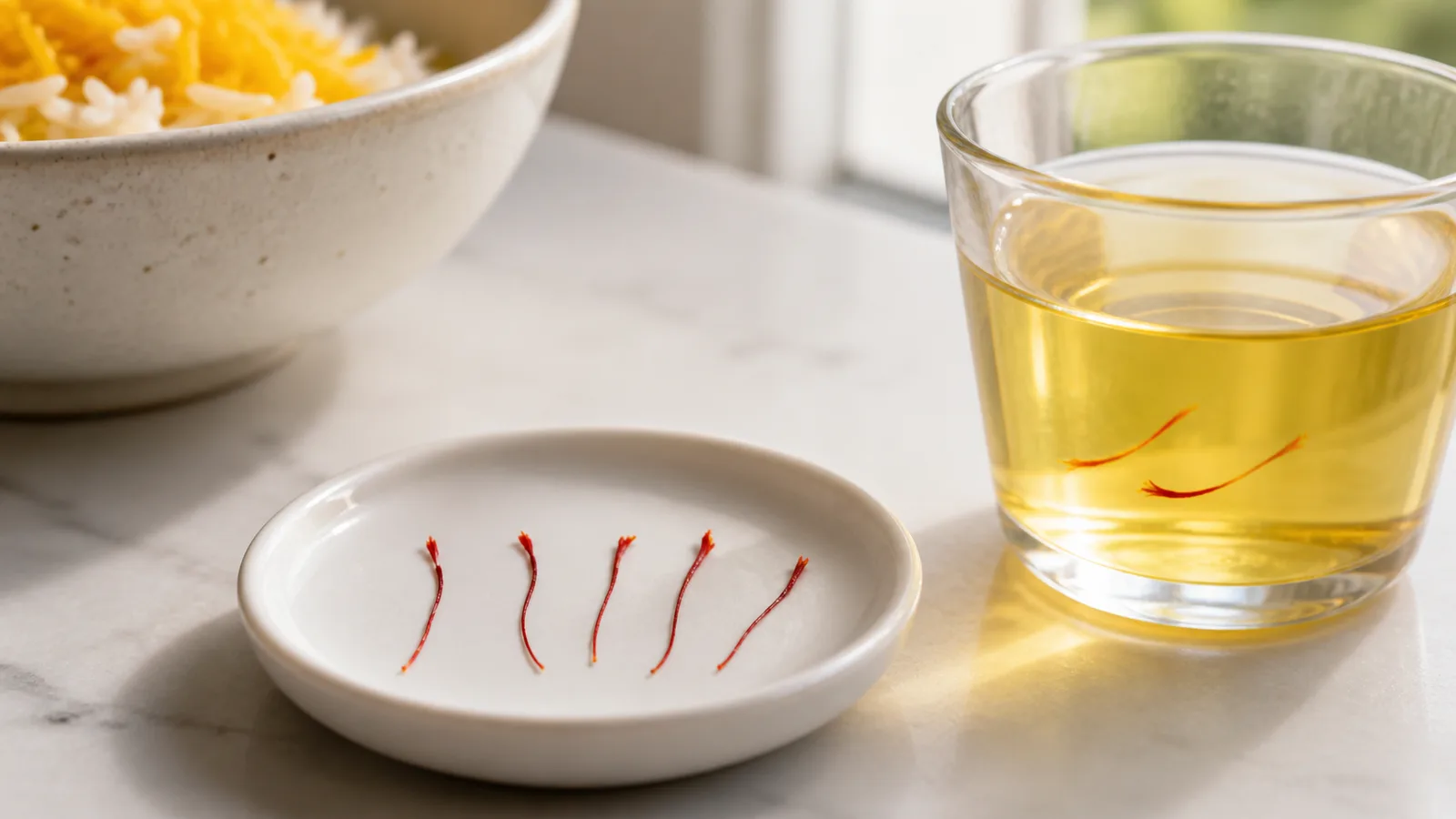
Neither origin is automatically better. In a Persian vs Spanish saffron comparison, Persian saffron offers a vast choice from the world’s dominant growing country, while certified Azafrán de La Mancha offers protected Spanish provenance and a defined production specification. The better purchase is the fresher, purer and more traceable lot—not simply the jar with the more impressive country name.
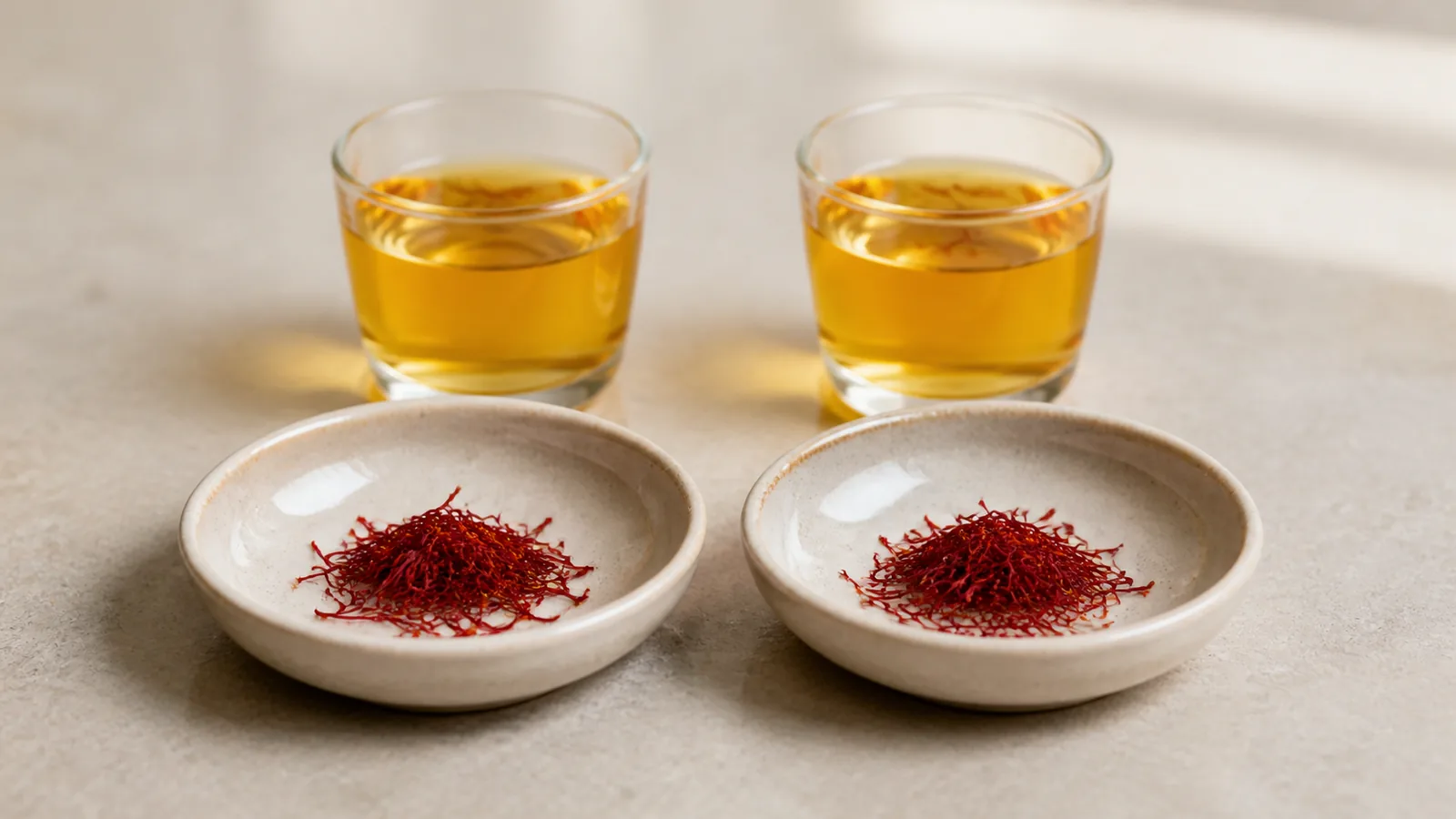
What “Persian” and “Spanish” saffron should mean
Persian saffron normally means saffron grown in Iran, historically called Persia. Much of it comes from Khorasan, although Iran has several producing areas and many commercial grades. The label should still name the agricultural origin; a Persian-style brand name is not proof that the flowers were grown there.
Spanish saffron can mean saffron grown in Spain, but it can also be used loosely for saffron packed, traded or sold by a Spanish business. Those are not equivalent claims. If Spanish-grown saffron matters to you, look for a clear origin statement or a certified regional designation such as Azafrán de La Mancha.
Both genuine products come from Crocus sativus. Spanish saffron is therefore real saffron, not a different spice or a substitute for “regular” saffron.
Persian saffron: scale, variety and Khorasan tradition
Iran is the world’s leading saffron producer by a very wide margin. A 2026 update from the Food and Agriculture Organization puts Iran’s share at 85–90% of world production and identifies Khorasan Razavi and South Khorasan as central growing regions.
That scale gives buyers access to many forms and grades, from threads with more yellow style attached to carefully separated all-red stigmas. Well-handled Iranian saffron can provide excellent colour, a clean aroma and a pronounced characteristic flavour. It is used comfortably in rice, stews, drinks and sweets.
Scale also means variation. “Iranian” is not a laboratory result, and one pack should not be judged by the best examples of an entire country. Producer, harvest, drying, storage, purity and age still determine what reaches the kitchen.
Spanish saffron: protected origin in La Mancha
Spain has a much smaller saffron crop, but La Mancha has a formal protected designation. The Spanish agriculture ministry lists a current specification and official control body for DOP Azafrán de La Mancha. A valid PDO label means the saffron must meet that designation’s origin, production and certification requirements.
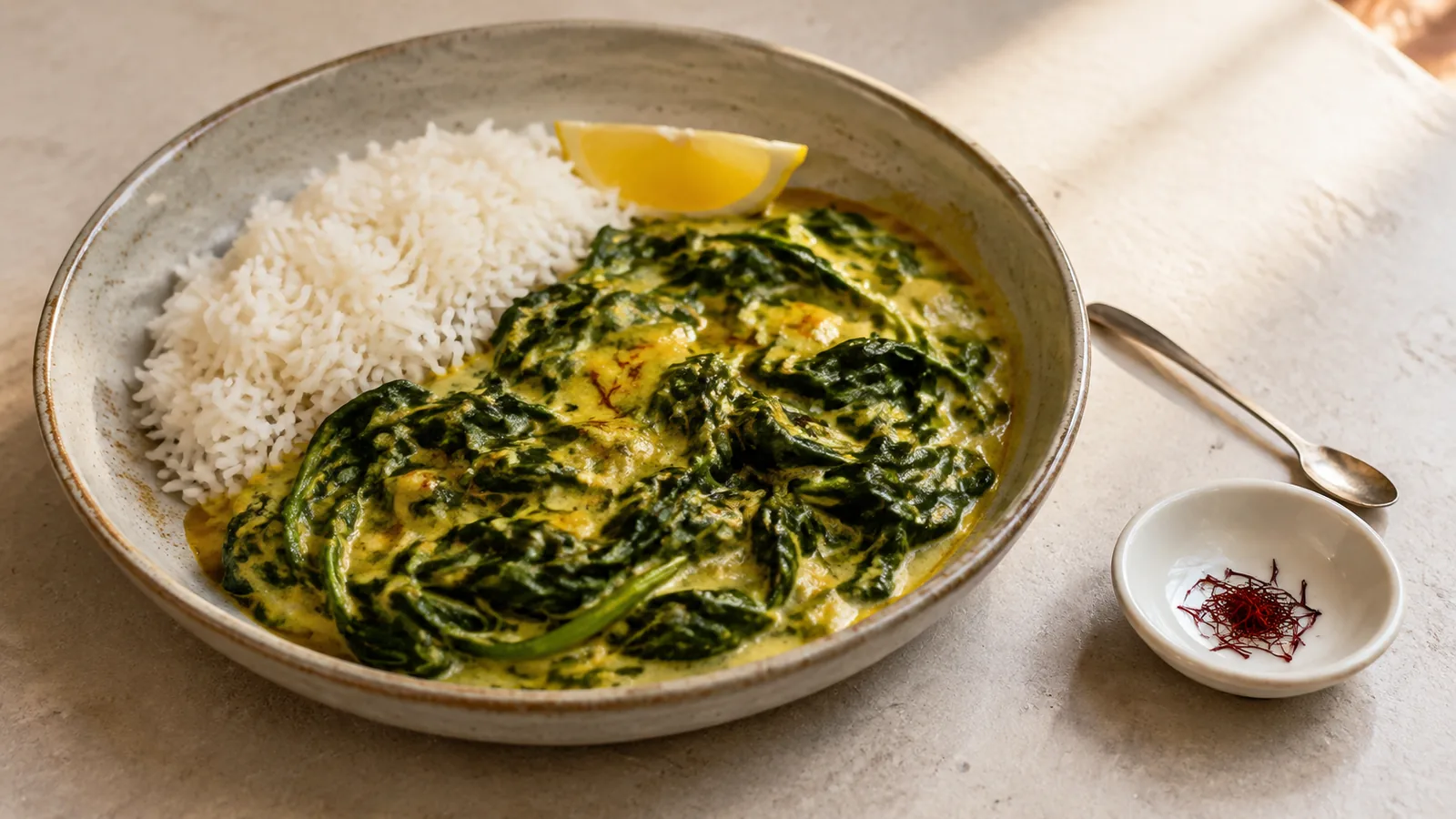
Spanish saffron is closely associated with paella and other regional cooking, yet cuisine does not make it chemically separate from Iranian saffron. It can be used in any recipe that calls for genuine saffron. The amount may need adjustment because strength varies between lots.
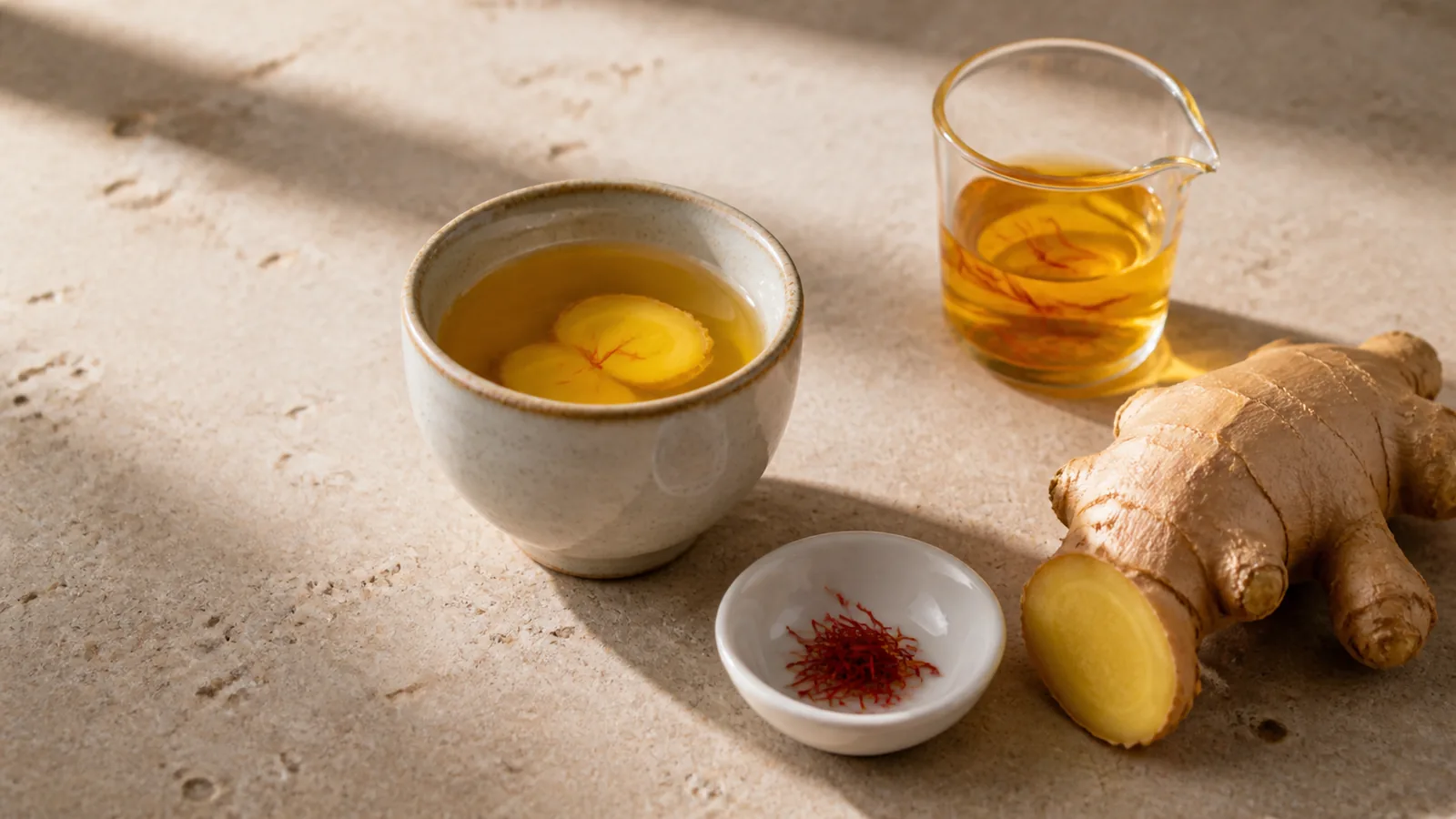
Do not expect authentic Spanish threads to be pale or golden. Good saffron stigmas are red; the familiar yellow-gold colour develops when their compounds disperse in liquid. The old shortcut that Persian threads are deep red while Spanish threads are golden is misleading.
Are their flavour and aroma always different?
No reliable rule says every Persian sample is bold and every Spanish sample is mild. Saffron’s sensory character is influenced by the crop, drying or roasting process, storage and dosage. Even two lots from the same village can differ.
People may perceive one sample as earthy, floral, hay-like, honeyed or more bitter than another. Those descriptions are useful tasting notes, not permanent national profiles. In an Iranian saffron vs Spanish saffron tasting, compare the actual samples at the same concentration before deciding that one origin is stronger.
How quality is assessed beyond the country name
The international approach is based on measurable requirements. The Codex Alimentarius standards collection includes CXS 351-2022 for dried saffron, while ISO 3632 covers saffron specifications and test methods. These frameworks examine the product rather than awarding a country first place.
When comparing Persian and Spanish saffron, check:
- Origin: where the saffron was grown, not only where it was packed.
- Identity: Crocus sativus, with the form stated as threads, cut filaments or powder.
- Lot traceability: a batch number and a responsible producer, packer or seller.
- Condition: a dry, well-sealed pack without mustiness, moisture or unrelated material.
- Dates: harvest or packing information that helps you judge age.
- Testing: a report that names the same lot and identifies its methods and results.
Colour strength, aroma-related compounds and bitterness-related compounds can help characterise commercial quality, but they do not make every sample from one country superior to every sample from another.
Which one should you use for cooking?
For paella and Spanish dishes
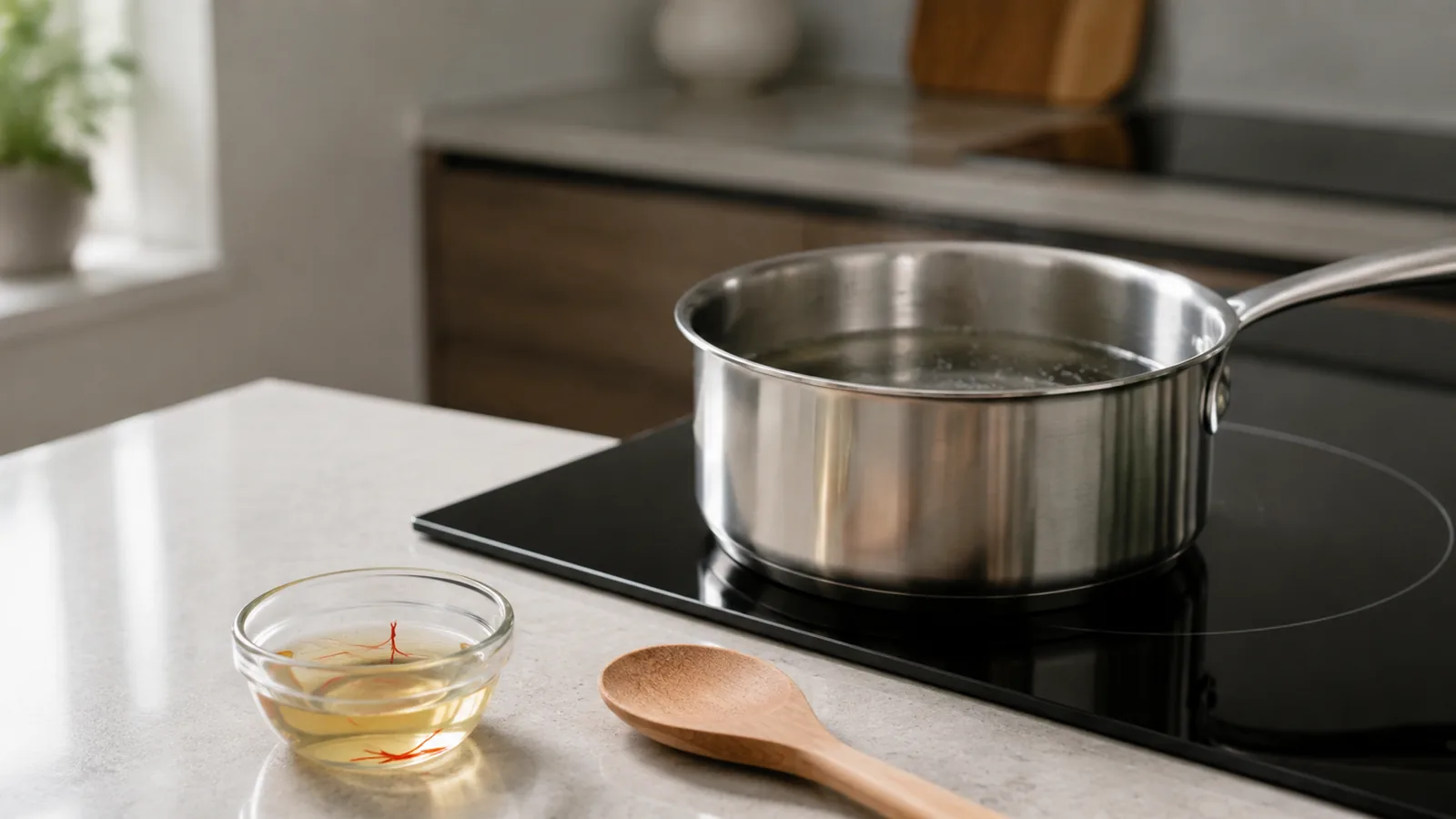
La Mancha PDO saffron is a meaningful choice when protected Spanish origin is part of the dish’s story. Genuine Persian saffron can also colour and flavour paella; it is not a culinary error simply because it grew elsewhere. Bloom a measured amount and adjust according to the strength of the lot.
For Persian rice, stews and desserts
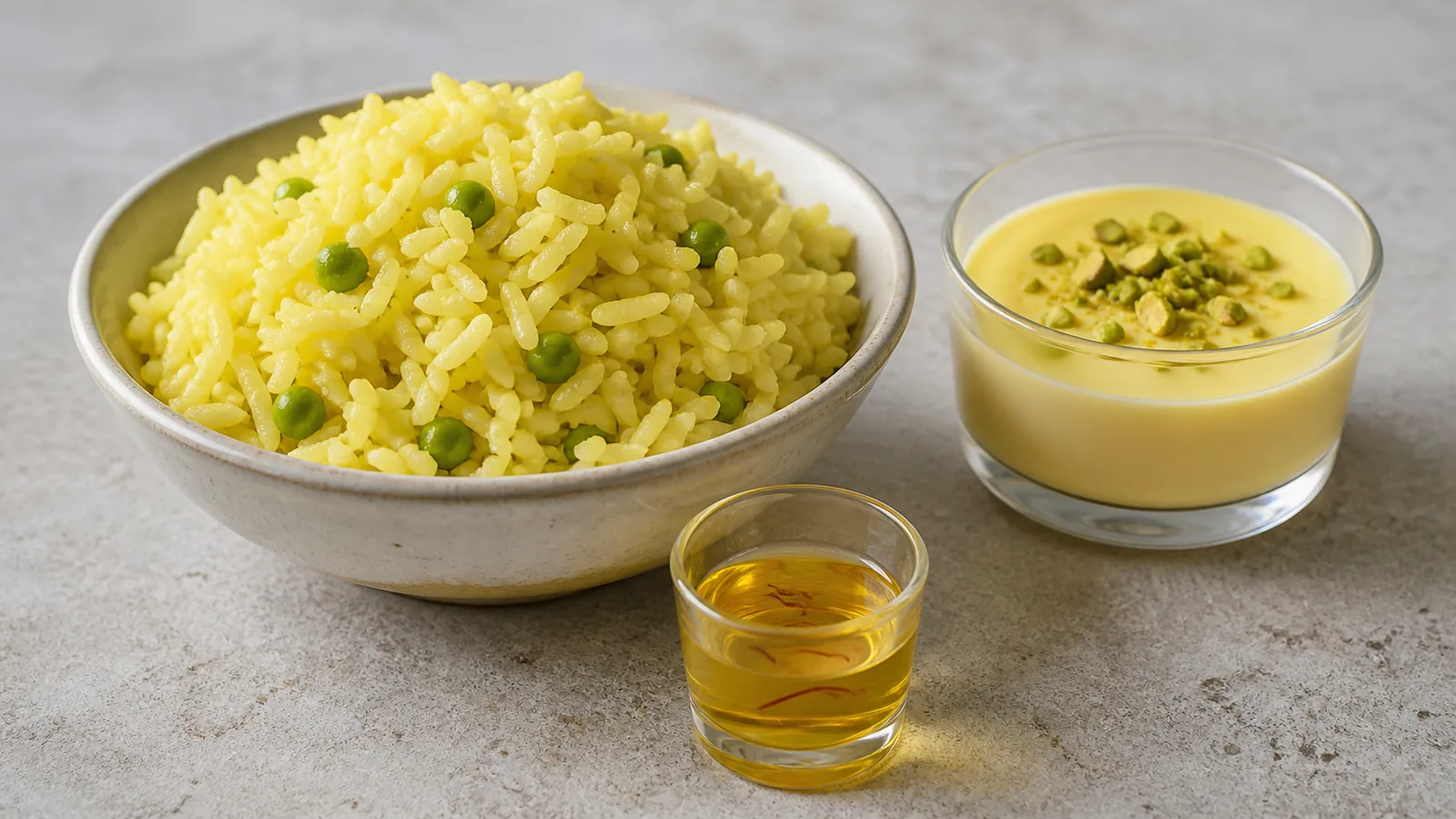
Iranian saffron is the culturally direct choice and is available in forms suited to different budgets and uses. Its familiarity in Persian cooking does not mean that every expensive or all-red pack will perform identically.
For an everyday pantry
Choose a small, fresh pack from a seller who can explain its origin and lot. Buying more than you can protect from air, light, heat and moisture can erase the advantage of a prestigious source.
Common comparison questions
Is Iranian saffron the best?
Iran produces outstanding saffron and has the strongest general claim because of its scale and long growing tradition. It is still better to say that a particular Iranian lot is excellent after checking its evidence than to declare every Iranian sample the winner.
Is Spanish saffron the same as saffron?
Yes, when the product is genuine Crocus sativus. “Spanish” describes origin or trade context; it does not name another plant. A protected La Mancha label is more specific than a broad “Spanish saffron” claim.
What about Kashmiri saffron vs Spanish saffron?
The same rule applies: compare protected or clearly stated origin, lot evidence, freshness and performance in the dish. Kashmir has its own registered geographical indication, but neither a Kashmir nor a La Mancha name guarantees that a damaged or badly stored pack will taste its best.
Are American or Mexican saffron the same product?
Not necessarily. Those market names are sometimes applied to safflower or another plant. Check for Crocus sativus on the label before treating the product as a lower-cost version of Persian or Spanish saffron.
So, is Persian or Spanish saffron better?
Persian saffron is often the practical choice for variety, availability and a direct connection to the world’s largest producing tradition. Certified La Mancha saffron is compelling when verified Spanish provenance matters. Between two real packs, choose the one with stronger lot-level evidence and better freshness.
For the broader origin question, see which country has the highest-quality saffron. If authenticity is uncertain, use the cautious checks in how to tell whether saffron is pure before comparing flavour. You can also review the available saffron products by form and pack information.