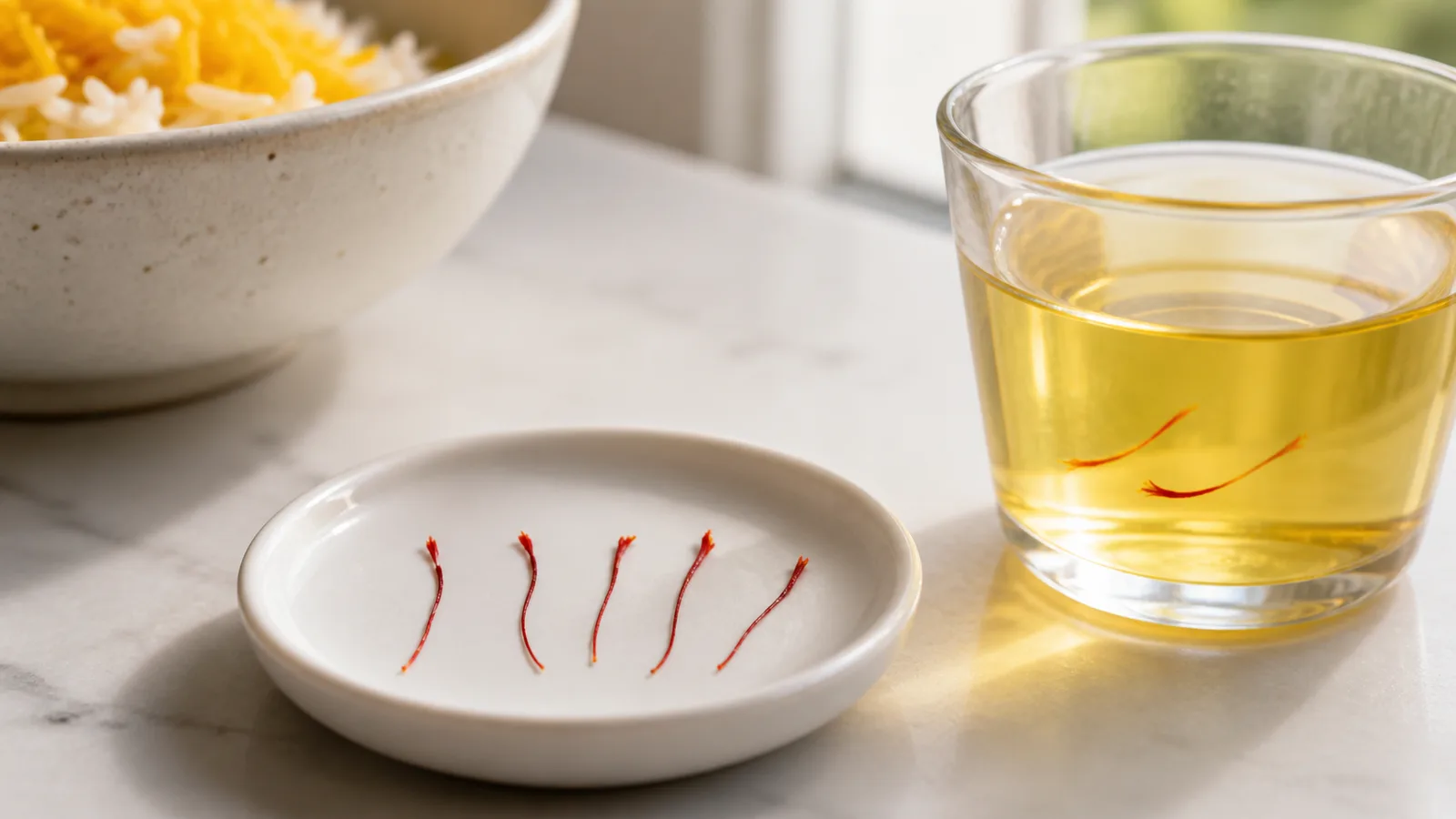
Is 200mg of Saffron Too Much?
Two hundred milligrams may be too much for unsupervised daily use, especially when the product is a concentrated extract. It is several times higher than the roughly 30 mg daily amount used in many older saffron mood trials. A small study did test 200 mg and 400 mg saffron tablets for seven days, but that does not establish either amount as a safe long-term dose or a recommendation.
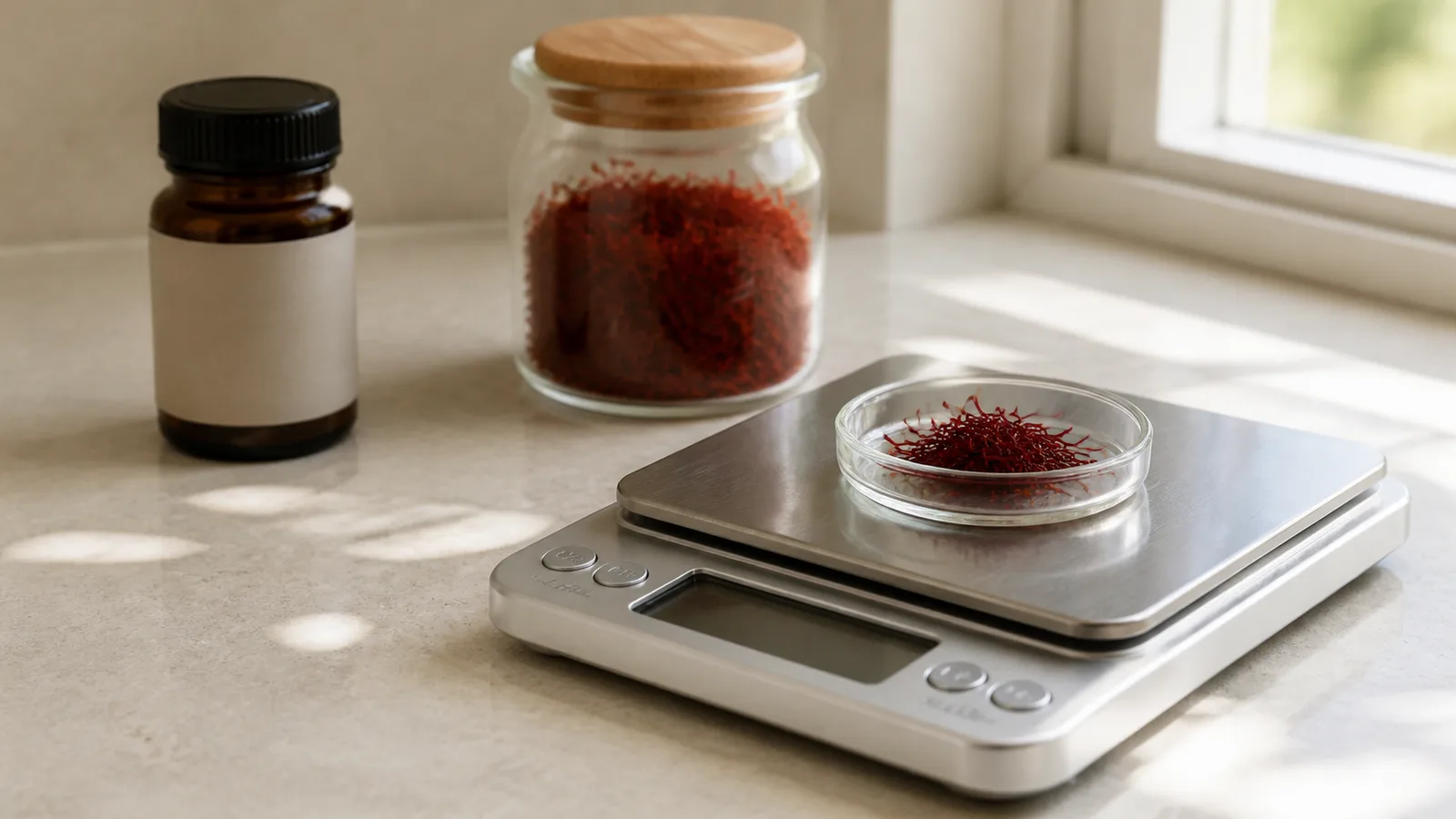
The right answer depends on what “200mg saffron” means on the label: whole dried stigma, powder, a standardised extract, or a blend with other ingredients. Do not convert between them as though they were identical. If a clinician did not recommend the product, ask a pharmacist or doctor to review the exact label before taking 200 mg every day.
What Does the Research Say About Saffron Dosage?
An older review of five randomised mood trials found that the included studies commonly used 30 mg of saffron per day. Another trial tested a named standardised extract at 22 mg or 28 mg daily for four weeks. Those figures describe the preparations and participants in those trials; they are not an official saffron dose per day for the public.
The main direct human evidence around 200 mg comes from a small placebo-controlled safety study. Thirty healthy adults received placebo, 200 mg or 400 mg saffron tablets for one week. No gross clinical change was reported, but the higher tested amount affected standing systolic and mean arterial blood pressure, and saffron produced small changes in some blood and biochemical measurements. The study was short, involved few people and did not answer long-term use, pregnancy, medication interactions or safety in people with health conditions.
This is why “tested” is not the same word as “recommended.” It is also why 200–400 mg from a one-week experiment should not be presented as a daily safety range.
Saffron Side Effects at Higher Doses
For saffron side effects, dosage is only one part of the assessment. Product identity, concentration, duration, other ingredients, medicines and individual health all matter. A 2026 systematic review of adverse events included 102 clinical trials and one case report. Saffron monopreparations were generally tolerated, but adverse effects were reported; gastrointestinal problems were the most frequent and were usually minor and self-limiting. The authors said some potentially significant events with higher-dose or prolonged medicinal use may warrant clinical monitoring.
Nausea, stomach upset, vomiting, diarrhea, headache or dizziness after a product should not be dismissed because its label looks “natural.” Stop the suspected supplement and seek appropriate advice. For trouble breathing, facial or throat swelling, fainting, confusion, a seizure, persistent vomiting or rapidly worsening symptoms, get urgent help. These are general emergency signs, not a claim that saffron always causes them.
Saffron overdose and taking too much
How much saffron is too much cannot be reduced to one figure for every form and person. A saffron overdose is an exposure that produces toxicity or requires clinical assessment. If someone swallows a large amount of threads, powder or capsules, keep the container and contact a local poison service or emergency clinician. Do not induce vomiting unless a poison professional tells you to do so.
Online gram-level “safe” and “toxic” cut-offs are not suitable for self-dosing. They often mix animal toxicology, short human trials, traditional claims and products with different composition. Our evidence-based guide to the risks of too much saffron explains that distinction further.
How Much Saffron Is Actually Safe?
There is no universal saffron recommended dosage for health use. For cooking, saffron is used as a seasoning in a small recipe quantity. For a supplement, use only an identified product with a clear label and follow professional advice appropriate to the purpose. Do not raise the amount because a lower dose did not create an immediate feeling.
If you are asking how much saffron to take daily for mood, sleep, inflammation, memory or another health aim, a blog cannot turn trial averages into a personal prescription. A study of a named extract in selected participants is not proof that loose saffron, another extract or 200 mg will give the same result. It also does not replace established care for a diagnosed condition.
The US Food and Drug Administration lists saffron as a food flavouring and colouring ingredient under good manufacturing practice. That culinary status does not approve a supplement dose or treatment claim. The FDA also advises reviewing supplements alongside medicines with a health professional, particularly around pregnancy, breastfeeding, children and surgery.
What about 88 mg or 88.5 mg of saffron?
Searches for “is 88.5 mg of saffron safe?” have the same missing information as the 200 mg question. Eighty-eight milligrams of a whole-spice powder is not automatically equivalent to 88 mg of a concentrated extract. A saffron extract dosage belongs to that specific product; the number alone cannot tell you the amount of crocins or safranal, the other ingredients, the intended use or whether it is suitable with your medicines.
Do not calculate a safranal dosage from the weight of saffron. Safranal is one constituent of the spice, and its concentration varies. An isolated-compound dose is a different toxicology question that should not be inferred from a retail saffron article.
Who should get individual advice before taking it?
Speak with a healthcare professional before medicinal or supplement use if you:
- are pregnant, trying to become pregnant or breastfeeding;
- take prescription or over-the-counter medicines;
- have a blood-pressure, bleeding, kidney, liver, mood or other medical condition;
- are preparing for surgery;
- want to give it to a child; or
- have reacted to saffron or another botanical product.
A 2026 review of saffron in pregnancy described the clinical efficacy and safety evidence as limited and inconclusive. That uncertainty is a reason not to self-experiment with 200 mg during pregnancy.
Choosing High-Quality Saffron
Quality cannot make an unsuitable dose safe, but poor identity makes the question harder. Choose a product that names Crocus sativus, states whether it contains whole spice or extract, gives the net amount and lists every other ingredient. Avoid products that promise to treat or cure disease. Whole culinary threads are easier to inspect than anonymous powder; our all-red saffron selection shows the food form we sell.
The Bottom Line
Is 200mg of saffron too much? It is high compared with the roughly 30 mg amounts used in many trials, and the short study that tested 200 mg did not prove it safe for long-term daily use. Treat the exact product, purpose and duration as part of the dose. For routine cooking, use saffron as a spice. For 200 mg, 88.5 mg or any repeated supplement amount, get advice based on the actual label and your health rather than copying a research number.