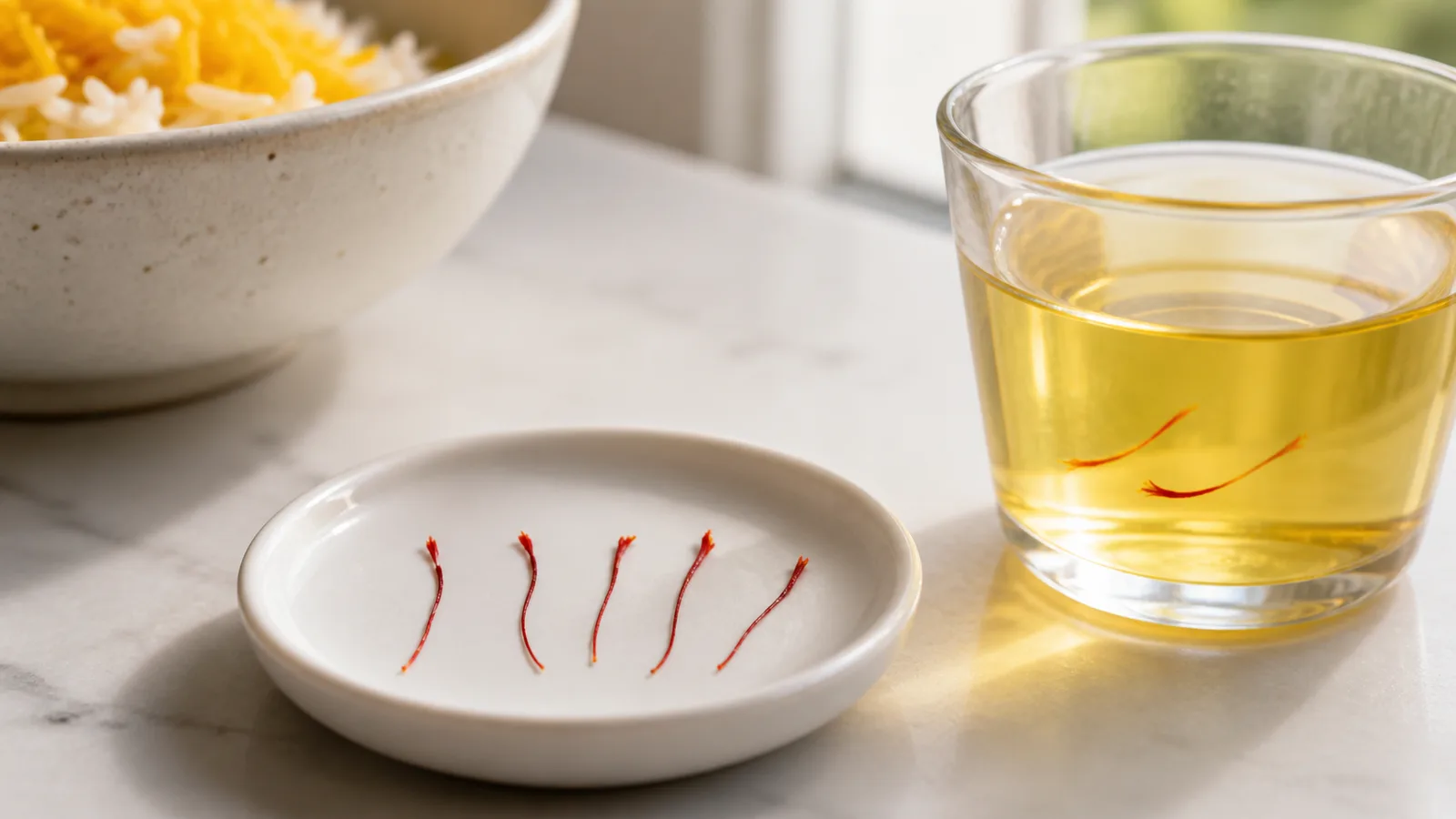
Yes—1g of saffron is a lot for an ordinary home kitchen. Most recipes use only a fraction of a gram, so one gram can season several meals: roughly 10 to 20 two-person dishes when each batch uses 0.05 to 0.1 gram. The exact number depends on the dish and how prominent you want the saffron to be.
Is 1g of saffron a lot?
One gram looks small beside everyday spices, but saffron is used by the thread rather than the spoonful. For a light drink, dessert or sauce, a cook may use around 0.03 to 0.05 gram. A clearly saffron-led rice dish for two might use 0.05 to 0.1 gram.
At those amounts, one gram provides approximately:
- twenty 0.05-gram batches;
- ten 0.1-gram batches; or
- five generous 0.2-gram batches.
Serving counts are not universal because a batch might feed two people or a large family. The old claim that 1g of saffron flavours only 4–6 servings therefore understates how far it usually goes in home cooking. One gram can flavour a large 4–6-serving recipe, but using the entire gram at once would make an unusually strong and costly dish.
What does a 1 gram saffron quantity look like?
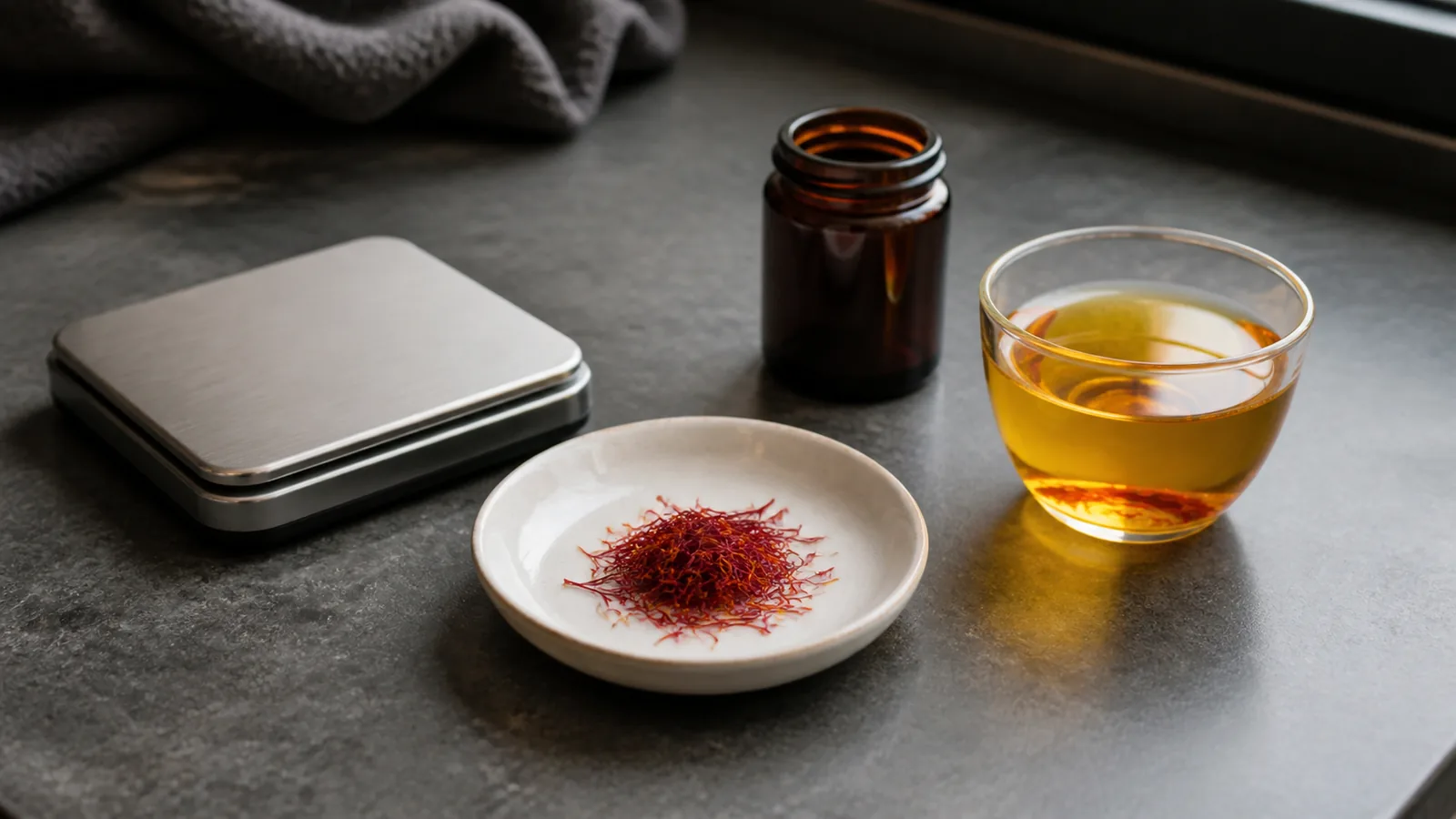
A gram is a loose cluster of fine red stigmas, not a compact teaspoon of powder. It may fill a small section of a jar because intact threads trap air. The same weight of broken or tightly packed threads can look smaller.
Use the net weight on a sealed package or a digital scale that reads to 0.01 gram. An ordinary kitchen scale that changes only in whole grams cannot measure recipe-sized portions accurately.
How many saffron threads in 1 gram?
A practical estimate is about 500 average-sized threads in one gram. A peer-reviewed culinary review of saffron reports an approximate weight of two milligrams per stigma; dividing 1,000 milligrams by that average gives 500.
This is an estimate, not a package guarantee. Threads vary with the flower, drying method, trimming, breakage and the way a seller defines one “thread.” A gram could contain fewer substantial intact stigmas or more small pieces. Weight is therefore more reliable than counting when a recipe needs precision.
Searches for “how many saffron threads in a gram” and “how many threads of saffron in a gram” are asking the same question. The Indonesian phrase berapa helai also means “how many strands”; for “1 gram saffron berapa helai,” about 500 is a reasonable estimate with the same variation warning.
How much saffron do you need per dish?
The recipe should take priority whenever it gives a measured amount. Without one, these starting points keep the spice in proportion:
- Two portions of rice or risotto: about 0.05 to 0.1 gram.
- Two cups of tea or milk: around 10 to 15 threads for a light infusion.
- A small sauce, custard or soup: about 0.03 to 0.05 gram.
- A four-to-six-person saffron-led dish: often 0.1 to 0.25 gram, depending on volume and the other ingredients.
For a deliberately strong risotto or paella, a tested recipe may call for 0.1g to 0.2g; use that as a recipe-specific instruction, not a universal serving rule. These are culinary starting points, not health or supplement doses. Our guide to the amount of saffron for two people gives a closer look at scales, pinches and thread conversions.
The power of 1g of saffron comes from distribution
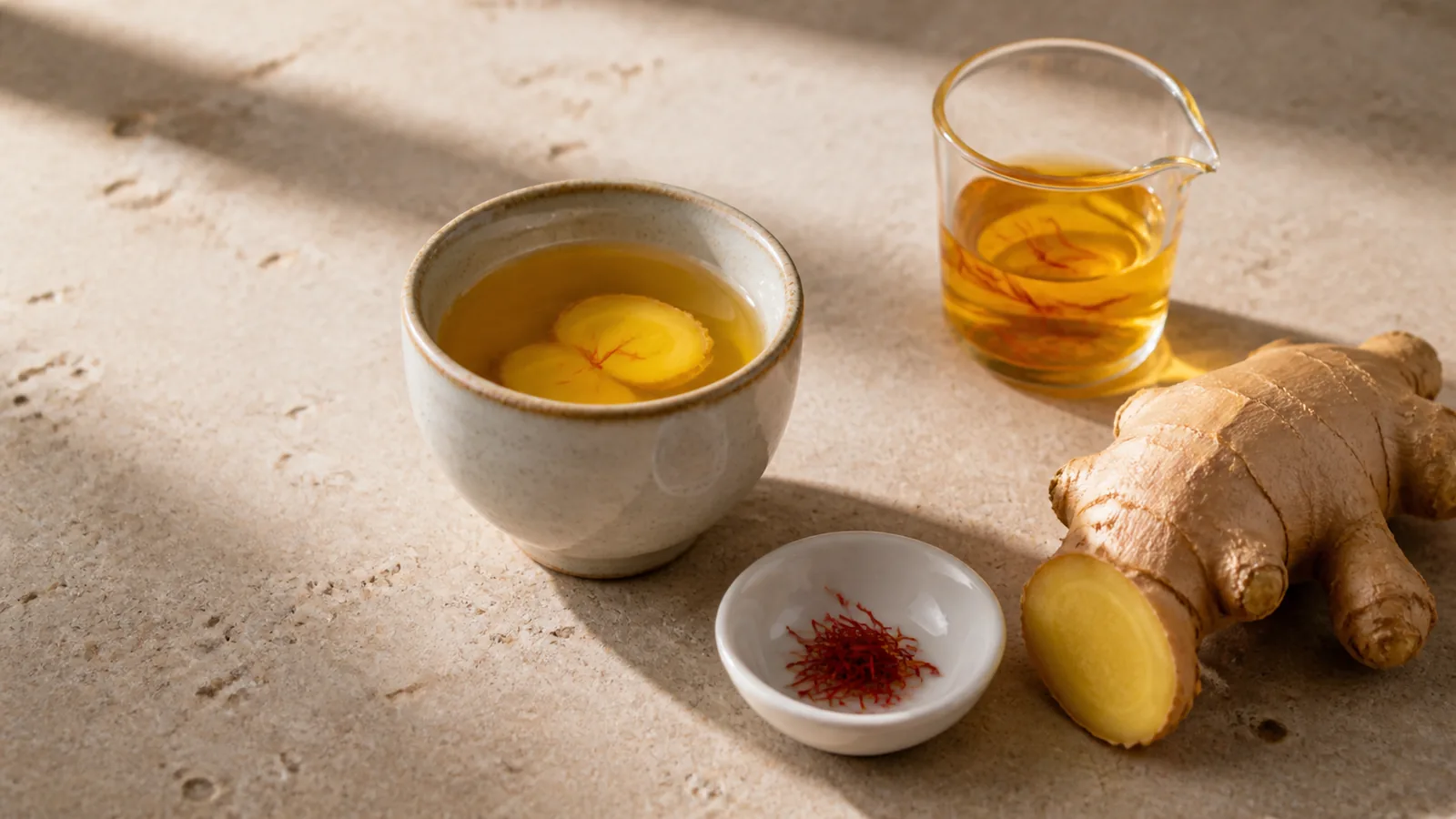
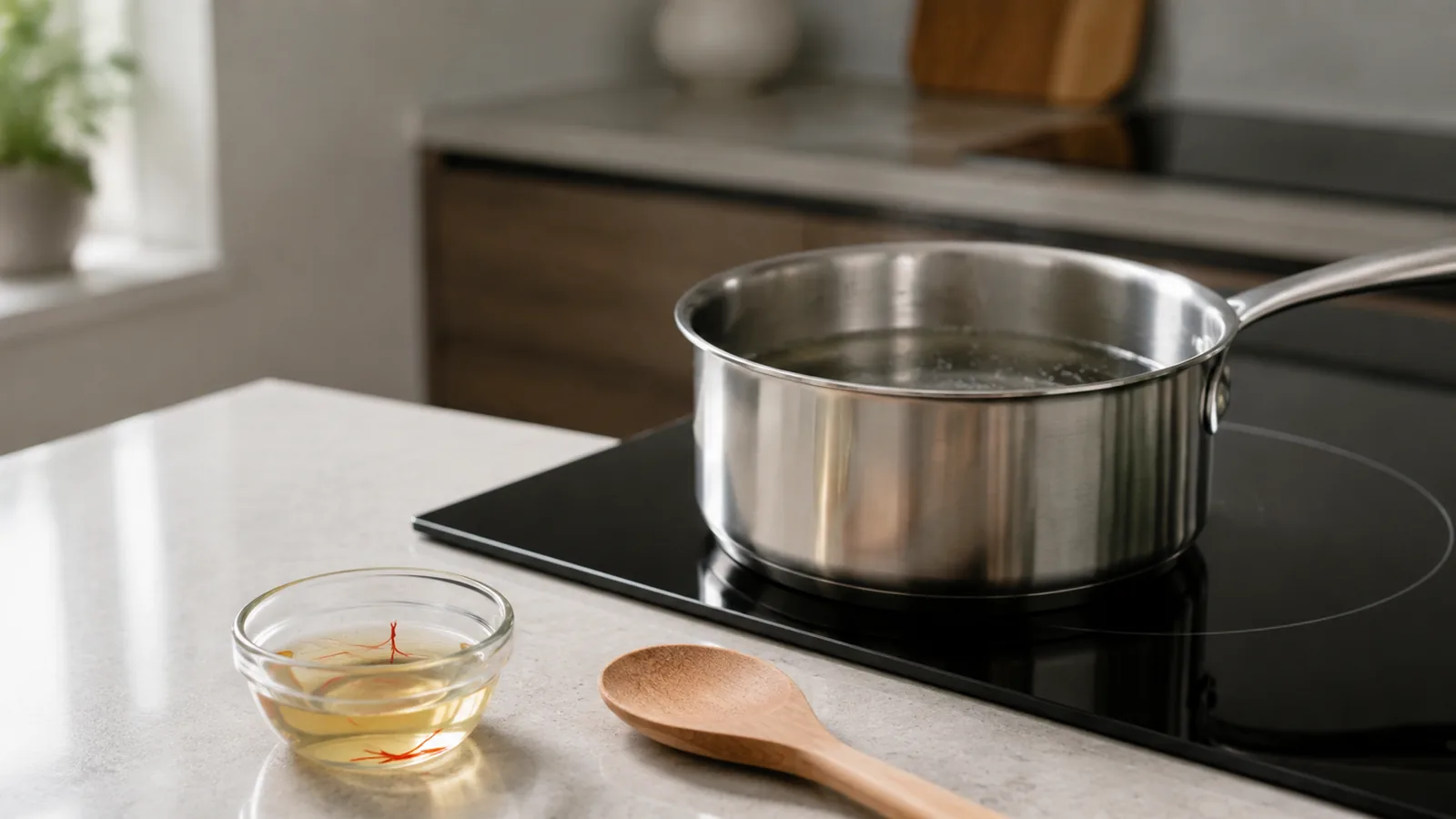
A few dry threads dropped into one corner of a dish do not show what the spice can do. Lightly crush the measured portion, steep it in a small amount of warm water, milk or broth for about 10 to 15 minutes, then add both the liquid and softened threads.
This spreads the rich flavor and color, along with saffron’s aroma, through more of the food. It also makes it easier to hold back part of the infusion, taste and adjust. The separate guide on soaking saffron in water explains why the threads soften and disperse without claiming that every component completely dissolves.
Whole threads versus powder
One gram of whole saffron threads and one gram of pure saffron powder contain the same mass, but they behave differently in the kitchen. Powder disperses quickly and is easy to overmeasure. Threads are easier to inspect and can be portioned before grinding.
Do not use a thread-count estimate for powder. Weigh it. If buying pre-ground saffron, choose a seller that provides clear origin, lot and quality information because a visual check is more difficult once the material has been milled.
How long can one gram last?
If a household cooks with 0.05 gram once a week, one gram represents about 20 meals and could last close to five months. At 0.1 gram per meal, it represents ten uses. Calendar life is therefore a result of portion size and frequency, not a special property of the one-gram package.
Once opened, keep the threads in an airtight, food-safe container away from light, moisture, heat and strong odours. Do not leave a jar beside the cooker, and do not repeatedly open it over a steaming pan. The article on whether you should store saffron in the fridge explains why a cool, dry cupboard is usually simpler than exposing the spice to condensation.
Is buying one gram good value?
Value depends on authenticity, grade, origin, testing, freshness and how much the household will actually use. A lower price is not a saving if the product is old, weak or adulterated, while an oversized pack can lose aroma before it is finished.
Compare like with like on the current saffron price page, and check the available saffron products by net weight. Divide the package price by the number of likely recipe portions rather than judging a one-gram jar by its size.
The practical answer
For most home cooks, 1g of saffron is a useful multi-meal supply, not a single-recipe dose. Measure out 0.05 to 0.1 gram for a typical two-person dish, bloom that portion, and keep the rest sealed in a cool, dark and dry place. Count threads only when a sensitive scale is unavailable, and treat 500 per gram as an estimate rather than an exact standard.