The cost of 3g saffron depends on quality, origin and seller. As a current reference, the thread-saffron prices in our shop on 27 August 2026 work out to about €14.62–€20.46 for 3 grams. That is a price equivalent, not a quotation for a 3 g pack: our listed thread products currently start at 5 g, and checkout totals may vary with delivery and tax.
This range is more useful than a fixed dollar figure that soon becomes stale. Saffron prices move with the harvest, grade, origin, exchange rates, packaging and order size. For today’s figures, use the live saffron price page.
How the 3g saffron price is calculated
The calculation is simple: divide the pack price by its net weight, then multiply the price per gram by three. Using the currently listed 5 g options gives these approximate 3 g equivalents:
- Poushali B: €24.36 for 5 g, or about €14.62 for 3 g
- Poushali A: €26.43 for 5 g, or about €15.86 for 3 g
- Sargol: €28.02 for 5 g, or about €16.81 for 3 g
- Sargol Negin A: €30.94 for 5 g, or about €18.56 for 3 g
- Super Negin A: €34.11 for 5 g, or about €20.46 for 3 g
Those figures let you compare like with like. A cheaper pack is not necessarily better value if it contains more yellow style, broken material, added moisture or a different grade. Net weight and the price per gram matter more than the size of the container.
What 3 grams of saffron looks like
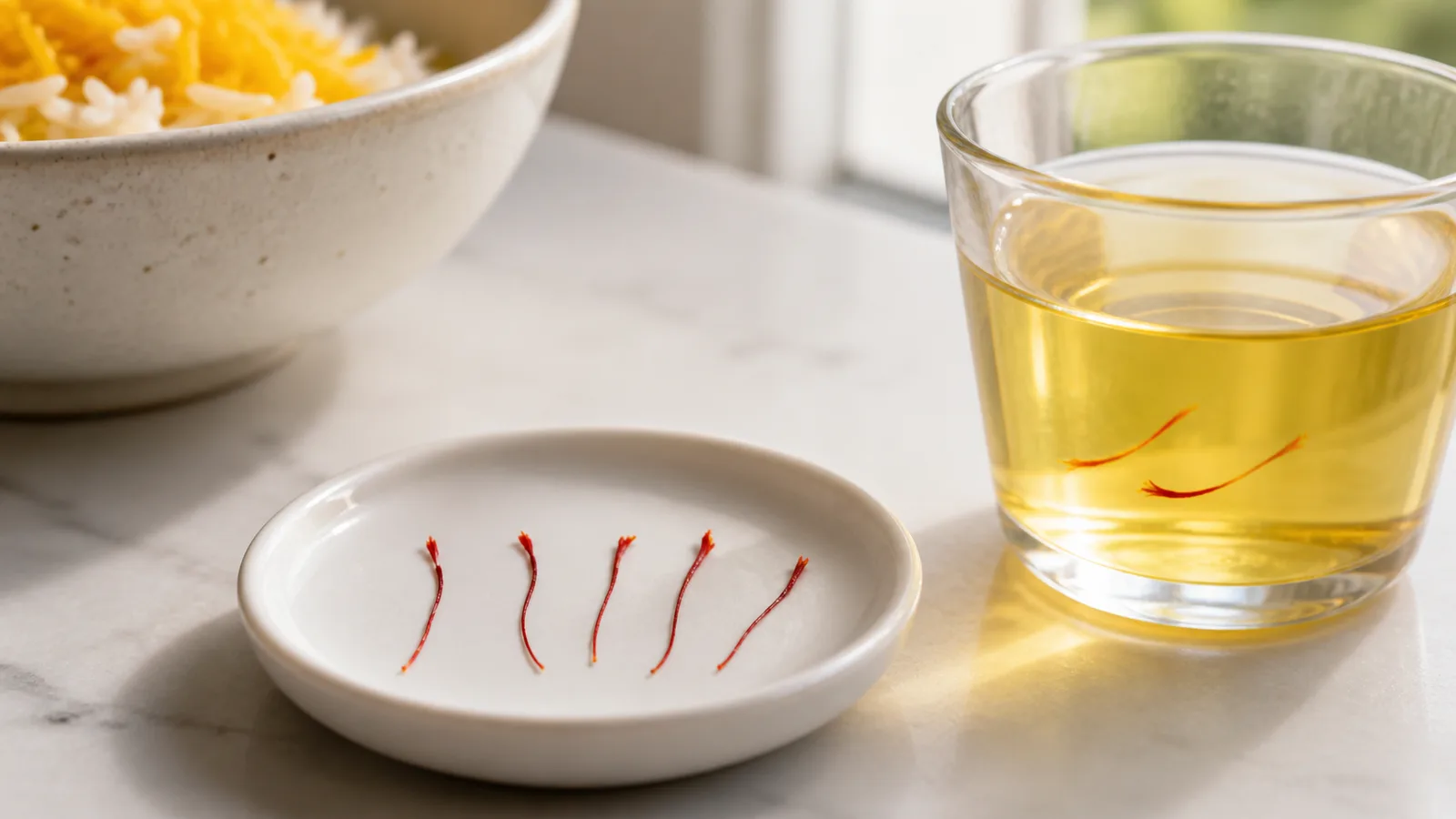
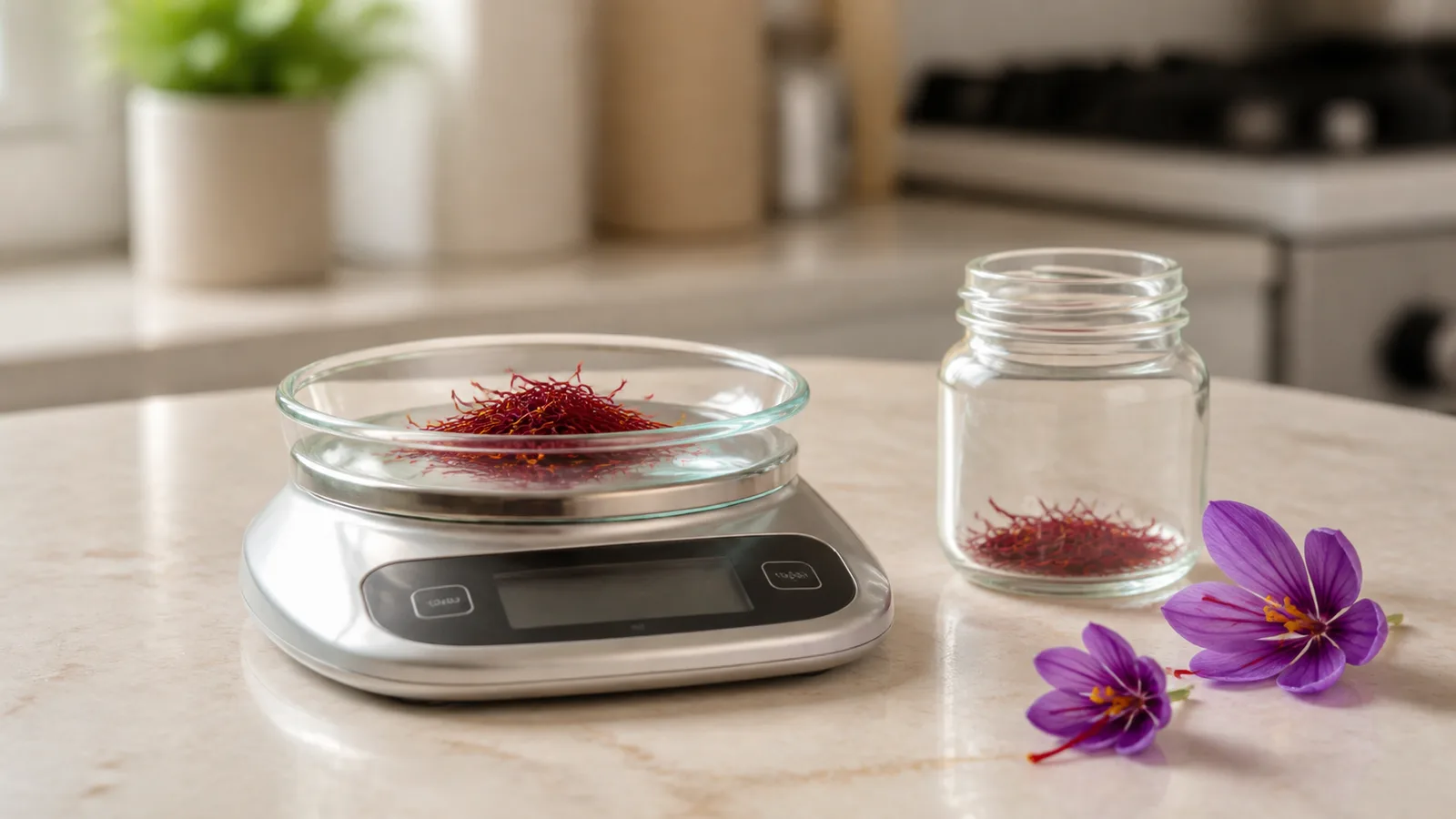
Three grams is a modest quantity by weight but a useful amount in a home kitchen. Saffron is normally measured in small pinches because its colour and aroma are released through steeping; it is not used by the spoonful like many ground spices. A digital scale accurate to 0.01 g is preferable when the exact amount matters.
Buy threads rather than judging by a large-looking package. Whole saffron should be recognisable as fine stigmas, predominantly red, with a characteristic aroma. Colour alone is not proof of purity, and an unusually low price deserves a closer look at the seller, origin, net weight and any available quality information.
Why the cost of saffron varies
Grade and usable red thread
Commercial names such as Poushali, Sargol and Negin describe different thread characteristics and degrees of style separation. Long, carefully sorted red threads usually require more handling and can carry a higher retail price. A grade name is still only one part of the comparison; aroma, colour strength, moisture, storage and trustworthy testing also matter.
Harvest and processing
Saffron comes from the stigmas of Crocus sativus. Each flower supplies only three, and harvesting and separating them requires close manual work during a short flowering period. Drying must then be controlled so that the threads keep their useful aroma and colour without retaining excessive moisture. The FAO’s saffron production guide describes the crop and its labour-intensive handling in detail.
Origin, supply chain and packaging
Iranian and Persian saffron price searches often mix farm-gate, export, wholesale and retail numbers. These are not interchangeable. A consumer price can include sorting, testing, food-safe packaging, storage, payment costs and delivery through several markets. Kashmiri, Spanish, Afghan and Iranian products may also use different naming and grading conventions, so origin alone does not establish quality.
Price per gram, kilogram and pound
How much does saffron cost per gram?
At the dated retail range above, saffron costs roughly €4.87–€6.82 per gram. Pure arithmetic puts that at about €4,872–€6,820 per kilogram or €2,210–€3,094 per pound. These are consumer-price equivalents, not an Iranian saffron wholesale price per kg. A bulk commercial order has different quantities, specifications, documents and terms, and should be priced with a current quotation rather than by multiplying a small retail pack.
The same warning applies to an “Iran saffron price per kg 2026” or “Iran saffron wholesale price per kg 2026” result. Check when the quote was issued, which grade it covers, whether it is an export or delivered price, which currency is used and whether tax, laboratory documentation, packaging or freight is included. Anyone comparing an Iranian saffron price per gram with a Persian saffron price per gram should also check whether the two listings are simply using different geographic wording for an Iranian product.
How to buy 3g without paying for the wrong product
- Compare the unit price. Convert every option to a price per gram before comparing packs.
- Confirm the net weight. Decorative containers can make a very small quantity look larger.
- Check the form. Whole threads are easier to inspect than powder, which can conceal turmeric, safflower or another added material. A recent systematic review of saffron adulteration explains why laboratory methods are more reliable than home tricks when authenticity is in doubt.
- Match grade to use. An attractive long-thread grade may suit presentation, while a sound Sargol or Poushali grade can be practical for cooking.
- Read the current listing. Stock, currency, delivery and tax can change after an article is published.
For example, you can compare a value-oriented Poushali B saffron with Sargol saffron or a long-thread Super Negin option. The right choice depends on how you will use it, not simply on selecting the highest price.
Seasonal harvest volume and short periods of stronger gift or holiday demand can move offers too. Saffron from Iran, Spain, India and Afghanistan reaches the market through different supply chains, while limited-production Kashmiri saffron may be quoted at a premium. Those names can provide context, but they do not replace a clear grade, net weight, current price and evidence of authenticity.
So, how much is 3g of saffron?
For the shop prices checked on 27 August 2026, the answer is approximately €14.62–€20.46 for three grams of red saffron threads, calculated from available 5 g packs. Treat that as a dated guide. Recheck the live product price, net weight and delivery total before buying, especially when comparing it with a dollar price or a wholesale quote.