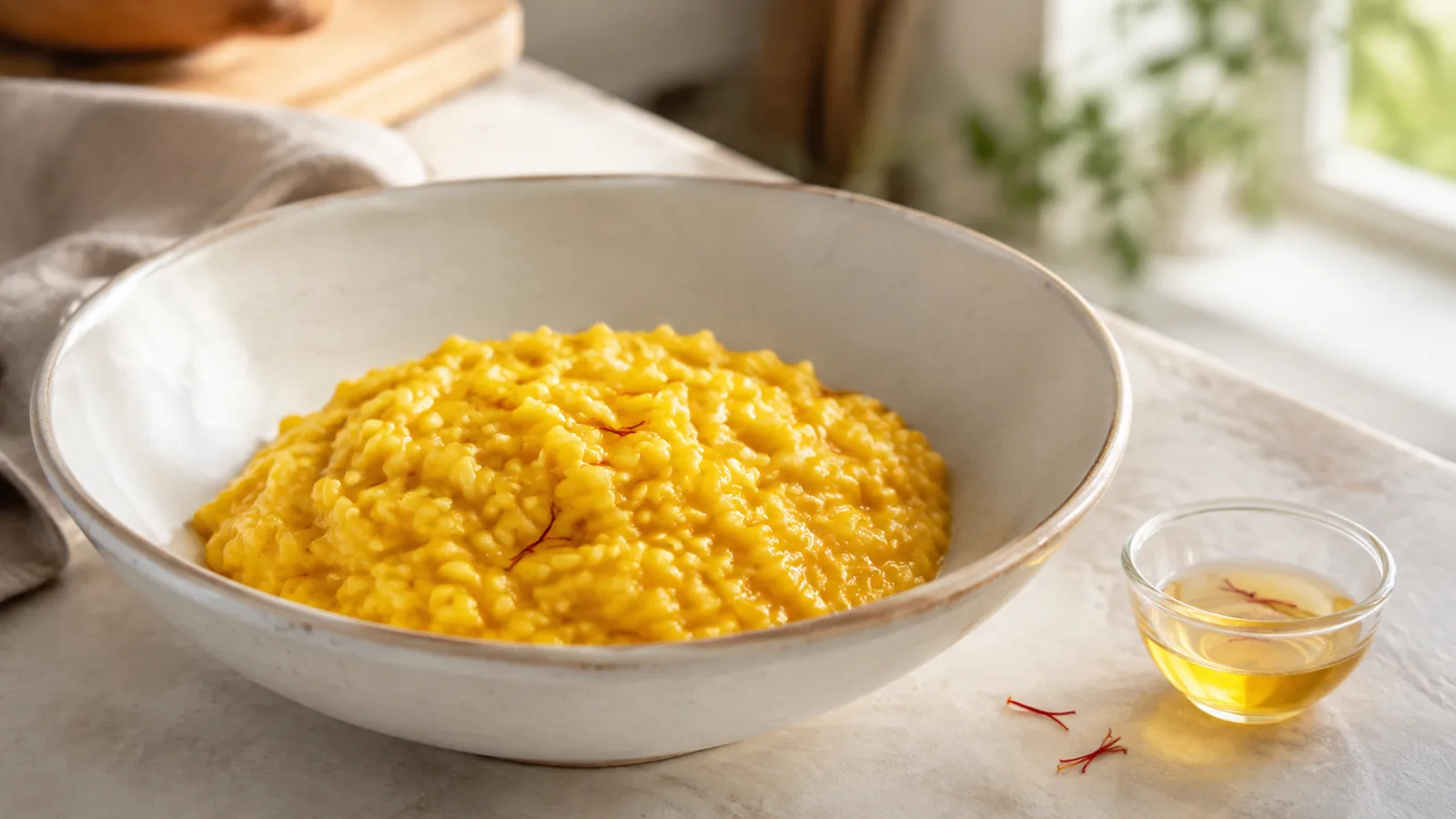
Saffron infused Iranian dishes are made for a table where the rice arrives fragrant, the garnishes matter and nobody is in a hurry. This guide brings together two generous celebration dishes: ajil pilaf with chicken, dried fruit and nuts, and slow-braised chelo gosht with saffron rice. The quantities are balanced for six people, and each method keeps saffron’s aroma clear rather than burying it under sweetness or spice.
What makes these Iranian dishes feel special?
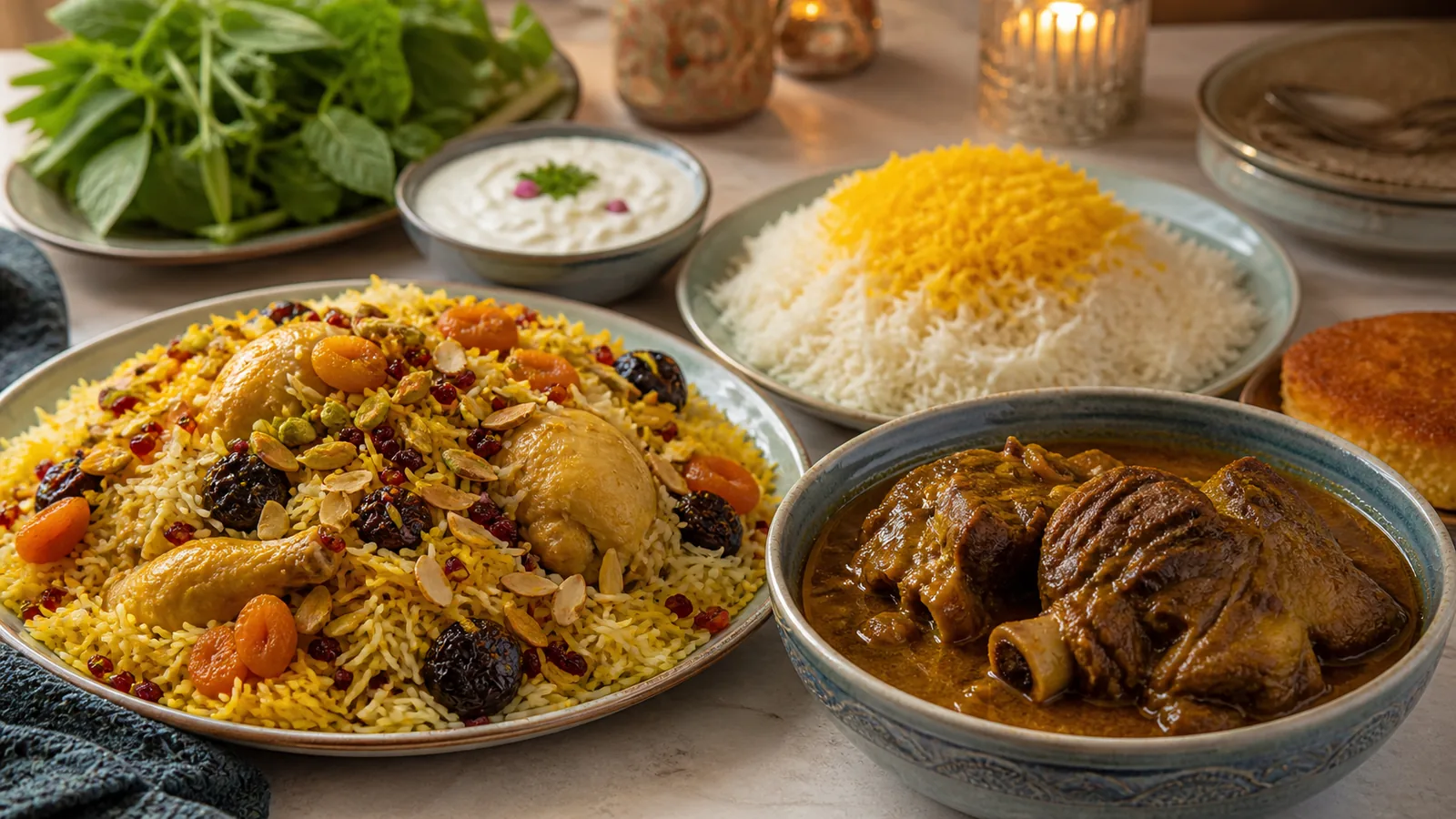
“Majestic” is not the name of one fixed recipe. Here it describes the style of Iranian food served for guests and important occasions: separate grains of rice, carefully cooked meat, a polished arrangement and contrasting sweet, tart and savoury flavours. In Persian cuisine, saffron often provides the bridge between those elements.
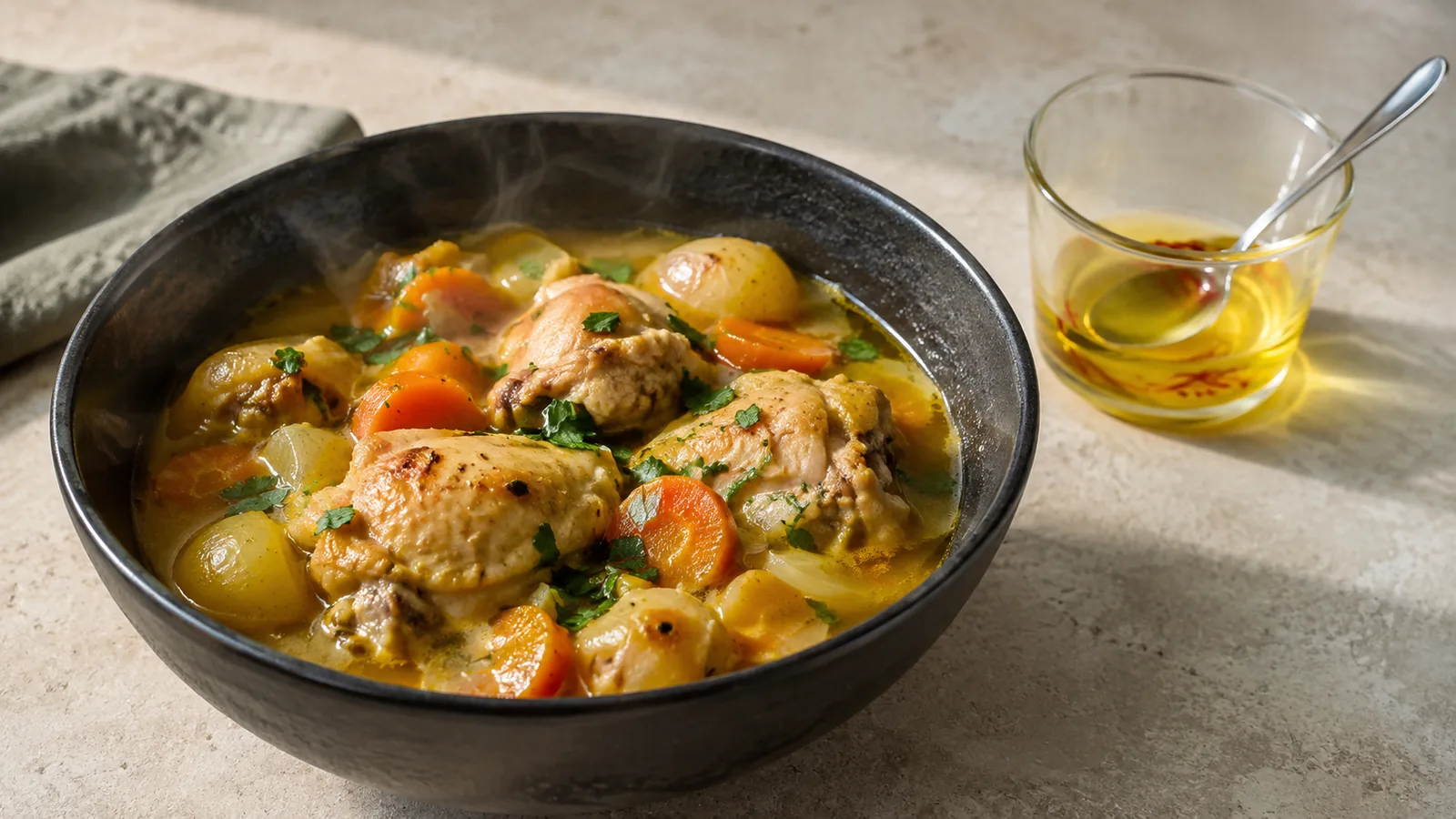
The two dishes below take different routes. Ajil pilaf is colourful and abundant, with chicken and a restrained mixture of apricots, prunes, barberries, almonds and pistachios. Chelo gosht is quieter but deeper: lamb is braised until tender and served beside plain steamed rice finished with a saffron-gold layer.
If you are looking for a saffron flavored dish that can anchor a gathering, either one works: choose the pilaf for colour and sweet-tart contrast, or the lamb for a deeply savoury meal.
Prepare the saffron before either recipe
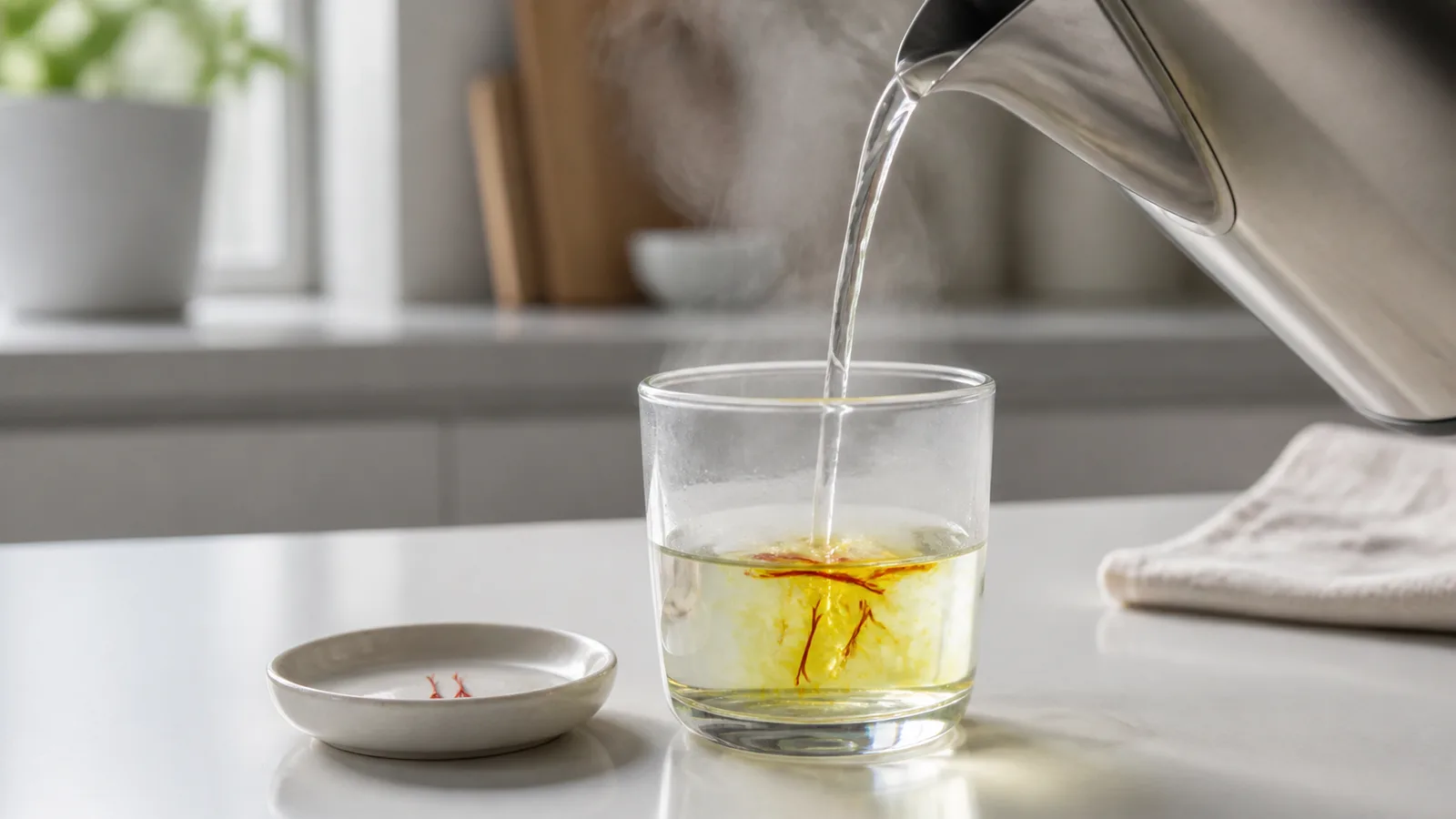
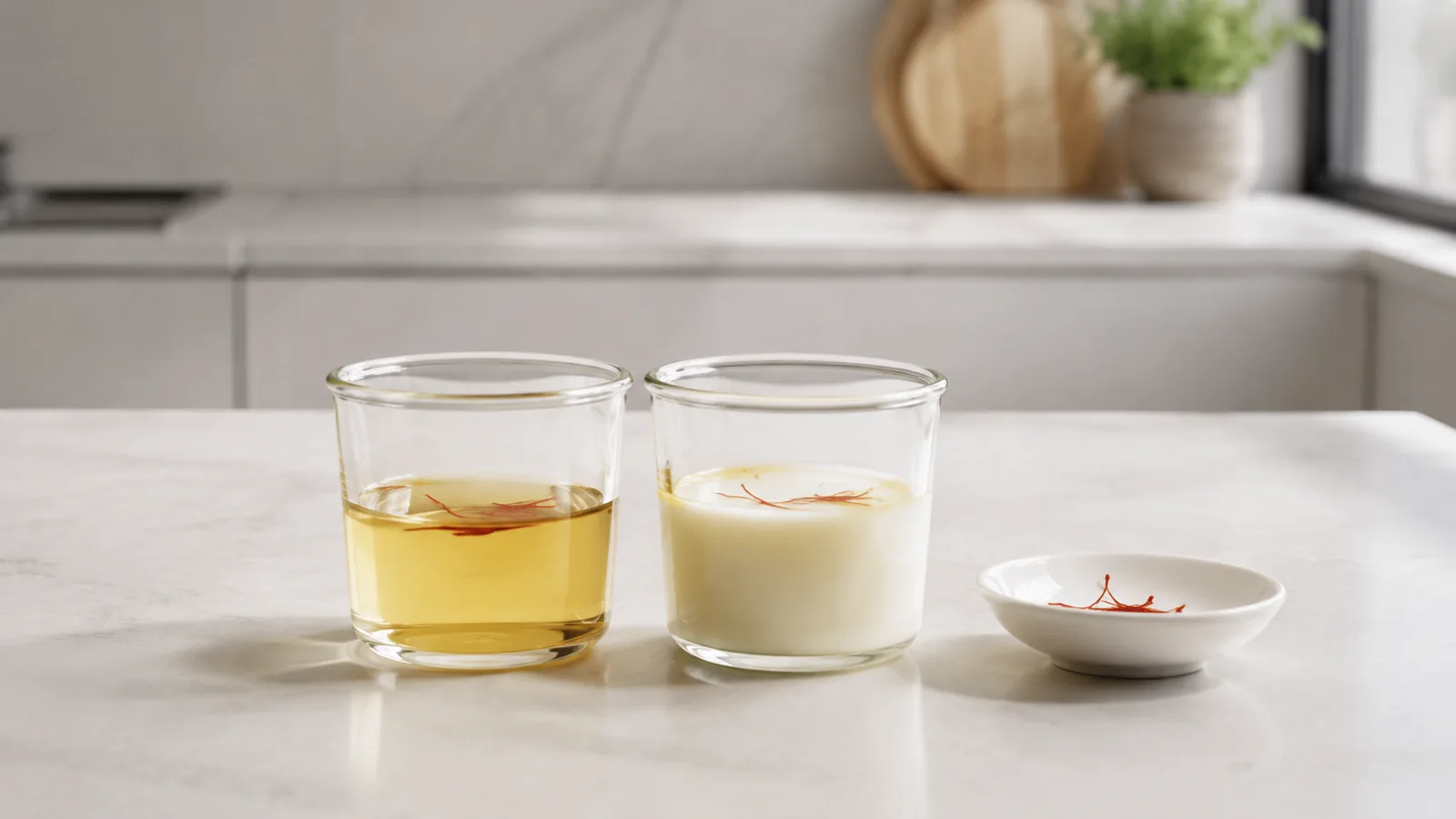
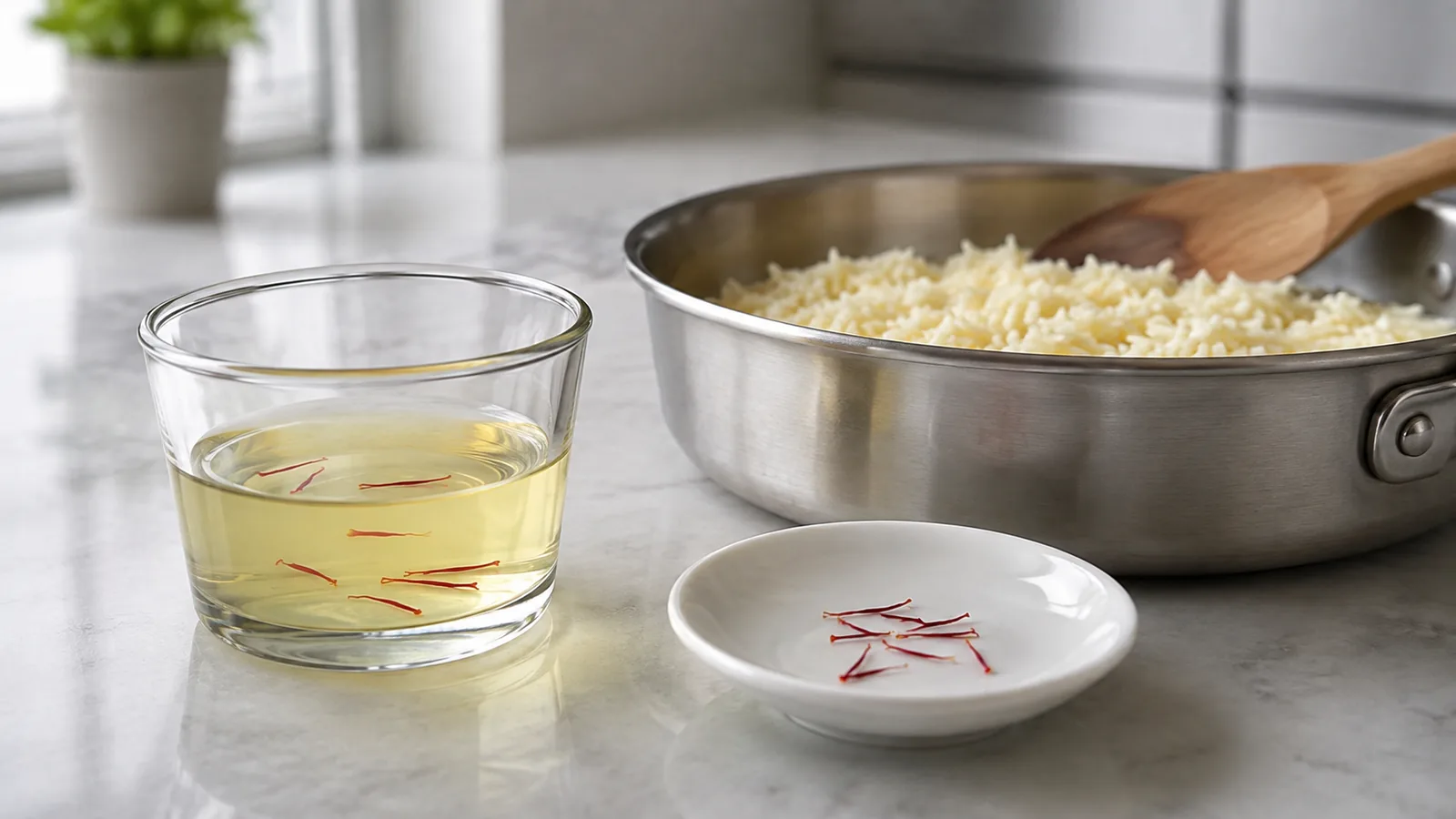
For each dish, lightly grind 1/2 teaspoon of saffron threads. Pour over 4 tablespoons of hot water, cover and leave for 15–20 minutes. This makes a concentrated infusion that spreads evenly through rice or sauce. Adding several spoonfuls of dry ground saffron would be wasteful and could make the food bitter.
If this is your first time working with the spice, read our guide to brewing saffron for flavour and colour. Prepare the infusion before chopping anything else; it can steep while the onions and garnishes are readied.
1. Ajil pilaf with saffron chicken
Ajil means a mixture of nuts and dried fruit. In this saffron-flavoured dish, that mixture is treated as a garnish as much as an ingredient. Keeping it mostly near the top prevents the barberries from disappearing and the nuts from becoming soft during steaming.
Ingredients for six
- 500 g basmati rice;
- 600 g boneless, skinless chicken thighs or breast;
- 2 medium onions;
- 80 g dried apricots;
- 80 g pitted prunes;
- 60 g dried barberries;
- 60 g slivered almonds;
- 40 g slivered pistachios;
- 1/2 teaspoon saffron threads, brewed as described above;
- 45 g butter, divided;
- 2 tablespoons neutral oil, plus a little for the rice pot;
- 1/2 teaspoon turmeric;
- 1/4 teaspoon ground cinnamon, optional;
- 1 tablespoon sugar, optional for very tart barberries;
- salt and black pepper;
- 1 large potato for tahdig, optional.
Clean and soak the rice
- Rinse the rice in several changes of cool water until the water is much clearer.
- Cover with cool water and add 1 tablespoon of salt. Soak for 1–2 hours, then drain.
- Bring a large pot of water to a vigorous boil. Add the drained rice and cook for 5–7 minutes, stirring once or twice.
- Bite a grain: its outside should be tender while the centre still has a firm white point. Drain immediately and rinse briefly with lukewarm water.
Cook the saffron chicken
- Cut the chicken into 3–4 cm pieces and pat dry. Do not wash raw chicken; keep its board and knife away from the fruit and garnishes.
- Thinly slice one onion. Heat 1 tablespoon each of butter and oil in a wide pan and cook the onion until soft and lightly golden.
- Add the chicken, turmeric, 1/2 teaspoon salt and black pepper. Brown over medium heat, turning the pieces so they colour evenly.
- Add 2 tablespoons of the brewed saffron and 3 tablespoons of water. Cover and cook gently until the chicken reaches 74°C/165°F at its thickest point. Remove from the heat and keep covered.
Chicken breast cooks faster and should be checked early; thighs are more forgiving. The goal is juicy cooked chicken, not deeply fried pieces. It will warm once more when the rice steams.
Prepare the fruit and nut garnish
- Rinse the apricots and prunes, then soak them in warm water for 10 minutes. Drain, pat dry and cut large pieces in half.
- Pick through the barberries, rinse them in a fine sieve and dry gently. They can hold grit, so do not skip this step.
- Slice the second onion. Melt 15 g butter in a pan and cook the onion until golden. Add the apricots and prunes; toss for 2–3 minutes, then transfer to a bowl.
- Add another small piece of butter to the pan. Cook the barberries for only 30–45 seconds with the optional sugar. They burn quickly.
- Toast the almonds for 1–2 minutes. Keep the pistachios unheated so their colour remains bright.
Steam and assemble the pilaf
- Put 2 tablespoons of oil and 2 tablespoons of water in a clean heavy pot. For potato tahdig, arrange thin potato slices across the base.
- Spoon in half the rice without packing it down. Add the chicken and half the apricot-prune mixture, keeping a few pieces of chicken for the top.
- Cover with the remaining rice and mound it gently. Make several steam holes with the handle of a spoon.
- Wrap the lid in a clean tea towel, cover tightly and steam over medium heat for 8 minutes, then low heat for 35–40 minutes.
- Mix 2 cups of cooked rice with the remaining brewed saffron. Fold the plain and saffron rice together lightly on a platter.
- Arrange the chicken, dried fruit, barberries, almonds and pistachios over the rice. Serve the tahdig separately so it stays crisp.
If you prefer a sharper sweet-tart balance, increase the barberries rather than the sugar. For a related technique with a simpler garnish, see our saffron rice with barberries.
2. Chelo gosht with saffron
Chelo gosht pairs steamed white rice with tender braised meat. Lamb neck gives the sauce body and a deep flavour, while shoulder is easier to portion. The meat needs time, but most of that time is quiet simmering; this is a good dish to start several hours before guests arrive.
Ingredients for six
- 1.4 kg bone-in lamb neck pieces or 1.2 kg boneless lamb shoulder;
- 500 g basmati rice;
- 2 large onions, thinly sliced;
- 2 garlic cloves, lightly crushed;
- 1 tablespoon tomato paste;
- 1/2 teaspoon saffron threads, brewed in 4 tablespoons hot water;
- 1/2 teaspoon turmeric;
- 1 small cinnamon stick;
- 2 bay leaves;
- 2 tablespoons neutral oil;
- 1.25–1.5 litres hot water;
- salt and black pepper;
- 30 g butter, optional, for finishing the rice.
Brown the meat and build the braise
- Pat the meat dry and season lightly with salt and pepper. Heat the oil in a heavy pot over medium-high heat.
- Brown the lamb in batches. Give each piece room; crowding makes it steam. Transfer the browned meat to a plate.
- Lower the heat and add the onions with a pinch of salt. Cook for 10–12 minutes until soft and golden.
- Stir in the turmeric and tomato paste for one minute. Return the meat and its juices to the pot.
- Add enough hot water to come about three-quarters of the way up the meat. Bring to a gentle simmer and skim any foam from the surface.
- Add the garlic, cinnamon and bay leaves. Cover with the lid slightly ajar and simmer on low for 2 1/2–4 hours, turning the meat occasionally.
Lamb neck can take longer than shoulder. It is ready when a fork enters easily and the meat begins to release from the bone. A safe minimum temperature is not the same as tenderness in a collagen-rich cut, so judge this braise by both temperature and texture.
Finish the saffron sauce
- When the lamb is tender, transfer it carefully to a warm dish. Remove the cinnamon and bay leaves.
- If the sauce is thin, simmer it uncovered for 10–15 minutes. Skim excess surface fat rather than trying to hide it with more spices.
- Add three-quarters of the saffron infusion. Taste, then adjust the salt and pepper.
- Return the meat to the sauce and warm over very low heat for 5 minutes. Spoon the remaining saffron over the meat just before serving.
Six tablespoons of dry saffron are neither necessary nor desirable here. About 1/2 teaspoon of genuine threads, brewed correctly and divided between sauce and finish, gives a clear aroma without bitterness.
Make the chelo
Rinse, soak, parboil and drain the 500 g of rice as in the first recipe. Steam it in a clean pot for 40–45 minutes. Mix 1–2 cups of the cooked rice with a spoonful of saffron infusion and the optional butter, then use that golden rice as the top layer. Keep most of the chelo white: the contrast is part of the dish.
Serve the lamb in a deep platter with enough sauce to keep it moist, not submerged. Place the chelo and tahdig alongside it. Our separate chelo majlisi meat guide offers another version for readers comparing methods.
Which recipe should you choose?
Ajil pilaf is the more colourful option and suits guests who enjoy a sweet-sour rice dish. It also stretches gracefully across a large platter. Chelo gosht is richer and more savoury, with a sauce that rewards slow cooking. For a mixed menu, serve only one as the main dish and add a fresh salad, yoghurt and herbs rather than a second heavy rice course.
A calm schedule for entertaining
- Four hours ahead: begin the lamb braise, or prepare the dried fruit and nuts for ajil pilaf.
- Two hours ahead: rinse and soak the rice; brew the saffron.
- One hour ahead: parboil and begin steaming the rice.
- Thirty minutes ahead: reduce the lamb sauce or finish the chicken and garnish.
- At serving time: fold the rice gently, arrange the saffron layer and add pistachios last.
Both dishes can be prepared in stages. Braised lamb is often even better reheated gently the next day. Cool leftovers promptly in shallow containers, refrigerate within two hours and use within three to four days. Reheat meat, rice and sauce thoroughly; add a splash of water before warming rice so it does not dry out.
Common problems and useful fixes
The rice turns soft or clumps
It was probably boiled too long before draining or compressed in the steaming pot. Drain while the centre is still firm, mound the rice loosely and allow space for steam. Use a wider platter and a gentle folding motion when adding saffron rice.
The dried fruit makes the pilaf too sweet
Do not use hundreds of grams of every fruit and nut. The measured amounts here keep rice and chicken central. Tart barberries, unsweetened apricots and a modest amount of prune give contrast without turning the main course into dessert.
The lamb is cooked but still tough
Keep it at a quiet simmer and give it more time. Hard boiling tightens the outside and breaks the sauce before connective tissue has softened. Check the pot every 30 minutes and add hot water only when needed.
The saffron disappears beneath the spices
Use a small cinnamon stick and remove it before serving. Add most of the saffron near the end, once the sauce has reduced. Iranian saffron has a distinctive aroma, but it cannot compete with an unchecked amount of cinnamon, turmeric or burnt tomato paste.
Saffron’s place in Persian cuisine
A memorable saffron Persian dish is not made by colouring everything yellow. The best use is selective: a golden layer of chelo, a fragrant spoonful in braising liquid, or a bright finish over chicken. That restraint lets the rice, meat, fruit and nuts remain recognisable while saffron ties the plate together.
These two recipes preserve the generous spirit of Iranian celebration food while making the quantities and cooking cues practical in a home kitchen. Ajil pilaf brings colour and contrast; chelo gosht brings patience and depth. In both, careful rice preparation and a strong, measured infusion matter far more than excess saffron.