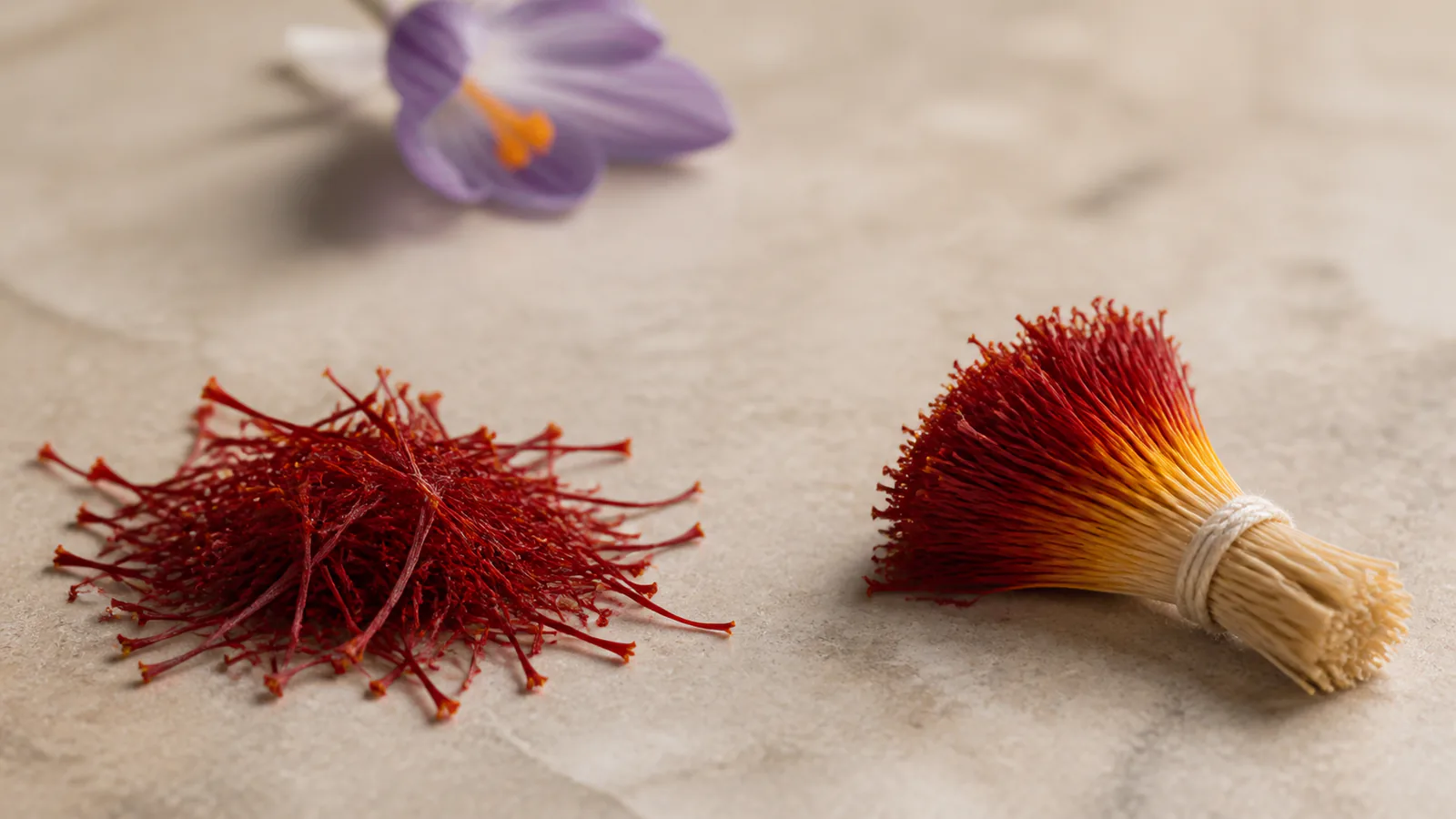
Negin saffron is an Iranian trade style made from long, separated red stigmas with little or no yellow style attached. Its clean appearance, low breakage and strong coloring potential place it near the premium end of the retail market. Bundle saffron, also called dasteh, is the contrasting whole-filament presentation: the red stigma and paler style remain connected and the strands are dried together in a small bunch.
Both come from the same plant, Crocus sativus. The difference is how much of the flower’s pistil is retained, how the threads are separated and presented, and how a particular lot performs when tested. Negin is not a different saffron species, and the word alone does not prove purity or laboratory grade.
What does “Negin” mean in saffron?
Negin means “jewel” in Persian trade usage. Sellers use it for straight, substantial red threads that have been separated from the style with care. A good sample normally has:
- mostly red stigmas, with very little yellow material;
- long, intact threads rather than a box full of fragments;
- a naturally flared or trumpet-shaped tip;
- a dry, clean appearance without clumping or added surface color; and
- saffron’s characteristic aroma rather than a perfume-like smell.
“Super Negin” is commonly used for an especially uniform, long and visually impressive selection. These Iranian commercial names are useful descriptions, but they are not substitutes for a test report. The current ISO 3632-1:2025 saffron specification applies internationally to filaments, cut filaments and powder; it does not certify a product merely because its package says Negin or Super Negin.
Negin, filaments and cut filaments
International standards use more general terms than the retail trade. The Codex standard for dried saffron defines a filament as the dried stigma with part of the style, while a cut filament is the dried stigma with the style removed and the pieces detached from one another.
Negin is closest in appearance to carefully selected cut filaments. That comparison is more accurate than calling Negin “Grade 1” everywhere. Numbered grades vary between sellers and markets, so a three-level shop classification should not be mistaken for a universal scientific grading system.
What is saffron bundle or dasteh?
Bundle saffron keeps the filament visibly intact. Its red stigma remains joined to the yellow and pale style, and a group of strands is dried or arranged together. In Iran it may be called dasteh; “daughter bunch” is another traditional trade name associated with the hand work historically involved in separating and tying the crop.
The pale portion is the style, not the plant’s underground root. Calling it “saffron root” is common in shops, but botanically inaccurate. The spice comes from parts of the flower’s pistil. Codex likewise describes saffron as dried stigmas with part of the style.
Why bundle saffron usually costs less
Bundle contains more yellow or pale style and less red stigma per gram than Negin. Because the red portion supplies more of the compounds associated with coloring strength, buyers usually pay less for the whole-filament presentation. Lower price here does not mean fake; it reflects a different composition and appearance.
Its visible color transition can also make a crude substitution easier to notice. If every pale section has been stained an identical red, that deserves scrutiny. Still, bundle is not fraud-proof. Moisture, foreign matter, poor storage and misleading origin claims cannot be judged from shape alone.
Negin versus bundle: which should you choose?
Choose Negin when presentation matters
Negin suits gift packs, retail display and dishes where the appearance of long red threads matters. Its high red-stigma proportion also makes it attractive when strong coloring performance per gram is the priority. Handle the threads gently and keep the container dry, dark and airtight.
Choose bundle when traceable whole filaments matter
Bundle lets the buyer see the stigma-to-style transition and is often the more economical way to buy recognizable whole saffron. It can be a sensible household choice when the lot smells fresh, has been dried correctly and comes from a supplier that can explain its origin and testing.
Neither form wins every comparison. A clean, recently harvested bundle from a careful producer can be a better purchase than old or adulterated material sold under a premium name.
Are there special Negin saffron benefits?
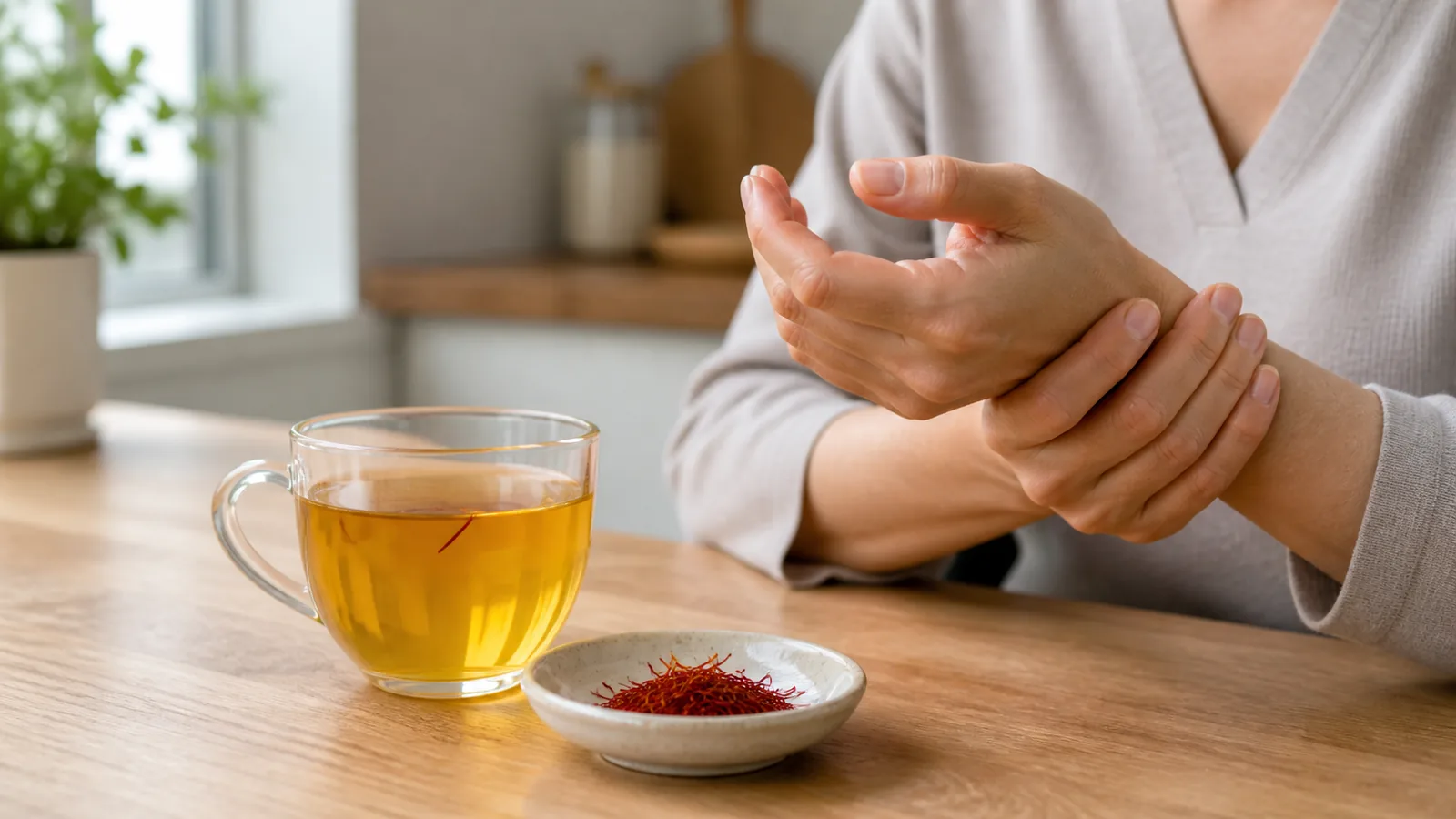
The practical benefits of Negin saffron are its presentation, high red-stigma proportion and potential coloring strength. There is no sound basis for claiming that the Negin trade cut creates unique medical effects that other genuine saffron does not have. Searches for “Negin saffron benefits” or “Super Negin saffron benefits” should therefore lead first to quality and use, not a list of treatment promises.
Saffron contains crocins, picrocrocin, safranal and other constituents studied in food chemistry and clinical research. The evidence depends on the preparation and dose used in a study; it does not turn a culinary grade into a remedy. Claims that Negin cures digestive problems, inflammation, menstrual conditions, anxiety or depression go beyond what its grade name establishes. Readers interested in that separate subject can review our evidence-led guide to saffron’s properties, research and safety.
How to assess Negin or bundle before buying
- Read the form correctly. Look for intact red stigmas in Negin and a natural red-to-yellow transition in bundle.
- Check aroma and condition. The threads should be dry, free flowing and characteristic, without mustiness or an artificial fragrance.
- Do not rely on redness alone. Extremely uniform color can be produced by dye, while genuine lots naturally vary.
- Ask for meaningful testing. Laboratory assessment of identity, moisture, foreign matter and coloring, aroma and flavor markers is stronger evidence than a grade word.
- Prefer traceability. A supplier should identify origin, packing information and storage conditions and should not hide behind a dramatic health claim.
ISO explains that standardized testing helps laboratories assess purity and the spice’s color, aroma and flavor strength, while also detecting foreign material and problematic moisture. See the ISO overview on recognizing quality saffron.
How to use either form
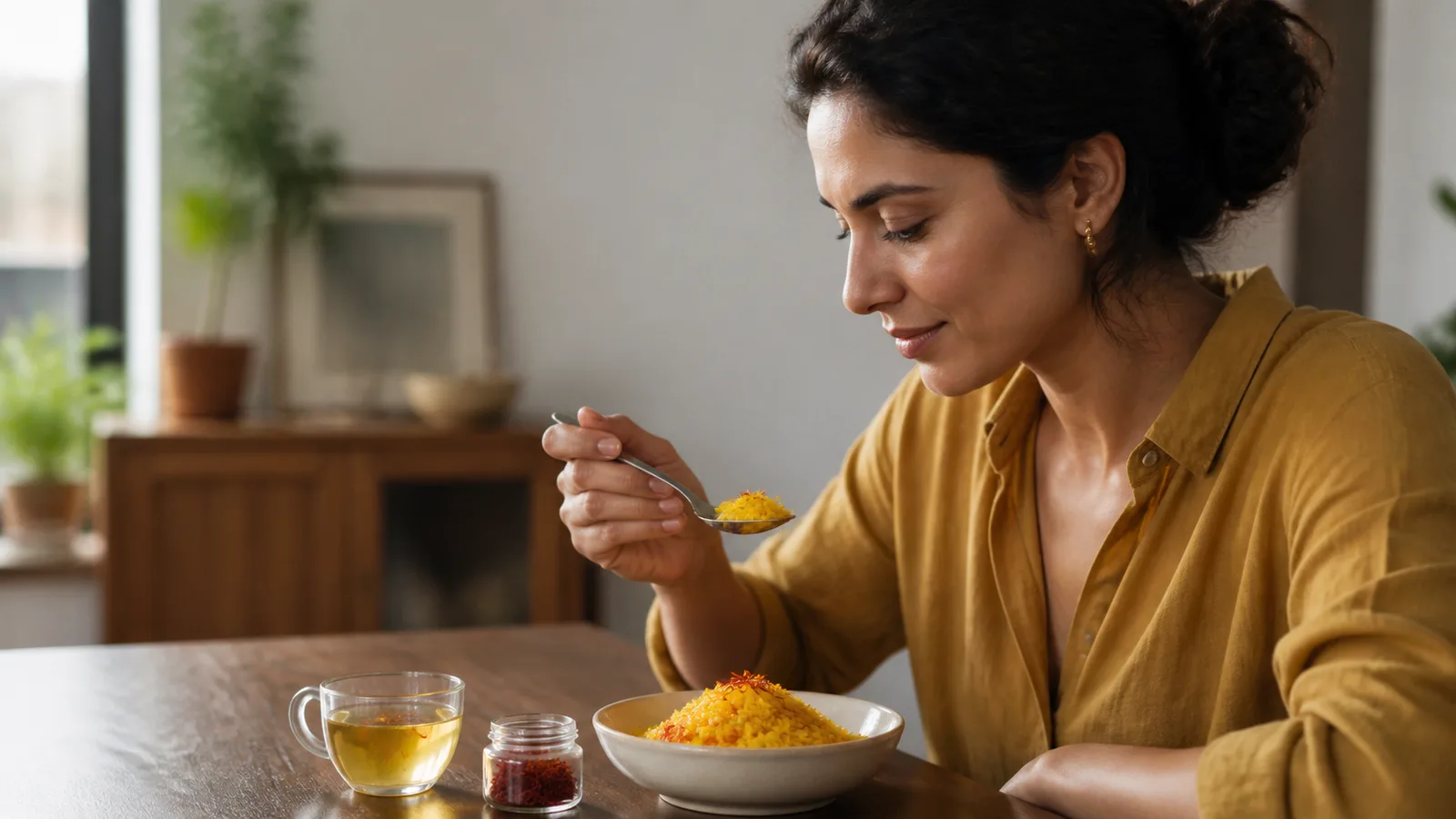
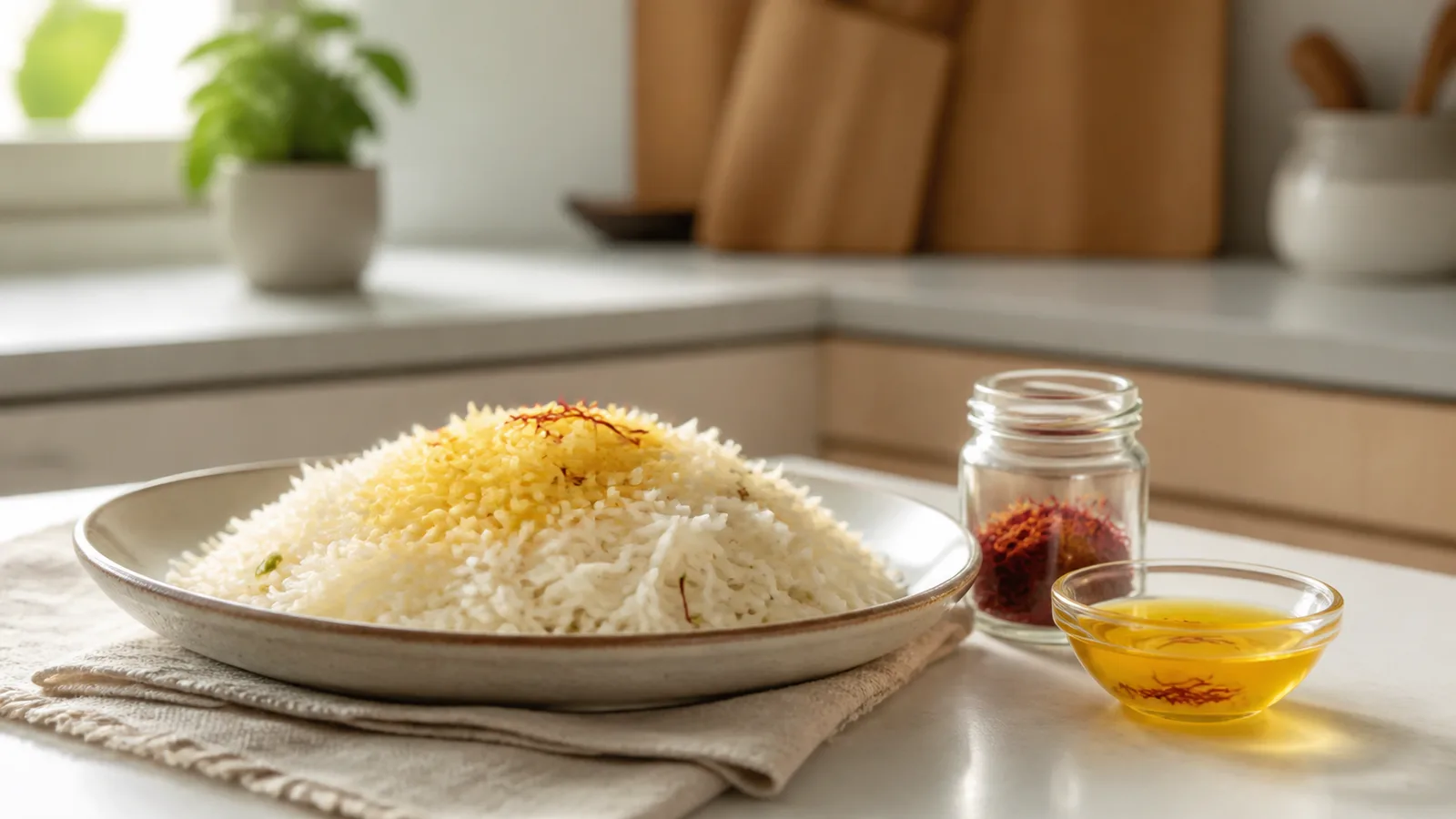
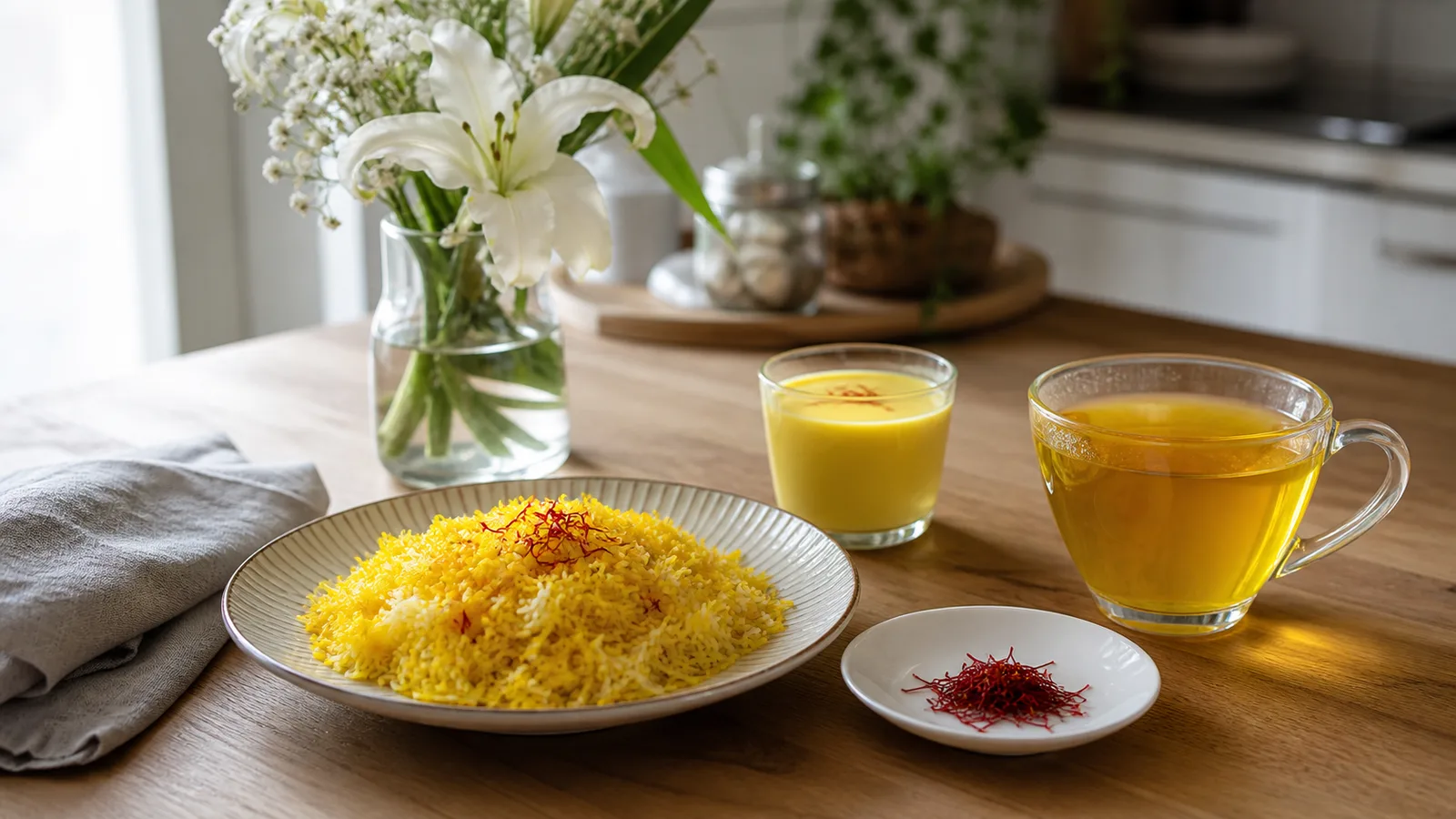
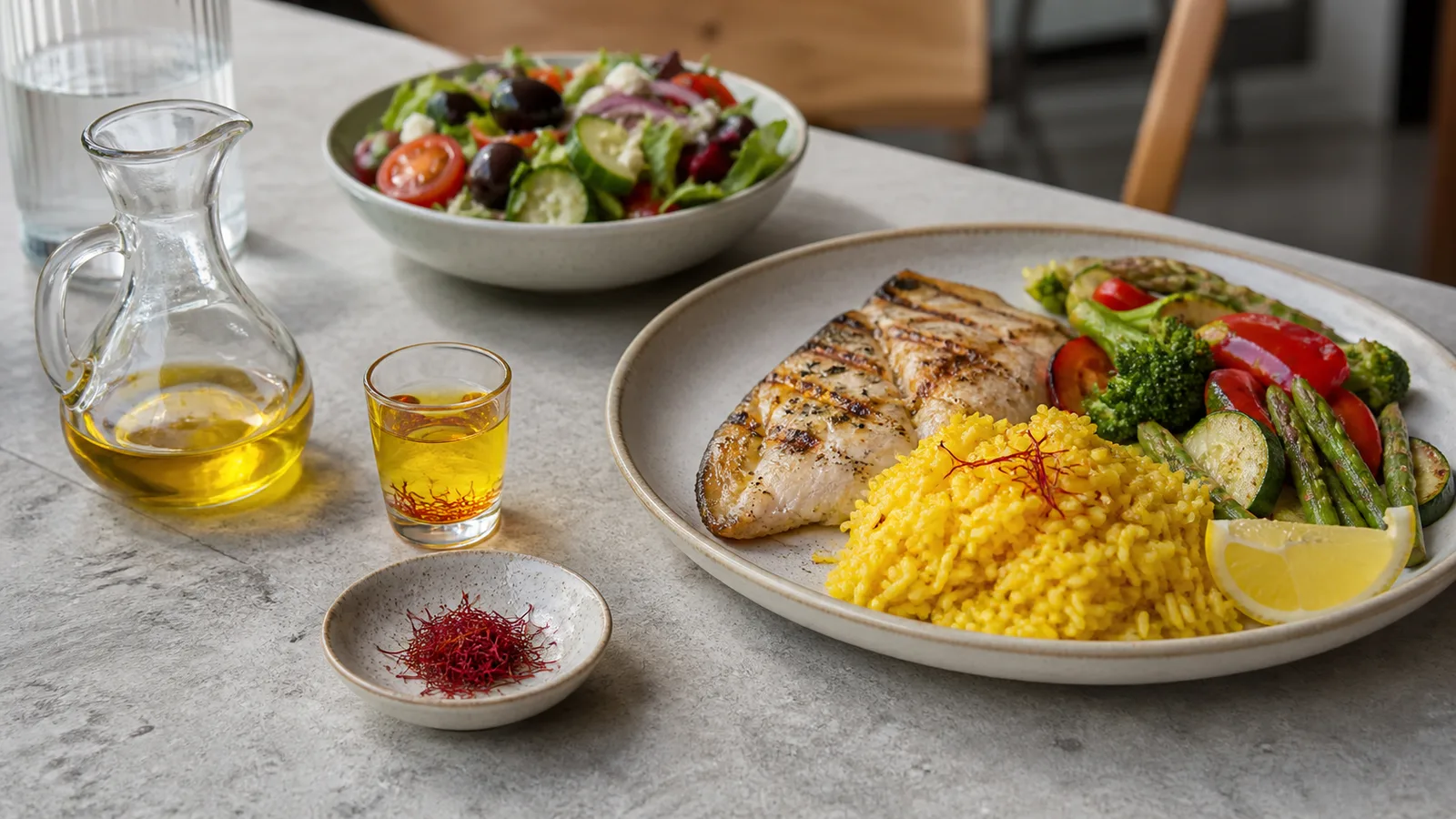
For cooking, gently crush the amount you need and infuse it in warm water before adding both liquid and threads to rice, stew, dessert or a drink. Negin’s long threads make an attractive garnish; bundle works well when appearance is less important and the buyer accepts that the paler style contributes less color per gram.
The most useful choice is therefore straightforward. Buy Negin for a premium, predominantly red presentation. Buy bundle for visible whole filaments and value. In either case, let freshness, traceability and testable quality carry more weight than a grand grade label.