


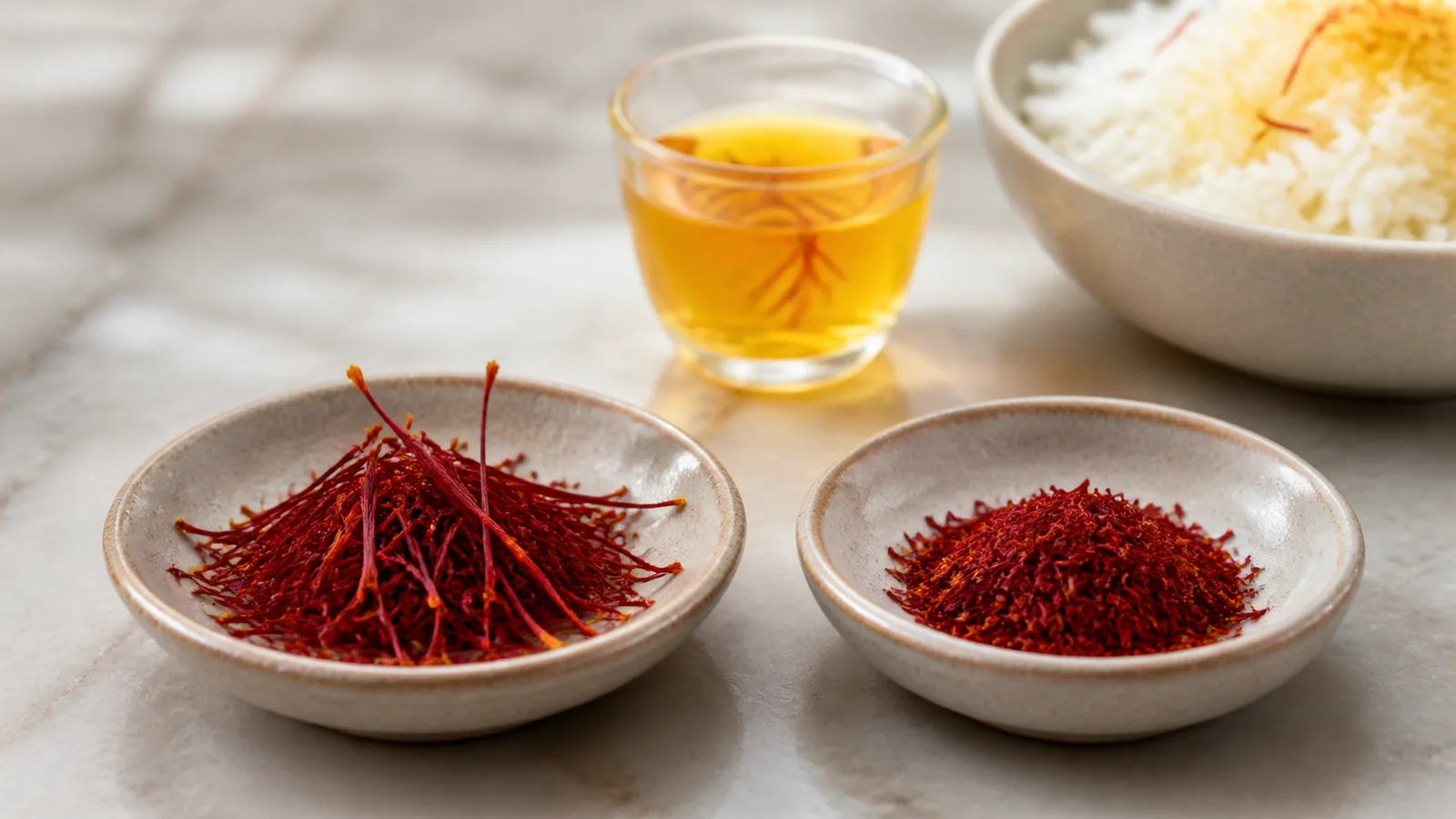
Broken saffron is made up of shorter pieces of the dried red stigma rather than long, intact threads. In Iran it may be sold as Narma. The pieces can form during cleaning, sorting, packing, or transport, so “broken” describes presentation—not a different saffron plant.
Good broken saffron can deliver excellent color, aroma, and flavor in cooking, often as a more affordable option than an attractive whole-thread grade. It is not automatically equal to premium Negin saffron, though. Quality depends on the original material, the proportion of red stigma to yellow style, drying and storage, purity, and measurable coloring, aroma, and taste strength.
Iranian whole and broken saffron: the practical difference
Whole saffron displays the recognizable trumpet-like stigma ends and is easier to inspect visually. Long red threads also command a premium when appearance matters for retail presentation or garnishing.
Broken saffron contains fragments, which makes its grade and botanical identity harder to judge with the eye. That does not make it fake. If the pieces came from a clean, well-dried, high-quality lot and contain little style material, they may perform very well. Conversely, fragments from a weak or adulterated batch remain weak or adulterated.
The fairest comparison is not simply “whole versus broken.” Compare origin and batch traceability, red-to-yellow composition, harvest and packing dates, moisture, storage, and laboratory results where available.
What determines color, aroma, and taste?
Saffron’s characteristic properties are linked mainly to crocins for color, picrocrocin for bitter taste, and volatile compounds including safranal for aroma. Their levels vary with the crop and with post-harvest handling. Light, heat, air, moisture, and long storage can weaken a batch.
ISO 3632 covers dried saffron as powder, filaments, and cut filaments. Its laboratory methods assess properties related to coloring, taste, aroma, moisture, and purity. A product name or photograph cannot substitute for those measurements.
Useful broken saffron uses
Fragments are convenient when the recipe will crush or bloom the spice anyway. Typical broken saffron uses include:
- Rice and savory dishes: bloom it for tahdig, zereshk polo, gheymeh, lubia, khorak, soup, or another stew.
- Desserts: use a measured infusion in sholeh zard, fereni, custards, cakes, or syrup.
- Drinks: steep a small amount for tea or an herbal infusion, or add it to coffee or milk when the recipe suits the flavor.
- Restaurants, bakeries, and catering: fragments can be cost-effective where saffron is dispersed through a large batch and long threads are not visible in the finished food.
For garnishing a finished plate with recognizable threads, whole saffron may be the better purchase. For an infusion that will be strained or mixed through food, the cosmetic difference often matters less.
How to bloom broken saffron
- Measure the amount needed for the recipe before grinding; small fragments are easy to overpour.
- Crush lightly to create an even texture. Do not reduce it to dust long before use.
- Cover with a small amount of warm—not aggressively boiling—water.
- Leave it for 10 to 15 minutes, then add the infusion and particles near the appropriate stage of cooking.
Broken pieces may hydrate quickly because more surface area is exposed, but they are not inherently “stronger.” Start with the recipe amount and judge a particular batch by its actual performance.
How to buy broken saffron well
Look for a seller who identifies the product clearly and can provide a batch or lot number, net weight, origin, packing date, and storage guidance. A sealed, light-protective pack is preferable to an open container with no traceability. If coloring strength is important for commercial use, request a recent laboratory certificate rather than relying on a grade name alone.
Price should be lower for cosmetic fragments, but an implausibly cheap offer deserves caution. Saffron requires intensive harvesting and processing even when threads break. Value comes from verified performance per gram, not the largest-looking package.
Our guide to choosing saffron explains the main buying criteria. You can also view the current saffron selection, checking the individual product description for its stated form and grade.
Fake saffron and adulteration risks
Because broken material is harder to inspect than intact stigma tips, seller and batch evidence matter. Reported adulterants include safflower, marigold, turmeric, colored plant fibers, and other parts of the saffron flower. Added moisture or substances such as glycerin, honey, or sugar can also increase weight.
Powder presents an even greater visual challenge because its structure has disappeared. ISO notes that fraud occurs more often with powdered saffron, although fragments are not immune.
Are home authenticity tests reliable?
A genuine thread is usually dark red to deep red, with a bitter rather than sweet taste and a distinctive aroma. Whole stigmas widen at one end. Those clues can reveal an obvious problem, but none proves purity or grade—especially when the product is already broken.
Water tests shared online are also easy to overinterpret. Genuine saffron releases golden color over time, but release speed changes with crushing, water temperature, and the batch. Artificial dye can be subtle, and a mixture can contain both genuine and fake material. Laboratory methods are the stronger evidence.
Storage
Keep broken saffron airtight, dry, and away from heat and direct light. Open the container briefly, use a clean dry utensil, and close it promptly. Store the pack in a cool cupboard rather than above a stove or beside a sunny window.
Buy an amount you will use while the aroma remains vivid. Smaller pieces have more exposed surface, so careful storage is particularly worthwhile.
Does broken saffron have different health benefits?
Breaking a genuine thread does not create a new health property. Nor does the Narma label prove a particular concentration of crocin or safranal. Research on measured saffron preparations cannot be transferred automatically to an untested culinary batch.
Broken saffron is not a treatment for high blood pressure, diabetes, gout, infertility, or another condition, and it should not replace medicine. Its clearest benefit is culinary: useful flavor and color, with less emphasis on perfect thread appearance.
Choose broken saffron when the batch is traceable, the quality is supported, and your recipe does not require long threads. Choose whole saffron when visual inspection or presentation matters. In either case, purity and measured quality are more important than shape alone.

![Exporting Saffron to Turkey + Price Guide [Complete 0 to 100]](https://img.rowhanisaffron.com/20260827003933/saffron-export-turkey-quality-inspection.webp)



