Women can use saffron like anyone else: as a spice in food, as an occasional infusion or, with more caution, as a standardized supplement. The right form depends on the purpose. Clinical research has explored certain menstrual, mood, perimenopause and sexual-health symptoms, but it does not support the broad claim that saffron “balances female hormones” or improves every aspect of women’s health.
The useful way to discuss saffron uses for women is by goal. Cooking for flavour is straightforward. Using an extract for a symptom is a health decision that needs evidence, a defined product and attention to pregnancy, medicines and side effects.
How to use saffron in everyday food
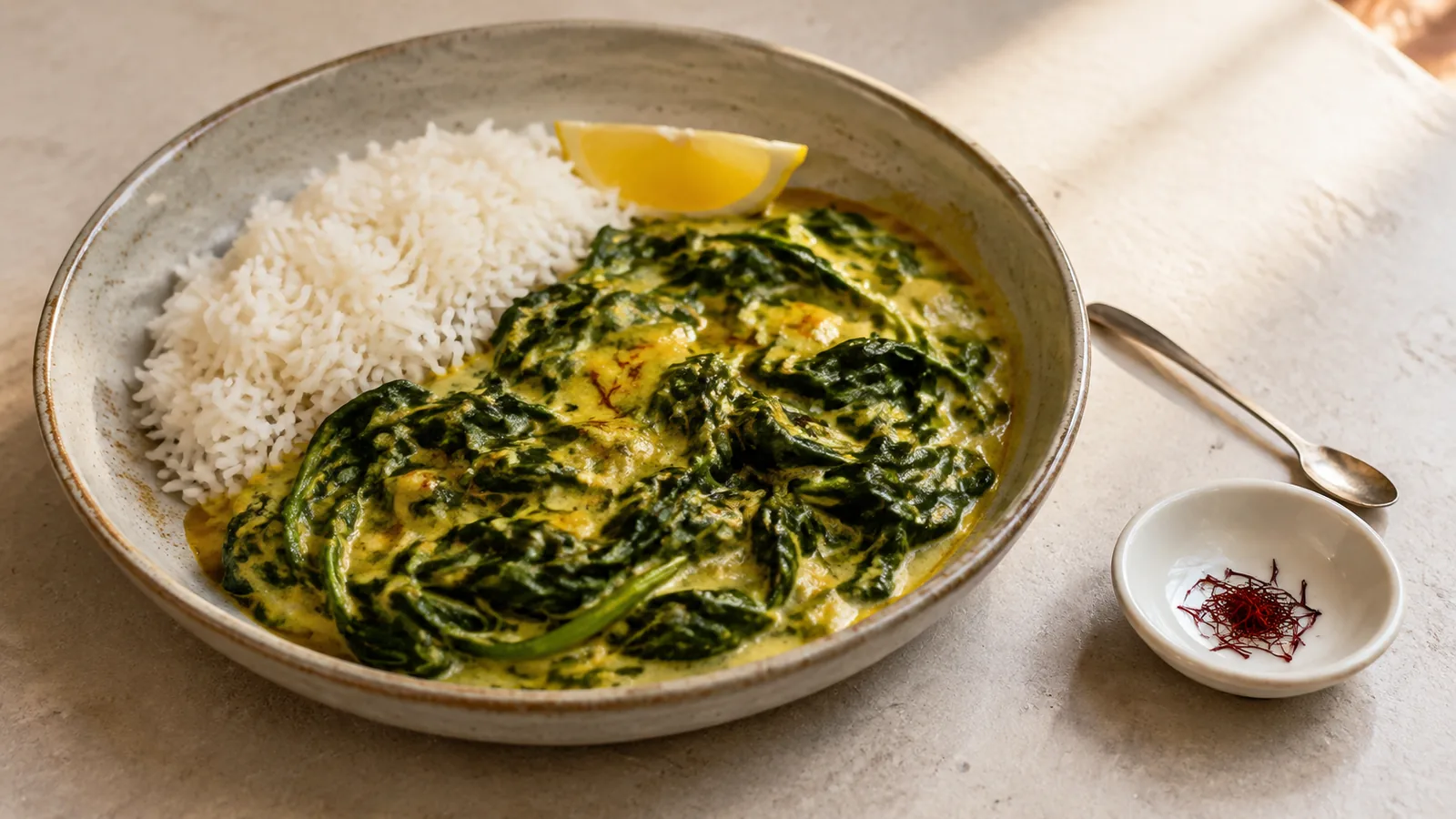
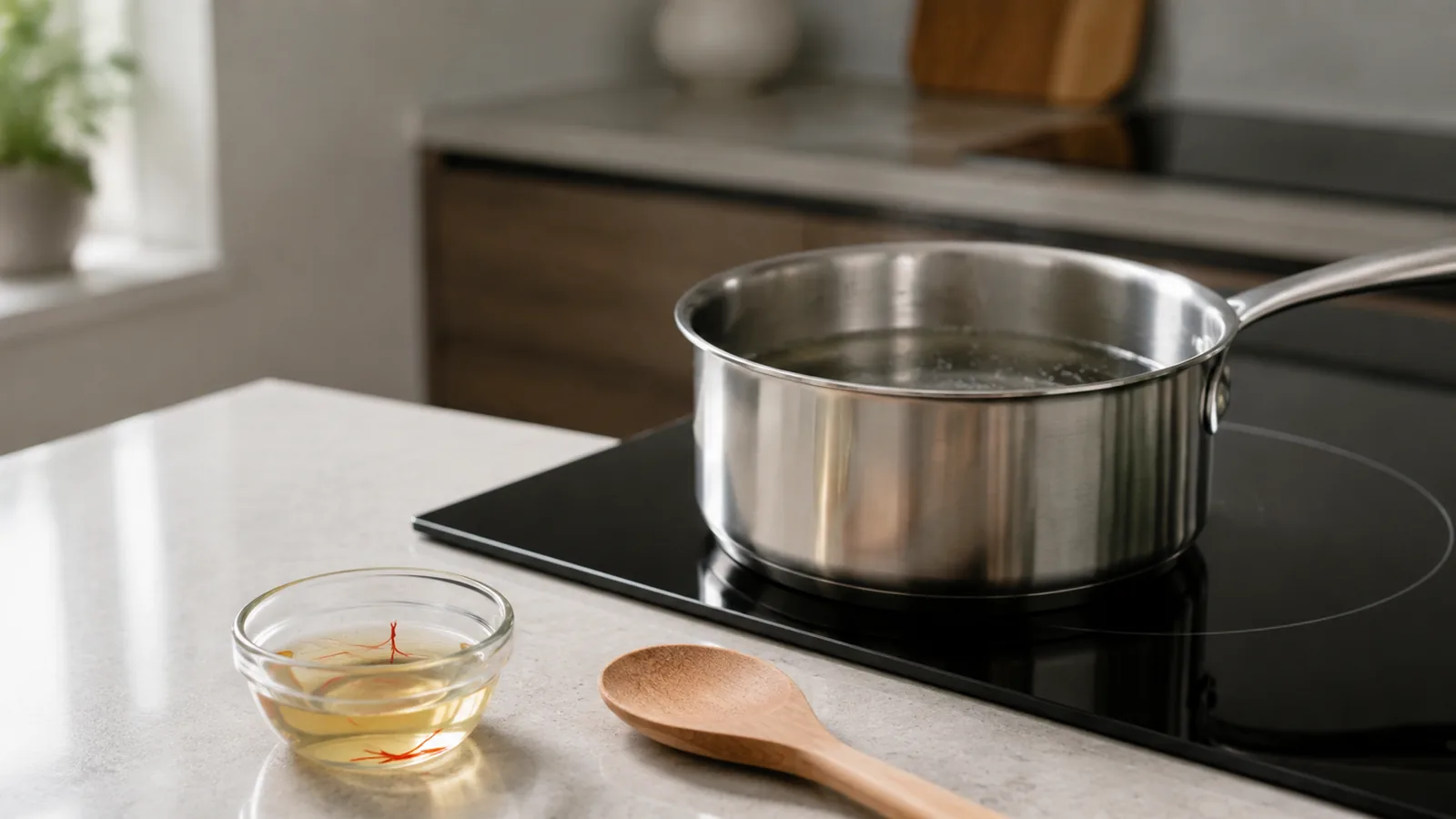
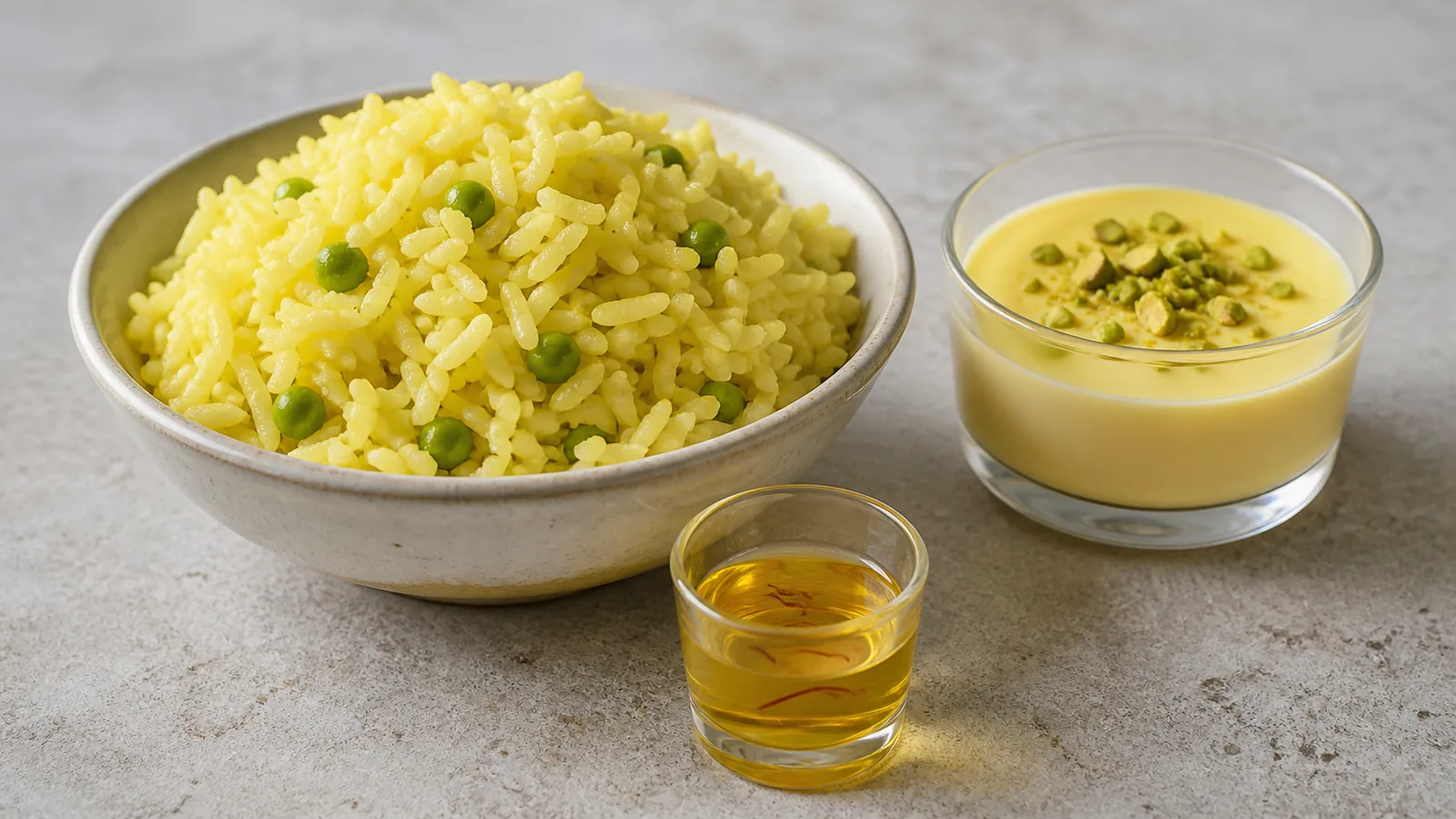
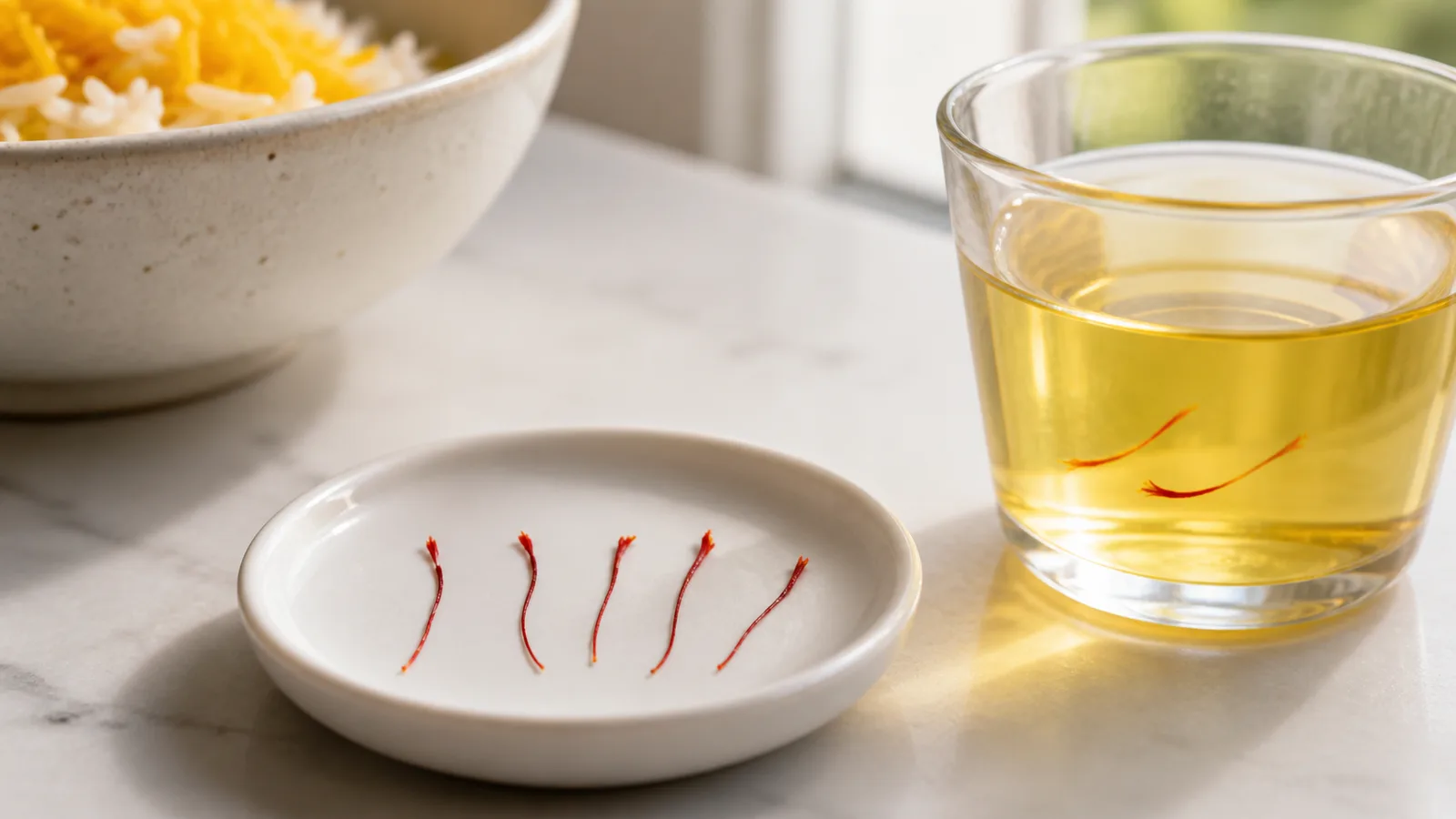
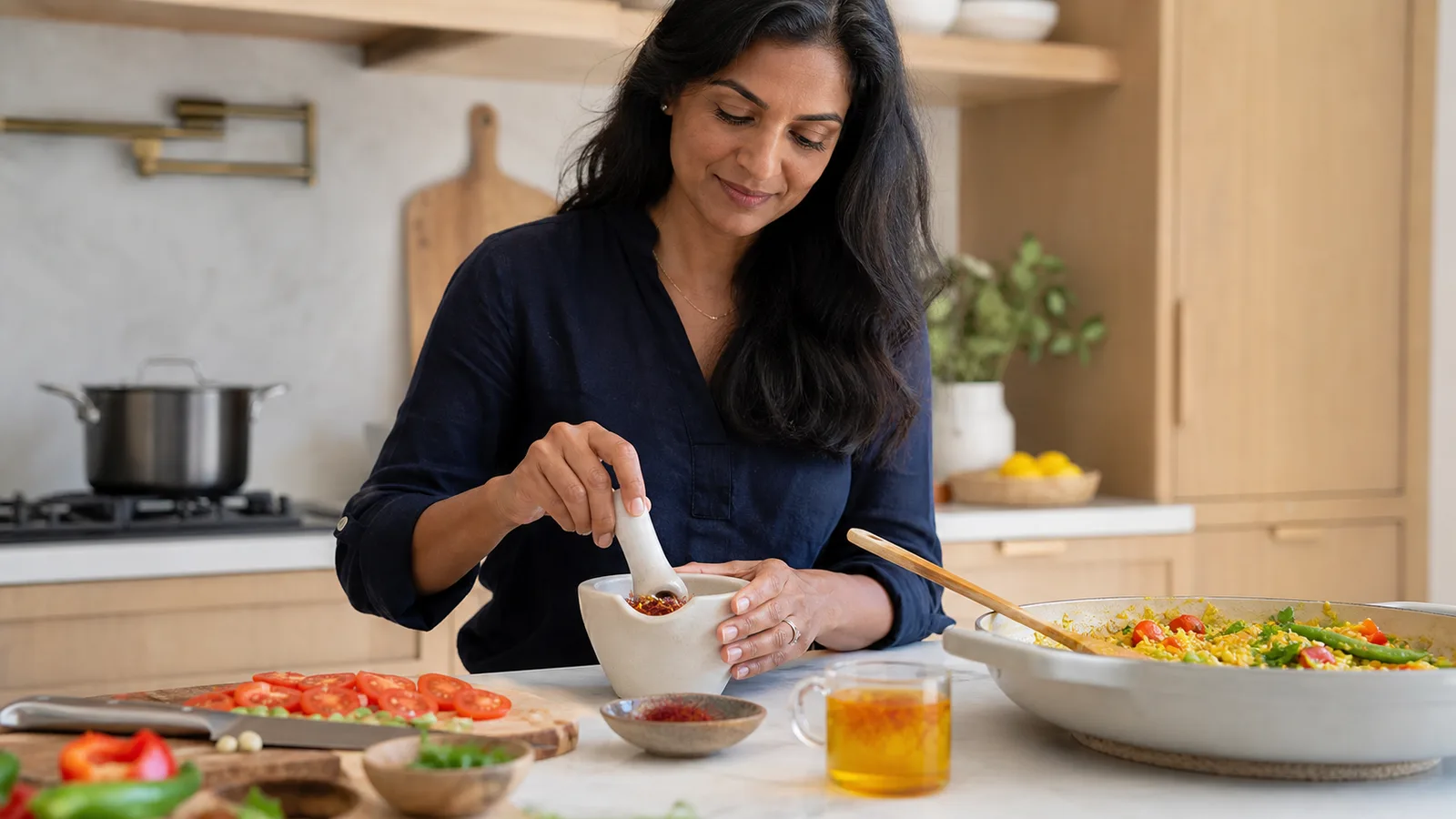
For cooking, lightly crush a small amount of genuine saffron threads, steep them in warm water for several minutes and add both liquid and threads to rice, soup, stew, yogurt or a sauce. Blooming distributes the aroma and colour more evenly than dropping dry threads into one corner of a dish.
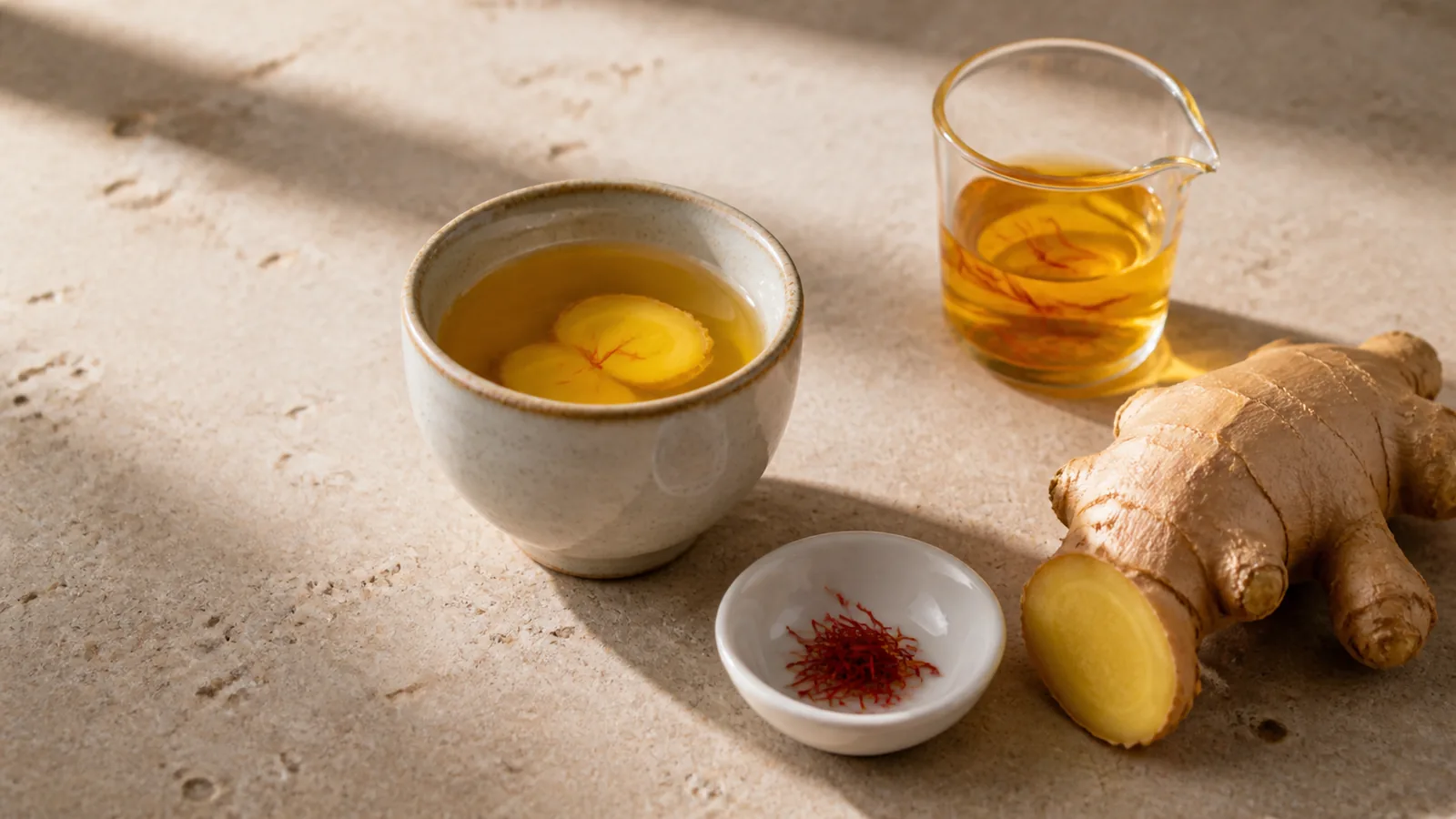
You can also make caffeine-free saffron tea, add the steeped liquid to warm milk or use a little in a fruit smoothie where the flavour fits. Treat these as drinks, not as measured treatment. A “pinch,” a thread count and a standardized capsule do not contain interchangeable amounts of crocin, crocetin or safranal.
Period pain and premenstrual symptoms
A 2026 systematic review and meta-analysis combined trials of saffron for premenstrual syndrome (PMS) and dysmenorrhoea. The pooled results favoured saffron for both symptom groups. That is more useful evidence than a traditional-use claim, but the included studies used different preparations and protocols and do not create a do-it-yourself thread dose.
Saffron should not be described as proven to regulate menstrual cycles, restore hormonal balance or “relax the uterus.” Trials may measure cramps and mood swings, but period pain and PMS can have several causes, and a new change in bleeding or pain deserves assessment. Seek medical advice for very heavy bleeding, faintness, severe one-sided pain, pain with pregnancy possibility or symptoms that disrupt daily life.
Mood, stress and sleep
Saffron extracts have been studied for mood symptoms, including in women, but the common explanation that they simply raise serotonin is too certain. Proposed pathways are still being investigated. A cup of saffron milk may be a pleasant evening routine; it is not equivalent to a trial capsule, does not guarantee better sleep quality and should not replace mental-health care.
Talk to a clinician if low mood, anxiety or sleep difficulty persists, worsens or affects safety. Do not stop an antidepressant or combine multiple mood-directed supplements on the assumption that “natural” means interaction-free.
Perimenopause and hot flashes
In a 12-week randomized trial, 86 perimenopausal women received a branded standardized saffron extract or placebo. The saffron group reported greater improvement in psychological symptoms, but not in vasomotor symptoms such as hot flashes, somatic symptoms or the other quality-of-life measures tested. The study was industry funded and calls for replication.
That result does not show that saffron restores oestrogen, corrects a hormonal imbalance or treats menopause as a whole. If hot flashes, sleep disruption, vaginal symptoms or mood changes are troublesome, a menopause-informed clinician can discuss options with evidence for that particular concern.
Sexual wellbeing
A six-week placebo-controlled trial in 74 women with severe sexual dysfunction found a borderline difference in total sexual-function score and improvements in desire, lubrication and satisfaction measures with saffron capsules. Thirty-four participants in each group completed the trial, and the authors asked for more robust research.
Sexual discomfort or reduced desire can be related to hormones, medicine, pain, mood, relationships or other health conditions. A small supplement trial is not a reason to ignore those causes or to promise an aphrodisiac effect.
Skin and beauty use
Saffron and crocin show antioxidant and anti-inflammatory activity in laboratory work, and one very small study tested a formulated saffron-extract and avocado-oil cream. That is not enough to say a homemade face mask creates glowing skin, reduces pigmentation, provides deep hydration or slows aging.
Mixing culinary saffron with milk or honey and leaving it on the face for 10 to 15 minutes also creates an unpreserved mixture that may irritate sensitive skin. If you try a finished cosmetic, choose one with a complete ingredient list, patch-test it and stop if burning, itching, swelling or a rash appears. Sunscreen and a suitable moisturizer remain the more dependable foundation.
Does saffron support immunity, digestion or circulation?
Claims that regular saffron boosts immunity through antibacterial properties, improves digestion and promotes healthy circulation go beyond what a culinary serving has been shown to do. The spice contains biologically interesting compounds, but their presence does not prove a clinical outcome.
Use saffron to make nourishing food taste and smell better. If you have recurrent digestive symptoms, infections, fatigue or circulation concerns, investigate the cause rather than adding an extract to cover the symptom.
Pregnancy, breastfeeding and medicine checks
Pregnancy is not the time to start a medicinal-dose saffron routine without obstetric advice. A 2026 review of saffron in pregnancy found that safety evidence remains limited and inconclusive. That uncertainty applies especially to supplements and repeated medicinal use; it is not proof that a normally seasoned meal causes harm.
Ask before regular supplement use while breastfeeding as well. The same applies if you take prescription medicine, have a bleeding disorder or low blood pressure, or are preparing for surgery. Our guide to when not to take saffron separates complete avoidance from situations that call for a product-specific review.
How to choose the form
- For flavour and colour: use authentic threads in ordinary food quantities.
- For a warm drink: steep a culinary amount and enjoy it as an infusion, not a treatment dose.
- For skin: prefer a properly formulated, labelled product over a stored homemade mixture.
- For PMS, mood, perimenopause or sexual symptoms: discuss the evidence and exact standardized product with a clinician or pharmacist.
- For a diagnosed condition: do not replace prescribed care with saffron.
The practical answer for women
Saffron fits most easily into a woman’s daily routine as a culinary spice. Research on particular standardized extracts is promising for some PMS, period-pain, mood and sexual-function outcomes, while results for hot flashes and many beauty or “general wellness” claims are weak or absent. Match the claim to the evidence, keep food and supplement amounts distinct, and get individual advice where symptoms or medicines make the decision personal.