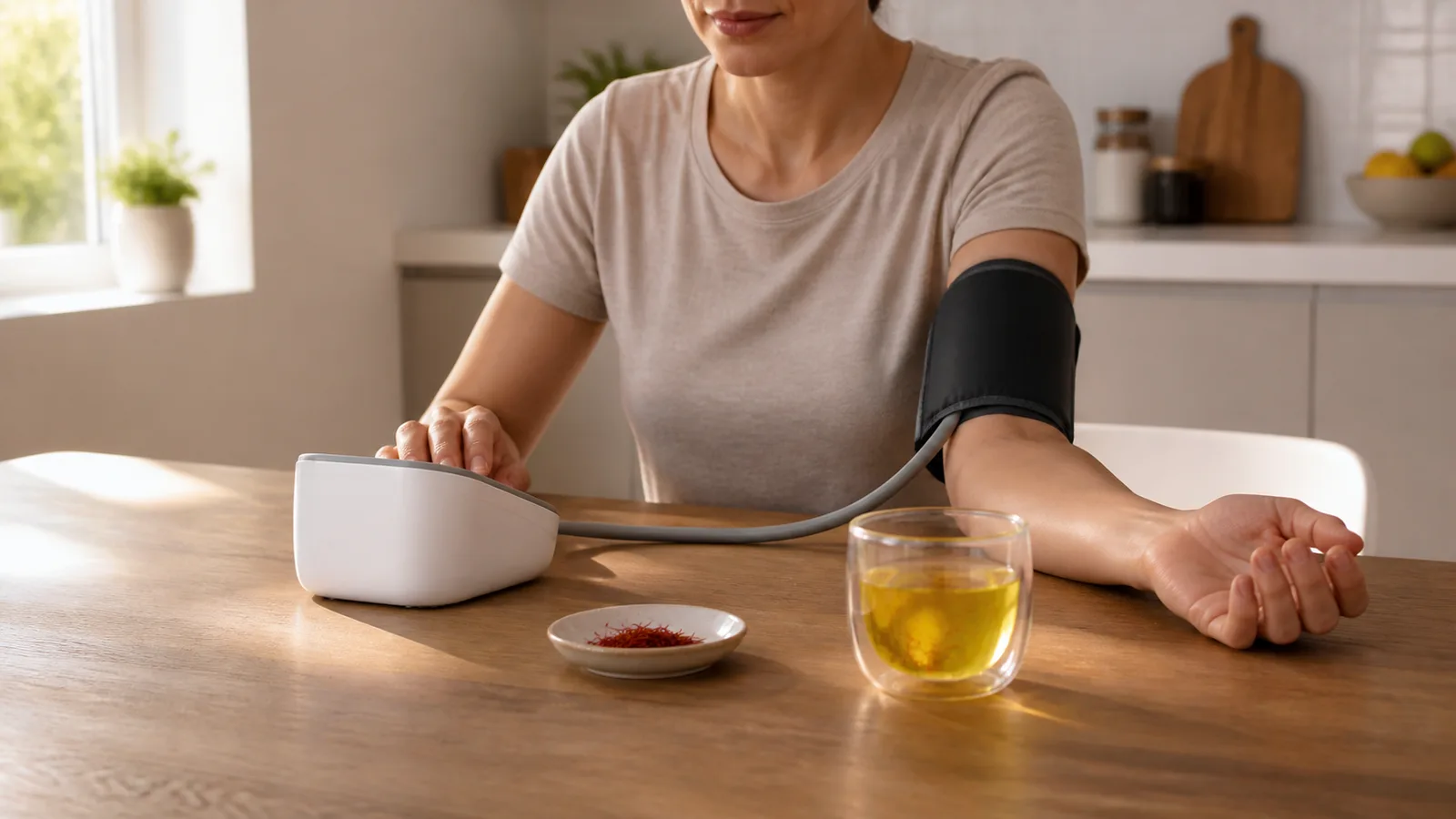
Saffron does not “clean,” thin or rebuild your blood. Human studies have looked at narrower outcomes such as blood pressure, blood sugar, blood fats, inflammatory markers and clotting tests. Some results are encouraging, but the measured changes are generally small, product-specific and not a reason to replace medical treatment.
That distinction matters when asking what saffron does to your blood. A few threads in food are not equivalent to a standardized extract used every day in a trial, and a change in a laboratory marker is not necessarily something you can feel.
Saffron effects on blood: what has actually been measured?
“Blood health” can refer to several different things. Blood pressure describes the force of blood against artery walls. Haemoglobin carries oxygen. Platelets and clotting proteins help stop bleeding. Glucose and lipids circulate in the blood, while antioxidant tests measure yet another set of processes.
Saffron cannot be assumed to improve all of them simply because crocin, crocetin and safranal show biological activity in laboratory research. The useful question is whether a particular effect has been demonstrated in people, at a meaningful size, with a preparation comparable to the one being used.
Does saffron improve blood circulation?
The familiar explanation is that saffron dilates blood vessels and therefore improves blood flow, sending more oxygen and nutrients around the body. That is plausible as a mechanism, but it is not the same as proof that culinary saffron improves poor circulation in people. Human trials more often measure blood pressure or biochemical markers than symptoms and clinical outcomes of impaired circulation.
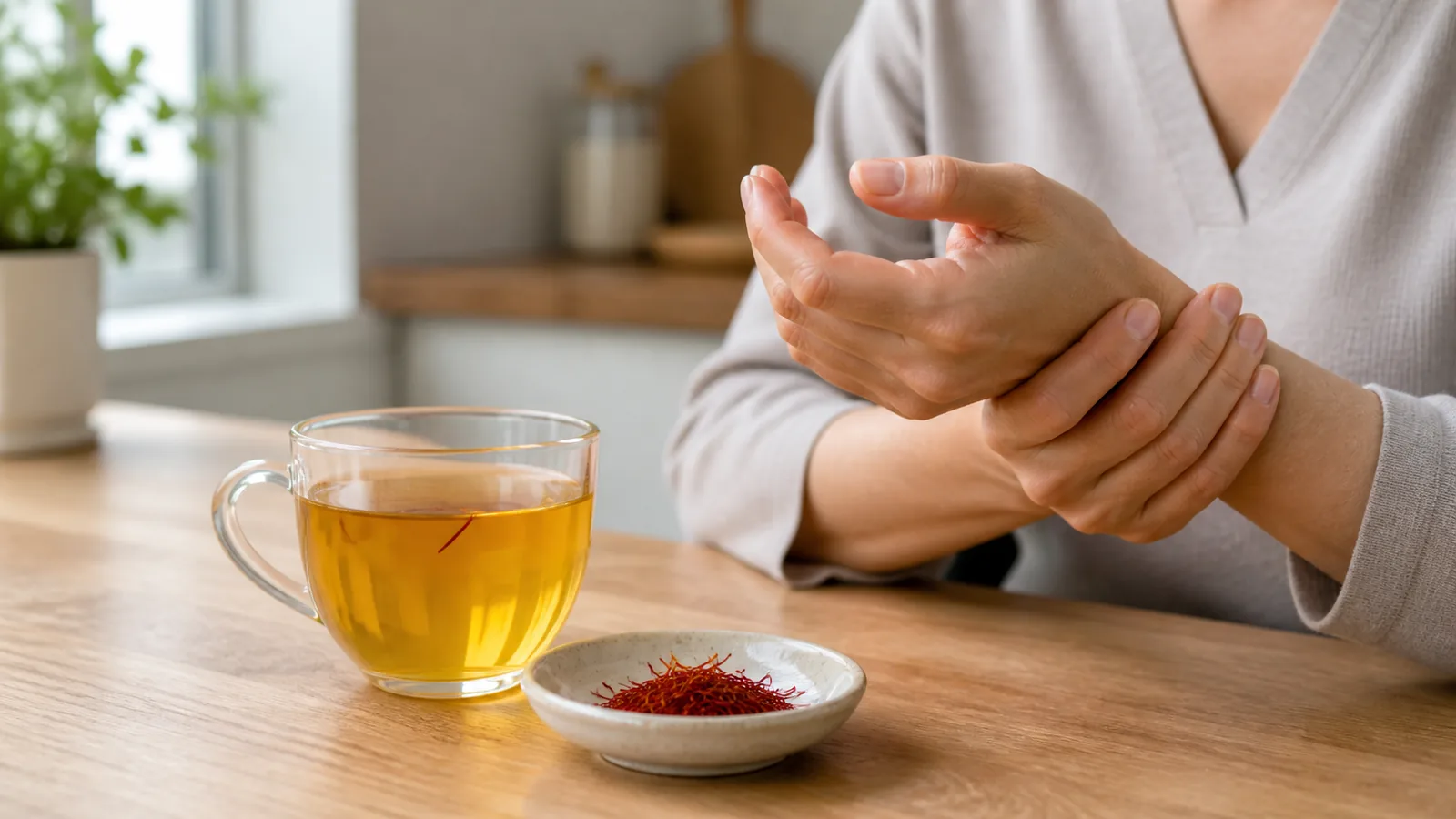
For that reason, saffron should not be presented as a treatment for cold or painful limbs, leg swelling, numbness, colour changes or slow-healing wounds. Those symptoms have many possible causes and deserve proper assessment. A warm saffron drink may be pleasant, but warmth after drinking it does not establish better circulation.
Does saffron lower blood pressure?
A systematic review of eight randomized trials found average reductions of about 0.65 mmHg in systolic pressure and 1.23 mmHg in diastolic pressure. The authors explicitly noted that these effects were small and might not be clinically important. A more recent review in people with diabetes or prediabetes likewise judged the observed blood-pressure changes not clinically important.
So the evidence does not support calling saffron a natural vasodilator that regulates high blood pressure. It certainly does not justify reducing or stopping prescribed medicine. High blood pressure often has no symptoms; the reliable way to know your level is to measure it with a suitable monitor and discuss persistent high readings with a clinician.
Someone who already has low blood pressure, takes blood-pressure medicine, or develops dizziness or fainting after a supplement should seek individual advice. The NHS blood-pressure guide explains why readings, rather than sensations, are needed.
Does saffron thin the blood or change clotting?
Laboratory experiments have reported effects on isolated platelets, but these cannot tell us that a normal food serving thins a person’s blood. In a small placebo-controlled human study, 60 healthy adults took 200 mg or 400 mg saffron tablets daily for seven days. The researchers found no between-group change in the clotting measures they tested, including PT, PTT, fibrinogen and several clotting proteins.
That short study is reassuring within its own limits; it is not proof of safety for every dose, product, duration or medical situation. It also did not establish that saffron prevents clots. People taking an anticoagulant, antiplatelet medicine or several medicines should check with their prescriber or pharmacist before starting a concentrated saffron supplement. The FDA’s supplement-and-medicine guidance recommends discussing combinations because supplements can alter a medicine’s effects.
Is saffron a good source of iron?
Saffron contains iron by weight, but it is eaten in tiny culinary quantities. A few threads contribute a negligible amount compared with foods eaten by the spoonful or plateful. It is not a practical way to raise haemoglobin or treat iron-deficiency anaemia.
The NIH iron fact sheet explains that iron is part of haemoglobin and lists meaningful food sources, including meat and seafood for haem iron and beans, lentils, spinach, nuts and fortified foods for non-haem iron. Fatigue, breathlessness or a suspected deficiency calls for assessment because anaemia has more than one cause; adding saffron without a diagnosis can delay the right treatment.
What about blood sugar, cholesterol and antioxidants?
Saffron studies sometimes report changes in fasting glucose, HbA1c, cholesterol, inflammatory compounds or markers of oxidative stress. Those results are often described loosely as anti-inflammatory or antioxidant effects. A 2025 meta-analysis of 25 trials in people with metabolic syndrome and related conditions found small average changes in several of these measures, while triglycerides, LDL, HDL and some other outcomes did not change significantly.
These findings do not mean that antioxidants in saffron directly protect blood vessels from damage, nor that a person’s circulation has improved. Biomarker results vary by population, extract and study design. Diabetes, high cholesterol and cardiovascular disease require monitoring and a treatment plan built around proven measures; saffron is not a substitute.
Food use and supplement use are different
Using genuine saffron threads to flavour rice, soups or drinks is a culinary choice. Concentrated extracts and capsules deliver different amounts and may be standardized to particular compounds. A trial result belongs to the tested preparation and cannot be transferred automatically to a pinch from the kitchen—or to every product sold as saffron.
If you are choosing threads for food, focus on authenticity, aroma and sensible culinary use. Our saffron products page shows the food products we sell; it does not turn them into treatments for blood pressure, anaemia, clotting or circulation.
The practical answer
What does saffron do to your blood? In trials, some supplements have produced small changes in blood pressure and selected metabolic or antioxidant markers. Evidence that saffron improves everyday circulation is not established, a short human trial found no change in the clotting tests it measured, and culinary amounts provide virtually no useful iron.
Enjoy saffron as food if it suits you. For high or low blood pressure, unusual bleeding, symptoms of poor circulation, diabetes, high cholesterol or possible anaemia, use measurements and medical assessment rather than judging whether a spice seems to be working.