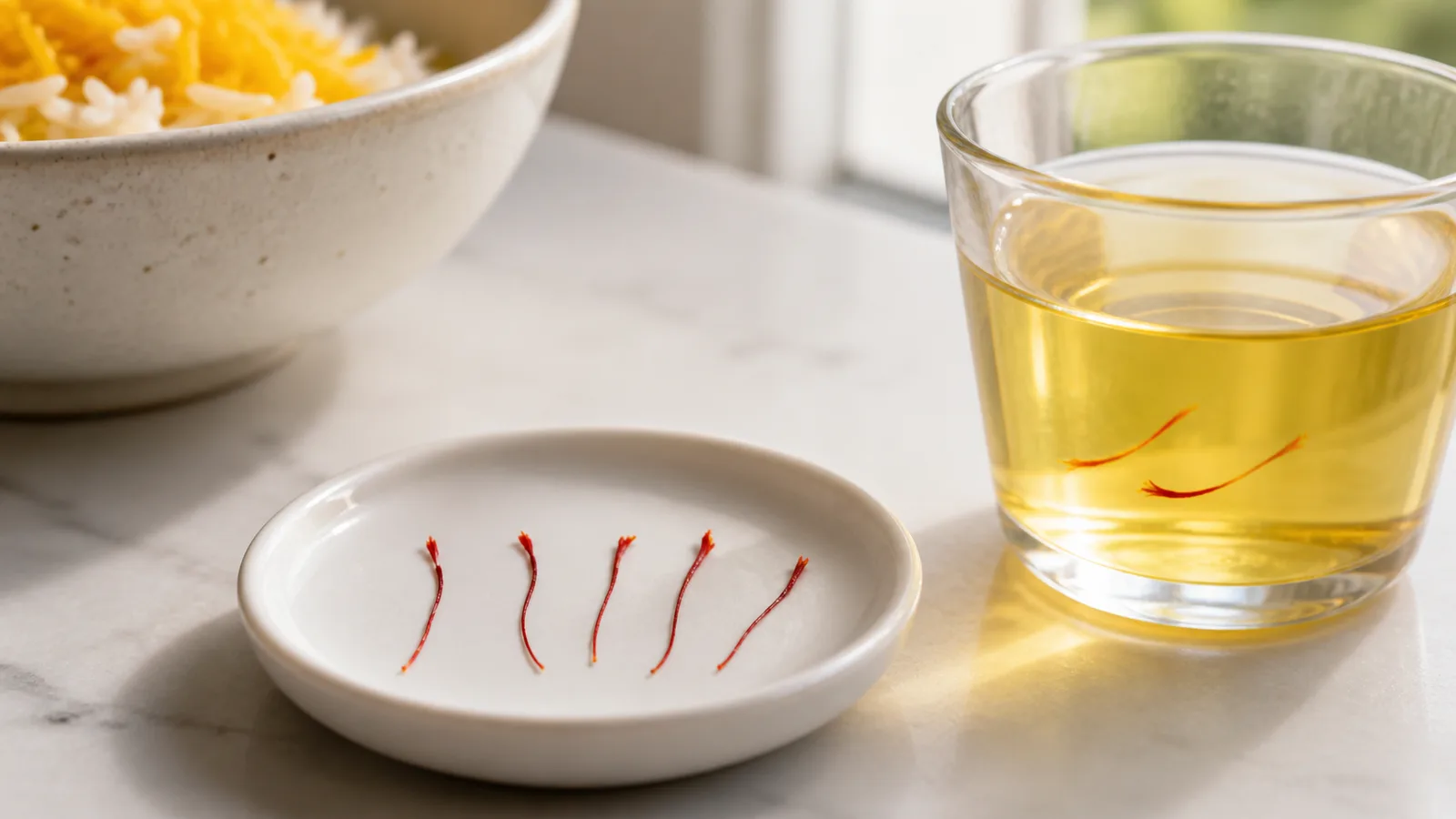
Original saffron should look like dried flower stigmas, smell complex rather than perfumed, and release a clear golden color gradually in warm water. Those clues can reveal obvious fakes, but no single home trick proves authenticity. The strongest purchase combines recognizable whole threads with a traceable seller, sound packaging and credible batch testing.
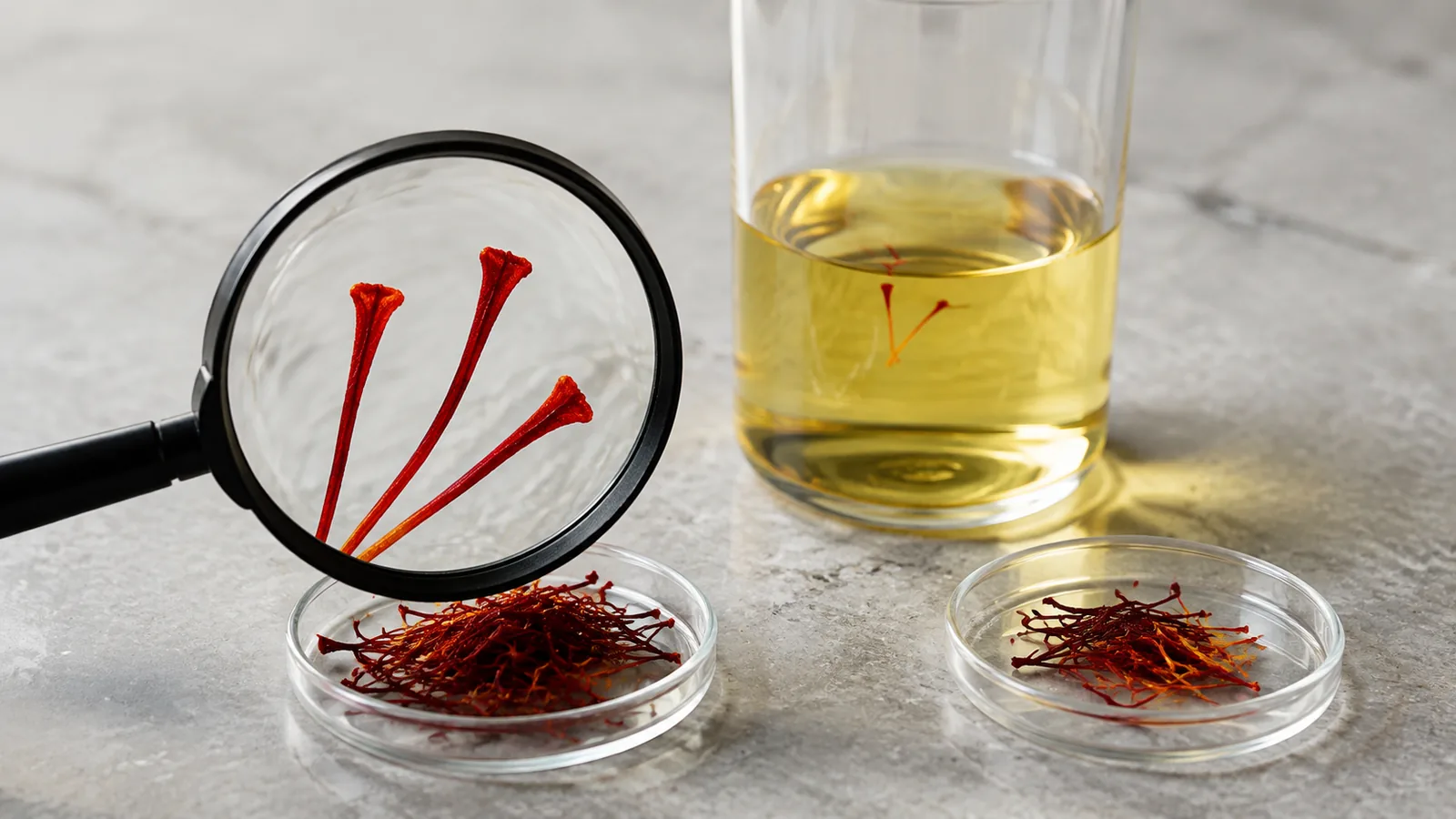
Authentic Saffron Tips
Saffron’s high value makes substitution and adulteration a real concern. In a coordinated European survey of herbs and spices, the European Commission reported that 11% of the tested saffron samples were considered at risk of adulteration. That does not mean every inexpensive pack is fake; it means buyers should rely on evidence rather than a dramatic label.
Start with these authentic saffron tips:
- Prefer whole threads when buying from an unfamiliar source.
- Look for the recognizable, slightly irregular shape of a dried stigma.
- Expect a complex floral, hay-like and gently bitter aroma, not a sugary perfume alone.
- Compare net weight and batch information, not package size.
- Treat home tests as screening checks, never as certification.
What Original Saffron Threads Look Like
A saffron thread is a dried part of the Crocus sativus flower. The red stigma broadens or flares subtly at one end and tapers toward the other. Real threads are naturally variable; they should not resemble perfectly cut plastic fibers or a pile of identical straight strands.
High-grade all-red saffron contains mostly the red stigma. Some products intentionally retain part of the orange or yellow style, so a small amount of lighter material does not automatically prove fraud. A package filled mainly with pale stalks, however, contains less of the red portion buyers generally seek.
Dry threads can be brittle, but texture depends on moisture and handling. “It snaps” is not a complete authenticity test. Dyed plant fibers may snap too, while genuine threads can bend slightly if they have absorbed humidity.
Color, Aroma, and Flavor
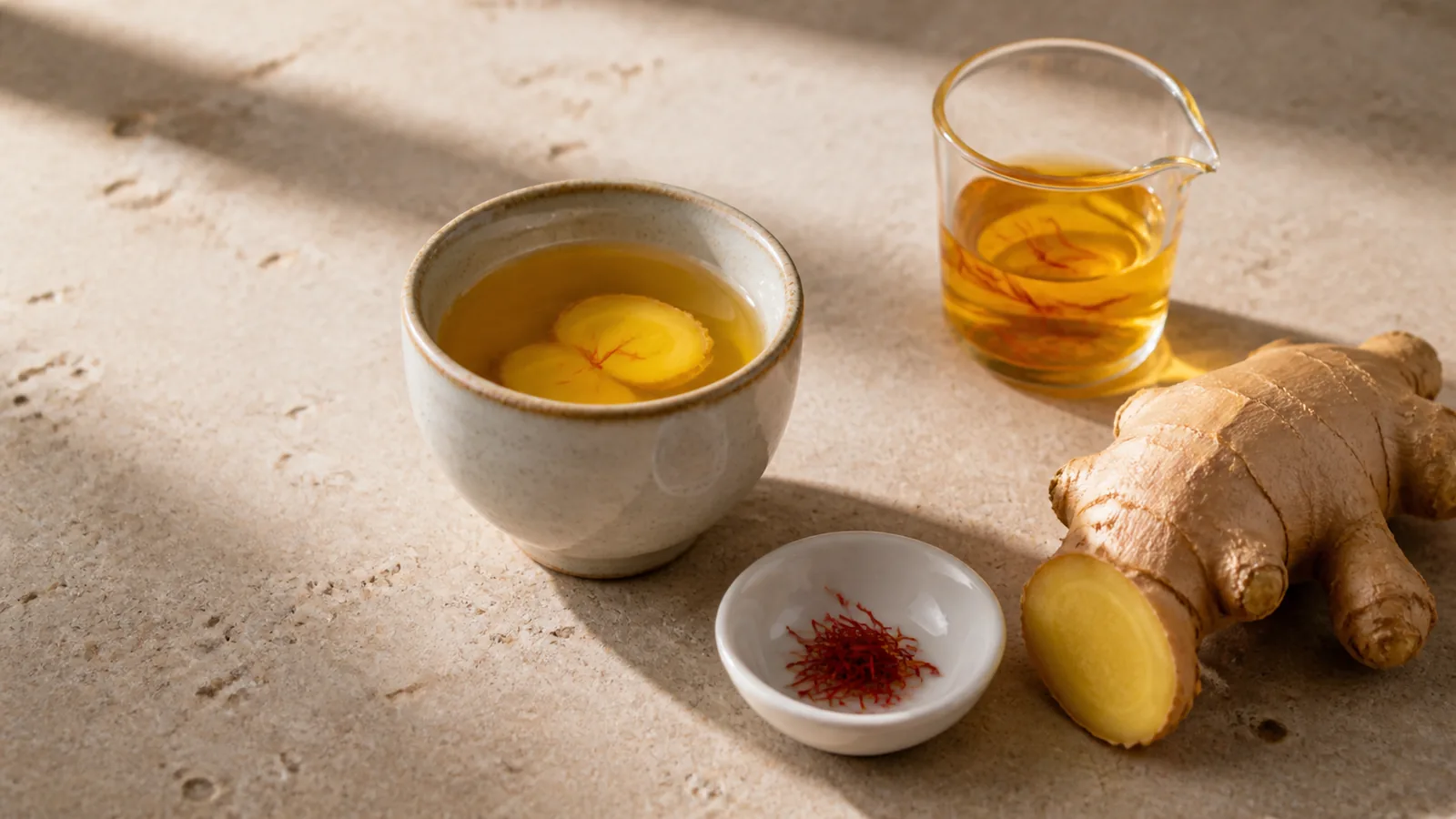
Genuine saffron releases a yellow-to-golden infusion. The color moves out from the threads over time rather than behaving like loose surface dye. Very fast color is a warning sign when it appears unnaturally intense and the material then turns pale at once, but extraction speed also changes with crushing, water temperature and thread size.
The aroma is distinctive and difficult to describe with one word. It can suggest flowers, hay, honey and dry earth while remaining slightly sharp. An overwhelming candy scent, chemical odor or complete absence of aroma deserves caution.
Saffron tastes gently bitter and complex; it is not sweet simply because people compare part of its aroma with honey. Do not chew an unknown product as the first test. Inspect and infuse a small amount instead.
A Simple Warm-Water Check
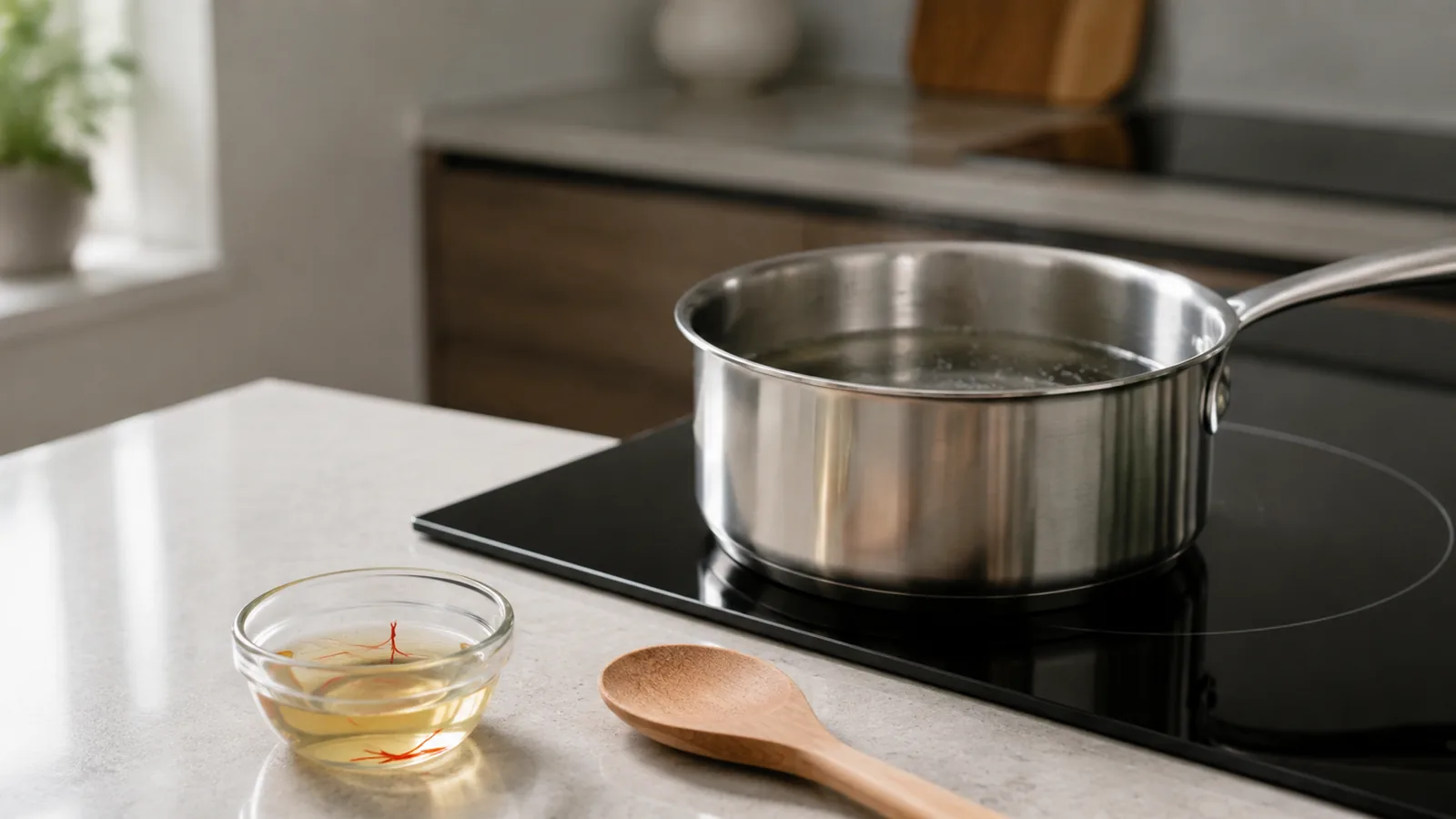
- Place a few threads in a clean, clear glass.
- Add warm—not violently boiling—water.
- Watch the color spread for 10 to 15 minutes.
- Smell the infusion and compare it with the dry threads.
- Inspect the softened threads rather than judging the water alone.
Authentic saffron does not dissolve like sugar. Its compounds move into the water while recognizable plant material remains. Ground saffron is different: fine particles may disperse, which is one reason powder is harder for a shopper to evaluate.
Other Methods to Identify Real Saffron
Use Magnification
A phone macro lens or simple magnifier can reveal stigma structure and surface texture. This is more useful than comparing color against a heavily edited internet photograph. It can expose unrelated fibers, but it still cannot establish chemical purity.
Compare Weight and Moisture
Saffron should be dry, not damp or clumped. Added moisture increases weight and shortens storage life. A tiny retail scale can confirm that the net quantity is plausible, although it cannot identify what the threads are made from.
Check Traceability
Look for a named producer or packer, origin, lot or batch reference, net weight and contact details. A marketplace listing that disappears after the sale offers less accountability than a supplier with consistent records.
Ask About Laboratory Testing
Laboratories can examine characteristics related to coloring strength, aroma, bitterness, moisture and foreign material. Credible testing is stronger evidence than a video in which one thread is placed in water. Ask whether a report applies to the batch being sold, not merely whether the company has ever tested saffron.
Home Tests That Can Mislead
Several popular tests are presented online as final proof, but each has limits:
- The water test: useful for observing color release, but temperature and crushing change the result.
- The taste test: subjective, and unsafe as a first step for unknown material.
- The paper-rub test: may reveal obvious dye or moisture, but it cannot establish botanical identity.
- The baking-soda test: internet color claims are not a substitute for a validated laboratory method.
- The flame test: introduces fire risk and is unnecessary in a kitchen.
Use several low-risk observations together. If the result matters commercially, obtain proper testing.
“Original Zafran” Means Genuine Saffron
Zafran, zaffran and similar spellings are used for saffron in different markets. A search for “original zafran” is still a search for authentic saffron, not a separate spice or grade. The spelling on a seller’s page says nothing about purity by itself.
Red Flags When Buying
- a price far below comparable whole-thread offers with no explanation;
- no net weight, batch information or accountable seller;
- strong promises of cures or guaranteed wellness outcomes;
- powder from an unknown source presented as easier to verify than threads;
- neon color without the characteristic saffron aroma and flavor;
- wet, musty or visibly contaminated material.
Low price is not proof of fraud, and high price is not proof of authenticity. It is the mismatch between the promise, evidence and product that matters.
Where to Buy Genuine Saffron
Choose a supplier that describes the form and net weight clearly, protects the product from light and moisture, and can answer basic questions about origin and testing. Buy an amount you can use while it is fresh. Whole threads are the most practical starting point for a new buyer.
The detailed guide to detecting real saffron explores adulterants and test limitations further. The all-red saffron collection shows the current whole-thread format.
How to Tell if Saffron Is Original
Inspect the thread shape, dry condition, aroma and gradual golden infusion, then check the seller and batch information. These steps can identify warning signs and help two products be compared fairly. They cannot turn a kitchen observation into laboratory proof.
The best authentic saffron tip is therefore simple: do not trust one trick. Combine whole-thread inspection, a controlled warm-water check, traceability and credible test evidence. Remove any product from consideration if its identity remains doubtful.