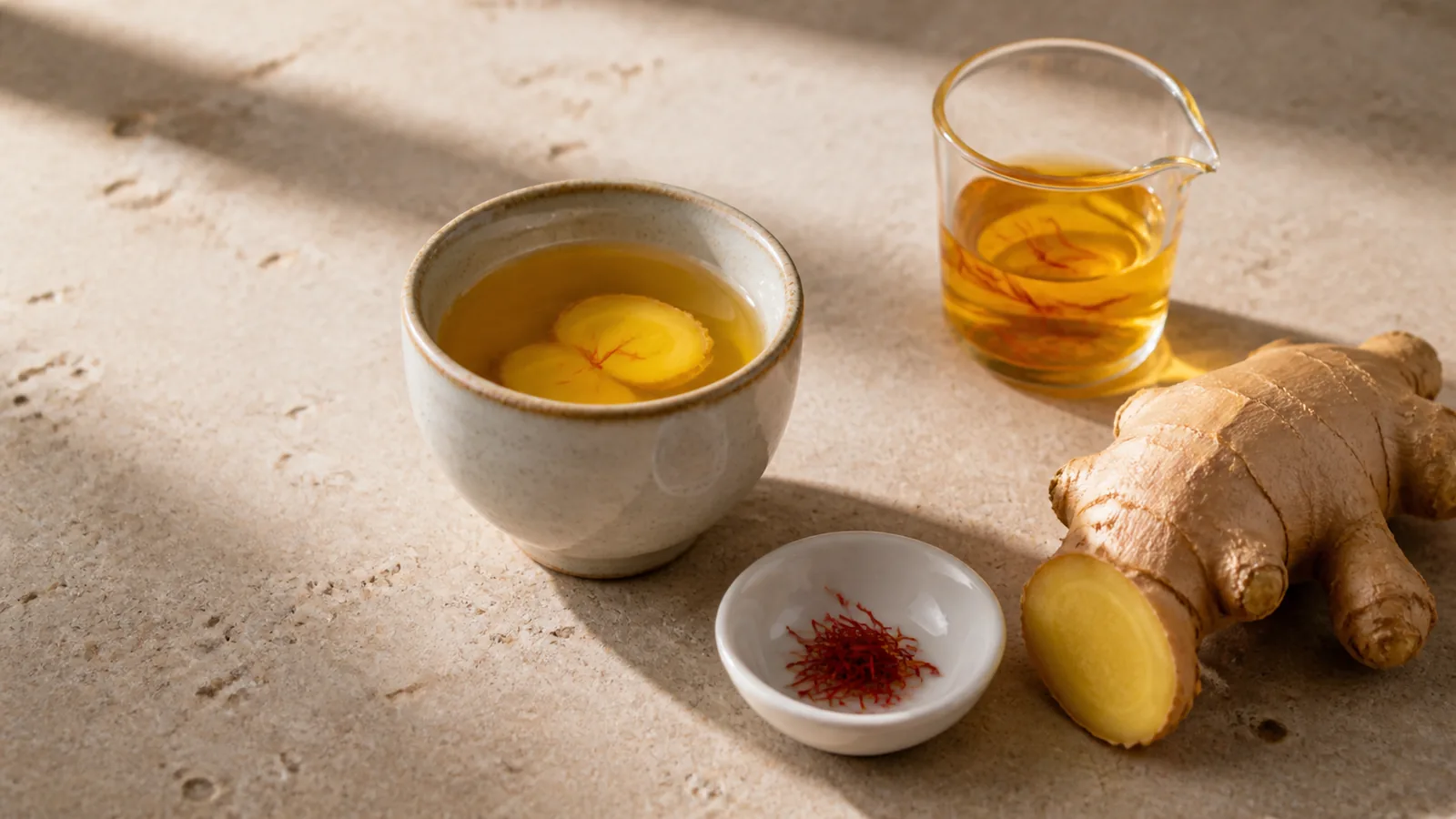
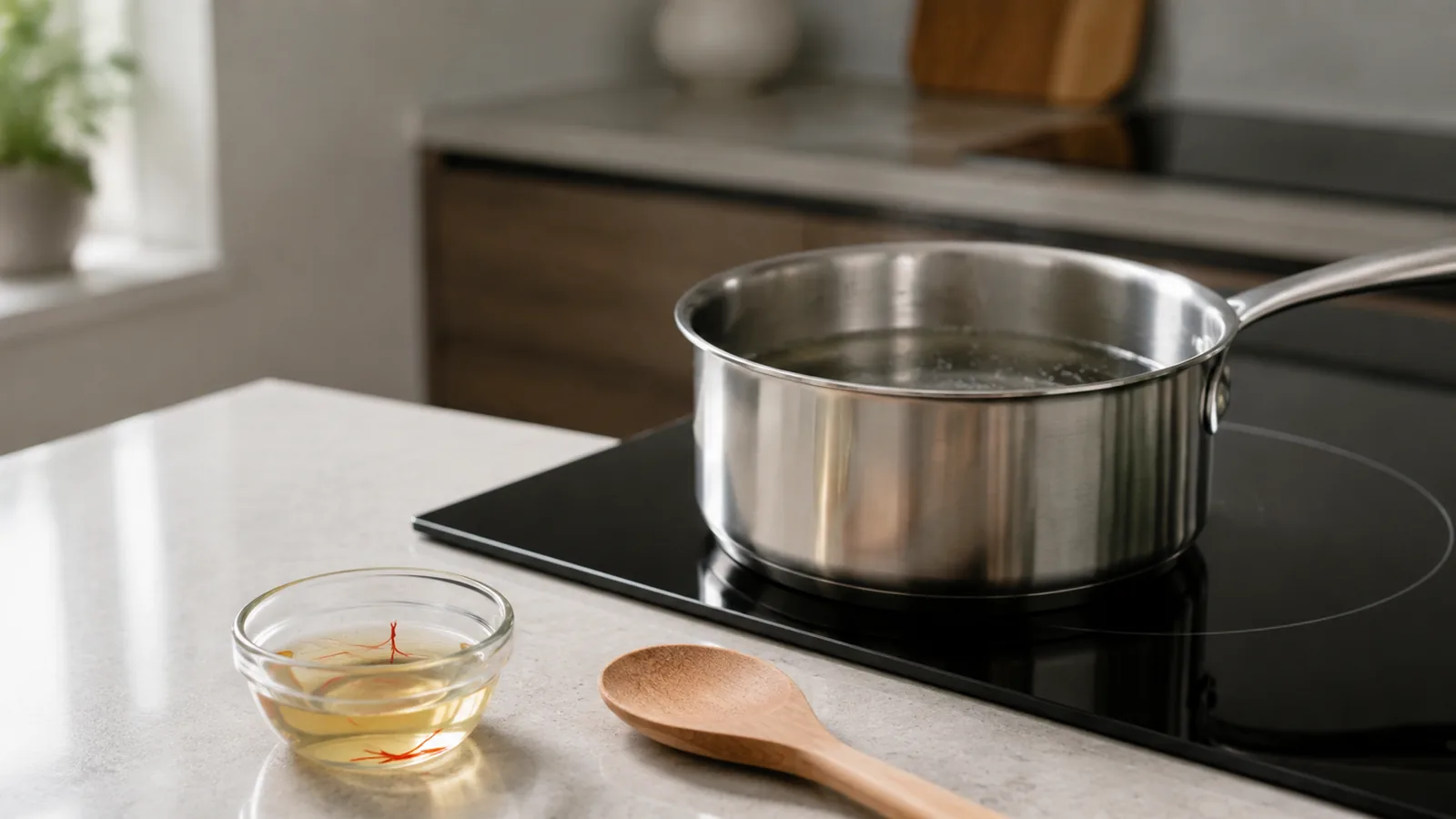
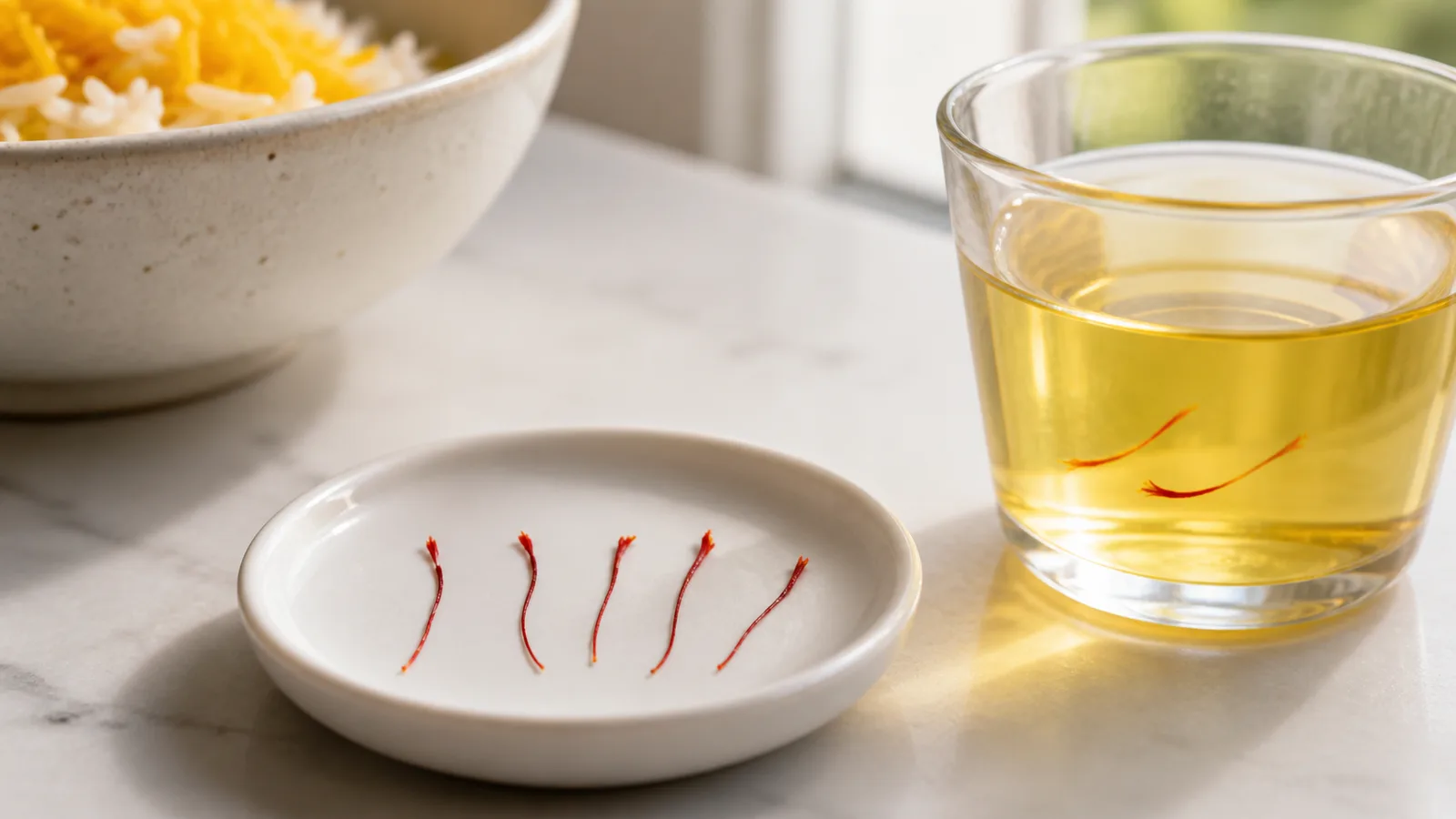
The best way to eat saffron is to measure a small amount, lightly crush the threads, steep them in warm water, milk or broth for about 10–15 minutes, then add both the liquid and softened threads to food or a drink. You can eat the threads themselves, but blooming them first distributes their colour, aroma and flavour more evenly.
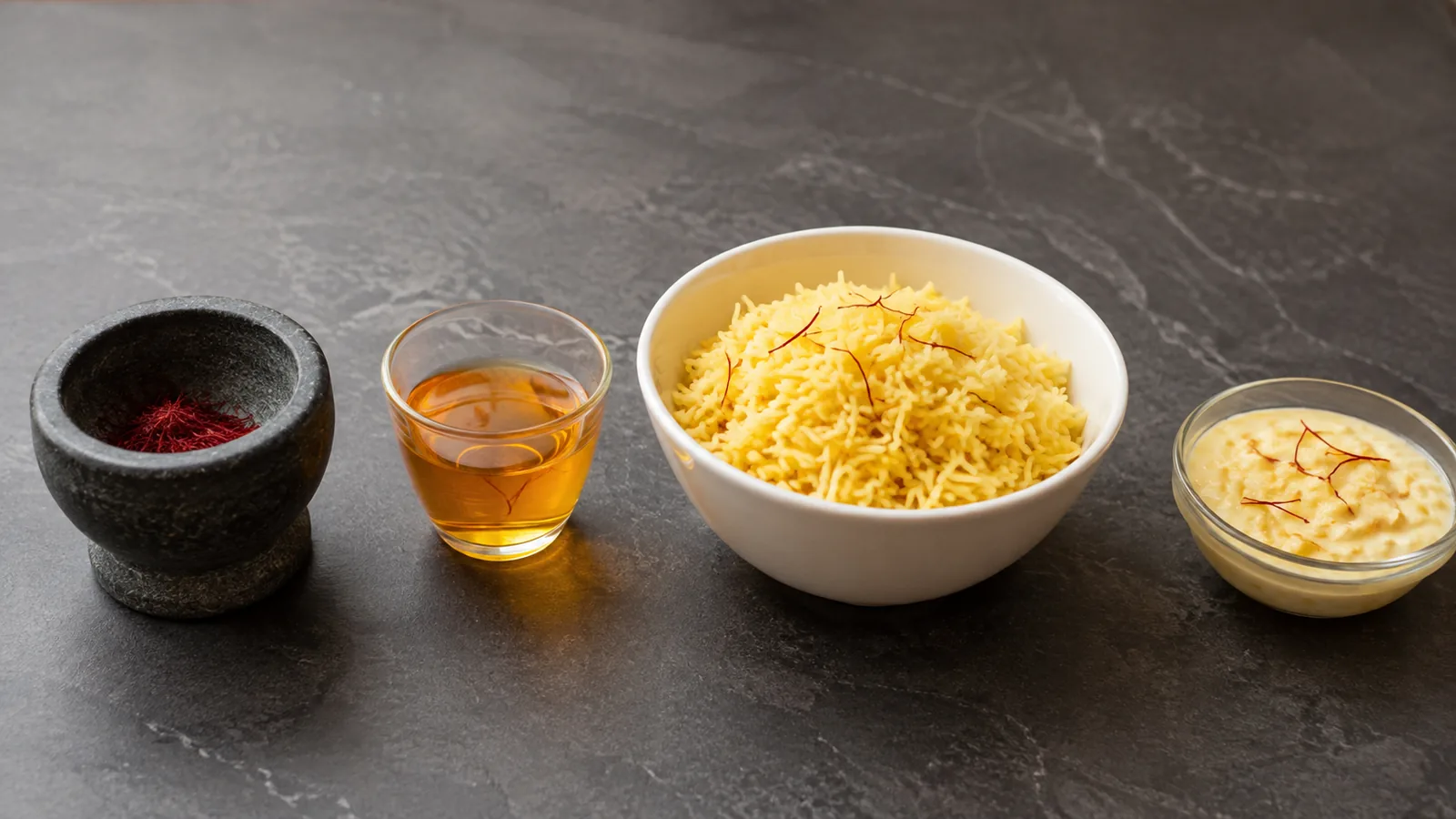
How to eat saffron
Saffron is the dried red stigma of Crocus sativus. In normal cooking, the threads are edible: they can remain in rice, soup, tea or dessert after steeping. There is no need to strain them unless their texture bothers you or a very smooth finish matters.
A practical everyday method is:
- Measure the amount required by the recipe. Without one, start around 0.05 gram for two portions.
- Lightly crush the threads with a clean mortar or between dry fingers.
- Add a few tablespoons of warm recipe liquid.
- Wait 10–15 minutes.
- Stir the whole infusion into the dish while it still has time and moisture to distribute.
For anyone looking for a simple “4–5 threads” rule, that amount steeped for 5–10 minutes makes a very subtle cup or small portion. The old rule is not wrong, but it is lighter than many people expect. Use a measured recipe when saffron is meant to lead the dish.
Can you eat saffron threads raw?
Yes, a few culinary saffron threads can be eaten directly, and eating the softened threads left in an infusion is normal. Raw threads are dry, slightly bitter and difficult to spread through food, so chewing them is rarely the best use of the spice.
Questions such as “can I eat saffron raw?”, “can we eat saffron directly?”, “can you eat saffron threads?” and “do you eat saffron threads?” share this answer: the threads are edible, but use a small recipe amount and bloom them for better distribution. Do not treat “edible” as permission to swallow a large quantity or a concentrated supplement.
How to consume saffron in water or milk
For water, add the measured crushed threads to warm—not violently boiling—water. A small amount of liquid is enough when it will be added to food. For a simple drink, steep in the full cup and leave the threads in.
For milk, warm it gently and add the crushed saffron. Milk carries the aroma differently from water and suits custards, kulfi and saffron milk. Claims that saffron milk is automatically calming or improves digestion are not established by the drink itself, so this article treats it as food rather than medicine.
The guide to brewing saffron compares practical liquid methods, while the dedicated saffron tea guide covers cup strength and timing. Green tea and smoothies can also take a small prepared infusion; mix it through the drink rather than dropping in an unmeasured pinch.
How to add saffron to food
Rice and grains
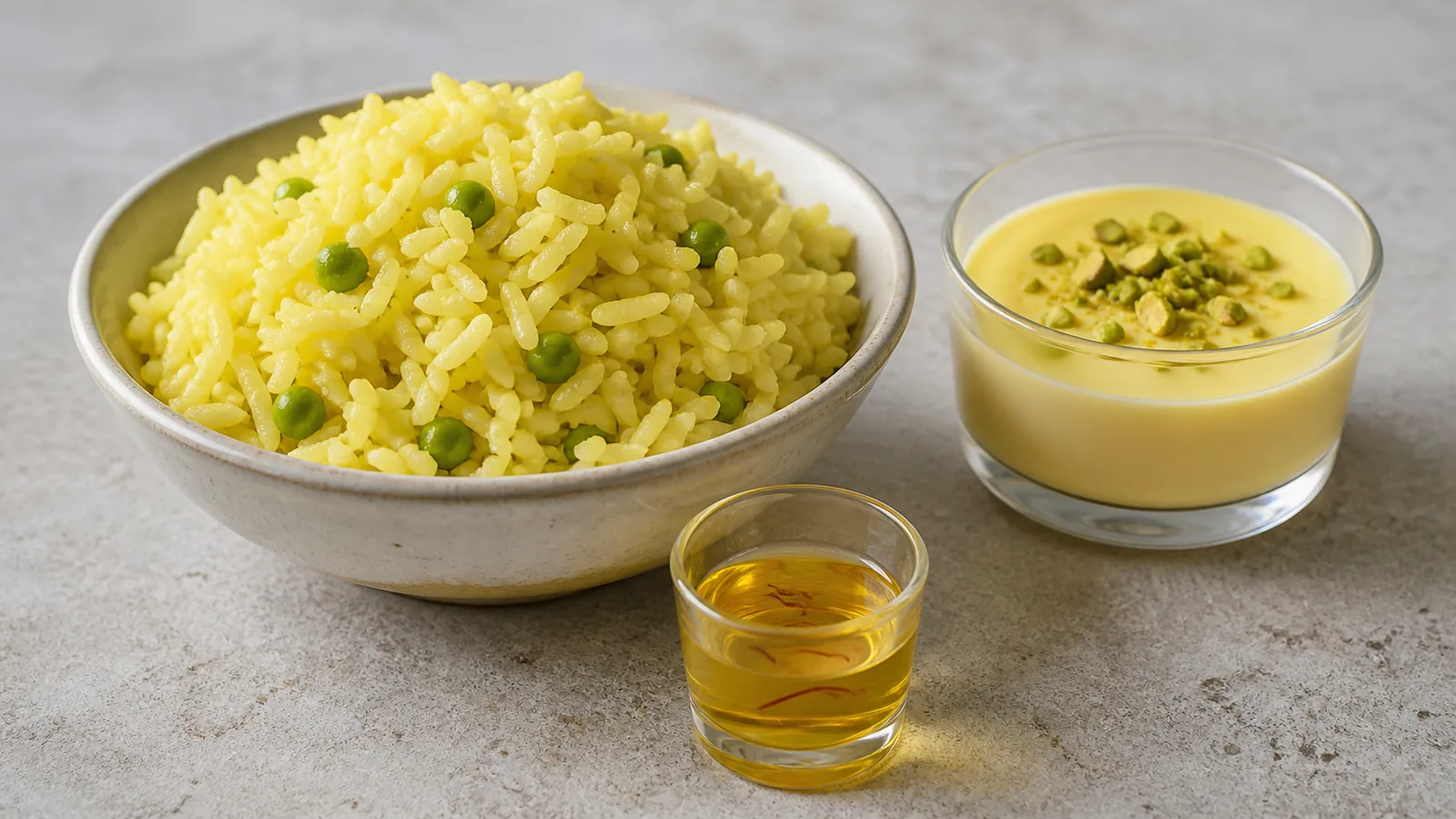
Bloom saffron before adding it to biryani, paella, pilaf or risotto. For even colour, stir the infusion into the measured cooking liquid. For a marbled Persian-style presentation, mix the infusion into a small portion of cooked rice and fold or spoon it over the rest.
Quinoa and couscous can take saffron too. Keep the total liquid correct for the grain instead of adding a large cup of infusion on top of the recipe.
Soups, stews and curries
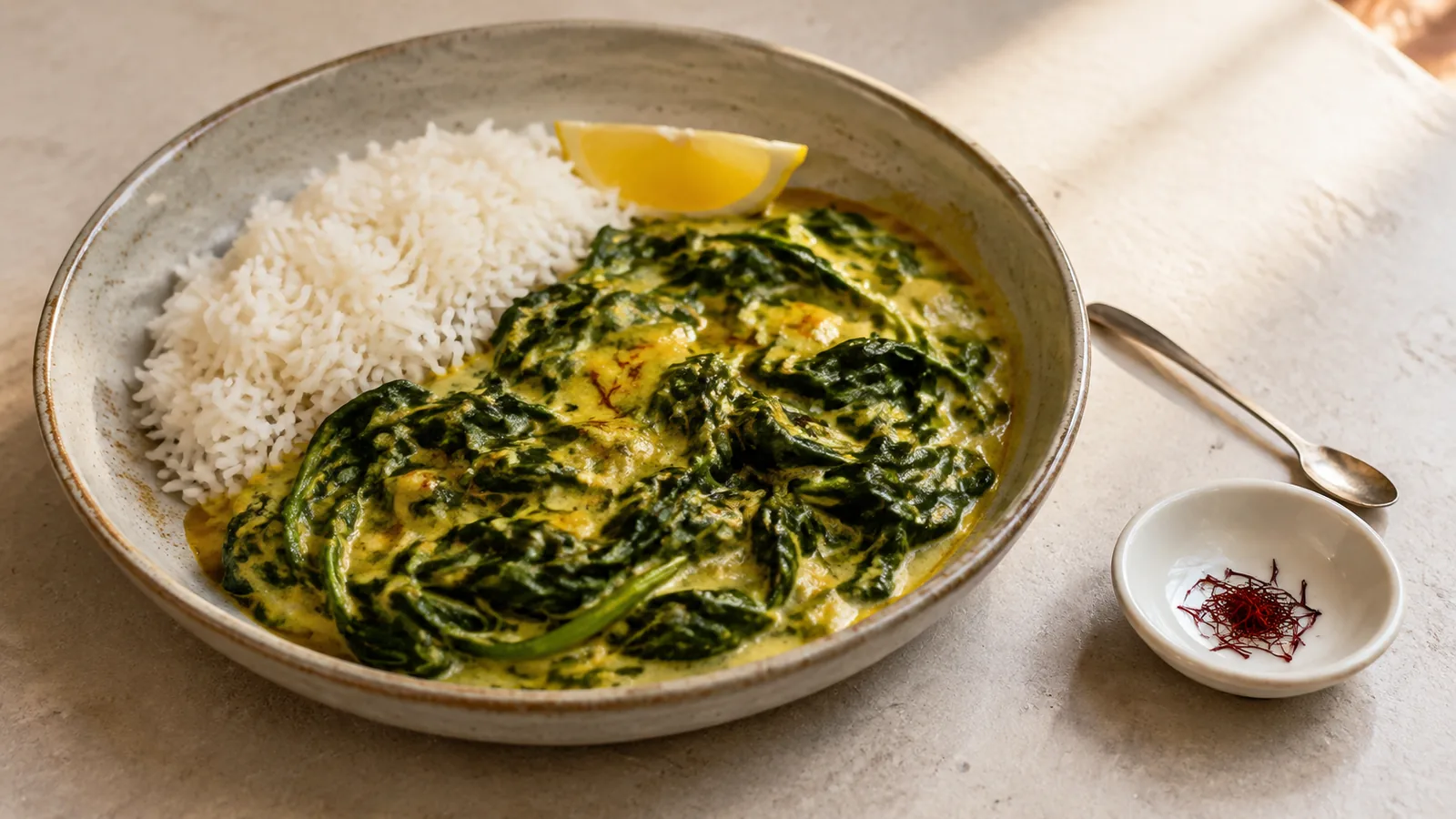
Add the infusion while enough cooking time remains for it to spread, but avoid prolonged aggressive boiling. Saffron works with tomato, seafood, chicken and gentle broths in Mediterranean, Middle Eastern and South Asian dishes. Taste before adding more; reduction can concentrate bitterness as well as aroma.
Sauces
Use a small infusion in cream, butter, seafood stock or a light vegetable sauce. If the sauce will reduce substantially, begin at the lower end of the recipe’s amount. A few threads are easier to add than an oversaffroned sauce is to repair.
Desserts
Saffron suits dairy and rice-based desserts such as kulfi, rice pudding and ice cream. Bloom it in part of the recipe’s warm milk, then return that milk to the mixture. This gives more even colour than scattering dry threads over a cold base.
How much saffron should you eat?
For culinary use, the dish and number of portions determine the amount. About 0.05 to 0.1 gram is a practical starting range for a two-person saffron-led recipe; 10–15 threads can give two drinks a lighter character. The two-person saffron quantity guide explains why grams are more reliable than teaspoons or rigid thread counts.
There is no food requirement to consume saffron daily. Searches for “how to consume saffron daily,” “how to intake saffron” or “how to take saffron for health benefits” move beyond a recipe question when they imply a dose. Concentrated extracts and supplements are different from seasoning food. The FDA’s dietary supplement guidance explains that supplements can have biological effects, interact with medicines and should not replace prescribed treatment.
Kesar, zafran and saffron mean the same spice
Kesar is a common South Asian name for saffron, while zafran and safron are spelling or language variants. “Kesar and saffron are same” is therefore broadly correct when both refer to genuine Crocus sativus stigmas.
The best answer to “how to eat kesar,” “how to consume kesar,” “how to use kesar in food,” “how to use saffron in food” or “how to take kesar with water” is the same culinary method: measure a small amount, bloom it, then use the infusion and threads. Kesar tastes aromatic, gently bitter and distinctive; it should not taste like a sugary flavouring.
What about saffron health benefits?
A meal can be enjoyable without being described as treatment. This page does not promise special “saffron benefits for female” or “saffron benefits for male” readers, and it does not recommend how to use saffron as medicine. Clinical studies of a standardised extract cannot automatically establish what a cup of saffron milk or a few threads in rice will do.
If you are pregnant, nursing, taking medicine, managing a condition or considering a concentrated product, discuss that product and amount with a qualified healthcare professional. Keep culinary instructions and medical decisions separate.
Can you boil saffron?
Saffron can be present in a simmering dish, but hard boiling is unnecessary. Warm liquid and a short steep are enough to begin releasing colour and aroma. Add the infusion at a stage suited to the recipe rather than boiling a few dry threads alone for a long time.
How to get the most out of saffron
- Buy identifiable threads from a traceable seller.
- Measure before crushing.
- Use a small amount of warm recipe liquid for blooming.
- Add the softened threads as well as the liquid.
- Keep the jar closed, cool, dry and away from light.
- Do not add extra saffron merely to force a darker colour.
The broader guide to using saffron in food covers timing across more dishes. If you are deciding what amount to buy, compare net weights and current context on the saffron price page.
Questions about eating saffron
Can saffron be eaten?
Yes. Genuine saffron threads are an edible spice. They are usually bloomed and included with the food or drink.
Can you drink saffron threads?
Yes. The softened threads may stay in saffron water, tea or milk. Strain them only for texture or presentation.
When should saffron be added?
Add a prepared infusion while the dish still has enough moisture and time to distribute it. For cold desserts, bloom in a warm component first.
What does “كيف يتم تناوله” mean?
The Arabic phrase means “how is it consumed?” For saffron, bloom a small measured culinary amount and add both liquid and threads to food or drink.
The simplest answer
To eat saffron well, do not swallow an arbitrary dry pile. Measure the recipe amount, steep it in warm water, milk or broth for 10–15 minutes, and use the entire infusion. That method works for rice, drinks, soups, sauces and desserts while keeping flavour and quantity under control.