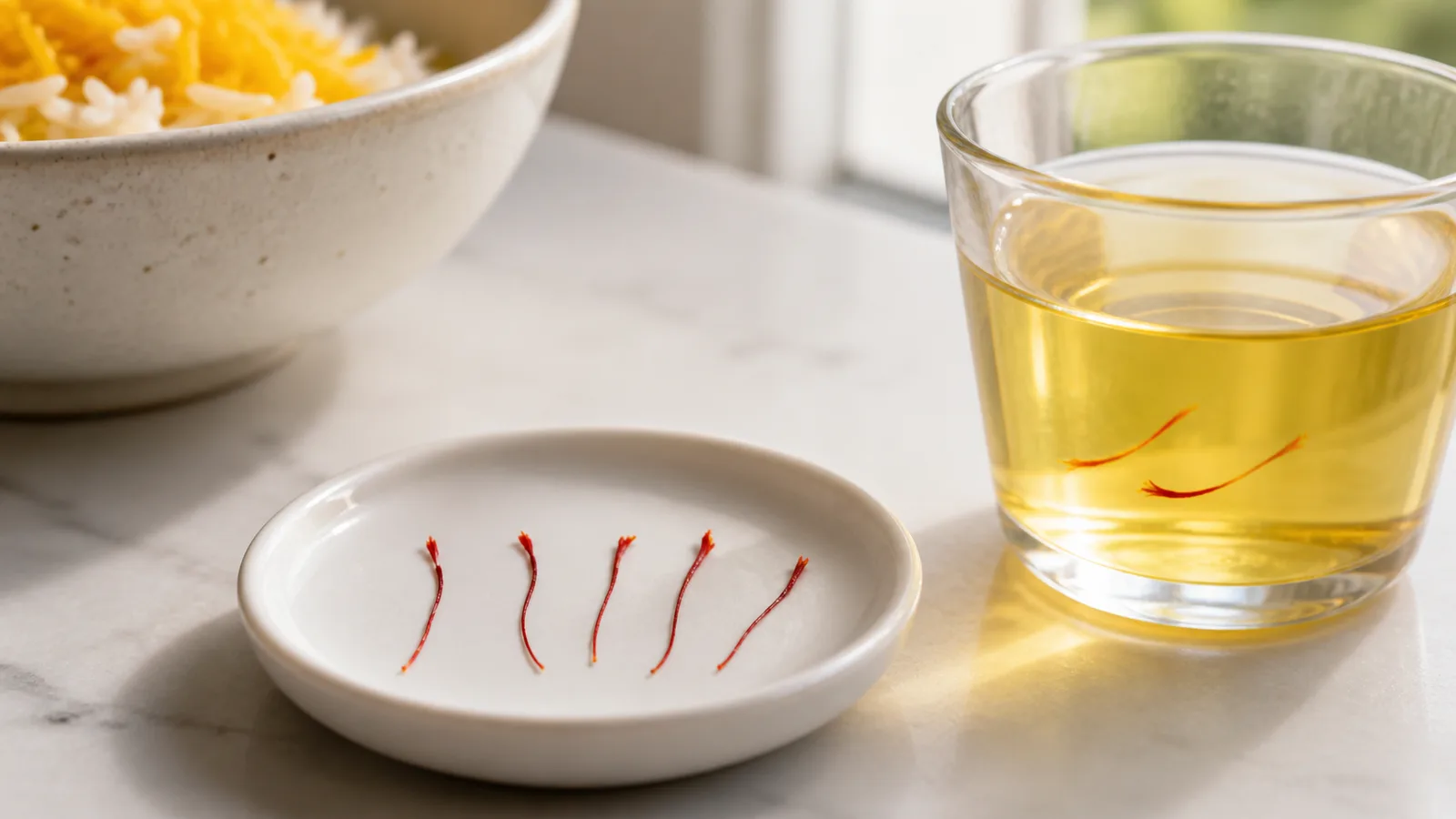
Gold costs much more per kilogram than saffron. This saffron price comparison uses dated benchmarks: the World Gold Council reported a July 2026 gold price of US$4,027 per troy ounce, or about US$129,500 per kilogram. A recent research benchmark places premium saffron around US$5,000–$10,000 per kilogram, so gold was roughly 13 to 26 times more expensive by weight in this illustration.
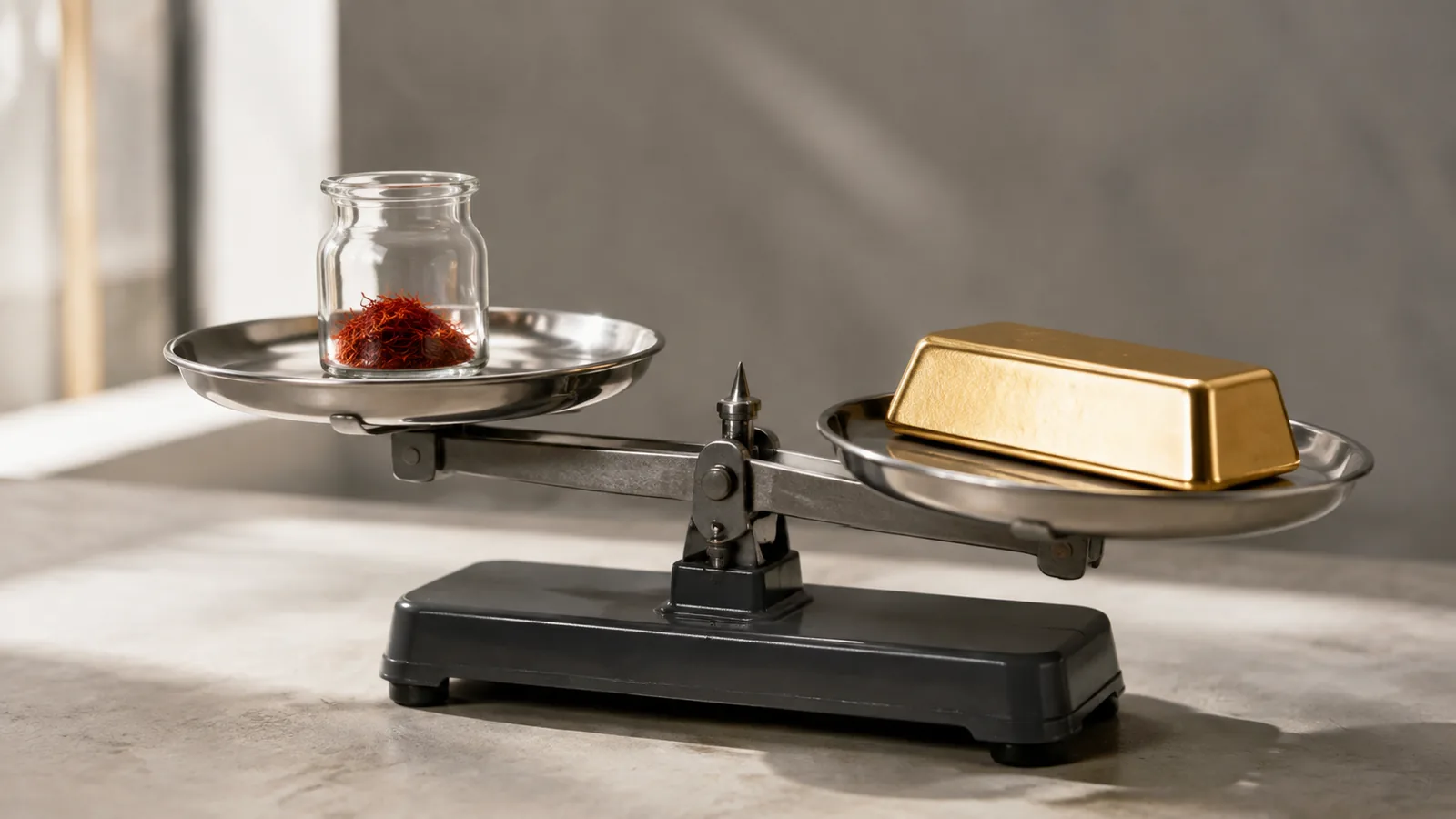
Saffron vs gold price comparison at a glance
- Gold: about US$129.50 per gram, calculated from the July 2026 price
- Premium saffron benchmark: about US$5–$10 per gram
- Difference: gold at roughly 13–26 times the price of saffron by weight
These figures are a comparison, not a permanent price quote. Gold changes throughout each trading day. Saffron prices vary by origin, grade, harvest, order size, seller and whether the figure is wholesale or retail.
How the gold price per kilogram was calculated
The World Gold Council’s July 2026 market commentary gives a month-end gold price of US$4,027 per troy ounce. Gold is quoted in troy ounces, not the ordinary ounces used for most groceries.
NIST’s official conversion factor states that one troy ounce equals 31.10348 grams. A kilogram therefore contains about 32.1507 troy ounces:
US$4,027 × 32.1507 = approximately US$129,500 per kilogram.
To update the figure on another day, multiply the current gold price per troy ounce by 32.1507. The result is the approximate price of one kilogram of pure gold before dealer premiums, taxes or transaction costs.
How much is saffron per kilogram?
Unlike gold, saffron has no single global spot price. Bulk saffron traded close to harvest is not priced like small retail jars, and two products labelled “saffron” can differ sharply in grade, testing, origin and freshness.
A 2026 peer-reviewed paper uses a premium-price range of US$5,000–$10,000 per kilogram for saffron. Treat that as a research benchmark, not a quote for every market. A one-gram retail pack may imply a higher per-kilogram price because packaging, testing, distribution and seller margins are concentrated into a small purchase.
Kesar is another name for saffron. If you find a listing headed “kesar price 1kg,” apply the same checks rather than assuming the name or pack size establishes quality.
When comparing offers, make sure both figures describe the same thing. Check:
- currency and date
- price per gram or price per kilogram
- wholesale versus retail quantity
- whole threads versus powder
- quality grade and test documentation
- tax, shipping and insurance
Is saffron more expensive than gold?
No—not when equal weights and comparable current prices are used. Calling saffron “red gold” describes its value among spices and the work required to produce it. It does not mean a kilogram of culinary saffron normally costs more than a kilogram of investment-grade gold.
The confusion often comes from an old gold figure, a very expensive tiny saffron pack extrapolated to a kilogram, or a comparison between retail saffron and wholesale gold. The previous version of this article, for example, used a much lower gold estimate and then incorrectly said saffron could cost three to five times more. The dated calculation above corrects that reversal.
Why saffron is still so expensive
Saffron remains extraordinarily valuable for a food ingredient. Each thread is part of the stigma of Crocus sativus, and harvesting and separating those stigmas requires extensive manual work. One quality review estimates that a kilogram of dried saffron requires roughly 110,000–165,000 flowers, about 50 hours of flower picking and a further 200 hours separating the stigmas. The full review explains the relationship between saffron production, quality and commercial value.
Yield, weather, labour, drying, sorting and storage all influence cost. Quality also matters because saffron’s colour, aroma and taste depend on compounds that can deteriorate with poor handling or long storage.
Saffron price per gram versus gold
A per-gram comparison is often easier to understand. Using the same dated figures, gold was about US$129.50 per gram, while the cited premium saffron benchmark was about US$5–$10 per gram. A home cook also uses them differently: saffron is bought in small culinary quantities, whereas gold pricing commonly refers to bullion purity and weight.
If you see a claim that saffron is worth more than gold, check the date, unit, currency and market level before repeating it. For the wider context behind the spice’s reputation, read what makes saffron the world’s most expensive spice.
The accurate answer
Saffron is costly, but gold is substantially more expensive per kilogram. On the cited July 2026 gold price and current research benchmark for premium saffron, the comparison is about US$129,500 per kilogram for gold versus US$5,000–$10,000 for saffron. Recalculate the gold side with a current benchmark whenever the exact number matters, and compare saffron offers at the same market level.