No, saffron does not taste like turmeric. In a saffron taste vs turmeric comparison, the two spices share a talent for colouring food yellow, but their aromas and flavours are distinct. Saffron is floral, hay-like and gently bitter; turmeric is earthier, more root-like and more assertive.
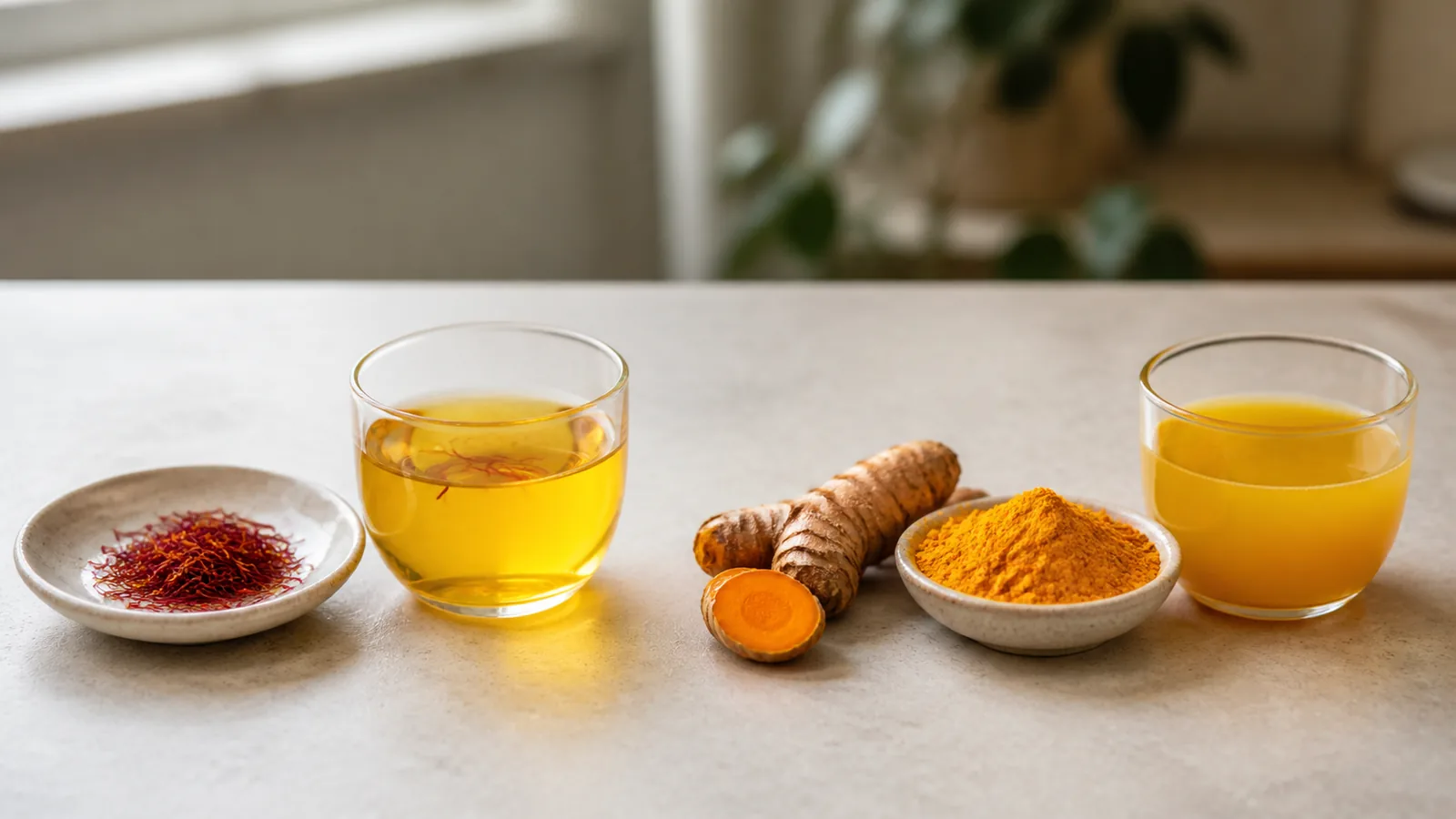
Why saffron and turmeric are often confused
Both can turn rice, stock, sauces and dough a warm yellow, which makes them look interchangeable in a finished dish. They also appear together in some spice blends and recipes. The resemblance largely ends with colour.
They do not even come from the same part of a plant. Saffron consists of the dried stigmas of Crocus sativus. Turmeric is made from the underground stem, or rhizome, of Curcuma longa, a plant in the ginger family. The National Center for Complementary and Integrative Health’s turmeric overview also notes that curcumin is a major component responsible for turmeric’s yellow colour.
What does saffron taste like?
Properly used saffron is aromatic rather than hot. Its flavour combines floral and grassy or hay-like notes with a clean, restrained bitterness. The fragrance can seem honeyed in warm milk or dessert, but saffron itself is not a sweetener.
Its characteristic profile comes from several compounds working together. Crocins are closely associated with colour, picrocrocin with bitter taste and safranal with aroma. These relationships are examined in a peer-reviewed chemical and sensory evaluation of saffron.
What does turmeric taste like?
Turmeric has a dry, earthy and mildly bitter flavour with a warmer, more pungent edge. Fresh turmeric can also taste brighter and more root-like than dried powder. It is usually easier to identify as a seasoning in a dish because a generous amount quickly becomes dominant.
A review of turmeric’s food uses describes its yellow-orange curcuminoids and explains that, although curcumin may be used as a low-cost colour alternative, it cannot substitute for saffron’s taste.
Saffron vs turmeric: the practical differences
- Colour: both create yellow tones, although saffron infusion tends toward a clear golden yellow while turmeric powder can look more opaque.
- Aroma: saffron is floral and hay-like; turmeric is earthy and root-like.
- Taste: both can be bitter, but the character and intensity are different.
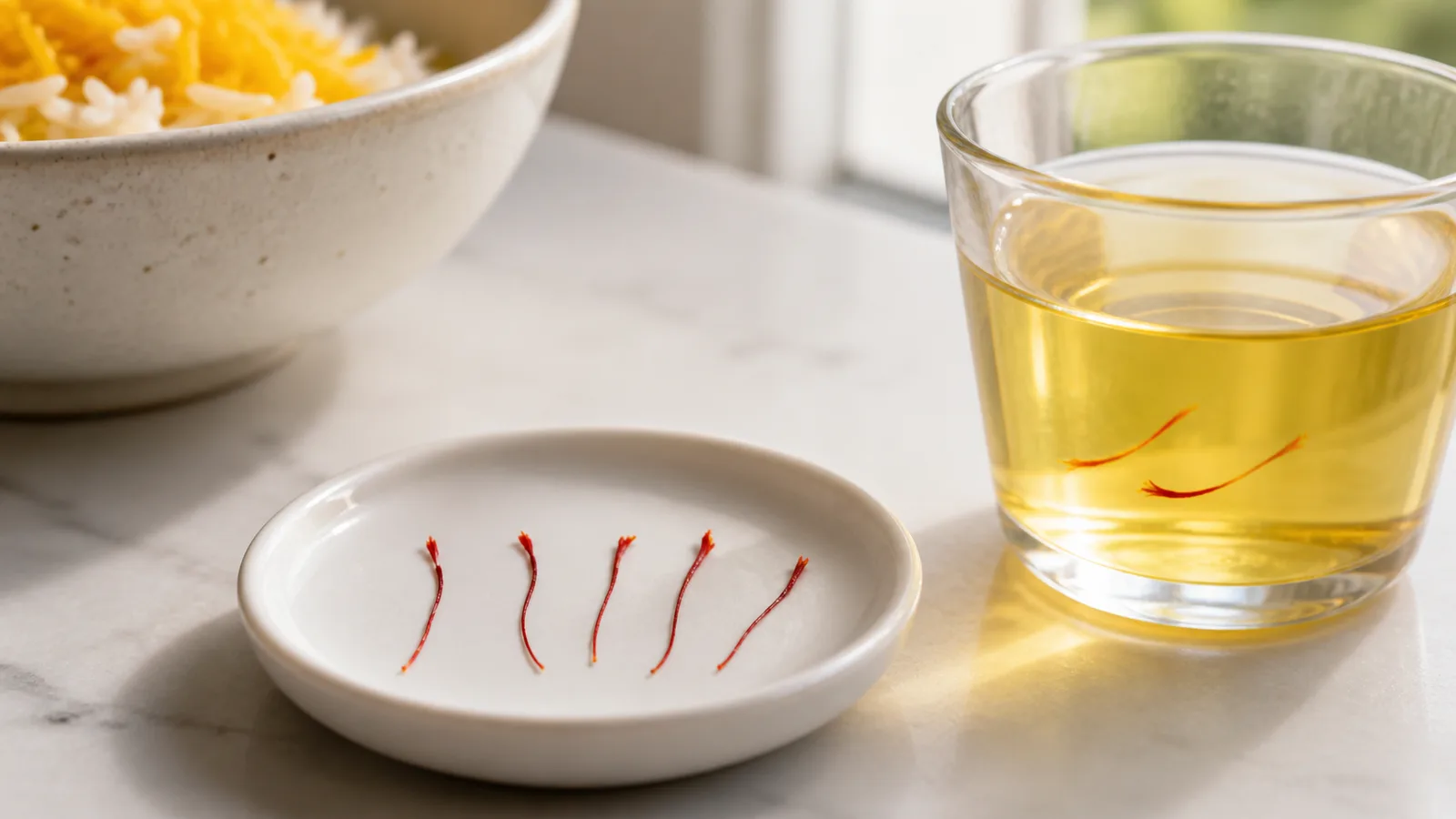
- Form: saffron is sold as delicate red threads or powder; turmeric is sold as fresh rhizome or ground powder.
- Quantity: saffron is normally used by the pinch, while turmeric is often measured by the fraction of a teaspoon or more.
- Preparation: saffron benefits from a short warm-water infusion; turmeric powder is commonly cooked directly with the other ingredients.
Can turmeric substitute for saffron?
How much turmeric to substitute for saffron depends on the dish, because the swap changes flavour as well as colour. Begin with a very small pinch, especially in pale rice, custard or dough. You can add more colour, but you cannot remove the earthy taste once it dominates.
It is less successful in a saffron-forward recipe. Risotto alla Milanese, saffron ice cream, saffron milk and a delicate saffron tea depend on the spice’s fragrance, not merely a yellow appearance. In those cases, using less real saffron usually gives a more faithful result than replacing it with turmeric.
How the difference changes a dish
Rice and savoury cooking
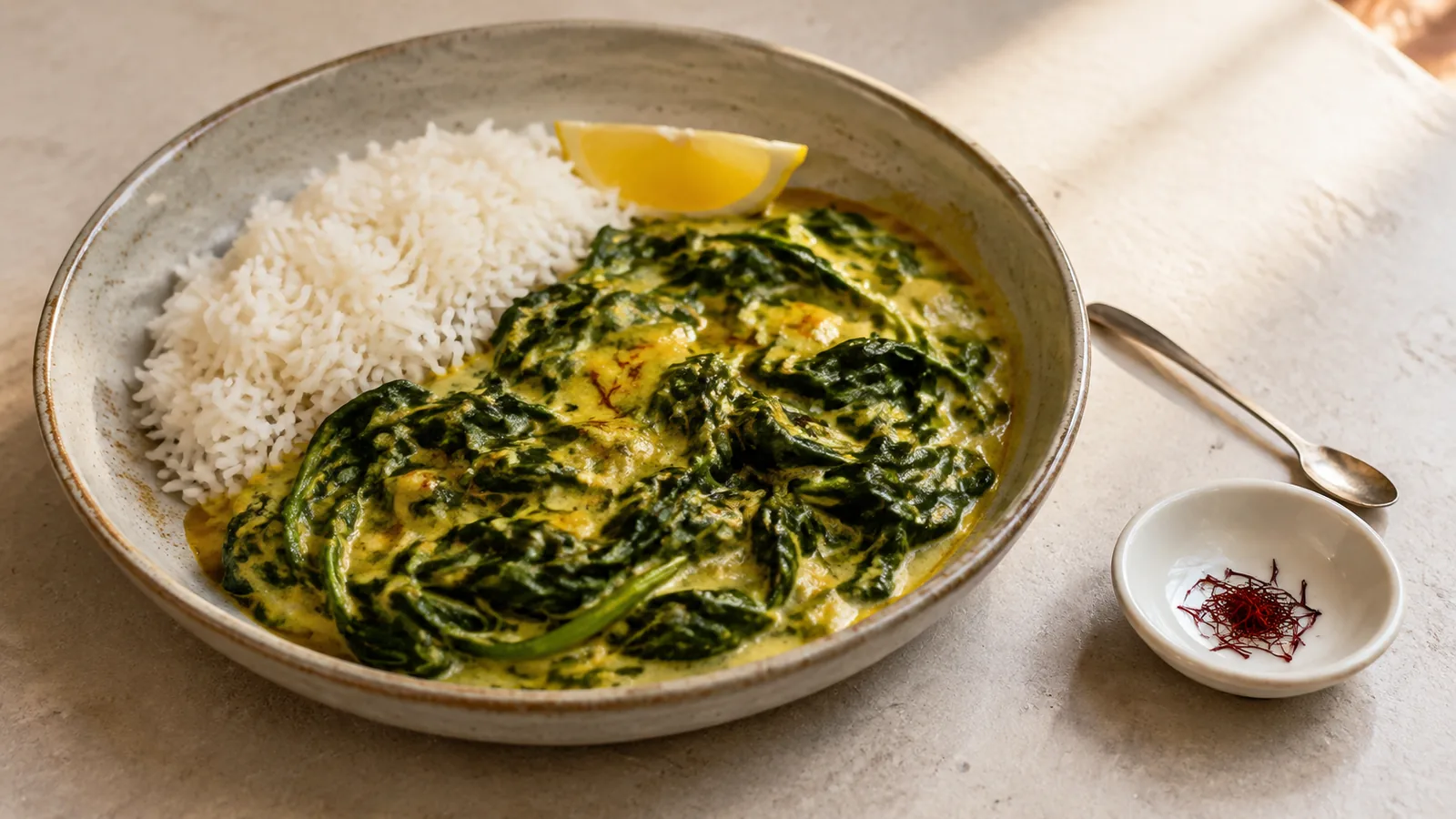
Turmeric suits curries, lentils, roasted vegetables and strongly seasoned rice. Saffron is better when you want the aroma to remain visible against a simpler background such as rice, stock, seafood or chicken. A dish can use both, but the turmeric should not be expected to amplify saffron flavour.
Baking and dairy desserts
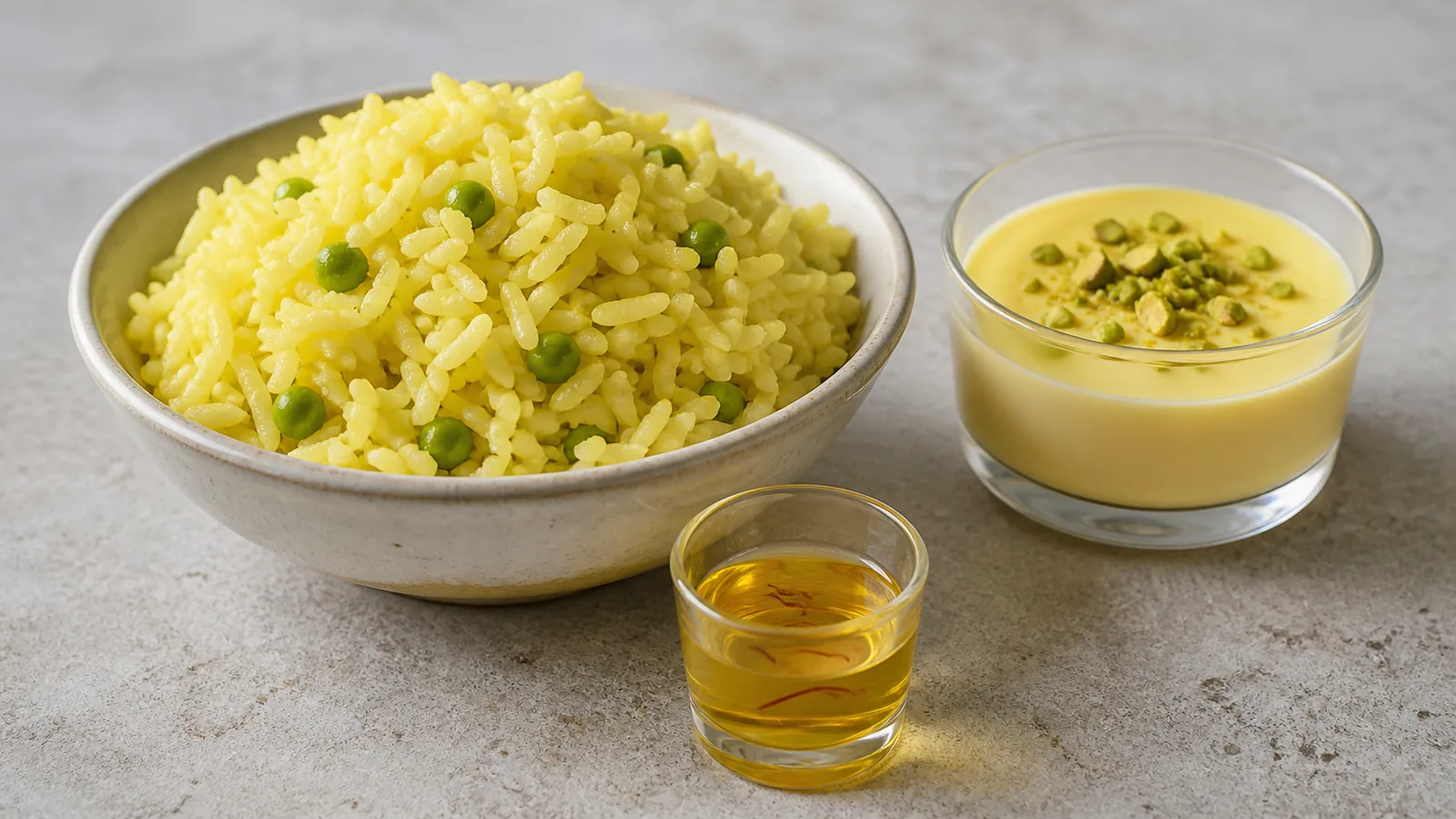
Saffron pairs naturally with milk, cream, sugar, citrus, nuts and cardamom. Turmeric can colour baked goods and drinks, but its earthiness needs a recipe designed around it. Swapping one for the other changes the dessert rather than making an equivalent version.
Tea and warm drinks
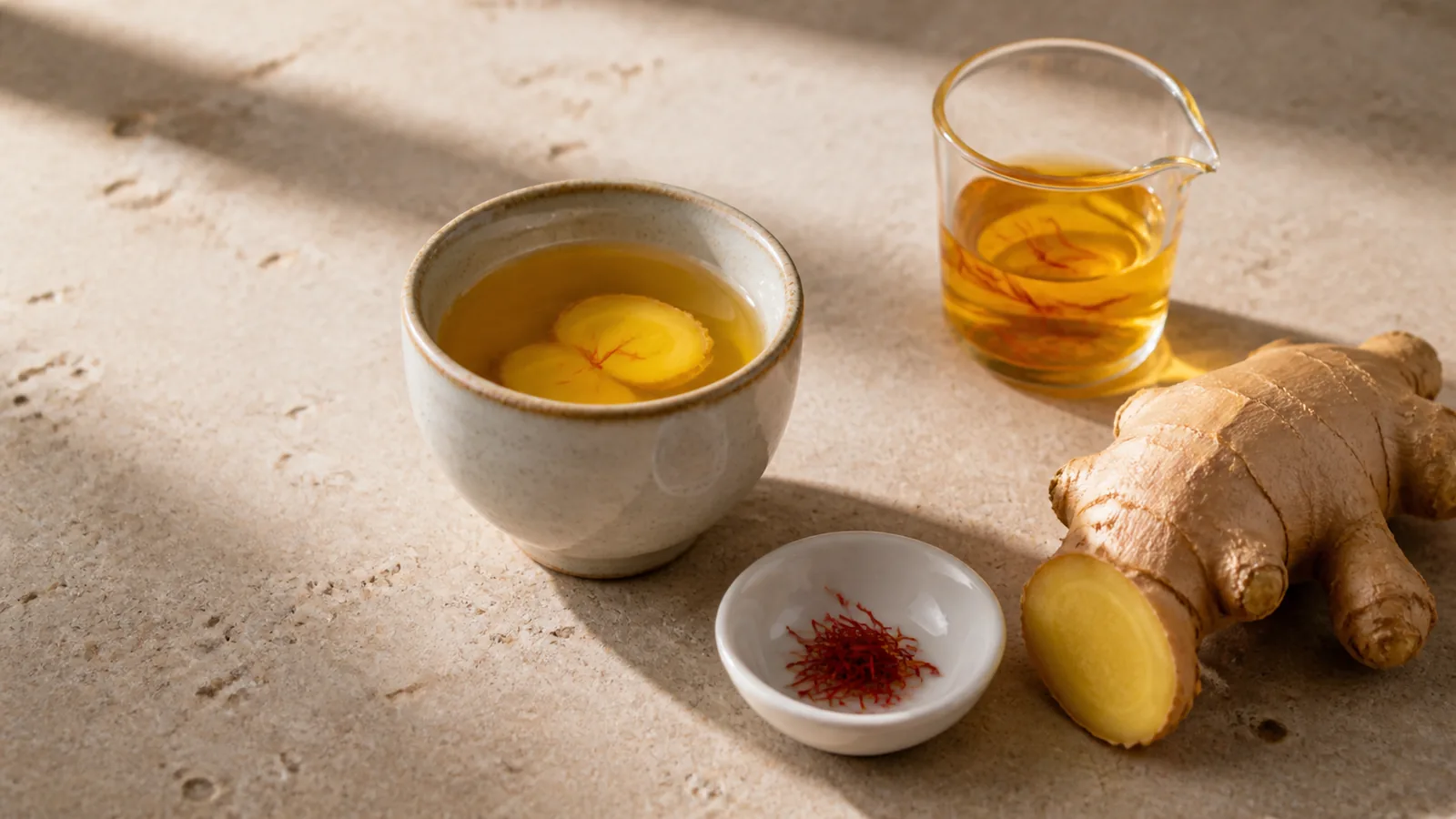
Saffron water is clear, aromatic and lightly bitter. Turmeric drinks are fuller-bodied when made with powder and tend to taste earthy. Honey may soften either drink, but it does not make their underlying flavours alike.
Is “Indian saffron” the same as saffron?
No. “Indian saffron” is sometimes used as a common name for turmeric, while genuine saffron is Crocus sativus. Check the botanical name and the ingredient itself instead of relying on the word saffron in a nickname. Whole saffron should consist of recognizable red stigmas, not yellow ground turmeric.
Which should you use?
Choose saffron when its floral aroma, clear golden colour and delicate bitterness are central to the recipe. Choose turmeric when you want an earthy spice or an economical yellow colour and the change in flavour suits the food.
If colour is your main goal and neither choice is available, the guide to spices that are closest to saffron explains what annatto, safflower, paprika and cardamom can—and cannot—replace. The key point is simple: saffron and turmeric may look related in the pot, but they do not taste the same.