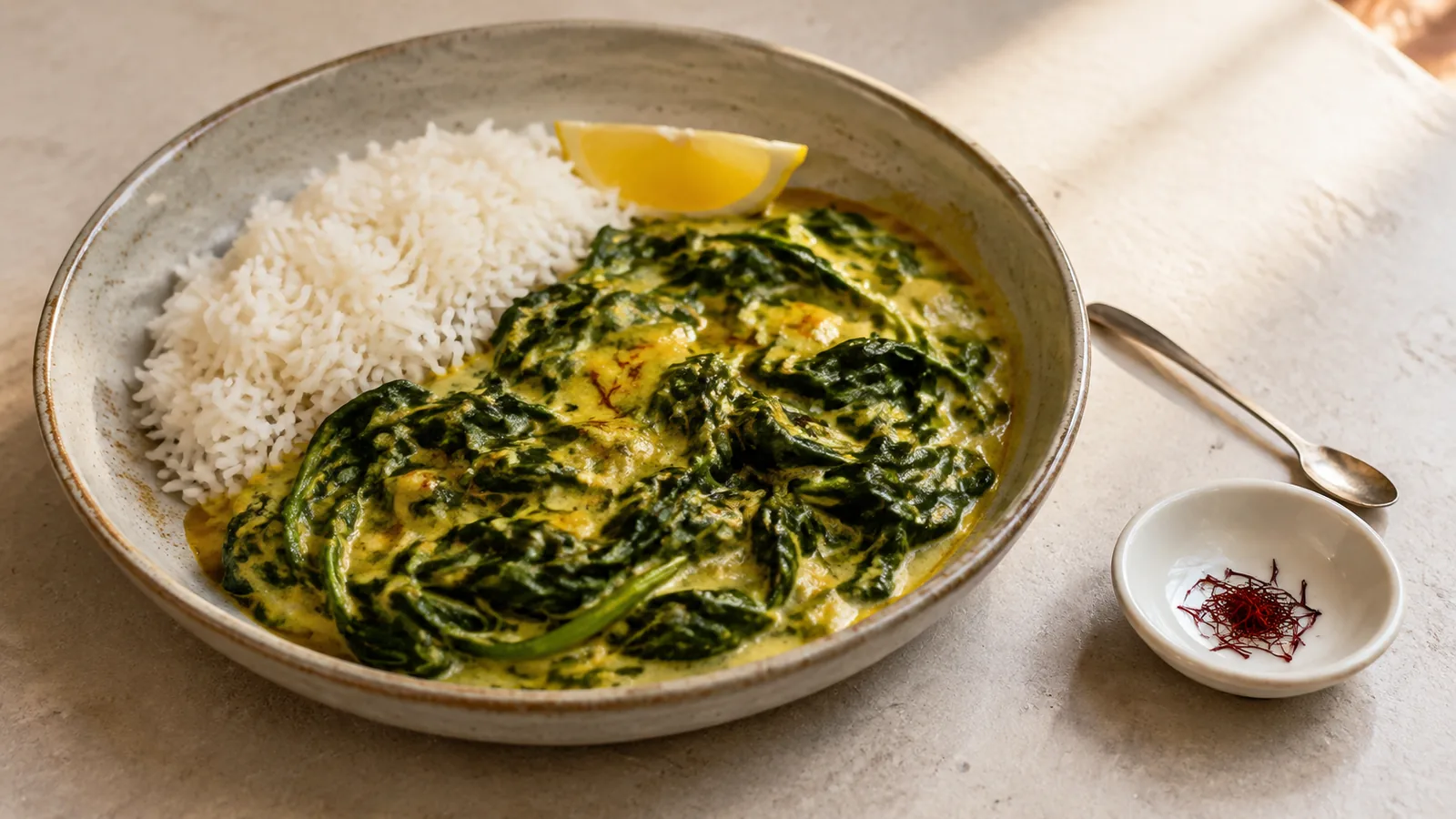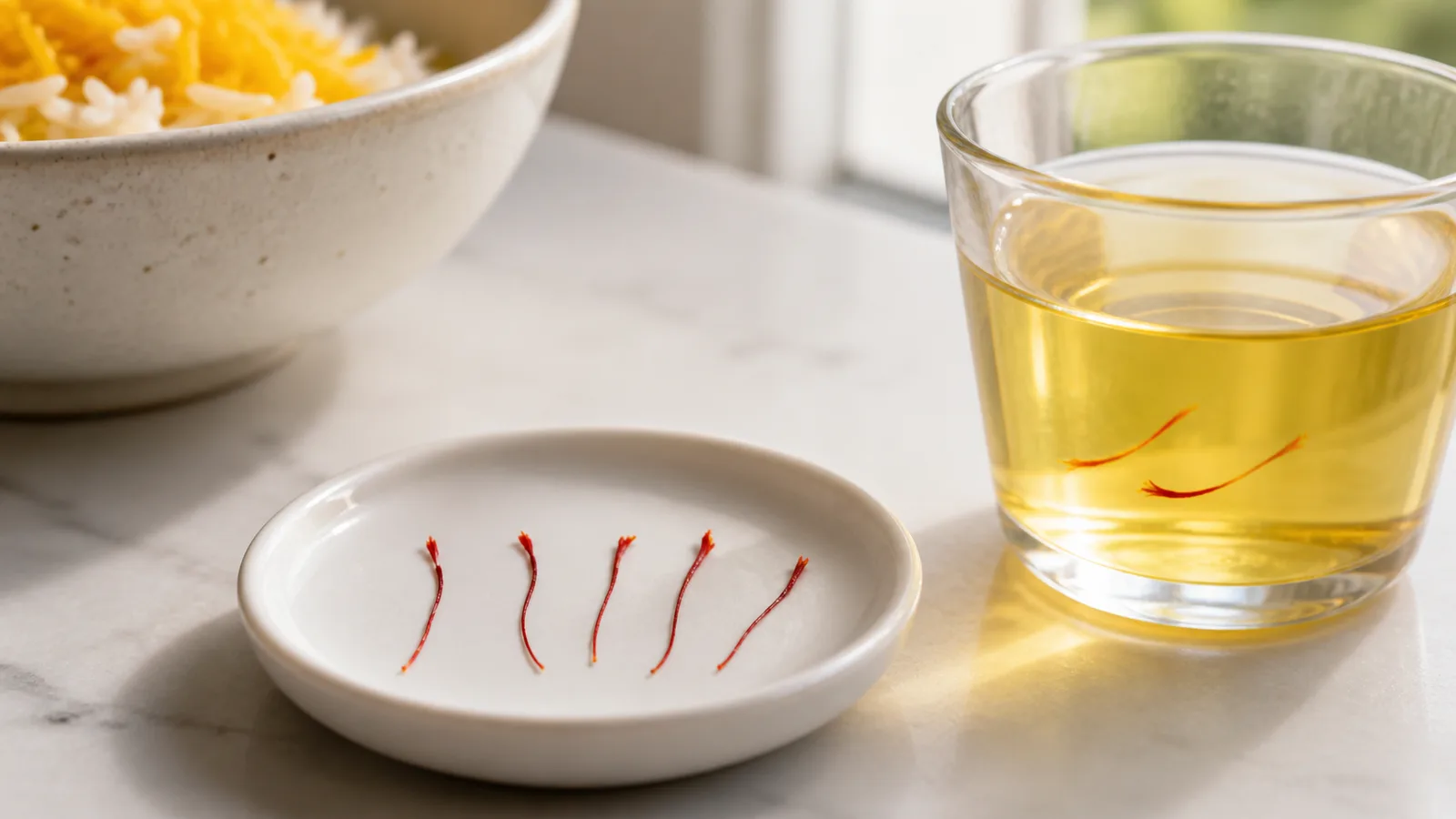
Can you eat saffron by itself? Yes. Genuine food-grade saffron threads are edible, so you can chew or swallow a few directly. They are dry and bitter, however, and steeping a small pinch in warm water, milk or stock usually gives a better flavour and makes more of the aroma available to a dish.
Can You Eat Saffron By Itself?
The question often appears as “Can we eat saffron directly?” The answer is still yes for an ordinary culinary amount. Saffron is listed by the US Food and Drug Administration as a flavouring and colouring ingredient. The threads do not need to be removed from rice, tea or another finished recipe.
Eating a spice is not the same as taking a standardised extract. A pinch of threads varies in size and composition; a capsule may be concentrated and designed to deliver a measured amount. Keep those uses separate when reading safety or health research.
How Saffron is Typically Used
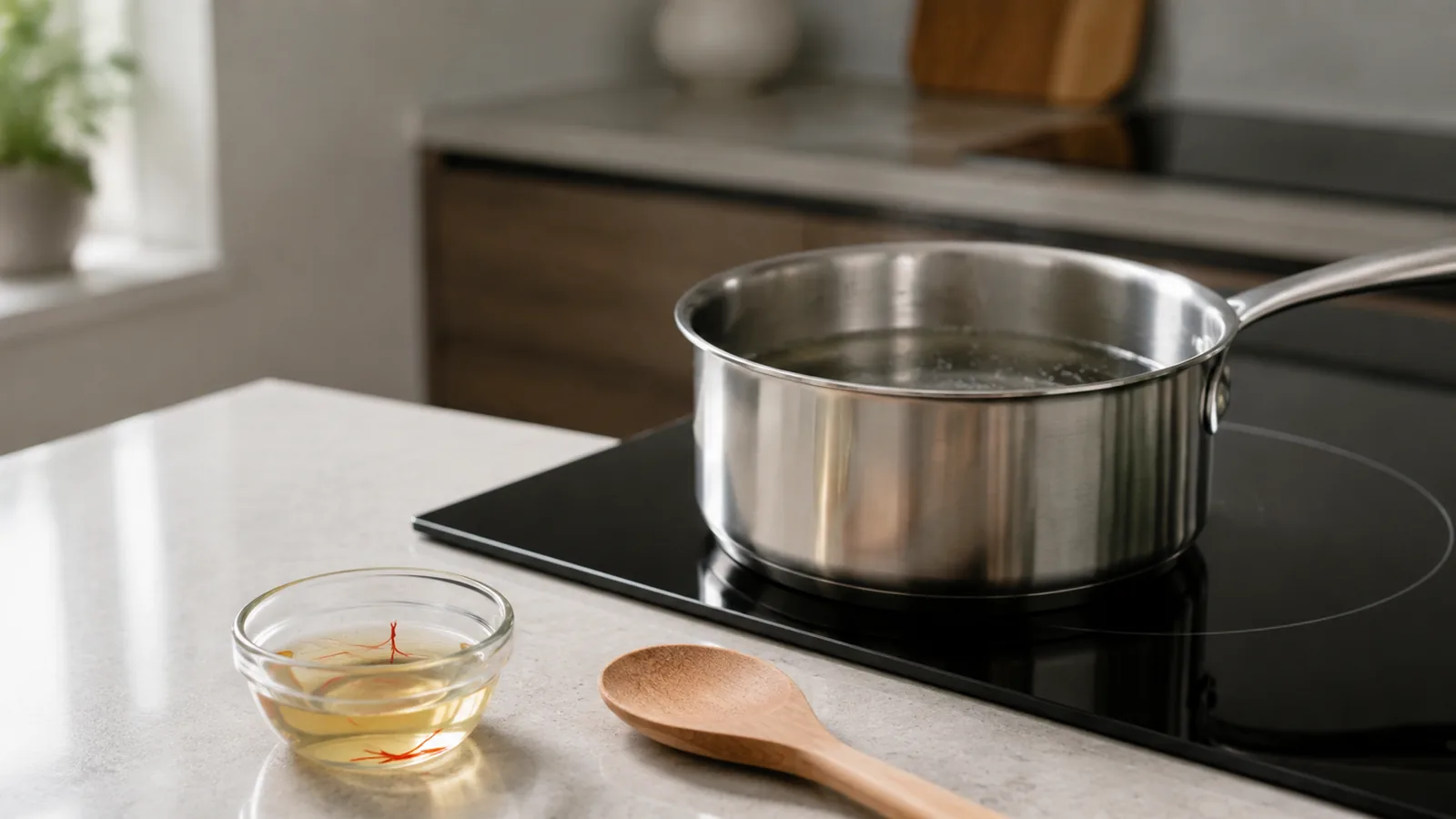
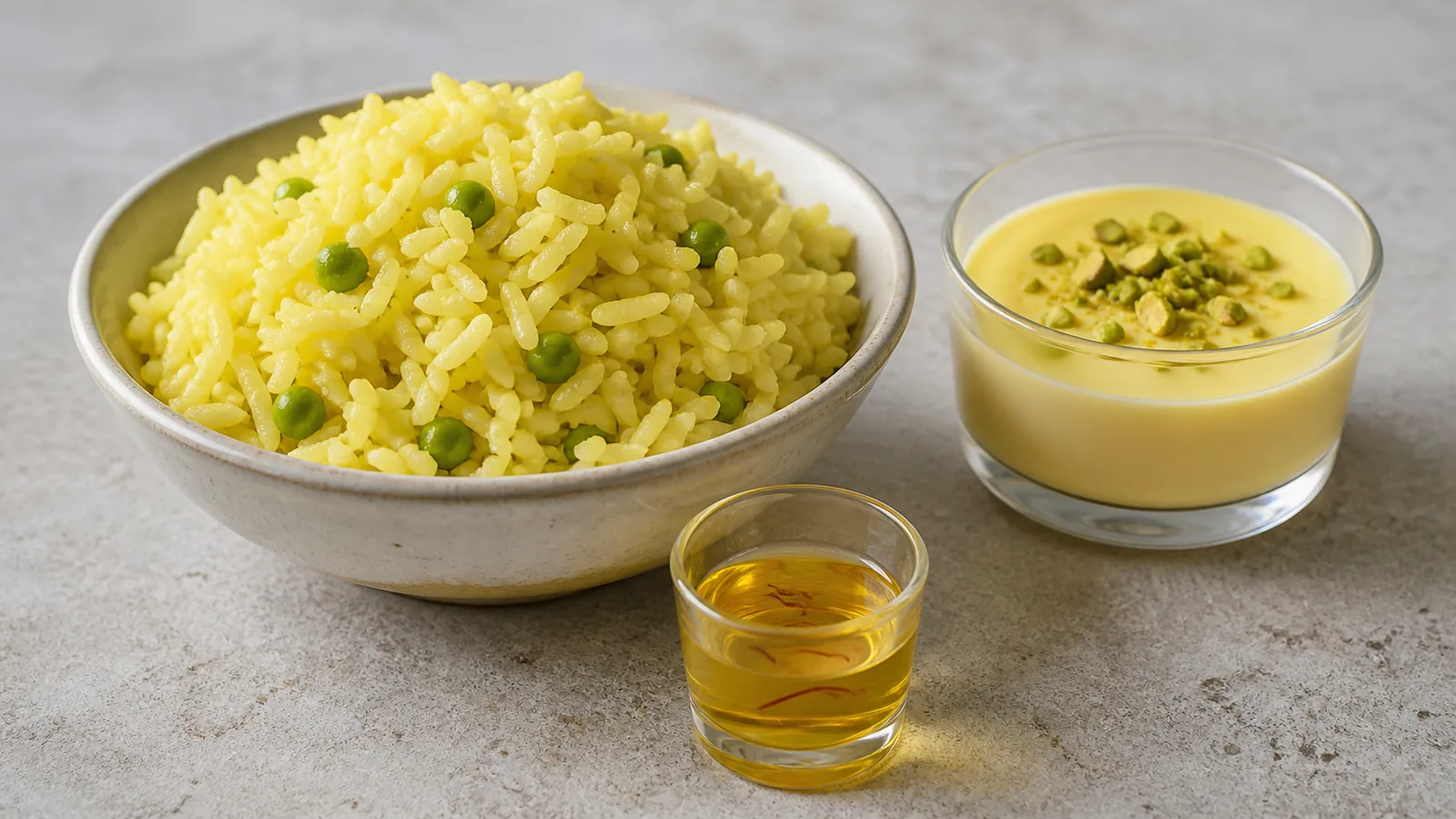
Most cooks crush the threads gently and bloom them for 10 to 20 minutes in a few tablespoons of warm liquid. Water works across many dishes, milk suits desserts and drinks, and stock fits savoury recipes. Add both the golden liquid and softened threads.
Blooming does not “activate” saffron as medicine. It is a kitchen technique that disperses crocins, aroma and bitterness. It also prevents several valuable threads from ending up in one concentrated mouthful.
Consuming Saffron Directly
Can you eat saffron raw? Yes, provided it is genuine, food-grade and in good condition. One or two dry threads are enough to understand the taste. Do not taste material that smells chemical or musty, appears damp or mouldy, or was sold for decorative rather than food use.
Can you eat saffron threads after soaking? Yes. Leave them in the cup or dish if you like; they remain edible. There is no proven advantage to swallowing the threads dry, and “more concentrated” does not mean “more beneficial.”
Health Benefits of Eating Saffron
Saffron contains compounds including crocins, picrocrocin and safranal. Clinical research has examined measured preparations for several outcomes, but the evidence does not justify promising that a few dry threads improve mood, anxiety, inflammation or cognition.
A meta-research review of saffron health evidence reported promising findings alongside important weaknesses in the quality of existing reviews and trials. Culinary saffron can be enjoyed for flavour and colour without being presented as treatment.
Potential Risks of Eating Too Much Saffron
The previous recommendation of 0.5 to 1 gram every day was not a general culinary guideline and has been removed. Saffron is normally used by the pinch because its flavour is strong. There is no reason to turn it into a daily gram-level habit simply because the threads are edible.
A systematic review of human safety evidence found saffron preparations generally well tolerated, while gastrointestinal complaints were the most frequently reported adverse effects and higher-dose or prolonged medicinal use required more caution. Stop a non-essential product and seek advice if you feel unwell.
A known saffron allergy calls for avoidance. Ask a clinician before supplement-style use if you are pregnant, breastfeeding, take regular medication or have a medical condition. Get urgent help for breathing difficulty, throat or tongue swelling, faintness or another severe allergic reaction.
A Better Way to Taste Saffron on Its Own
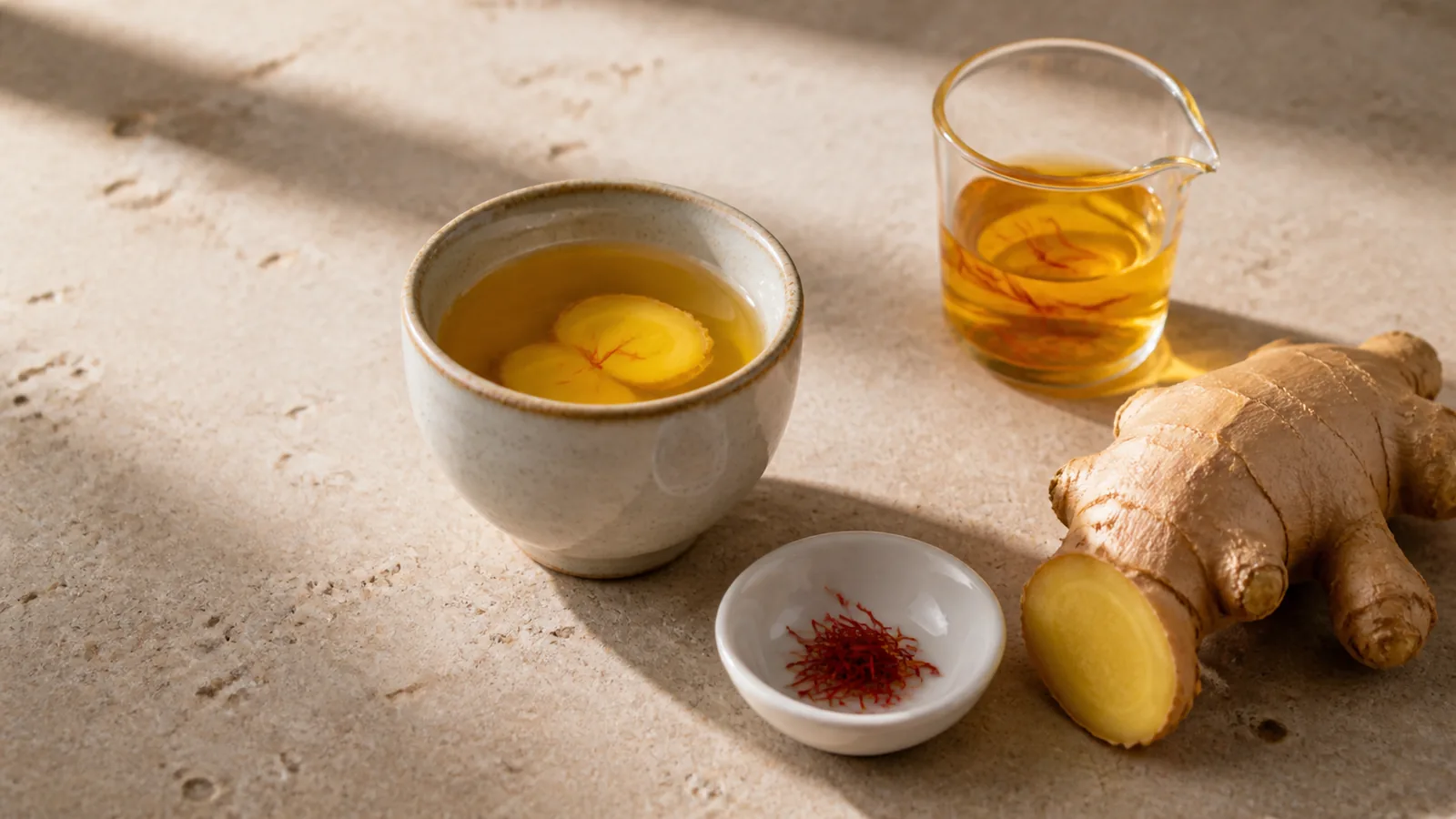
To experience the spice without another tea or food masking it, steep a small pinch in plain warm water for about 10 minutes. Smell the dry threads first, then compare the golden infusion. Taste it unsweetened before deciding whether to add honey or lemon.
Browse our saffron products, or see how to eat saffron threads in food and drinks.
Conclusion
You can eat saffron by itself, raw or after soaking, in the small amount used for food. Blooming it is usually the more enjoyable and useful choice. Do not mistake direct eating for a proven treatment or follow an invented daily dose.