One kilogram of pure gold is worth the current gold price per troy ounce multiplied by 32.1507465. Using a reference price of US$4,305.306 per ounce published on 4 September 2026, that worked example is about US$138,419 before any dealer premium, fee or tax.
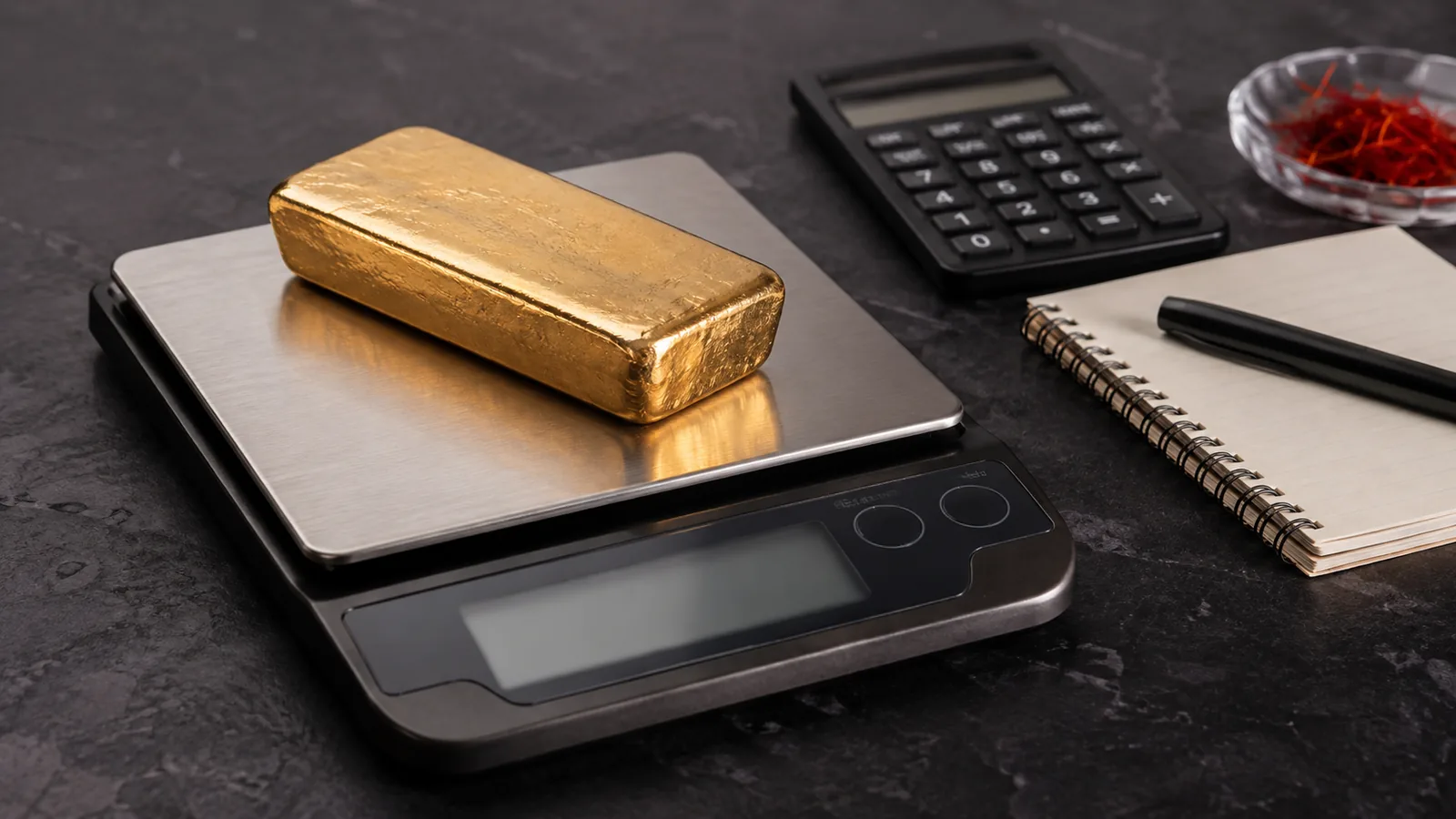
How much is 1kg of gold worth today?
The exact answer changes throughout a trading day. The figure above uses the latest dated reference available when this article was reviewed: the Kuwait Ministry of Commerce and Industry gold-price reference showed US$4,305.306 per ounce at 8:05 a.m. on 4 September 2026. It is a timestamped example, not a live offer to buy or sell gold.
To calculate the value now, take a current price for one fine troy ounce of gold and multiply it by 32.1507465:
1kg pure-gold value = price per fine troy ounce × 32.1507465
For example, if the quoted price is US$4,300 per fine troy ounce, one kilogram of pure gold has a theoretical metal value of US$138,248.21. If the quote moves to US$4,400, the same kilogram is US$141,463.28. The calculation is simple; selecting the right quote and accounting for purity are the important parts.
Why the calculation uses troy ounces
Precious metals are quoted in troy ounces, not the ordinary ounces used for many household goods. One troy ounce is exactly 31.1034768 grams. The London Bullion Market Association’s troy-ounce guide gives the accepted market conversion of one kilogram to approximately 32.1507465 troy ounces.
Confusing a troy ounce with an avoirdupois ounce produces a large error. There are about 35.274 ordinary ounces in a kilogram, but that is not the multiplier used with a gold quote. For a current gold price shown as “USD/oz,” confirm that the source means a fine troy ounce.
Spot price, benchmark price and retail price are different
The number seen on a financial screen is normally a wholesale market reference. It is not necessarily the amount a customer will pay for a one-kilogram bar or receive when selling one.
The official name of the widely used London benchmark is the LBMA Gold Price. ICE Benchmark Administration operates the auction, and the price is set per fine troy ounce for London delivery. The LBMA explanation of the benchmark also notes that redistribution and some valuation uses of the price may require a licence. This article therefore gives a calculation method and a dated public reference rather than pretending to display an authorised live feed.
A dealer’s final price can differ because it may include:
- the dealer’s buying or selling spread;
- bar fabrication, assay, certification and delivery costs;
- the bar’s recognised refiner and resale liquidity;
- currency conversion and payment costs;
- insurance, storage and security expenses; and
- taxes or reporting rules in the relevant jurisdiction.
For that reason, “spot value,” “retail price” and “cash offered by a buyer” should not be used interchangeably.
How purity changes the value of a 1kg gold bar
A kilogram describes gross mass. Market value depends on how much fine gold that mass contains. A 999.9-fine one-kilogram bar contains 999.9 grams of fine gold, not a mathematically perfect 1,000 grams. The LBMA fine-gold conversion table lists a one-kilogram 999.9 bar at about 32.148 fine troy ounces.
The general formula is:
Fine-gold value = gross weight in troy ounces × fineness × price per fine troy ounce
For a 999.9-fine bar, multiply 32.1507465 by 0.9999, then multiply by the current quote. Dealers may follow specific weighing and rounding conventions, so their settlement figure can differ slightly from a simple consumer calculation.
Is 1kg of 24-karat gold the same as 1kg of jewellery?
No. “24 karat” is commonly used for gold that is effectively pure for retail purposes, although the precise fineness should still be read from the hallmark or assay. Jewellery often contains less gold because other metals are added for hardness, colour and wear.
One kilogram of 18-karat jewellery is theoretically 75% gold by mass, so it contains about 750 grams of fine gold before allowing for solder, stones, non-gold fittings or assay differences. Its melt value is not the same as the value of a one-kilogram 999.9 bullion bar. Craftsmanship, brand and resale conditions can also affect a jewellery price in ways that have little to do with spot gold.
How to check a one-kilogram bar before valuing it
Start with the bar itself and its documentation. Record the gross weight, fineness, refiner, serial number and any assay certificate. A photograph or seller’s description is not a substitute for physical verification when substantial money is involved.
Then obtain two separate figures from a credible dealer: the price at which the dealer will sell the bar and the amount it will pay to buy it back. That reveals the spread more clearly than comparing one advertisement with a financial headline. For a transaction of this size, independent authentication, secure custody and professional financial or tax advice may be appropriate.
What makes the current gold price move?
Gold trades globally. Its price fluctuations can reflect economic conditions, interest-rate and inflation expectations, currency moves, geopolitical risk, central-bank activity, investment flows, supply-demand dynamics and market liquidity. These relationships are not fixed. A news event can move gold and the relevant exchange rate in opposite directions, which is why a local-currency valuation may change even when the US-dollar quote is steady.
Time also matters. A weekend or holiday page may show the last available trading reference rather than a newly formed price. Always note the date, time, currency and whether the figure is a bid, ask, midpoint, spot indication or formal benchmark.
Gold and saffron are valuable in different ways
Saffron is often called “red gold,” but comparing a kilogram of saffron directly with a kilogram of bullion can mislead. Gold has a continuously quoted financial-market value and standardised fineness. Saffron is an agricultural product whose price varies with origin, cut, quality, harvest, testing, package size and sales level. Our article asking whether saffron is pricier than gold explains why a retail spice price and a wholesale bullion benchmark are not an equal comparison.
A reliable answer in three steps
- Find a current, timestamped price per fine troy ounce in the currency you need.
- Multiply by 32.1507465, then adjust for the bar’s fineness.
- Add or subtract the real dealer spread, fees, conversion costs and applicable taxes to estimate the transaction price.
That method gives a defensible answer to how much 1kg of gold is worth today. Keep the timestamp beside the result: without it, even an accurate calculation quickly becomes stale.