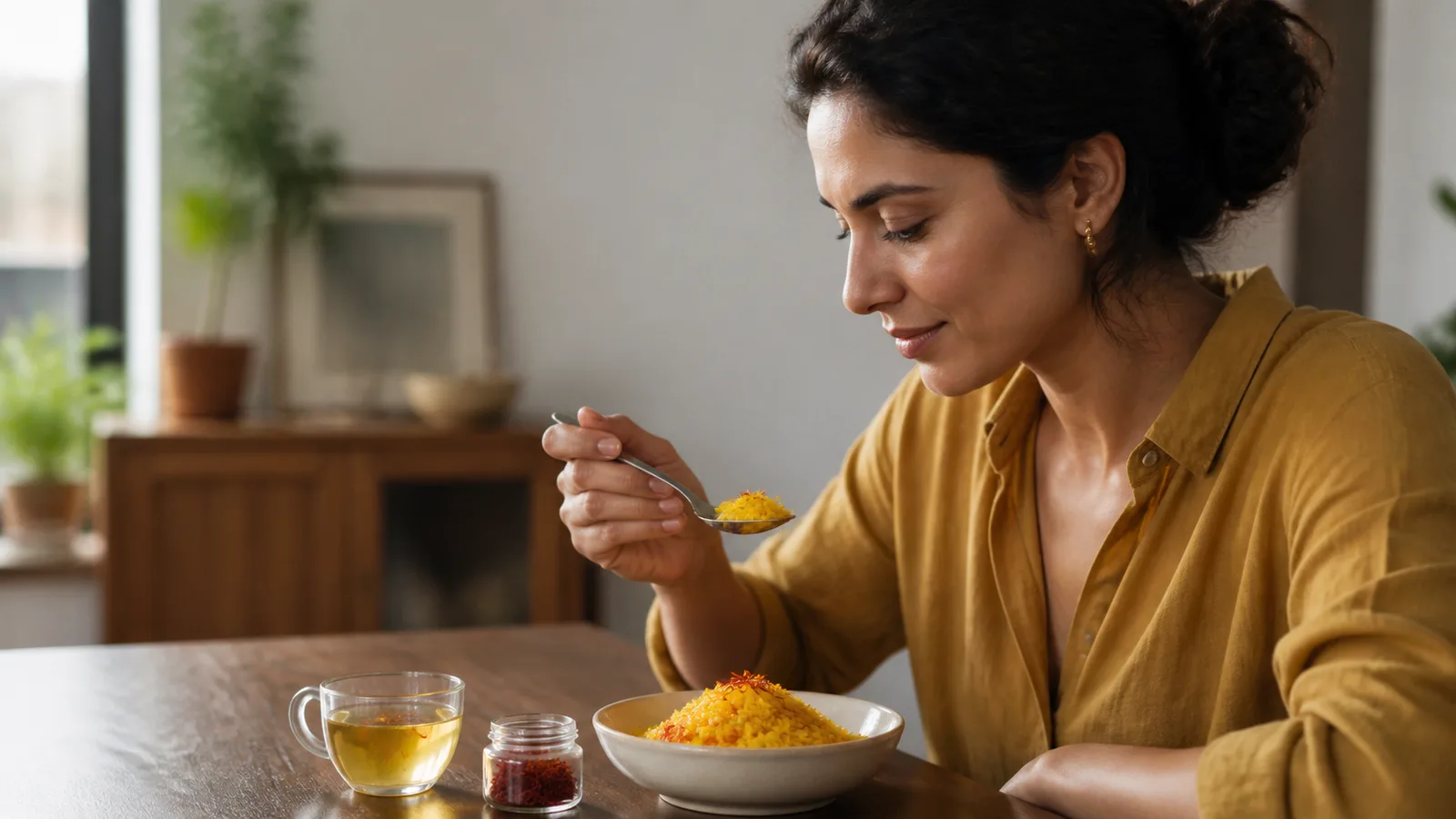
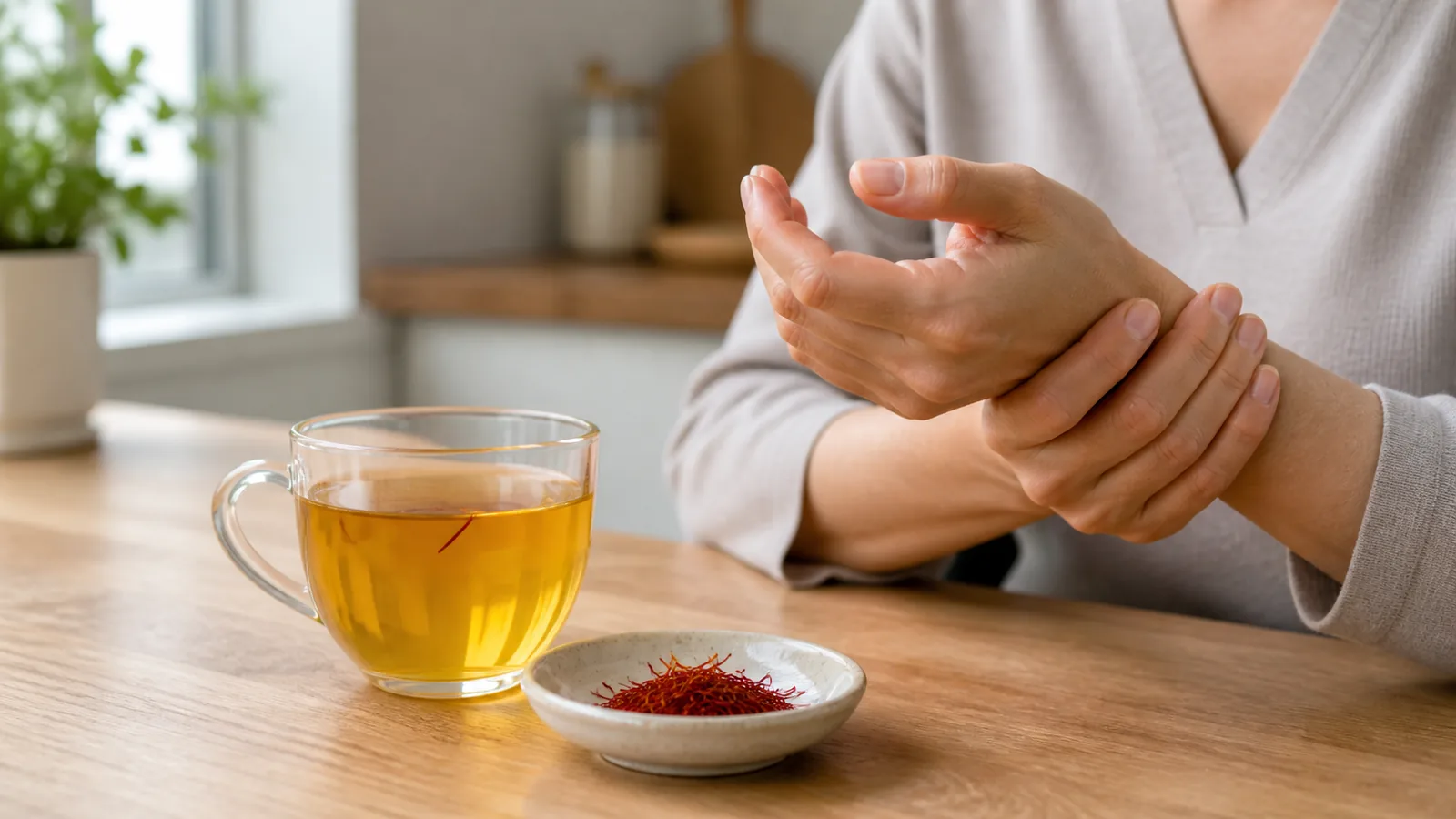
Heat does not instantly destroy saffron, but temperature, time and cooking method change what you smell, taste and see. Saffron’s aroma includes volatile compounds that can fade with prolonged cooking, while its color compounds behave differently in water and under dry high heat. The practical goal is not to keep saffron cold; it is to extract it well and avoid needless exposure.
Saffron has several heat-sensitive properties, not one
The old phrase “heat kills saffron’s properties” treats the spice as if every component reacts in the same way. Three groups are especially useful for cooking:
- Crocins are water-soluble pigments responsible for much of saffron’s golden color.
- Picrocrocin contributes characteristic bitterness and is a precursor in aroma development.
- Safranal and other volatile compounds contribute strongly to aroma.
Color extraction, flavor balance and aroma retention can therefore point to different choices. A method that draws color quickly may still lose fragrance if it boils uncovered for a long time.
What happens to saffron aroma with heat?
Safranal is volatile, meaning it can move into the air. That is part of why warm saffron smells so expressive: heat helps release aroma. It is also why an open pan, vigorous boiling and long holding can leave less aroma in the food by serving time.
Safranal is not the only odor-active molecule. A study of Iranian saffron found nine aroma-active compounds, with safranal, 4-ketoisophorone and dihydrooxophorone among the most powerful in the tested extract. Protecting “the aroma” means preserving a profile, not one essential oil.
Does boiling destroy saffron color?
The answer depends on the model. A 2022 study found that major crocetin glycosides, including crocin, were largely stable during 20 minutes of boiling. In a dry grilling model at 180°C for five minutes, chemical changes and hydrolysis occurred.
Another recent infusion study measured the transfer of saffron compounds between water and oil at temperatures from 60°C to 100°C. It found useful extraction at moderate temperatures and reported that culinary heat could adversely affect crocins and safranal depending on the phase, temperature and time. These results are not contradictory: boiling in water, dry roasting and a mixed dish are different chemical environments.
A better way to use heat when cooking with saffron
1. Grind only what you need
Gently crush the threads immediately before use. Greater surface area speeds extraction, but it also exposes more material to air, light and moisture. Keep the remaining threads whole in a closed container.
2. Make a warm infusion
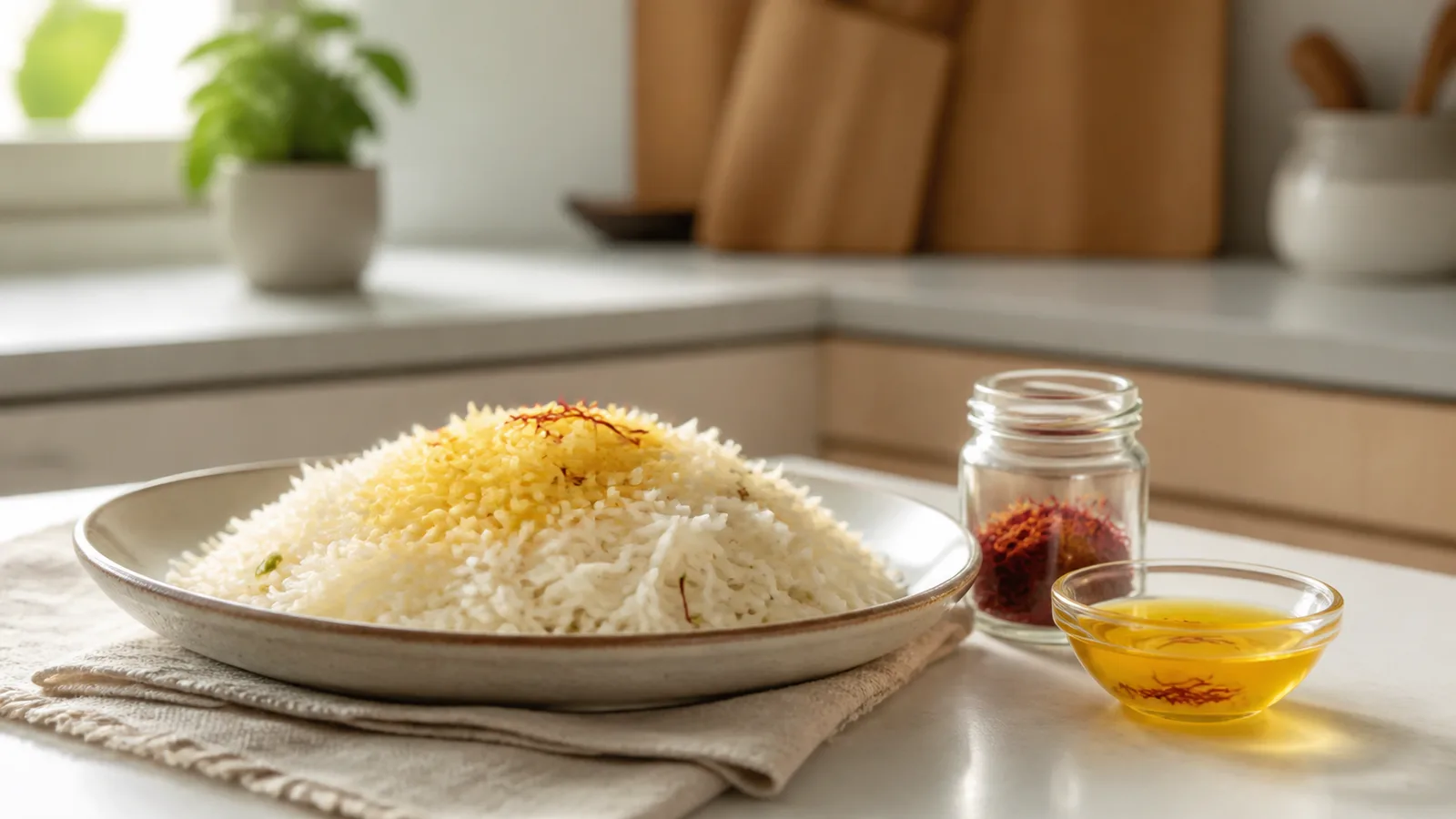
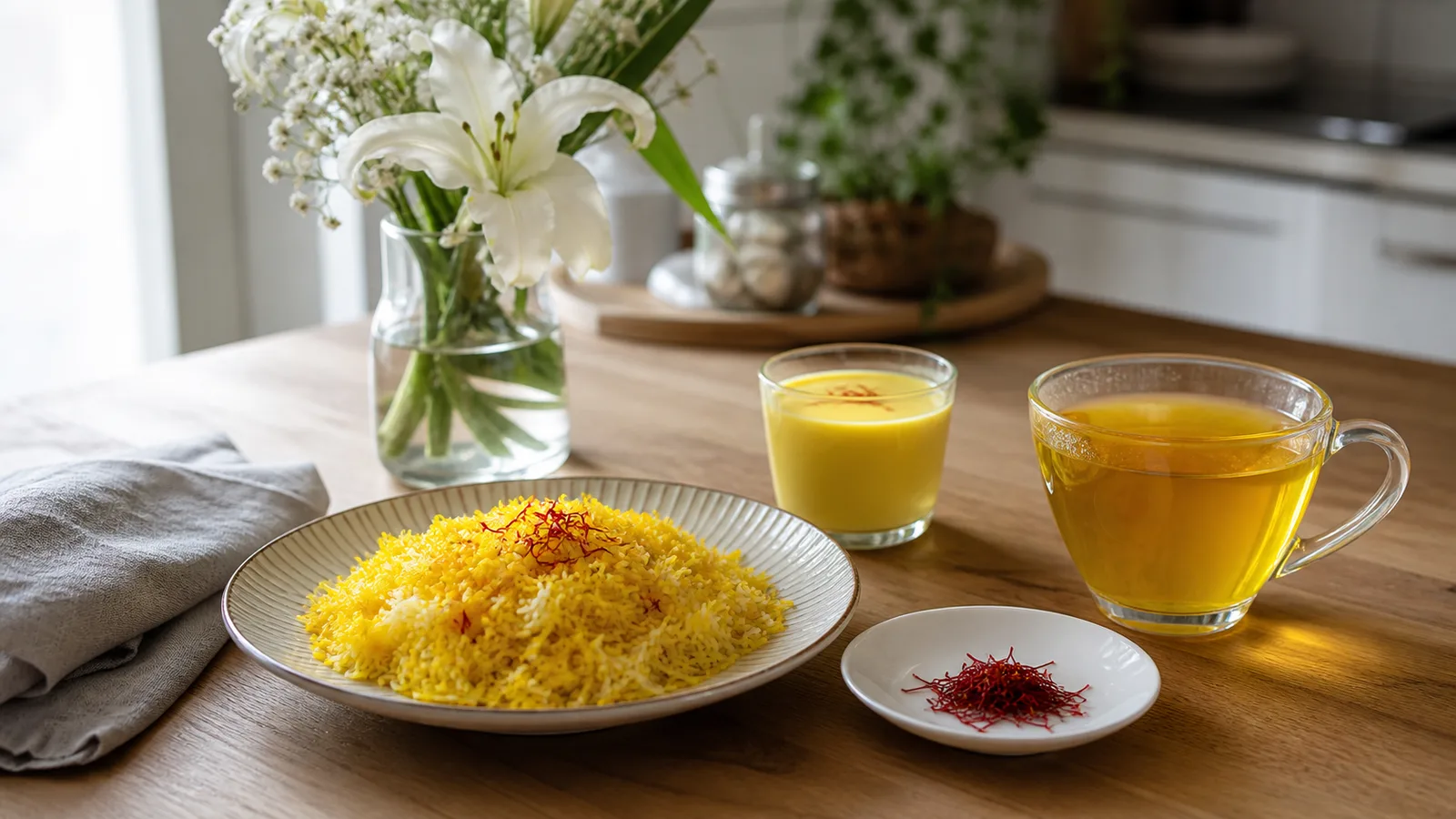
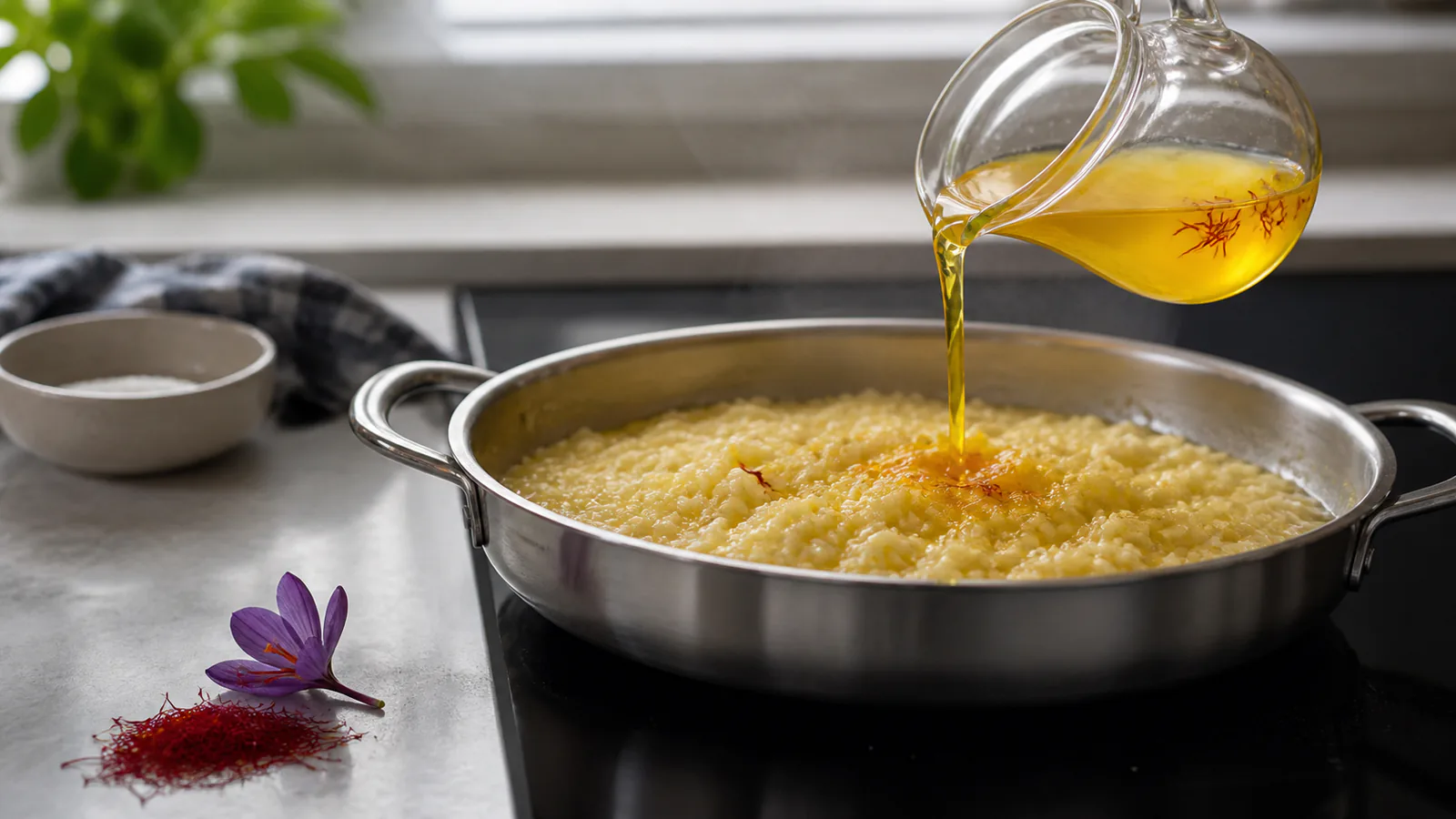
Steep the crushed saffron in a small amount of warm water for about 10 to 20 minutes. Warm—not furiously boiling—water efficiently carries the water-soluble color through the dish. Covering the cup helps contain aroma.
3. Divide the addition when the recipe allows
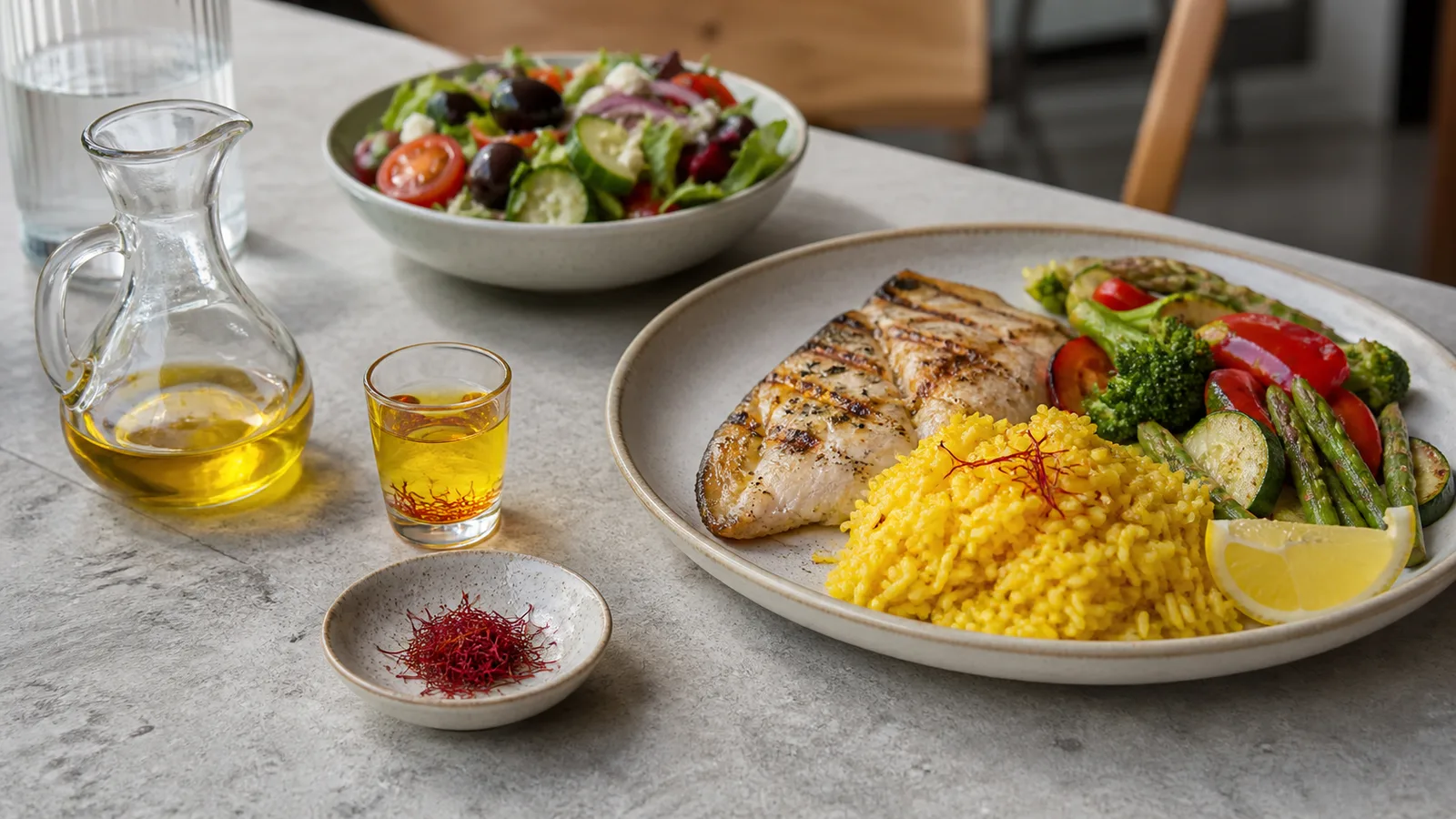
Add one portion earlier for even color and integrated taste. Add the remaining infusion toward the end for a fresher aromatic lift. This is especially useful in rice, sauces, soups and desserts that cook for a long time.
4. Avoid dry scorching
Do not toast fine saffron powder directly in a very hot empty pan. Dry high heat is harder to control and can create local temperatures far above those in a watery dish. If saffron is part of a spice bloom, provide a liquid or fat medium and keep the exposure brief.
What about the ice-brewing method?
Ice infusion is often promoted as the only way to preserve saffron. Cold water can extract crocins over time, so the method can produce color. It is not uniquely necessary, and “ice protects all properties” is too broad.
A 2024 extraction study found crocins transferring well at low and moderate temperatures, while safranal behaved differently and was enriched more effectively in an oily phase at a temperature no higher than 80°C. The best method depends on whether the cook prioritizes color, aroma, speed or the texture of the dish.
Our hot-water and ice saffron brewing guide compares the two household techniques. For the broader yes-or-no question, see whether heat destroys saffron.
Storage heat is different from cooking heat
Cooking is brief and purposeful. Warm storage repeatedly exposes saffron to heat, air and sometimes humidity without giving a culinary benefit. Research using saffron stored at 25°C and 40°C found that its volatile fingerprint changed and safranal declined under the study conditions.
Store dry threads in a tightly closed, food-safe container away from the oven, direct sun and steam. Do not keep the jar on a hot backsplash or open it above a boiling pot. Let a prepared infusion cool promptly, refrigerate it in a clean closed container and use it soon rather than treating it as shelf-stable.
What “preserving the properties” should mean in a kitchen
The former article connected careful cooking to the medicinal effects of saffron. A culinary technique cannot guarantee a health outcome, and preserving crocin in a dish does not turn that dish into treatment. In the kitchen, the meaningful properties are sensory: a clean golden color, balanced bitterness and a recognizable aroma.
Use enough warmth to extract the spice, limit long uncovered boiling, avoid dry scorching and time part of the infusion near the end. Heat is a tool, not an automatic killer. Control it according to the dish and the quality you want to keep.