Can I grow saffron indoors? Yes. Saffron can be grown indoors, provided you can give the corms strong light, sharp drainage and a believable seasonal rhythm. A permanently warm, dim room is much less suitable than a sunny, cool window, enclosed balcony or unheated greenhouse.
How to grow saffron indoors: start with the right plant
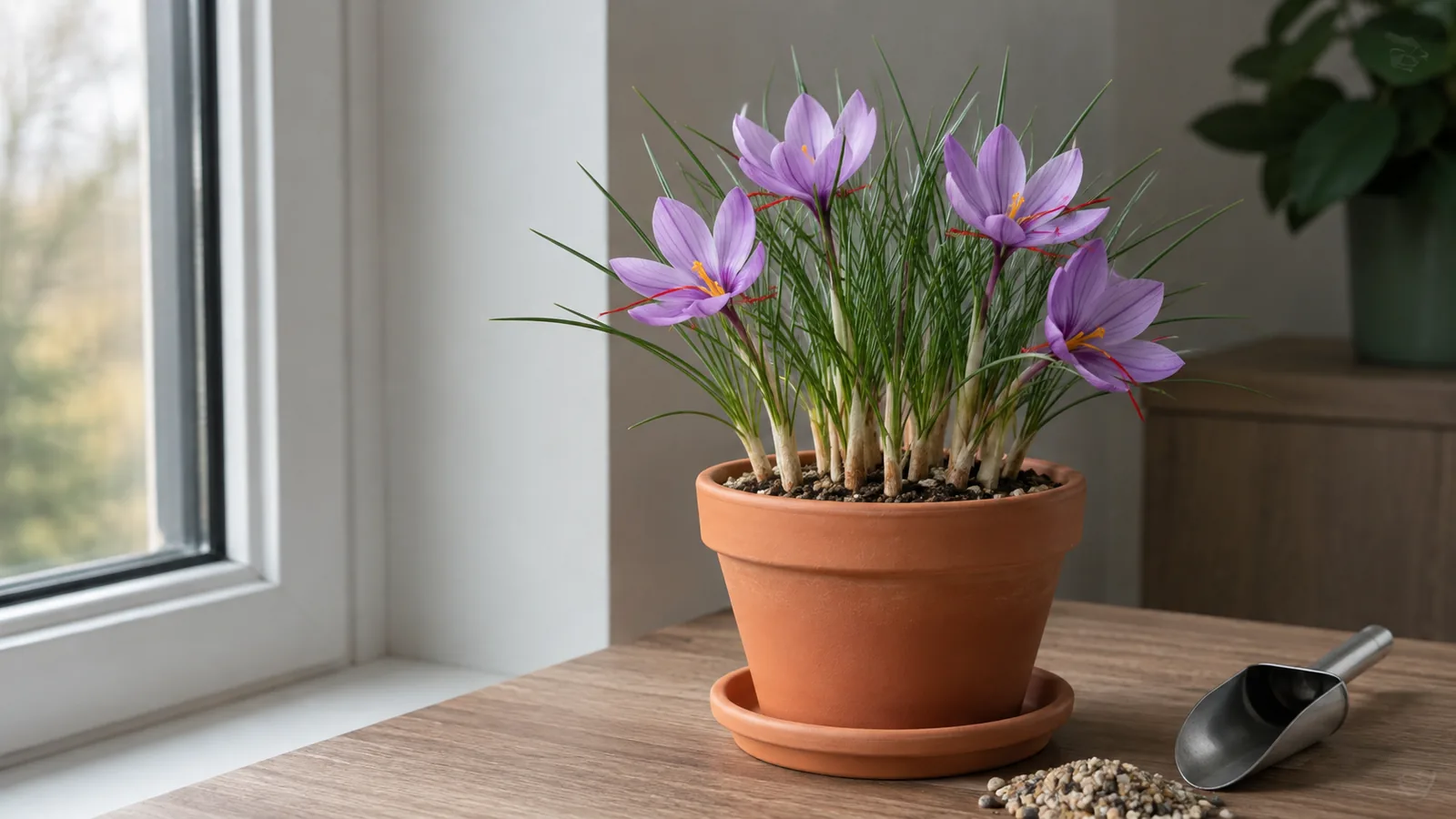
The culinary spice comes from Crocus sativus, an autumn-flowering crocus. Although sellers often call them saffron bulbs, they are technically corms. Buy named Crocus sativus corms from a reputable bulb nursery rather than collecting an unidentified “autumn crocus.”
That distinction is important. The Royal Horticultural Society’s saffron guide warns that Crocus sativus should not be confused with poisonous Colchicum, which is also called autumn crocus or meadow saffron. Only the red stigmas from correctly identified saffron crocus flowers are harvested as the spice; corms and other plant parts are not food.
Choose a bright but seasonally cool position
Saffron crocus needs abundant light. A clear south-facing window may work where it receives several hours of direct sun, while a properly positioned grow light can supplement short or overcast days. Watch the plant rather than trusting a fixed six-hour rule: pale, stretched leaves indicate that the light is not strong enough.
Indoor growing does not mean keeping the pot at normal living-room temperature all year. Saffron is often described as a Mediterranean plant, and the useful lesson is its seasonal pattern: it grows through the cooler months and rests after its foliage dies back. A bright spare room, porch or frost-protected greenhouse often provides a better cycle than a shelf above a radiator. There is no universal requirement to hold the pot at exactly 60–70°F (15–21°C); light, corm condition and seasonal temperature change matter together.
Use a container that can drain freely
Choose a stable pot with unobstructed drainage holes. A depth of roughly 6–8 inches can accommodate a small display, but a deeper container gives more room for the recommended planting depth and for roots below the corms. Width matters too because the corms multiply over time. Do not pack a large number into a small decorative bowl simply for a full first-season display.
A free-draining, loam-based potting mix amended with horticultural grit is more predictable than bringing garden soil and sand into the house. Builder’s sand is not a substitute for horticultural grit. The aim is a mix that accepts water evenly and then releases the excess; a layer of stones cannot compensate for a pot with no drainage hole.
When and how to plant saffron corms
Plant healthy, firm corms in late summer, soon after they become available. Set them with the pointed growing tip upward. The RHS recommends planting saffron corms at least 10–15cm (4–6 inches) deep and about 10cm (4 inches) apart in the ground. In a container, use those measurements as a practical reference, then make sure there is still growing medium beneath each corm and space for water to move between them.
Water the pot after planting so the mix settles around the corms, then let excess water drain completely. Label it with the species and planting date. A first-year flowering display is possible, but it may come later or be lighter than expected while the corms establish.
Water according to growth, not a calendar
The instruction to keep saffron “moist but not waterlogged” needs some interpretation. During active leaf growth, check the mix a few inches down and water when it is beginning to dry rather than giving a small daily splash. Empty any saucer or cachepot after drainage. Constant saturation deprives roots of air and raises the risk of corm rot.
After the foliage yellows and dies back naturally, the plant enters summer dormancy and uses much less water. Keep the dormant corms on the dry side while preventing the pot from being soaked by routine houseplant watering. Resume cautiously as seasonal growth returns. The exact interval will change with pot material, room temperature, light, plant size and growing mix, so “water every seven days” would be poor advice.
What growth should look like through the year
Autumn flowers may emerge before or alongside the narrow, grass-like leaves. The plant then keeps its foliage through winter and into spring. Let those green leaves remain until they yellow naturally; they are replenishing the corm for the next cycle. Cutting them early can trade a tidier pot for weaker future flowering.
During summer dormancy the empty-looking pot is not necessarily dead. Keep its label in place and avoid filling the same container with a thirsty summer plant. Over several seasons the original corm forms cormlets. If the pot becomes crowded or flowering declines, lift and divide the dormant corms, discarding any that are soft or diseased and replanting the sound ones in fresh, free-draining mix.
How to harvest the saffron threads
Harvest flowers after they open, ideally while they are still fresh. Early morning can be convenient because the blooms are cool and have not spent a day drying indoors, but careful, prompt handling matters more than treating one clock time as compulsory.
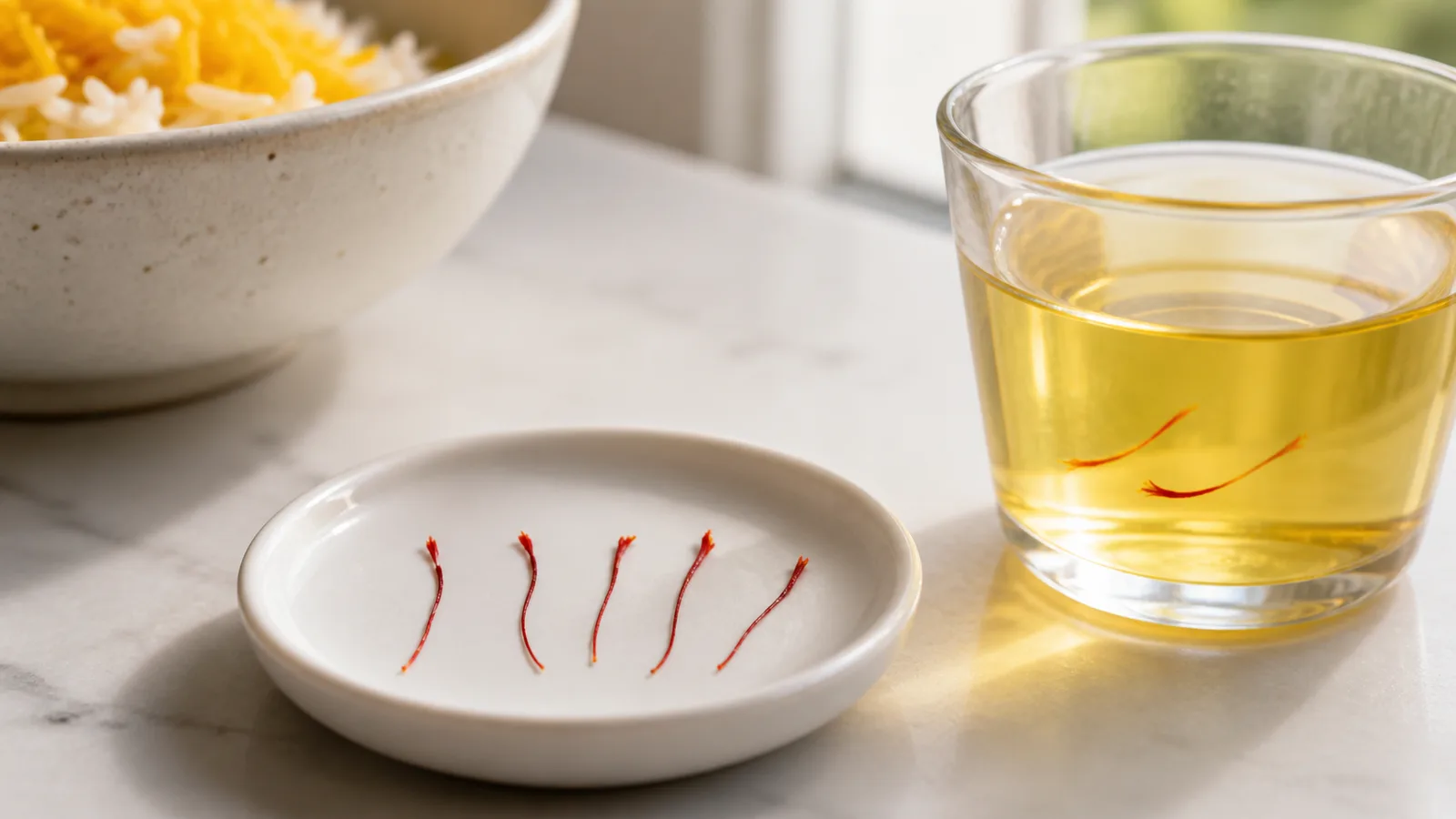
Each saffron flower carries three long red stigmas. Use clean tweezers to separate those from the shorter yellow-orange pollen-bearing parts. Handle one flower at a time so plant debris and damaged tissue do not enter the batch.
Spread the stigmas in a single layer on clean kitchen paper over a rack and allow them to dry gently at room temperature. The RHS advises at least 24 hours, followed by storage in an airtight container away from light once the threads are completely dry. If they still feel damp, do not seal them.
How much saffron will an indoor pot produce?
Expect a small culinary harvest, not a household supply. The RHS estimates that about 150 flowers are needed for one gram of dried saffron. A modest pot may therefore yield enough threads for a dish or two even when the flowers are healthy.
That does not make the project pointless. Growing a few corms lets you see exactly which part of the flower becomes the spice and gives you a carefully handled, traceable harvest. If quantity is the priority, a sunny outdoor bed or a much larger protected growing area is more practical. Our saffron cultivation tips cover the broader field-to-storage decisions.
Troubleshooting an indoor saffron pot
Leaves appear but there are no flowers: the corms may be small, newly planted, crowded, too warm or short of light. Keep healthy foliage until it dies back, review the position and allow the plant another seasonal cycle before discarding it.
The leaves are long, pale or leaning: increase light gradually or move the grow light closer within its manufacturer’s safe operating range. Rotate the pot for even exposure, but do not move a stressed plant abruptly from shade into intense sun.
The mix smells sour or corms turn soft: stop watering and inspect drainage. Remove rotted material so it does not remain against healthy corms. A pot without working drainage should be replaced rather than managed by watering less.
Flowering weakens after several years: crowding and depleted growing mix may be involved. Divide during dormancy, refresh the medium and give the largest sound corms adequate spacing.
Is growing saffron indoors worth it?
It is worthwhile for a curious home grower who has a bright, cool place and is happy with a very small harvest. Success depends less on pampering the plant in constant warmth and more on respecting its cycle: late-summer planting, autumn flowering, winter leaf growth, natural spring dieback and a comparatively dry summer rest.
Start with correctly identified Crocus sativus, a draining container and realistic expectations. Those three choices prevent most of the disappointment that comes from treating saffron like an ordinary year-round windowsill herb.