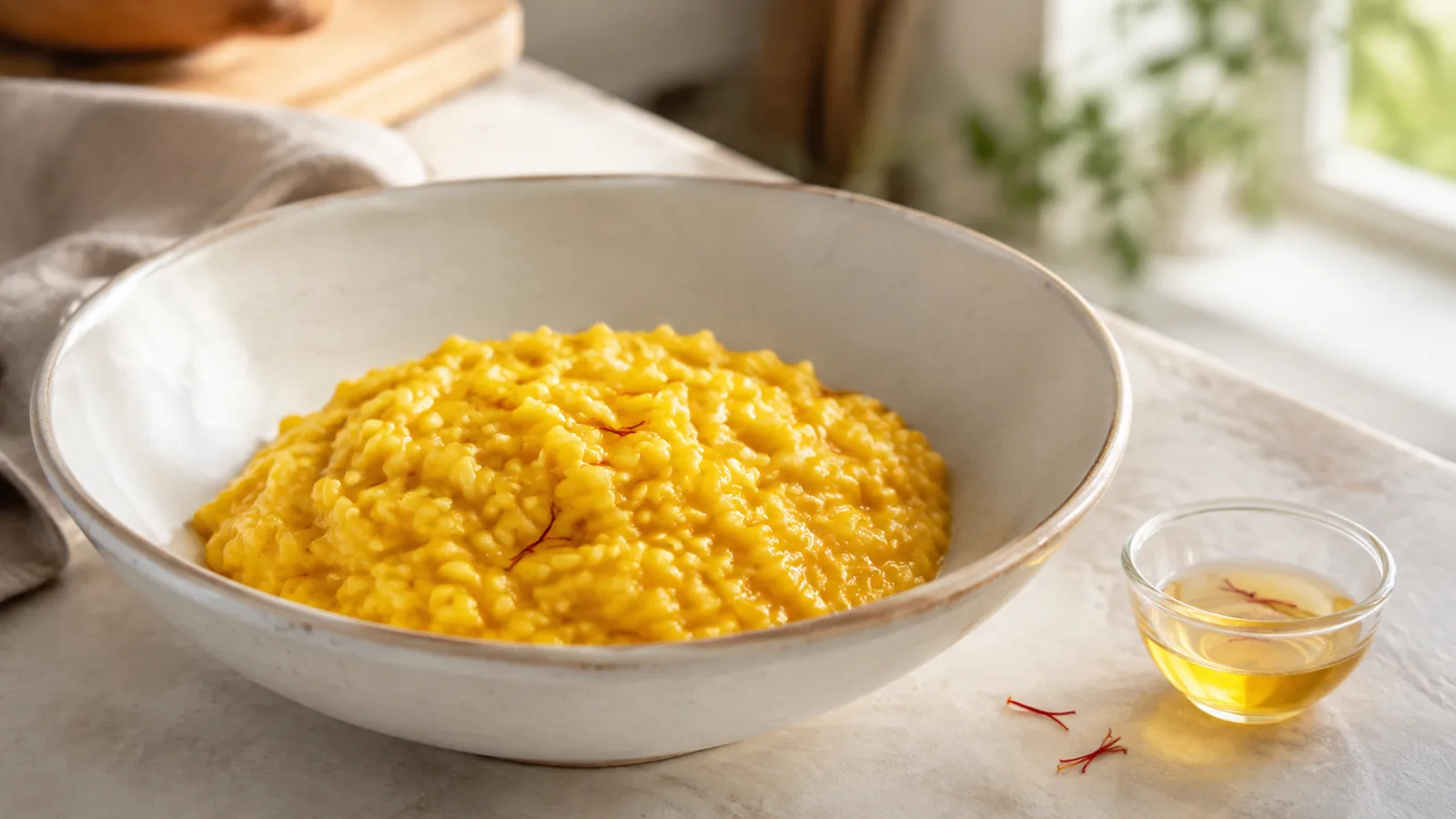
Yes, you can add saffron to eggs. Bloom a small pinch of threads in warm water or milk, whisk the golden liquid into the eggs, then cook gently. This gives scrambled eggs, omelettes and baked saffron egg dishes an even colour and a delicate aroma without leaving dry threads in one bite.
Can You Add Saffron to Eggs?
Eggs have enough richness to carry saffron, but their flavour is mild enough for the spice to remain noticeable. The pairing works at breakfast, in a simple supper or as part of a more elaborate dish. What matters is restraint: too much saffron can taste bitter or medicinal, while a modest amount adds a floral, earthy fragrance and a warm golden hue.
Saffron does not make every egg recipe taste sweet. Its character is better described as aromatic, lightly bitter and hay-like, with the exact result depending on the threads, dose and cooking method. If you want a fuller description before seasoning, see what flavour saffron adds.
The Best Way to Prepare Saffron for Eggs
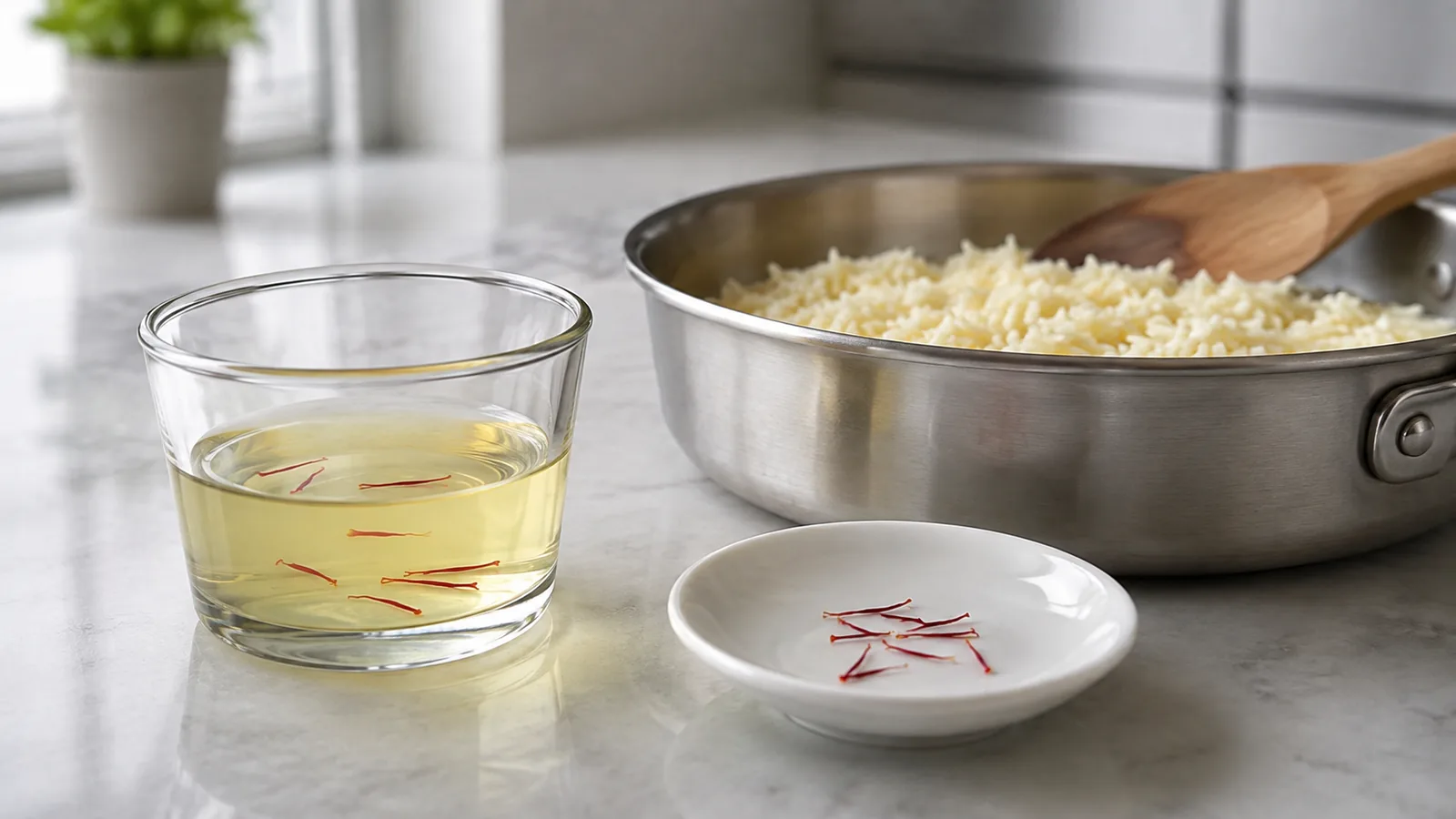
Crushing and blooming the threads distributes both colour and aroma more evenly than dropping whole dry threads straight into the pan.
- Use about 10 to 15 saffron threads for three eggs. A small pinch is enough for a clear saffron presence.
- Gently crush the threads between clean fingers or with a mortar and pestle. They need not become a fine powder.
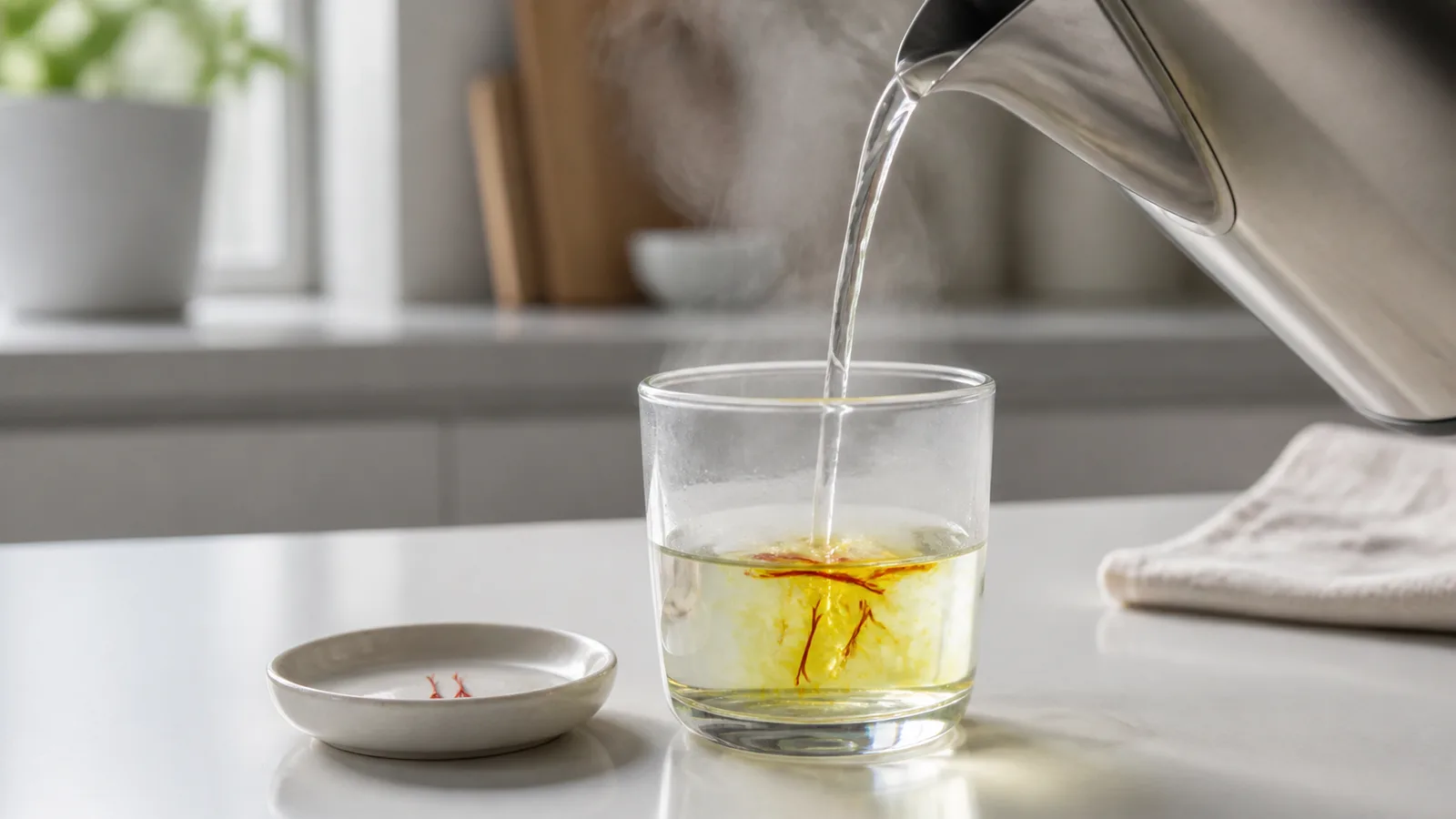
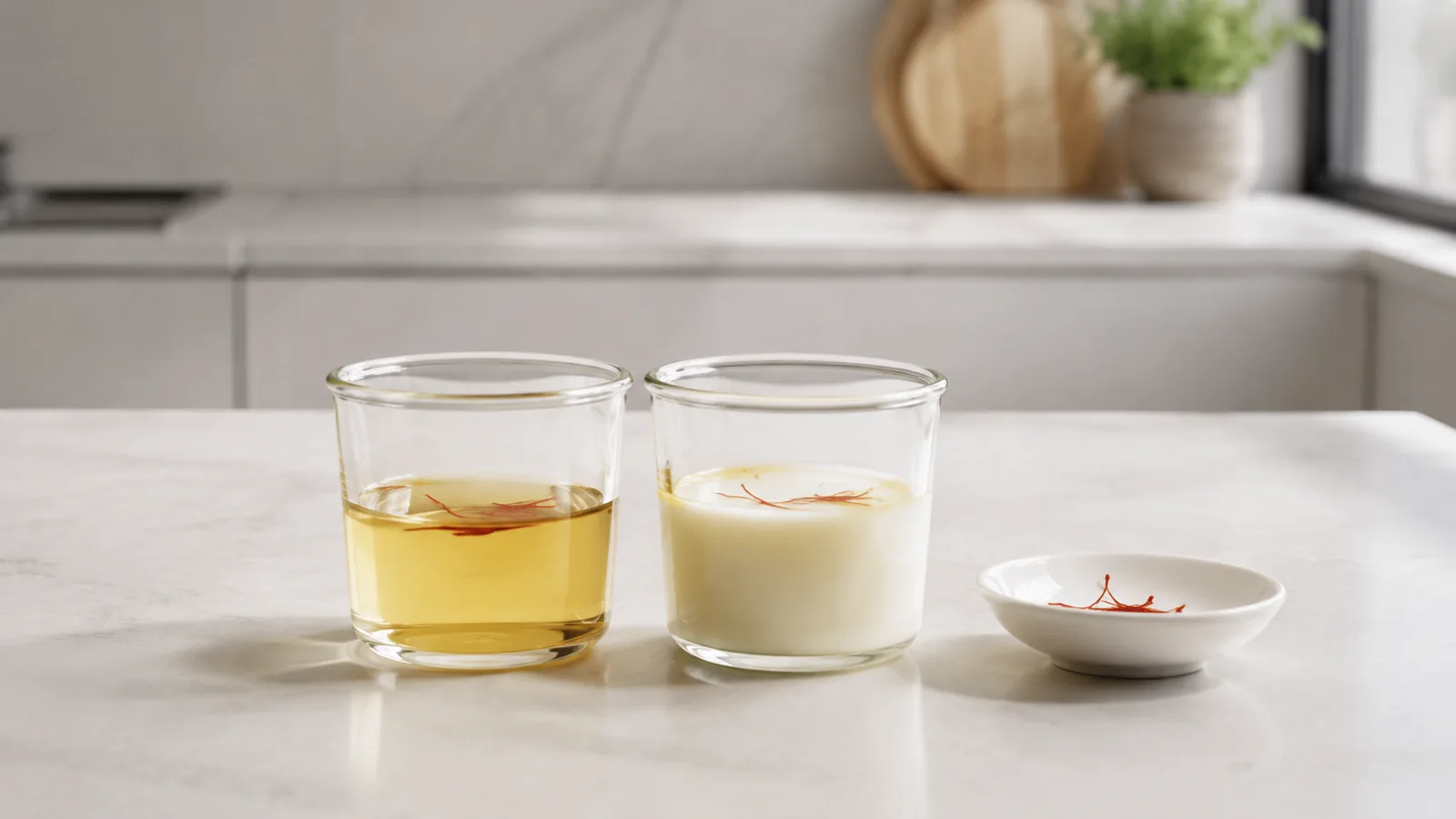
- Add one tablespoon of warm, not boiling, water or milk.
- Leave the mixture for 10 to 15 minutes, until the liquid turns gold and becomes fragrant.
- Whisk the infusion into the beaten eggs just before cooking.
Milk gives a slightly rounder result in scrambled eggs, while water keeps the flavour cleaner and works in any recipe. The same blooming principle applies when you add saffron to other dishes.
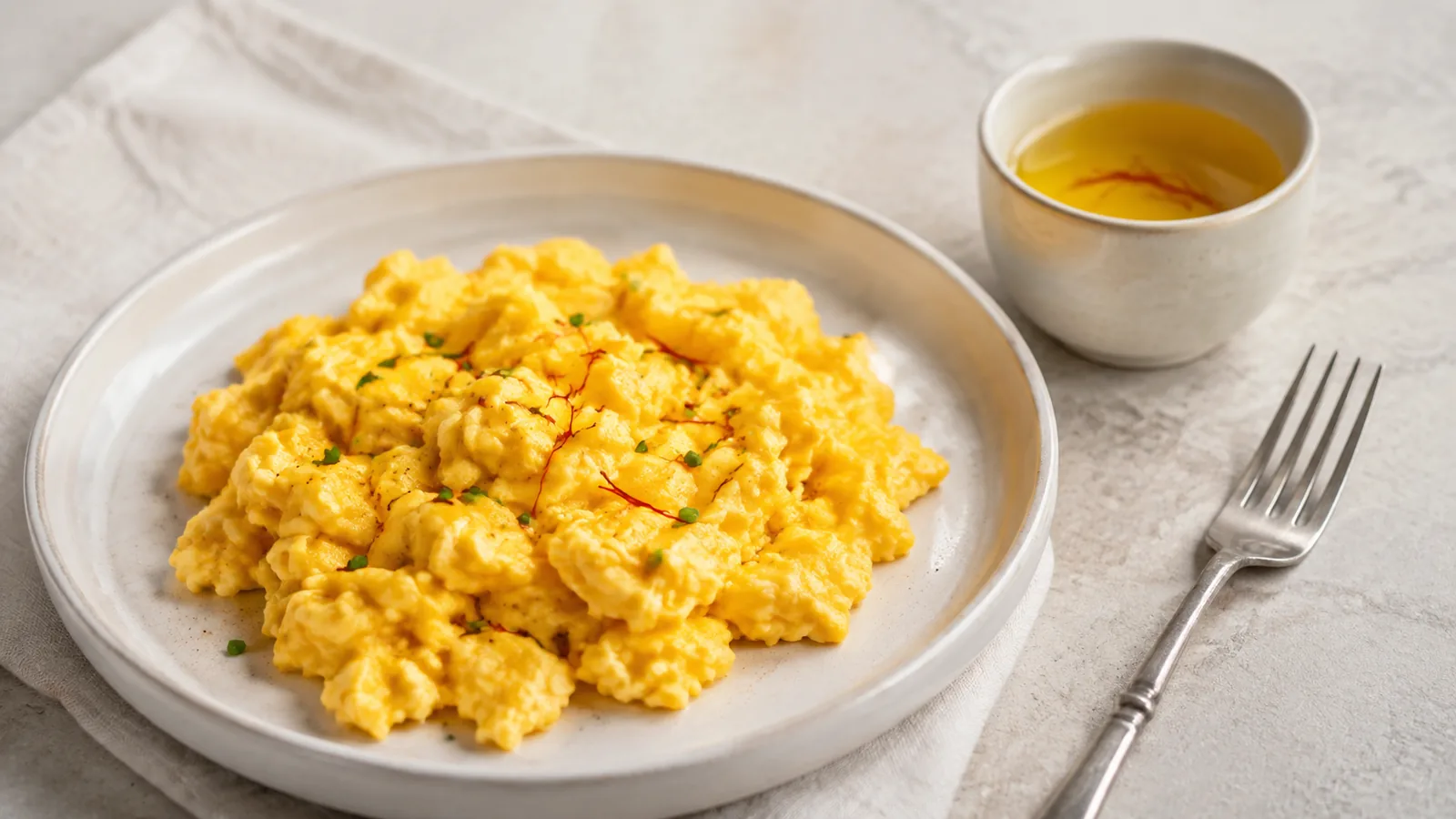
Simple Saffron Scrambled Eggs
Ingredients for Two Servings
- 3 large eggs
- 10 to 15 saffron threads
- 1 tablespoon warm water or milk
- 1 teaspoon butter or olive oil
- A small pinch of salt
- Black pepper, chives or parsley, if wanted
Method
- Bloom the saffron as described above.
- Break the eggs into a bowl, add the saffron liquid and salt, and whisk until the colour is even.
- Warm the butter in a non-stick pan over low to medium-low heat.
- Add the eggs. Stir slowly, drawing the cooked curds from the edge towards the centre.
- Remove the pan while the eggs are still slightly glossy. Residual heat will finish them without making them dry.
- Taste before adding pepper or herbs so they do not hide the saffron.
The result should be soft and aromatic, not strongly perfumed. If the eggs are pale but pleasantly fragrant, that is not a failure; colour intensity varies by dose and saffron quality.
Using Saffron in an Omelette
For an omelette, bloom the same small pinch and whisk it into two or three eggs. Keep the filling simple. Soft cheese, mushrooms, spinach, herbs or a little cooked potato can work, but several forceful ingredients at once will mask the spice.
Cook the omelette over moderate heat and fold it while the centre is still tender. High heat browns the egg quickly and makes its cooked flavour dominate the saffron. If you want visible threads as a garnish, reserve two or three from the measured pinch rather than adding an extra dose.
Baked and Festive Saffron Egg Dishes
Saffron also suits frittatas, savoury custards and herb-rich egg dishes. In a frittata, blend the infusion into the egg mixture before it goes into the pan so each slice has the same colour and aroma. Potatoes, leeks, peas and mild cheeses are dependable partners.
Persian cooking offers another direction: traditional egg mixtures can include generous fresh herbs, barberries or walnuts, with saffron used as one aromatic note rather than the whole identity of the dish. These uses connect a simple ingredient pairing with a wider food culture. The ingredient list should determine the dose. A strongly herbed mixture may need a little more infusion than plain scrambled eggs, but adding many dry threads is still not the answer.
When Should You Add the Saffron?
For scrambled eggs and omelettes, add the bloomed saffron to the raw beaten eggs. That produces the most even result. For a baked dish, mix it into the liquid portion before combining everything else. Adding the infusion near the end can leave streaks and uneven flavour, although a few reserved threads may be placed on top for appearance.
Avoid pouring cold liquid into eggs already cooking in the pan. It can interrupt cooking and make the texture watery. Bloom first, cool the tablespoon of liquid if it feels hot, then whisk.
Common Mistakes
- Using too much: more saffron does not always mean better flavour. Bitterness can take over.
- Skipping the bloom: dry threads release their colour and aroma unevenly during a short egg cook.
- Using boiling liquid: warm liquid is sufficient and is easier to add without warming the raw eggs.
- Cooking over fierce heat: tough, browned eggs can overwhelm the delicate spice.
- Adding too many strong flavours: heavy chilli, smoked meat or a large amount of pungent cheese may make the saffron difficult to notice.
Choosing Saffron for Egg Recipes
Whole red threads are easy to inspect, measure and bloom. They should smell distinctive before use and release colour gradually in warm liquid. Store them sealed, dry and away from direct light. If your current saffron has little aroma even after blooming, adding more may only deepen the colour; fresher threads are usually the better solution.
When you need a new supply, compare clearly described options in the saffron shop and choose a quantity you can keep well sealed.
Conclusion
Saffron with eggs is a practical combination, not merely a decorative one. Bloom a small pinch, mix it evenly into the raw eggs and use gentle heat. Start with simple scrambled eggs or an omelette, then adjust the amount for larger baked or herb-filled dishes. The goal is a soft egg dish with a recognisable saffron aroma, balanced flavour and natural golden colour.