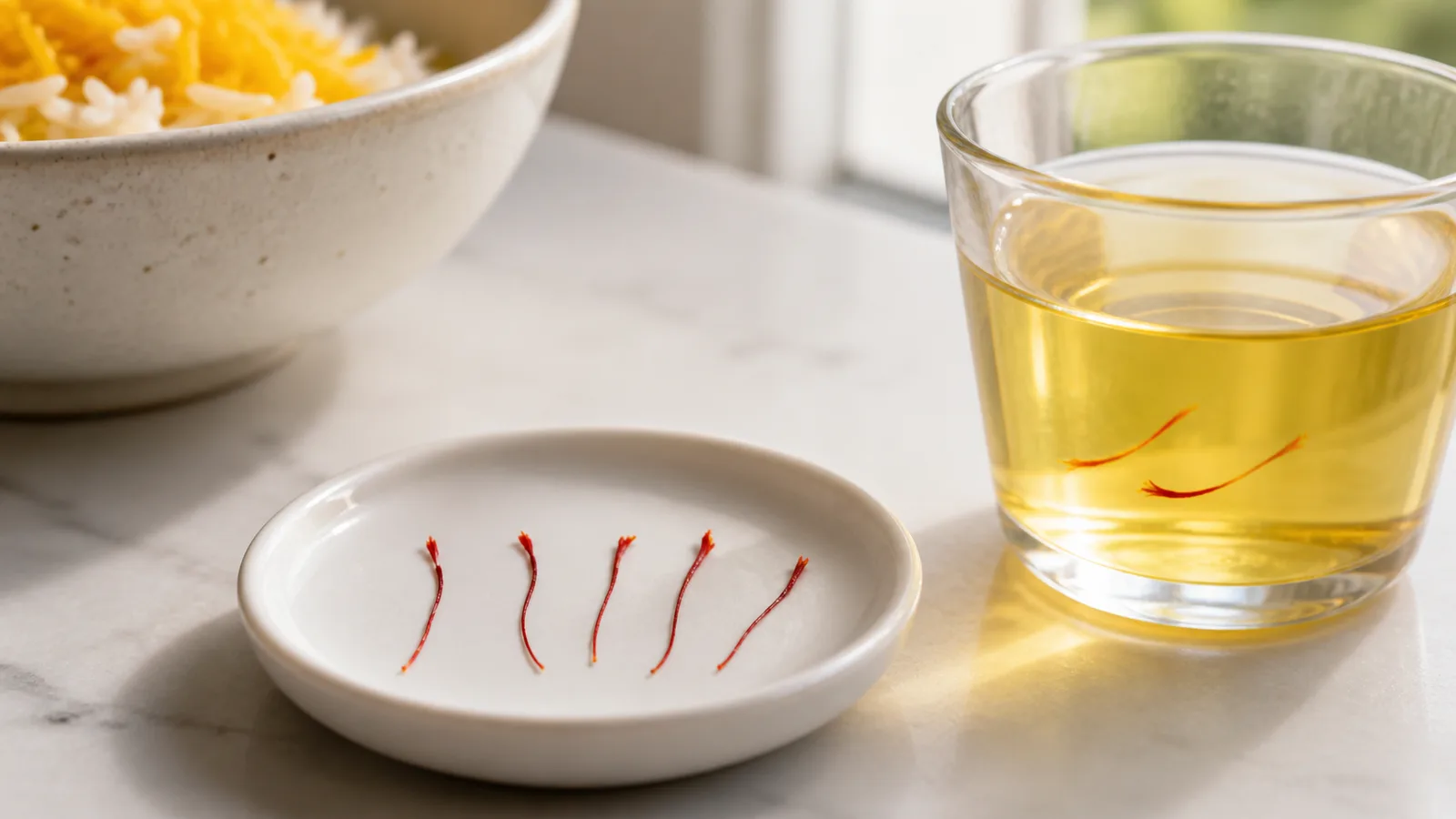
Saffron is the usual answer to “What is the rarest spice in the world?” because every gram requires a remarkable number of flowers and careful hand work. Strictly speaking, however, there is no official global rarity ranking. Saffron is best described as one of the rarest and most valuable spices in ordinary international trade.
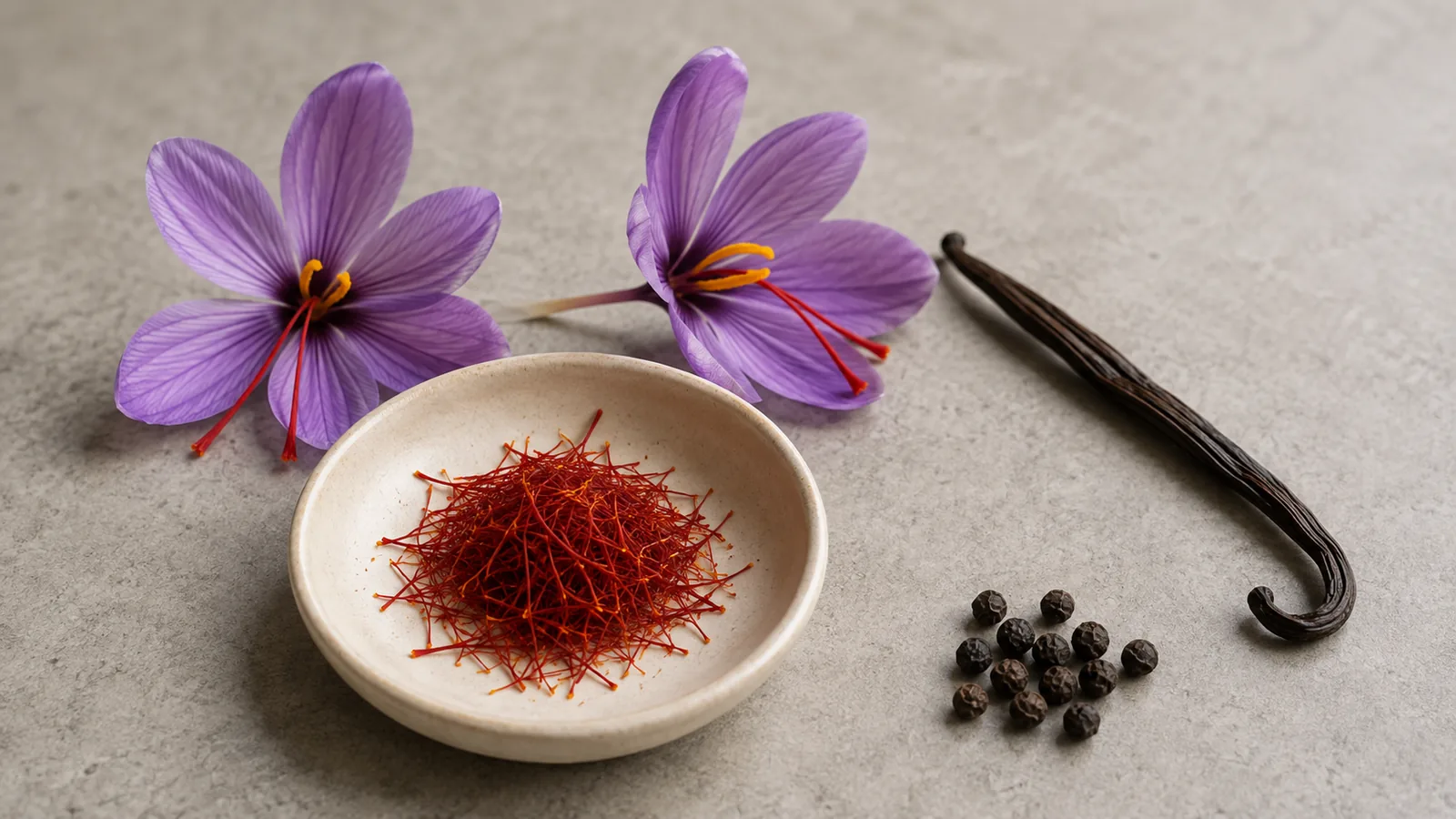
The Rarest Spice in the World
Rarity can mean several things. A spice may have a tiny harvest, grow in a narrow region, appear for only a short season or require so much skilled labour that little finished product reaches the market. Another spice may be produced in greater volume but sell for more because a particular grade is exceptional.
That distinction matters when comparing lists of rare spices in the world. There is no central authority that measures every spice by the same standard. Saffron nevertheless stands out because its scarcity is easy to understand: the usable part is only a small portion of each flower, and separating it remains labour-intensive.
Why Saffron Is So Valuable
Saffron is made from the dried red stigmas of Crocus sativus. Each flower carries only three of these slender parts. The blossoms emerge during a short harvest period, after which the stigmas must be separated and dried with enough care to preserve their colour, aroma and taste.
The UN Food and Agriculture Organization’s account of saffron production describes a process handled by hand and explains how many stigmas are needed for even a small finished quantity. The exact yield varies by crop and method, but the underlying reason for the price does not: most of the flower never becomes spice.
A Short Harvest Window
Saffron flowers do not wait for a convenient industrial schedule. Commercial quality is concentrated in limited growing regions with suitable conditions, where growers must collect blossoms while the crop is flowering and process them promptly. A delay can affect the condition of the delicate plant material. This concentrates a great deal of work into a brief part of the year.
Work That Is Difficult to Automate
The stigmas are small and easy to damage or contaminate with other flower parts. Picking, separating, drying, grading and packing all require control. Machinery can support parts of production, but it does not turn the crop into an ordinary high-volume field spice.
Quality Differences Within Saffron
Not every thread has the same value. The ratio of red stigma to pale style, clean handling, moisture, storage and sensory strength all matter. Whole threads also allow a buyer to inspect shape and colour more easily than an unidentified powder. This is why “saffron price” is not one universal number.
For a wider picture of where the crop is grown and how output is measured, see our current saffron production statistics.
Does Rare Mean the Same as Expensive?
No. Scarcity can raise cost, but price also reflects quality, demand, origin, season, labour, transport and the unit being sold. A spice produced in a very small region may be genuinely rare without attracting saffron-level prices. Conversely, a famous spice can be expensive even when it is widely available in lower grades.
This is also why “rarest spice” and “most expensive spice” should not be treated as perfect synonyms. Saffron is commonly described as both, yet the first is a broad comparison and the second depends on grade and market. Record sales are different again.
Other Rarest Spices in the World
Several ingredients appear beside saffron in discussions of rarity. They do not form a fixed league table, but each illustrates a different reason supply can be limited.
Natural Vanilla
Vanilla beans come from cured orchid pods. Producing good natural vanilla involves successful flowering and pollination, harvesting mature pods and a long curing process. Vanilla itself is available worldwide, but fine beans of a named origin, with strong aroma and careful curing, are much less ordinary than vanilla flavouring.
Regional Peppers
Some peppers are valued because they express a recognised place and production tradition. Kampot pepper from Cambodia is a familiar example. Its significance is tied to origin and method, so it is more useful to compare authentic regional pepper with like-for-like products than with anonymous peppercorns sold in bulk.
Small-Production and Wild-Gathered Spices
Long pepper, grains of paradise and certain wild-gathered aromatics may be difficult to find in a local shop even though they are not always expensive per gram. Their rarity is often commercial or regional: modest production, a specialised customer base and limited distribution.
These examples explain why lists of the rarest spices can differ. One writer may measure retail price, another annual supply, and another the difficulty of finding an authentic regional grade.
What Saffron Adds in Cooking
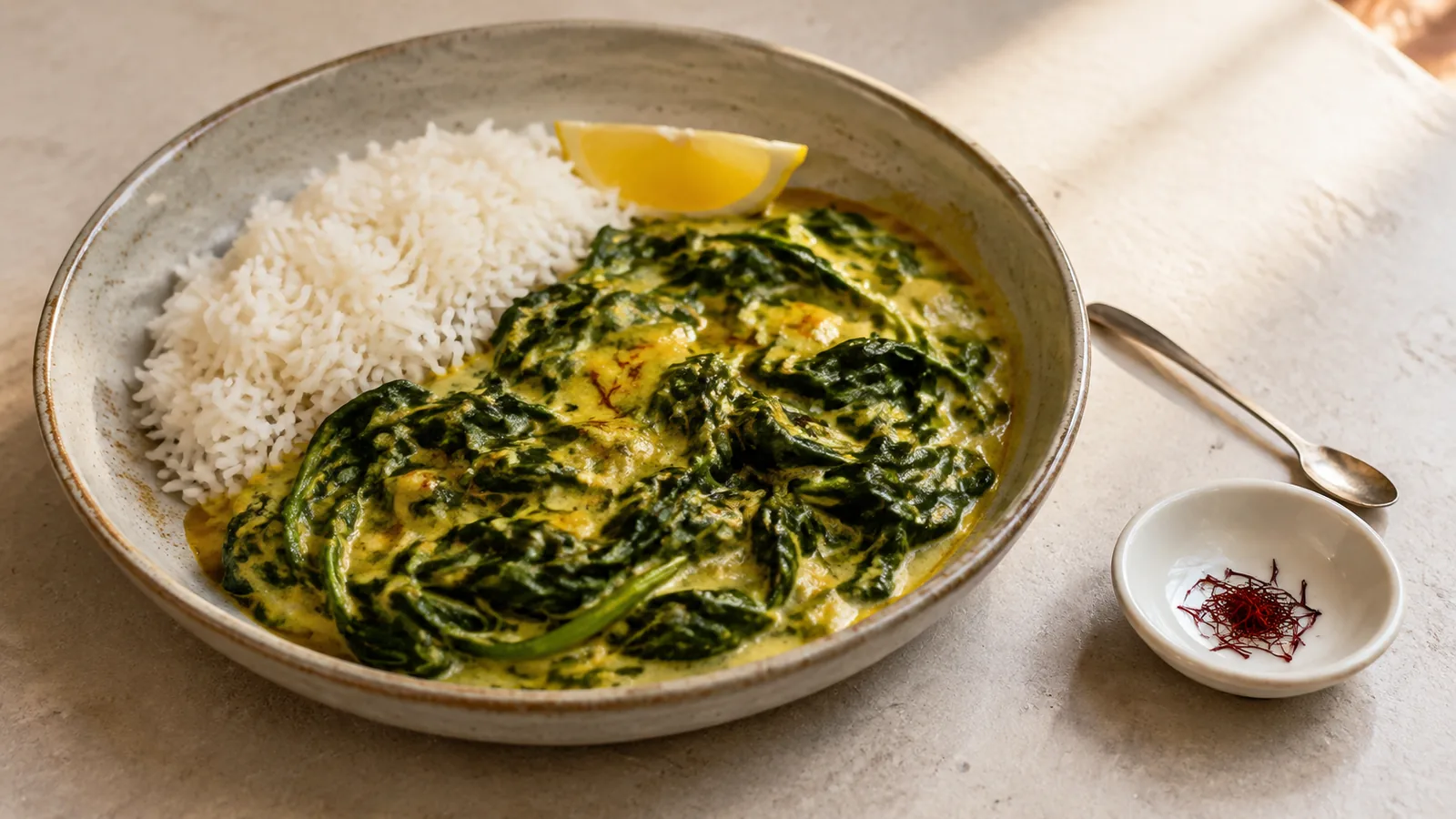
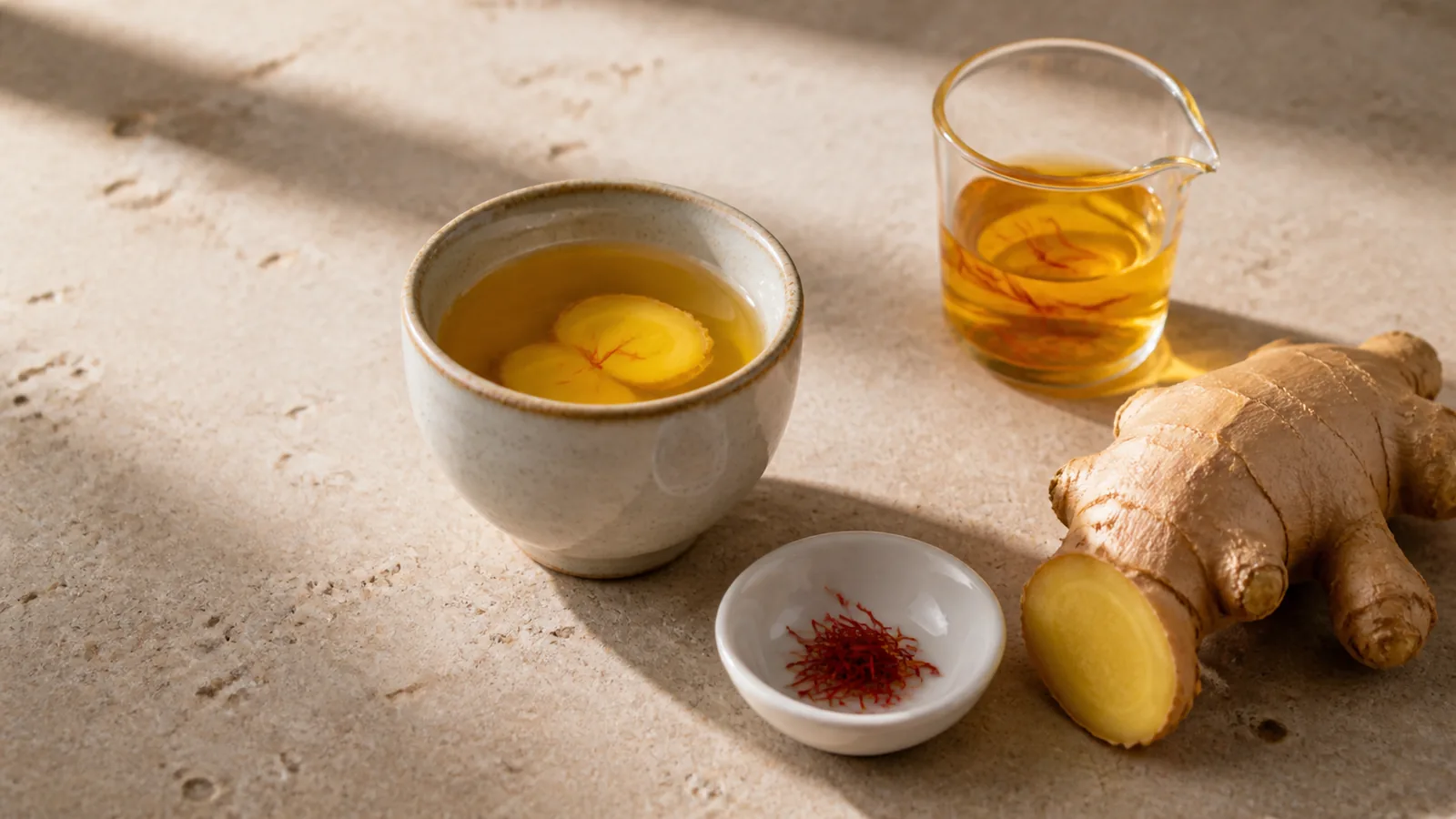
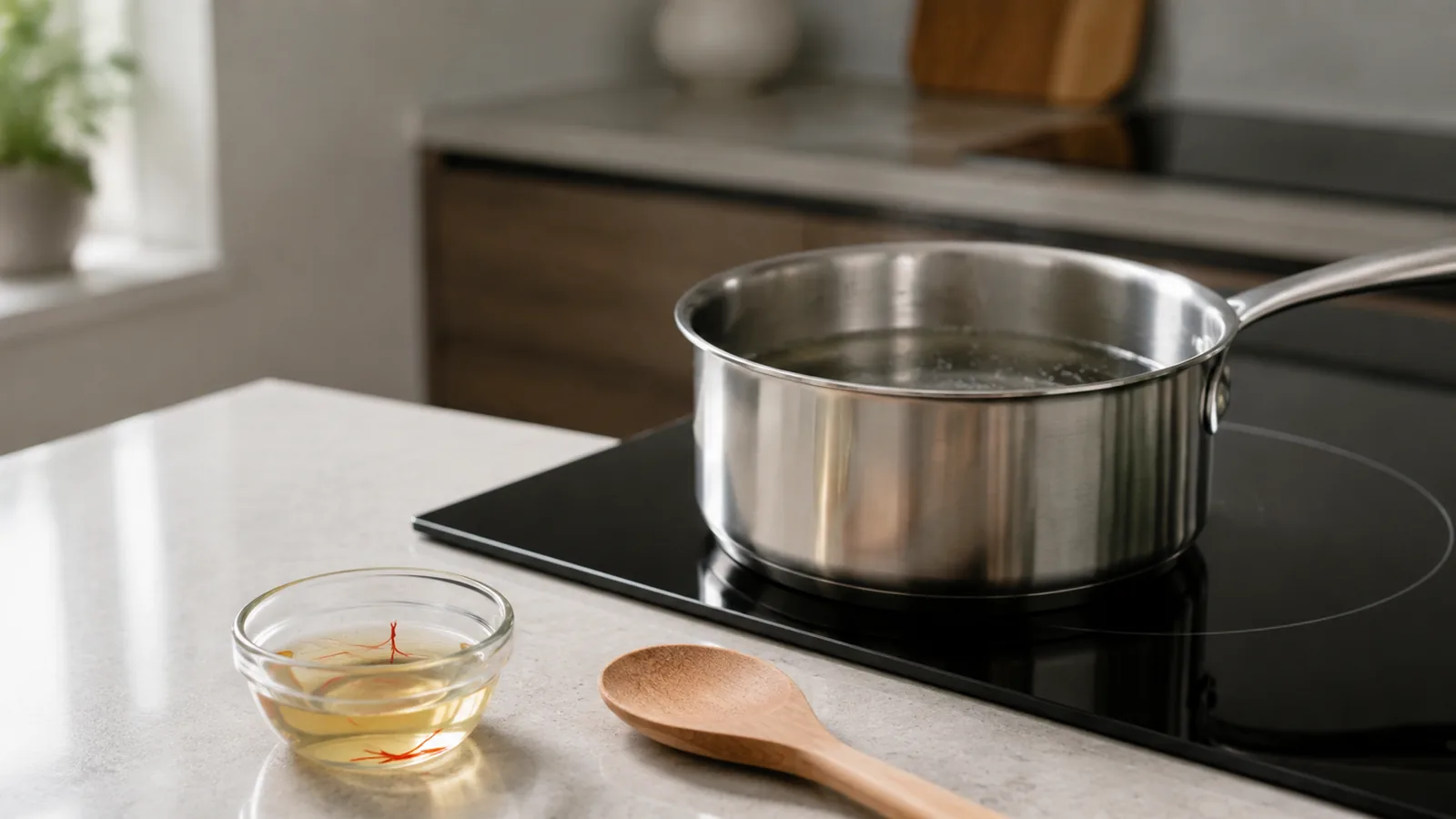
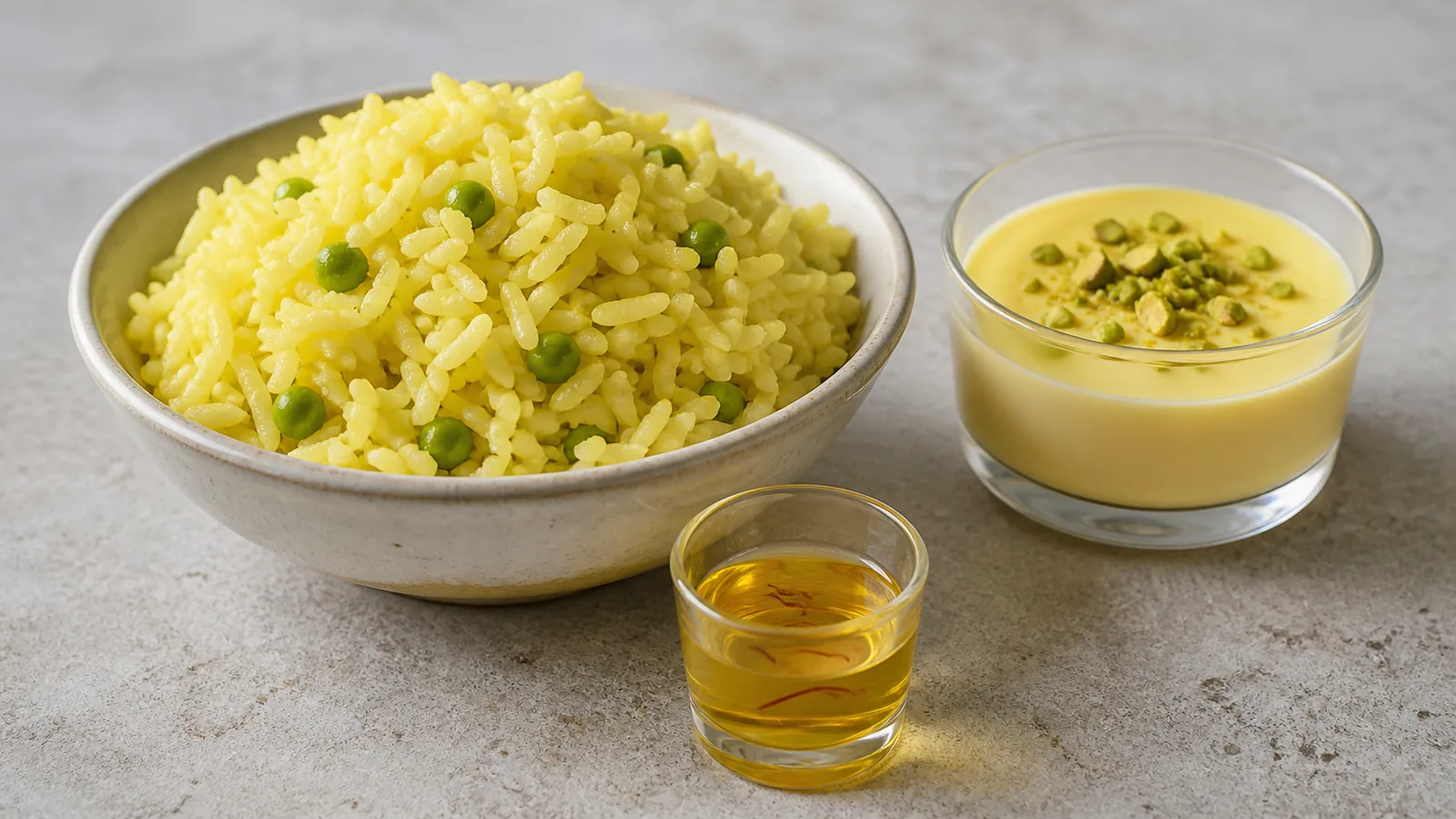
Saffron’s value is not based on scarcity alone. When bloomed in warm water or milk, good threads release a golden colour and an aroma that can seem floral, hay-like and gently earthy. The taste is lightly bitter rather than simply sweet. Used carefully, it adds depth without turning the dish into perfume.
Rice, stews, breads, desserts such as custards, and beverages all make room for that character. Because only a small pinch is normally needed, an expensive packet can season several dishes. This separates saffron from a luxury ingredient that is bought only for display.
How to Buy a Rare Spice Sensibly
- Check the exact product: species, origin, grade and form are more informative than a claim that something is “rare.”
- Prefer a usable quantity: aroma fades with poor or prolonged storage, so an oversized packet is not automatically better value.
- Look beyond colour: dyed fibres and weak material can appear bright. Aroma, thread structure and gradual infusion matter too.
- Compare equivalent forms: whole threads should not be priced against a blend or an unidentified powder as though they were identical.
- Store it well: use a tightly closed container kept dry, cool and away from light.
If you are buying saffron for cooking, the all-red saffron collection shows thread-form options that are easier to inspect and portion.
Why Saffron Is Still the Practical Answer
Among the most valuable spices, saffron has an unusual combination of constraints: three stigmas per flower, a short bloom, demanding manual separation and a small dried yield. It also has a clear culinary purpose in aroma, flavour and vibrant golden colour.
So, what is the rarest spice? There is no scientifically fixed winner, but saffron remains the most defensible everyday answer when rarity, production effort, price and global culinary recognition are considered together. It has earned the name “red gold” without needing exaggerated claims about exclusivity or health.
If you want to compare it with luxury foods rather than spices alone, our guide to three of the world’s most expensive foods explains why the measurement changes the answer.