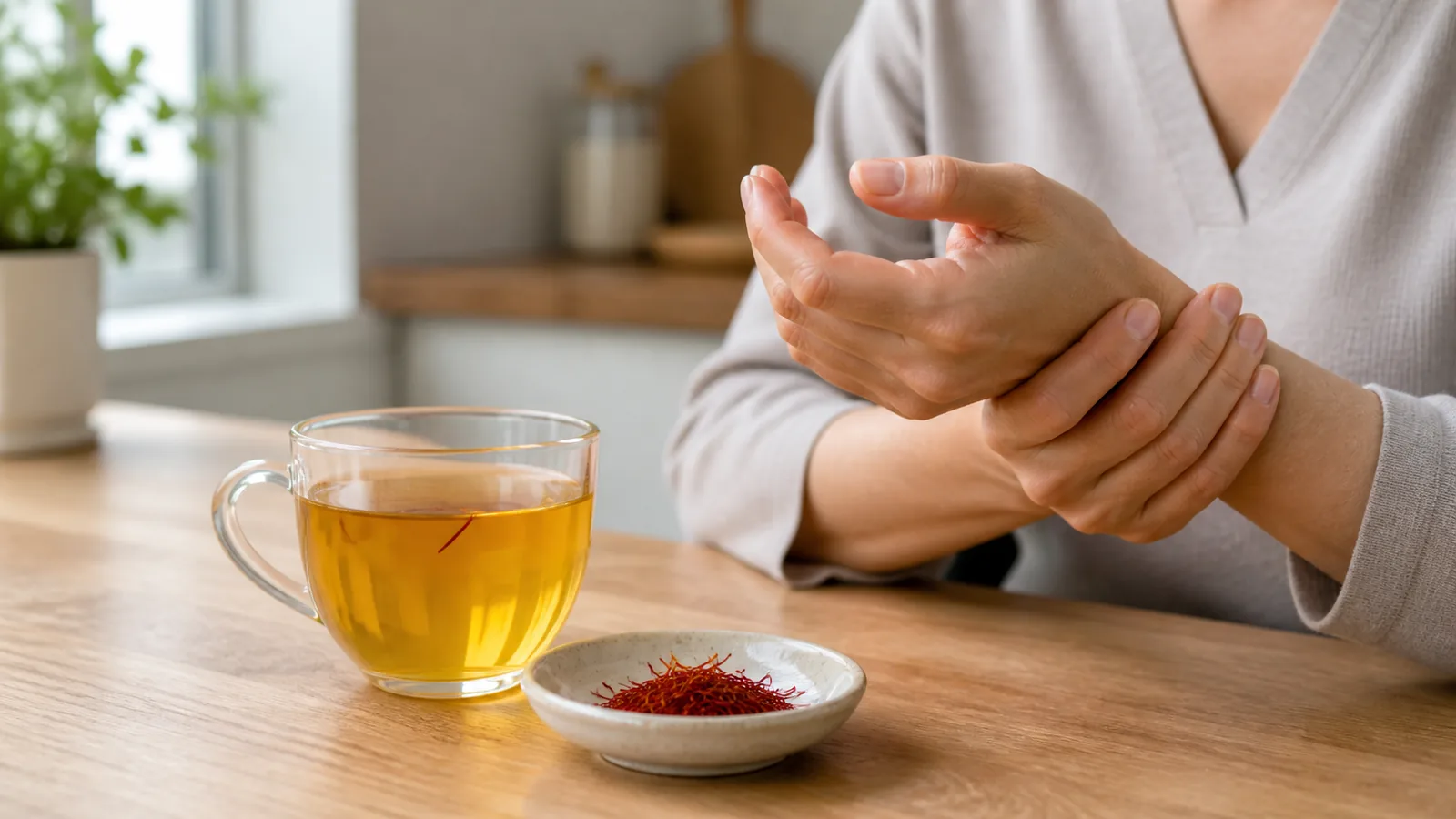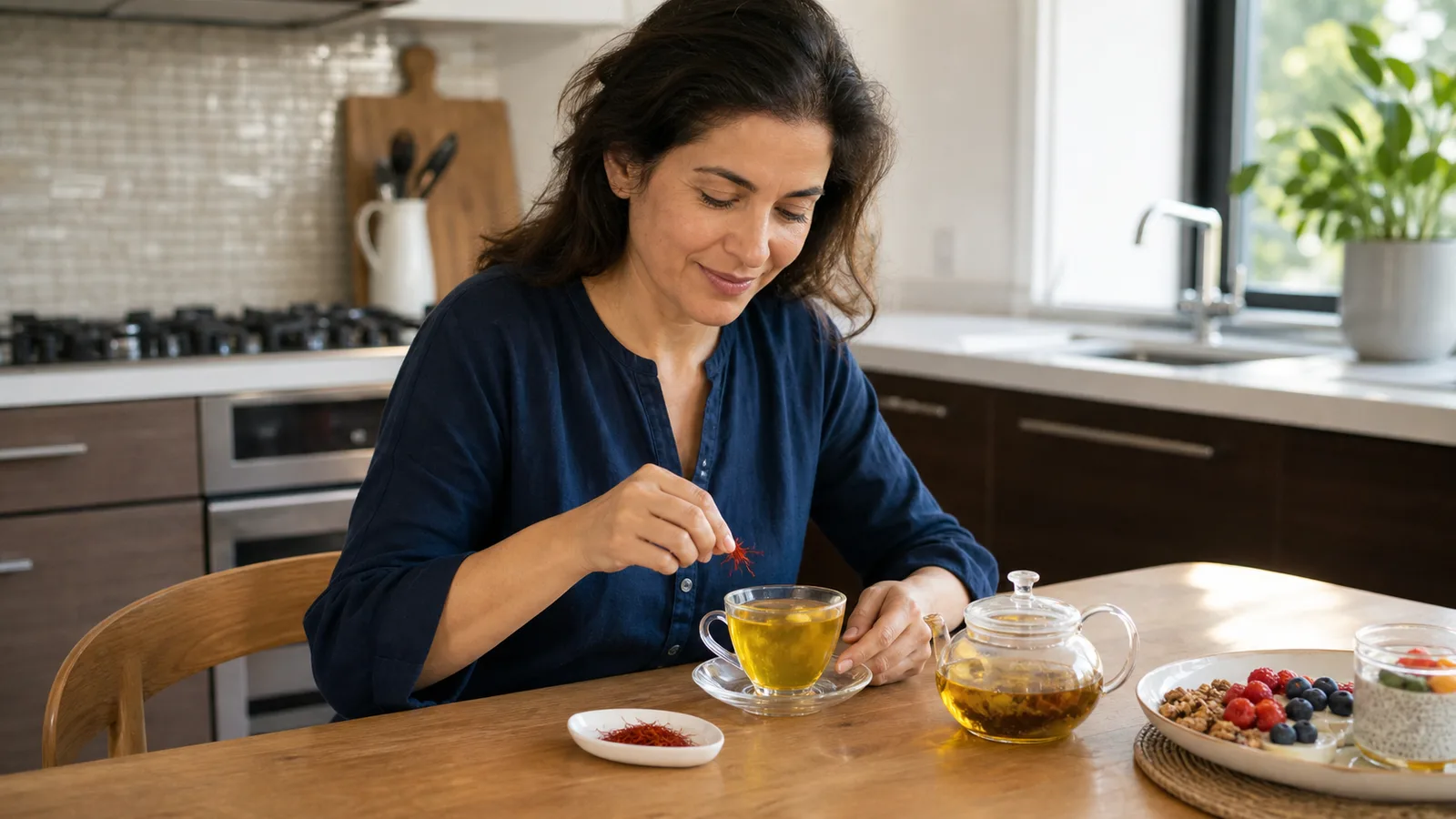
The best-supported potential benefits of saffron for women concern premenstrual symptoms, period pain, mood and some aspects of sexual function. Even in these areas, the studies generally use standardized saffron or extracts for a set number of weeks. They do not show that a cup of tea will treat a medical condition, and the evidence is not equally strong for every claim associated with the spice.
That distinction matters. Saffron is a valued food with a long culinary history, while a capsule or concentrated extract is an active supplement. This guide looks at what human research suggests, where the limits are, and which popular claims should not be treated as established benefits.
Benefits of saffron for women: what the evidence supports
The research can be divided into three practical categories:
- Promising human evidence: premenstrual syndrome (PMS), dysmenorrhea or period pain, depressive symptoms, and selected measures of female sexual function.
- Small effects that may not be clinically important: changes in blood pressure and some other cardiovascular risk markers.
- Not established: regulating every menstrual cycle, preventing anaemia in pregnancy, improving fetal growth, treating unusual vaginal discharge, “purifying” blood, or preventing breast cancer.
A promising result is a reason for better research, not permission to turn a food into a cure. Study participants, preparations and outcome measures vary, and many trials are short.
Saffron, PMS and period pain
This is one of the clearer women-specific areas of saffron research. A 2026 systematic review and meta-analysis pooled randomized trials of saffron for PMS and dysmenorrhea. It found reductions in symptom scores for both conditions. The result is encouraging, although it still comes from a limited group of trials rather than years of large, diverse studies.
The research concerns measured preparations taken under a study protocol. It does not establish that two or three cups of saffron tea before a period will regulate the cycle, intensify or reduce bleeding, or provide the same exposure as an extract. The original article’s fixed tea schedule has therefore not been retained as medical advice.
Persistent severe cramps, very heavy bleeding, bleeding between periods or a meaningful change in the cycle deserves clinical assessment. Conditions such as endometriosis, fibroids and anaemia cannot be diagnosed from symptoms on a food blog. Our separate guide to saffron and menstrual pain looks more closely at the trial evidence and its limits.
Benefits of saffron tea for women during a period
A warm cup can be soothing, hydrating and pleasant, but those ordinary benefits should not be confused with a proven treatment effect. Tea strength is difficult to standardize because thread quality, weight, water temperature and steeping time all change the final drink. If you simply enjoy the flavour, use our saffron tea method and keep the serving culinary rather than trying to copy a supplement trial.
What studies say about female sexual function
Some clinical work has examined saffron and sexual wellbeing. In one small randomized placebo-controlled trial, women experiencing fluoxetine-related sexual dysfunction used a measured saffron preparation for four weeks. The saffron group improved on total sexual-function scores and on arousal, lubrication and pain, but not on desire, orgasm or satisfaction. Only 34 participants completed at least one follow-up measurement, so the finding should be read at that scale.
A later three-centre randomized trial also studied saffron capsules in women with severe sexual dysfunction. These trials do not prove that saffron increases genital blood flow in everyone, and they do not make it a general aphrodisiac. Pain during sex, persistent dryness, a sudden change in desire or a suspected medicine side effect can have several causes. A clinician can help identify the cause without asking someone to stop a prescribed antidepressant on their own.
Mood, anxiety and emotional wellbeing
Saffron has a larger research base for mood than for many other popular claims. A GRADE-assessed meta-analysis of 34 randomized trials found improvement on some self-reported depression and anxiety scales, while other clinician-rated mood scales did not show a significant effect. The authors judged the overall certainty as moderate, and variability between studies was substantial.
That is more nuanced than saying saffron simply “raises serotonin.” Human mood is not explained by a single chemical switch, and a clinical outcome cannot be reduced to a mechanism proposed in laboratory work. Saffron should not replace psychotherapy, prescribed medication or medical follow-up. Anyone experiencing severe depression, thoughts of self-harm or an immediate mental-health crisis needs urgent professional help.
Blood pressure and heart health after menopause
Cardiovascular health becomes especially relevant as women age, but saffron is not a heart treatment. A systematic review of randomized trials found small average reductions in systolic and diastolic blood pressure with saffron supplementation. The authors explicitly noted that the size of the change might not be clinically important.
That evidence does not show that saffron prevents heart disease after menopause. It also gives no reason to alter blood-pressure medicine. People taking antihypertensives, anticoagulants or other regular medicines should check with a pharmacist or clinician before adding a concentrated herbal product, since the product and the medicine may act together or interact.
Saffron during pregnancy and breastfeeding
The claim that saffron prevents anaemia, supports fetal growth or maintains healthy pregnancy blood pressure is not established. Anaemia requires appropriate testing and treatment; sprinkling saffron into food is not a substitute for iron, folic acid or antenatal advice.
A recent review of saffron use in pregnancy described limited and inconclusive safety evidence, with greater concern around higher exposure and uterine stimulation. The NHS pregnancy guidance likewise cautions that “natural” remedies are not automatically safe and advises discussing herbal products with a midwife, doctor or pharmacist.
Using a normal amount of saffron to flavour a shared meal is different from taking capsules, extracts or deliberately strong tea. Pregnancy and breastfeeding are not the time to improvise with concentrated preparations. A person who has already consumed one should give the clinician the product name, ingredient list and approximate amount rather than guessing about risk.
Two women’s-health claims that should be left behind
Saffron does not treat unusual vaginal discharge
Normal discharge changes through the menstrual cycle. A new colour, odour, consistency or amount can also point to an infection or another condition. There is no sound clinical basis for saying saffron reduces discharge by “purifying the blood.” ACOG’s vulvovaginal-health guidance explains the difference between normal changes and symptoms that need professional assessment. Masking a symptom with a home remedy can delay the right diagnosis.
Saffron has not been shown to prevent breast cancer
Laboratory studies of saffron compounds are sometimes presented as proof of breast protection. Cells in a dish and human cancer prevention are very different questions. The National Cancer Institute’s evidence review does not identify saffron as a proven preventive measure, and it notes how limited human evidence is for dietary changes and breast-cancer incidence. Saffron should never replace screening, investigation of a breast change or oncology care.
Culinary saffron, tea and supplements are not interchangeable
A few threads used in rice, soup, baking or tea contribute aroma, colour and the pleasure of a carefully prepared meal. A standardized extract is manufactured to deliver a measured composition. A supplement may instead contain a different extract, added ingredients or an amount that cannot be compared directly with either food or a research product.
This is why a milligram figure from a trial is not a do-it-yourself dose. Product quality also matters. Choose saffron sold as identifiable deep-red threads with a clear origin and batch information, and avoid products that make cure claims. For a broader evidence map, see our review of the health benefits of saffron.
When to be cautious with saffron products
A systematic review of reported adverse events found that human trials do not support treating every saffron preparation as risk-free. Before using a concentrated product, seek individual advice if you are pregnant or breastfeeding, have a bleeding disorder, are preparing for surgery, or take medicine for mood, blood pressure, diabetes or blood clotting.
Stop using a product and seek help for a suspected allergic reaction. New or worsening mood symptoms, severe pelvic pain, unusually heavy bleeding, unusual discharge, a breast change or persistent sexual pain needs the appropriate health professional rather than another cup or capsule.
A practical conclusion
The most credible saffron benefits for women are narrower than many online lists suggest. PMS and period-pain findings are promising, mood research is substantial but mixed across measures, and small trials suggest possible benefits for selected sexual-function problems. Claims about pregnancy nutrition, blood purification, breast-cancer prevention and universal heart protection go beyond the human evidence.
Enjoying saffron in food or tea can still be worthwhile. It brings flavour, colour and tradition to a meal. When the goal shifts from cooking to treating a symptom, the preparation, evidence and personal health context all change—and that is where professional advice belongs.