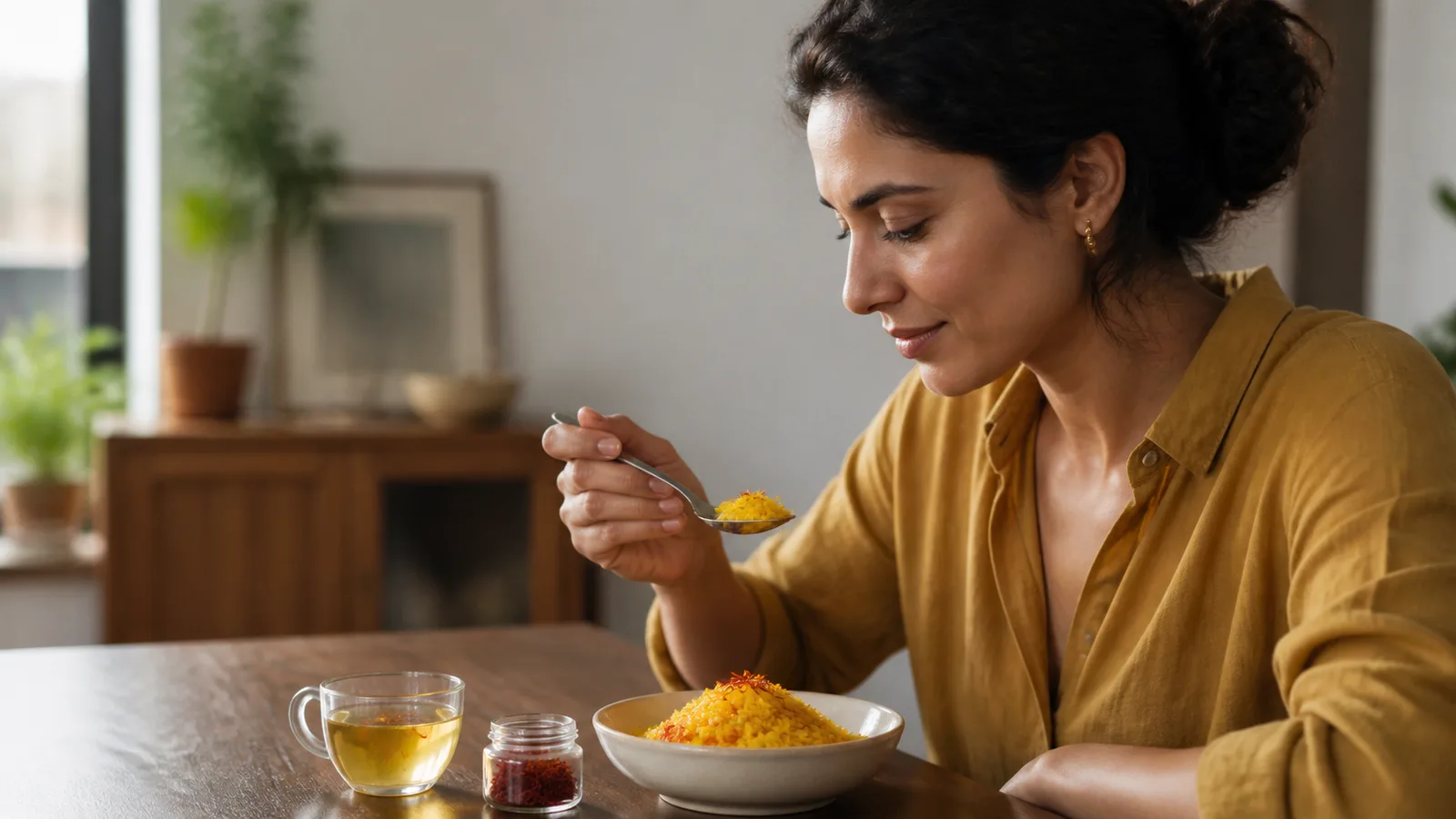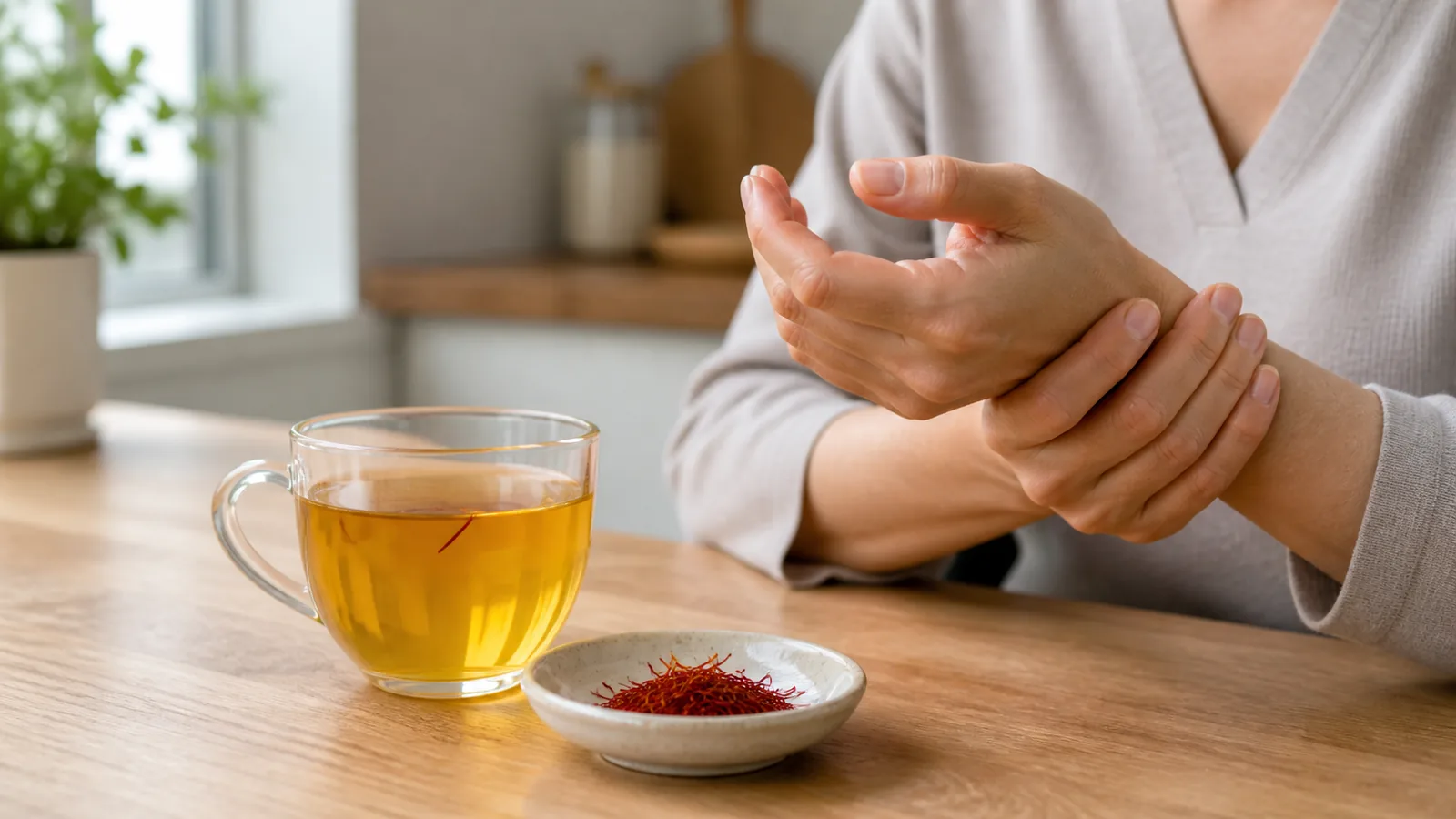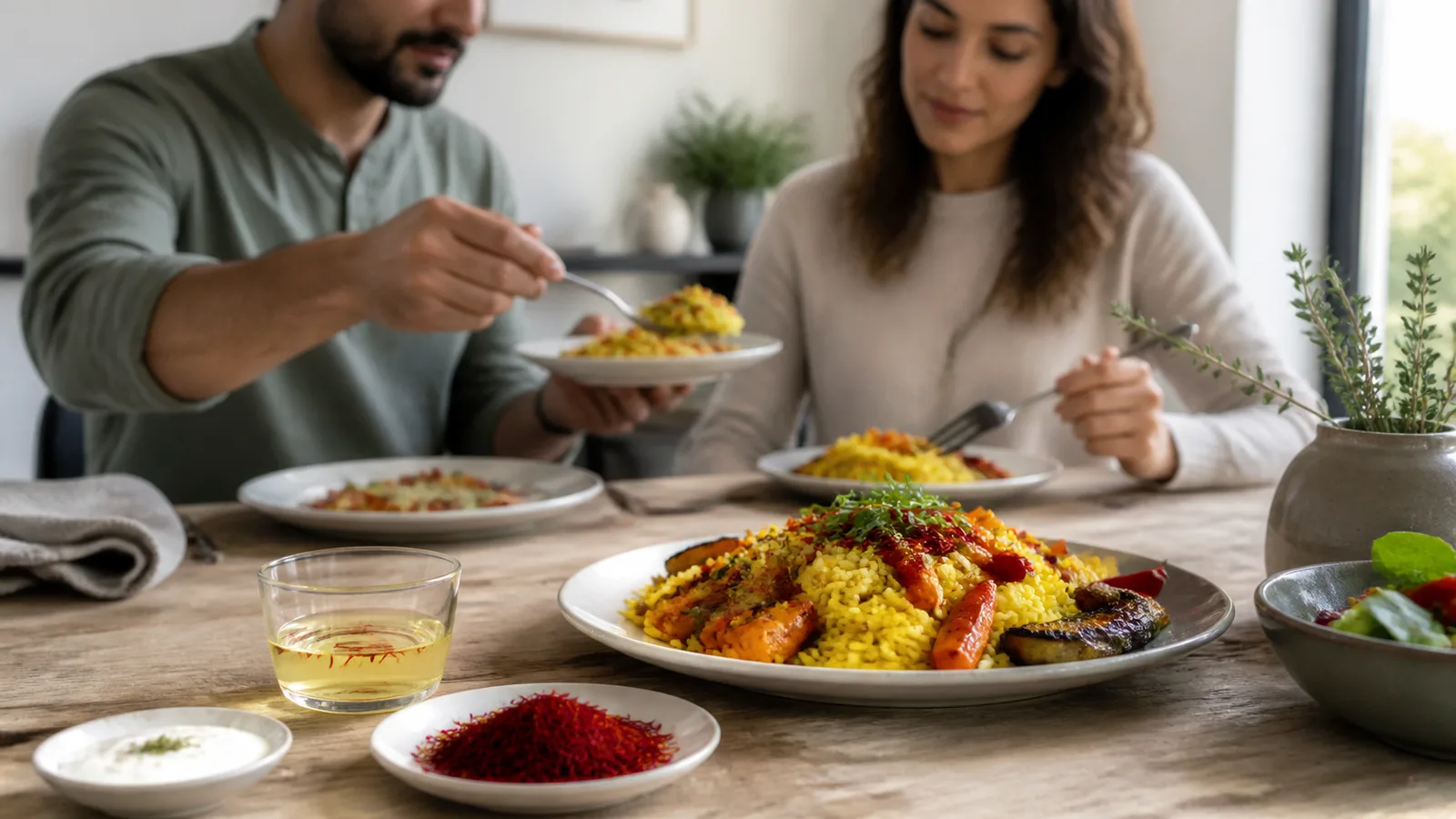
The most certain everyday benefit of saffron is culinary: its colour, aroma and flavour. Human trials of standardized extracts also report promising results for depressive symptoms, sleep and a few other outcomes, but the evidence is not equally strong for every popular claim. Saffron has not been shown to cure disease, prevent heart attacks or make skin, hair, eyesight and digestion healthier simply because it contains antioxidants.
That is the health benefits of saffron at a glance: interesting clinical signals, many unproven extensions and an important difference between food and supplements. A pinch in rice is not the same product as a capsule used in a trial.
What is saffron?
Saffron is the dried stigma of Crocus sativus. Each flower usually produces three red stigmas. Crocins contribute much of the colour, picrocrocin the characteristic bitter taste, and safranal much of the aroma that develops during drying and storage.
These compounds have antioxidant and other biological activity in laboratory systems. That helps researchers decide what to study; it does not establish a health outcome in a person. A credible claim needs human evidence for a defined product, population, comparison and result.
What are the benefits of saffron with the best human evidence?
Mood and depressive symptoms
Mood is one of the better-studied areas. A meta-analysis of small randomized trials found that saffron extracts improved depressive-symptom scores compared with placebo in the available studies. Some trials also reported outcomes similar to antidepressant comparators over short periods.
That does not make saffron a replacement for diagnosis, therapy or prescribed medicine, nor does it prove a reliable remedy for everyday stress. Trials were small, products varied and long-term evidence is limited. Anyone with persistent depression, worsening function or thoughts of self-harm needs professional care; urgent danger requires immediate help.
Sleep
Several short trials have studied saffron extracts for sleep. A systematic review of sleep outcomes found a possible benefit, while noting variation in study design and products. This supports further research, not a claim that saffron tea corrects insomnia or resets everyone’s body clock.
Cognition and Alzheimer’s disease
Small trials in mild cognitive impairment or Alzheimer’s disease have reported changes on cognitive scales. A systematic review of saffron and cognition described encouraging results alongside a small evidence base. Culinary saffron has not been shown to prevent dementia, and no supplement should replace assessment or established care.
PMS and menstrual discomfort
Limited studies have examined saffron for premenstrual syndrome and dysmenorrhea. A 2026 systematic review and meta-analysis suggests a possible benefit, but the number and size of studies constrain confidence. A combined herbal product containing saffron cannot show what saffron alone did.
Saffron benefits for men and reproductive health
Saffron has been studied in small trials involving erectile function and sexual side effects from antidepressants. An early pilot study of erectile function was brief and uncontrolled, so it cannot establish a treatment. Erectile dysfunction can be related to cardiovascular disease, diabetes, hormones, medicines or psychological factors and deserves appropriate assessment.
Claims that saffron generally increases libido, improves fertility or creates hormonal balance are broader than the evidence. It should not replace fertility evaluation or prescribed treatment.
Saffron for women
Women-specific discussion often combines PMS, mood, fertility, pregnancy and beauty into one list. Those are separate questions. Early PMS research does not prove that saffron regulates irregular periods, treats postpartum depression without care or improves fertility.
Pregnancy also changes the safety question. Culinary and concentrated exposure should not be assumed equivalent. Pregnant or breastfeeding people should discuss supplements with their clinician and should not use saffron to start labour, induce bleeding or treat pregnancy symptoms.
Heart, blood pressure and bones
Trials have measured blood pressure, lipids, blood sugar and inflammatory markers after saffron supplementation. A cardiovascular-risk-factor meta-analysis reports changes in some biomarkers, but a biomarker shift does not prove prevention of heart attack or stroke.
Saffron is used in such small culinary amounts that its potassium and other minerals do not turn it into a heart or bone treatment. It has not been shown to prevent osteoporosis. Blood-pressure, cholesterol, diabetes and bone-health plans should remain based on established assessment and care.
Eye health and retinal function
Small studies have investigated saffron supplements in selected retinal conditions. Results from narrow patient groups and short follow-up cannot support a general claim that saffron improves eyesight or protects every retina. Sudden vision loss, new flashes, a curtain-like shadow, severe eye pain or neurological symptoms need urgent evaluation.
Digestive health
Saffron has a traditional place in foods and drinks used for digestive comfort. There is not good clinical evidence that it treats ulcers, reflux, irritable bowel syndrome or persistent bloating. A warm drink may feel soothing without changing the cause of symptoms.
Ongoing pain, vomiting, blood in stool, difficulty swallowing or unexplained weight loss should not be managed with a spice. These symptoms warrant medical advice.
Skin care and hair strength
Laboratory antioxidant activity is often converted into claims that saffron brightens skin, rebuilds collagen, treats acne or protects against ultraviolet damage. Robust clinical evidence for those outcomes is lacking. A cosmetic containing saffron should be judged as a formulated product, not as proof for a homemade mask.
There is also no sound evidence that eating saffron prevents hair loss or strengthens hair. The thread-like appearance of the spice has no biological relevance. Persistent shedding, scalp disease or sudden patchy loss has many possible causes and deserves proper assessment.
Respiratory comfort, allergies and pain
Warm saffron drinks may feel comforting, but saffron is not a treatment for asthma, chronic cough or respiratory infection. Laboratory anti-inflammatory findings do not replace inhalers or clinical care. Breathing difficulty can be an emergency.
Likewise, limited research in specific pain settings does not prove general relief for muscle aches or chronic pain. Saffron itself can also cause an allergic reaction in some people.
Pure, Persian and Iranian saffron benefits
Searches for pure saffron benefits, Persian saffron benefits and Iranian saffron benefits often mix quality, origin and medicine. Genuine saffron from Iran can have excellent colour, aroma and thread presentation. It is still the same species, Crocus sativus, grown in other established regions.
The shorter search phrase “Iran saffron benefits” raises the same issue: origin can describe traceability and quality, but it does not create a separate set of medical effects.
Purity matters because adulterated material may contain undeclared dyes or plant fibres. It does not make every health claim true. Origin and grade describe the product; a clinical benefit still needs evidence for the preparation actually studied.
Food, tea and supplements are different
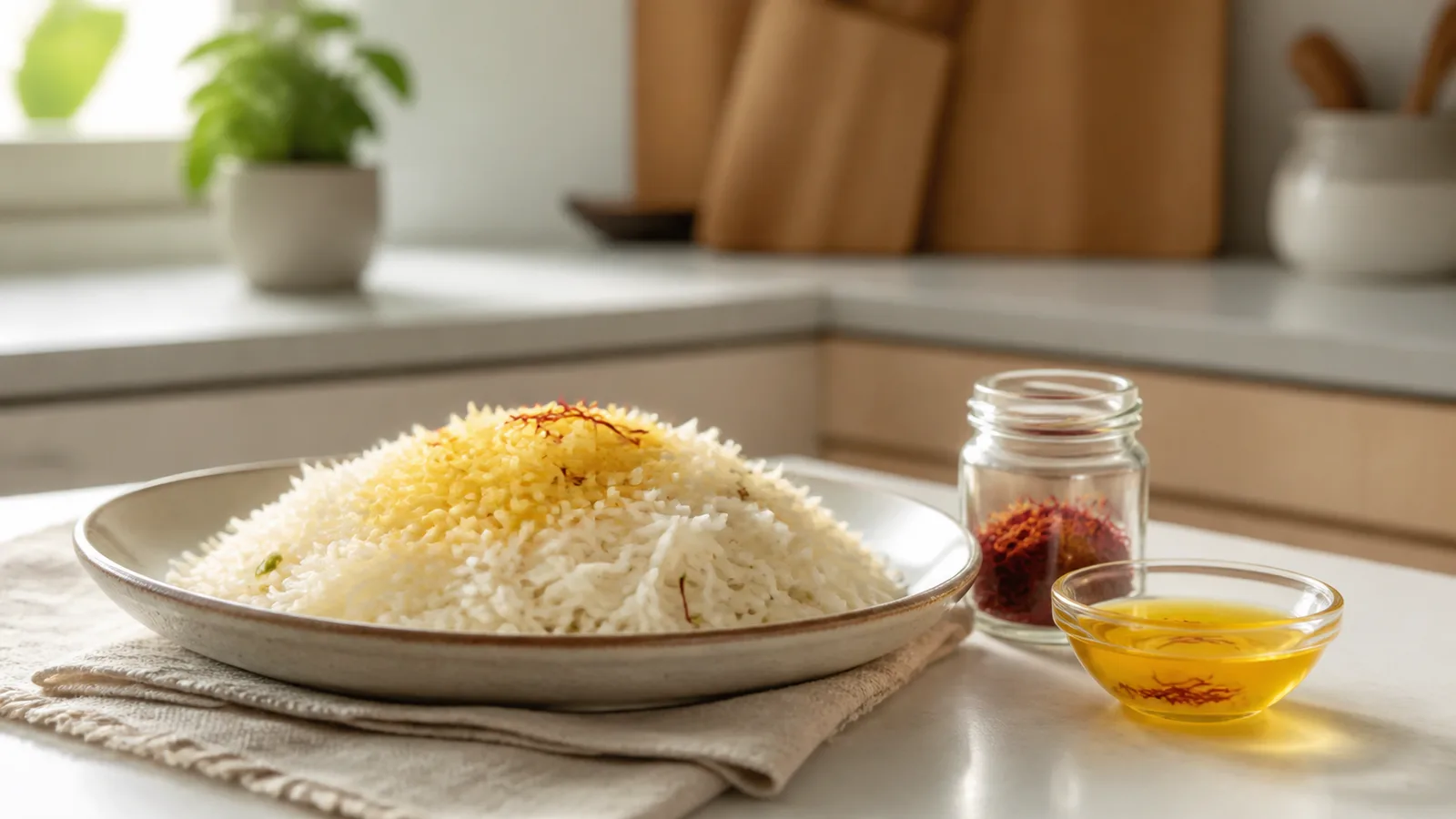
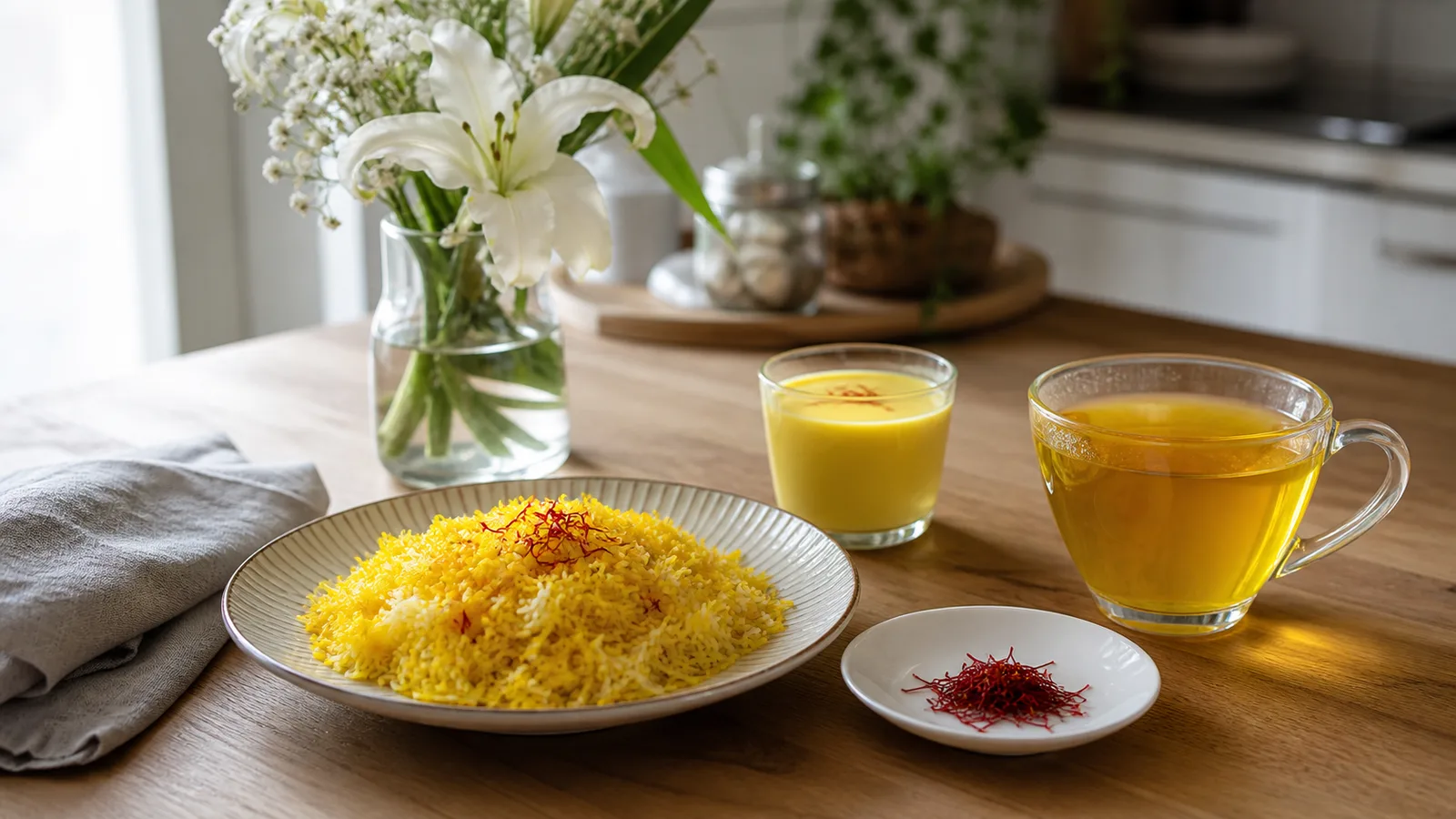
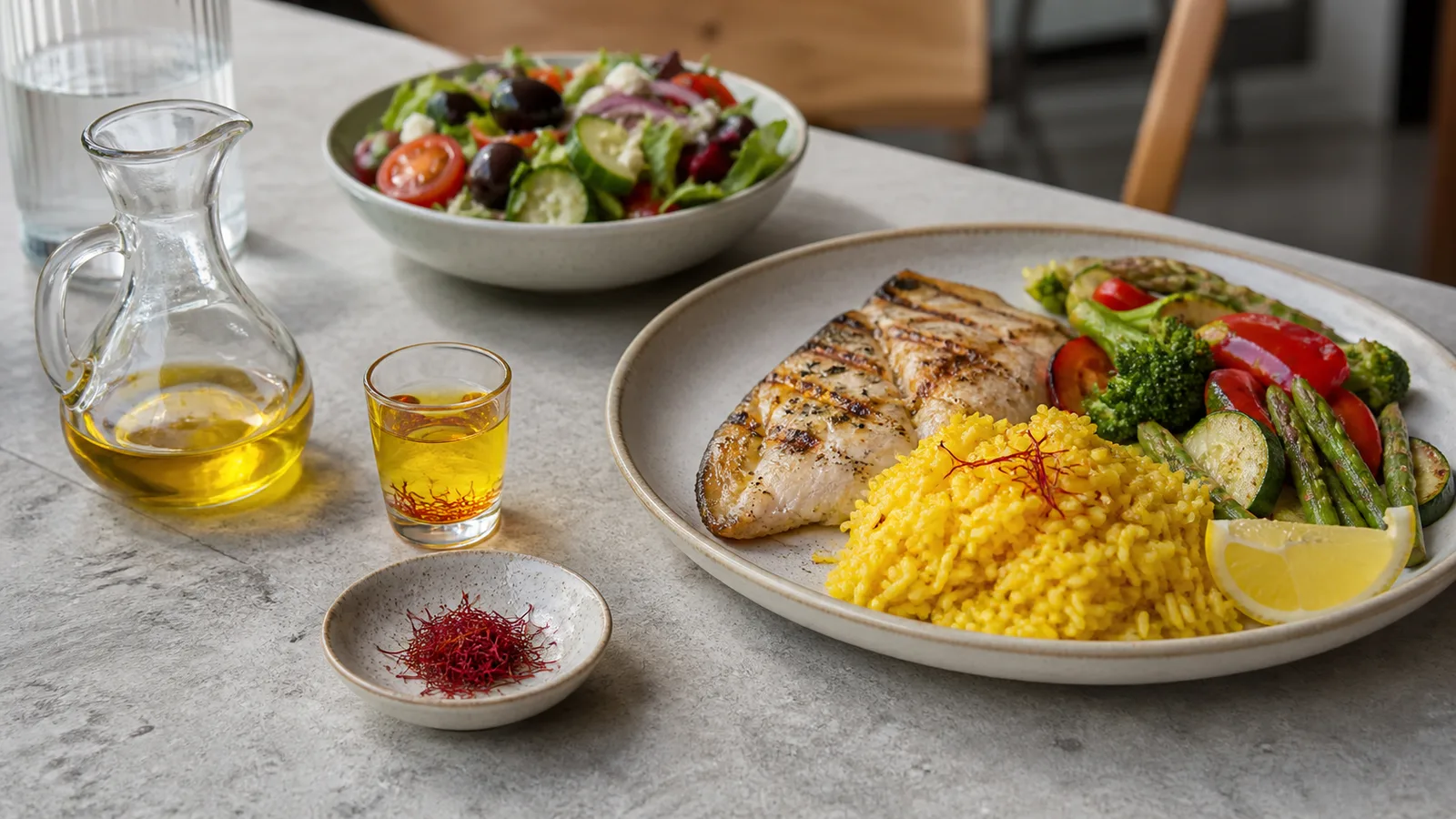
For cooking, gently crush a small pinch of whole threads, steep them in warm water or milk, then add the infusion to rice, soup, vegetables, bread or dessert. This distributes the colour and aroma. It is a culinary method, not a treatment dose.
Supplements are more concentrated and can cause nausea, digestive discomfort, headache, dizziness, dry mouth or allergic reactions. A systematic review of reported adverse events provides useful context, although consumer products may differ from research preparations.
Check a supplement with a clinician or pharmacist if you are pregnant, preparing for surgery, managing a chronic condition or taking medicines that affect mood, blood pressure, blood sugar or bleeding. Do not stop prescribed care because a supplement appears natural.
What are benefits of saffron in practical terms?
The immediate saffron advantages are culinary and cultural: a small amount can transform the colour, aroma and flavour of a dish. When considering saffron benefits for health, human research gives the strongest early signals in mood, sleep and a few selected clinical outcomes, but results cannot be borrowed for every organ or every product.
The fairest summary of saffron health benefits is neither “miracle spice” nor “no value.” Enjoy saffron in food, read extract studies at their actual scale, and keep symptoms and medical decisions connected to appropriate care.