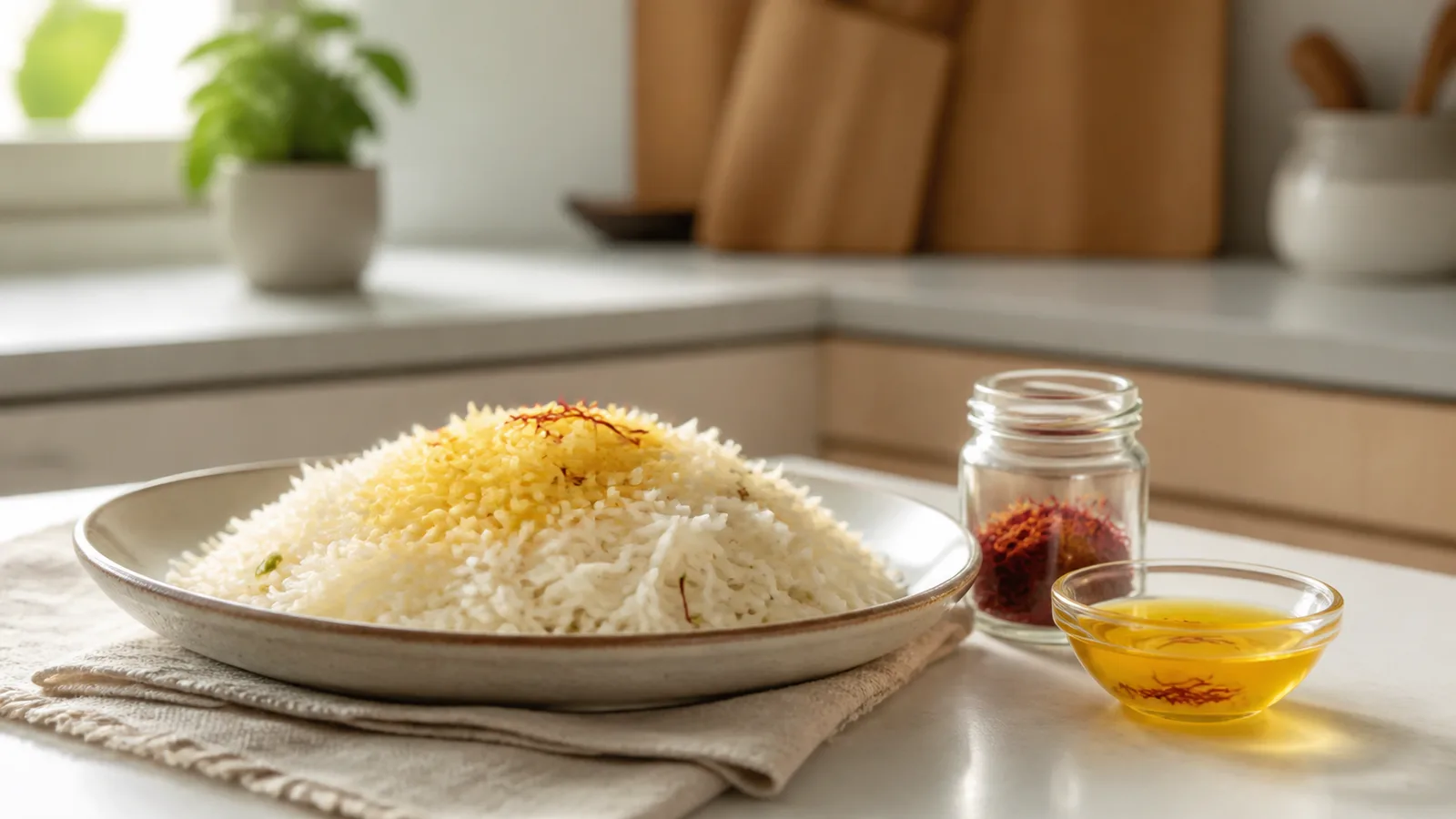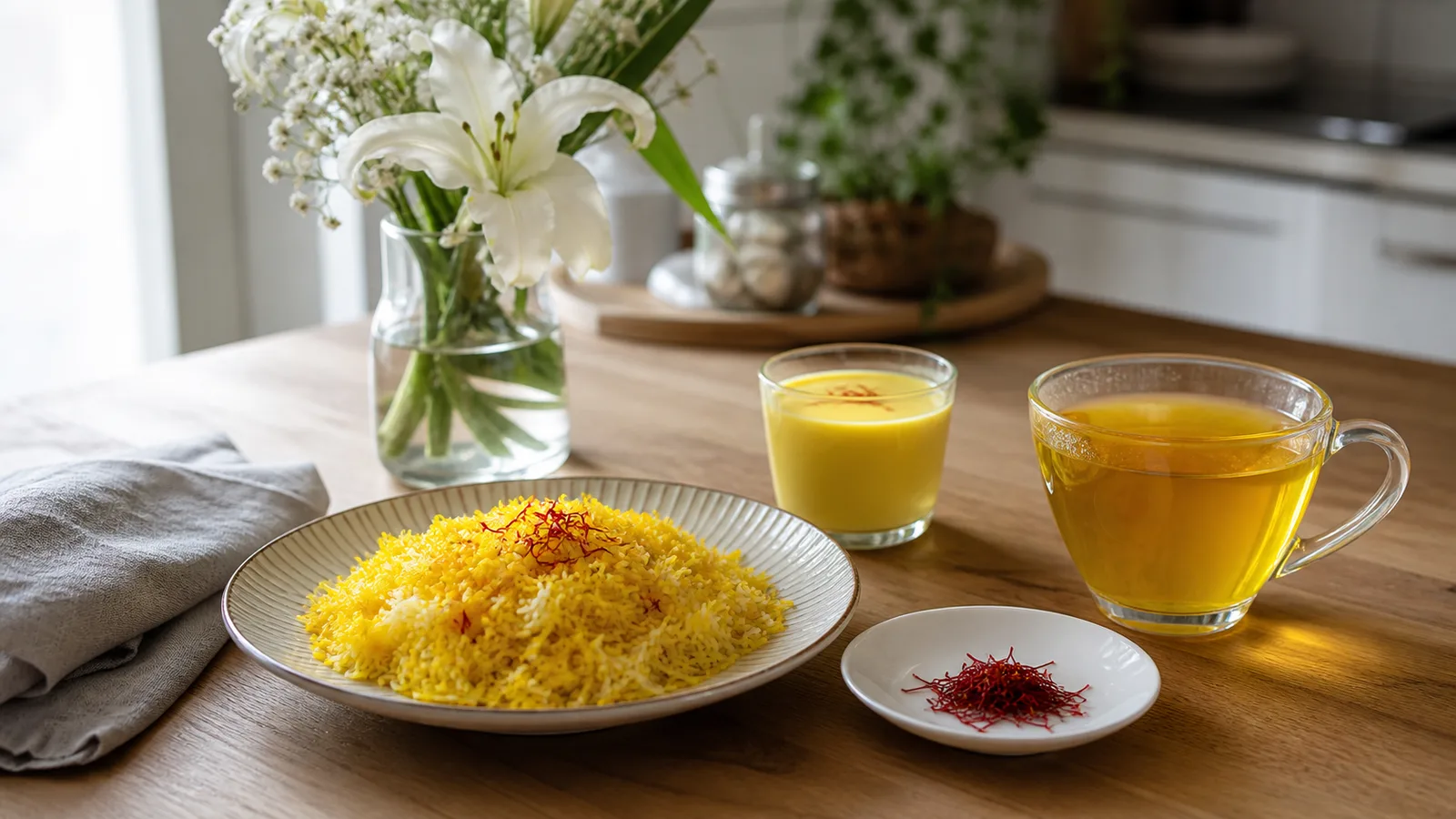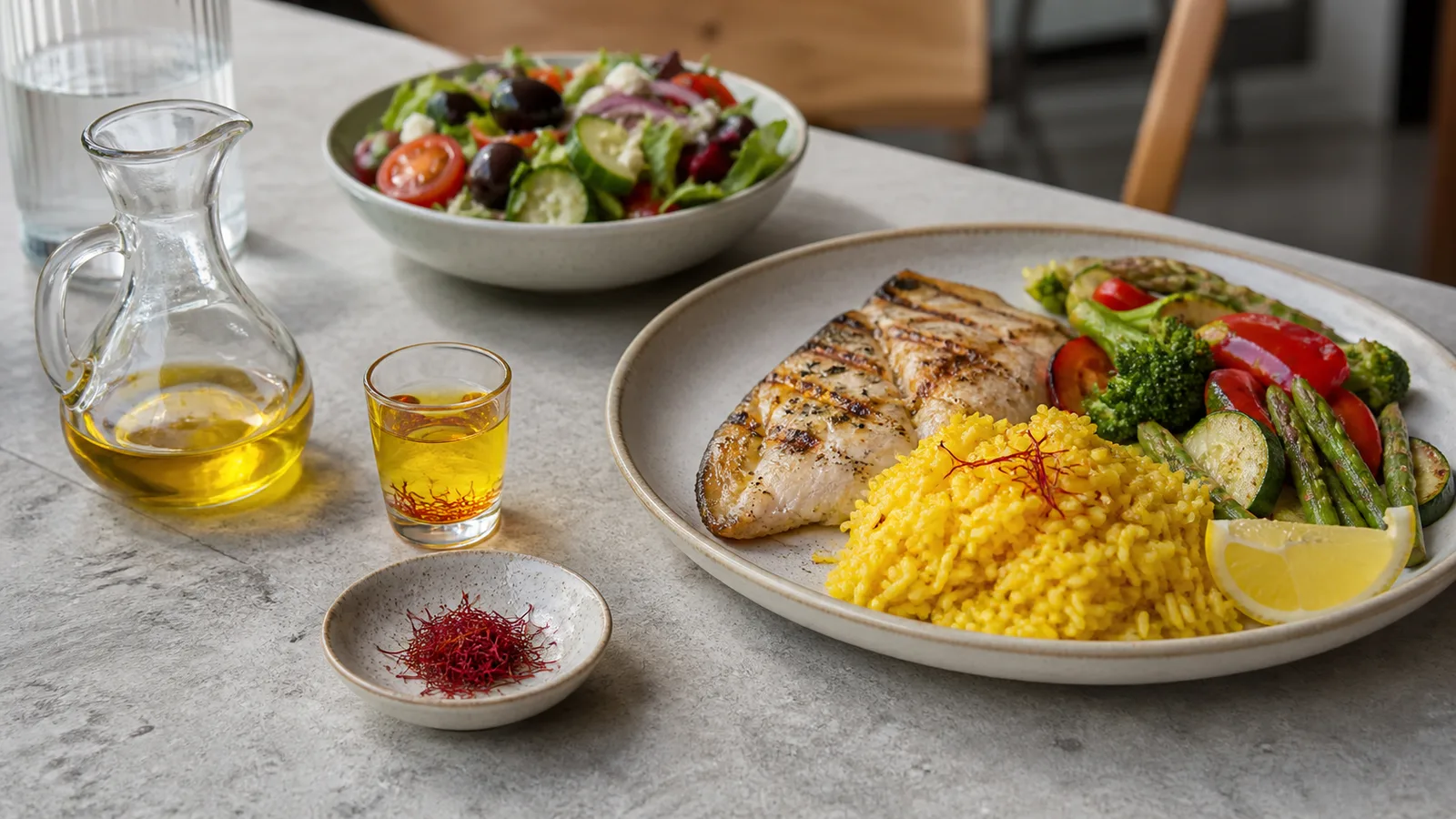
Saffron is mainly grown in Iran, with important production traditions in India, Afghanistan, Greece, Spain, Morocco and Italy. Smaller farms now cultivate it in many other dry temperate regions. Iran remains the centre of world supply, while origin names such as Kashmir, La Mancha, Kozani and L’Aquila carry their own agricultural and cultural histories.
So, where is saffron mainly grown? Iran is the clear answer by volume. Lists of saffron producing countries or saffron production countries become more useful when they distinguish a large national crop from a small protected-origin region and separate harvest volume from trade.
The cultivation of saffron in different countries follows the same plant, Crocus sativus, but not one universal calendar or method. Planting time, flowering, irrigation and drying depend on local altitude, rainfall, soil and temperature. That is why a useful account of saffron cultivation countries needs more than a ranking.
Where is saffron grown?
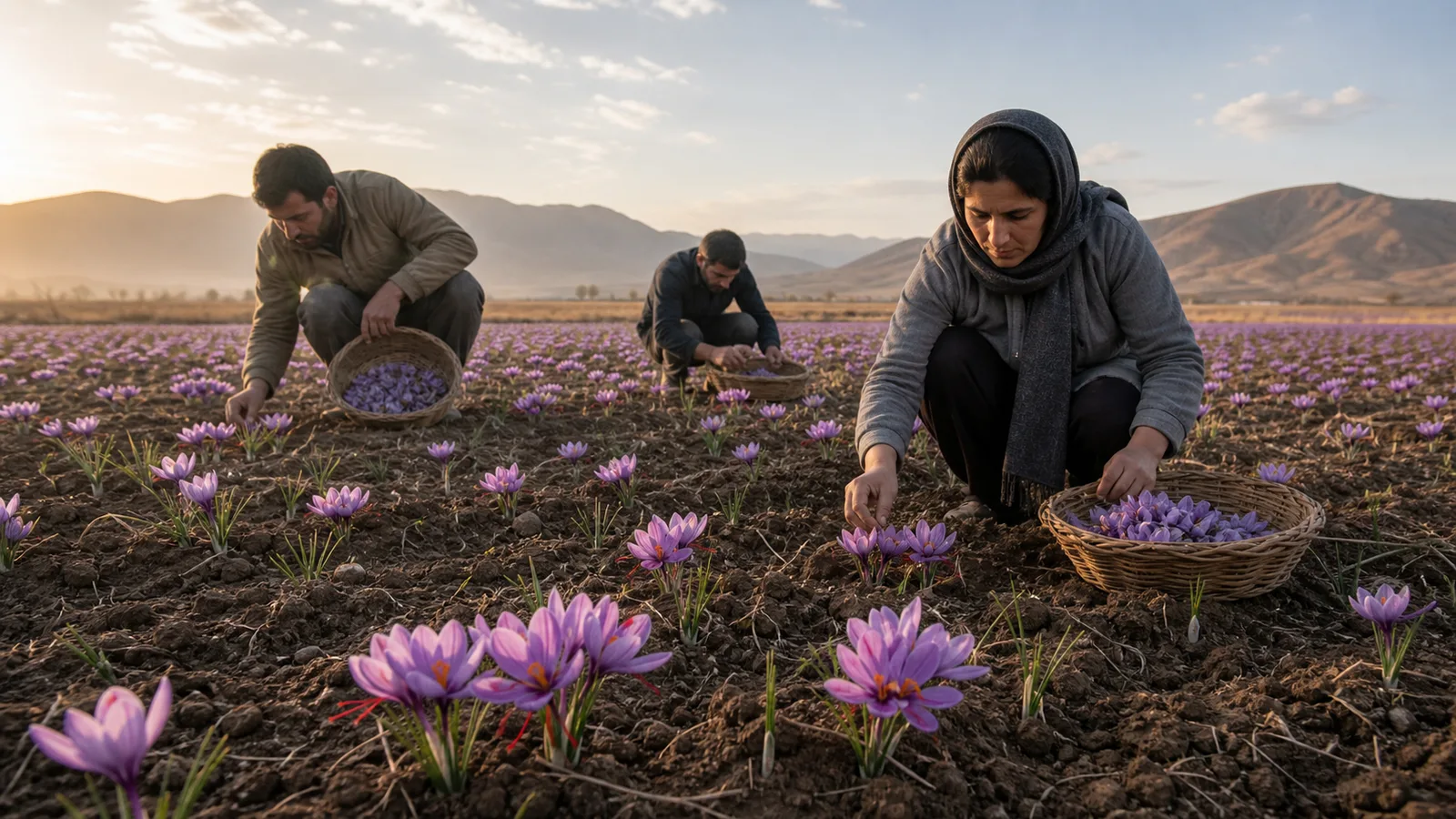
Saffron grows best where farmers can combine a dormant dry season with autumn flowering, well-drained soil and enough cool weather for the crop’s annual cycle. The plant survives through an underground corm. Leaves and flowers emerge seasonally, then the foliage feeds replacement corms before it dies back.
Where saffron is grown commercially, labour matters as much as climate. Flowers open over a short period and are normally picked by hand. The three red stigmas in each flower must be separated and dried promptly. Those concentrated harvest weeks help explain the spice’s cost.
Searches for “where saffron grows” sometimes assume a tropical crop because of its colour and aroma. In practice, established saffron growing regions are often dry, elevated or continental, with hot summers and cold or cool winters. Local drainage is crucial because corms are vulnerable in persistently waterlogged soil.
Iran saffron farming
Iran is the leading saffron production country and the largest source in international trade. Cultivation is concentrated in the east and northeast, particularly Khorasan Razavi and South Khorasan, although it also occurs elsewhere. Generations of specialised knowledge cover corm selection, irrigation timing, rapid flower collection, stigma separation and drying.
Iran’s scale should not be reduced to a timeless percentage. Estimates change by crop year, dataset and whether a source measures production, exports or re-exports. Saying “more than 90%” without a dated, comparable source can quickly become misleading. The durable fact is that Iran leads global production by a wide margin.
Iranian trade names such as Pushal, Sargol and Negin describe how stigmas are cut or presented. They should not be mistaken for different botanical species or proof that every batch has identical chemistry.
India and Kashmir saffron
Indian saffron farming is closely associated with Kashmir, especially the Pampore area. The crop is often called kesar, and Kashmiri trade includes terms such as Mongra and Lacha. The region’s elevation, winter cold and traditional rain-fed systems differ from many Iranian fields.
Kashmir saffron has geographical-identity value as well as agricultural value. Production can vary sharply with weather, water access, corm health, field age and land use. Calling it “golden zest” or red gold expresses cultural esteem; it is not an agronomic category.
Afghanistan
Afghanistan has developed saffron as a high-value crop, particularly in Herat and other western areas. Its dry climate and proximity to long-established Iranian knowledge make cultivation possible, while training and organised processing help farmers meet export requirements.
The crop is sometimes promoted as an alternative livelihood because a small area can produce a valuable spice. That promise needs context: corms, labour, irrigation, drying facilities, quality control and dependable buyers all affect whether a saffron farm is profitable.
Mediterranean saffron growing countries
Spain
Spain has a famous saffron culture centred on Castilla–La Mancha. Spanish saffron is used in dishes such as paella and has a long relationship with regional cuisine and protected-origin marketing. Spain’s role in packing and trade can make export figures look different from domestic crop volume, so production by country and exports by country should not be treated as the same table.
Greece
Greek production is strongly associated with Kozani in Western Macedonia, where grower organisation and protected geographical identity support a smaller but recognised crop. The cooler continental setting shows that saffron does not require year-round heat.
Italy
Italy has several small regional traditions, including L’Aquila in Abruzzo, San Gimignano in Tuscany and parts of Sardinia. Italian farms are modest beside Iran’s industry, but short supply chains, regional food culture and origin protection can make the crop economically meaningful.
Morocco
Moroccan saffron is closely linked with Taliouine and the Anti-Atlas. Mountain conditions, cooperative processing and regional identity shape the crop. As elsewhere, the place name should be supported by traceability rather than inferred from colour or packaging.
Saffron cultivation in world regions beyond historic centres
Saffron is also cultivated on a smaller scale in Turkey, Azerbaijan, China, France and parts of Central Asia. Trial and boutique farms operate in the United States, Canada, the United Kingdom, Australia and New Zealand. Commercial success depends on the local microclimate and labour model, not merely whether a country appears on a saffron growing countries list.
A saffron production by country chart may therefore answer a narrower question than it appears to. Saffron production in world trade can include packing and re-export activity that did not begin with flowers grown in that country.
The plant can flower outside its best-known regions, but a viable business needs reliable corm multiplication, disease control, a harvest workforce and consistent drying. A field that produces flowers once is not automatically a sustainable saffron industry.
How the cultivation cycle changes by region
In many Northern Hemisphere systems, corms are planted or lifted and replanted during summer dormancy, flowers are harvested in autumn, and leaves continue growing through the cooler months. Exact dates vary. The old August-to-October rule describes only part of some calendars and should not be applied worldwide.
- Site: well-drained soil, appropriate winter chill and a manageable irrigation source.
- Corm establishment: healthy planting stock, suitable depth and spacing for the soil and production system.
- Flower harvest: repeated early picking during a compact bloom.
- Separation and drying: clean handling and controlled dehydration soon after picking.
- Vegetative season: leaves remain to replenish and multiply corms.
- Dormancy and renewal: fields are assessed for crowding, disease and the timing of replanting.
A peer-reviewed agronomic review of saffron cultivation describes how environment, crop management, harvest and post-harvest handling interact. Country of origin is only one part of the final result.
Why saffron from different countries can taste or look different
Climate, soil, plant health, harvest timing and drying can influence colour, aroma and bitterness. So can the cut: long red stigmas, shorter red tips and threads with some yellow style are different commercial presentations. Storage after drying may then change the product further.
These differences do not justify a simple claim that one nation always produces the best saffron. A fresh, well-dried, traceable batch can outperform a poorly stored pack carrying a famous origin. Current ISO 3632-1 specifications apply to dried saffron in filament, cut-filament and powder forms; they do not rank countries.
Cultural value without unsupported medical claims
Saffron culture connects farming with food, festivals, family labour and regional identity. Its compounds are also studied in medicine. Those two facts do not support the old claims that everyday saffron strengthens hair, rejuvenates skin, treats diabetes or heart disease, cures depression, strengthens the immune system or relieves every form of stress.
Japan, for example, has traditional and pharmaceutical uses of saffron, but doctors do not depend on global saffron farming to prescribe it as a general treatment. Medical research requires defined products and clinical evidence. This article’s subject is where and how the crop is grown.
The global picture
Saffron production in the world has one dominant centre and many distinctive smaller regions. Iran leads; India, Afghanistan and Mediterranean countries maintain important crops and identities; new farms continue to test where saffron can be grown successfully.
The best comparison looks beyond a country list. Climate establishes the possibility, farmers manage the corm cycle, pickers capture a short flowering window, and careful drying protects what they harvested. That shared work is the thread connecting saffron cultivation across countries.