


Selling saffron to tourists can turn a small spice purchase into a lasting memory of Iran, but only when the product earns the traveller’s trust. Clear origin, sensible pack sizes, honest quality information and useful cooking guidance matter more than grand claims. The opportunity is real because saffron is portable, closely tied to Iranian food culture and easy to use again at home.
Why saffron suits a tourist purchase
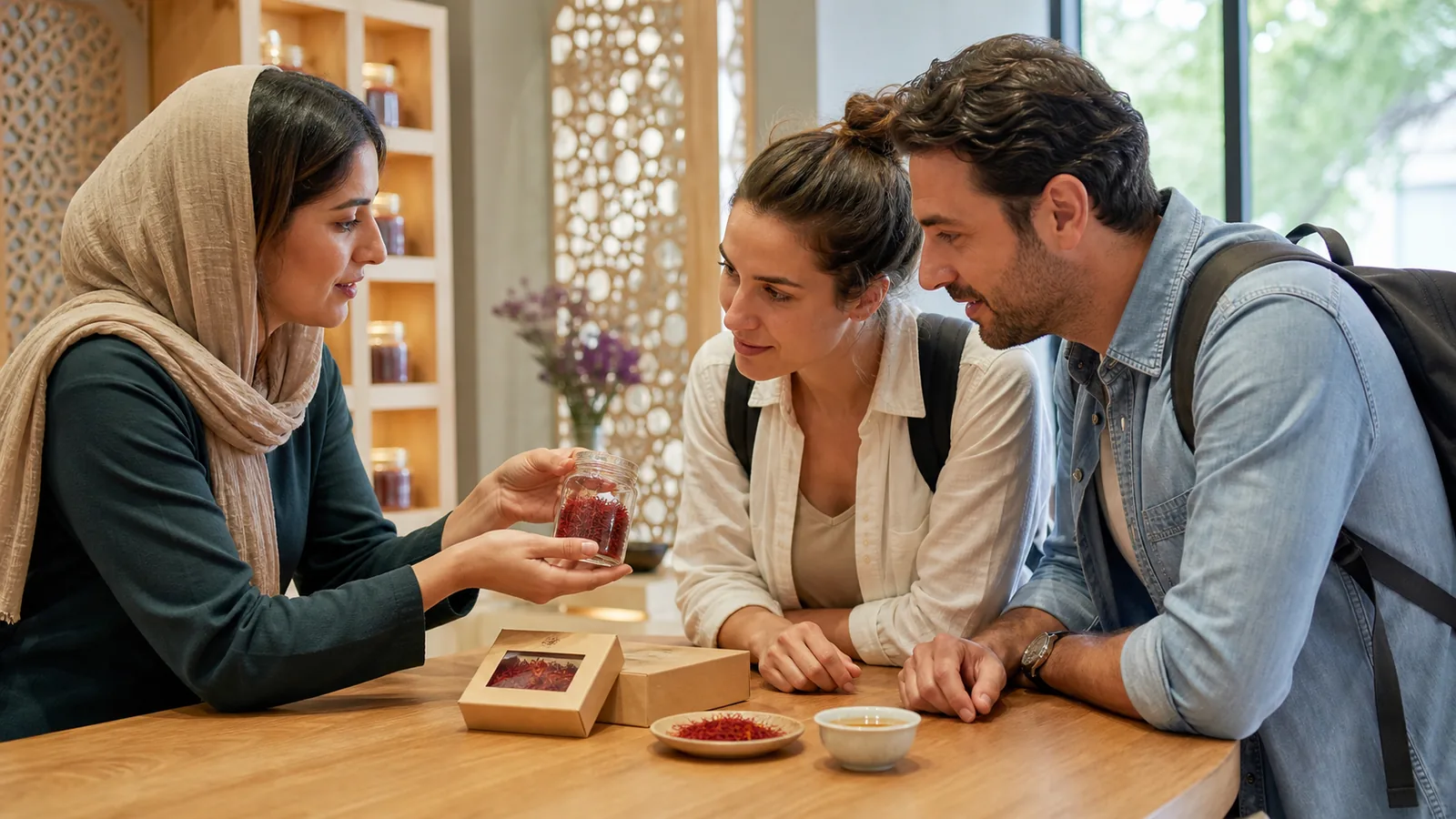
A good travel souvenir carries a story without becoming a burden. Saffron is light, compact and familiar enough to interest food-minded visitors, yet many people have never handled whole threads or learned how to bloom them. That gap gives a knowledgeable seller something valuable to offer: not a sales pitch, but a short lesson the customer can take home.
Visitors may encounter saffron in rice, desserts, tea or local celebrations before they consider buying it. A market stall, specialist shop, hotel, farm visit or saffron festival can connect the finished spice to its flowers, harvest labour and place of origin. The product then has context instead of looking like an expensive red powder in an unfamiliar package.
For the tourism industry in Iran, that context is the advantage: genuine Iranian saffron can be experienced through food, farming and local knowledge instead of being displayed as anonymous merchandise.
This does not mean tourism is automatically profitable or that every visitor will buy. Footfall, season, location, price transparency and service quality determine the result. A seller should start by understanding the actual customers at that location rather than relying on national tourism forecasts or broad assumptions about visitors from Europe, America or neighbouring countries.
Tourist retail and saffron export are different businesses
A traveller buying one sealed pack for personal use is a retail customer. A foreign shop owner asking for cartons, private labels or repeat supply is a trade lead. Mixing those two situations creates confusion.
Retail selling needs a clear shelf price, a lawful consumer label, a receipt and practical advice. Commercial export involves contracts, product classification, destination-market labelling, customs documents, food-safety compliance, payment terms and an importer who understands local rules. A pleasant conversation at a tourist counter can begin a business relationship, but it is not an export procedure by itself.
If a visitor asks about wholesale supply, collect their business details with permission and arrange a separate follow-up. Do not promise delivery dates, market access or documentation at the counter unless the exporter has already confirmed them. Our overview of saffron export requirements explains the additional checks a commercial order needs.
What tourists need to know before they buy
Most first-time buyers have a few quiet concerns: Is it genuine? Why does this pack cost more than another? How much should I use? Can I carry it home? Good selling answers those questions before pressure enters the conversation.
- Identity: say plainly that the pack contains dried saffron stigmas from Crocus sativus.
- Form: explain whether it contains whole threads or powder. Whole threads let the buyer inspect the product more easily; powder is convenient but requires stronger trust in the packer.
- Origin: distinguish where the saffron was harvested from where it was packed. Never imply Iranian origin merely through colours, imagery or a brand story if the batch came from elsewhere.
- Quantity: show the net weight and explain roughly how the buyer might use that amount, without making an exact serving promise that ignores the recipe.
- Storage: advise a tightly closed container away from light, heat and moisture.
- Travel: remind the buyer that entry rules belong to the destination country and can change.
A short printed or digital guide in clear English is useful for many international visitors. Other languages can be offered where the shop’s customer mix justifies them, but translations must be checked by a competent speaker. Decorative text that no one can understand does not build confidence.
Package saffron for trust, not just appearance
Attractive packaging helps only if it protects the spice and communicates the right facts. For tourist retail, small sealed packs are usually easier to understand, carry and give as gifts than an unlabelled bulk portion. The container should limit moisture, odours and unnecessary light exposure while allowing the buyer to inspect the product where practical.
The label should follow the law where the product is sold and should not mislead. Useful information commonly includes:
- the product name and form;
- net weight in a recognised unit;
- country of origin or harvest, stated accurately;
- packer or responsible business details;
- batch or lot identification;
- packing or durability information required by local rules;
- storage instructions;
- a tamper-evident seal where the package design allows it.
The FAO/WHO Codex Alimentarius catalogue includes a dedicated standard for dried saffron, CXS 351-2022. It is a useful quality and labelling reference, but it does not replace Iran’s requirements or the rules of a traveller’s destination market.
Explain quality without giving a laboratory lecture
Tourists often hear terms such as Negin, Sargol, Pushal and Grade A without knowing whether they describe a cut, a commercial grade or a seller’s marketing language. Explain what the words mean for the product in front of you. Point out the visible red stigmas, aroma and cleanliness, then show the batch documents behind any formal quality claim.
No single home trick proves authenticity. Water demonstrations can illustrate how threads release colour, but timing varies and a convincing display is not a substitute for traceability or testing. Avoid claims that genuine saffron must always behave in one exact way. A buyer who wants a deeper assessment can use our guide to buying high-quality saffron.
Health promises are particularly risky. Saffron can be introduced as a culinary spice with a long cultural history; it should not be sold to a tourist as a cure, treatment or guaranteed mood, sleep or sexual-performance product. Medical claims need a different evidence and regulatory standard and do not belong in casual souvenir marketing.
Make the cultural story specific and verifiable
“Persian red gold” may attract attention, but a real detail is more memorable. Tell the visitor that each flower carries three red stigmas, that flowers are picked during a short autumn season, or that families and harvest teams separate the delicate threads by hand. If the batch comes from a named farm or region, say so only when the supply chain can support it.
A cooking demonstration can turn that story into something practical. Show how a small pinch is ground or steeped for a specific dish, then let the aroma and colour develop at a natural pace. Use clean utensils and follow local food-service rules if anything is tasted. The goal is to help, not to stage an “authenticity test” whose conclusion was decided before the customer arrived.
Set a price a visitor can understand
Display the price, currency, pack weight and tax treatment clearly. Where several sizes are offered, showing the price per gram makes comparison easier. A premium batch can cost more, but the reason should be concrete: traceable origin, cut, harvest information, documented testing, careful packing or limited production. “Best in the world” is not an explanation.
Avoid changing the price after hearing a visitor’s accent or learning their nationality. High-pressure bargaining may create one sale and lose years of word-of-mouth trust. Give a receipt, explain the return policy, and let the customer inspect the seal before leaving.
Choose sales settings that add value
Selling saffron to tourists works best where the setting supports the product:
- Specialist shops can offer consistent storage, trained staff and several pack sizes.
- Hotels and visitor centres can provide convenience, though the story and provenance still need substance.
- Markets and bazaars give atmosphere and comparison, but cleanliness, clear labels and fixed product identity remain essential.
- Farm and harvest visits can connect a sale with cultivation when visitors are managed safely and farmers share in the value.
- Religious-tourism routes may bring large and diverse audiences; service should be respectful, multilingual where justified and free of assumptions about spending.
Partnerships with cooks, guides and hospitality businesses can introduce saffron naturally. Pay or disclose commissions transparently. A guide’s recommendation loses value if the customer later discovers that the “local favourite” was simply the shop offering the highest fee.
Help the product survive the journey home
Keep the pack sealed, compact and robust enough for normal luggage handling. Give the buyer a receipt and advise them to retain the original label. Saffron should stay dry and away from heat; a suitcase left in a hot vehicle is not ideal storage. Once home, the customer should transfer any poorly protected presentation pack to an airtight container if the design allows it.
Do not tell every traveller that saffron is automatically permitted through customs. Personal food allowances, declaration rules, sanctions and import restrictions differ by destination and can change. The traveller should check the official customs or food-import guidance for the country they will enter, including any transit stop that requires clearance. A seller can provide accurate product documents, but cannot override a border authority.
Turn one sale into a useful relationship
A simple English recipe card, storage note and link to the producer’s real website are more useful than a bundle of slogans. If the customer can prepare one successful rice dish, dessert or tea at home, the souvenir has done its job and repeat purchase becomes possible.
Ask for an email address only with clear consent, and make unsubscribe options easy. A batch-specific QR code can lead to origin, packing and cooking information, but the web page must remain available after the traveller returns home. Do not use a code that merely opens a social account the customer cannot access in their country.
For the product itself, storage guidance should be consistent from counter to website. Our article on preserving saffron quality in storage gives buyers a practical reference after the trip.
How a seller can test the opportunity
Begin with a limited, traceable range instead of a wall of nearly identical packs. Train staff to answer the same core questions, record which sizes sell, and note the genuine questions visitors ask. Useful measures include conversion by location, returns, repeat orders, recipe-page visits and complaints about labels or travel handling. Collect only the customer data the business is entitled to hold.
Review the results by season and visitor type without stereotyping individuals. A pilgrimage group, a food tour and an independent business traveller may need different explanations, but all deserve the same honest origin, quality and price information.
A practical counter checklist
- Is the saffron traceable to a real batch and stated origin?
- Is every pack sealed, clean, correctly weighed and lawfully labelled?
- Can staff explain threads, usage and storage in plain language?
- Are quality claims supported rather than improvised?
- Are prices and payment terms visible before the sale?
- Does the buyer receive a receipt and travel-safe pack?
- Are customs questions answered with a direction to current official rules?
- Is commercial export interest separated from the tourist transaction?
The opportunity depends on trust
Saffron can strengthen a visitor’s connection with Iranian cuisine and give growers, packers and retailers more value than an anonymous bulk sale. That outcome comes from a good product and a calm, transparent buying experience. When origin is truthful, packaging is useful and the customer knows how to cook with the threads, selling saffron to tourists becomes more than moving a souvenir across a counter—it becomes a credible introduction to the people and work behind the spice.

![Exporting Saffron to Turkey + Price Guide [Complete 0 to 100]](https://img.rowhanisaffron.com/20260827003933/saffron-export-turkey-quality-inspection.webp)



