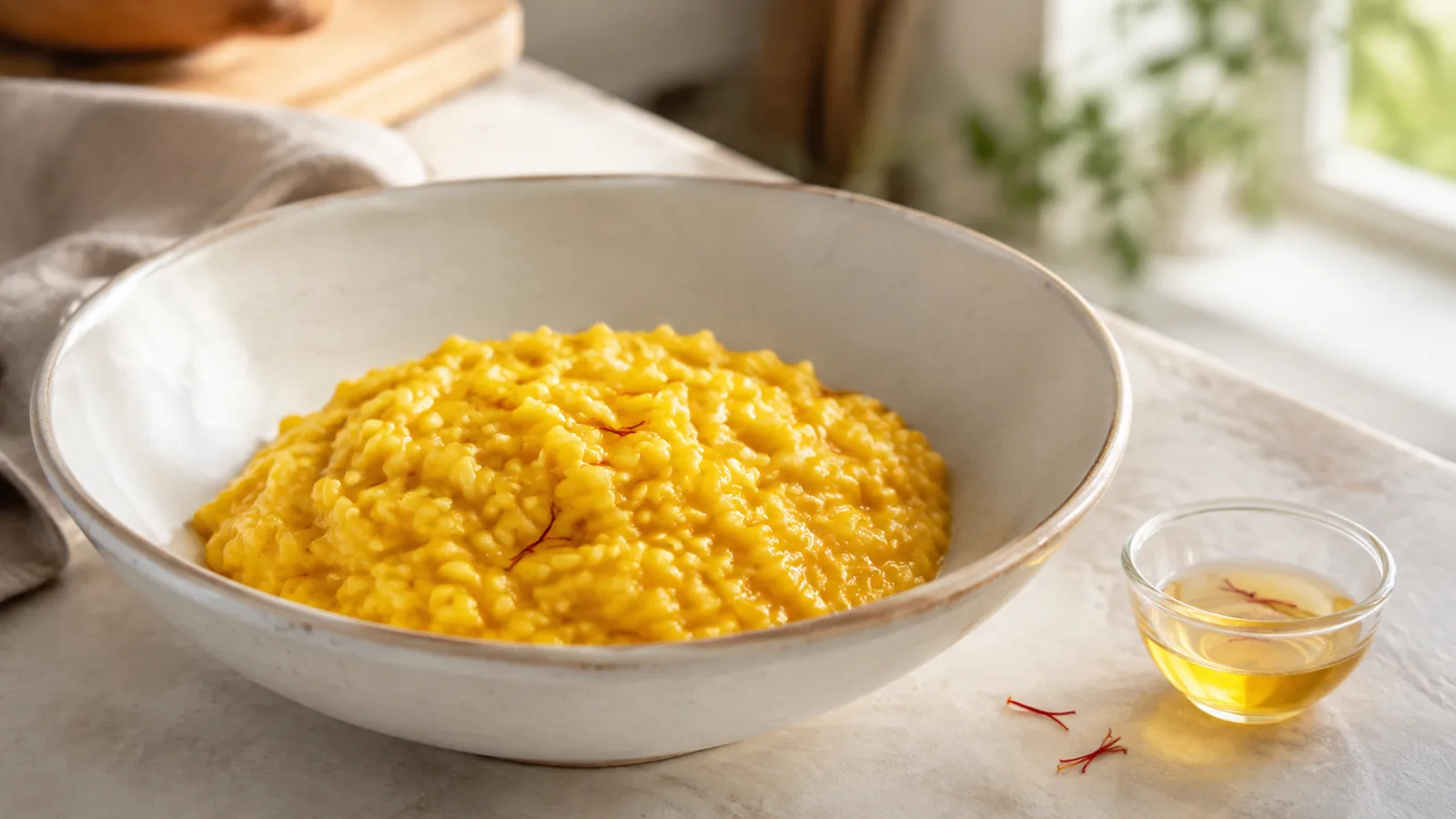
Saffron in paella does three jobs at once: it gives the rice a clear golden colour, adds a warm aroma and brings a gently bitter, honeyed note that sits behind the stock and sofrito. You can cook rice in a paella pan without it, but saffron is part of the character people expect from many traditional Spanish paellas.
Why put saffron in paella?
The shortest answer is colour, aroma and flavour. Saffron is not there to make the dish hot or obviously “spiced.” A good dose is subtle. It rounds out the savoury stock, vegetables and meat or seafood while giving the grains an even yellow-gold tone.
Crocin, one of saffron’s characteristic compounds, supplies much of that colour. Picrocrocin is associated with its bitter taste, while safranal contributes strongly to its aroma. Warm liquid releases these qualities and distributes them through the rice far more evenly than scattering dry threads across the pan.
There is a cultural reason too. The official Spanish tourism recipe for paella includes saffron alongside rice, chicken, rabbit, green beans, garrofó beans, tomato, paprika and other traditional ingredients. The regional tourism authority’s recipe also uses saffron, while acknowledging that Valencian paella varies with season and cook.
What saffron tastes like in paella
Saffron is often described as floral, earthy, hay-like or honeyed. None of those words captures it completely, and the finished paella should not taste like perfume. The spice works in the background, giving the rice a dry aromatic lift and a faint bitterness that balances a rich stock.
That is why adding more is not always better. Too little may disappear, particularly in a large pan or a strongly flavoured seafood stock. Too much can make the rice medicinal or harsh. The aim is a distinct aroma as the pan reaches the table and a flavour that remains integrated with the sofrito.
How much saffron for paella?
For a home paella serving four to six people, about 0.1 gram of good saffron threads—a generous pinch—is a practical starting point. Thread counts are unreliable because length and thickness vary, so a small precision scale is better when consistency matters.
A delicate vegetable or chicken paella may need less. A broad pan with a deeply flavoured seafood stock may need a little more. If the saffron is old or poorly stored, increasing the quantity will not fully restore its aroma. Fresh, properly kept threads give a cleaner result.
Commercial paella seasoning sometimes combines saffron with other spices or colouring. Read the ingredient list before using it: one teaspoon of a blend is not equivalent to one teaspoon of pure saffron.
How to use saffron in paella
The most reliable method is to infuse the threads before they go into the pan.
- Measure the saffron and rub or crush the threads lightly between clean fingers. They do not need to become a fine powder.
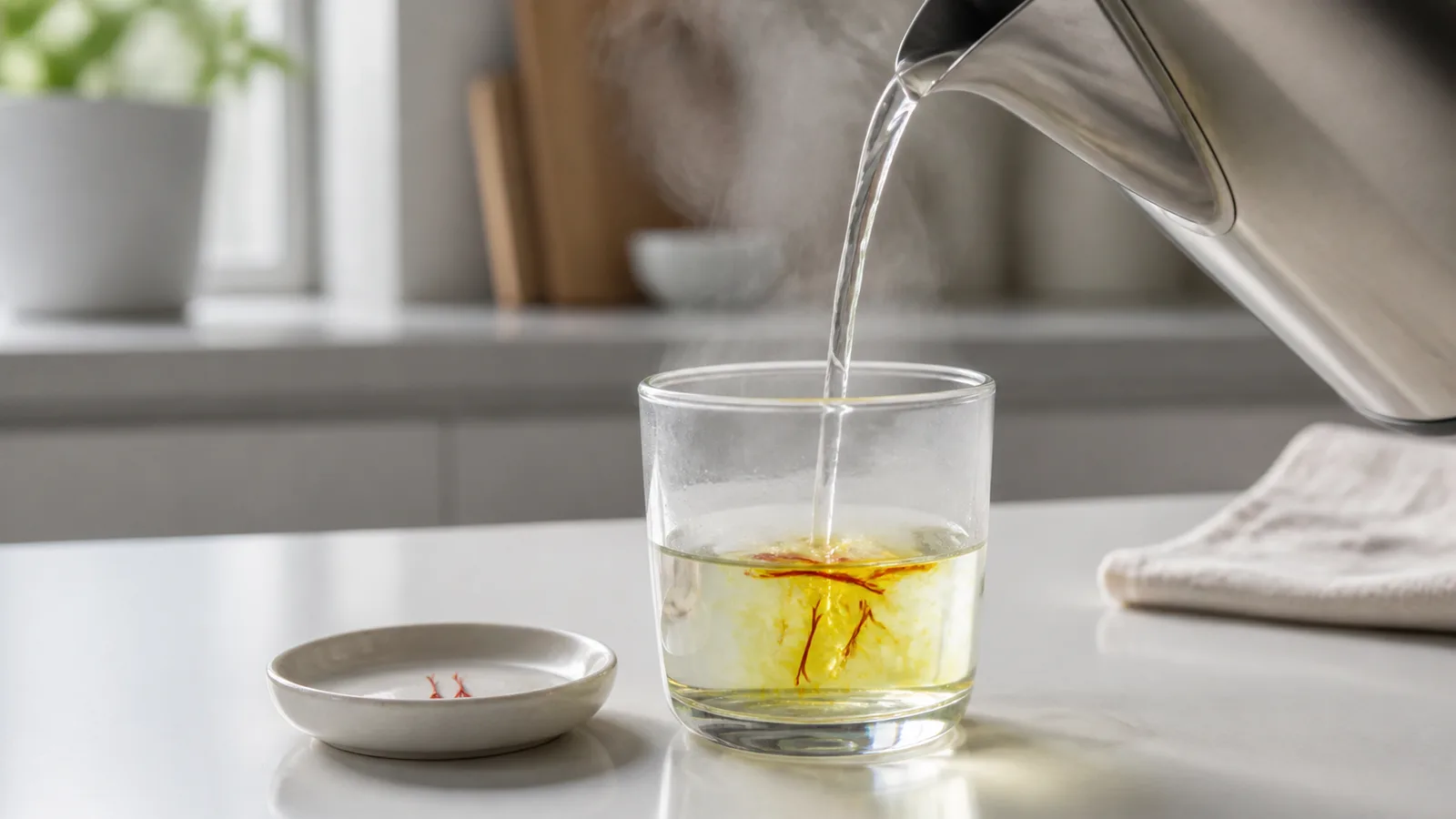
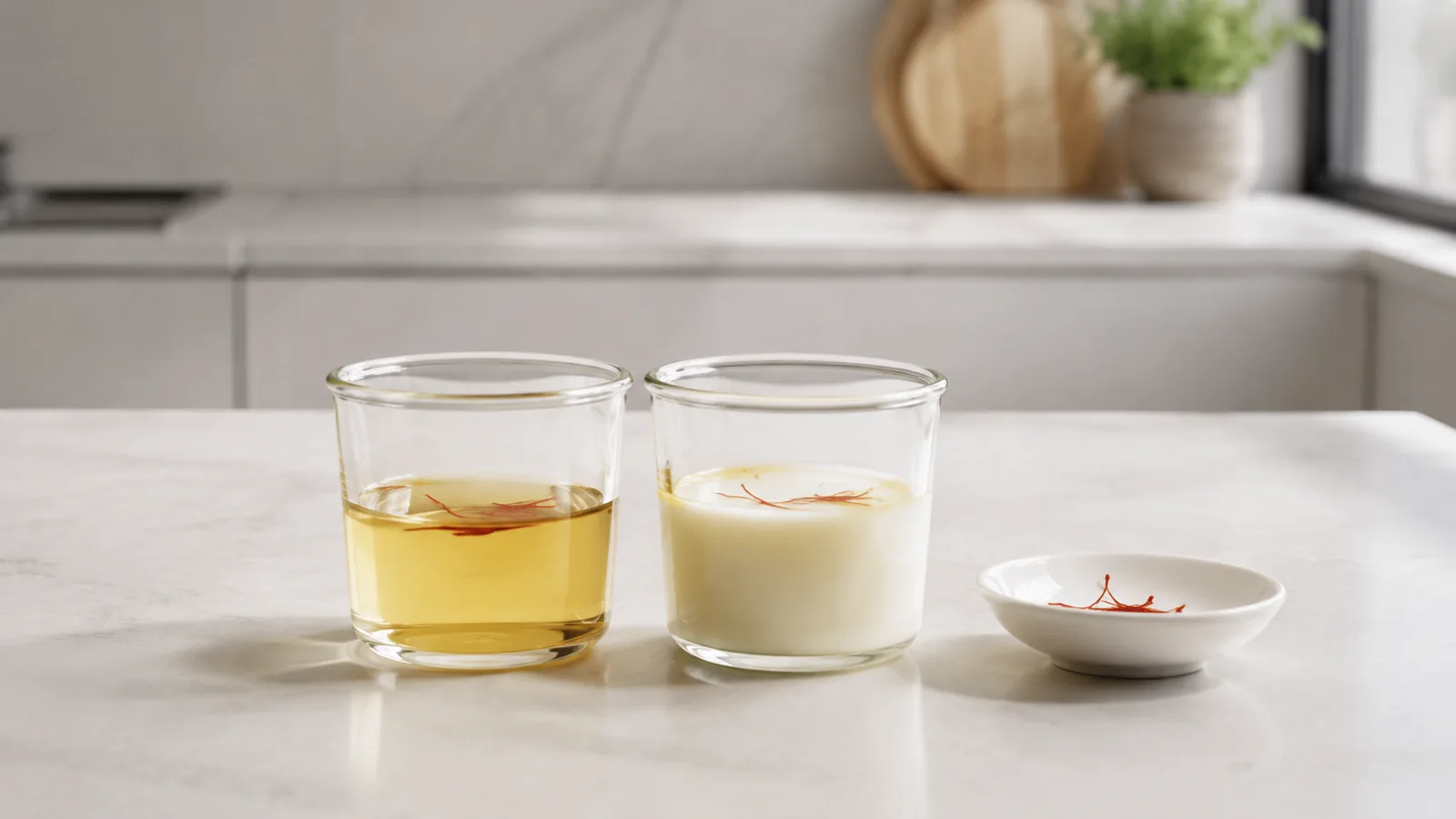
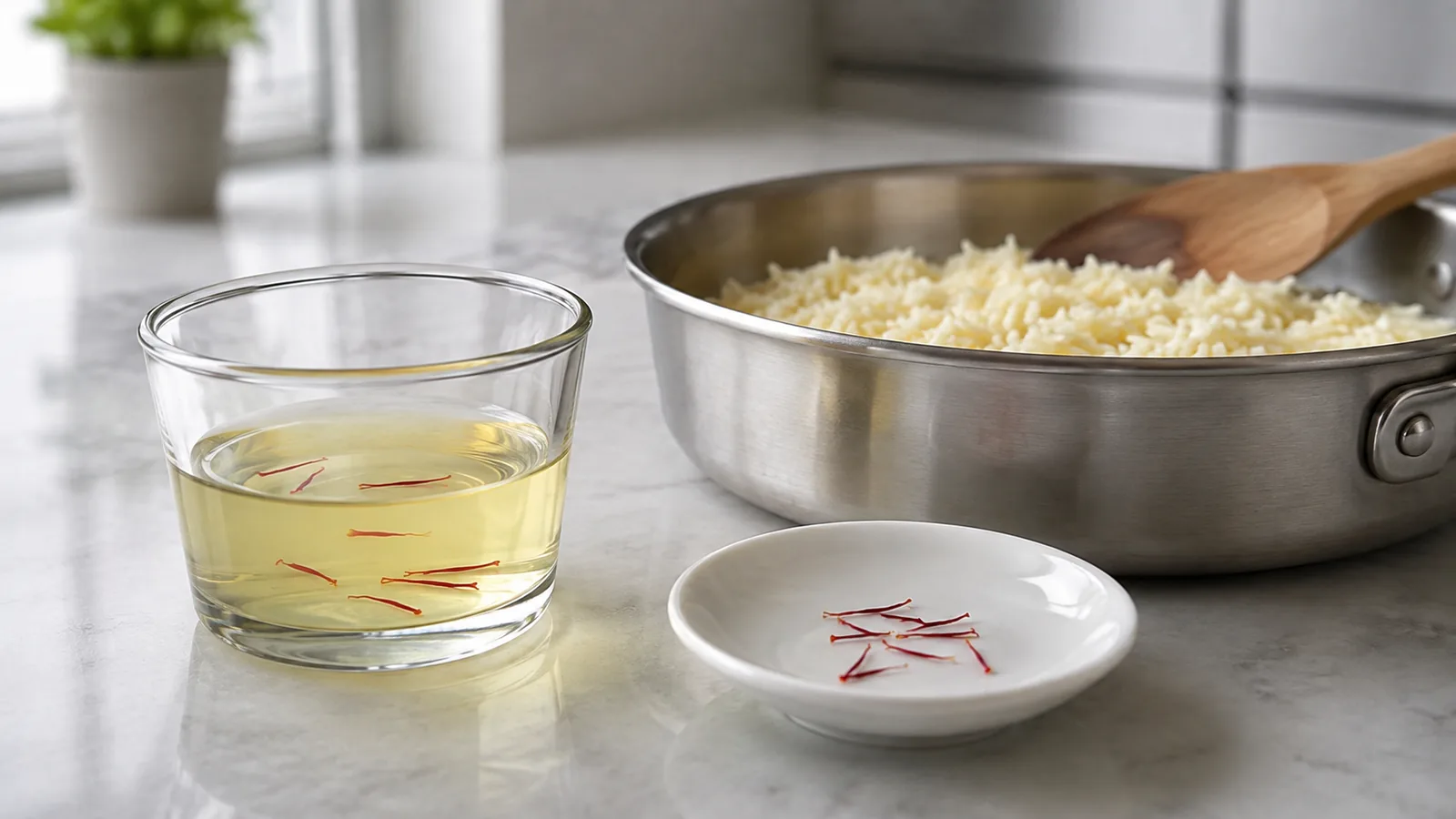
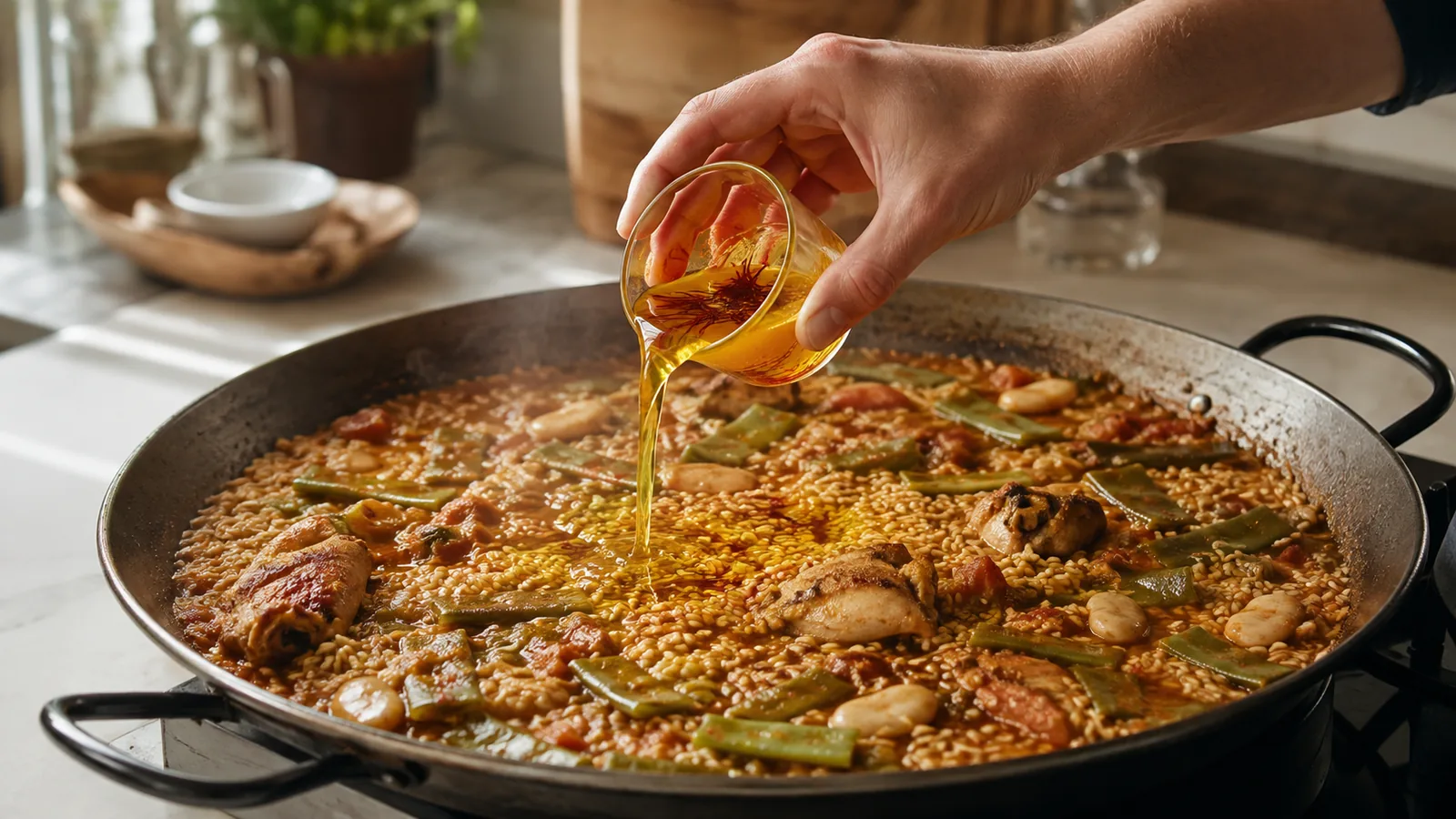
- Place them in a small cup with about 60–120 ml of warm stock or water. The liquid should be hot enough to infuse, but not boiling.
- Leave the cup for 15–20 minutes while you prepare the sofrito and stock.
- Add the saffron liquid with the measured cooking liquid, making sure the threads go into the pan too.
This method spreads both pigment and aroma through the whole pan. Our fuller guide to brewing saffron before cooking explains why gentle heat and time work better than boiling the threads.
When should you add saffron to paella?
Add the infusion before or with the rice, once the sofrito and main cooking liquid are ready. This gives the colour time to move evenly into the grains. If you pour it into one corner after the rice has nearly cooked, the pan may colour unevenly and the late-added liquid can disturb the texture.
Avoid frying dry saffron directly in hot oil. Brief, controlled warming is used in some kitchens to wake up the aroma, but scorching a tiny quantity is easy and irreversible. Infusion is more forgiving for a home cook.
After the rice is distributed, resist constant stirring. Paella is meant to cook in a shallow layer, and moving the grains repeatedly changes the texture and makes the bottom crust harder to manage.
Does paella have to contain saffron?
Not every rice dish cooked in a paella pan follows one formula. Valencia has local and seasonal variations, and seafood, mixed and vegetable versions have developed well beyond the original rural dish. The Spanish Ministry of Culture’s paella heritage overview places the dish within Valencia’s living social and culinary tradition rather than reducing it to a generic yellow rice recipe.
For a classic Valencian-style paella, saffron is a traditional and valuable ingredient. Calling it absolutely indispensable is still too rigid: cooks have used approved colouring or made local adjustments when saffron was unavailable. What a substitute cannot do is reproduce the spice’s complete aroma and flavour.
So, does paella use saffron? Many traditional recipes do. Is saffron necessary for every dish called paella? No. The honest answer depends on the style you are cooking and whether you want the particular sensory effect of azafrán—the Spanish word for saffron.
Can turmeric replace saffron in paella?
Turmeric can turn rice yellow, but it tastes different. It is earthier and more direct, and a large amount can dominate the stock. Artificial paella colouring can imitate the appearance with little flavour, but it contributes none of saffron’s aroma.
If saffron is unavailable, use a substitute because you like the resulting dish, not because it is identical. A very small amount of turmeric can provide colour, while smoked or sweet paprika belongs in many paella preparations for its own flavour. Neither should be described as saffron.
For cooks choosing threads, our all-red saffron guide explains the form and quality cues to look for. Buy whole threads when possible and check that the aroma is fresh before committing the rice and stock.
How saffron works with the rest of the pan
Saffron cannot rescue weak stock or poorly cooked rice. Its effect depends on the foundation beneath it. Brown the meat or seafood appropriately, cook the tomato sofrito until excess water is gone, keep paprika from burning and use a rice that absorbs flavour without collapsing.
The pan matters because a wide, shallow layer promotes even evaporation. The cooking liquid should already taste properly seasoned before the rice goes in. Saffron then becomes part of that liquid rather than a garnish sitting on top.
Allow the finished paella to rest briefly off the heat. The grains settle, steam evens out and the aroma becomes easier to notice. Serve from the pan while it is still warm.
Common saffron mistakes in paella
- Using a large spoonful: pure saffron is potent; measure a small amount and avoid bitterness.
- Adding dry threads at the end: they cannot colour or flavour the rice evenly in the final minutes.
- Boiling the infusion hard: gentle warmth is enough to extract colour and aroma.
- Relying on colour alone: very bright instant orange can come from a blend or added colour rather than saffron quality.
- Using stale threads: a faded, nearly odourless jar may add cost without adding character.
- Expecting saffron to hide weak technique: stock, sofrito, rice depth and heat control still determine the dish.
The reason saffron remains worth using
Saffron is expensive by weight, but a paella needs only a small pinch. Used properly, that pinch reaches every grain and changes the dish in ways a yellow colourant cannot: the pan smells different, the stock gains another layer, and the rice takes on its familiar warm gold.
That is why cooks put saffron in paella. It is not decoration and it should not shout over the other ingredients. Infuse it, add it with the cooking liquid and let it become part of the rice.