How Many Flowers Does It Take to Make 1g of Saffron?
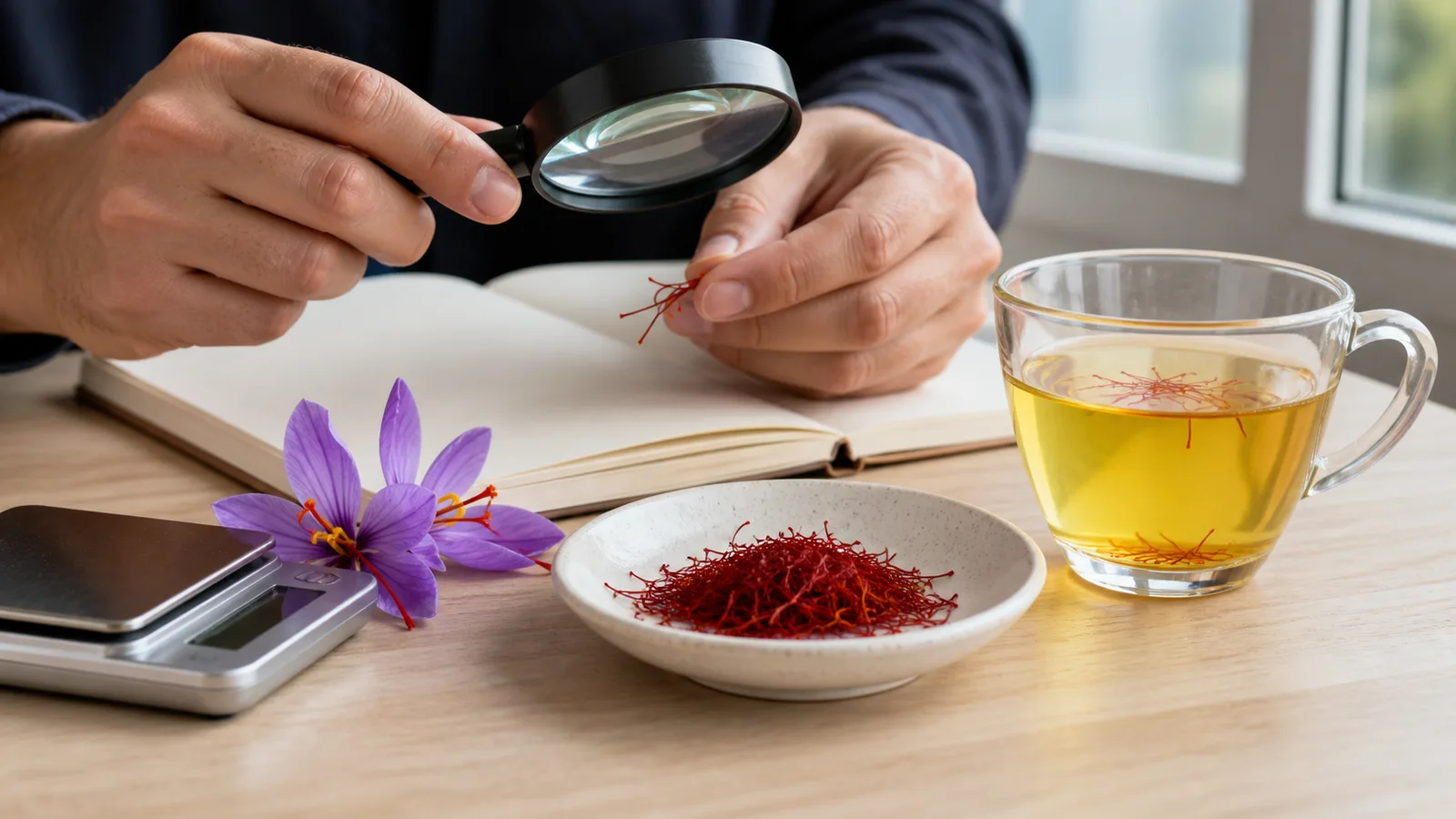
The production of saffron is a delicate and labor-intensive process, which is one of the main reasons for its high market value. To obtain just 1 gram of saffron threads, you typically need between 150 and 170 saffron flowers. Each flower of Crocus sativus contains only three red stigmas, and these are handpicked during the short blooming season in autumn. Once collected, the stigmas are dried carefully to preserve their aroma, color, and flavor. Drying reduces their weight significantly, which means the number of flowers needed to reach one gram is higher than most people expect.
The 150–170 range is not just a decorative fact. A Food and Agriculture Organization publication reports that producing a kilogram of pure saffron requires about 150,000–170,000 flowers. Divide that kilogram estimate by 1,000 and the familiar answer is roughly 150–170 flowers per gram.
It is still an estimate, not a rule that every batch will meet exactly. Flower size, stigma weight, how much yellow style remains attached, harvest conditions and final moisture all affect the number.
Why the answer is a range
A flower does not produce a standardised one-gram fraction. Larger, well-developed stigmas contribute more dry weight than small ones. Drying method and endpoint matter too: a product with more retained moisture weighs more, while over-drying can damage quality and reduce mass.
Field studies show the variation clearly. Research on crop cycle and corm size reported a highest measured dry-stigma weight of 7.4 mg per flower in one treatment. At that rate, about 135 flowers would make a gram; lower-yielding flowers require more. That does not overturn the 150–170 trade estimate. It explains why honest answers use “about.”
Grade also changes what is sold as a gram. Long red stigma sections, shorter broken material and product containing more style can occupy different volumes and represent different trimming decisions even when the scale reads 1.000 g.
How many stigmas, threads or strands are in one gram?
Each saffron flower has three red stigma branches. Using the typical flower range, one gram begins with about 450–510 stigma branches. People often call those branches threads or strands.
A finished gram does not necessarily contain 450–510 countable pieces. Stigmas can split during separation, drying, grading and packing, while some commercial cuts keep branches joined at the style. This is why how many saffron threads in 1 gram has no reliable single answer. Weight and grade are better measurements than a visual thread count.
How many plants are needed for one gram?
Flowers and plants are not interchangeable units. Saffron grows from a corm, not a true bulb, and one planted corm can produce no flowers, one flower or several depending on corm size, age, growing conditions and season. A field also develops daughter corms, so the relationship changes over time.
A three-year study of mother-corm size found large differences in flower and stigma production among corm weight classes and harvest years. For a home grower, “150–170 flowers” should therefore not be converted into “150–170 plants.” Plan with local field-yield data, flowering corm size and more than one season of results.
Flowers needed for larger weights
The same working range gives useful scale estimates:
- 1 gram: about 150–170 flowers.
- 1 ounce (28.35 g): about 4,250–4,820 flowers.
- 1 pound (453.6 g): about 68,000–77,100 flowers.
- 1 kilogram: about 150,000–170,000 flowers.
These are scaled estimates, not production guarantees. A processor should calculate with the measured dry-stigma yield of the actual crop rather than multiplying a marketing number.
From a crocus flower to dried saffron
The work happens in a narrow window. Flowers are collected during bloom, then the red stigma branches are separated from the purple tepals and yellow stamens. Separation needs care because only a very small portion of each flower becomes the familiar spice.
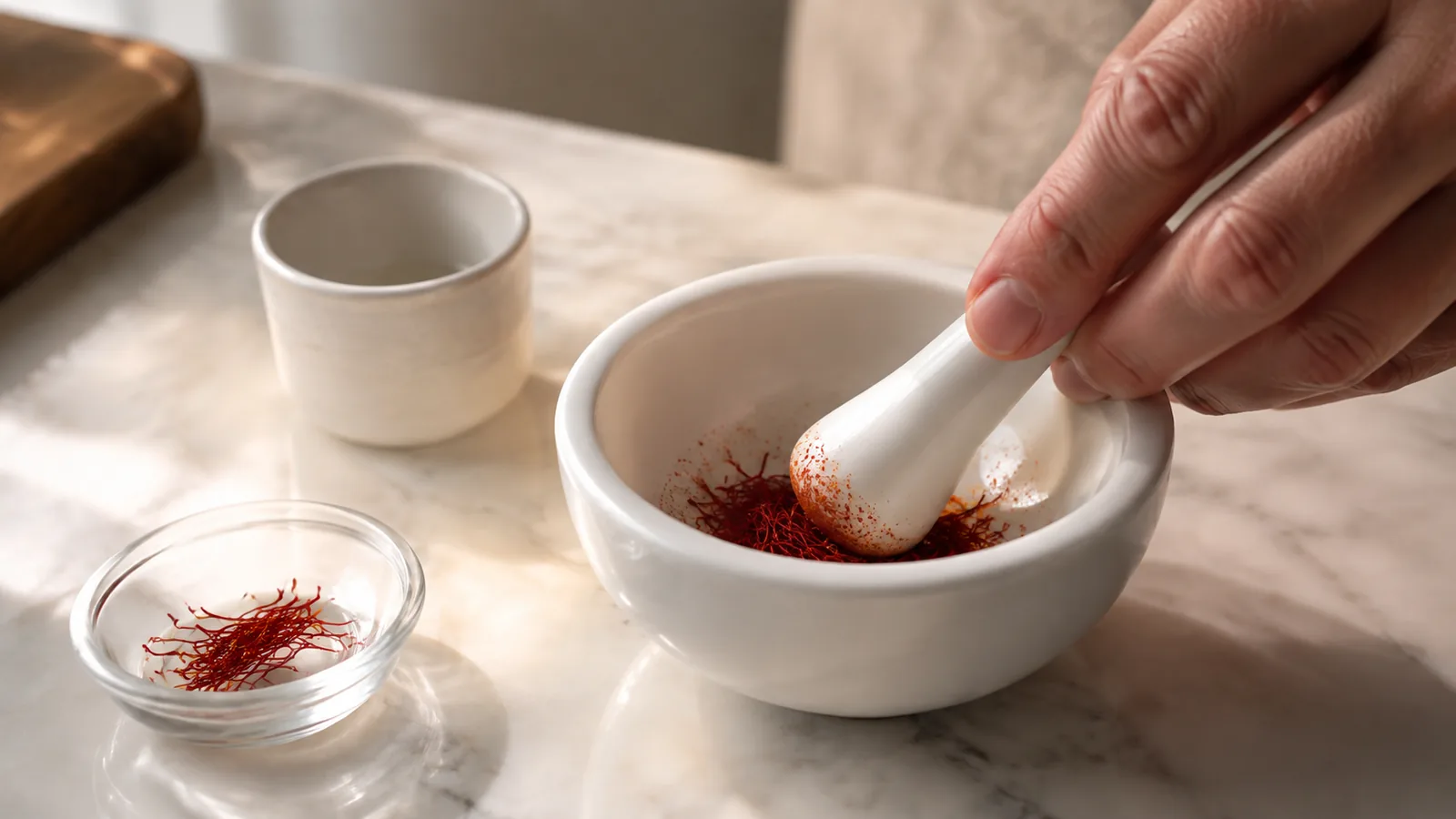
The stigmas are then dried under controlled conditions. Drying removes water, stabilises the material and develops the sensory profile expected of saffron. The Codex work on a saffron standard defines the product as dried floral parts derived from the pistil—stigmas with part of the style—of Crocus sativus. Petals and stamens do not become saffron spice.
Harvest and separation are commonly performed by hand because the flowers are delicate and the target material is small. Mechanisation exists in parts of production, but “entirely by hand everywhere” would be too absolute.
What does one gram of saffron look like?
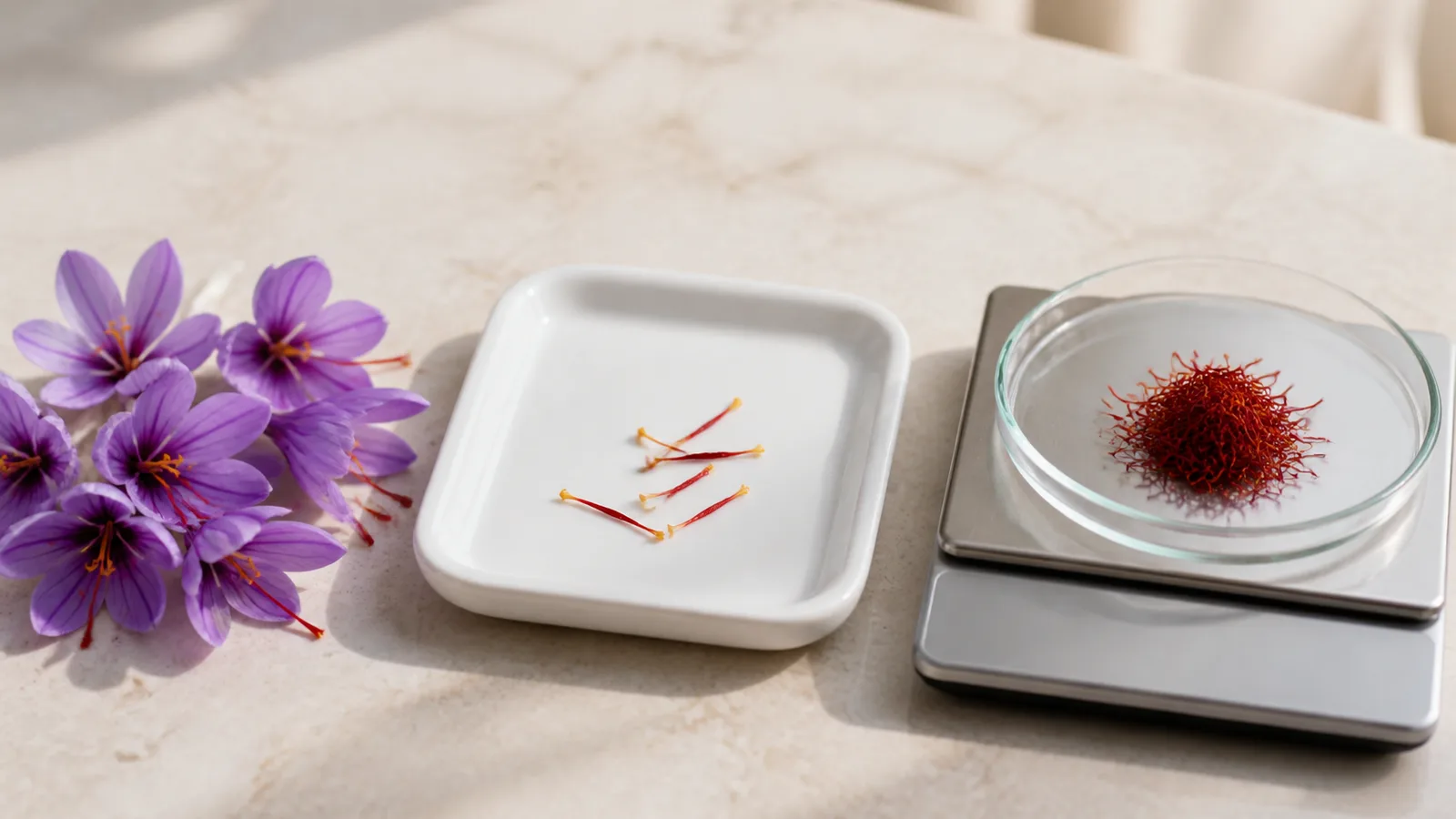
One gram looks like a small loose bundle, not a filled spice jar. Its apparent volume changes with thread length, breakage, cut and packing pressure, so a photograph cannot verify the weight. A calibrated scale is the meaningful check.
Powder may look more compact, but it also hides thread structure and is harder for a buyer to inspect. Whole threads make colour, shape and foreign material easier to assess. Neither appearance nor the flower-count estimate can replace identity and quality testing.
Why flower count affects saffron price
The raw material is only part of the cost. A producer must establish and maintain the field, collect a large number of flowers in a short season, separate the stigmas, dry them correctly, grade the result and protect it from moisture, light and contamination.
A saffron flower price, nursery-corm price and finished-spice price measure different products, so they should not be compared directly. Market value also changes with grade, origin, laboratory results, order size and season. For current context rather than a fixed number in an evergreen article, use our saffron price page.
The answer in one sentence
It typically takes about 150–170 saffron flowers to produce 1 gram of dried saffron: three stigmas per flower, roughly 450–510 original stigma branches, followed by careful separation and drying.
The range matters. Crop and processing conditions change the yield, thread counts become unreliable after handling, and corms do not each produce exactly one flower. That variability is part of the real agricultural story behind a single gram.