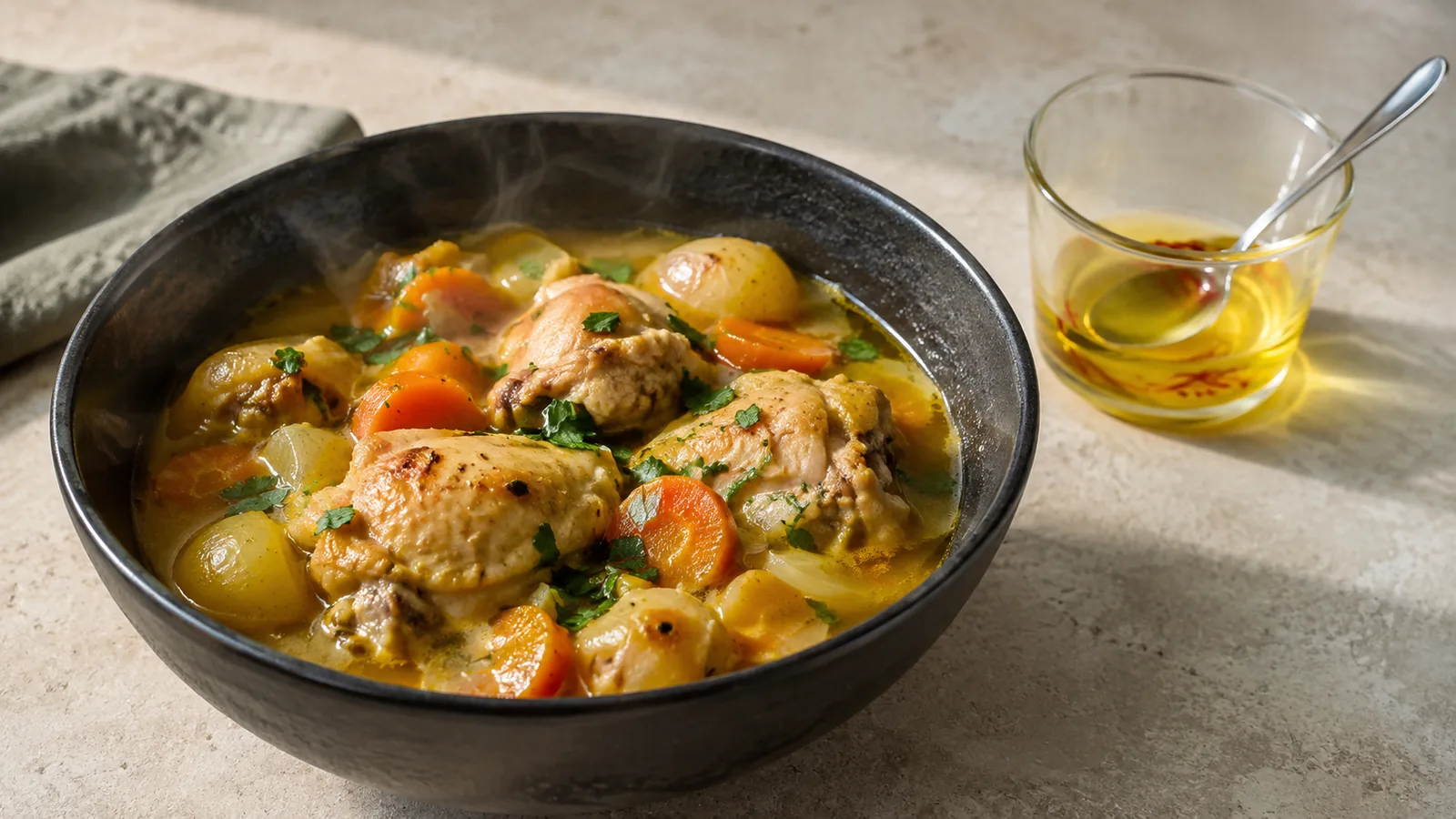
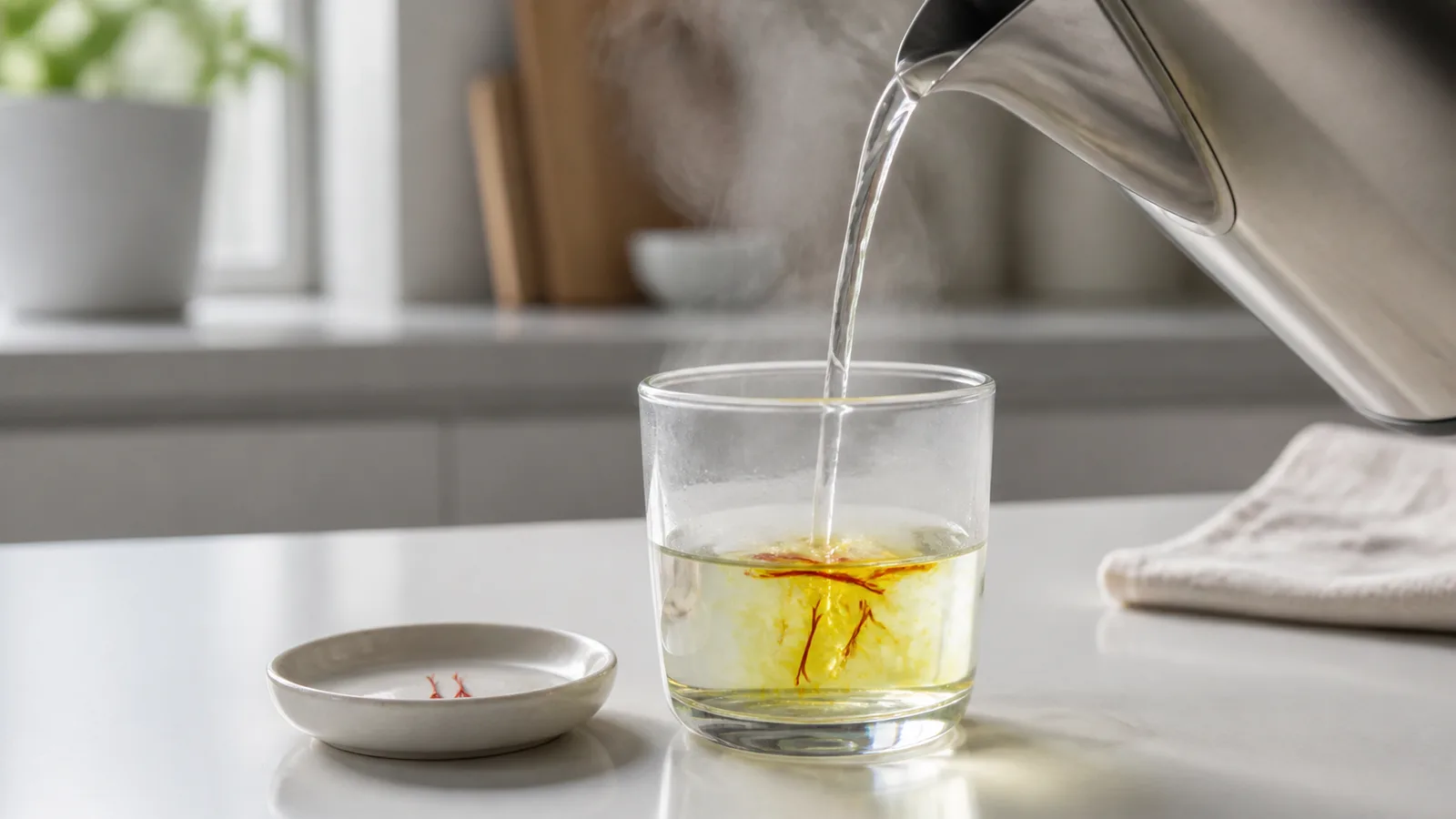
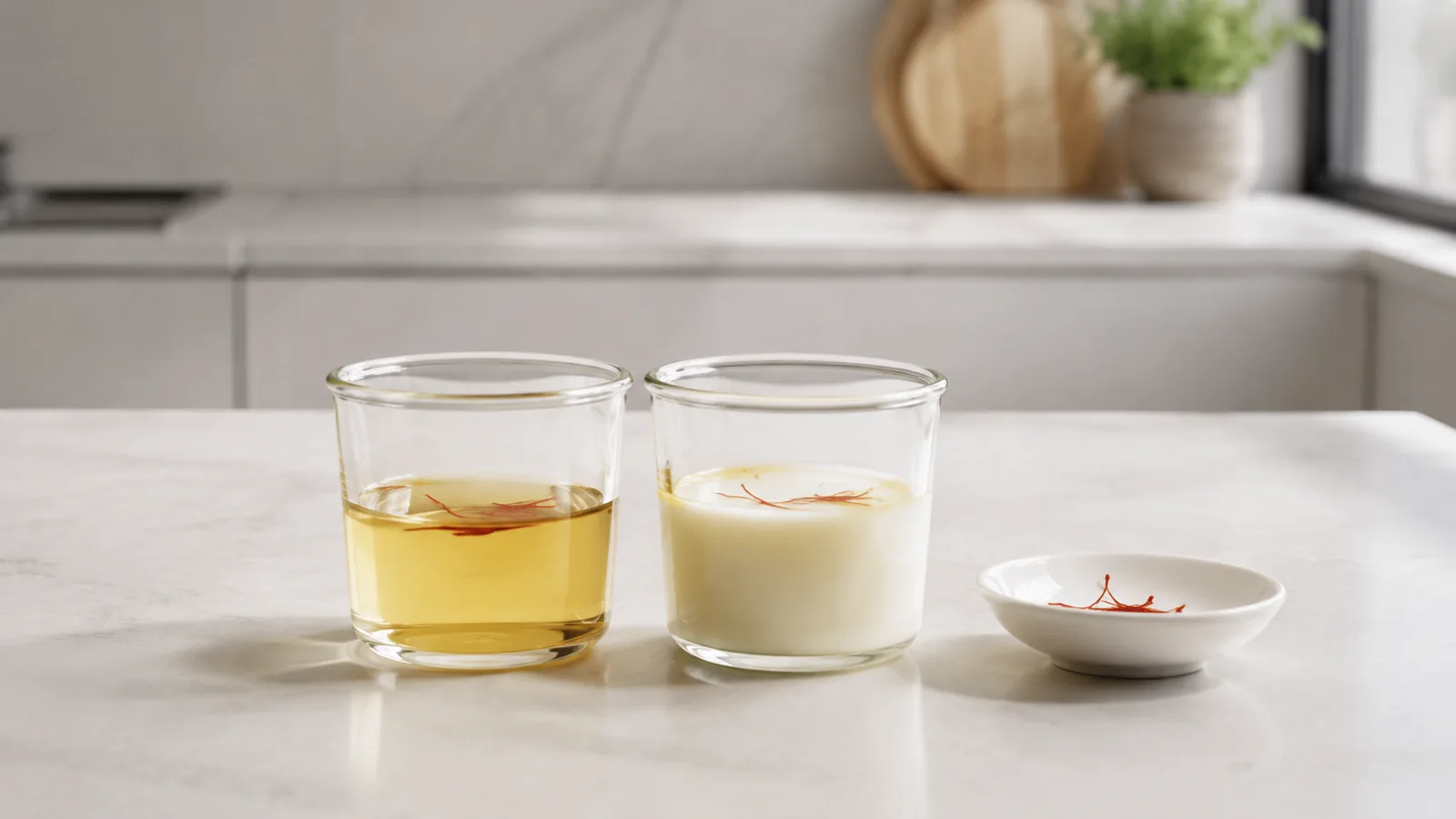
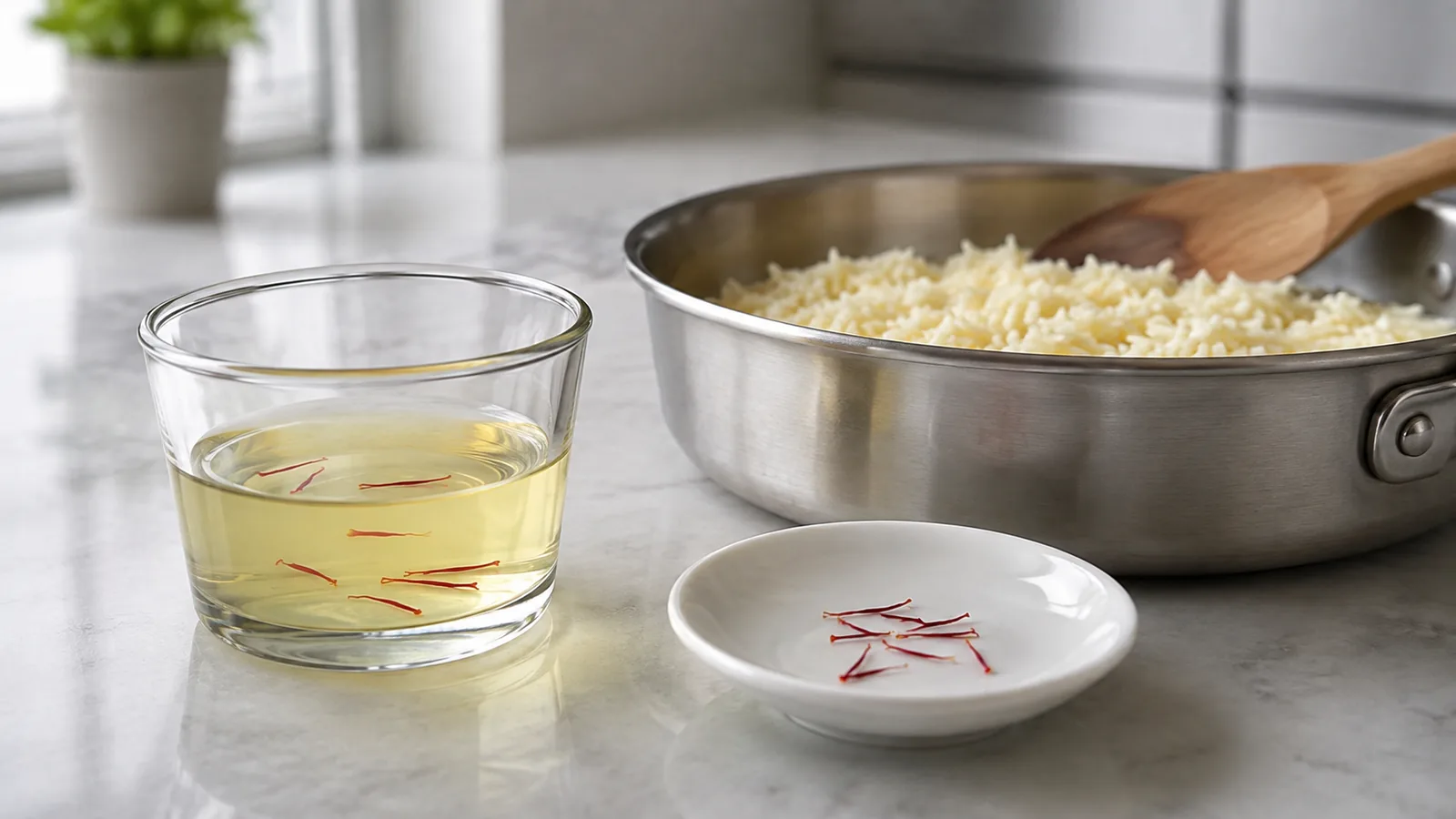
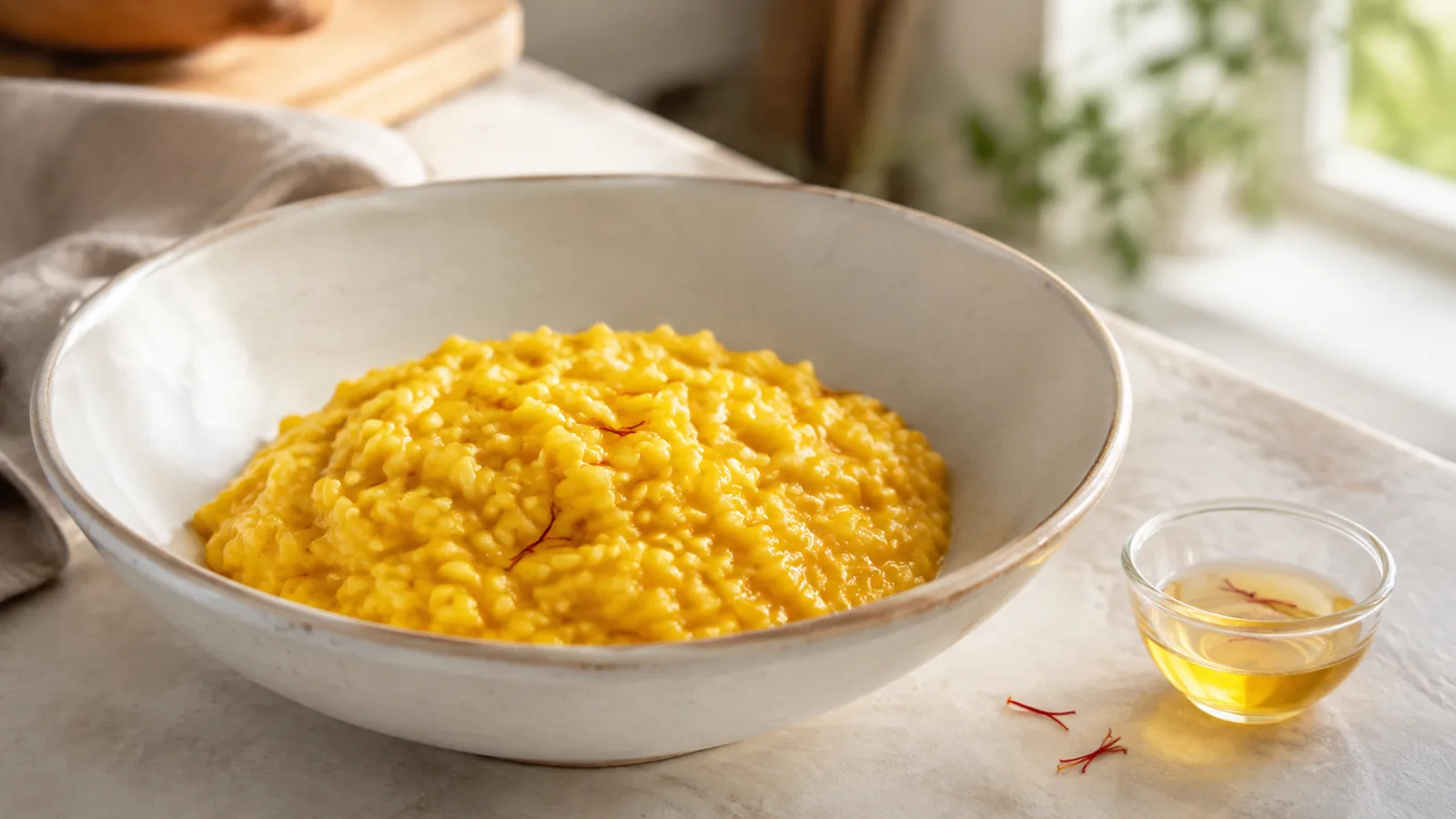
To activate saffron, lightly crush the threads, cover them with a small amount of warm water or stock, and leave them for about 15–20 minutes. Add both the golden liquid and the threads to the dish. In cooking, this hydration step uses gentle heat to spread colour, taste and aroma evenly. For anyone searching “how to infuse saffron,” this is the same process; “activate” is simply the familiar kitchen term.
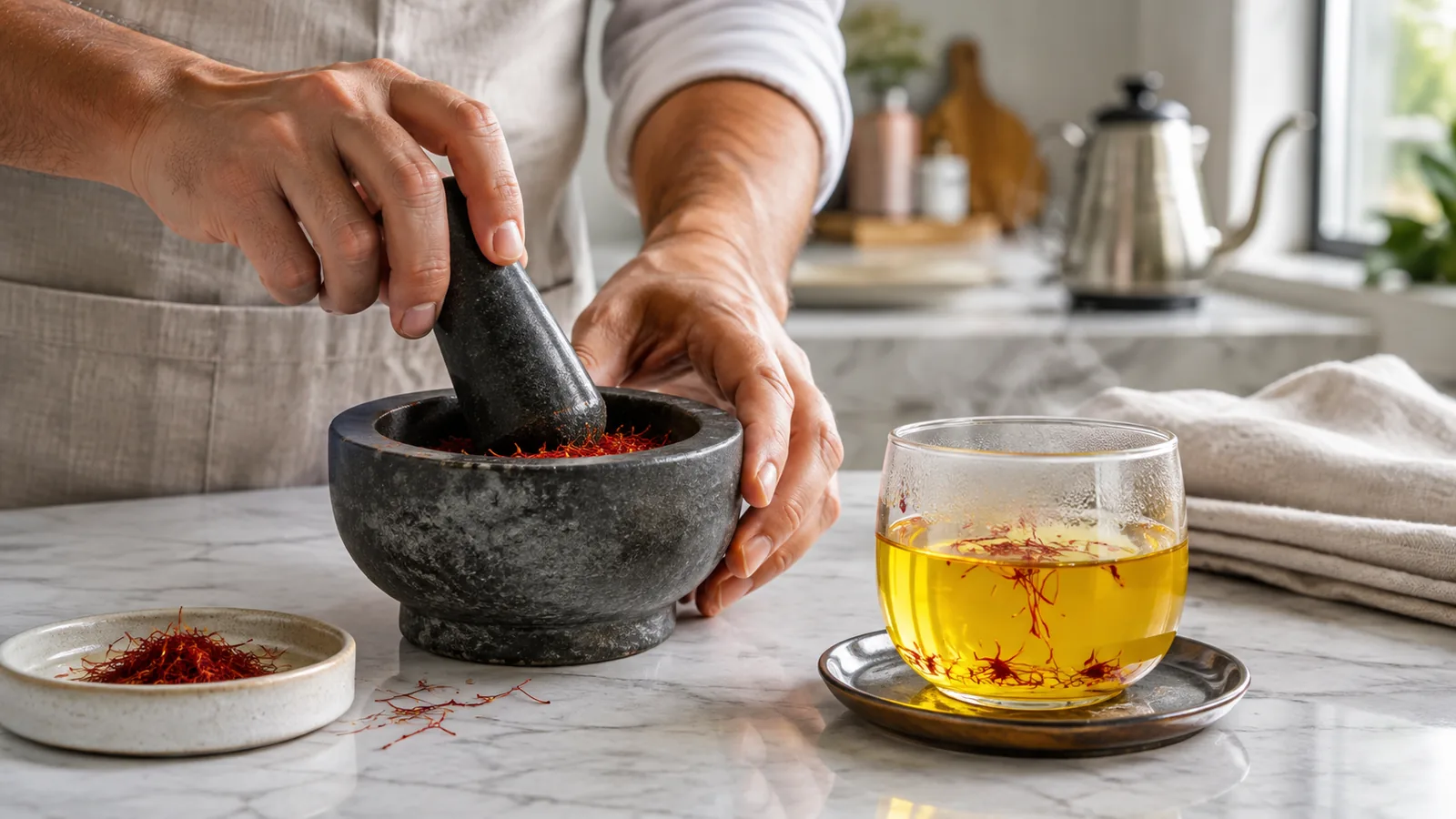
How to activate saffron step by step
- Measure the threads. Use the quantity called for in your recipe. For many family rice dishes, a generous pinch is enough; weighing is more consistent than counting threads.
- Crush them lightly. A mortar and pestle works well. Break the threads into small pieces rather than grinding them into dust.
- Add warm liquid. Pour in two to four tablespoons of water, milk or unsalted stock, depending on the recipe. Warm liquid should steam gently, not boil hard.
- Wait 15–20 minutes. The liquid should turn a clear yellow-gold and develop a recognisable saffron aroma.
- Use everything. Stir the infusion and softened threads into the food at the stage described below.
This small preparation makes it easier to distribute a tiny amount of saffron across a whole pot. It is especially useful for rice, where dry threads dropped into one spot can leave uneven patches.
What happens when saffron is infused?
Saffron contains crocins associated with colour, picrocrocin associated with taste and volatile compounds including safranal that contribute to aroma. Water carries much of the colour and taste into the dish. A 2024 culinary extraction study of saffron compared water, oil and mixed media at different temperatures and times. It found that water was particularly effective for crocins and that temperature, time and the surrounding medium changed what moved into the infusion.
That research helps explain why the traditional small-cup method works. It also shows why claims about one perfect temperature for every saffron compound are too simple. The practical aim is not laboratory maximum extraction; it is balanced colour and aroma in a meal.
How warm should the water be?
Use warm to hot water that is below a vigorous boil. Around 50–70°C is an easy working range at home: hot enough to infuse promptly, cool enough that you do not need to rush. If you have no thermometer, heat the liquid until it is clearly hot and lightly steaming, then let it stand for a moment before pouring.
Boiling water is not instant ruin. Studies have extracted saffron at high temperatures, and saffron is routinely cooked in rice and stews. The concern is prolonged, unnecessary exposure to strong heat. Research on saffron compounds during boiling-water cooking found that culinary heating can reduce crocins and safranal. A gentle infusion gives the cook more control.
How long should saffron bloom?
Fifteen to 20 minutes is a useful default for crushed threads in warm liquid. Five minutes can release noticeable colour, but a little more time usually gives a fuller infusion. A study of saffron tea reported substantial recovery of crocetin sugar esters from a five-minute hot-water infusion, while cold water extracted much less in that short period.
You can leave the covered cup longer while the rest of the meal cooks. If preparing it hours ahead, keep it covered and refrigerated, then use it the same day. Do not leave milk-based infusions sitting at room temperature.
Should you grind saffron with sugar or salt?
A few grains of sugar or coarse salt can give a mortar more grip and help break the threads evenly. Use whichever belongs naturally in the recipe. If the dish needs careful salt control, sugar is often simpler; for a dessert, avoid adding salt just for grinding.
Do not mix the whole jar with sugar in advance. Saffron keeps better as intact, dry threads in its own airtight container. Grind only what you are about to use.
Can you activate saffron with ice?
The ice method places crushed saffron under a melting cube and waits for cold water to draw out the colour. It works, but it is slower. Research comparing temperatures confirms that low-temperature water can extract crocins, while other aromatic components behave differently with heat and with oil.
Choose the method that fits the dish and your timing. Warm infusion is quick and dependable for everyday cooking. Ice blooming can be prepared earlier and may suit cooks who prefer that ritual, but it is not inherently more authentic or guaranteed to produce a stronger aroma.
Water, stock, milk or oil?
Match the liquid to the recipe.
- Water: neutral and reliable for rice, bread dough, sauces and desserts.
- Unsalted stock: convenient for paella, risotto and savoury stews; keeping it unsalted avoids concentrating salt in the small cup.
- Milk: useful for custards, saffron milk and dairy desserts; treat it as perishable.
- Oil or butter: can carry some aromatic compounds, but oil alone is less effective for the familiar water-soluble golden colour. Use an aqueous infusion first when colour matters.
Wine or another recipe liquid can also work, provided its flavour belongs in the finished dish. There is no benefit in adding an ingredient that competes with saffron merely to make an infusion.
When to add activated saffron
For rice, paella, soups and stews, add the infusion with enough cooking liquid left for it to spread. Our guide to using saffron in paella places the infusion before or with the rice rather than in one corner at the end.
For a long-cooked stew, part of the infusion can go in during cooking and a small reserved portion near the end can refresh the aroma. For custard, cake or bread, mix it into the recipe’s liquid so it disperses before the batter or dough sets.
Do not pour extra water into a nearly finished dry rice dish without accounting for it. Use part of the recipe’s measured liquid to bloom the saffron.
Common activation mistakes
- Using too much liquid: a concentrated small cup is easier to fit into the recipe.
- Scorching dry threads: gentle warming is different from frying saffron on a hot pan.
- Grinding a large batch: powdered saffron exposes more surface area to air and is harder to store well.
- Discarding the threads: add them with the infusion; useful material can remain in the solids.
- Judging by instant red colour: genuine saffron normally releases a golden-yellow infusion rather than a sudden opaque red dye.
- Expecting old saffron to recover: blooming distributes what remains; it cannot restore aroma lost during storage.
Activation is not a dose recommendation
Searches for how to consume saffron, how to intake saffron or how to consume kesar sometimes lead to this cooking technique. Infusion explains preparation, not a therapeutic dose. The amount appropriate for a recipe is not evidence for treating a health condition, and concentrated use requires different safety considerations.
For ordinary culinary use, follow a tested recipe and use saffron as a seasoning. People who are pregnant, take medication, have a health condition or plan to use concentrated saffron should seek individual advice from a qualified healthcare professional.
A reliable everyday method
Lightly crush the measured threads, steep them in a few tablespoons of warm recipe liquid for 15–20 minutes, then add the whole infusion at a point where it can spread. That is all “activating” saffron needs to mean.
Fresh threads and careful storage matter as much as technique. If you are replacing an old supply, use the current saffron price guide to choose a quantity you can keep airtight, dark and dry until it is used.