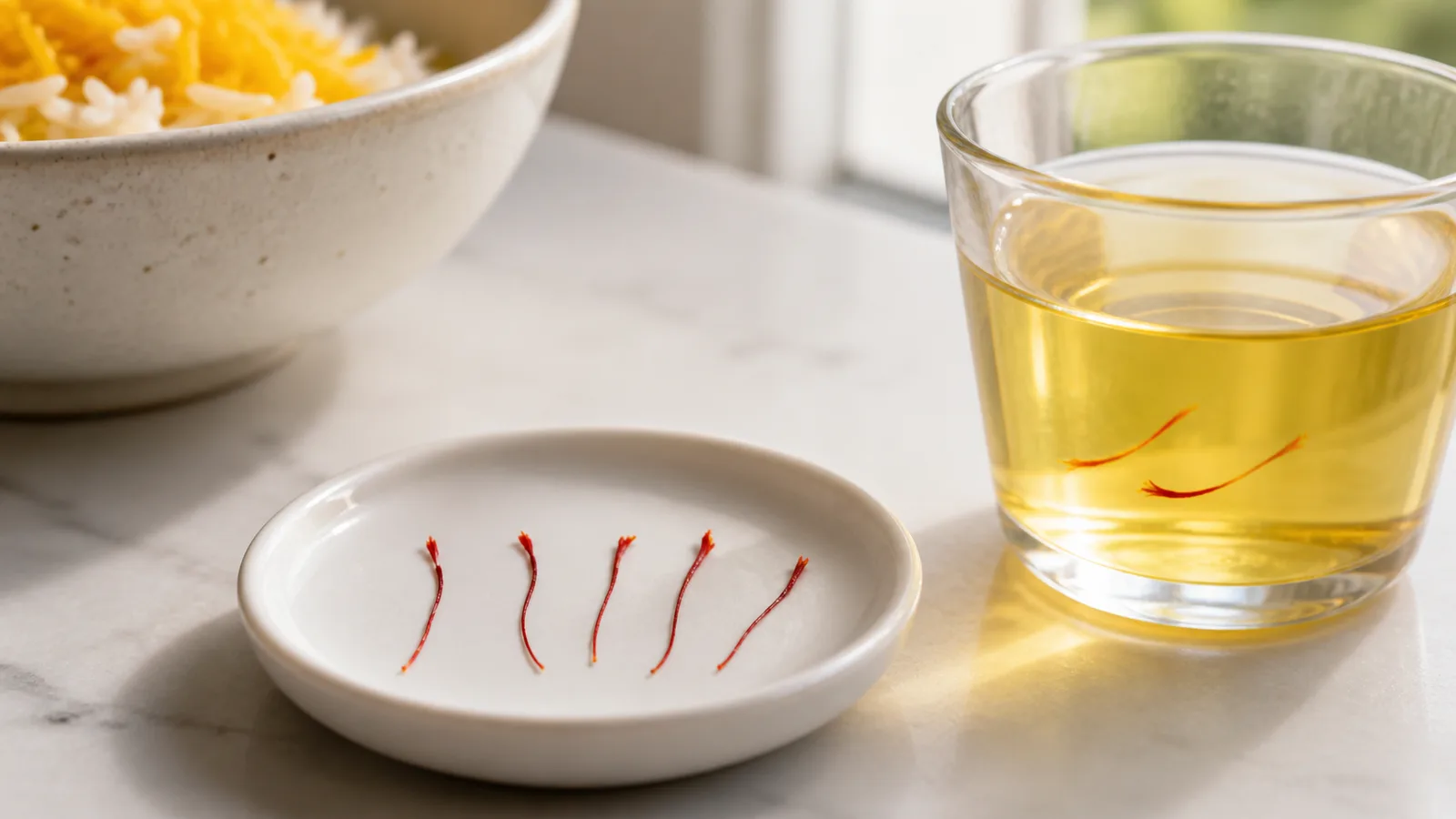
Saffron is scarce as a finished spice because each flower yields only three stigmas, the crop blooms during a short window, and harvesting and separation are largely manual. The cultivated plant also does not produce seed and must be multiplied through corms. Saffron is grown in several countries, so its rarity is about low usable yield and difficult production—not a claim that the plant exists in only one place.
Saffron Rarity Explained: Why This Spice Is Scarce
When people ask why saffron is so rare, they usually mean why genuine dried threads are available in such small quantities and cost more than ordinary spices. The answer begins with the tiny part of the flower that becomes the product.
Saffron is often called one of the rarest spices in the world because unique growing conditions, labor-intensive harvesting and meticulous processing constrain the finished supply. That familiar description refers to the spice, not to an endangered wild plant.
Rarity also needs context. Crocus sativus is a cultivated crop rather than an endangered wild spice that sellers happen to find. Farmers intentionally grow it, but converting a field of delicate flowers into a kilogram of clean dried stigmas takes an unusual amount of material and work.
Is Saffron Rare?
Yes, in the practical sense that finished culinary saffron has a very low yield per flower and cannot be produced as cheaply or quickly as many seed, bark or leaf spices. No, if “rare” is taken to mean that almost no saffron plants are cultivated. Commercial production exists in Iran, India, Spain, Afghanistan, Greece, Morocco and other suitable regions.
The useful question is therefore not simply how many plants exist. It is how much clean, dry, saleable stigma those plants yield and how reliably growers can harvest it during a narrow season.
Each Flower Provides Only Three Stigmas
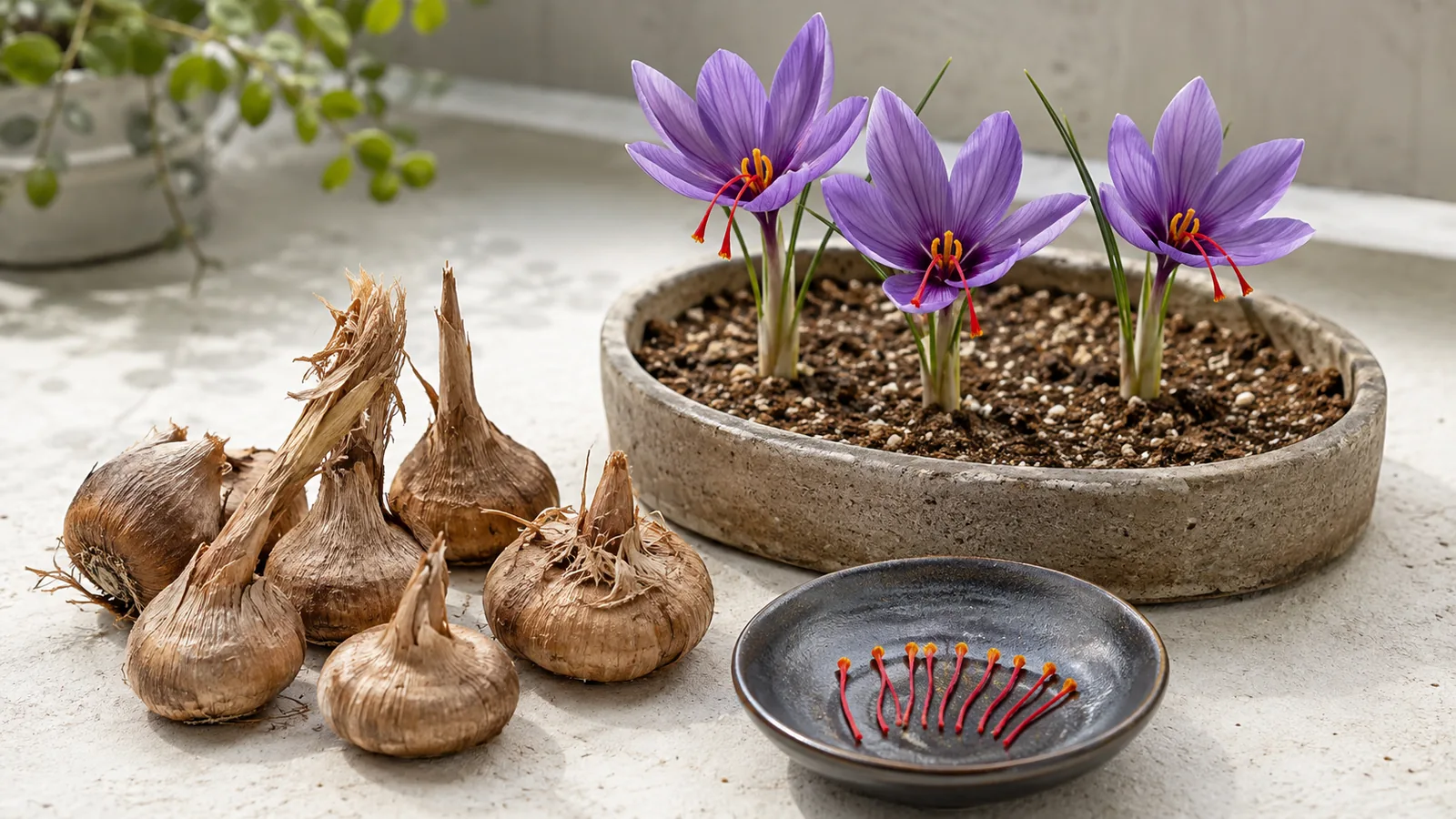
The spice comes from the three red stigmas of each saffron crocus flower. Petals, stamens and most of the remaining flower do not become the familiar dried threads. An FAO publication estimates that workers process approximately 150,000 to 170,000 flowers for one kilogram of saffron spice.
This creates a striking difference between harvest volume and finished weight. Thousands of flowers can become only a small package after separation and drying.
The Plant Cannot Be Raised from Seed
Cultivated saffron is a sterile triploid. It does not set viable seed and is propagated through underground corms. A peer-reviewed plant study describes its corm-only propagation and relatively low natural multiplication rate.
Growers can divide and replant daughter corms, but this is slower and more labour-intensive than sowing a field from inexpensive seed. Corm health, size, disease control and planting density also affect future flowering.
Flowering Creates a Short Harvest Window
Saffron flowers in autumn over a relatively brief period. Individual blooms need prompt collection and processing, so the workload arrives all at once rather than spreading evenly through the year.
A field can have enough plants but still face a labour bottleneck. Weather, delayed picking or slow separation can affect both recoverable yield and quality. This seasonal concentration contributes to scarcity in a way that annual production totals alone do not show.
Harvesting and Stigma Separation Are Manual
Flowers are picked and the red stigmas removed from the surrounding floral material. These jobs require careful handling because the threads are small and the product must stay clean. Mechanisation is difficult when the valuable part is delicate and the harvest is brief.
Manual work does not literally make the plant rarer, but it limits how much finished saffron can move through the production process during the available window. If labour is unavailable, flowers cannot simply wait indefinitely.
Drying Shrinks and Defines the Finished Product
Fresh stigmas contain moisture. Controlled drying reduces their weight, helps make them stable and develops the aroma expected from saffron. Poor drying can leave excess moisture or damage colour, aroma and flavour.
The kilogram measured at the end is therefore very different from a kilogram of newly harvested flowers. Only a small selected part remains, and that part has lost water during processing.
Suitable Cultivation Is Broad but Not Effortless
The old idea of extremely limited cultivation areas is too simple. Saffron can adapt to more than one climate and soil, but commercial success still depends on seasonal temperature, well-drained soil, ample sunlight, corm quality, water management, field health and harvest labour.
Production is geographically concentrated because knowledge, planting material, infrastructure and trading networks matter alongside climate. Our reviewed saffron production overview gives more context without implying that saffron grows nowhere else.
Quality Sorting Reduces Saleable Supply
Not every harvested thread belongs in the same lot. Producers may sort by red stigma content, thread condition and unwanted plant material. Moisture, drying, storage and contamination also affect whether a lot meets its intended specification.
This means gross harvest and saleable high-quality supply are not identical. Purity checks and testing can remove or downgrade material, which is necessary for honest trade even though it reduces the quantity sold at the highest value.
High Demand Meets a Small Finished Yield
Chefs, home cooks, food manufacturers and cultural traditions create continuing demand for saffron’s distinctive aroma, flavour and colour. This creates the familiar high global demand versus limited supply pattern: when output is slow and labour-intensive, buyers compete for a limited harvest.
Demand does not stay constant, and neither does supply. Crop size, quality distribution, exchange rates, freight and stock carried from earlier seasons can change availability. That is why “rare” should not be converted into one permanent price.
Does Rarity Mean Every Expensive Jar Is Good?
No. Scarcity and price can attract substitution, added material, artificial colour or dramatic marketing. An expensive package is not proof of purity, and a country name alone does not establish quality.
Look for a clear net weight, product form, origin, batch information and evidence supporting grade or purity claims. Whole threads are easier to inspect visually than powder, although visual inspection cannot replace proper testing.
Rarity versus High Price
Saffron’s scarcity helps explain its price, but the two ideas are not identical. Price also includes labour, drying, verification, packaging, freight, duties and retail handling. The guide to why saffron’s rate is high separates those costs.
Likewise, “rarest spice” and “most expensive spice by weight” are different claims. For the price comparison with vanilla and cardamom, see whether saffron is the most expensive spice by weight.
Conclusion
Saffron is scarce because three tiny stigmas per flower, sterile corm-based propagation, a short flowering period, manual harvest, careful separation and drying all limit finished output. It is cultivated across several countries, so the strongest explanation is low yield and demanding production rather than mythical exclusivity. Genuine whole-thread saffron is available through our products page.