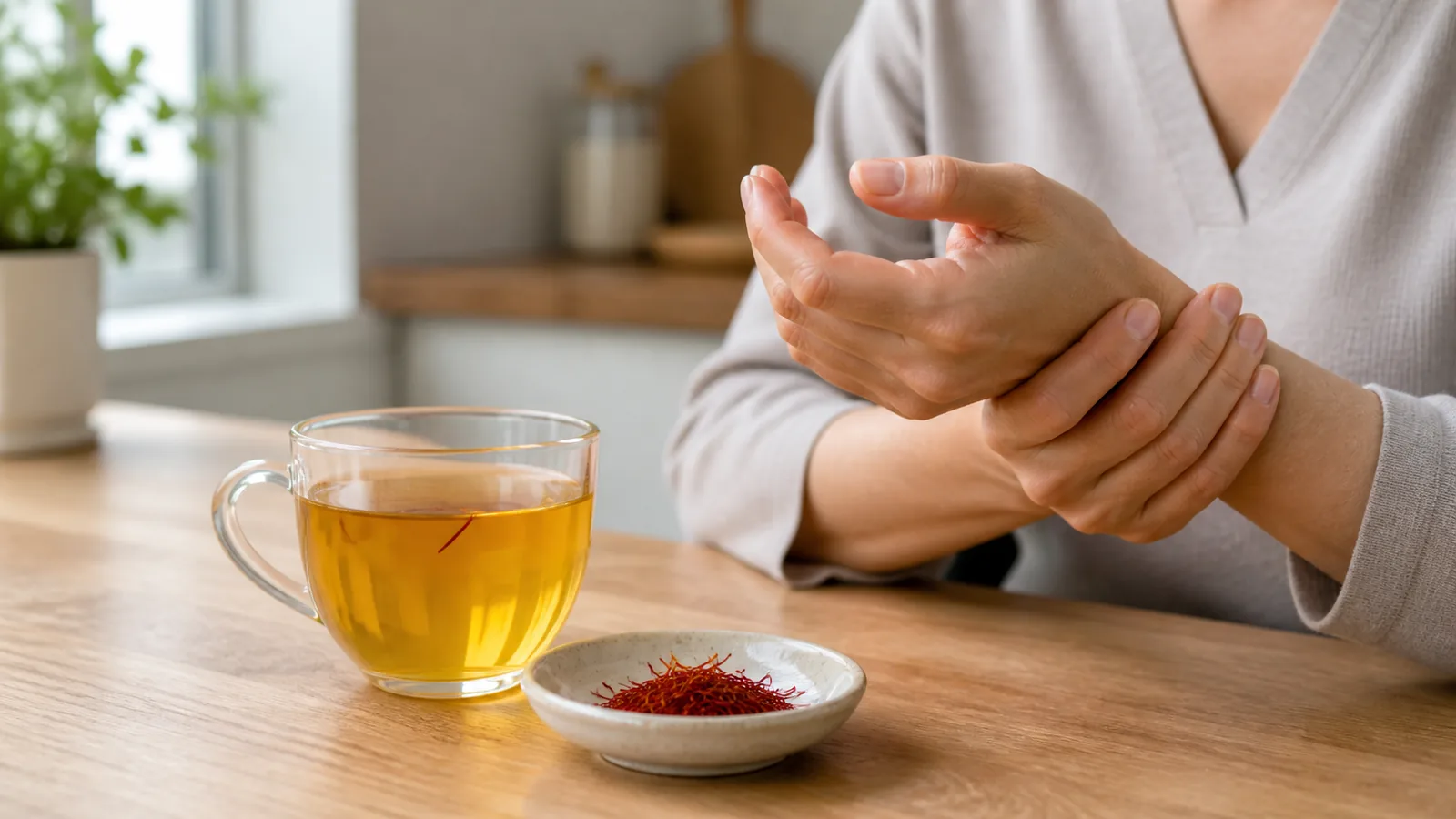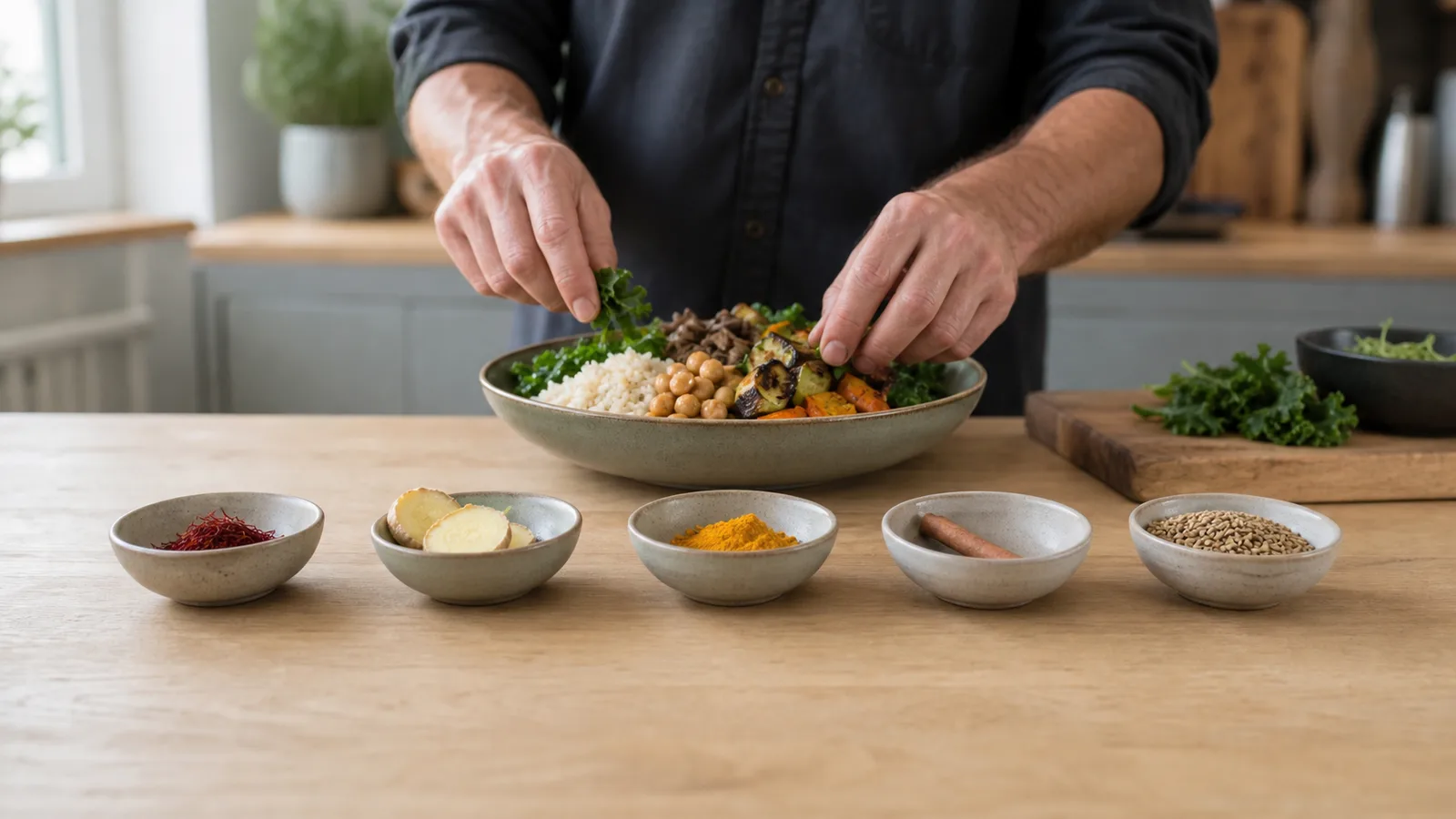
No spice has enough clinical evidence to be called the best spice for testosterone. Fenugreek seed extracts and ashwagandha preparations have produced the most encouraging results in some small human trials, but those findings concern specific supplements—not ordinary seasoning—and they are not a treatment for diagnosed testosterone deficiency. Saffron, ginger, turmeric, and cinnamon have not been shown reliably to raise testosterone in people.
That may be less exciting than a “natural booster” ranking, but it is the useful answer. Testosterone varies with time of day, health, sleep, energy intake, medication, and laboratory method. A spice cannot tell you whether your level is low, and feeling tired or having a lower libido does not establish the diagnosis.
Which spice is best for testosterone?
There is no proven winner. A systematic review of 32 controlled studies covering 13 single herbal ingredients found that only nine studies reported a statistically significant testosterone increase. The reviewers saw the most positive evidence for fenugreek and ashwagandha extracts, yet only six of the 32 studies were judged at low risk of bias, and much of the research involved healthy men younger than 40 rather than patients with confirmed hypogonadism.
A later review of products marketed as testosterone boosters reached a similar broad conclusion: most proposed ingredients failed to increase total testosterone. Even a statistically detectable result does not necessarily produce a meaningful change in symptoms, strength, fertility, or health.
Saffron and testosterone
Does saffron increase testosterone? Human evidence does not currently show a dependable increase. Saffron has been studied more for mood, sexual function, and male infertility than for correcting a low hormone level. Those outcomes should not be treated as synonyms.
Some small trials and a meta-analysis report improvement in parts of sexual-function questionnaires, but that does not demonstrate higher testosterone. A 260-person placebo-controlled infertility trial also found no improvement in semen measures after 26 weeks of saffron. Antioxidant activity or an effect in an animal model is not proof that saffron boosts testosterone in men.
Saffron can still be a worthwhile culinary spice. Use it for aroma, flavor, and color in food, without presenting it as hormone therapy. Our evidence review of saffron benefits for men separates mood, sexual function, fertility, and testosterone claims in more detail.
Does ginger boost testosterone?
Ginger has a plausible-looking laboratory story, but the human evidence is not strong enough to call it a testosterone booster. A focused review found that most supportive research came from animal or basic studies and said clinical studies were still needed. Mechanisms involving oxidative stress, blood flow, or luteinizing hormone cannot substitute for controlled trials that measure meaningful outcomes in people.
Fresh ginger is a useful food ingredient, and supplements have been studied for other purposes such as nausea. That does not establish a hormone effect. Ginger supplements can cause heartburn, abdominal discomfort, diarrhea, and medicine interactions, according to the U.S. National Center for Complementary and Integrative Health.
Fenugreek: positive signals, important limits
Fenugreek has the strongest spice-related signal in the comparative herb review, but the details matter. Studies generally tested proprietary or standardized extracts, sometimes alongside resistance training, for a limited period. A spoonful of fenugreek in a meal is not the same intervention.
The evidence is not consistent enough to recommend fenugreek as treatment for low testosterone. It may also cause nausea, diarrhea, a harmful drop in blood sugar, or an allergic reaction at supplemental amounts. NCCIH advises that amounts greater than food use are unsafe during pregnancy and recommends discussing herbal supplements with a clinician when medicines are involved.
Ashwagandha is an herb, not a proven testosterone treatment
Ashwagandha is often included in lists of testosterone-boosting spices, although it is a root herb rather than a culinary spice in the usual sense. NCCIH describes limited evidence that certain preparations taken for two to four months may increase testosterone or sperm quality. It also notes that the studies are small and use varied products.
Short-term use is not the same as established long-term safety. Ashwagandha can cause digestive symptoms and drowsiness, has been linked rarely to liver injury, and may interact with thyroid, blood-pressure, diabetes, immune, sedative, and anti-seizure medicines. It is not appropriate during pregnancy or breastfeeding and is not recommended for some thyroid, autoimmune, surgical, or hormone-sensitive prostate situations.
Turmeric and curcumin
Claims that turmeric raises testosterone usually come from animal research or indirect reasoning about oxidative stress. There is no solid human trial evidence showing that turmeric seasoning or curcumin reliably corrects low testosterone. Curcumin supplements also vary substantially in dose and absorption; a highly bioavailable extract is not comparable with turmeric in a curry.
NCCIH notes that evidence is insufficient to conclude turmeric or curcumin is beneficial for most promoted health purposes. Enhanced-absorption formulations have also been associated with liver injury in some users. That safety issue is another reason not to take a concentrated product merely because turmeric is familiar as food.
Is cinnamon good for testosterone?
Cinnamon is not a proven testosterone booster in humans. Searches often surface animal fertility experiments, but they cannot establish that adding cinnamon to breakfast raises a person’s testosterone or treats symptoms. Cinnamon can be enjoyed as seasoning; it should not be promoted as endocrine treatment.
Supplement exposure also differs from food use. Cassia cinnamon can contain coumarin, and concentrated products are not automatically safer because they are sold as natural. The relevant question is not whether cinnamon has an interesting plant compound, but whether a controlled human study shows a reliable, clinically useful hormone change. That evidence is missing.
What about testosterone-booster foods, seeds, and boron?
No single testosterone-booster food or seed reliably raises testosterone in a person who is already adequately nourished. A balanced diet supplies energy, protein, fats, and micronutrients needed for normal physiology, but correcting a documented deficiency is different from pushing a normal hormone level higher.
Boron supplements are sometimes marketed for testosterone. The U.S. National Institutes of Health says boron is not classified as an essential human nutrient, no recommended intake has been set, and scientists are uncertain about its role in the body. That is not a basis for buying a high-dose “booster.” Excess boron can cause nausea, vomiting, diarrhea, rash, headache, and more serious toxicity.
Other common testosterone claims
Short, small studies of sexual activity and abstinence have recorded temporary hormone differences, but they do not show that masturbation causes chronic low testosterone. In one study of ten healthy men, testosterone was unaltered by masturbation-induced orgasm. More importantly, temporary fluctuations do not diagnose hypogonadism or create a need for a spice or supplement.
Likewise, libido, erections, sperm quality, muscle gain, and testosterone are related in some contexts but are not interchangeable measures. A product that changes a questionnaire score has not necessarily changed a hormone level, and a laboratory change has not necessarily improved how someone feels.
How low testosterone is actually assessed
The Endocrine Society recommends diagnosing hypogonadism only when compatible symptoms or signs occur together with unequivocally and consistently low testosterone. It recommends an accurate morning fasting total-testosterone measurement, a repeat measurement to confirm the result, and further evaluation to find the cause.
That evaluation matters because sleep disorders, severe calorie restriction, obesity, pituitary or testicular conditions, chronic illness, and some medicines can affect hormone levels or produce similar symptoms. Treatment decisions can also affect fertility. A spice list cannot replace that workup.
A sensible way to use spices
- Use saffron, ginger, turmeric, cinnamon, and fenugreek to make varied, enjoyable food.
- Do not assume a supplement extract has the same exposure or safety as the food.
- Be sceptical of labels promising a rapid testosterone increase, muscle gain, or sexual performance.
- Check independent testing, the exact ingredient and dose, interactions, and duration before considering any supplement.
- If symptoms concern you, seek proper testing rather than combining several “boosters.”
If you are selecting saffron for cooking rather than hormone treatment, our saffron range shows the available culinary formats.
Evidence reviewed
- Systematic review of herbal ingredients and testosterone concentrations in men
- Systematic review of products proposed as testosterone boosters
- Endocrine Society guideline resources for diagnosing male hypogonadism
- Review of ginger and testosterone evidence
- Placebo-controlled saffron trial in men with infertility
- NCCIH fenugreek evidence and safety summary
- NCCIH ashwagandha evidence and safety summary
- NCCIH turmeric evidence and safety summary
- NIH Office of Dietary Supplements boron fact sheet