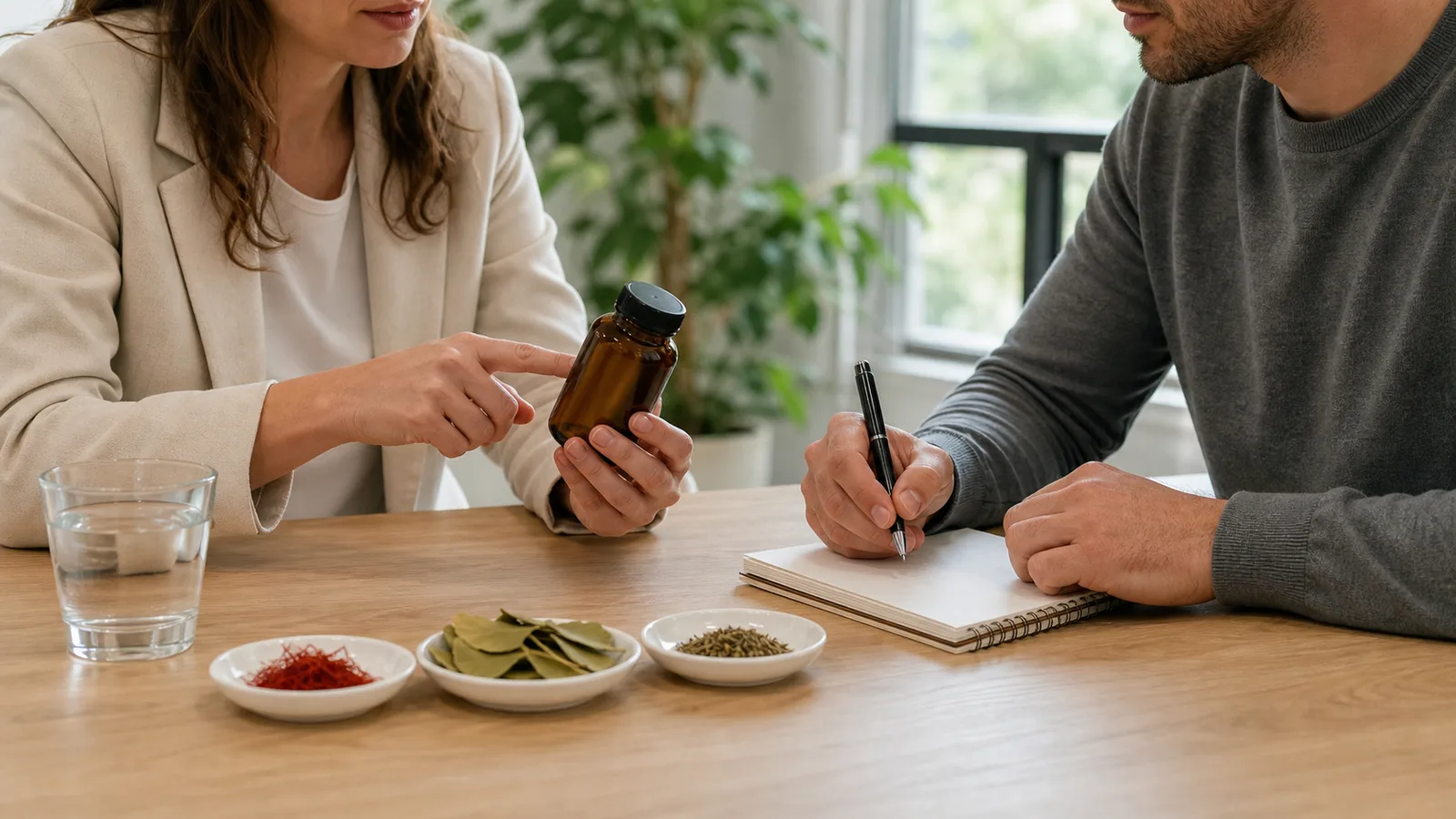
There is no “strongest herb” proven to treat attention-deficit/hyperactivity disorder (ADHD). A few plant extracts—including saffron, ginkgo, bacopa, and valerian—have been tested in small or short studies, but the evidence is too limited and inconsistent to rank one as the most effective. Gotu kola has not been established as an ADHD treatment at all.
This does not mean every study is negative. It means the research is not strong enough to replace a proper assessment, behavioral support, school or workplace accommodations, or medication when prescribed. It is especially important not to experiment on a child with several “focus” supplements at once: products vary, interactions occur, and a proprietary extract is not the same as a kitchen herb.
What is the strongest herb for ADHD?
No herbal treatment currently has the quantity and quality of evidence needed to earn that title. A systematic review and meta-analysis found only seven relevant randomized trials in children and adolescents. It described possible signals for a few preparations, but concluded that the proof was inadequate to strongly recommend herbal medicines for ADHD.
A 2025 supplement review also found limited potential for bacopa and ginkgo under clinical guidance, while stressing that supplements cannot replace the well-documented efficacy of stimulant treatment. Different reviews do not even rank the same products in the same order. That uncertainty is exactly why a confident “best herb” list would be misleading.
Gotu kola for ADHD: what the evidence actually shows
Gotu kola (Centella asiatica) is traditionally described as a brain tonic, which is probably why people search for gotu kola and ADHD together. Yet the available clinical literature does not show that it reduces the core ADHD symptoms of persistent inattention, hyperactivity, and impulsivity in diagnosed patients.
A systematic review and meta-analysis of Centella asiatica for cognition found no significant advantage over placebo across cognitive-function domains. Some small studies suggested short-term changes in alertness or mood, but the participants and outcomes were not equivalent to an ADHD treatment trial. Research in healthy older adults, healthy schoolchildren, dementia, anxiety, or laboratory models cannot establish that gotu kola treats ADHD in a child or adult.
Claims that gotu kola “increases blood circulation to the brain” also do not answer the clinical question. A mechanism is not evidence of improvement in daily functioning, school performance, impulse control, or a validated ADHD rating scale. There is no justified ADHD dose to recommend.
Ginkgo biloba
Ginkgo has been tested in children and adolescents, but the findings are mixed and the studies are small. In one six-week comparison, ginkgo was less effective than methylphenidate. Another six-week trial found some additional improvement when ginkgo was added to methylphenidate, but that tested it as an adjunct—not as a replacement.
Those two designs cannot be merged into the claim that ginkgo is one of the most effective herbs for ADHD. Ginkgo can also interact with medicines and may increase bleeding risk in some circumstances, so a clinician or pharmacist should review the exact product before use.
Bacopa monnieri
Bacopa, also called brahmi, has early research on attention, behavior, and memory. Older reviews noted small-to-medium improvements across selected outcomes, but also called for replicated designs and better statistics. A more recent 14-week placebo-controlled trial in 112 boys with inattention and hyperactivity found no significant behavioral difference between bacopa and placebo, although a few cognitive, mood, and sleep measures differed.
That is not a clear treatment result. It also illustrates why selecting only the favorable outcome from a study can distort the answer. Bacopa might warrant further study, but it cannot currently be called the strongest ADHD herb.
Saffron
Saffron is among the more interesting emerging candidates, but its evidence base remains small. A 2024 systematic review found only four clinical studies with 118 participants. The results suggested potential benefit when saffron was used alone or alongside methylphenidate, with no major safety signal in those trials.
Four small studies do not establish long-term effectiveness, the best extract, an appropriate dose for every age, or equivalence to standard care. Saffron in a meal is also not the same exposure as a standardized extract used in a trial. Anyone considering a concentrated preparation should review it with the clinician managing the ADHD plan. Our article on saffron side effects and precautions explains the distinction between food, tea, gummies, and extracts.
Valerian root
Valerian is better known as a sleep-related herb than as an attention treatment. A small ADHD study has contributed to interest, but systematic reviews describe the evidence as inconclusive. Sedation is not the same as better attention or self-regulation. A child who appears less active because a product makes them drowsy has not necessarily experienced an improvement in ADHD.
Valerian can cause sleepiness and may add to the effects of sedatives or other products. It should not be combined casually with ADHD medicine, sleep aids, alcohol, or multiple calming herbs.
Rhodiola rosea
Rhodiola is marketed for stress and fatigue, but that is not evidence that it treats ADHD. Good-quality ADHD trials showing improvement in core symptoms and functioning are lacking. Calling it an adaptogen or describing a possible neurotransmitter effect does not fill that gap.
Rhodiola products also differ in plant material and standardization. A person who feels tired or unfocused may have sleep loss, anxiety, depression, anemia, a medicine effect, or another issue that needs assessment rather than stimulation from an unverified blend.
Ashwagandha
Ashwagandha has limited evidence for stress and insomnia, but it has not been shown to be an effective ADHD treatment. Lower stress or better sleep might make concentration easier for some people, yet that is an indirect effect and does not prove improvement in ADHD symptoms.
NCCIH notes possible digestive effects, drowsiness, medicine interactions, thyroid concerns, and rare cases of liver injury linked to ashwagandha supplements. It should be avoided during pregnancy and breastfeeding. These are meaningful considerations for a product sometimes marketed as harmless and “natural.”
Why focus and memory claims are not enough
ADHD is not simply an occasional lapse in concentration. Diagnosis considers a persistent pattern, its onset and presence across settings, functional impairment, and other explanations. A study in healthy adults that measures memory for a few hours cannot show that an herb manages ADHD. Nor can an animal study, a blood-flow claim, or a laboratory change in dopamine or serotonin.
A useful trial needs an appropriate ADHD population, a clearly identified product, randomization, a credible comparison, validated outcomes reported by more than one observer when relevant, adequate follow-up, and full safety reporting. Much of the herbal literature is too small or inconsistent to meet that standard confidently.
What evidence-based ADHD care includes
Current CDC guidance describes behavior therapy and medication as established treatments, chosen and monitored according to age and individual needs. For children under six, parent training in behavior management is recommended before medication. For children six and older, recommended plans can combine approved medication with parent training, classroom interventions, organizational-skills work, and school support.
Adults may use medication, therapy, other behavioral approaches, or a combination. A good plan measures whether daily functioning improves and adjusts for side effects. Sleep, exercise, regular meals, and a balanced diet can support wellbeing, but they are not presented as cures.
If you are considering an herbal supplement
- Tell the ADHD clinician or pharmacist the exact brand, extract, amount, and full ingredient list.
- Do not stop or reduce prescribed treatment to test an herb without clinical guidance.
- Use one clearly documented change at a time so benefits or adverse effects can be interpreted.
- Agree in advance on meaningful outcomes, such as task completion, classroom behavior, sleep, or a validated rating scale.
- Watch for sedation, agitation, stomach symptoms, rash, sleep disruption, bleeding, or medicine interactions.
- Avoid products that promise a cure, hide amounts inside a proprietary blend, or combine many stimulants and calming agents.
The safest conclusion is not that herbs have no research value. It is that none can yet be named the strongest herb for ADHD, and gotu kola specifically lacks direct ADHD evidence. Promising extracts should be studied—not promoted beyond what their trials can show.
Evidence reviewed
- CDC overview of evidence-based ADHD treatment
- NICE recommendations for ADHD diagnosis and management
- Systematic review and meta-analysis of phytotherapy for ADHD
- 2025 systematic review of supplements used with or without stimulants
- Systematic review and meta-analysis of gotu kola and cognition
- Randomized comparison of ginkgo and methylphenidate
- Placebo-controlled bacopa trial in children with inattention and hyperactivity
- Systematic review of saffron clinical studies in ADHD