Which saffron is best? The best saffron is genuine Crocus sativus from a recent, traceable batch that delivers strong colour, aroma, and flavour. Country names and trade grades can be useful clues, but they do not prove quality on their own. A well-stored Iranian saffron can be excellent; so can certified Spanish or Kashmiri saffron. The batch matters more than a slogan about being “number one in the world.”
If you are comparing products, start with whole red threads, clear origin and packing information, a sensible harvest or best-before date, and, when available, a batch-specific laboratory report. For buyers, best saffron quality means that the identity, purity, potency, and freshness of that batch can be supported. Those checks tell you more than an ornate box or an unexplained premium label.
What is the best saffron in the world?
There is no independent world ranking that names one permanent winner. Saffron changes from harvest to harvest, and storage affects it after packing. The International Organization for Standardization publishes ISO 3632-1:2025 for dried saffron in filament, cut-filament, and powder forms. Laboratory assessment is designed to evaluate the product itself, not the reputation of a country or brand.
ISO explains that its saffron standards help laboratories assess colour, aroma, flavour strength, moisture, and foreign matter. It also notes that powdered saffron is more vulnerable to undetectable-at-a-glance substitution. Its consumer overview, How to recognize quality saffron, is a better basis for choosing than a top-five or top-ten list built from marketing claims.
So the practical answer to “what is the highest quality saffron?” is: a pure, potent, correctly stored batch with evidence behind it. An ISO category or test result should be tied to the actual batch you are buying. A generic logo printed on every package is not the same thing.
Which country produces the best saffron?
Origin affects tradition, processing style, thread presentation, and flavour profile. It does not make every product from that region equal.
Iranian and Persian saffron
Iran is closely associated with saffron production, and Iranian saffron is widely available in several trade presentations. Names such as Negin, Sargol, Pushal, and Dasteh usually describe which part of the stigma and style is retained and how the threads are sorted. They are not universal guarantees of freshness, purity, or laboratory strength.
- Negin commonly refers to long, separated red stigma sections with little or no pale style attached.
- Sargol is generally made up of separated red stigma tips and may be shorter.
- Pushal retains some yellow or orange style with the red stigma, which can make origin and structure easier to see but adds less colour-active material by weight.
- Dasteh or bunch saffron keeps the connected stigma and style bundled together in a more traditional presentation.
For someone searching for the best Iranian saffron or best Persian saffron, a clean Negin or Sargol batch may offer a high proportion of red material. Even then, ask for batch details. A “best Iranian saffron brand” cannot be judged responsibly from the country name or grade word alone.
Spanish saffron
Spain has a long saffron tradition, and Spanish products may be sold as threads or powder. Azafrán de La Mancha is a protected designation of origin, not a generic synonym for all saffron packed in Spain. The European Union’s official product specification states that the name may be used only for saffron that complies with the PDO specification and is certified by the inspection body.
When comparing Spanish saffron vs Iranian saffron, check whether you are looking at a protected regional product, a Spanish-packed import, or saffron actually grown elsewhere. Compare the same form and similar batch data rather than assuming the packing country is the growing country.
Kashmiri and other Indian saffron
Kashmir saffron is valued for its regional identity and distinctive presentation. It is also a registered geographical indication in India; the official Kashmir Saffron GI record lists the defined Jammu and Kashmir geographical area. A GI protects a regional name and specification. It does not mean every unrelated product described loosely as “Indian saffron” has the same provenance.
A Spanish saffron vs Indian saffron comparison therefore needs more than colour in a photograph. Look for a traceable producer or packer, a protected-origin mark where claimed, harvest information, and appropriate testing.
How to recognise high-quality saffron threads
Inspect the structure
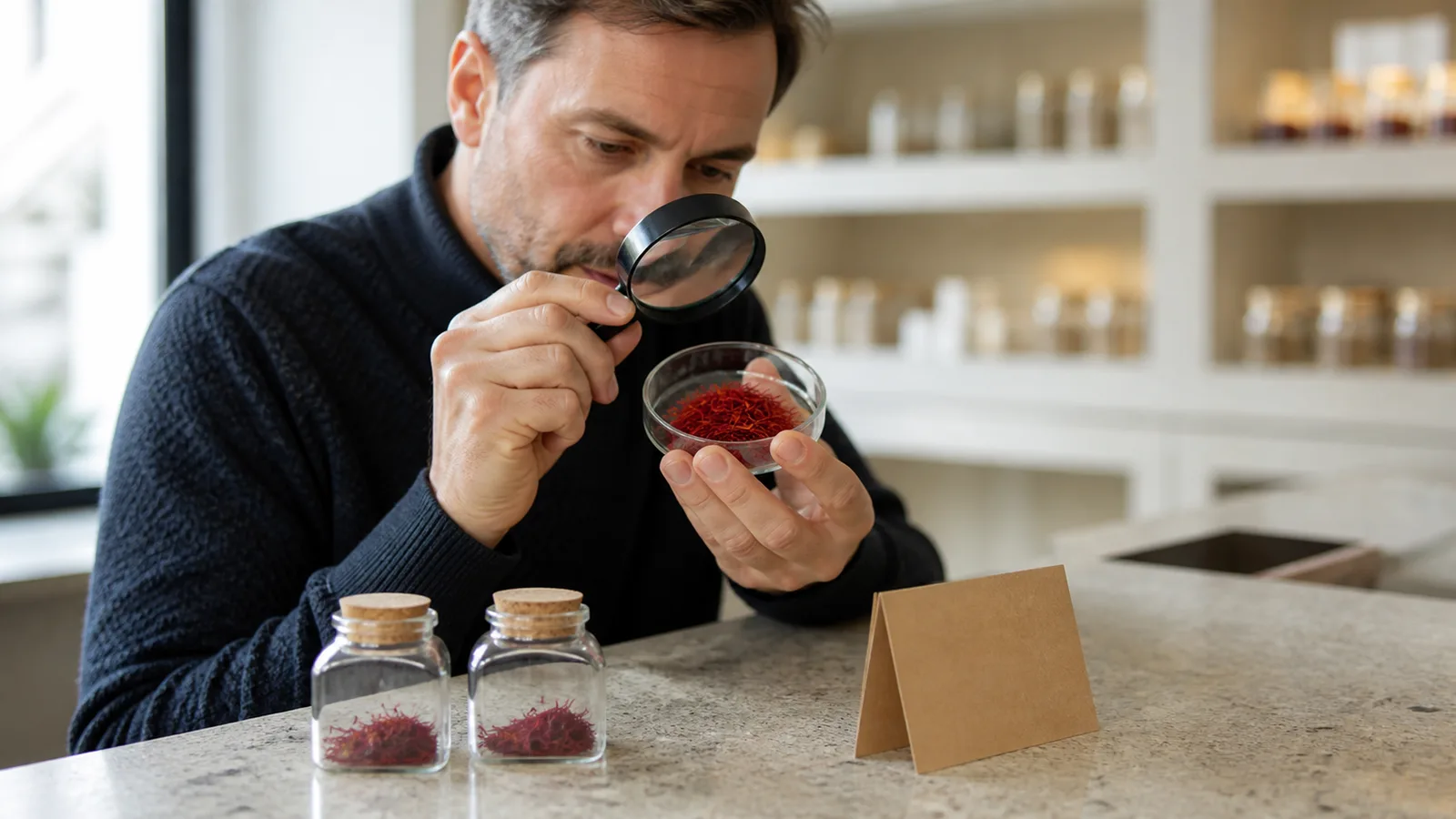
Genuine saffron threads are dried stigmas, not flat petals or uniform fibres. The red portion often widens slightly toward one end. A product made mainly from red stigma generally has more colour- and aroma-bearing material by weight than one with long pale styles.
Some yellow or orange style does not automatically mean adulteration; it may indicate a lower red-stigma proportion or a traditional grade. Foreign plant fibres, strangely identical pieces, oily residue, added grit, or obvious dyed material are more concerning. The FDA’s official saffron examination method shows why trained inspection looks at filament structure and foreign matter rather than relying on colour alone.
Notice aroma and flavour
Good saffron has a distinctive, complex aroma that people often describe as warm, hay-like, honeyed, or lightly floral. Its taste is gently bitter. It should not smell musty, perfumed with an unrelated fragrance, or completely flat. Aroma fades with age and poor storage, so a weak smell can mean the batch is old even when it began as good saffron.
Watch how it infuses
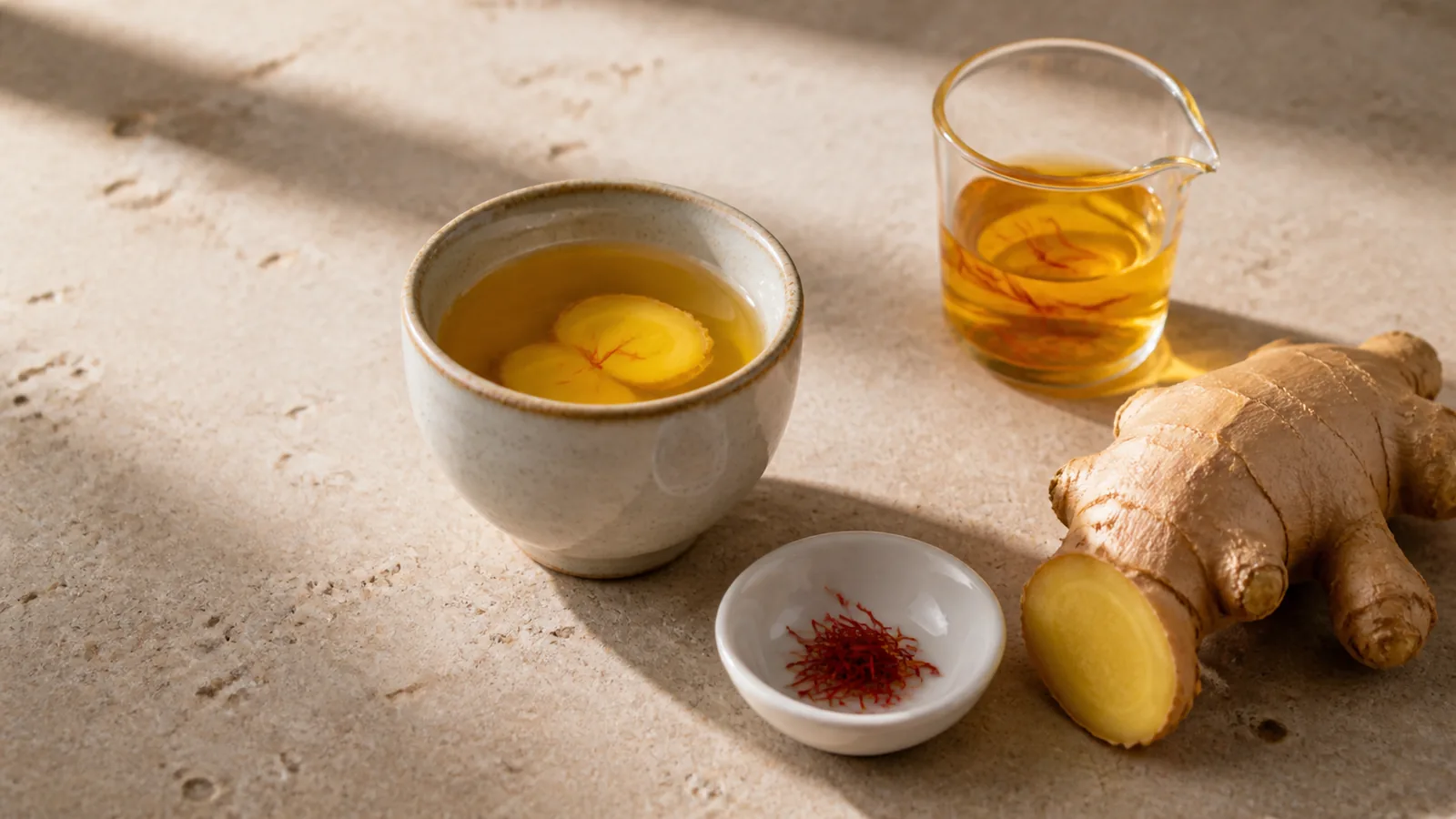
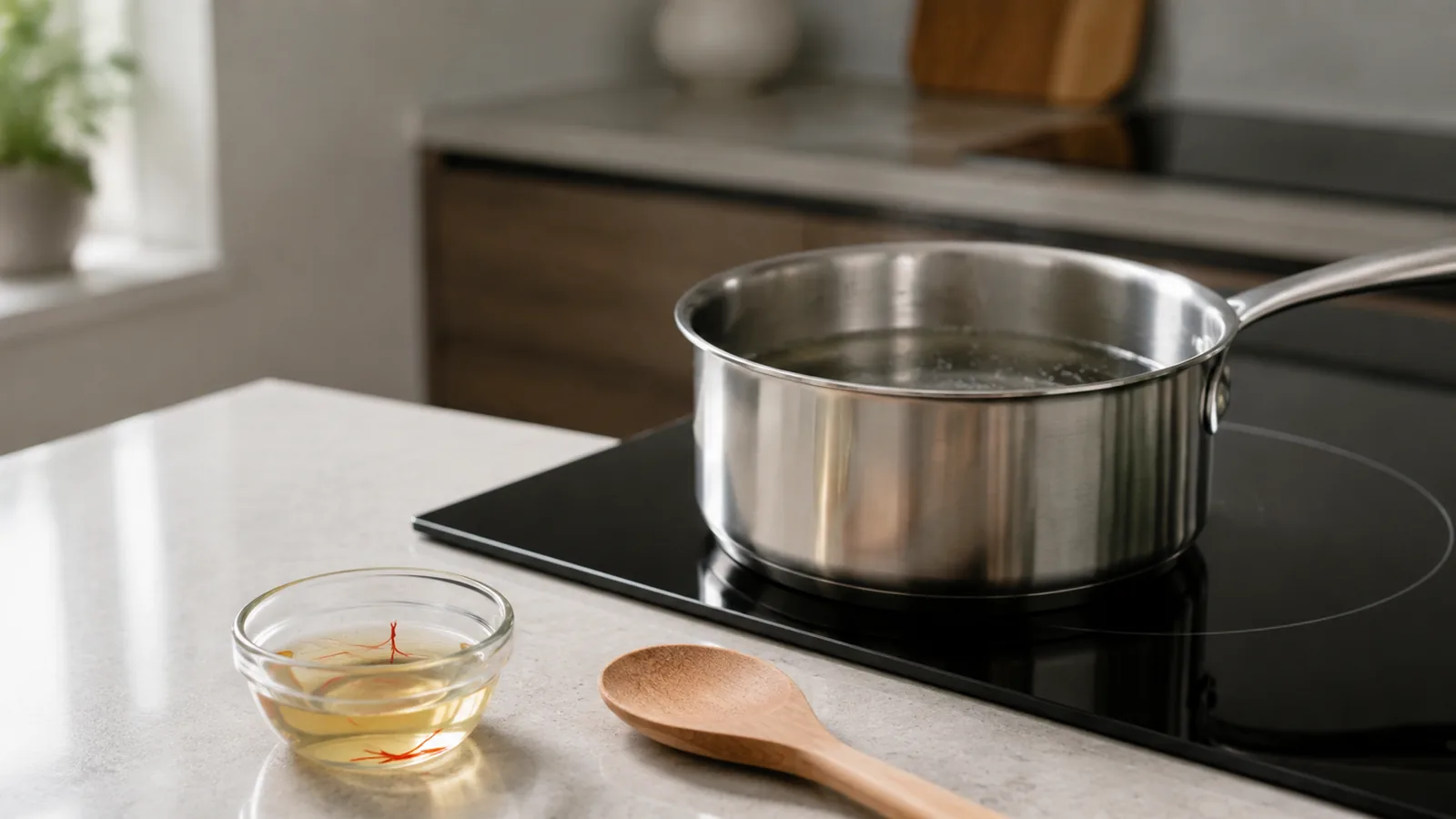
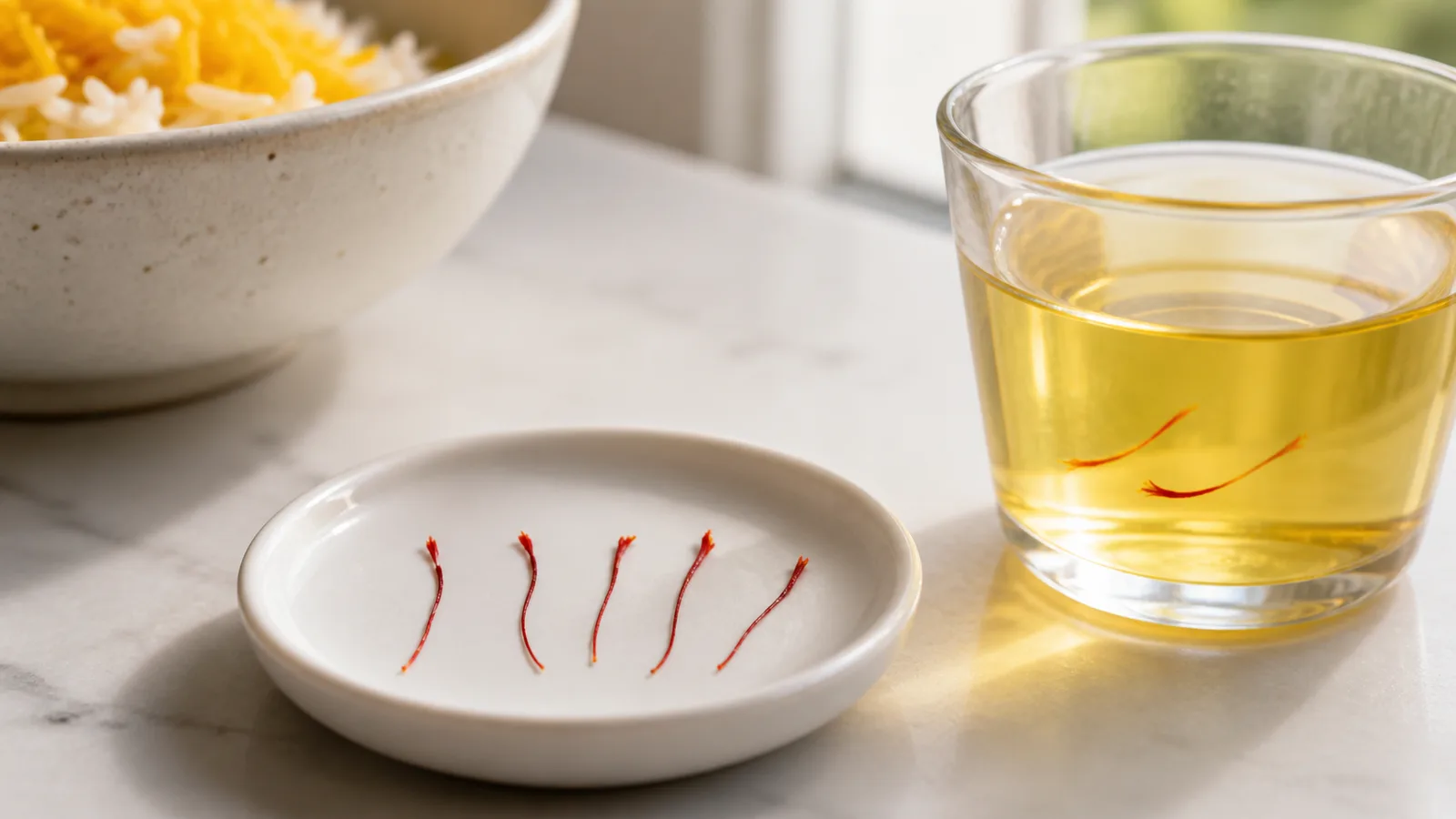
A few genuine threads should colour warm water golden yellow while keeping their basic thread structure. The exact speed depends on water temperature, how much the threads were crushed, and the saffron itself. Water that flashes an unnaturally intense red is a warning sign, but no home water test can certify purity or ISO category. A convincing fake can pass a simple social-media test.
Purity, certification, and the label
Saffron’s price makes food fraud a real concern. The FDA gives saffron as an example of a spice that may be bulked with cheaper plant material in its guidance on economically motivated adulteration.
Before buying, look for:
- the botanical name Crocus sativus;
- country of growth or origin, not only the packer’s address;
- a batch or lot number and a meaningful packing or harvest date;
- an intact, food-safe package that protects the spice from light and moisture;
- a batch-specific ISO 3632 report or other accredited laboratory result when a seller makes potency claims;
- a seller who explains sourcing and has a clear replacement or refund policy.
An organic seal concerns how a product was grown and handled under that programme. It does not by itself measure colour strength, freshness, or flavour. Likewise, “premium,” “super,” and “royal” may be marketing terms unless the seller defines them.
Threads or powder: which kind of saffron is best?
Whole threads are usually the easiest choice for a first purchase because you can inspect their shape and condition. Powder is convenient and can distribute quickly in a recipe, but visual adulteration is harder to spot. If you need powder, buy sealed, traceable saffron from a supplier that can support its purity claim. You can also grind a small amount of verified threads immediately before cooking.
Choose the package size you will actually use. A smaller fresh jar stored well can outperform a large “bargain” pack that sits open for years. Keep saffron airtight, dry, and away from heat and direct light.
Which saffron should you buy?
For strong colour and easy inspection, choose fresh whole threads with a high proportion of red stigma and credible batch information. Select Iranian Negin or Sargol, Spanish PDO saffron, Kashmiri GI saffron, or another traceable origin according to the flavour, presentation, and price you prefer. Do not pay extra solely because a label calls itself the world’s best saffron.
Our saffron product range lets you compare available thread formats and sourcing information. Whatever brand you consider, apply the same standard: identity, purity, batch evidence, freshness, and honest labelling first.