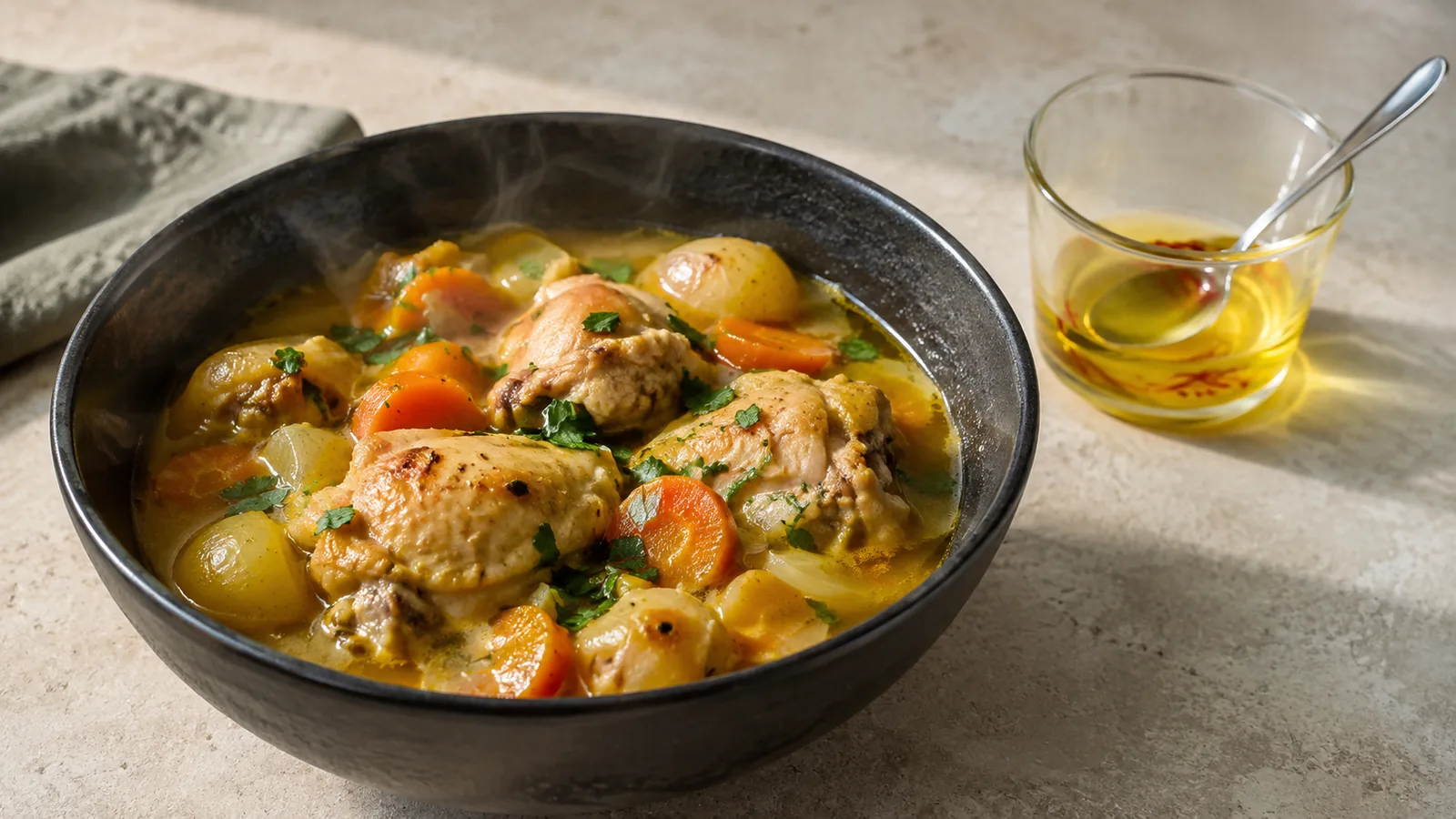
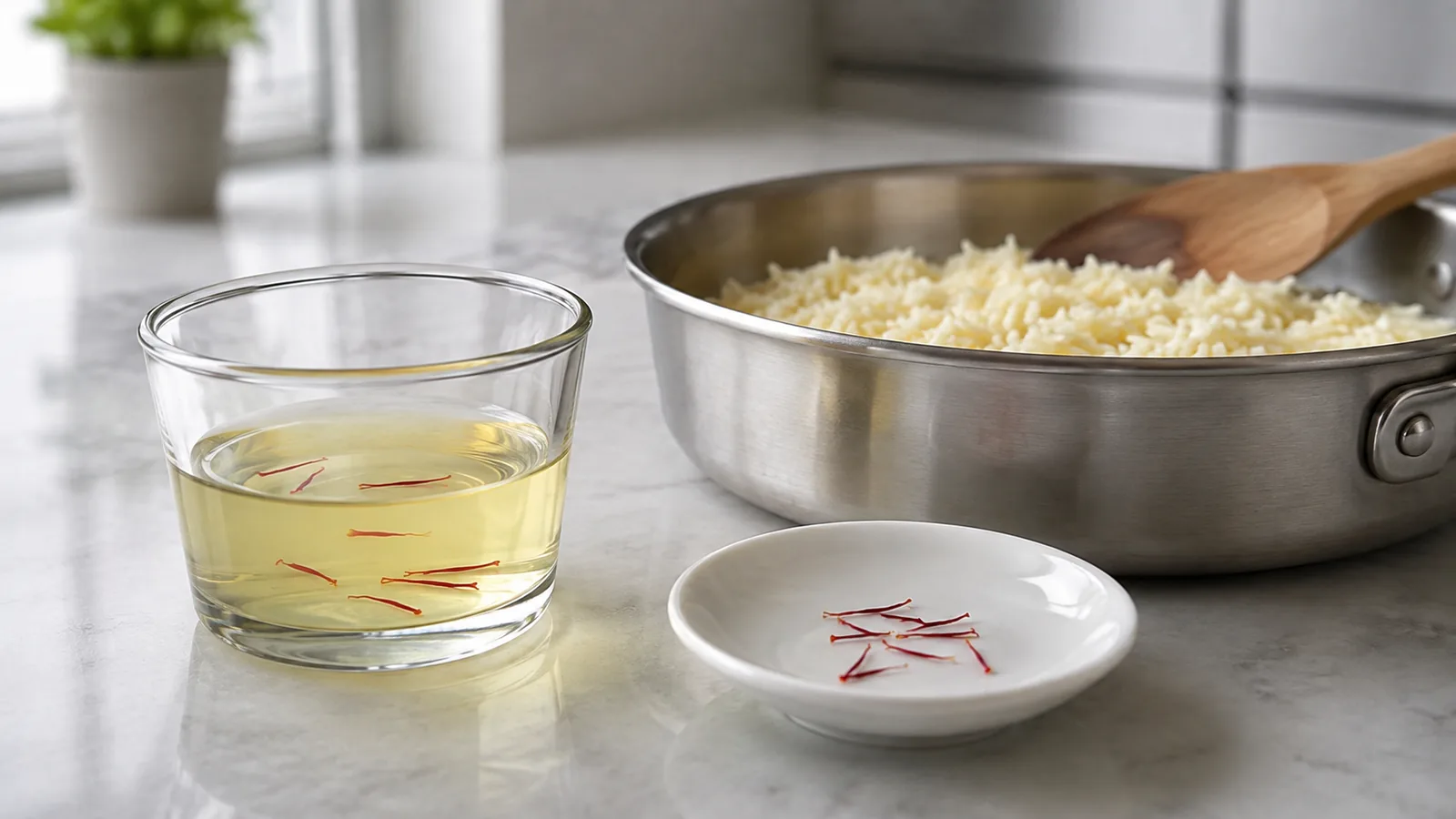
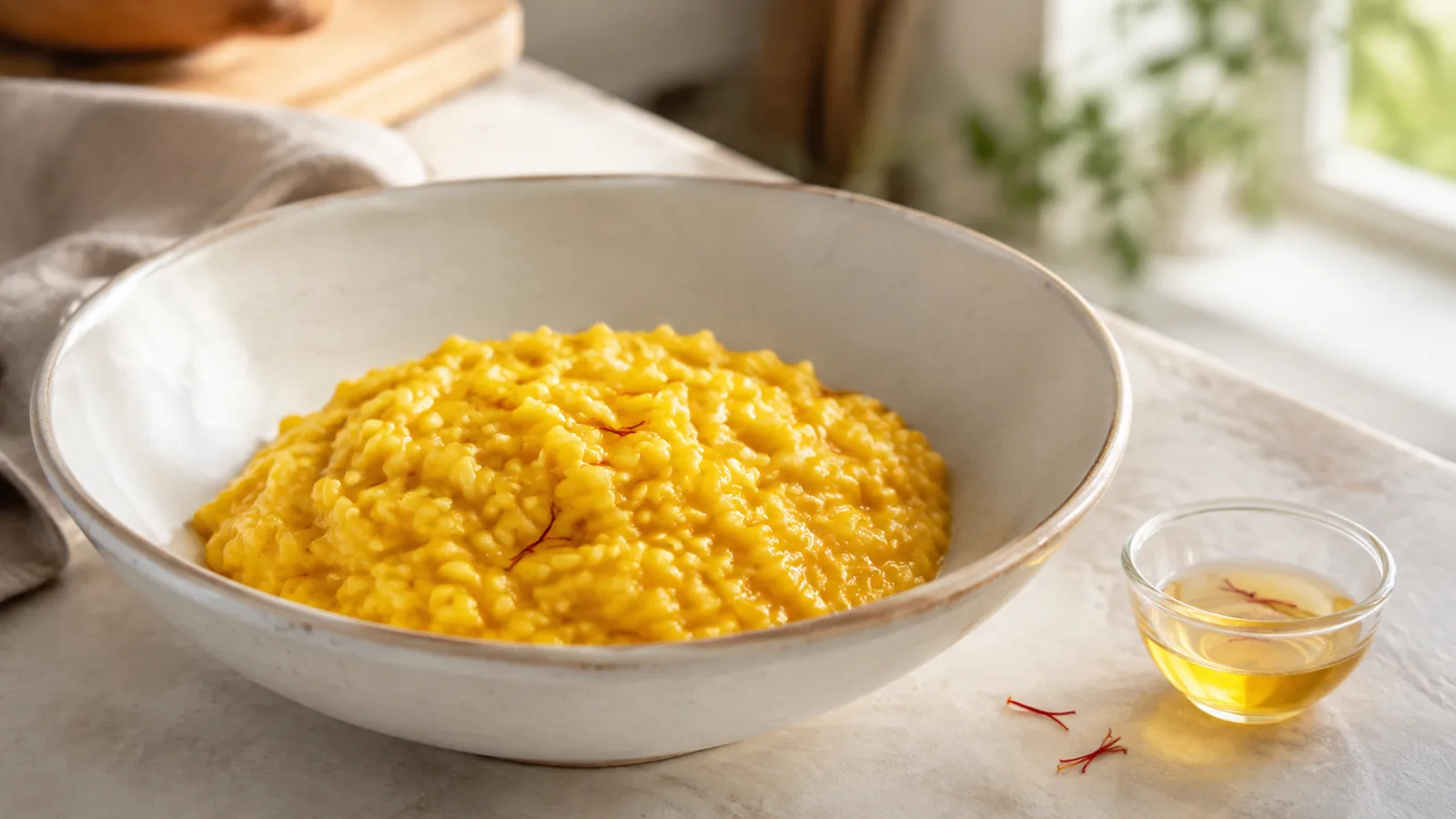
Add saffron to risotto after the rice has begun absorbing stock, usually around the middle of cooking. Bloom the threads in warm water or broth for 10–15 minutes, then stir in the saffron-infused liquid with a ladle of stock. These saffron risotto tips give the colour time to spread while protecting the aroma from unnecessarily long heat.
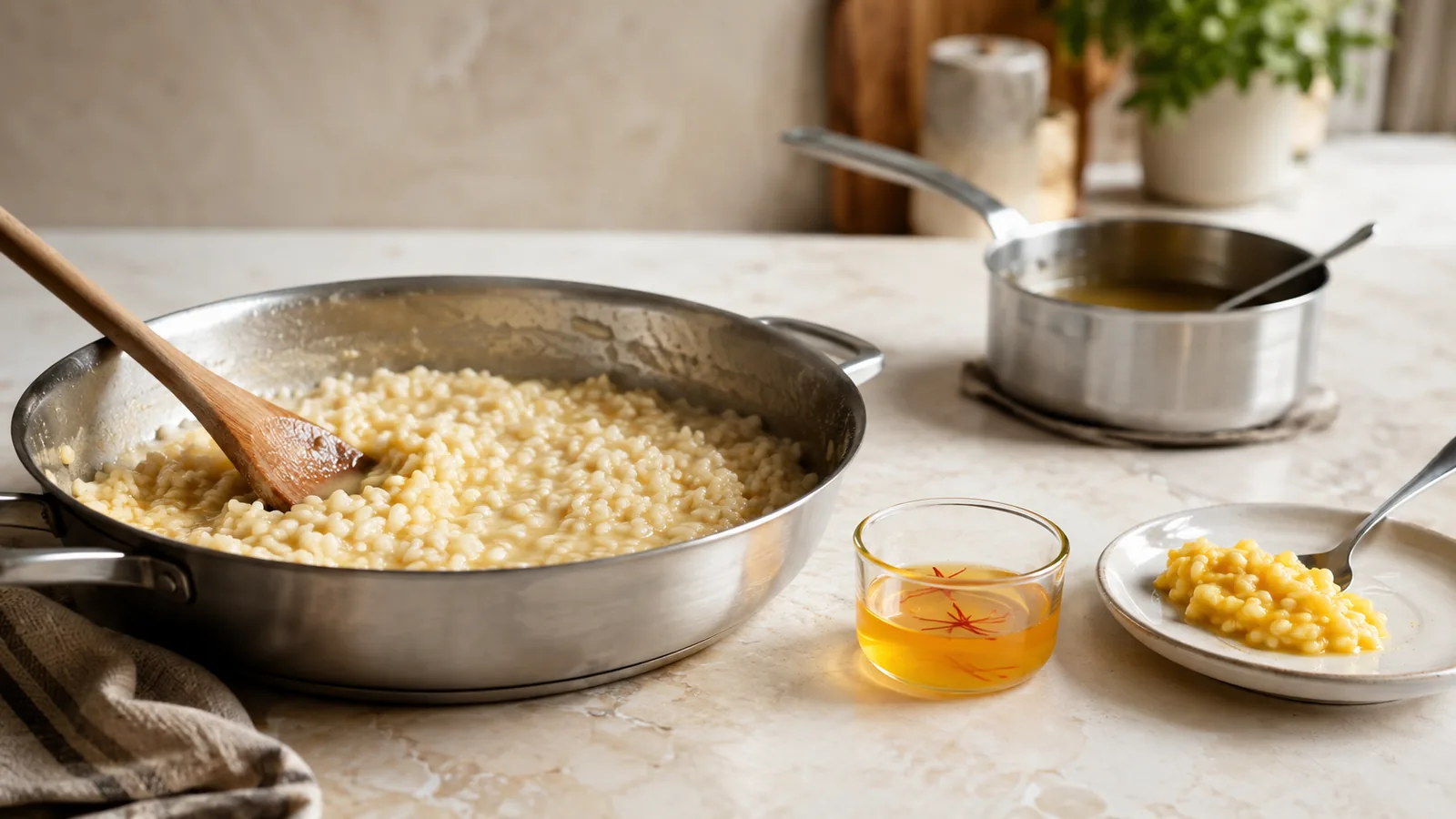
Adding Saffron to Risotto: Tips for Perfect Flavor
Saffron is an essential ingredient in saffron risotto and risotto alla Milanese, offering a rich aroma, vibrant color, and delicate flavor. Knowing the right time to add saffron to risotto ensures the spice releases its full potential without losing its unique qualities.
The useful window is not one exact minute. Risotto cooking time changes with the rice, pan, heat and amount of stock. Watch the grain: once it has absorbed the first few additions of liquid and begun to soften at the edges, the saffron can go in.
When to Add Saffron
For optimal flavor, add the saffron-infused liquid after the rice has started absorbing the broth, usually midway through the cooking process. This timing ensures that the saffron’s delicate aroma and taste are preserved and fully distributed throughout the risotto.
Adding it at the beginning is not automatically disastrous, but it exposes the aroma to more heat and makes the final balance harder to judge. Adding it only after the rice is fully cooked gives less time for even colour and flavour. The middle stage offers a practical compromise.
Preparing Saffron Before Adding
Before adding saffron to risotto, it’s best to gently soak the threads in warm water, broth, or milk for 10–15 minutes. This process helps release the color and aroma, allowing the spice to infuse the dish evenly.
For a savoury risotto, warm unsalted or lightly salted stock is usually the easiest choice because it is already part of the recipe. Water also works. Milk can soften the flavour, but it changes the dish and is not needed for a classic stock-based method.
Crush the threads lightly between clean fingers or in a small mortar. They do not need to become an invisible powder. Add enough warm liquid to cover them comfortably, then let the cup stand while you toast the rice and begin cooking.
A Simple Risotto Timeline
Start with warm stock in a separate pan. Soften the onion or shallot in fat, add the rice and toast it briefly until the grains look slightly translucent at the edges. If the recipe uses wine, add it and let the alcohol evaporate before beginning with the stock.
Add hot stock a ladle at a time, stirring often enough to keep the rice moving and cooking evenly. When the rice has absorbed several additions and is partway tender, pour in the saffron infusion. Continue adding stock until the grains are creamy outside and still have a gentle bite at the centre.
Take the pan off the heat for the final butter and cheese, a step often called mantecatura. This last mixing creates the flowing texture. Taste for salt only after the stock and cheese have contributed their seasoning.
Why Midway Timing Works
Saffron needs moisture and time to spread through the rice. Adding the infusion midway gives it both. The liquid reaches the starch surrounding the grains, colour develops gradually, and the cook can still adjust the strength before serving.
The rice also provides a mild base that lets the spice remain noticeable. If saffron enters before heavily reduced stock, wine and aromatics, its finer notes can disappear. If it enters at the final second, the aroma may be strong in one spoonful and absent in another.
Tips for a Perfect Risotto
Stir the risotto gently after adding saffron to allow the threads to blend evenly. Avoid adding saffron too early, as prolonged cooking at high heat can reduce its flavor and aroma. Combining proper timing with gentle stirring creates a beautifully colored and flavorful dish.
Keep the stock hot enough that each addition does not stop the simmer, but do not boil the rice violently. Add liquid gradually and watch the texture instead of following a rigid clock. The finished risotto should spread softly on a warm plate rather than stand in a stiff mound.
How Much Saffron Should You Use?
A small pinch can be enough for a household pan. Strength varies by harvest, grade, storage and thread form, so a universal number can mislead. Start modestly; you can reserve a little infusion and add it during the last few minutes if the aroma is too faint.
More saffron does not guarantee a better risotto. Too much can produce a medicinal bitterness and obscure the rice, stock and cheese. The goal is a clear aroma and warm golden colour, not the deepest possible yellow.
Whole Threads, Crushed Threads or Powder?
Lightly crushed threads offer a good balance of extraction and traceability. A few whole threads can remain visible, but completely whole saffron takes longer to release its colour. Powder distributes quickly yet is harder to inspect and easier to overmeasure.
If using purchased powder, confirm that it is genuine saffron and begin with less than you think you need. Do not replace saffron with turmeric and expect the same flavour; turmeric can imitate part of the colour but has a different aroma and earthy taste.
Should Saffron Go into the Stock?
You can infuse saffron in a small cup of stock or add it to part of the stock pan. A separate cup gives better control because you know when the full infusion reaches the rice. If all the saffron enters a large stockpot at the beginning, some aroma may be held over or exposed to heat longer than necessary.
Keep the main stock gently hot and the saffron infusion warm. There is no need to boil the threads. Our broader guide to adding saffron to a dish explains why liquid and timing change with the recipe.
Can You Add Saffron Near the End?
Yes. If you forgot the midway stage, stir a well-bloomed infusion into the risotto several minutes before it is finished. Mix gently and give the rice time to take on colour. This is better than scattering dry threads over the plated dish.
Some cooks deliberately hold back a spoonful of infusion for the final stage to brighten the aroma. That can work, provided most of the saffron has already had time to integrate.
Common Problems and Fixes
If the risotto tastes bitter, too much saffron or excessive toasted spice may be responsible. Balance cannot always be repaired, so add gradually. If the colour is patchy, the threads were probably not bloomed long enough or the infusion was not stirred through evenly.
If the aroma is missing, check the age and storage of the saffron before adding more. Threads kept in a tightly closed container away from light, heat and moisture retain their character better than an open jar near the stove.
A dry or gluey texture is a risotto problem rather than a saffron problem. Adjust hot stock, heat and final mixing; do not use extra saffron to distract from overcooked rice.
Cheese, Butter and Other Pairings
Butter and a firm aged cheese make the texture rich and help carry aroma. Use enough for balance, but remember that very salty or strongly flavoured cheese can dominate the spice. Onion or shallot, good stock and dry white wine are familiar supports.
For variations, saffron can accompany seafood, squash, courgette or chicken, though each addition changes the stock and finishing choices. Keep the ingredient list focused so the saffron still has a reason to be there.
Conclusion
Adding saffron to risotto at the right stage enhances both color and taste, creating a luxurious and aromatic dish. Bloom the threads for 10–15 minutes and add the infusion after the rice has started absorbing broth, usually midway through cooking. Stir gently, finish the texture off the heat, and judge the aroma before adding more. Whole threads for careful risotto cooking remain available on our all red saffron page.