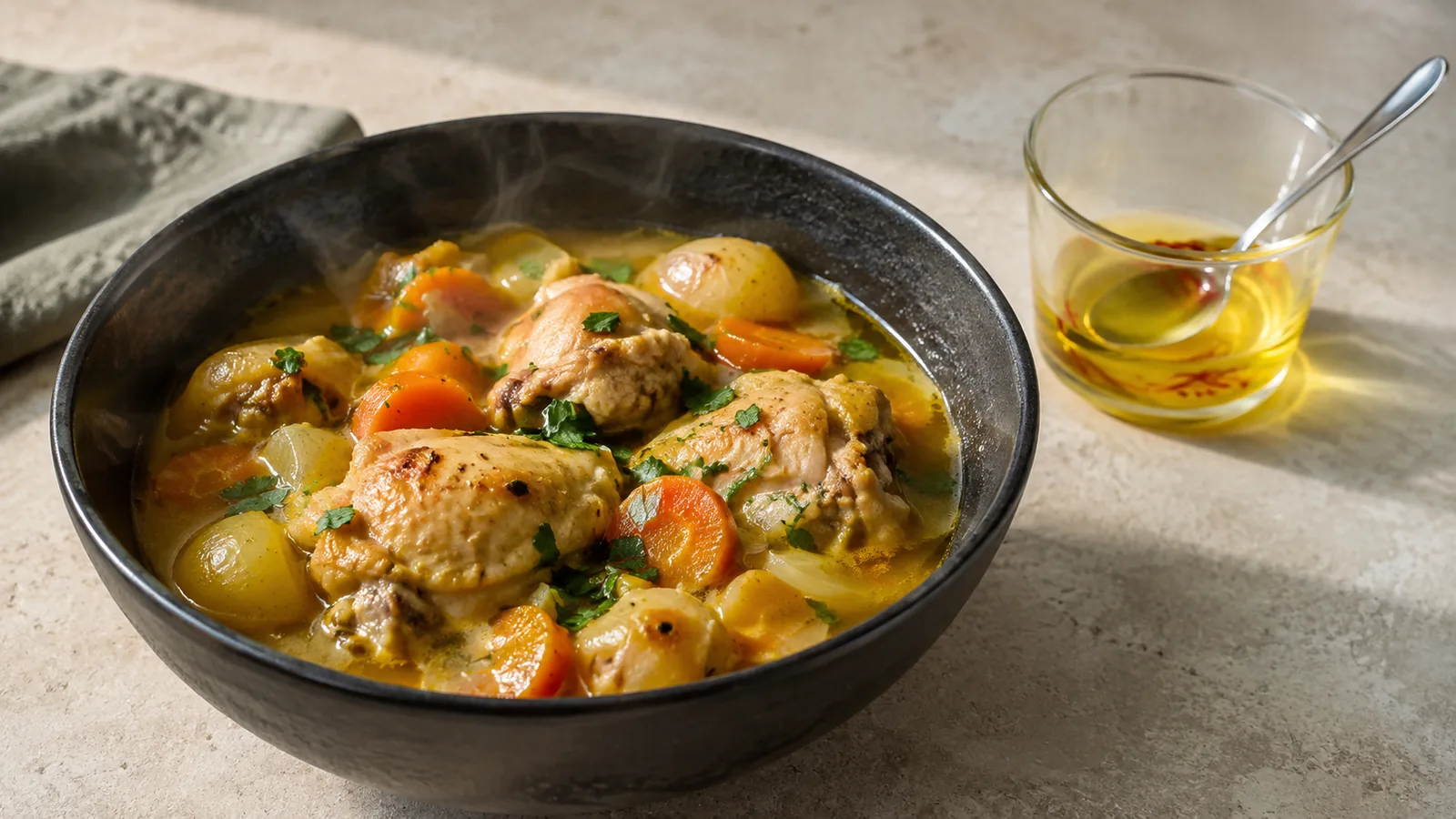
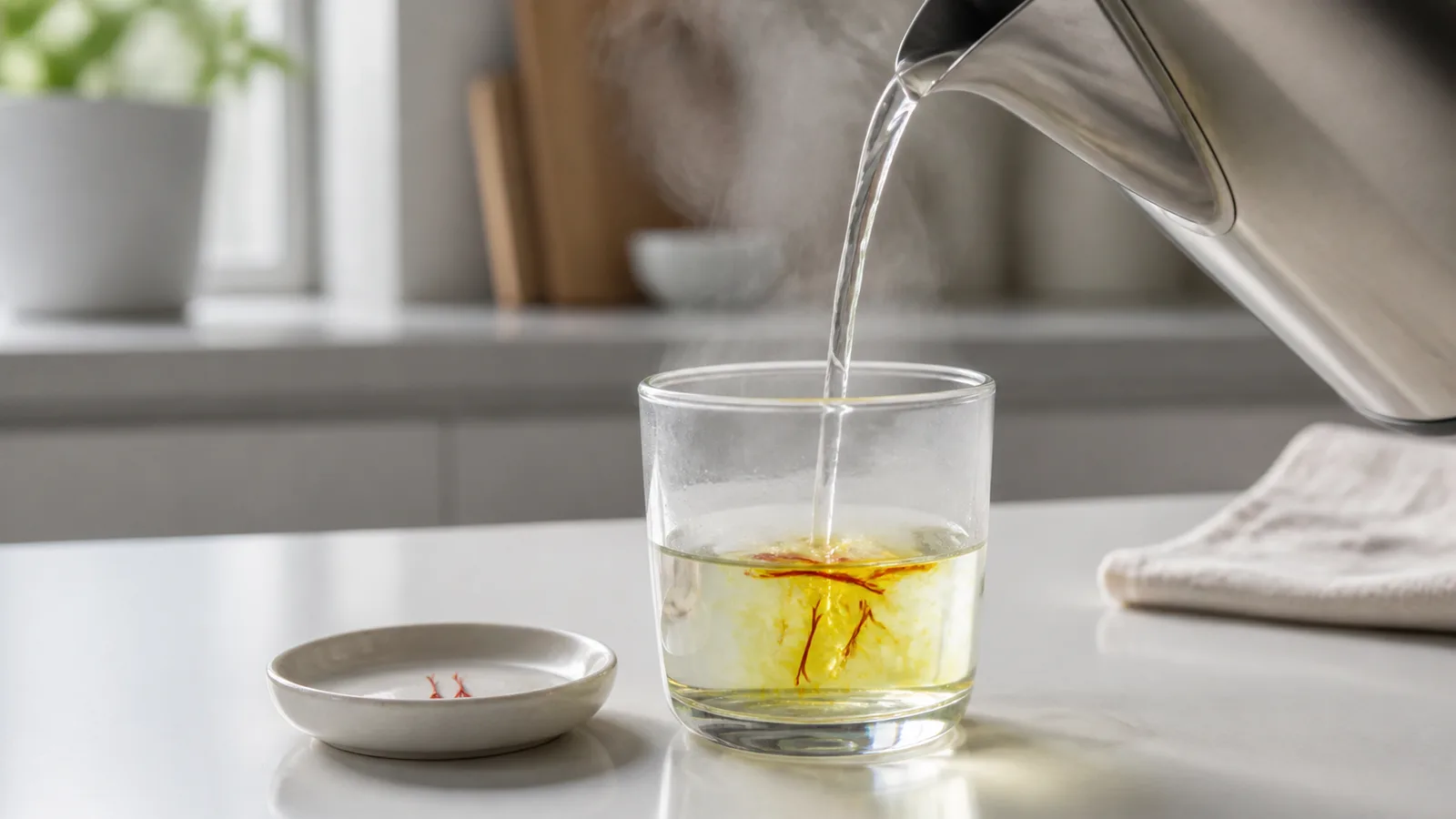
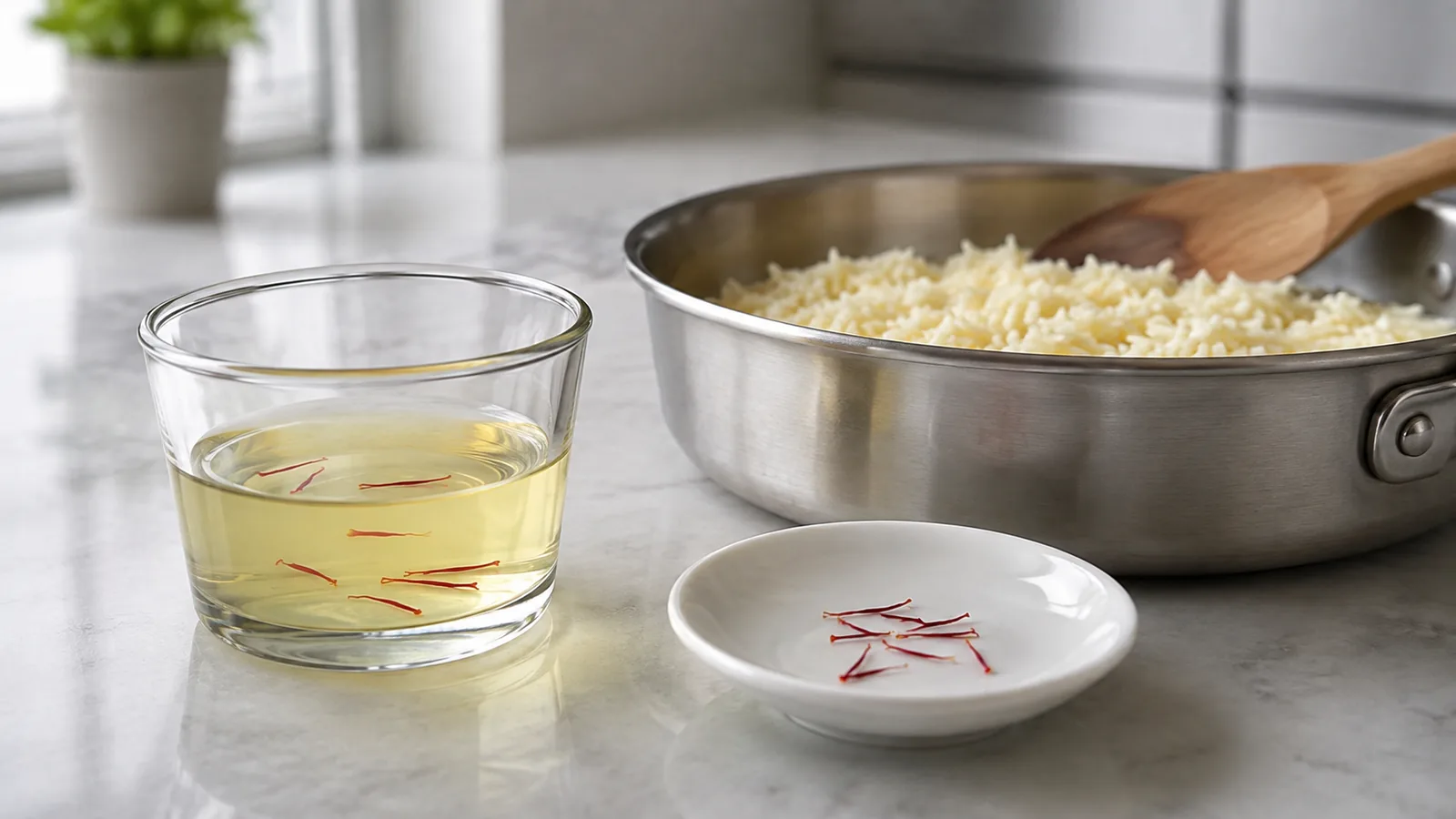
The best time to add saffron to milk is after the milk is warm but before it reaches a vigorous boil. Lightly crush the threads, stir them into a small portion of warm milk, wait 10 to 15 minutes, then combine that golden infusion with the rest of the recipe.
When to Add Saffron to Milk
Warm milk gives saffron enough heat and moisture to release its colour and aroma without subjecting it to a long, hard boil. The practical cue is gentle steam around the pan: the milk should be hot enough to drink carefully, not bubbling aggressively.
If the final dish cooks for a long time, prepare the saffron separately and add it during the later part of the recipe. If you are making a simple glass of saffron milk, bloom it directly in a small amount of the warm milk and then stir in the remainder.
How to Infuse Saffron in Warm Milk
- Measure a modest pinch of saffron threads for the amount of milk you are using.
- Crush the threads lightly with a mortar or between clean fingers. They do not need to become fine powder.
- Warm a few tablespoons of milk until it is steaming gently, then remove it from direct heat.
- Add the saffron, cover the cup or bowl, and leave it for 10 to 15 minutes.
- Stir both the liquid and threads into the remaining milk or the dish you are preparing.
Covering the infusion keeps its aroma in the cup rather than allowing it to drift away with the steam. A pale gold liquid can still be aromatic; adding more saffron only to chase a darker colour may make the flavour less balanced.
How Much Saffron to Use
For two cups of milk, begin with a small pinch—roughly 10 to 15 good threads. The right amount depends on the grade, age and storage of the saffron, as well as what else is in the drink or dessert.
Sweetener, cardamom, rosewater, nuts and vanilla can all change how strongly you perceive it. Start restrained, let the infusion develop, then taste the complete mixture. It is easier to add a little more prepared infusion than to remove an overpowering dose.
For Plain Saffron Milk
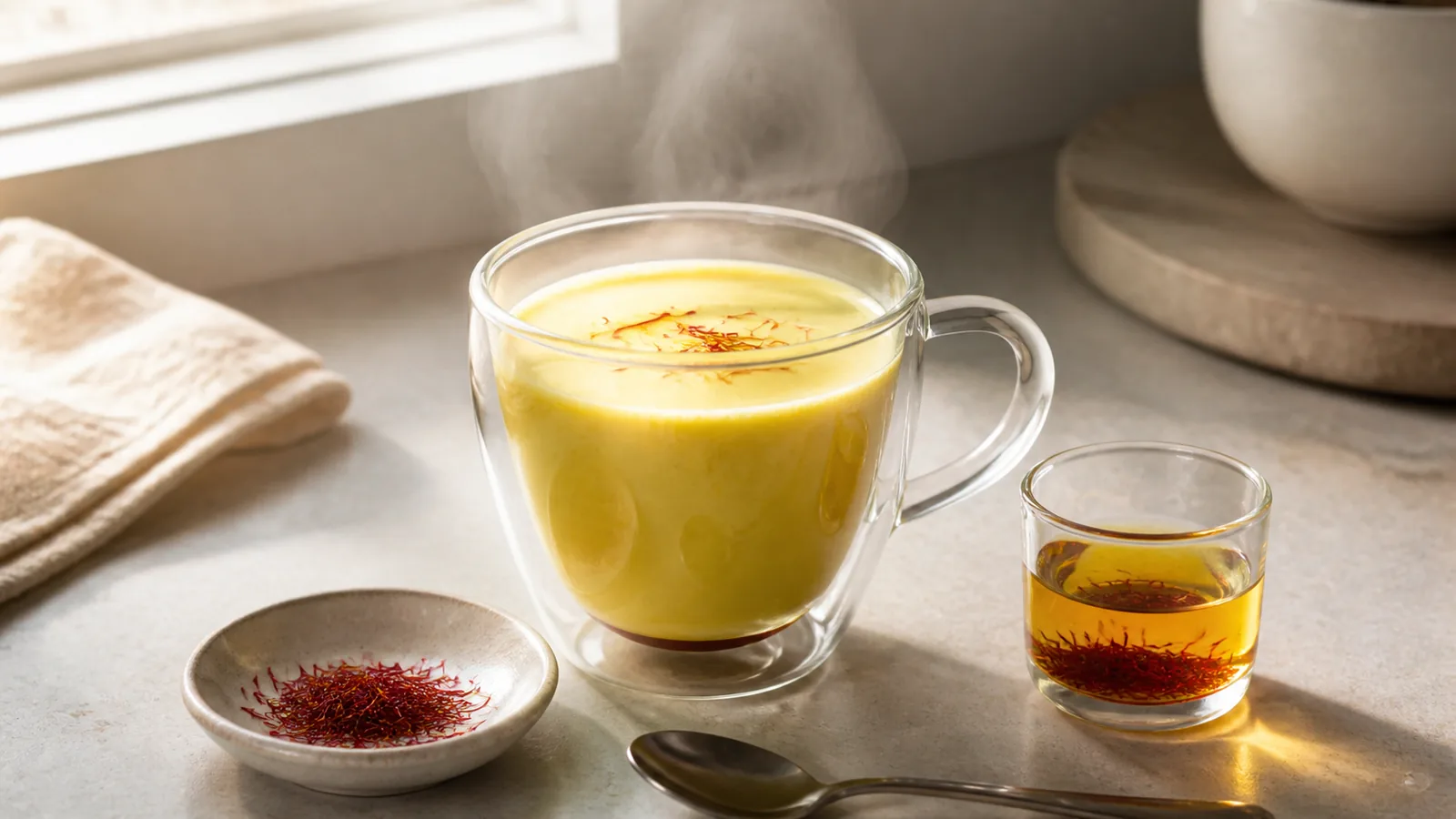
Warm the milk gently, take a small portion for blooming, and recombine it after the saffron has steeped. Add sugar or honey only if you want sweetness; neither is required for extraction. Serve it warm, or cool it promptly and refrigerate it for a chilled drink.
Avoid boiling the milk simply to strengthen the saffron. A harder boil changes the milk and increases the chance of scorching the pan, while the spice still needs time in the liquid. Gentle heat followed by a covered rest is more controllable.
When Adding Saffron Milk to Cooking
Rice Pudding, Kheer and Custard
For rice pudding or kheer, stir the prepared infusion in after the milk has begun to thicken but still has enough cooking time for even distribution. Adding it near the end preserves a clearer aroma; adding it at the start of a long reduction can leave the colour while muting the fragrance.
For custard, combine the infusion with the warm dairy before tempering the eggs. This distributes it evenly and prevents a few dark specks from carrying all the flavour. Follow the recipe’s normal temperature control so the custard stays smooth.
Ice Cream and Kulfi
Bloom saffron in part of the recipe’s warm milk, then add it to the base before chilling. The cold base needs time to mature, so the saffron continues to integrate as it rests. There is no benefit in scattering dry threads into a frozen mixture at the end.
Cakes, Breads and Pastry
Prepare the saffron milk first, allow it to cool to the temperature required by the recipe, and include it within the measured liquid. For yeast dough, very hot milk can harm the yeast; for butter-based batters, excess warmth can alter the texture. Saffron timing should fit the baking method rather than override it.
Milk or Water: Which Is Better?
Both work. Milk is convenient when dairy already belongs in the recipe, and it carries the infusion directly into custard, pudding or dough. Water gives you a more neutral concentrate and is useful when you want to control the recipe’s dairy quantity precisely.
For a milk drink, blooming in milk keeps the process simple. For a recipe with only a spoonful of milk, a small water infusion may distribute more evenly. The better choice is the liquid that fits the final dish.
Common Problems and Their Causes
- The milk is pale: give the crushed threads more time before increasing the amount.
- The saffron tastes harsh: the dose may be too high, or the other flavours may not be balanced.
- Threads collect in one place: bloom them in a small portion and stir that concentrate through the full batch.
- The aroma is faint: old or poorly stored saffron may be responsible; prolonged uncovered boiling can also flatten it.
- The milk scorches: use lower heat, a heavier pan and regular stirring rather than blaming the spice.
The Simple Timing Rule
Warm, steep, then combine. For a drink, add saffron to warm milk and let it rest. For a long-cooked pudding, add the prepared infusion later in the cook. For ice cream or baking, bloom it first and mix the cooled infusion with the liquid ingredients.
Our comparison of soaking saffron in milk or water helps you choose the liquid. See the guide to brewing saffron for the broader infusion method and how heat affects saffron for temperature context. Current thread grades are listed in the saffron shop.