Iran is the top saffron-producing country. Recent FAO material places its share at roughly 85–90% of global production, while another 2025 FAO update describes it as more than 90%. The familiar “90%” answer is therefore a useful rounded figure, not a fixed annual measurement.
What Country Produces 90% of Saffron?
The short answer is Iran. Iran is the largest producer of saffron in the world by a wide margin. Its saffron accounts for about 90% of world production, although estimates change with the harvest year and the way production is counted. That explains why credible sources do not always publish exactly the same percentage.
In late 2025, the UN Food and Agriculture Organization described Iran as producing 85–90% of the world’s saffron. An earlier 2025 FAO report said the country produces more than 90%. Both support the central point behind the question: Iran is the leading producer, and no other country is close to its scale.
Why Iran Produces So Much Saffron
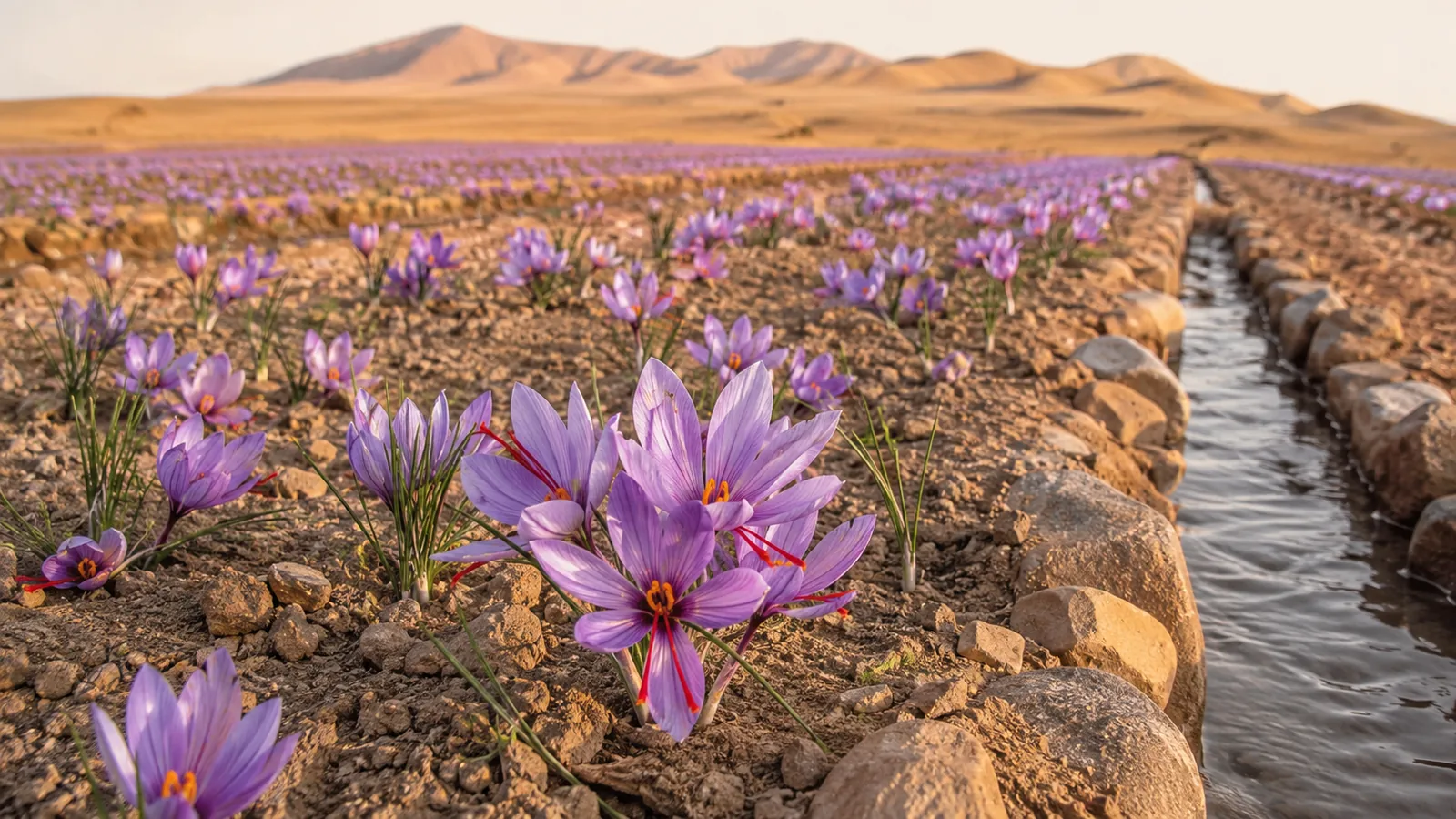
Iran’s lead comes from a combination of climate, specialist knowledge and an established supply chain. Saffron crocus grows through a cool season and flowers in autumn. It needs well-drained soil, dry summer dormancy and careful irrigation rather than constant moisture. Large parts of eastern Iran are well suited to that pattern, although water scarcity remains a serious farming constraint.
The crop is also deeply embedded in local farming. Growers know how to select and divide corms, manage flowering fields and organise the intense harvest period. Picking has to happen quickly because each flower opens for only a short time, and its three red stigmas must be separated and dried with care.
Khorasan Is the Centre of Iranian Saffron
Khorasan Razavi and South Khorasan are the best-known growing regions. Gonabad, in Khorasan Razavi, is home to a qanat-based saffron farming system recognised by the FAO as a Globally Important Agricultural Heritage System. Underground qanat channels bring water to farms in a dry landscape, supporting a crop that can be cultivated with relatively modest irrigation.
Saffron also grows elsewhere in Iran. Khorasan’s importance is not a claim that every Iranian thread comes from one province; it reflects the concentration of fields, processing knowledge and trade infrastructure there.
What the Saffron Plant Actually Produces
Saffron comes from Crocus sativus, a small purple-flowering crocus. The spice is not the whole flower, a seed or a root. It consists of the dried red stigmas collected from inside each bloom.
That distinction helps explain why saffron is expensive. A field can produce thousands of flowers, yet each contributes only three usable stigmas. Harvesting, separating and drying them involves detailed manual work, and the final dried weight is a small fraction of the fresh flowers. Land, corm care, labour, sorting and quality control all contribute to the price.
Does the Largest Producer Always Supply the Best Saffron?
Country of origin matters, but it does not decide quality on its own. Iranian saffron ranges from carefully handled whole threads to poorly stored or adulterated material, just as saffron from another country can be excellent or disappointing.
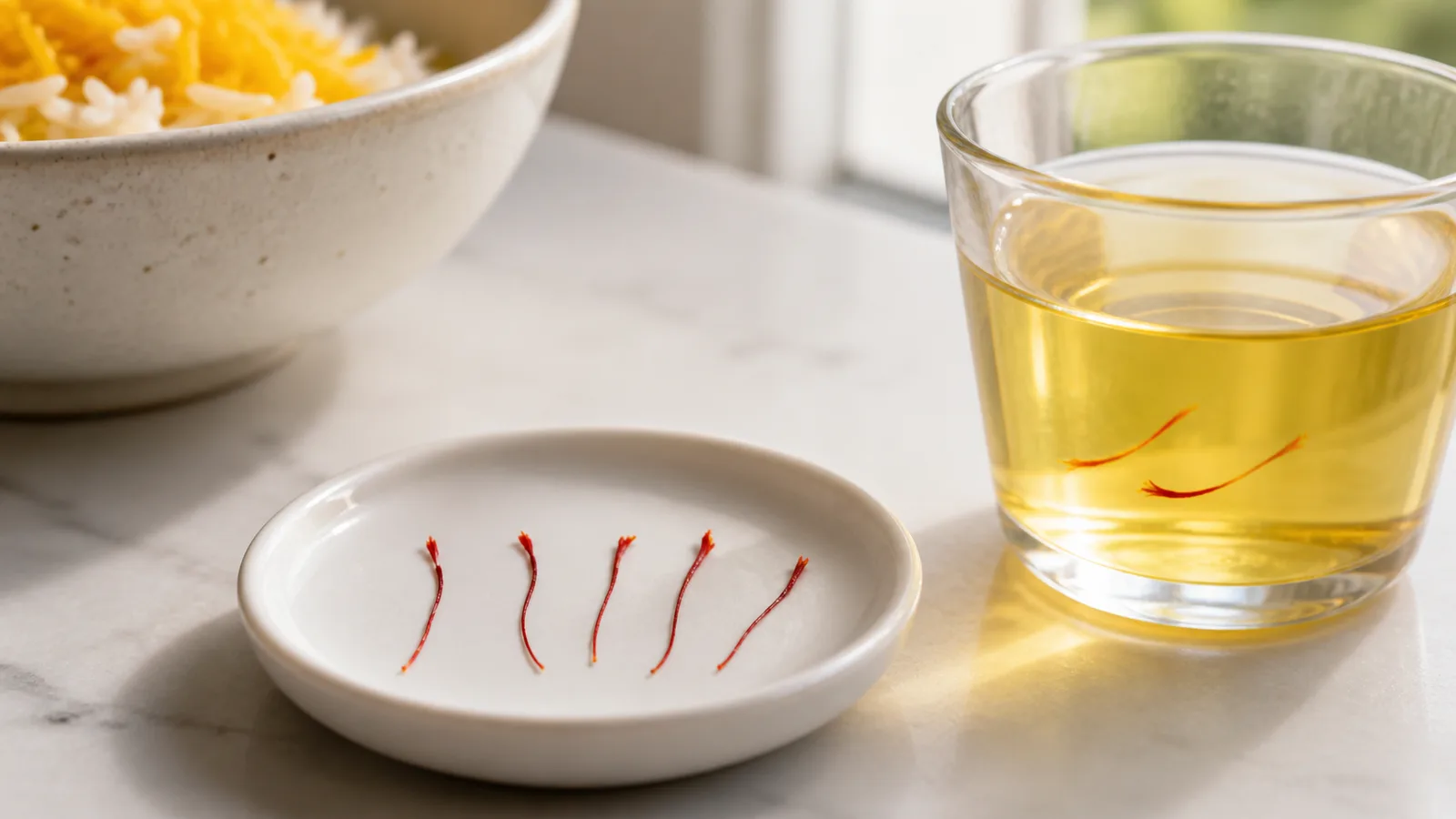
When choosing saffron, look at the threads and the seller’s quality controls. Good whole saffron has a strong clean aroma, a vivid red appearance and little unrelated plant material. It should release colour gradually in warm water rather than behaving like instant dye. Packaging should protect it from light, moisture and strong surrounding odours.
Laboratory testing and traceability are more reliable than romantic claims about a region. The FAO’s recent work with Iranian institutions has focused on authenticity testing, post-harvest handling and value-chain integrity for precisely this reason.
Which Other Countries Produce Saffron?
Iran is dominant, but saffron is not exclusive to Iran. Commercial or traditional production also exists in India, Afghanistan, Greece, Morocco, Spain and several smaller growing areas. Kashmir is especially well known for Indian saffron, while La Mancha has a long Spanish saffron tradition.
Production and trade figures should not be treated as the same thing. Saffron may be grown in one country, packaged or re-exported through another, and sold under branding associated with the trading country. A country’s export total therefore does not necessarily equal the amount harvested there.
Why the Percentage Can Change
The often-repeated figure that Iran produces 90% of the world’s saffron is an estimate. The share can move from one season to the next because of rainfall, drought, corm health, acreage, labour conditions and yields in competing regions. Data collection is also difficult where production is spread across many small farms.
For a timeless answer, it is safest to say that Iran produces roughly nine-tenths of the world’s saffron and is the clear global leader. For a report that needs a precise percentage or tonnage, cite the year and source rather than presenting the number as permanent.
From Iranian Fields to the Global Market
After harvest, the stigmas are dried, graded, packed and sold through domestic and international supply chains. Some saffron reaches consumers under an Iranian name. Some is shipped in bulk and later packaged or re-exported elsewhere, which can make origin less obvious on the retail shelf.
This is why production leadership, export rankings and the country named on a consumer-facing package can tell different stories. The clearest answer to “which country produces the most saffron?” is Iran; the route an individual packet followed still needs its own traceability.
To understand the spice itself, see our guide to what saffron is. Our explanation of why saffron is so expensive looks more closely at harvesting and yield, and current thread grades are available in the saffron shop.