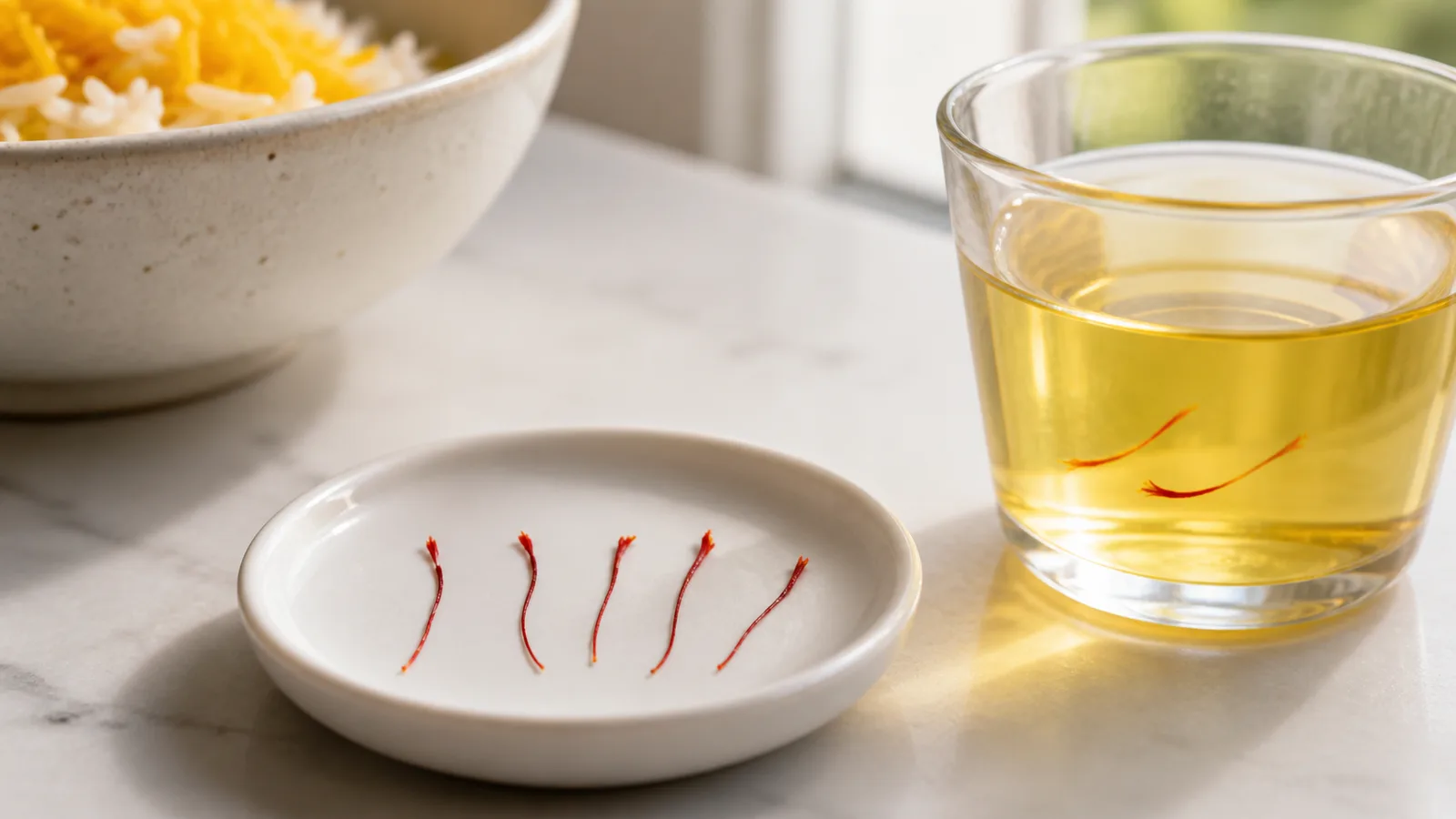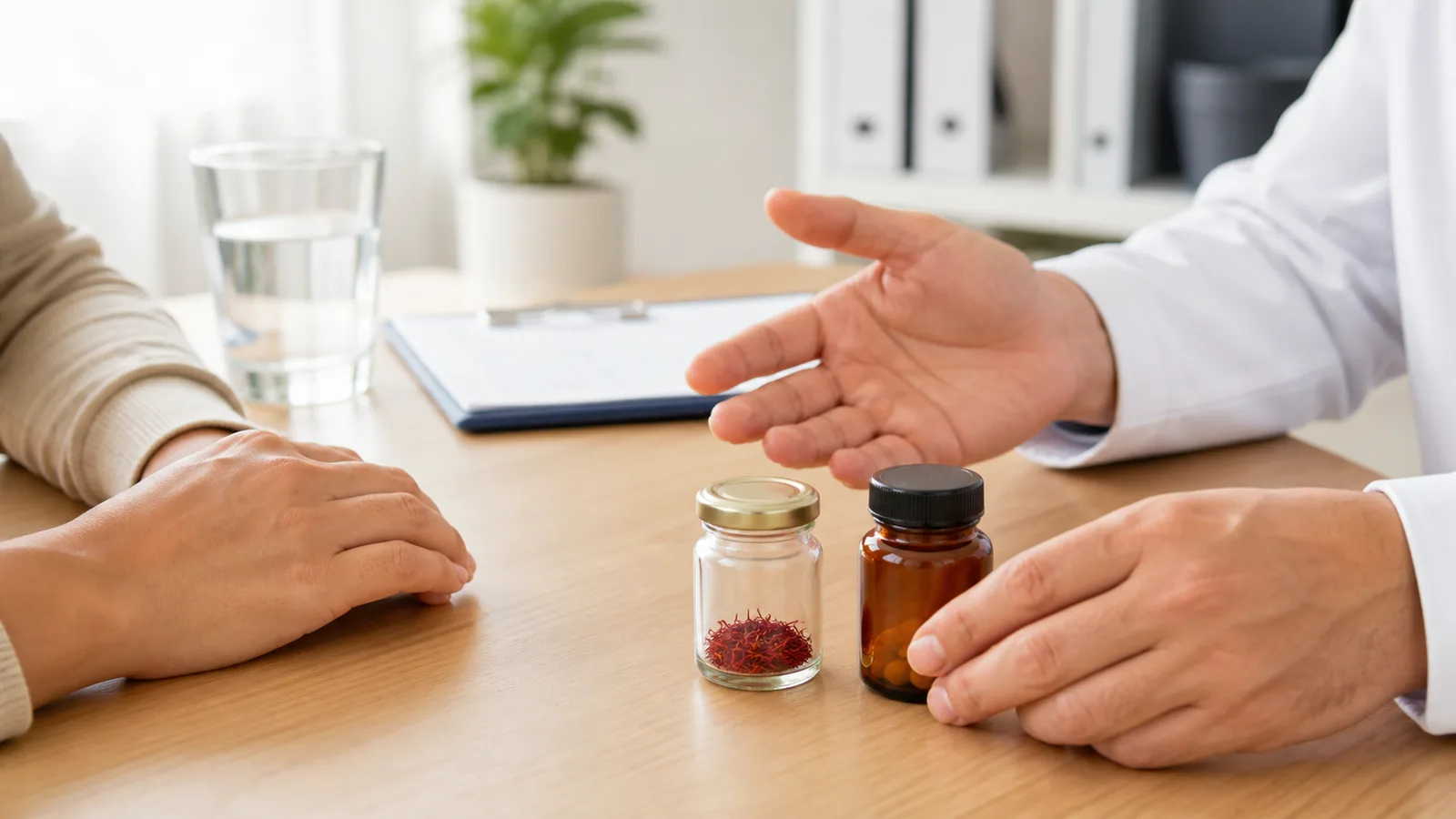
Avoid saffron if you have had an allergic reaction to it. Be cautious with concentrated saffron extracts or supplements during pregnancy, with symptomatic low blood pressure, alongside prescription medicines, and before surgery. Ordinary culinary seasoning and a supplement are not the same exposure, so advice should match the product, amount and reason for using it.
The safest rule is simple: avoid saffron consumption after a suspected allergy, and do not start or continue a medicinal-dose product when a clinician or pharmacist has advised against it.
Interest in possible saffron health benefits for mood, memory or digestion does not remove these precautions. Studies often use defined extracts and doses; they do not establish that every food or supplement product has those effects.
This guide explains who should avoid taking saffron and puts saffron’s side effects in context, including what is known, what is uncertain and when a symptom needs urgent care.
Stop immediately for a possible saffron allergy
Can you be allergic to saffron? Yes, although published reports are uncommon. A medical case report describes anaphylaxis to saffron. A rash or isolated itching needs prompt medical advice; swelling of the lips, tongue or throat, wheezing, trouble breathing, collapse or severe dizziness is an emergency.
Saffron allergy symptoms can resemble reactions to other foods or ingredients in the same dish. Swelling or difficulty breathing needs emergency care. Stop eating the suspected food, seek appropriate care, and do not test yourself again at home. An allergy clinician can help distinguish saffron from another spice, milk, nuts or a contaminant.
Pregnancy and breastfeeding
Using a few threads as a normal food seasoning is different from taking capsules, extracts or large repeated quantities. The human evidence is not strong enough to define a universally safe medicinal dose during pregnancy. A 2026 integrative review found pregnancy safety evidence limited and inconclusive.
Concerns about uterine contractions and miscarriage come largely from high-dose, non-human or observational contexts rather than proof that a normally seasoned meal causes either outcome. That uncertainty is a reason not to experiment with medicinal doses during pregnancy.
For that reason, avoid saffron supplements and unusually large quantities during pregnancy unless the obstetric clinician responsible for your care has reviewed the exact product. The same caution is sensible during breastfeeding because concentrated-product safety and transfer into breast milk are not well established. A culinary amount in a meal should not be confused with a high-dose intervention.
Low blood pressure or blood-pressure medicine
People who already have low blood pressure, fainting or frequent dizziness should be cautious with supplements. A meta-analysis of eight randomised trials found small average reductions in blood pressure with saffron supplementation—about 0.65 mmHg systolic and 1.23 mmHg diastolic—and noted that the effect may not be clinically important.
That does not show that a pinch in dinner will cause hypotension. It does mean that someone taking a concentrated product alongside blood-pressure medicine should discuss it with a pharmacist or prescriber and monitor symptoms rather than assuming “natural” means interaction-free.
Blood thinners and bleeding concerns
The common statement that saffron is a proven blood thinner is too strong. In one small controlled study, 200 mg and 400 mg saffron tablets taken for a week did not change the measured coagulation factors in healthy volunteers. On the other hand, a published case report described bleeding in a person using rivaroxaban with a saffron supplement. A case report cannot establish how often an interaction occurs, but it is a reason for caution.
If you take warfarin, rivaroxaban, apixaban, another anticoagulant or an antiplatelet medicine, show the supplement label and dose to the clinician or pharmacist managing it. Do not alter the prescribed medicine on the basis of this article.
Antidepressants and other prescription medicines
Saffron extracts have been studied in mood trials, but they are not a drop-in replacement for antidepressants. Clinical interaction data remain limited. A 2025 review of saffron and cytochrome P450 enzymes identifies possible metabolism interactions while stressing that more research is needed to establish their clinical importance and relevant doses.
Ask a pharmacist before combining a saffron supplement with medicine for depression, anxiety, blood pressure, transplant care or another condition, especially a medicine with a narrow therapeutic range. Never reduce or stop a prescription to make room for saffron.
Before surgery or anaesthesia
Tell the surgical and anaesthesia team about every supplement you use, including saffron, and bring the container if possible. The American Society of Anesthesiologists advises that supplements may affect anaesthesia, bleeding, heart rate or blood pressure; in some cases, the physician anaesthesiologist may recommend stopping a supplement at least two weeks before a procedure.
That is not a fixed saffron rule. The procedure, dose, other medicines and urgency all matter. Follow the date given by your own team rather than choosing one from a general article.
Can saffron be stopped abruptly?
If saffron is only a food ingredient, there is no taper: you can stop eating it. Published evidence has not established a saffron-withdrawal syndrome after supplement use. Even so, if a clinician is supervising a saffron product for a health condition, contact that clinician before changing it so symptoms and the original treatment plan can be reviewed.
Most importantly, “can it be stopped abruptly” may refer to the prescription drug being taken alongside saffron. Many antidepressants and other medicines should not be stopped suddenly. Follow the prescriber’s plan for the medicine; do not apply the food answer to a prescription.
Side effects that deserve attention
A 2026 systematic review of human saffron studies found that adverse events were reported across a range of medicinal preparations and doses, most often minor, self-limiting gastrointestinal problems. Nausea, stomach discomfort, poor appetite, headache, dry mouth or dizziness are reasons to pause a supplement and seek product-specific advice if symptoms persist.
Severe vomiting, fainting, unusual bleeding, breathing difficulty or swelling needs urgent assessment. Report the exact product, amount, time taken, other medicines and the symptoms rather than simply saying “saffron,” because extracts and culinary threads can differ substantially.
Who should not use saffron supplements without advice?
- Anyone with a known or suspected saffron allergy
- Someone who is pregnant, breastfeeding or trying to use saffron medicinally during fertility care
- A person with symptomatic low blood pressure or recurrent fainting
- Anyone taking anticoagulants, antiplatelet drugs, antidepressants or other medicines that may interact
- Someone preparing for surgery or anaesthesia
- A child, or an adult with a complex medical condition, when the proposed product is a concentrated supplement
This guidance is about risk, not a claim that normal culinary saffron is dangerous for most people. Use food amounts as food. Treat capsules, extracts and repeated medicinal doses as supplements that deserve a label check and an interaction review. This article is general information and cannot replace personalised medical advice.