Real saffron identification starts with the threads, not with a single “magic” home test. Genuine saffron is the dried stigma of Crocus sativus. Its shape, color and aroma can expose an obvious imitation, while the way it behaves in water can add another clue. None of those checks can prove purity on its own, however. For certainty, the sample needs appropriate laboratory testing.
This distinction matters because saffron can be diluted with other plant material, colored to look more convincing or sold with too much moisture. The US Food and Drug Administration lists bulking expensive saffron with plant stems as an example of economically motivated adulteration.
How to check if saffron is real: start with the threads
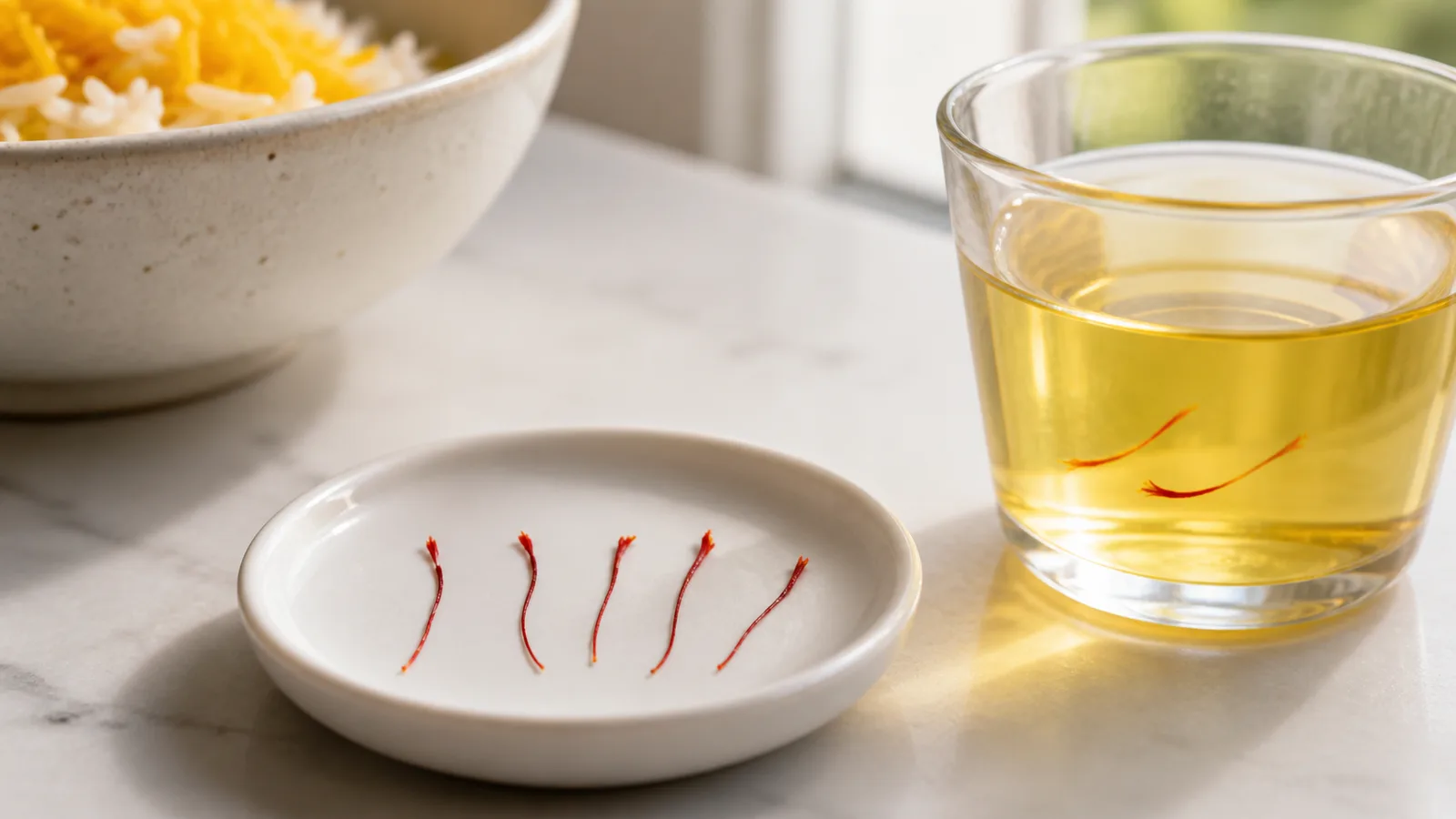
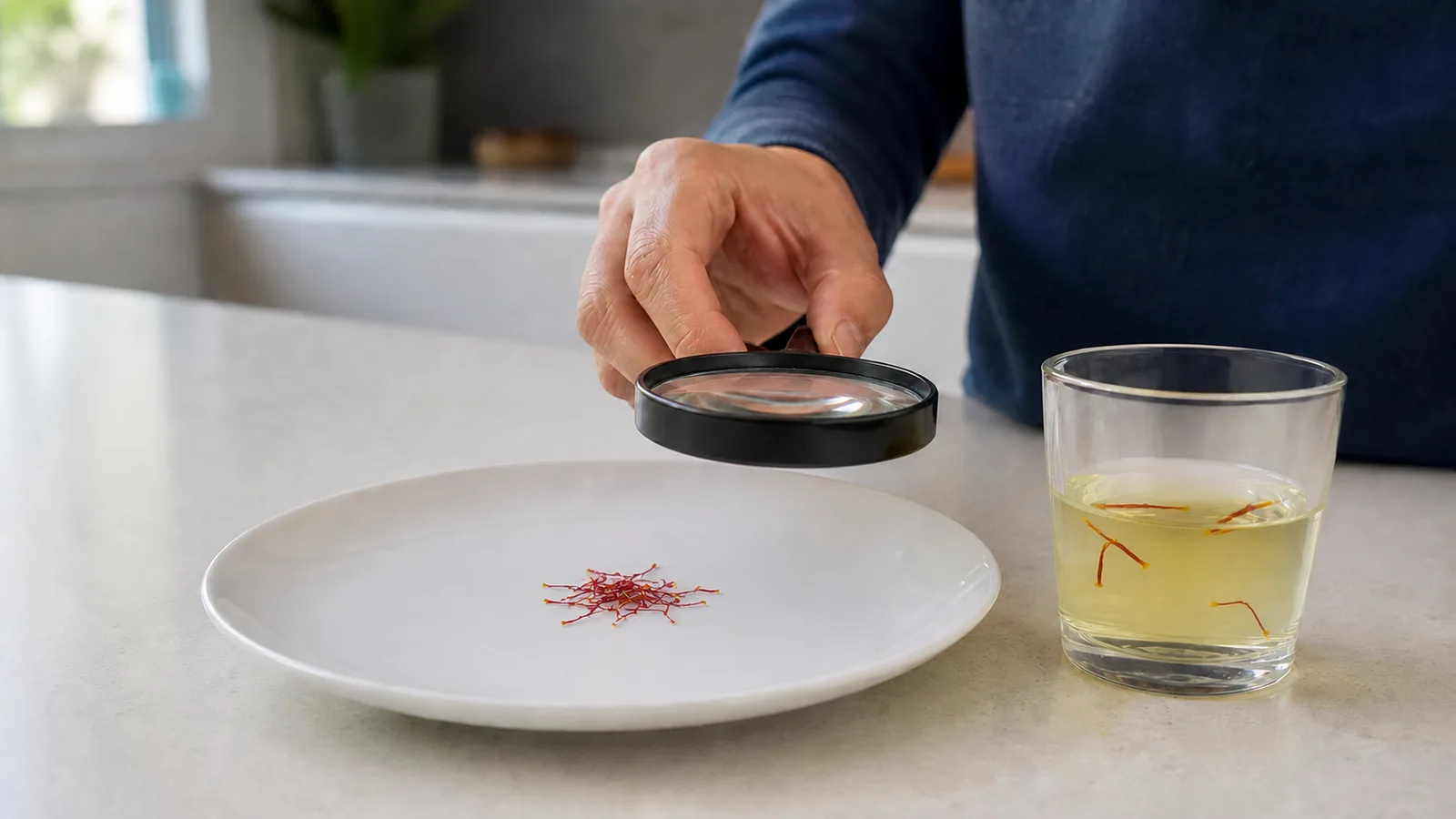
Spread a small pinch on a white plate under natural light. Real saffron threads should not look like identical red fibers cut by a machine. They are slender and irregular, and many have a slightly wider, flared end because they came from a flower stigma. The dominant color is deep red to red-orange. A few lighter areas can occur, but a large quantity of yellow floral material adds weight without providing the same quality.
Be cautious if the contents look unusually uniform, glossy, frayed like dyed silk or made from flat petals. Safflower, calendula and other plant material have been reported as substitutes. A modern systematic review of saffron fraud and detection methods also describes substitution, extraneous plant material and added dyes. Appearance is useful for screening, but a convincing adulterant can still pass a casual visual check.
Check the aroma without expecting perfume
Open the container and smell it before brewing. Authentic saffron has a distinctive, concentrated aroma that people often describe as hay-like, warm and faintly sweet. It should not smell musty, damp or strongly of artificial fragrance. A weak aroma or almost no scent does not automatically mean the saffron is fake: age, heat, light and poor storage can reduce it. It may simply be old or badly handled.
Likewise, an overpowering sweet smell is not proof of quality. Aroma profiling is useful in a laboratory, but the human nose cannot authenticate a sample or measure its grade.
Use the water test as a clue, not a certificate
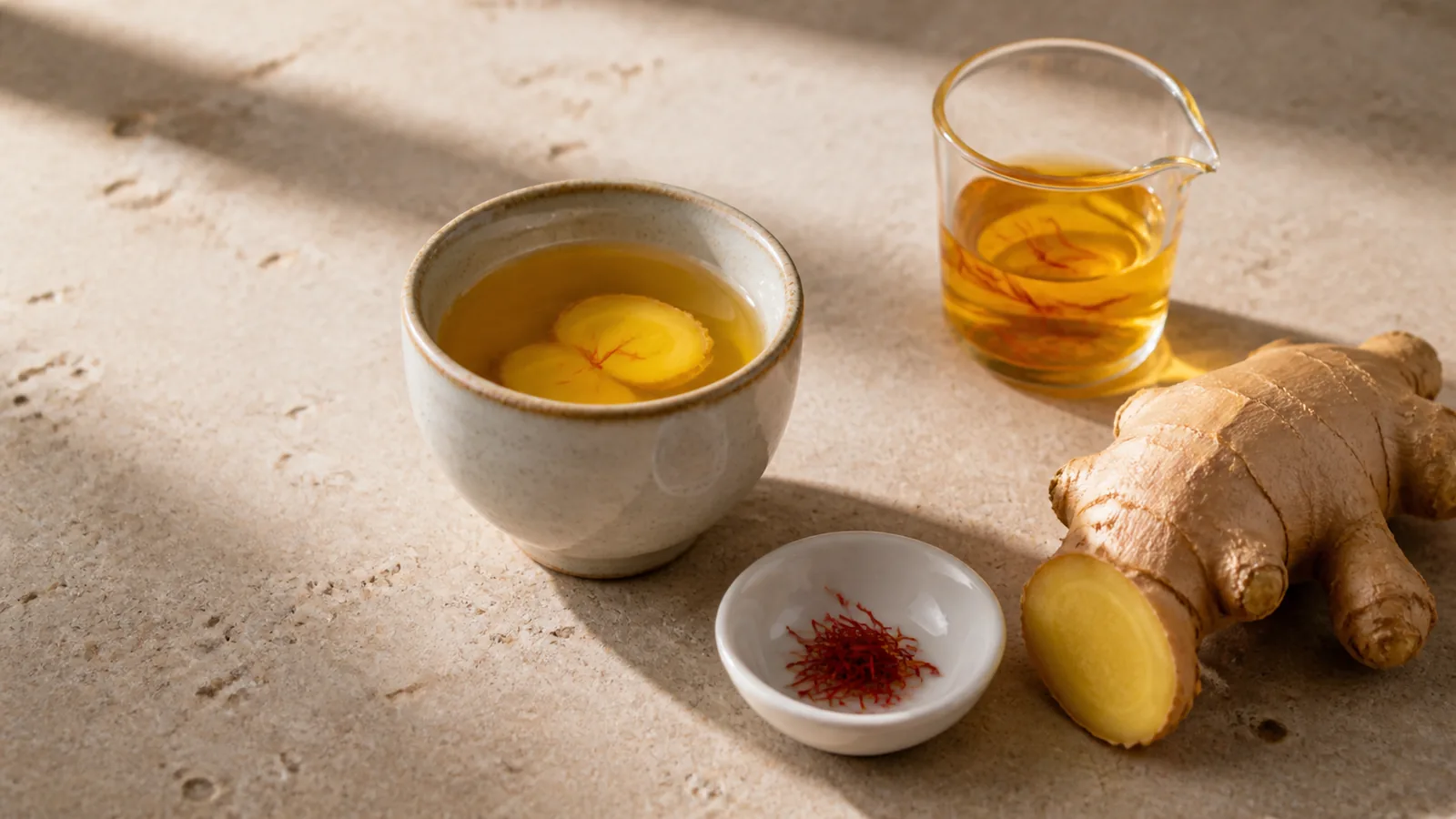
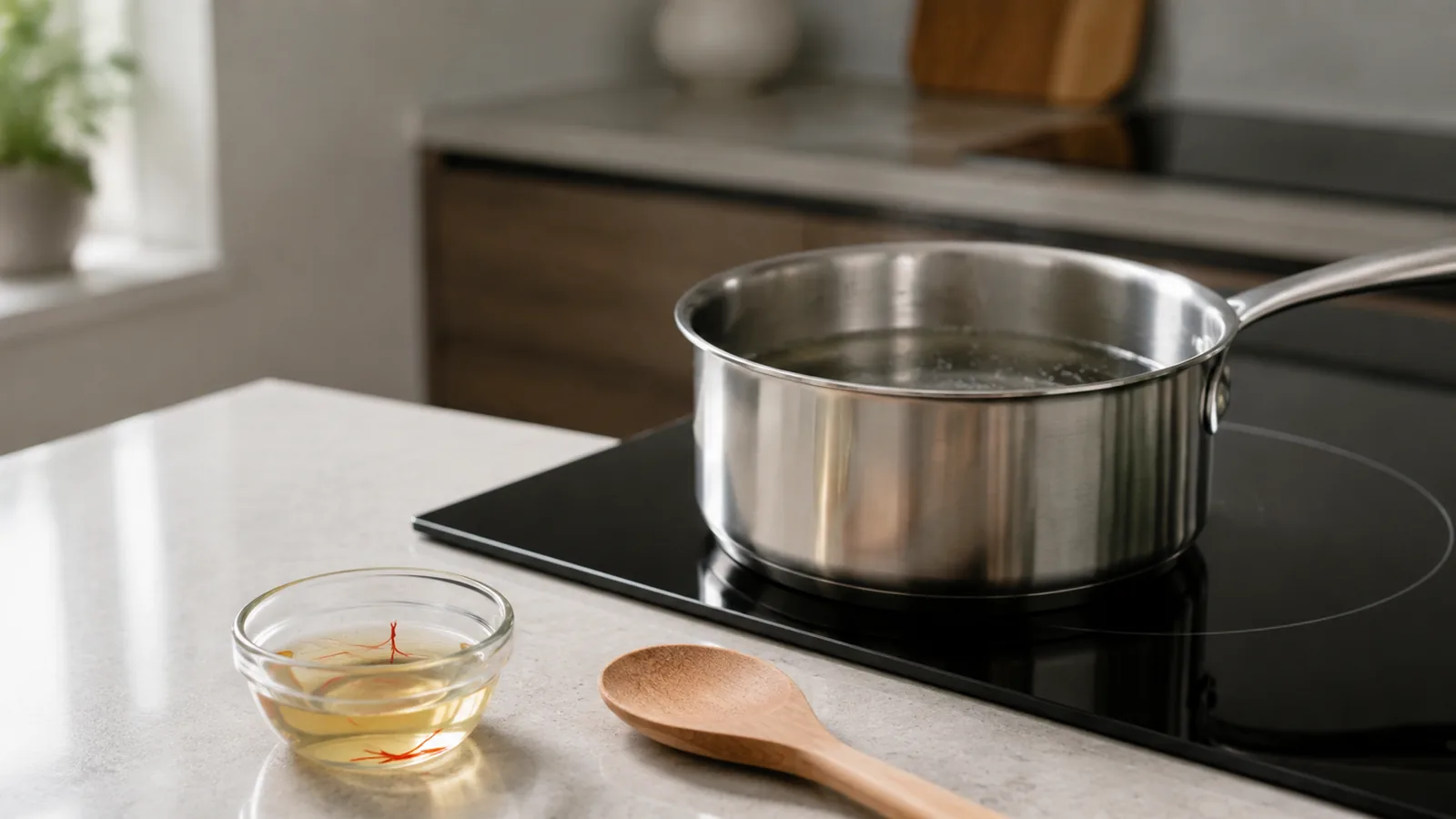
Place a few threads in a clear glass of room-temperature or warm water. Genuine saffron normally releases color progressively, turning the water yellow to golden while the threads remain visible. Material that produces an immediate cloud of bright red color, loses all its color at once or begins to disintegrate deserves closer scrutiny.
The simple water test is helpful when an obvious surface dye washes off, but it has limits. Brewing speed changes with water temperature, thread size, age and prior processing. Some colored plant fibers can imitate part of the effect, while genuine saffron can release color more quickly after it has been crushed. Do not use one stopwatch time or one shade of water as a pass-or-fail rule.
After several minutes, inspect the wet threads again. Their shape should still resemble softened stigmas rather than paper strips or uniformly cut fibers. Avoid adding baking soda, chemicals or other improvised reagents to saffron that you intend to eat.
What taste can and cannot tell you
Saffron’s aroma may seem sweet, but an infused thread has a mildly bitter character. A sugary taste can indicate that something has been added, yet taste alone is not a safe or reliable authenticity test. Do not taste a questionable sample that has an unusual color, chemical smell or unknown origin.
Powder is harder to assess at home
Ground saffron is convenient, but grinding removes the most useful visual clues. Other plant matter and colorants are much harder to recognize once everything has become a fine powder. That does not mean all powdered saffron is false. It means traceability, sealed packaging and credible testing matter more.
If authenticity is your priority, buy whole threads and grind the amount you need immediately before cooking. Keep the remainder tightly closed, dry and away from heat and light so that ageing is not mistaken for fraud later.
Look beyond the front label
Buy from a trusted supplier whose pack identifies the product, net weight, business responsible for it and a batch or lot that can be traced. Check the seal and look for unexplained damage, moisture or residue. Country of origin can be useful information, but no country name by itself guarantees authenticity.
Ask what the seller can provide for that particular lot. A vague statement that saffron is “lab tested” is less useful than a current report with a batch reference and named methods. Certifications must be specific and verifiable. Customer reviews can reveal service or packaging problems, but they do not replace product analysis.
The current ISO 3632-1:2025 specification covers dried saffron as filaments, cut filaments and powder. ISO-based measurements can assess important quality characteristics, but research comparing spectroscopy, microscopy and DNA barcoding shows why no one method answers every authenticity question. In one multi-method study of commercial samples, combining methods gave a more complete assessment than relying on one alone.
What to do if the saffron seems suspicious
Photograph the dry product, packaging, lot number and the result of any water check. Keep the receipt and contact the seller before discarding the sample. A responsible supplier should be able to identify the batch and explain its quality controls. If the color looks artificial, the smell is chemical or the pack appears contaminated, do not use it in food.
For everyday buying, the most practical answer to “how to tell if saffron is real” is to combine several observations: recognizable whole stigmas, natural color variation, a characteristic aroma, gradual golden infusion, intact packaging and traceable sourcing. These checks reduce the chance of an obvious mistake. Only suitable analytical testing can confirm saffron authenticity and purity.
When you are ready to compare formats, our saffron products page shows the options currently available from Rowhani Saffron.