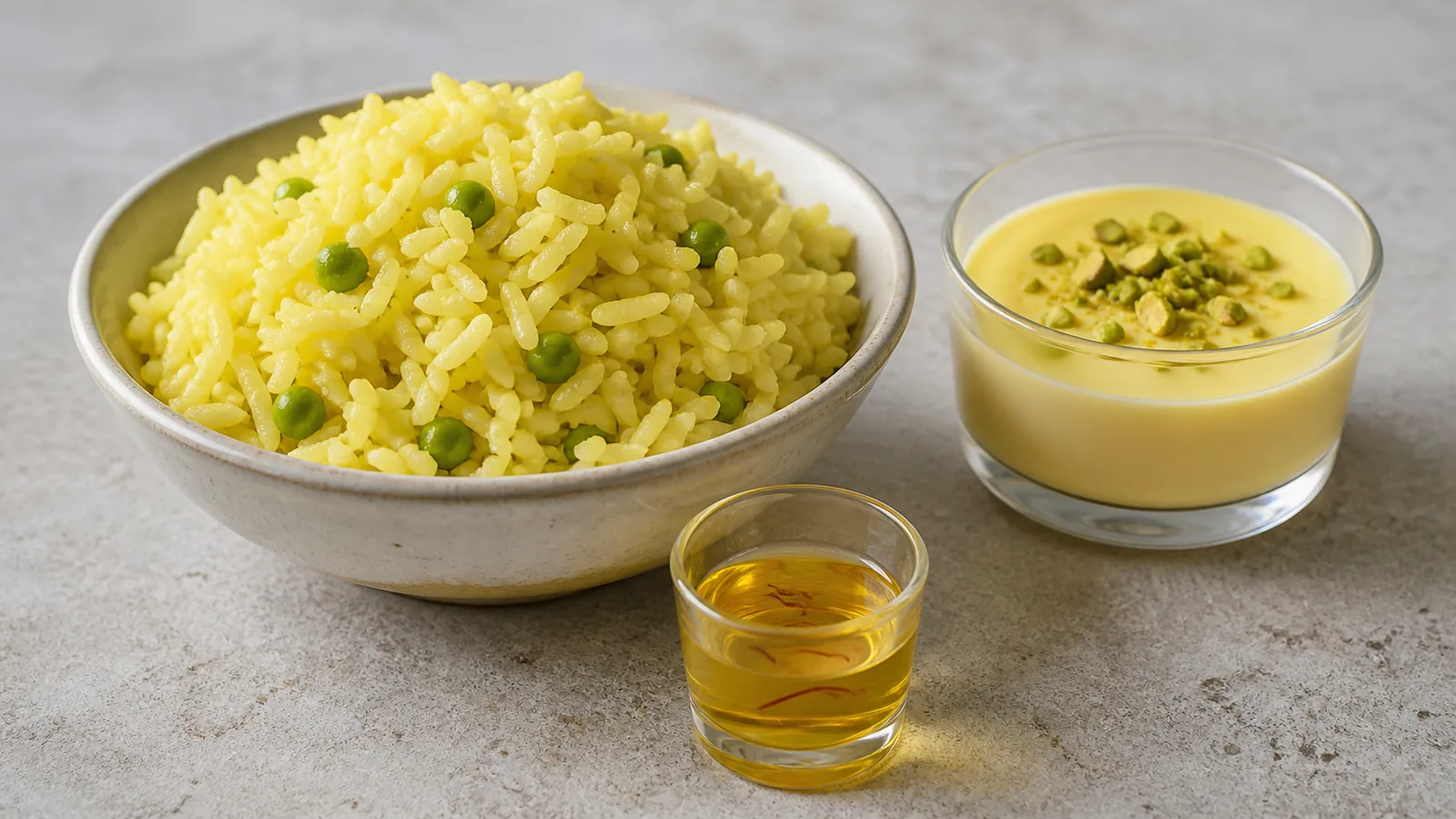
Is saffron easy to farm? The plant can be straightforward to establish in a sunny, free-draining site, but producing clean, saleable saffron at commercial scale is not easy. The hard parts are controlling corm and field risk, staffing a short harvest, drying consistently and earning a margin from a yield measured in kilograms per hectare.
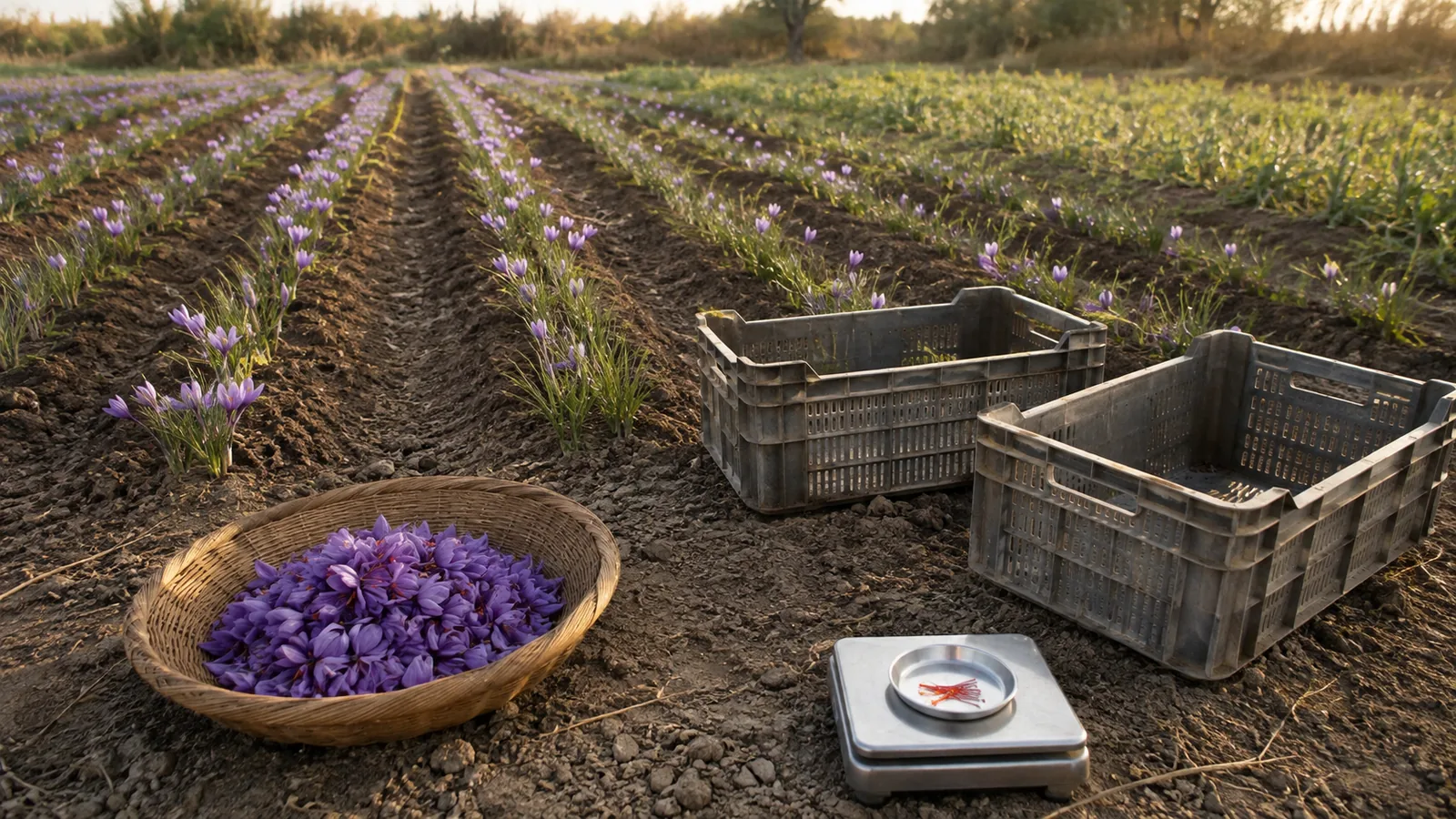
Average saffron yield per hectare in kg
There is no honest universal average saffron yield per hectare. Yield changes with corm size and density, planting age, climate, soil, disease, harvest timing, how much style is retained and the final moisture and grade of the dried product.
A 2023 USDA technical report on flavour handling describes published saffron yields of roughly 1.5–3.0kg per hectare in its background discussion. That range is useful for cautious planning, not a guarantee. Well-managed research plots can report more, while a new, stressed or poorly harvested field can produce less.
When comparing a saffron yield per hectare in kg, check that both figures mean dried stigmas from the planted area. Fresh-flower weight, fresh-stigma weight, dried saffron and premium-grade finished material are not interchangeable. Neither are experimental-plot yield and the saleable output of an entire farm.
The crocus is only one part of saffron farming
Crocus sativus grows from a corm rather than seed. It can flower in its first autumn, so the old claim that every planting waits several years for its first crop is misleading. Corms multiply over time and an established stand may produce more flowers in later seasons, but crowding, disease or poor management can eventually reduce performance.
Getting the plant to flower is therefore not the same as running a saffron farm. A farmer also needs clean planting material, a field plan, labour, drying and storage capacity, traceable lots, buyers and enough working capital to bridge the seasonal cycle.
Site and soil decide whether the job starts well
Saffron is often associated with Mediterranean conditions: comparatively dry summers, a cooler growth period and an autumn flowering season. It also grows in continental climates when the soil and timing suit it. Plenty of light and prompt drainage matter more than holding the field within a fixed temperature band.
Sandy or loamy soil can work, but texture alone does not guarantee drainage. Standing water increases the risk of corm rot. Before planting at scale, inspect the field after sustained rain or irrigation, test the soil, check previous crop and disease history and trial the proposed bed or ridge system.
Corm quality and establishment require capital
Large areas need a substantial number of healthy corms. Their purchase, transport, sorting and planting make corm supply a major initial cost before there is any saleable spice. Small or damaged corms may establish foliage without producing the expected flower count, while infected material can spread a problem through the field. Treat establishment as a long-term investment, not a quick return.
Planting density and depth should be chosen for the climate, soil, machinery and intended bed life rather than copied from a single high-yield trial. Dense planting may increase early flower numbers per area but also increases corm cost and can bring forward the need to lift and divide crowded stock.
The short harvest is the real labour test
Saffron flowers over a concentrated period, often with several peak days. Each bloom carries three red stigmas. Much of the delicate handling remains manual: flowers must be collected while fresh, then the stigmas are separated and dried without allowing the backlog to damage quality.
The familiar statement that around 150,000 flowers produce one kilogram illustrates the scale, although it is not a fixed conversion. The University of Vermont’s Saffron by the Numbers uses about 167 flowers per gram and reports that, in its observations, separating stigmas took longer than picking the same number of flowers. A farm budget must count both jobs, along with supervisors, transport, sanitation and rejected material.
A field can be agronomically successful and still lose value if it flowers faster than the crew and drying room can handle. Labour capacity should be planned from a peak-day estimate, not an annual average.
Drying turns a flower harvest into a saleable spice
Fresh stigmas are perishable. Drying removes moisture while preserving the colour, aroma and condition buyers expect. Inconsistent loading, temperature or time can create different products from the same field.
A commercial plan needs food-safe work surfaces, clean separation, controlled drying, accurate scales, lot identification, protected storage and representative testing. The amount that meets the agreed grade—not the gross flower harvest—is the yield that belongs in the revenue calculation.
Is saffron farming profitable?
It can be, but high retail prices do not prove farm profit. The useful equation is saleable dry yield multiplied by the price the farmer can actually realise, minus every establishment, annual and selling cost.
Costs commonly include corms, land preparation, irrigation, weeding, pest and disease management, seasonal labour, drying energy and equipment, testing, packaging, storage, finance, transport and unsold or downgraded material. Retail price per gram is not the same as farm-gate revenue per kilogram.
Run at least three cases: a poor yield with high harvest cost, a realistic base case, and a strong crop that still has enough labour and drying capacity. If the project only works with the highest published yield and a premium retail price for every gram, it is not yet a robust farm plan.
What makes saffron farming easier?
- a small multi-season trial before full-field planting;
- documented, healthy corm lots suited to the system;
- free-draining beds and a measured water plan;
- weed and rodent control arranged before emergence;
- a harvest rota sized for peak bloom, not average days;
- drying batches matched to separator and dryer capacity;
- records of flowers, labour hours, dry weight, grade and losses;
- a defined buyer and product specification before expansion.
Mechanisation can help with land preparation, bed formation, weeding, transport or controlled drying. It does not automatically solve delicate flower handling, and equipment should be judged by losses and final quality as well as speed.
Common mistakes in a first saffron farm
Scaling from a pot or tiny plot: the larger field adds labour peaks, uneven soil, logistics and quality variation that a garden trial may not reveal.
Budgeting from gross yield: moisture loss, trimming, contamination, breakage and grade reduce the amount that can be sold under a particular specification.
Assuming low water use means no water planning: saffron may use less water than some crops in a suitable system, but roots and leaves still need moisture at the right stages. Both drought and saturation can reduce performance.
Buying a market after harvest: pack size, testing, certification, channel and buyer requirements influence costs long before the flowers open.
A practical first-season approach
Begin with a representative part of the intended field rather than its easiest corner. Record corm number and size, planted area, labour, water, inputs, flower count, separation time, dry-stigma weight and saleable grade. Keep the foliage after flowering so the corm cycle can continue, then repeat the measurements in the next season.
Use our detailed saffron farming operations guide to map the workflow and the cultivation checklist to review field care. Local agronomic and food-business rules still need local advice.
So, is saffron easy to farm?
It is possible to grow, but difficult to scale well. The crop rewards accurate timing and disciplined handling, not simply patience or expensive planting stock. Site drainage, corm health, peak labour, dry-yield measurement, quality control and a realistic sales price determine whether an attractive field becomes a viable farm.